







Curly haircuts for men should consider dry length
A front piece can look longer when wet or stretched than when it rests dry. Show both its natural landing point and the length you want preserved. The amount of apparent shortening varies across the head, so a single stretched measurement should not decide the whole fringe or perimeter.
The useful question is not simply how much hair to remove, but where the shortest visible curls should sit afterwards. Name a recognisable boundary: above the eyebrows, clear of the glasses, covering part of the ear or reaching the collar. If you like forehead coverage, explain whether you want it when air-dried or only after deliberately stretching the front during styling.
In its explanation of curl shrinkage, Salon San Carlos describes the shorter appearance of textured hair when dry compared with its wet or stretched state. That observation supports checking your own resting shape; it does not provide a reliable universal allowance for every fringe. Avoid asking for a fixed extra length based on somebody else's curl photograph.
Curly haircuts for men: compare resting and stretched positions
Use a dry photograph as the main reference for visible length. If helpful, gently extend a front piece to show the difference, then let it return without holding it down. Explain which position matters to you. A curl that reaches the eyebrow when pulled may sit well above it when released. Ask how the proposed fringe length will be assessed against that resting position before committing to a major shortening.
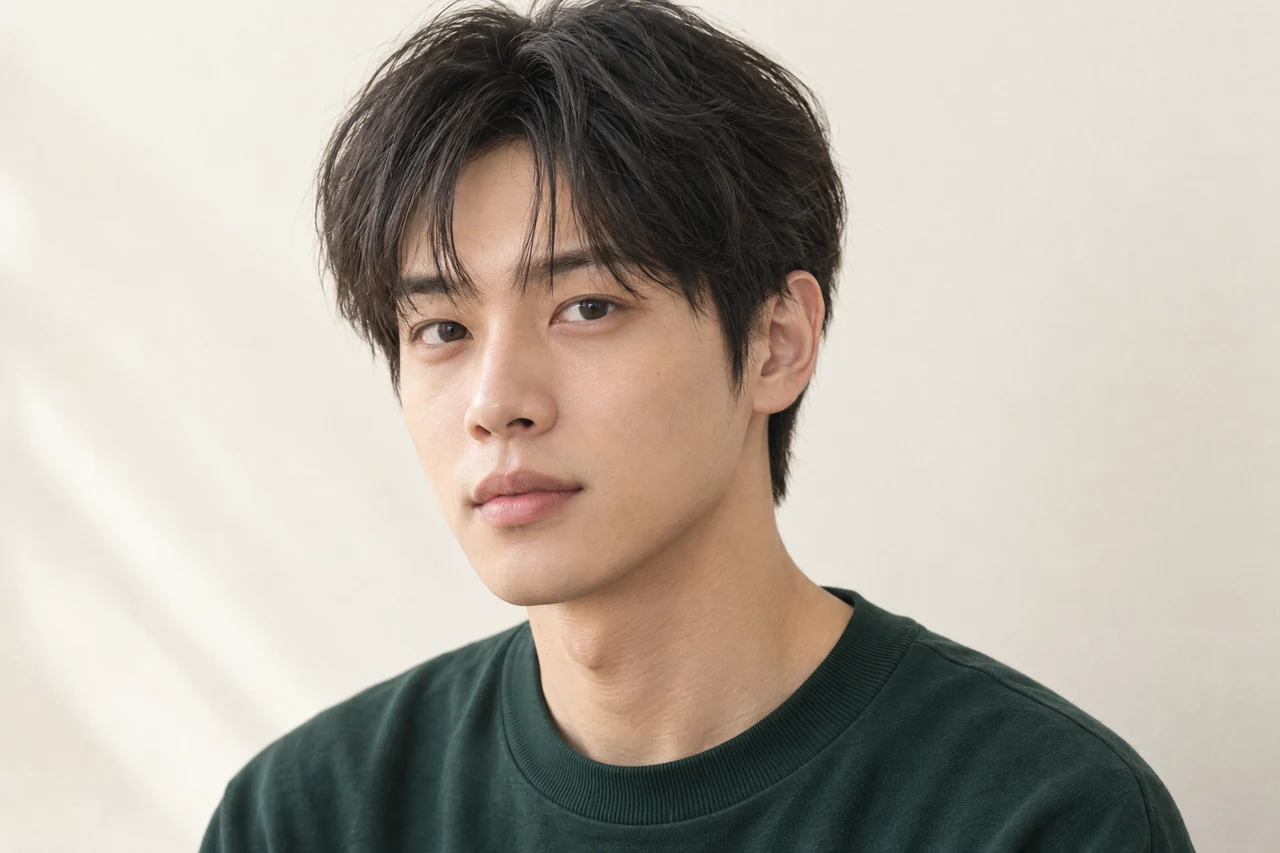
Different curl areas may need different weight decisions
Compare where the hair forms tighter movement, where it lies flatter and where it becomes too broad. Explain the outline you want at each area instead of asking for uniform weight removal. Reducing density can change the visible shape, so keep the desired fullness and support in the discussion.
Separate curl size from the amount of hair in an area. A broad side can be a group of curls projecting outwards, not simply excess hair that needs thinning. Likewise, a crown that looks flat may still contain plenty of hair. Describe the visible problem before naming a tool: the side looks too wide from the front, the crown loses its outline, or the ends feel heavy around the neck.
Discuss layering vs thinning out hair if you are unsure whether the aim is a new shape or less density within the existing one. For this haircut, identify the fullness you want to keep as clearly as the width you want reduced. Avoid a blanket request to make every area lighter when your front already separates more than you like.
Look at the front, crown and sides separately
A practical brief might ask for a fuller front, a softer outline above the ears and a tidy nape. Those requests need not translate into equal lengths or identical weight removal. Check the side view as well as the front: removing side coverage creates a stronger top-to-side contrast, while retaining it gives a more continuous outline. Decide whether that contrast is part of the look you want, rather than treating narrow sides as the automatic answer to curls.
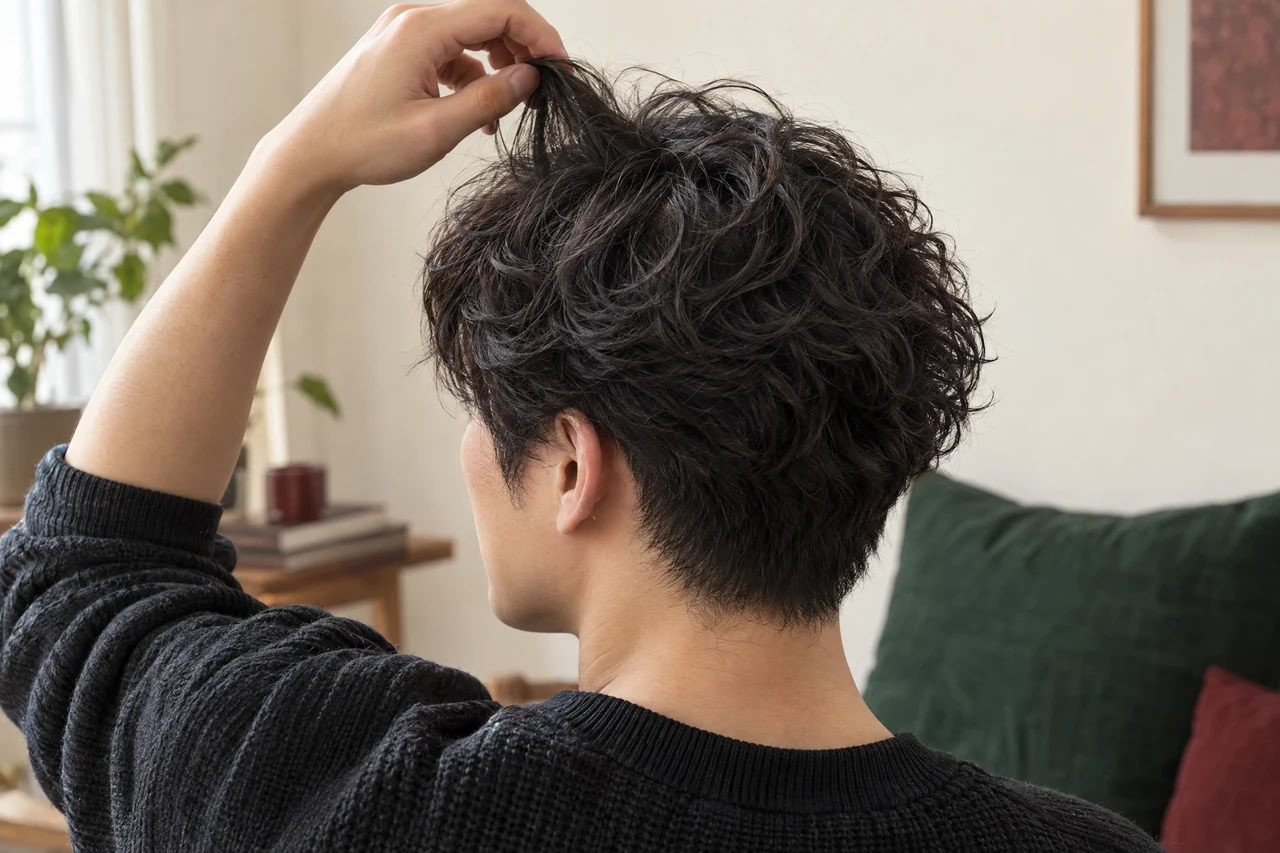
Choose references with a comparable natural pattern
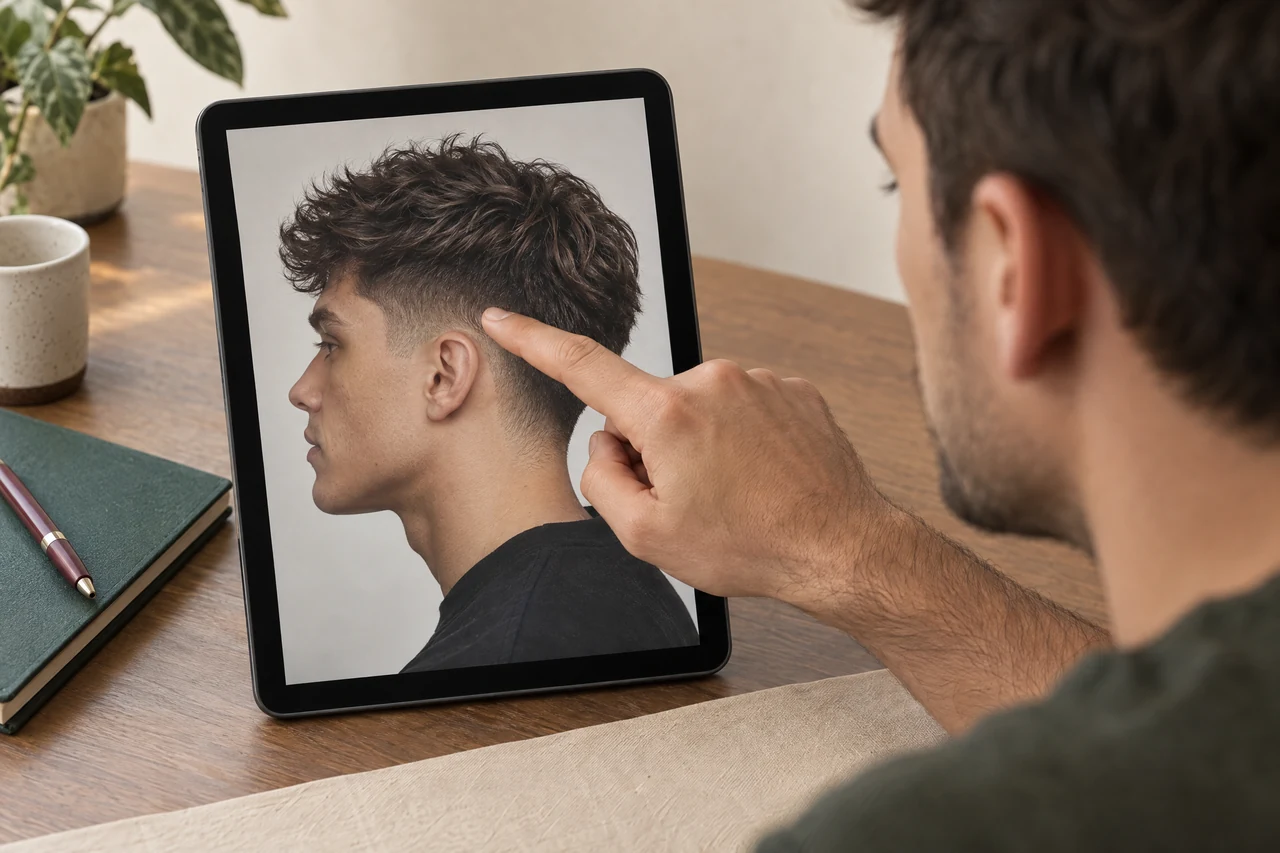
A photograph of a different curl pattern may be useful for the overall outline but not for predicting your dry result. Point out the parts you like, such as side coverage or fringe length. Include your own natural-hair views so the shape is discussed against your movement rather than an assumed match.
Look for a reference with a similar visible curl size and starting length, then label the feature you want to borrow. You might like its rounded top but not its exposed ears. A tight-coil reference and a loose-wave reference can suggest different amounts of visible fullness even when both are described as medium length. Keep the shape request separate from a request to reproduce the model's texture.
Continue with haircut reference photos for that specific comparison and the preparation questions it raises.
A styled image can hide the original movement
A polished picture does not tell you how much shaping, drying or product was involved. Bring your everyday dry front, side and back views alongside the inspiration. Include a view of any area you normally press flat or pull forward. If you sometimes wear your curls loose and sometimes stretch them, explain which finish should guide the haircut. An outline that works in one finish may reveal different layer lengths in the other.
Ask about the approach without assuming a specialist method
Share how you wash, dry and style your curls, including the finish you prefer on low-effort days. If a specific dry-cutting approach matters to you, enquire before booking. General men's haircut service does not establish a particular curl technique or specialist certification, and the cut does not guarantee identical curl behaviour every day.
Ask whether the hair should arrive dry in its usual shape, and what preparation is preferred for the proposed service. Do not change your routine dramatically just to produce a more impressive curl pattern for the consultation. Salon San Carlos discusses wet, dry and combined approaches in its shrinkage guide; the useful lesson is to ask how the approach relates to your goals, rather than assuming that one method is mandatory for everyone.
Vit So's listed men's wash, cut and blow dry is HK$380. Confirm the scope and intended finish when enquiring, especially if you are requesting a particular approach. This general service price is not a separate quote for a certified curl-cutting method.
Review men's haircut to check its service scope and the details to share before arranging the related work.
If your goal is to create or change a curl pattern rather than reshape existing curls, discuss a men's perm as a separate service. A haircut request does not automatically include chemical texture work.
Your routine is useful; a certification claim is not implied
Describe whether you air-dry, use a diffuser, apply a cream or gel, or usually leave the hair alone. Mention how you refresh the front after sleeping and whether you wear glasses or headwear. These details help establish a realistic everyday finish. Ask for an explanation of the proposed length and outline in ordinary language; you do not need specialist terminology to say which curls you want to retain.
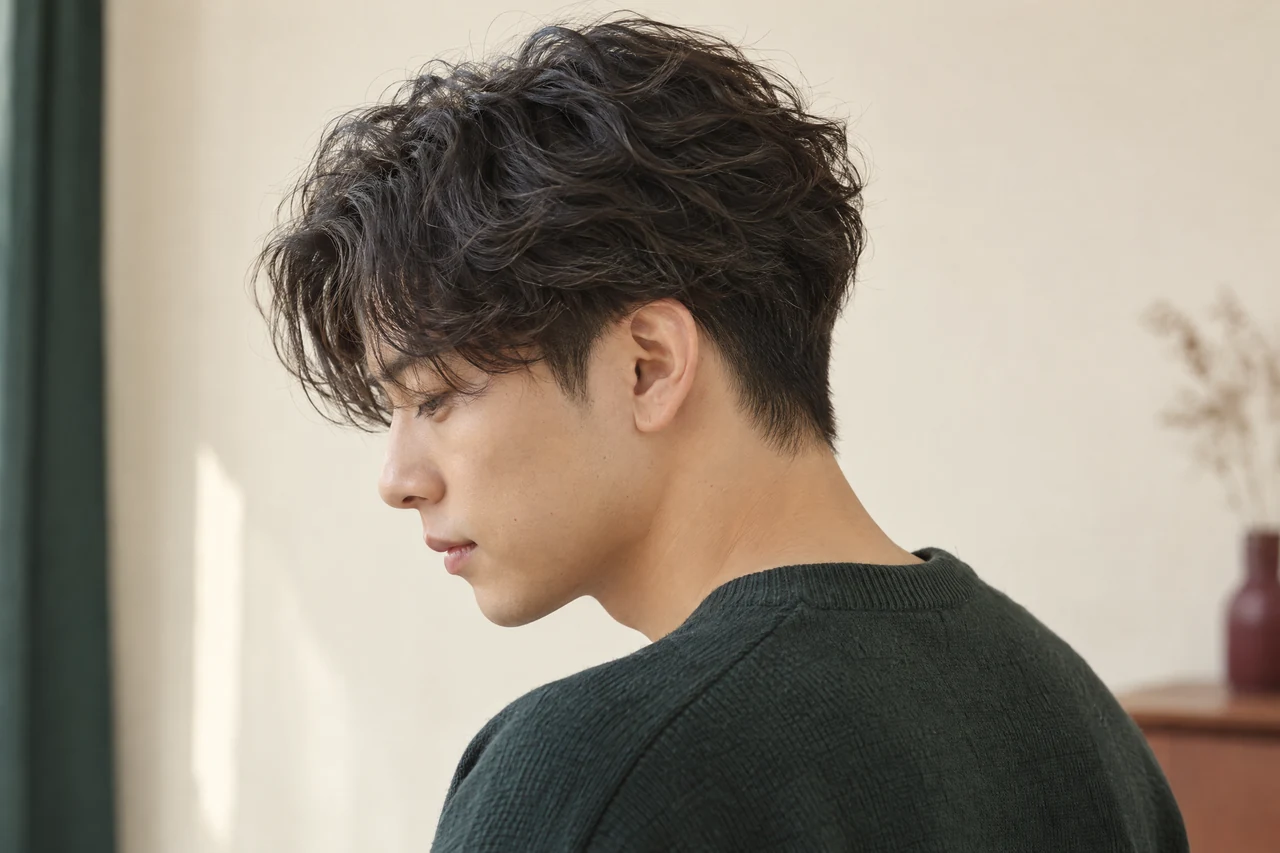
Compare shorter sides with a fuller or longer outline
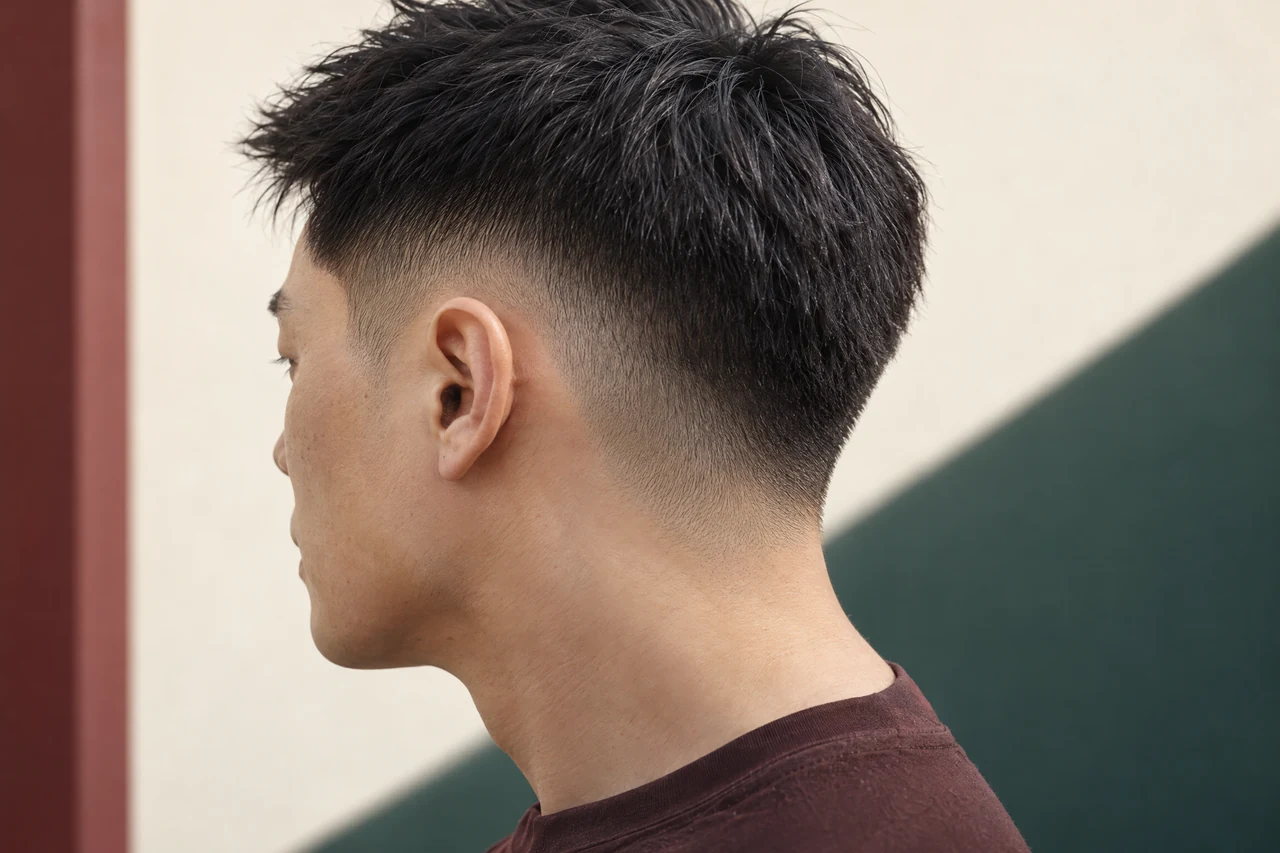
A short curly top with close sides places the emphasis on the front and crown. Before choosing it, discuss whether the retained top has enough length to show the movement you enjoy. If the sides are taken much shorter, their curls may no longer be visible in the same way. Decide whether you want exposed ears and a defined contrast or simply less width around the temples.
A fuller medium-length outline keeps more movement around the head, but needs a clear decision about the widest point. If you prefer a longer shape, protect the lengths that provide ear coverage, connect the top to the back or allow the hair to be tucked away. Avoid choosing short upper layers solely because they look lively in a reference if keeping a continuous longer outline matters more to you.
Continue with long haircuts for men for that specific comparison and the preparation questions it raises.
Choose the compromise you can live with between visits
Compare the alternatives below using your dry hair rather than the style name alone. Closer sides make regrowth at the edges more noticeable, while a longer outline leaves more hair to dry and arrange. Neither choice is automatically lower effort. Explain whether keeping a crisp ear line, preserving a soft fringe or retaining longer curls is your priority when those goals compete.
Review the shape in your normal home routine
The American Academy of Dermatology's curly-hair care advice recommends wetting hair and using leave-in conditioner with fingers or a wide-toothed comb for detangling between washes. It also advises avoiding dry brushing to reduce breakage and frizz. This is handling advice, not a promise about the silhouette of a haircut. For a useful shape comparison, avoid brushing out your curls before taking the dry photographs.
After washing at home, compare the front and side outline with your agreed brief once the hair is dry. Note whether a curl falls into your eyes, the ear coverage is comfortable or the crown feels too broad. Keep the washing and styling routine familiar so you can explain what changed. If you have a concern, send clear resting-hair views and describe the specific length or area rather than asking for all the curls to be removed.
Use visible changes to guide the next trim
Plan maintenance around the feature you notice first: a fringe approaching the glasses, side weight broadening, or a neckline losing the finish you prefer. A close-sided shape and a longer curly perimeter need not follow the same schedule. Tell the stylist whether the next visit should restore the outline or continue growing selected areas. That keeps a routine tidy-up from restarting a length goal you still want.
Curly haircut outlines: what to preserve and what to discuss
| Direction | What stays visible | Main trade-off to discuss |
|---|---|---|
| Short curly top with close sides | Movement concentrated at the top and front | Less side curl coverage; agree how much contrast and ear exposure you want. |
| Soft taper with retained side curls | Top movement connected to some side fullness | A softer edge rather than the strongest close-sided contrast; locate the unwanted width. |
| Fuller medium-length outline | Curls around the crown, temples and perimeter | More surrounding fullness; agree where the widest part should sit when dry. |
| Longer layered curls | A longer perimeter with movement through the upper shape | Shorter layers may interrupt the continuous outline or lengths you want to tuck away. |
| Curly fringe with retained coverage | Front curls falling towards the forehead | Wet or stretched length is not the same as the resting dry boundary above the eyes. |
Your preparation checklist
- Photograph your dry front, both sides and back with curls resting in the way you normally wear them.
- Identify the shortest acceptable dry fringe position and the ear or collar coverage you want preserved.
- Mark where the shape feels too wide, and separately name the fullness you do not want removed.
- Choose an inspiration image and explain which outline features you like, without assuming its texture matches yours.
- Describe your normal wash, drying and styling routine, including glasses, headwear and how you refresh the front.
- Confirm preparation, cutting approach, service scope and price before arranging the appointment.
Frequently asked questions
Is this guide about creating curls with a perm?
No. It concerns cutting hair with existing natural movement. A perm changes texture and should be discussed as a separate service with its own suitability assessment.
Can I request a specific curl-cutting technique?
You can enquire, but confirm the approach before booking. The general men's haircut listing does not prove that a specific dry-cutting method or certification is available.
What photographs help explain my curls?
Show the front, sides and back when dry and resting naturally, plus your usual styled finish. Explain where you want length, fullness or a softer outline retained.
Bring a clear brief for your curls' dry shape
Enquire with Vit So in Sheung Wan using your natural-hair photographs, preferred fringe boundary and the side fullness you want to keep. Explain your usual routine and ask about the proposed approach before arranging a visit. The aim is a clear discussion of your existing curls and length priorities. Sending an enquiry does not confirm an appointment; availability and service details still need to be agreed.
Start your WhatsApp enquirySources & further reading
- 6 curly hair care tips from dermatologists
Gentle detangling of curly hair and avoiding dry brushing to reduce breakage and frizz.
- What Is Curl Shrinkage?
Dry versus wet or stretched curl length, and choosing a cutting approach around texture and styling goals.



