






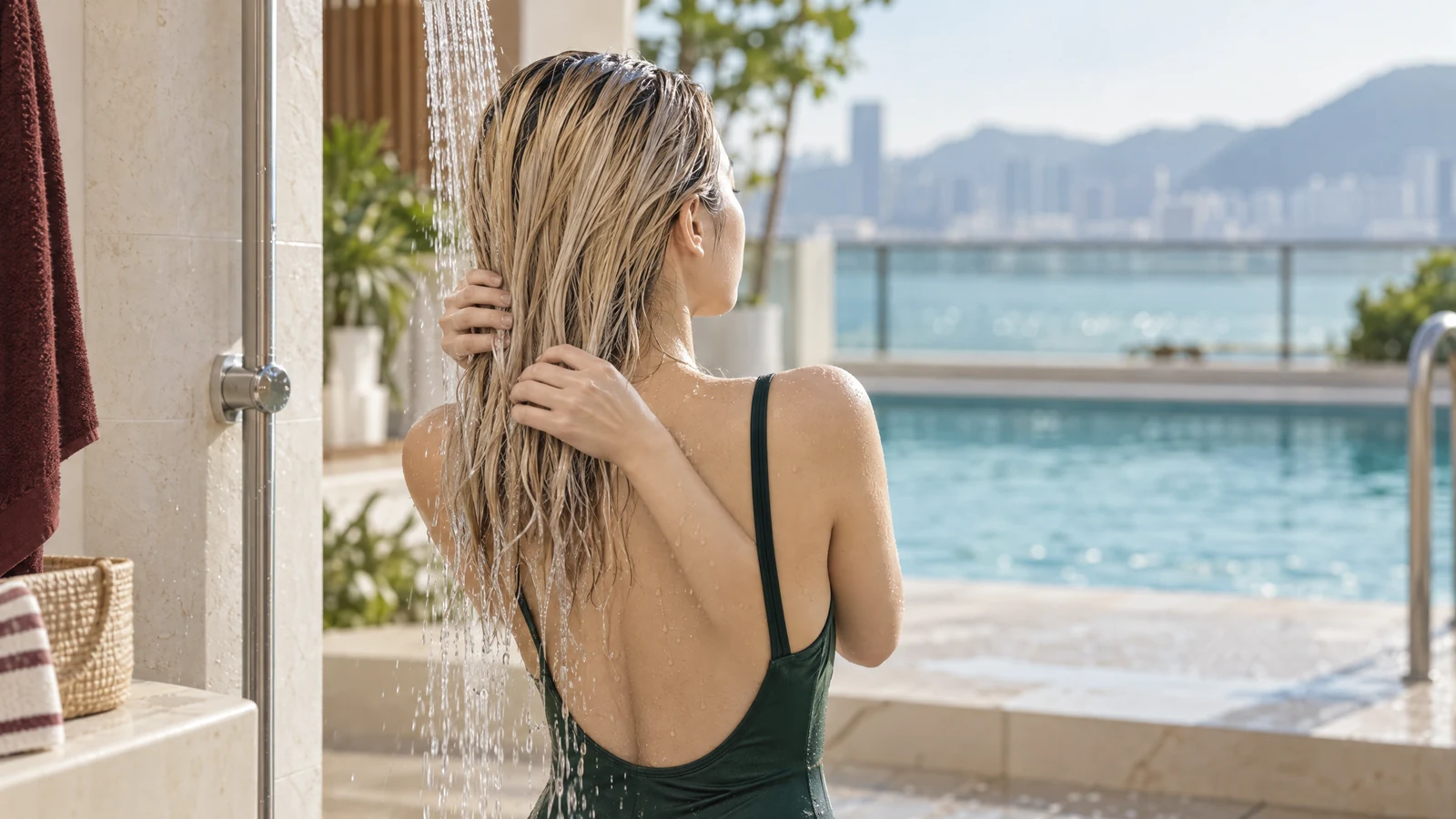
Bleached hair care after swimming starts with rinsing
Rinse with clean water after pool or sea exposure and use suitable cleansing products according to their directions. Avoid vigorous rubbing or twisting of fragile lengths. Note whether the roughness is different from your normal wash routine; that observation is useful for a care discussion without treating a single swim as proof of a specific type of damage.
Make the shower your first hair-care stop, not the brush. Let clean water pass through the lengths while keeping them hanging in their natural direction. If a swim cap has trapped the ends, ease it off rather than dragging it across a knot. Support longer hair with your hands and gently squeeze out excess water instead of wringing it. The immediate aim is to rinse away the water you swam in without creating more tangles.
The American Academy of Dermatology's summer hair-care advice recommends rinsing immediately after swimming, followed by a swimmers' shampoo and deep conditioner. Choose a formula whose directions are suitable for your lightened and coloured hair. Do not interpret the recommendation as permission to repeat an intensive wash until the hair feels squeaky. More scrubbing is not a useful test of whether pool exposure has been dealt with.
Continue with hair care after bleaching for that specific comparison and the preparation questions it raises.
Keep bleached hair care after swimming gentle from the start
If the beach has no shower, use clean fresh water for an initial rinse and arrange a proper wash when facilities are available. Baylor College of Medicine's swimming advice recommends rinsing right away and shampooing within the next few hours. This supports preparing for access to water; it is not a precise damage deadline. At the wash, massage the scalp gently and avoid piling the lightened ends on top of your head. If your cleanser has particular application instructions for the lengths, follow those without rough handling.
Condition according to the actual product
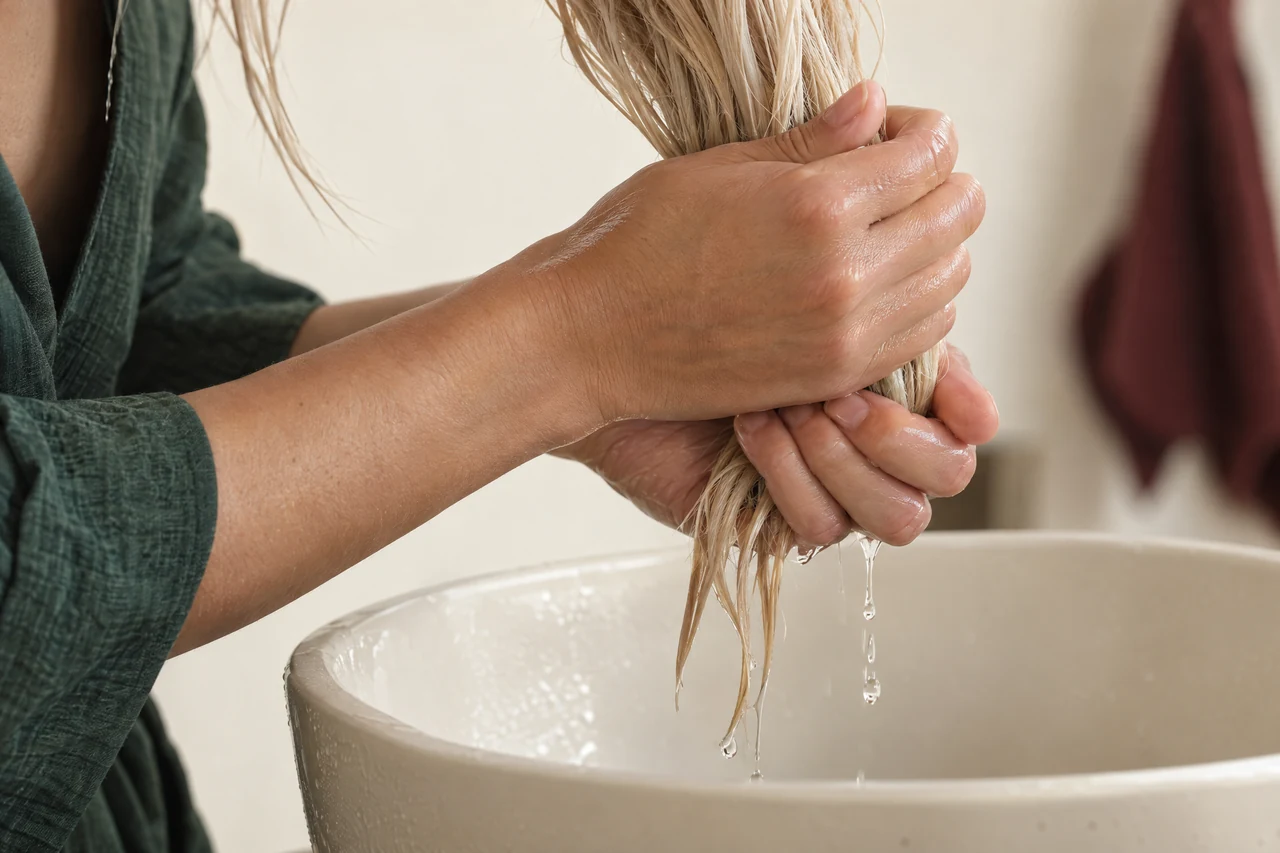
Choose an appropriate conditioning step and follow its application and rinsing instructions. A bigger amount or longer contact is not automatically a better response to chlorine or salt water. Review slip and weight as separate outcomes, and avoid combining multiple products in an attempt to erase the exposure immediately.
Keep the jobs separate. Shampoo cleanses; conditioner helps with manageability and the feel of the lengths. A rinse-out mask is not automatically a leave-in product, and a purple shampoo is not automatically a swimmers' cleanser. Read the label for where to apply the product, whether to rinse it out and whether it is compatible with your colour service. Use the recommended contact time rather than leaving a mask on throughout the journey home.
Apply conditioning care where directed, distributing it gently through accessible sections rather than pulling it through a matted area. Notice whether the ends become easier to handle and whether the roots feel unnecessarily coated. Lightened tips may need a different approach from unbleached regrowth. You can discuss those zones with a stylist without assuming that every strand needs the richest product available.
Do not turn an exposure concern into product overload
Before adding another mask, oil or protein-labelled treatment, check what the first product actually asks you to do. If the hair remains resistant after a suitable conditioning step, extra layers may make it harder to judge its condition without releasing the knot. Keep the routine simple enough to explain later: product name, placement and whether it was rinsed out. A softer surface is a useful handling improvement, but it does not establish that bleached hair has regained its previous strength or that its colour needs have been addressed.
Release loose tangles without force
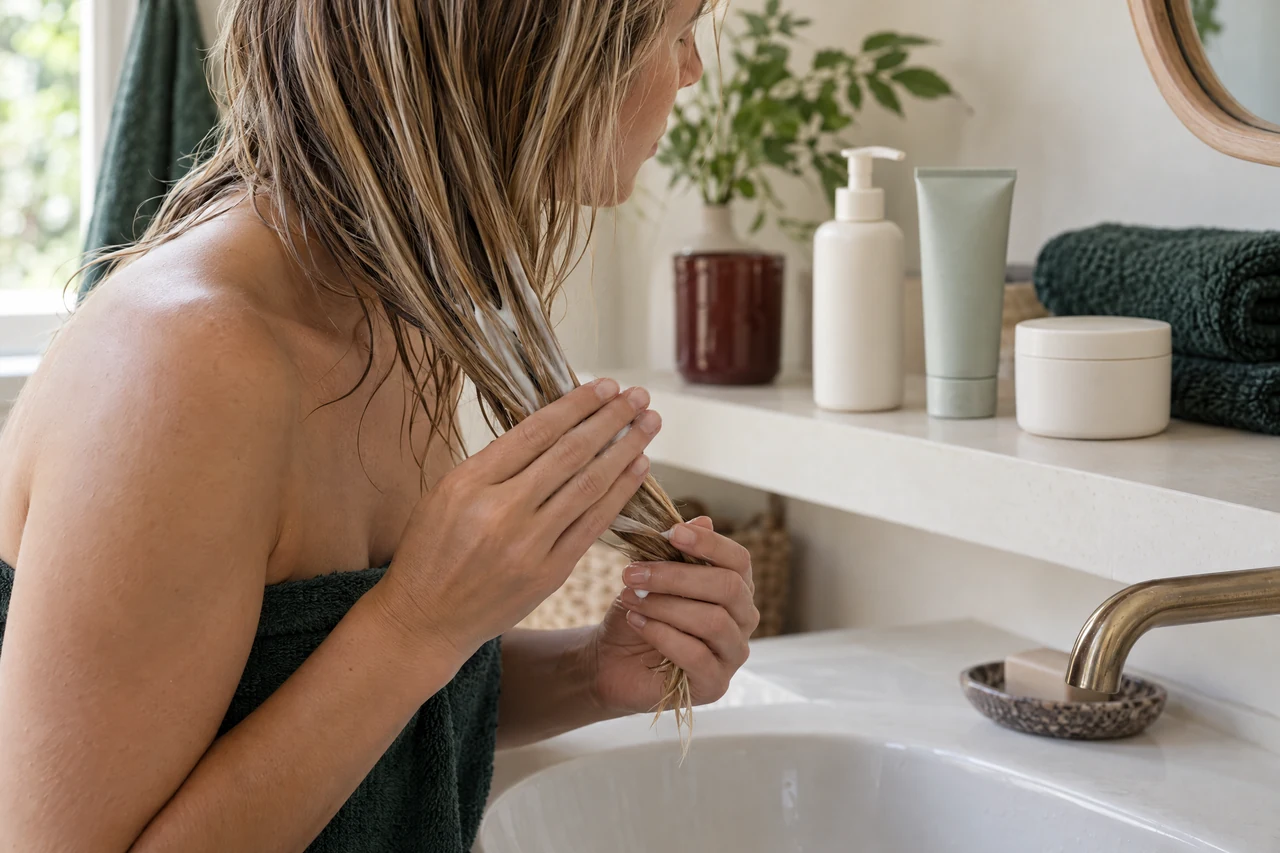
Work with manageable sections and handle loose tangles patiently, supporting the hair rather than pulling from the roots. Stop if a knot will not release without force or strands repeatedly snap. A wet, conditioned feel does not prove strength, and repeated brushing through resistance can add stress to lightened ends.
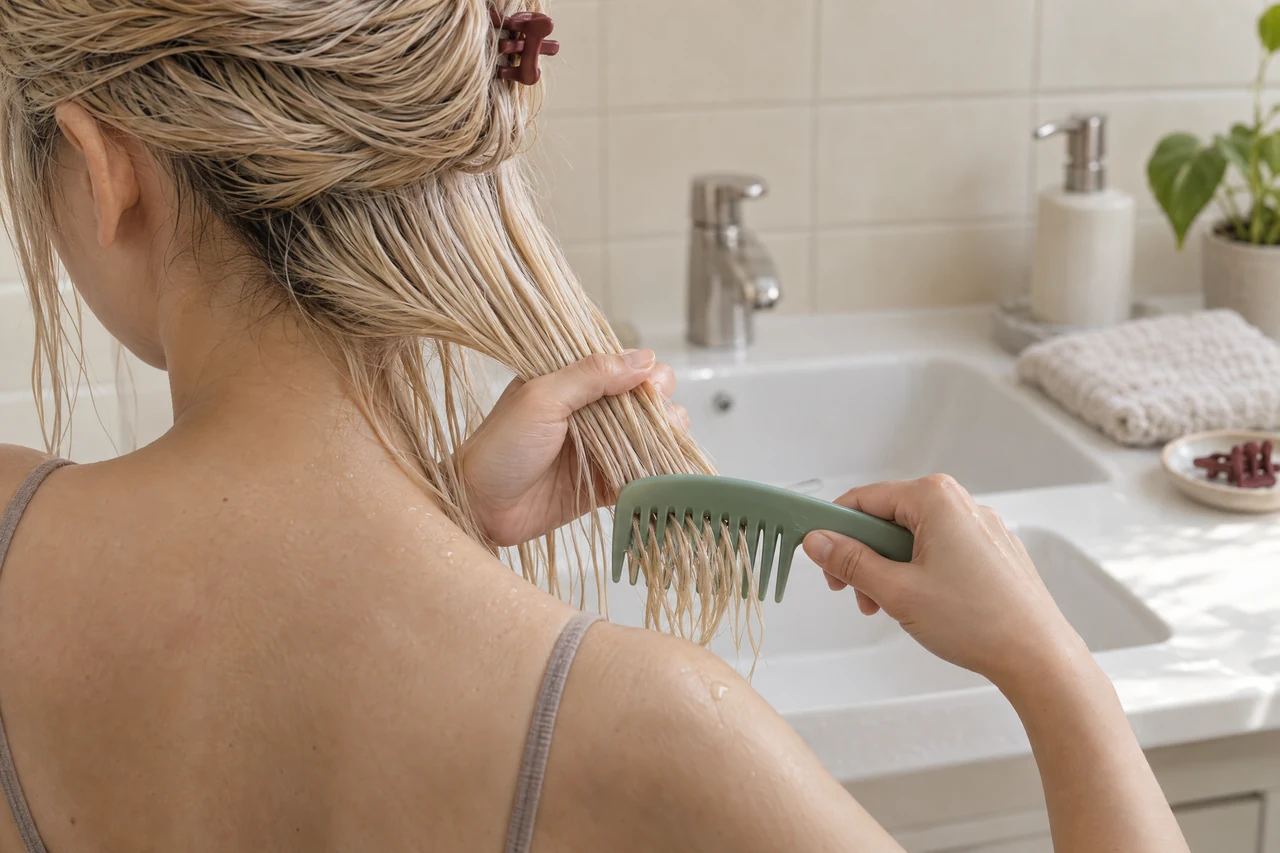
Find the tangle before trying to comb the whole length. Hold the section above the affected area without gripping tightly, then use your fingers to separate loose strands at the ends. A wide-tooth comb can follow where the hair allows it, starting below the knot and progressing upwards as the lower part becomes clear. Do not run a comb from the scalp to the ends as a test. Once resistance appears, pause and reposition rather than increasing pressure.
There is no universal rule that every swimmer must brush immediately while the hair is dripping wet. The AAD's guidance on avoiding hair damage advises letting straight hair dry a little before gentle wide-tooth combing, while textured hair or tight curls should be combed damp. For fragile lightened lengths, combine the needs of your natural texture with the actual resistance you feel. Conditioning slip does not override a stopping signal.
Continue with how to detangle damaged hair for that specific comparison and the preparation questions it raises.
Tight knots and snapping are reasons to stop
If a compact knot will not open gently, leave that area alone and seek help rather than repeatedly soaking, brushing or pulling it. Avoid stretching strands between your fingers to test their strength. Keep clips and tight elastics away from the tangle, and do not hide it in a tightly twisted bun. Tell the stylist whether the knot formed under the cap, during towel drying or at the wash. That detail helps identify the handling step to review without diagnosing the hair from a description alone.
Review drying and later changes
Follow your tool and product directions when drying, and avoid unnecessary heat passes over fragile ends. Keep notes if roughness, tangling or colour appearance changes persist after the usual routine. A shade change and a hair-shaft handling concern may need different discussions; do not assume a conditioning step will resolve both.
Press or loosely wrap the hair with a soft absorbent cloth rather than rubbing it back and forth. Once it is no longer dripping, choose a drying method that respects your texture and schedule. Air drying is an option when practical; if using a dryer, use the lowest heat setting and keep the airflow moving. The AAD's damage-prevention guidance supports avoiding towel rubbing and limiting heat. Do not try to make a rough patch look normal by repeatedly blow-drying or clamping it.
Check colour in consistent, neutral light after the routine, not only beneath changing-room lights. The AAD's summer guidance discusses copper in pool water in relation to a green hue in blond hair. That does not prove the cause of every visible shift. Describe whether the change is greenish, warmer, patchy or simply less bright, and where it appears. If it persists, a colour correction discussion can address the shade separately from the detangling problem.
Avoid chasing smoothness with repeated heat
For plans straight after swimming, choose an easy finish that does not require taut brushing or repeated hot-tool work on the ends. Carrying an absorbent cloth and allowing time for drying is more useful than relying on a quick, high-heat rescue. If new roughness continues after your usual care, record it rather than escalating products at each wash. Persistent scalp discomfort or concerns about thinning and hair loss belong with a healthcare professional, not a cosmetic colour or conditioning service.

Prepare the next swim around your lightened lengths
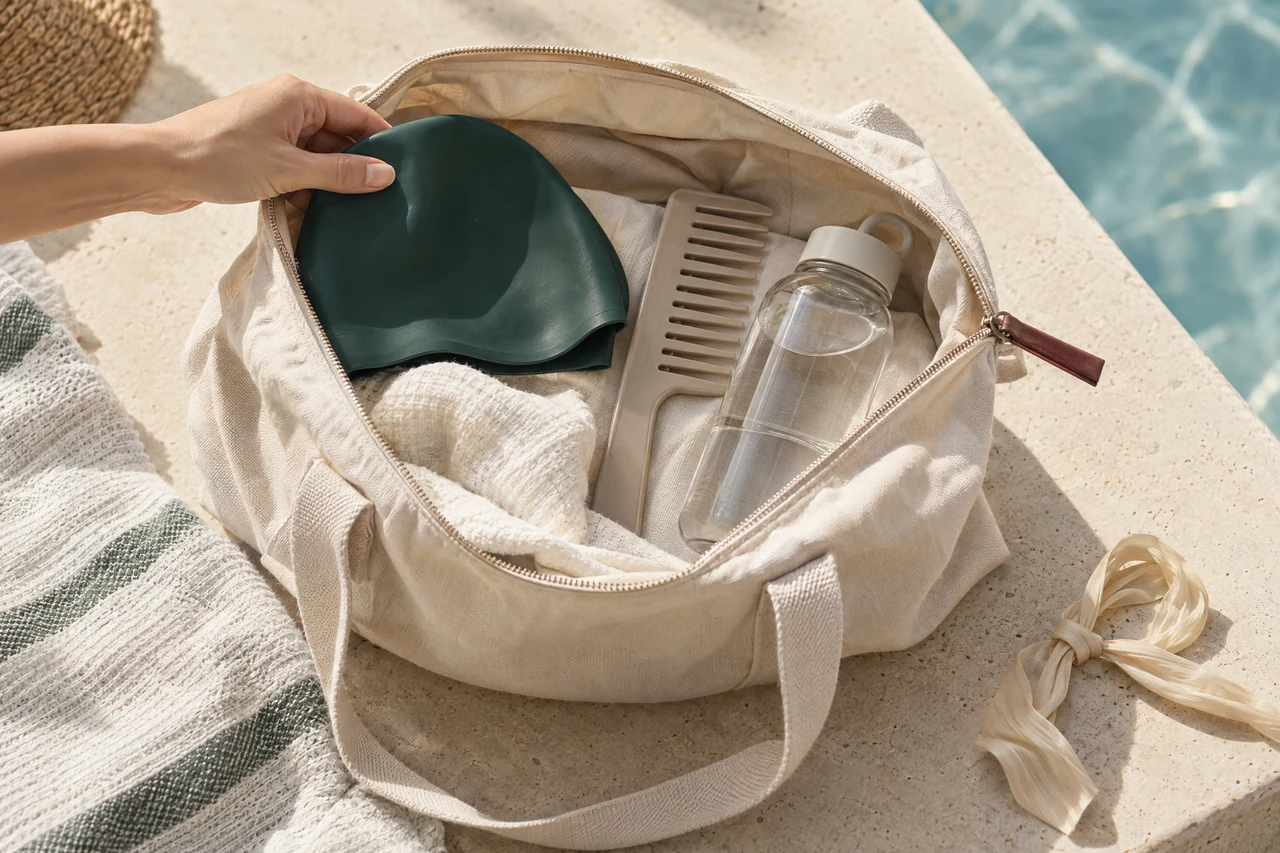
A practical swim bag makes aftercare easier: a suitable swim cap, clean water when shower access is uncertain, your chosen wash and conditioning products, a wide-tooth comb and a soft cloth. Keep the product labels available even if you use travel containers. Before entering the water, Baylor's guidance suggests wetting the hair with fresh water; it also recommends a cap that is not too tight at the hairline. Ease the cap on and off without snagging fragile ends.
If you swim regularly, explain that routine before planning another lightening appointment. A hair colour consultation for regular swimmers can connect your preferred shade with the care you can realistically carry out. Include whether you swim in a pool or the sea and whether you normally have time to rinse, cleanse and dry before work. For outdoor sessions, the AAD also recommends a wide-brimmed hat and shade; conditioning after the swim is not a substitute for sun protection.
Use the 6-point swim-day checklist below to prepare the bag and decide when to stop handling the hair. It is a practical packing and observation aid, not a measure of protection or a promise that a swim will leave your colour unchanged.
Plan for the shower you actually have
If you return to Sheung Wan after a beach visit, plan the first rinse before the journey rather than saving every care step for home. For a lunchtime pool session, leave enough changing-room time for gentle handling instead of a hurried brush-through. Ask about facility rules before applying any pre-swim product. Choose a loose, manageable arrangement for long hair where suitable, and avoid making a cap fit by forcing fragile lengths into a tight twist.
Bring useful observations to a care enquiry
For a care enquiry, share recent bleaching and colour history, pool or sea exposure, the products used afterwards and the location of persistent tangles. A photograph of dry hair in ordinary light can help explain a visible change, but it cannot establish strength or service suitability. Say whether your main goal is easier combing, a lighter-feeling finish or a shade review. These are different requests, and the appropriate next step may be advice before any further service.
Review hair treatment to check its service scope and the details to share before arranging the related work.
Agree on the purpose before adding a service
Ask what the proposed care step is intended to improve, how it will be applied to the lightened areas and what home routine should follow. Confirm the service scope and quote before proceeding. A cosmetic treatment should not be presented as guaranteed reversal of chlorine, saltwater or sunlight exposure, and an immediate colour service should not be assumed suitable just because the hair feels smoother after conditioning.

Choose the next step by what you observe after swimming
| Observation | Useful next step | Avoid |
|---|---|---|
| Hair still wet with pool or sea water | Rinse with clean water, then follow suitable cleansing directions | Starting with vigorous brushing or towel rubbing |
| Loose tangles in otherwise manageable lengths | Condition as directed; support small sections and release gently | Pulling a comb from roots through resistant ends |
| A tight knot or repeated snapping | Stop forcing the section and seek handling advice | Testing strength by stretching strands |
| Manageable hair that needs drying | Blot gently; air dry when practical or use the lowest dryer heat | Repeated hot passes to chase smoothness |
| A persistent visible shade change | Record the appearance in consistent light and discuss colour separately | Assuming a mask or purple shampoo will resolve every change |
Your preparation checklist
- Check whether fresh-water rinsing and a suitable wash are available before leaving for the pool or beach.
- Pack a comfortably fitting swim cap, a soft absorbent cloth and a wide-tooth comb that will not require tugging.
- Bring appropriate cleansing and conditioning products with their application and rinsing instructions accessible.
- After leaving the water, rinse first and handle the lengths without vigorous rubbing or twisting.
- Release only loose tangles; stop at a tight knot, forceful resistance or repeated snapping.
- Record persistent roughness or shade changes, together with swim exposure and products used, before seeking advice.
Frequently asked questions
Can one mask cancel chlorine exposure?
No care product should promise to erase every effect of pool exposure. Follow appropriate cleansing and care directions and review persistent changes separately.
Should I brush tightly tangled wet hair immediately?
Do not force through a tight knot. Handle loose tangles patiently with suitable care and stop if resistance requires force or strands keep snapping.
Is a colour change the same as rough-feeling hair?
No. A visible shade concern and a handling concern are different observations. Describe both rather than expecting a single conditioning step to correct the colour.
Make your swim-day care easier to discuss
Enquire with Vit So in Sheung Wan about persistent tangling or a care routine for your lightened lengths. Share your bleaching history, swimming habits and products used so the concern can be discussed clearly. Service suitability, scope, availability and the quote need confirmation; an enquiry is not a confirmed booking.
Start your WhatsApp enquirySources & further reading
- Must-try summer hair care
Immediate post-swim rinsing, swimmers' shampoo and conditioning; copper-related green hue and outdoor hair protection.
- Taking a dip? Here’s what to know to protect your hair and your skin
Rinsing right away, arranging shampoo within the next few hours, wetting hair before swimming and avoiding tight swim caps.
- How to stop damaging your hair
Gentle wide-tooth combing with texture-sensitive timing, avoiding towel rubbing and tugging, and reducing drying heat.



