






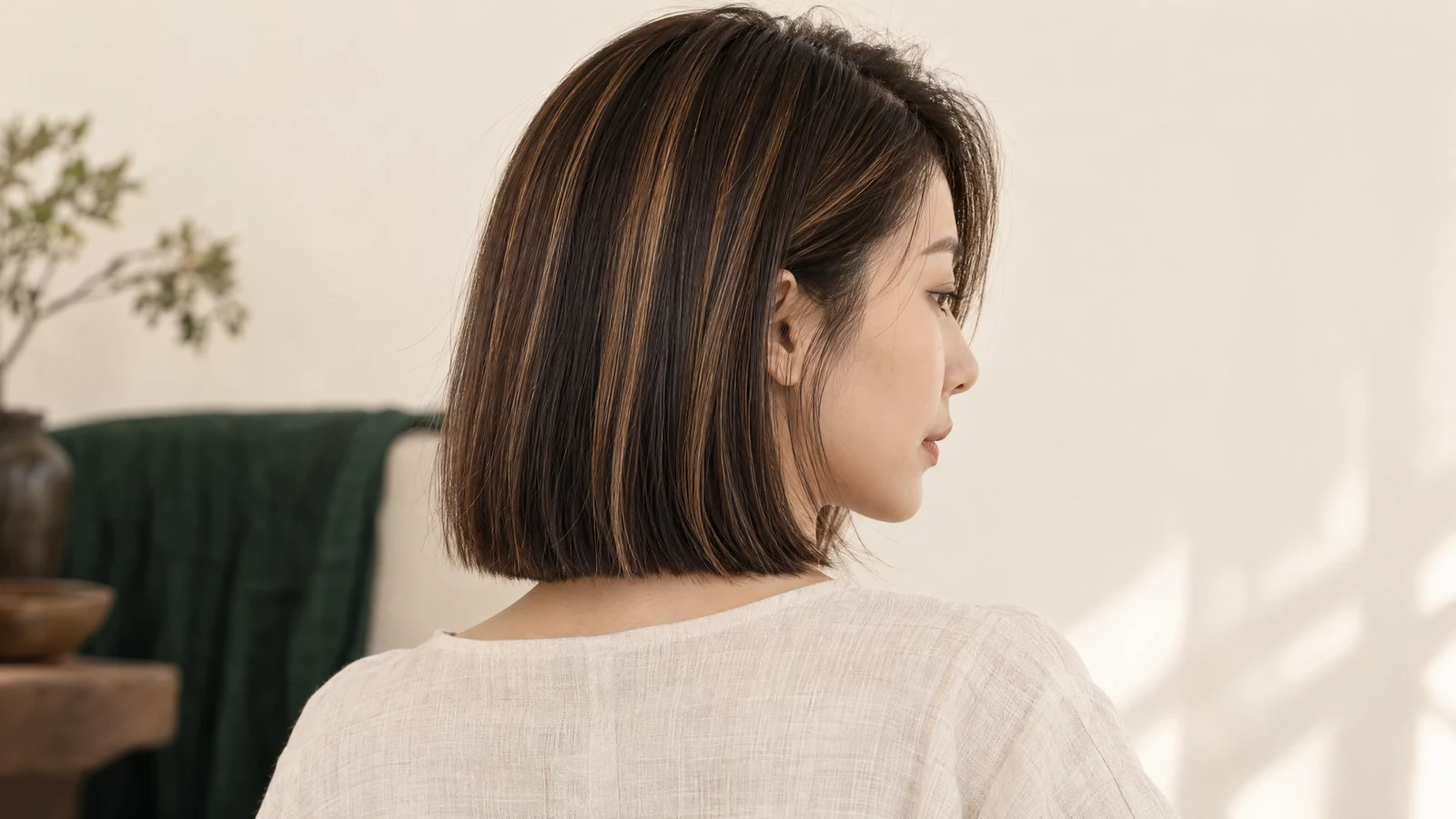
Balayage on straight hair without styled waves
Highlights for straight hair can create visible lines along a smoother surface, while broader painted lightness may show as areas of transition. Neither pattern has to be bold. Compare the start of the lightness and the spacing of dark areas on an uncurled view, especially if you rarely use heated styling at home.
Start with the overall distribution rather than the shade name. Does the colour remain mostly dark, with occasional brighter strands, or become noticeably lighter across the lower lengths? On a straight finish, a wide light area can read as a continuous panel. Narrower areas with darker hair between them can look more separated. Neither is automatically better: the useful question is whether you want distinct lines or a broader transition when your hair hangs still.
The examples in Wella's straight-hair balayage guide show that balayage does not depend on curls for its presentation. Wella also notes that curls and waves enhance definition and dimension. Use that distinction when choosing references: a curled photograph can communicate a colour preference, but it does not show exactly how the same placement will look uncurled.
Review balayage hair colour to check its service scope and the details to share before arranging the related work.
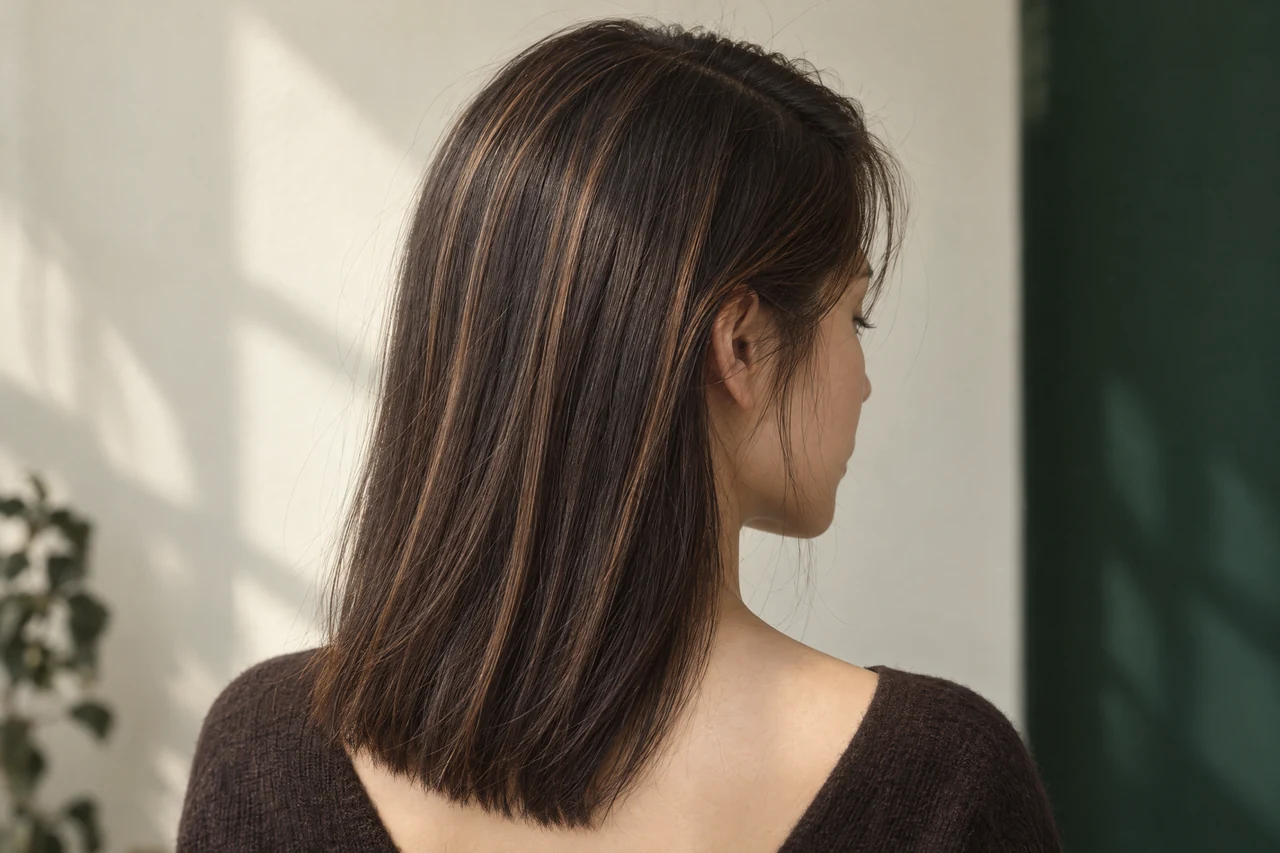
Balayage on straight hair in an everyday finish
Look at the front as well as the back. A pale section beside the face may feel quite prominent in a straight finish even when the back looks understated. Check your usual parting and tuck the hair behind an ear as you normally would. Explain whether you like that brighter edge or want the front to remain closer to the base. Ask for the transition to be discussed with the hair resting naturally, rather than relying on a final curl to make the pattern feel softer.
Curly hair and rotating light areas
Balayage on curly hair should be discussed using the curl pattern you normally wear. A strand may face outward in one position and turn inward in another, changing the visible brightness. Share dry, everyday photos rather than only a straightened reference, and explain any previous chemical services that affect the lengths.
In a curl, a lightened area may appear as separate flashes rather than an uninterrupted line. A bright surface near the face can become less visible when the curl settles behind another section. That is why an inspiration photo with very loose waves may not answer the placement question for tighter curls. Describe where you want brightness to be noticed in the dry shape: around the face, across the outer surface or mainly towards the ends.
If you alternate between straight and curly finishes, say which one matters most. The aim is not to find a pattern that looks identical in both, because the surfaces are arranged differently. Instead, decide what you want each finish to retain. You might want the straight version to keep visible dark gaps, while accepting that those gaps look less regular when the lengths curl. Discuss this before selecting the amount of lightness.
Observe the curl pattern in its normal dry state
Bring a photo after your usual wash and drying routine, including the products you normally use. A stretched, brushed-out or freshly ironed view can be an optional comparison, but label it clearly. Notice whether the front curls sit differently from the back and whether your parting stays fixed. These observations help explain the visible colour pattern; they are not a home test of how much processing the strands can tolerate.

Fine strands and the condition of the ends
Balayage for fine hair is a question of contrast, placement and the condition of individual strands, not a way to create more hairs. Light areas may influence the visual impression, but fragile lengths still need assessment. Discuss whether the desired lightness is appropriate rather than treating a soft-looking reference as evidence of gentle processing.
Fine describes the individual strand, while density concerns how much hair is present across the scalp. You can have fine strands with a relatively dense overall appearance. If your concern is a flat outline rather than sparse coverage, explain that separately from the colour request. The guide to fine hair vs thin hair helps separate those descriptions before you ask colour placement to solve the wrong problem.
Inspect the ends as part of the consultation rather than judging only the smoother surface near the roots. Explain tangling, snapping during routine handling or a rough feel that has changed since previous processing. The stylist may need to reconsider the lightness target or the areas included. Keeping some depth can be an aesthetic choice, but fewer lightened strands alone do not establish that a proposed process is gentle. The condition of the selected strands still matters.
Review hair treatment to check its service scope and the details to share before arranging the related work.
Visual dimension is not extra hair growth
A contrast pattern can change what your eye notices without increasing strand diameter or producing new hair. Ask whether the proposed brighter areas support the appearance you want when the hair lies flat. If your ends already look transparent, compare a restrained pattern with a much lighter lower section rather than assuming blonde will make the outline fuller. Conditioning may help the feel and handling of the lengths, but it should not be treated as permission for unlimited further lightening.
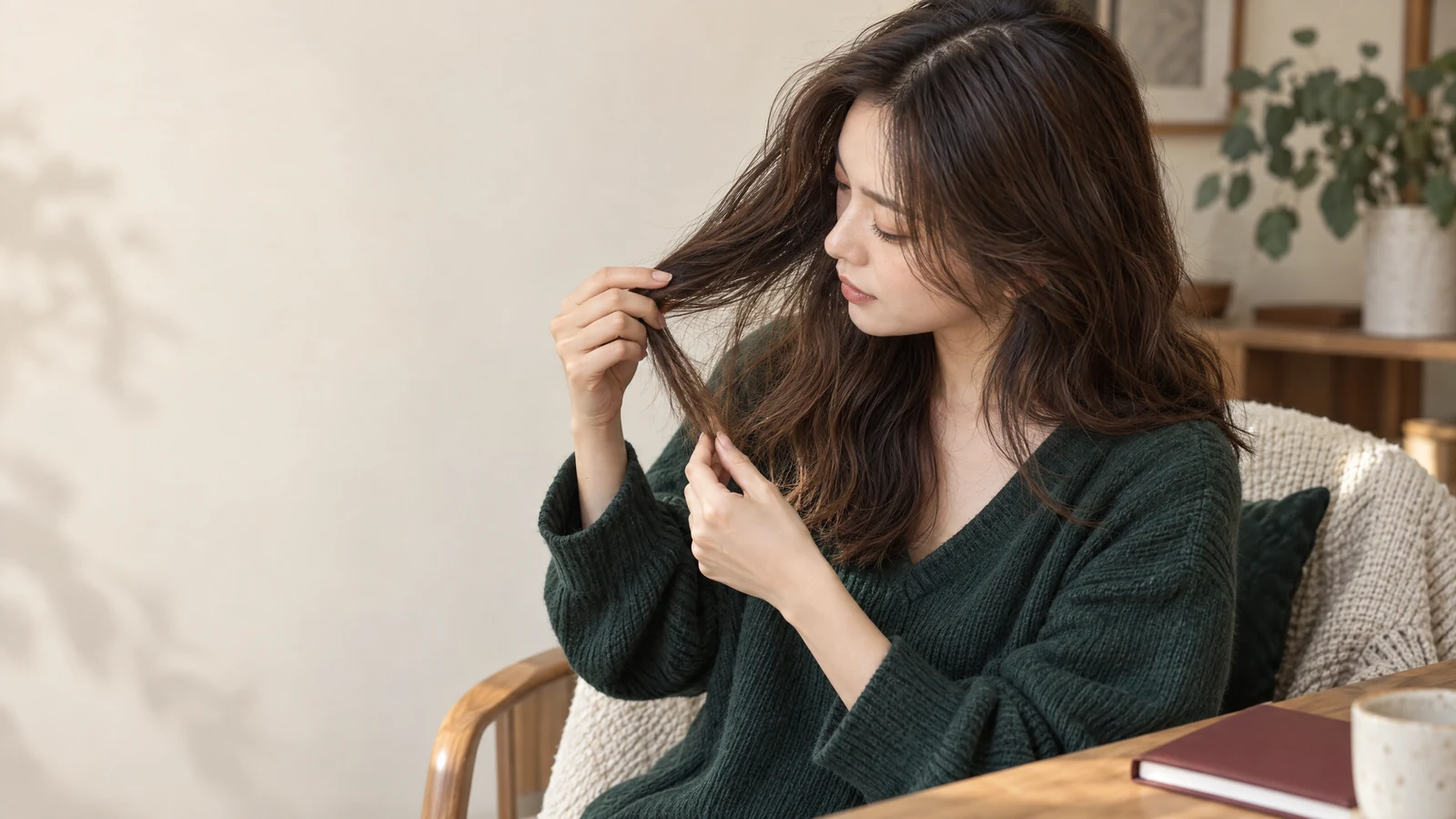
Separate texture from service promises
Tell the stylist whether the hair is naturally straight or curly, chemically altered, air-dried or heat-styled. These details help interpret placement and condition, but they do not establish one universal method for that hair type. Confirm a feasible target and care plan based on the actual strands rather than a general texture category.
Naturally straight hair and chemically straightened hair can look similar in a photograph while having different treatment histories. Describe the earlier service, roughly when it happened and which lengths still contain it. Include home colour and previous lightening, even if the colour now looks dark. If you cannot remember a product, bring any packaging or appointment record you have rather than guessing its contents.
Separate the texture discussion from the haircut discussion too. This page concerns how bright areas appear on straight or curved surfaces and how strand condition affects the decision. A short cut introduces another question: how much room remains for the transition and how much colour will be removed at a trim. Use a length-specific comparison alongside the texture conversation rather than expecting the same design to transfer unchanged.
Continue with highlights for short hair for that specific comparison and the preparation questions it raises.
Bring the finish you actually maintain
Explain your weekday routine plainly: whether you air-dry, smooth the front only or use heated tools throughout the lengths. Include how your hair looks after a normal Hong Kong commute if it differs from the freshly styled finish. Colour placement does not permanently straighten hair or hold curls in position. Choose a pattern you can appreciate in the routine you intend to keep, not one that requires a new styling habit you do not want.

Care for the finish without relying on daily heat
A straight view is useful for checking colour, but it need not mean repeated flat-ironing. If your hair is naturally straight, assess it after ordinary drying. If you normally smooth natural waves, discuss whether a less polished finish is acceptable on days when you skip heat. Choosing a colour pattern that only feels balanced after intensive styling can add a commitment beyond the colour service itself.
The American Academy of Dermatology's advice on damaging hair habits recommends conditioning after shampooing, reducing heated-tool use and choosing the lowest heat setting. Its handling advice also differs by texture: straight hair should dry a little before gentle wide-tooth combing, while textured hair or tight curls should be combed while damp. These are care recommendations, not a measure of whether a particular balayage pattern looks attractive.
Discuss balayage aftercare when deciding how to handle the lightened lengths and observe tone changes at home. Keep observations comparable: use your usual parting and similar lighting when a brighter area begins to look warmer. A change in shine or styling can affect how the colour appears, so explain both the visual change and any change in how the hair feels.
Keep condition and colour observations separate
A bright section becoming warmer is not the same concern as a section becoming harder to detangle. Tell the stylist which change you notice rather than asking automatically for more lightening. Avoid pulling through resistance to make the hair look smooth for a photograph. A useful follow-up shows the ordinary texture and describes where the problem occurs.

Turn a reference into a clear texture-specific enquiry
Use the 6-point preparation checklist below to organise your enquiry. Begin with a current photograph and identify the aspect of the reference you like: its tone, visible lines or broader bright areas. Also mention what you do not want, such as a prominent pale front section or an almost fully lightened lower half. This makes the target clearer than simply asking for the same balayage.
Ask which parts of the reference can be discussed for your current hair and which depend on styling or previous colour. Confirm the proposed work, included finishing steps, care expectations and quotation before agreeing a visit. If strand assessment suggests a more restrained target, compare how that alternative would look in your everyday texture rather than treating reduced lightness as an incomplete version of the photograph.
Name the priority that should guide the placement
Make the main preference explicit. You may value soft contrast on uncurled hair more than maximum brightness, or want curl definition without a conspicuous front streak when straightened. A clear priority gives the consultation a practical direction. The enquiry is a starting point for assessing that direction, not confirmation that every requested combination is feasible.
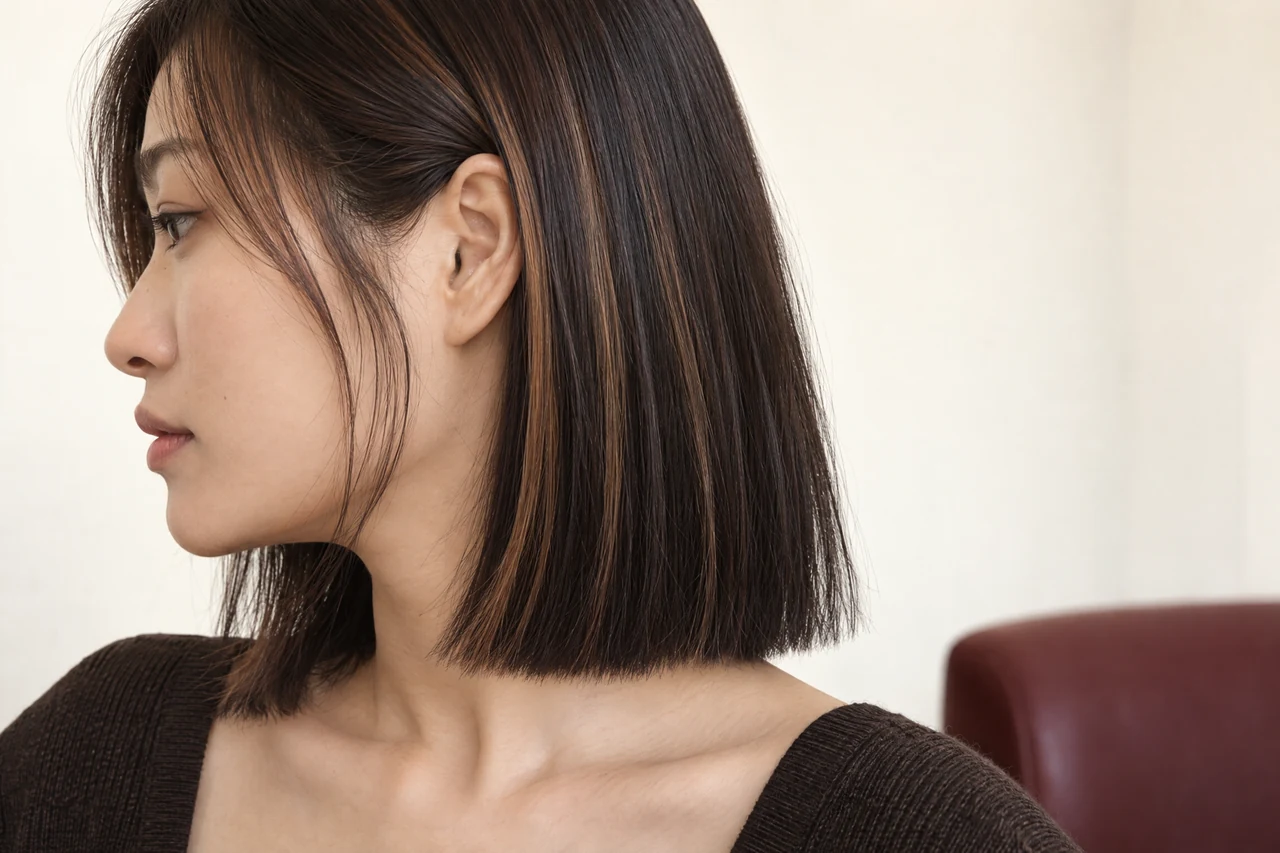
What to compare when the same colour idea meets different everyday textures
| Everyday hair state | Visible pattern to examine | Decision to discuss |
|---|---|---|
| Naturally straight, worn loose | Where bright areas start and how much dark hair separates them | Distinct strands or a broader transition without curled styling |
| Naturally curly, worn dry | Which light areas face outward as curls settle | Brightness in the usual curl shape, not only when stretched |
| Alternating straight and curly finishes | Continuous lines when straight versus separate flashes in curls | Which finish takes priority and what can differ in the other |
| Fine strands | Contrast against the base and the appearance of delicate ends | A condition-appropriate target, not a promise of more hair |
| Chemically straightened lengths | Current surface appearance alongside earlier processing | Assess the treatment history before agreeing further lightening |
Your preparation checklist
- Photograph your usual dry finish from the front, side and back, with your normal parting visible.
- Label optional curled or straightened references so they are not confused with your everyday texture.
- Identify the preferred contrast and where you want brightness to start, including any front area you want kept dark.
- Record earlier colour, bleaching, perming or straightening and identify which lengths still contain that processing.
- Describe the condition of the ends, normal detangling and how often you use heated tools.
- Confirm the feasible target, proposed work, quotation and home-care expectations before agreeing the appointment.
Frequently asked questions
Should I curl my hair for consultation photos?
Include the finish you wear most days. An optional styled view can show an alternative, but the everyday texture is important for judging the visible pattern.
Does fine hair mean I need more highlights?
Not necessarily. Retained depth, contrast and strand condition all matter. More lightened strands are not automatically a better visual balance.
Can a curly-haired reference work for straight hair?
It can communicate tone, but curls alter how areas face the light. Ask to discuss the placement in a straight finish before agreeing the target.
Discuss a colour pattern that works in your everyday texture
Send Vit So a current everyday-hair photo, a clearly labelled reference and your colour or straightening history for an enquiry in Sheung Wan. Explain where you want brightness to show without extra styling. The proposed target, service scope, quotation and appointment availability still need confirmation; sending an enquiry is not a confirmed booking.
Start your WhatsApp enquirySources & further reading
- 9 Balayage Ideas for Silky-Straight Hair
Straight-hair balayage examples and the difference between displaying painted lightness straight and enhancing dimension with curls or waves.
- 10 hair care habits that can damage your hair
Conditioning, reduced heat exposure and texture-specific gentle combing advice for everyday handling.



