







Brand relationship: OWNSTRAND and Vit So share the same owner. This article provides selection guidance, not an independent review or product test. Confirm styles, supply and visit arrangements with OWNSTRAND.
Wig hairlines for loose tie-backs: start with the front, not a promise
OWNSTRAND's lace front wig guide describes lace along the front hairline while leaving the rest of the cap to the individual design. For a loose tie-back, that makes it a starting point for asking where the front construction ends. It does not establish lace around the temples or nape. OWNSTRAND is Vit So's same-owner sister brand; this reference explains its published selection information, not an independent quality assessment or a tested result.
The American Cancer Society distinguishes a front lace panel from a full-lace cap covering the whole head, which offers broader styling possibilities.[1] That general distinction is useful, but it is not permission to expose every edge of a particular wig. Our guide to lace front wig vs full lace wig explains the construction comparison. For this decision, move beyond the label and ask how the actual hair direction and finished front edge behave when hair is gathered backwards.
Describe the front you want to see. A soft fringe with loose temple pieces asks less of the exposed edge than a completely swept-back forehead. Show both a front and a side reference rather than a single flattering photograph. A style that looks convincing with hair down may show a different boundary when gathered. The useful question is not whether the lace is called natural-looking, but whether the proposed arrangement exposes a finish you are comfortable with.
Fastening must support the shape without uncomfortable tightening
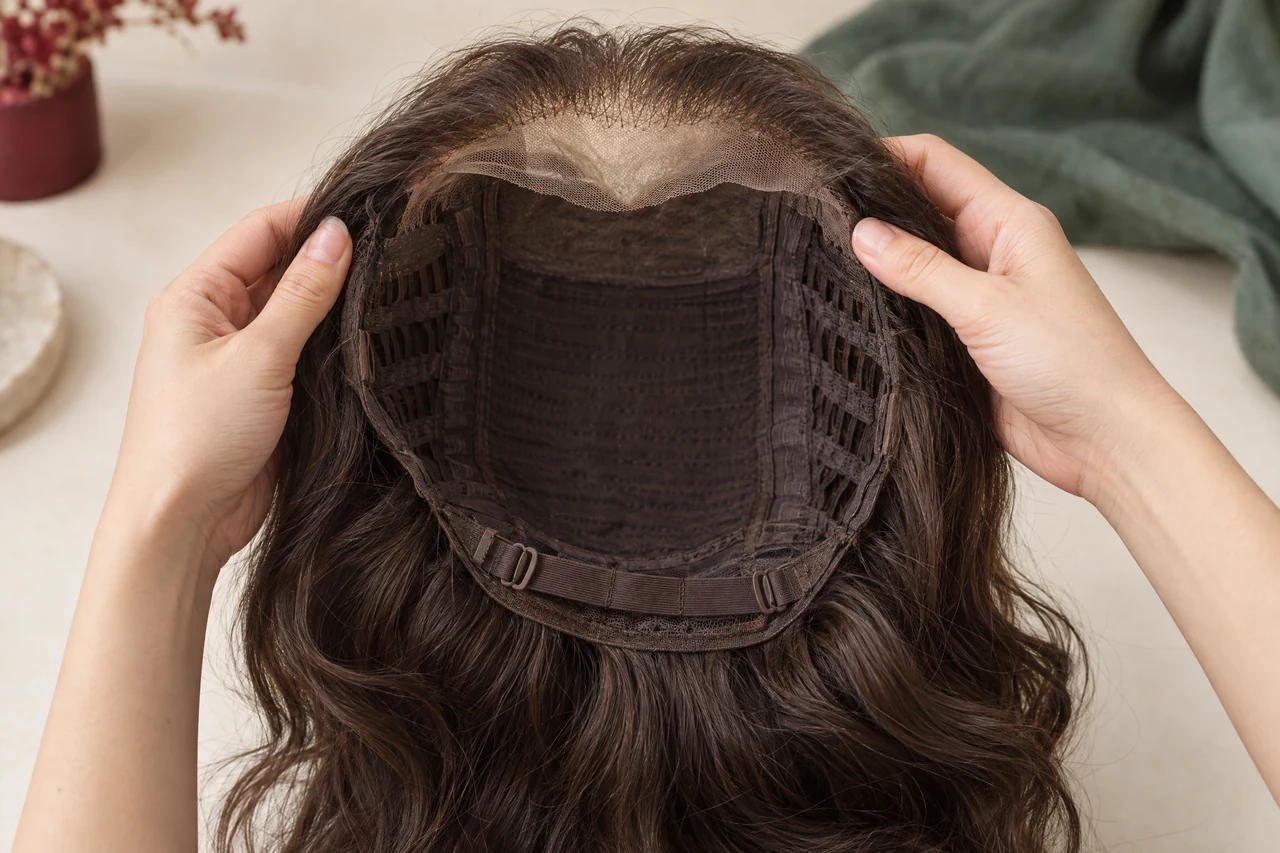
The glueless wig guide separates adhesive-free wear from cap construction and makes no universal no-slip promise. Use it to ask what holds the exact style in position and whether those features suit your intended low tie-back. Do not assume straps, combs or elastic are included, or that their presence grants styling permission. A cap may sit adequately with hair down yet need a different assessment once hair is gathered behind the head.
Check sizing using the maker's instructions rather than transferring an average-size label from a previous purchase. The American Cancer Society notes that brand size charts can vary and advises following the directions supplied with the wig.[1] Mention how you normally arrange your own hair underneath and whether you wear a liner. These details belong in the fit conversation. Pulling the adjustment tighter simply to stop a visible edge moving can conceal a mismatch instead of resolving it.
Comfort is a limit, not a trade-off to ignore for a smoother photograph. The American Academy of Dermatology advises keeping your own hair loosely arranged beneath a covering and identifies pain and scalp stinging as warning signs in tension-related styling.[2] This concerns your natural hair and scalp, not a diagnosis of the wig. Stop if the proposed wearing arrangement hurts. Persistent symptoms, new hair loss or treatment-related wearing needs should be discussed with a qualified care professional.
Temples and nape decide how much hair can leave the perimeter
If the first cap cannot accommodate the desired side or back exposure, compare a different full-cap design rather than forcing the same wig into shape. The women's wigs page is a broader full-head browsing route, with cap, fibre, length and fit to check separately. Full-head coverage does not mean all-around lace, and this category does not establish tie-back suitability. Ask for the inside and perimeter details of the alternative style before treating it as an improvement.
At the temples, look at what happens between the end of the front feature and the ear-side area. Hair that falls there when loose may be covering a boundary. When gathered back, it may no longer do so. Compare both sides, since your preferred part and loose pieces can expose them differently. The broader how to make a wig look natural discussion is useful for checking the side and back outline rather than judging only the forehead.
At the nape, the question is whether your intended gathering leaves enough hair in the right direction to cover the relevant edge. A long crown measurement does not answer that question if the lower sections are much shorter. Ask where the nape finish sits and whether the maker allows it to be exposed or needs it concealed. A low tie-back that retains a soft layer of hair around the neck is a different requirement from lifting every strand away.
A partly gathered style is a separate option
Leaving some side and lower hair down may reduce how much of the perimeter you reveal. It is not a guaranteed workaround: the remaining hair still needs to stay where you intend, and the cap must fit comfortably. Compare that compromise with your original goal before buying, especially if a fully clear neck was the reason you wanted the tie-back.

Use five tie-back wig perimeter checks before committing
Use five decision checks: front, temples, nape, fastening and manufacturer permission. This is an original enquiry framework, not a clinical score or a measured product rating. Record each as confirmed, needs clarification or unsuitable for your goal. A favourable front does not cancel an unresolved nape. Keeping the answers separate prevents an attractive photograph or reassuring category term from standing in for information about the full arrangement you actually plan to wear.
First ask whether the manufacturer permits the proposed gathering; only then request a gentle fitting comparison where available. Start with the wig sitting as directed and compare hair down with the intended loose shape. Look from the front, both sides and behind. Turn your head gently and lower your chin without tugging at the lace. Note any changed edge position or newly exposed construction. This is a selection check, not an adhesive installation or lace-altering tutorial.
Write an observation instead of a verdict
A useful note is specific: the right temple boundary becomes visible when the front section is gathered, or the nape moves when the tie is raised. Avoid calling the whole wig bad or secure after one view. Ask whether an approved lower position or retained loose section addresses that observation. If the answer requires an undocumented modification, leave the result unresolved.
Length and fibre do not replace the maker's styling permission
Enough total length to reach a tie is only the first question. Short temple layers, a shaped fringe or shorter nape hair may not join the gathering in the same way as the longer sections. Ask which parts are meant to remain loose and whether the proposed arrangement needs a different cut. Do not trim a sample, stretch an edge or add clips through the cap to make an unsupported style appear feasible during an enquiry.
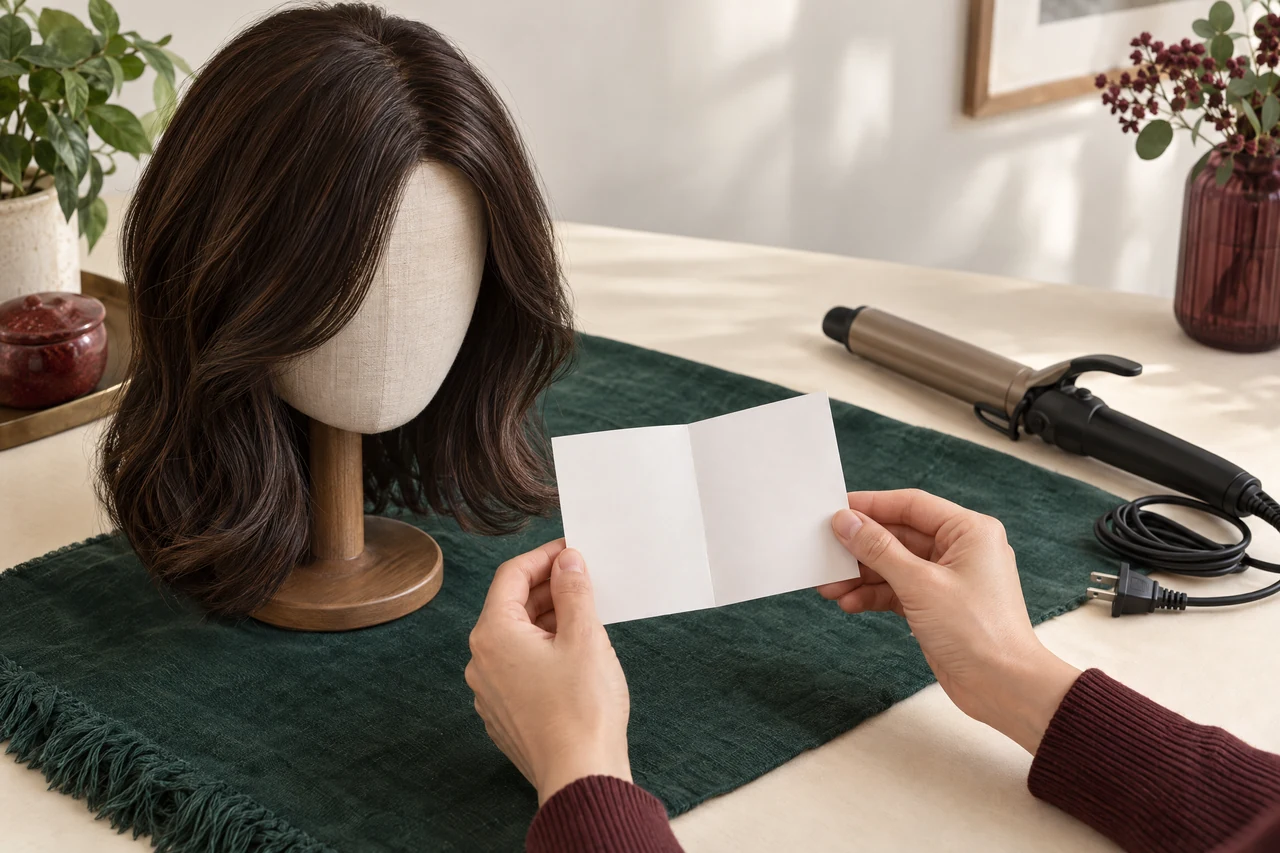
Fibre also changes what adjustments you can consider. The American Cancer Society advises against using a hairdryer or curling iron unless the wig is heat resistant.[1] Do not infer heat tolerance from a lace-front, glueless or human-hair category name. Check the exact product's fibre and care instructions before discussing tools or products. A concept image beside a curling iron illustrates that question; it does not establish that the pictured wig or any OWNSTRAND item can tolerate heat.
Ask a plain question: does the manufacturer allow this style to be worn in a loose low tie-back using its recommended fastening? If the answer is yes, clarify what must remain down and which accessories are permitted. If the answer is not documented, request confirmation rather than treating silence as permission. More expensive fibre or broader lace coverage does not remove that uncertainty. A different permitted silhouette may be more useful than a technically elaborate cap that misses your daily goal.
Choose the workable version and prepare a precise enquiry
Choose between three practical outcomes: the intended loose tie-back is supported, a partly gathered version meets your needs, or another design should be considered. Base that decision on the five checks rather than an overall impression. If the shape works only while you hold the edges down, tighten the cap uncomfortably or keep your head still, it has not met the proposed everyday requirement. A comfortable hair-down style remains a legitimate choice when the tie-back goal is not supported.
If you are reconsidering coverage itself, the full head wigs guide helps distinguish a full-cap option from a partial piece. Do not switch to a topper merely because it seems easier to tie: it changes which areas are covered and how your own hair contributes. Bring the proposed silhouette and your coverage priority into the conversation together. The purpose is to find a compatible design, not to preserve the first category you happened to browse.
Prepare the exact style name, requested colour and size, reference views, and the unresolved observations. Ask OWNSTRAND to confirm construction, permitted styling, fitting arrangements, quotation and current availability for that item. Its one store is in Kwun Tong; it is not Vit So's Sheung Wan location. Catalogue browsing is not a stock confirmation, and an enquiry is not an automatic order. Keep the intended low tie-back in the request so that any alternative is assessed against the same goal.
Five questions a loose low tie-back must answer
| Area | What to establish | Reason to pause |
|---|---|---|
| Front | Approved hair direction and exposed finish | Only a hair-down view is available |
| Temples | Where front construction ends; loose sections needed | Gathering reveals an unwanted boundary |
| Nape | Lower hair length, edge finish and permitted exposure | Long crown hair hides a short nape in the listing |
| Fastening | Exact size and recommended holding features | Stability requires uncomfortable tightening |
| Permission | Manufacturer allows the intended arrangement | The solution depends on an unapproved alteration |
Your preparation checklist
- Define tie height and how much forehead, temple and neck exposure you want.
- Request cap and perimeter details for the exact style, not a generic category.
- Confirm manufacturer permission before attempting a gathered fitting comparison.
- Check front, both sides and nape with gentle head movement where fitting is available.
- Reject discomfort or forced tightening as the answer to unwanted movement.
- Confirm colour, size, quotation and current supply separately from styling suitability.
Frequently asked questions
Is a lace-front label enough if I only want a low tie-back?
No. It describes the front construction, not the temple or nape finish, fastening or usable length. A low arrangement may leave some perimeter hair down, but you still need to confirm how the exact cap behaves and whether its maker permits that style.
Will leaving loose pieces around my ears solve visible edges?
It may change the exposure, but it is not proof of suitability. Check whether those pieces remain in the intended position when you gently turn and lower your head. Decide whether keeping them loose still meets your goal; a fully exposed neck requires a different assessment.
Should I add adhesive if the wig moves when gathered?
Do not treat adhesive as a default repair. Review the size, recommended fastening and permitted style first. Glue or tape may not be appropriate for that cap. This guide does not provide a bonded installation method or establish that such a service is available.
What if I am buying remotely and cannot try the tie-back?
Request inside-cap views, temple and nape details, and written clarification of the permitted styling. Ask about fitting and return arrangements before deciding. Photos can inform an enquiry but cannot establish personal comfort or stability; keep those points unresolved rather than assuming a successful fit.
Discuss the silhouette before choosing the cap
Invite Vit So to discuss your preferred face-framing, loose sections and overall style blending. For item-specific cap construction, permitted tie-backs, quotations or a Kwun Tong visit, use the OWNSTRAND guides already linked above to prepare your enquiry. Keep the styling discussion separate from confirmation of product supply.
Start your WhatsApp enquirySources & further reading
- American Cancer Society — Wigs for Hair Loss
General lace-front/full-lace distinction, brand-specific sizing, supplied fitting directions and heat-resistance precautions; not an OWNSTRAND endorsement.
- American Academy of Dermatology — Hairstyles that pull can lead to hair loss
Loose natural hair beneath coverings and warning signs of excessive styling tension; no product-specific medical or comfort guarantee.



