






Updo or hair down for wedding: start with the neckline
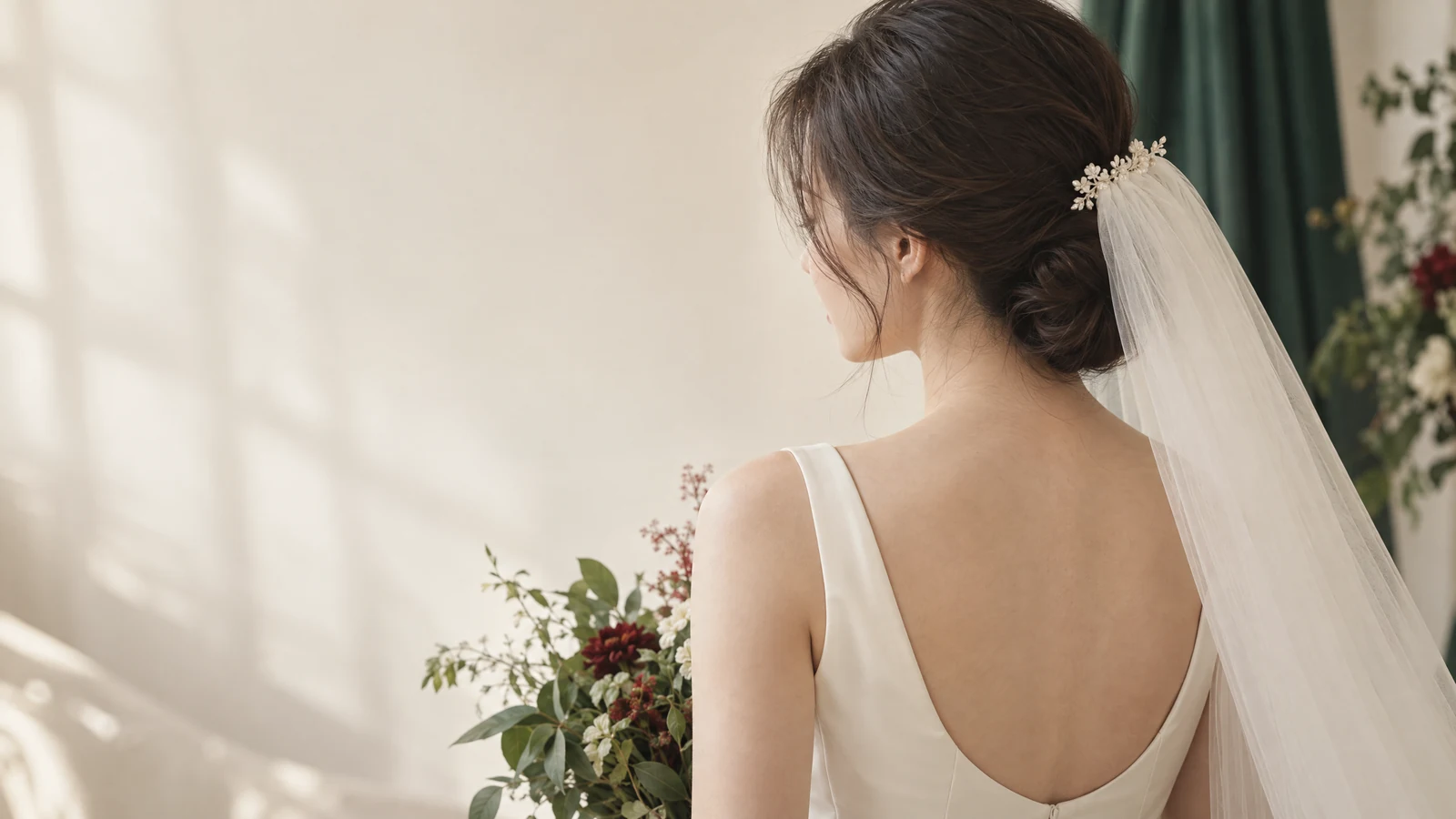
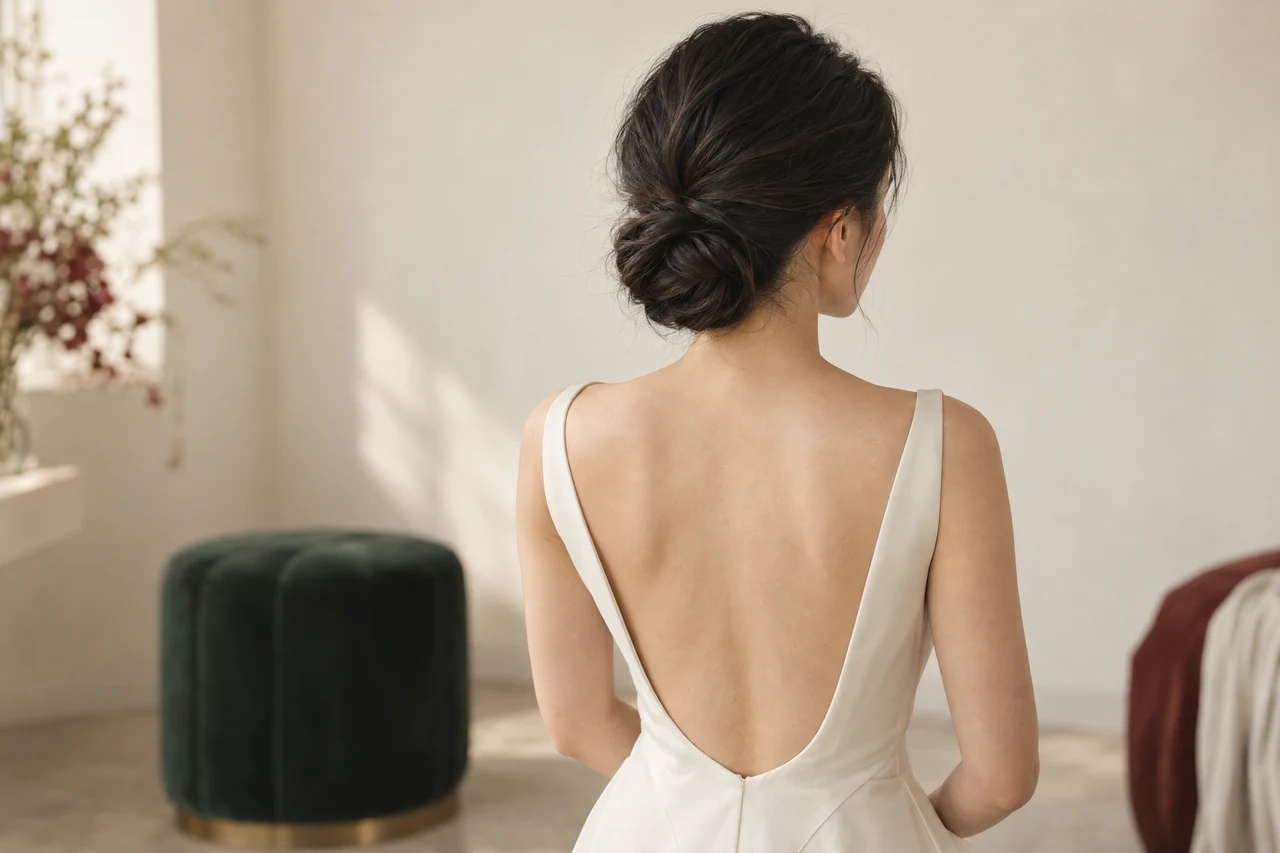
Wedding updo hairstyles can keep the neckline and back detail of a dress visible. Low bun wedding hair places the gathered shape near the nape, while a chignon wedding hairstyle can vary in fullness and placement. Check front, side and back proportions together, especially if your veil or earrings occupy the same area.
Start by identifying the part of the outfit you most want to show. A high collar with embroidery may benefit from clear space above it. An open back can disappear behind loose lengths, even when the front looks balanced. A strapless neckline does not automatically require hair down: gathered hair can emphasise the shoulders, while loose hair can add coverage. Neither is a rule about what a bride should wear. Decide which outline feels like you.
The position of a bun matters as much as the fact that the hair is up. A very low shape may sit against a raised collar; a fuller shape can share space with statement earrings. Ask to see the relationship between the lower edge of the gathered hair and the dress, rather than requesting a low bun without discussing its size. Bring a back-view dress photograph if you cannot bring the outfit itself.
Compare an updo or hair down for wedding portraits
Compare front views with the same parting and similar face-framing pieces before deciding that one structure looks better. Otherwise you may be choosing a fringe detail rather than an updo. Then look at the side and back: does the hair cover the shoulder you want visible, or leave a gap you dislike? Use ordinary, unfiltered photographs as well as a polished inspiration image. The most useful comparison is the complete hair-and-outfit silhouette, including how it looks when you turn your head.
A half-up shape keeps some length free
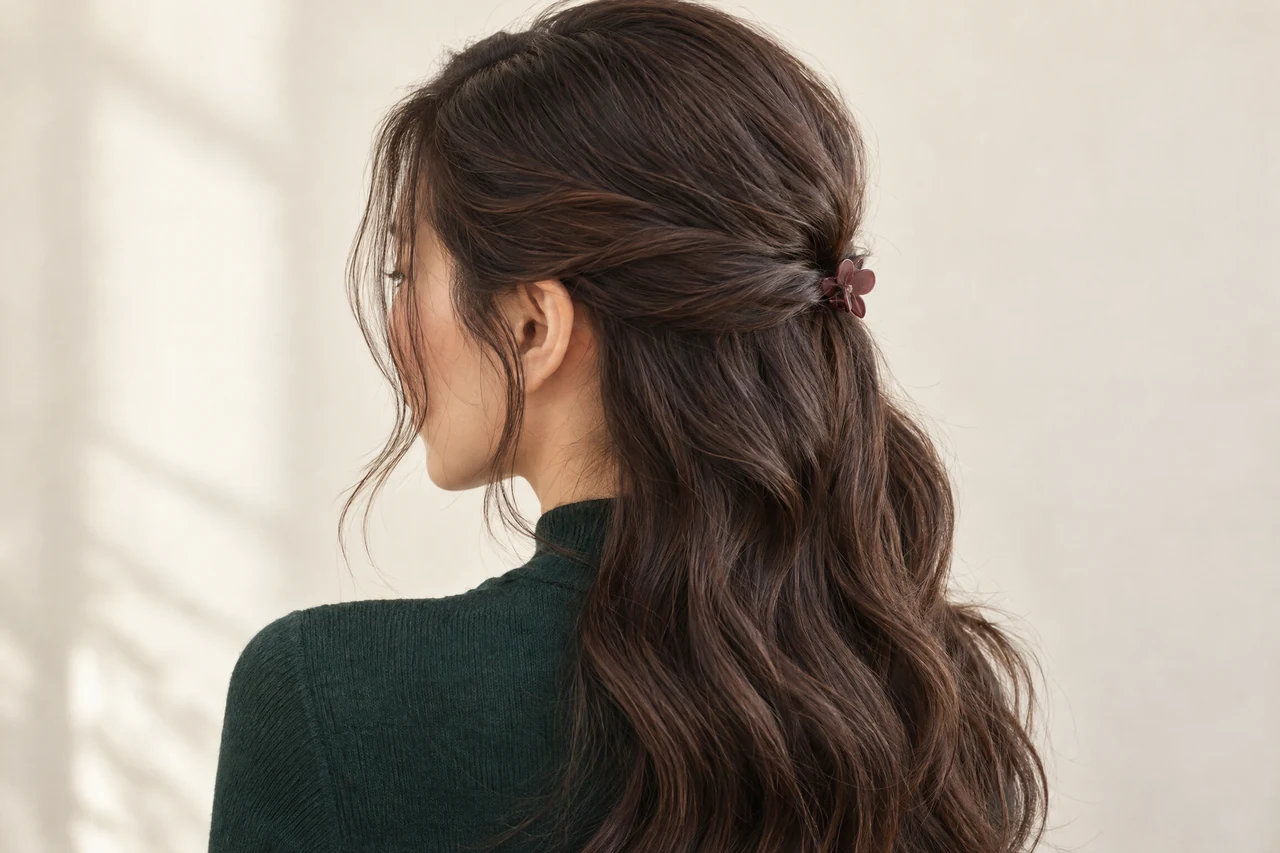
A half-up shape secures the crown and sides while leaving much of the length loose. It can clear the face without giving up the appearance of long hair. Compared with a full updo, more hair remains exposed to movement and weather; discuss whether the loose section and shorter layers behave in a way you are comfortable with.
The appeal of half up wedding hair is often familiarity. If you usually wear your hair loose but tuck the sides back when eating or talking, this structure can reflect that preference. However, the amount gathered should be deliberate. Taking a broad section from each side may make the remaining lengths look less full; taking a smaller section may leave more hair near the cheeks. Ask which compromise suits your available hair, rather than treating every half-up reference as equivalent.
Half up half down wedding hair can use twists, braids or a simpler gathering point. Choose the overall silhouette first, then consider those details. A broad, textured crown and a narrow, smooth finish give different side profiles even when both leave the ends free. If you want braids, decide whether their pattern should be visible or mainly help gather the sides.
Continue with braided bridal hair for that specific comparison and the preparation questions it raises.
Compare crown control with a fully gathered outline
When deciding between half up or updo for wedding plans, name the movement you want to keep. Free ends can move across an open back or forward over a shoulder. A fully gathered shape removes most of that movement but can still have a soft surface and loose face-framing pieces. Check how your shortest side layers reach the chosen fastening area. If they do not reach comfortably, discuss leaving them out or adjusting the gathering position rather than pulling harder.
Ponytails change the balance between polish and movement
A bridal ponytail can give a defined gathering point while retaining movement through the ends. A sleek, low position emphasises the parting and smooth surface more than a loose textured shape. Check whether your layers can reach the intended point and how the tail sits against the back of the dress before choosing a reference.
A ponytail is not simply a less formal bun. It creates a visible line from the gathering point through the ends, so the length and end shape become central to the result. A curled tail may appear shorter than the same hair worn straight. If your reference shows an unusually full tail, ask how its volume compares with your own hair before assuming the outline is reproducible. Added hair, if considered, needs a separate suitability and service discussion.
For sleek low ponytail wedding hair, look closely at the front and temples. A smooth surface can reveal the hairline and parting more clearly than a textured finish. Explain whether you prefer the ears completely visible, a soft sweep over them or a small loose strand. A smooth appearance should not depend on tolerating pain: the American Academy of Dermatology's guidance on tight hairstyles identifies repeated pulling as a hair-loss risk and advises changing a style immediately if tightly pulled hair causes pain or scalp stinging.
Consider a low position and the visible length
Test a low ponytail while looking down and turning towards each shoulder. Notice whether the fastening area presses against the collar and whether the tail repeatedly catches on back details. If you want the front controlled for the ceremony but enjoy moving ends for the reception, a ponytail may offer that balance. It still needs a practical plan for the free section; gathering the roots does not make the tail behave like a completely pinned updo.
Loose waves need a realistic movement brief
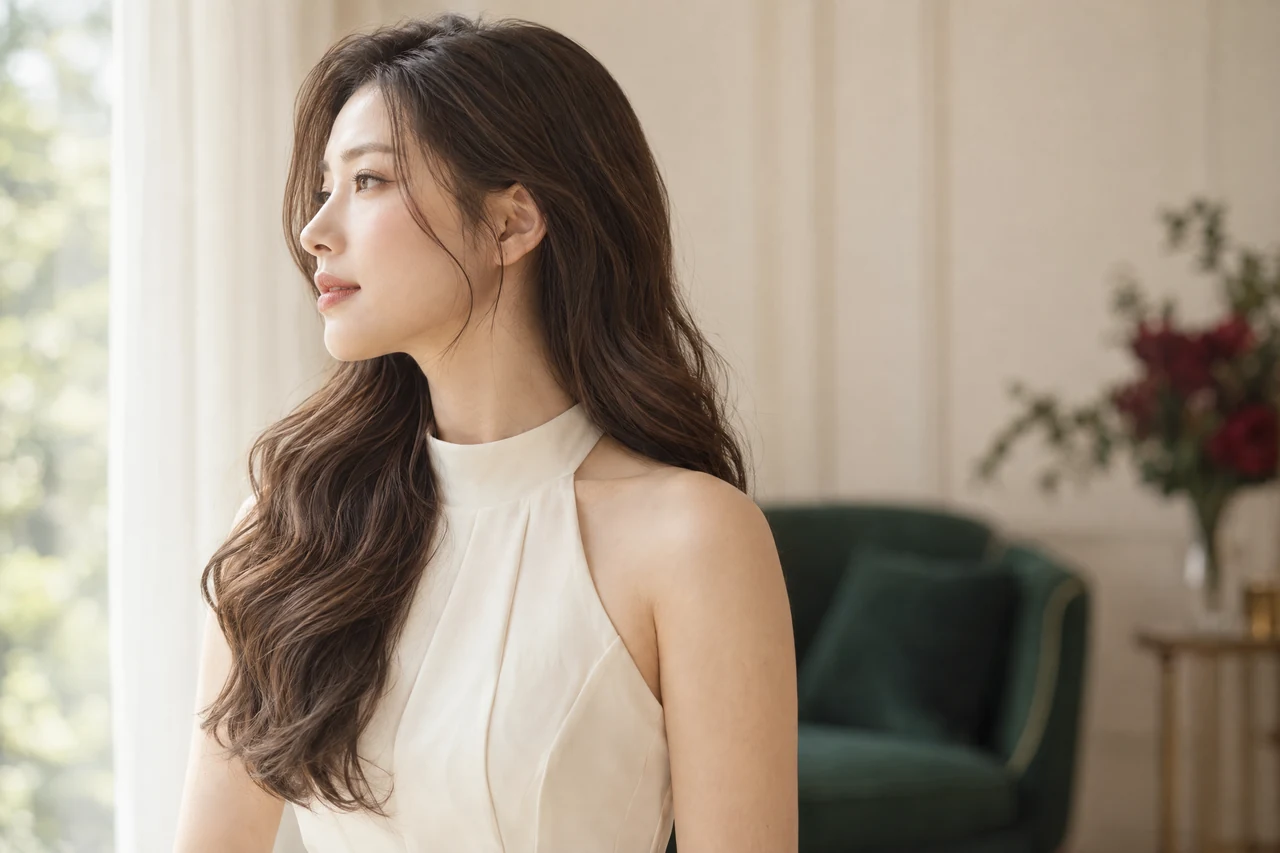
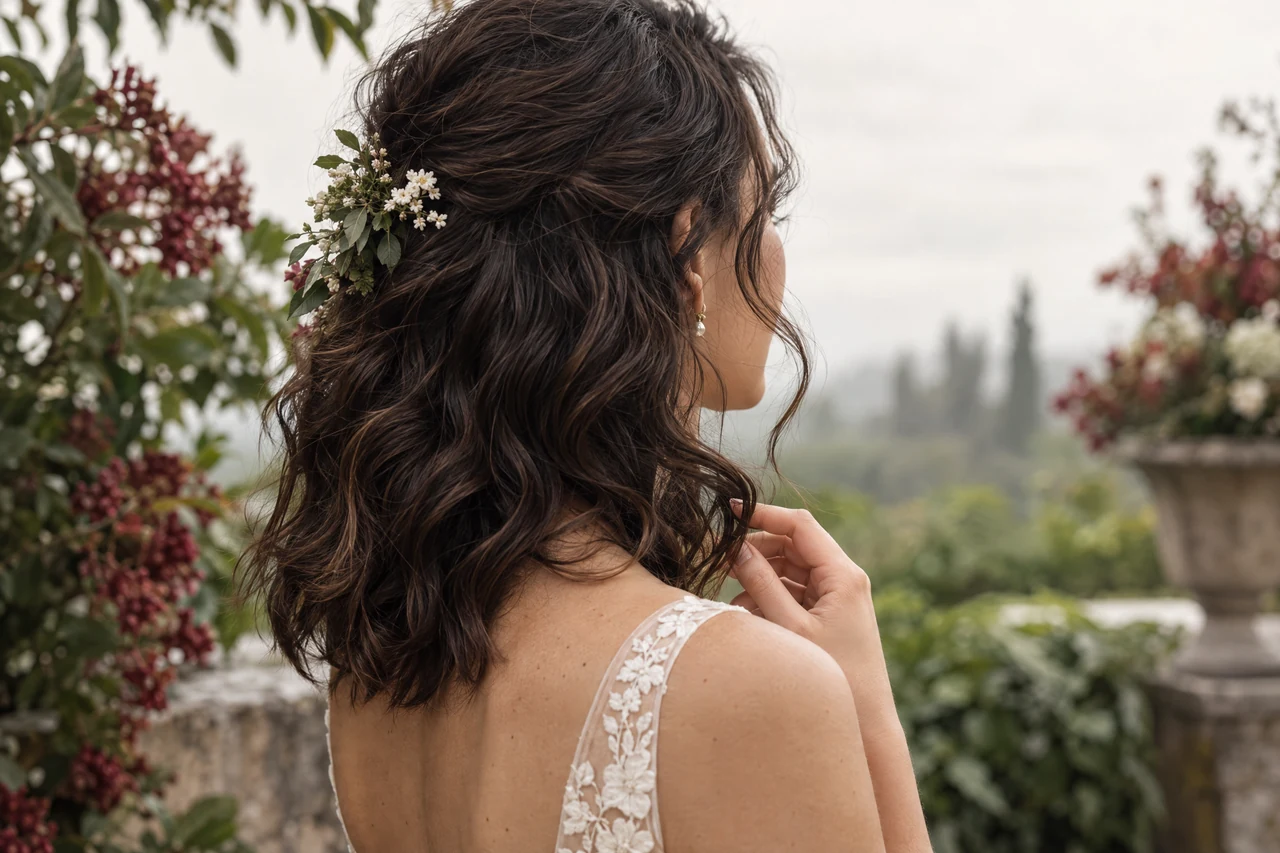
Beachy waves wedding hair usually describes a relaxed, less uniform outline; soft waves wedding hair puts emphasis on gentler bends and flow. These are temporary styling directions, not promises of a lasting curl pattern. Show which sections you like and discuss how the shape may soften during travel, photographs and the rest of the day.
Hair down can feel right when the length is an important part of your personal style. Describe where you want that length to sit: behind both shoulders, over one shoulder or framing the front of the dress. These choices affect which details remain visible. If you often push loose hair away from your mouth, ask about controlling that area instead of expecting yourself to stop a familiar habit throughout the celebration.
Separate wave size from neatness. You might like broad bends with a smooth surface, or smaller bends with a more relaxed finish. A reference photographed just after styling cannot tell you how your hair will look later. Explain what change you would accept: softer ends might be welcome, whereas a front section falling across your eye might not. That distinction gives the stylist a more useful brief than simply asking for waves that last.
Continue with outdoor wedding hairstyles for that specific comparison and the preparation questions it raises.
Explain how relaxed you want the finish to look
Use your everyday hair behaviour as evidence. Tell the stylist whether bends usually drop after brushing, whether your natural texture becomes more noticeable outdoors, and whether products tend to make the ends feel heavy. For a Hong Kong wedding involving outdoor photographs and an indoor reception, identify which part of the day needs the most defined outline. Discuss a finish you still like after it relaxes, rather than choosing solely for the first photograph.
Check the veil and comfort before committing
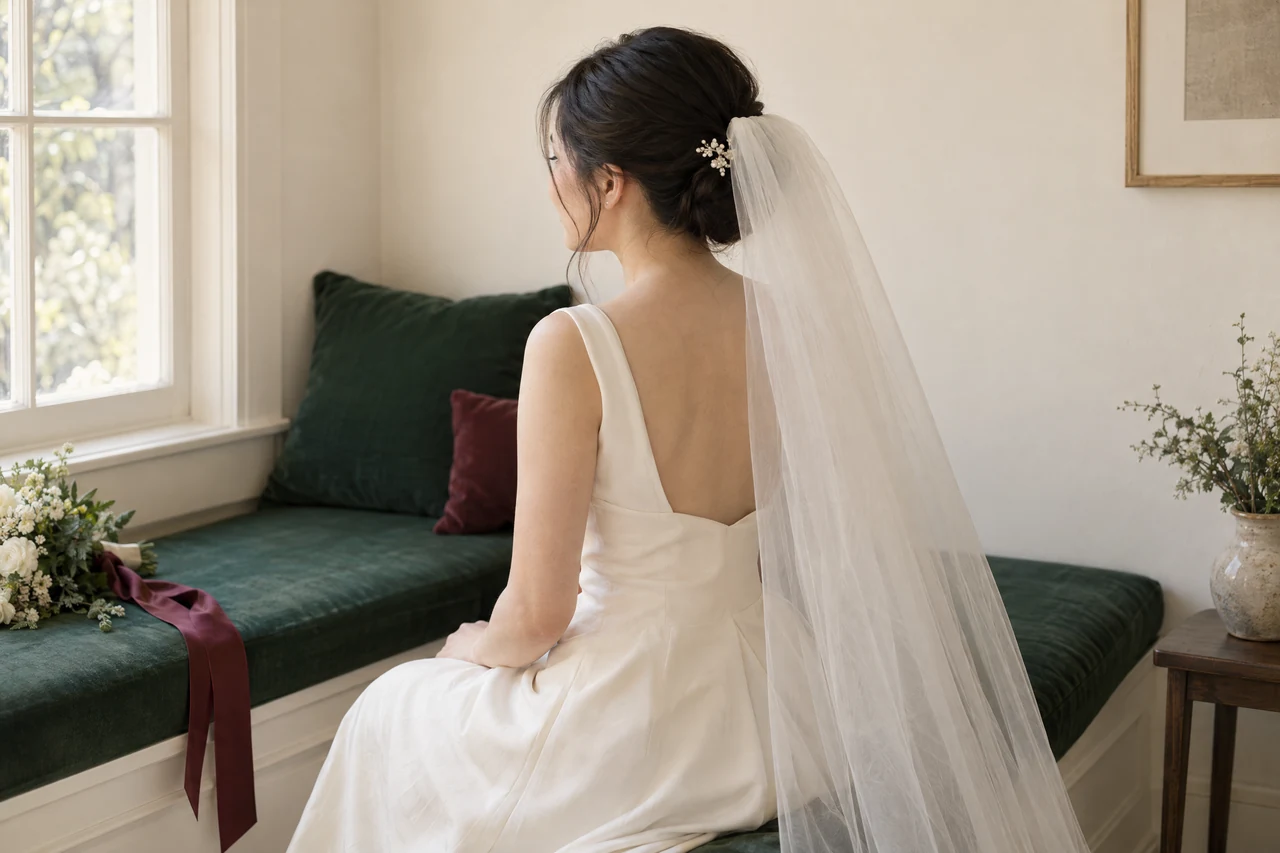
A veil does not settle the up-or-down question on its own. Vogue's guide to wedding hairstyles with a veil illustrates gathered, loose, ponytail and half-up options, and explains that placement above or below a chignon changes how much of the knot is visible. Use those possibilities as a starting point for discussing your own veil, not as proof that every fastening method suits every hair type.
Bring the actual veil and any hair accessory to a fitting when possible. Explain whether the veil stays on for the reception and which part of the hairstyle should remain visible after removal. Compare wedding hair with veil when the fastening area is a major deciding factor. The decorative comb and the veil should be considered together, especially if they compete for the same space.
Try the movements you will make during the day
Sit down, turn your head and lean forward as you might during a greeting or ceremony. Notice pressure from pins, pulling at the temples and contact between the hair and collar. State discomfort while the structure can still be adjusted. Secure does not mean painfully tight. Also check the loose pieces when you smile and speak: a strand that looks attractive in a still portrait may become distracting in motion. Ask who will remove the veil and what needs to stay untouched.
Turn your preferred outline into a clear enquiry
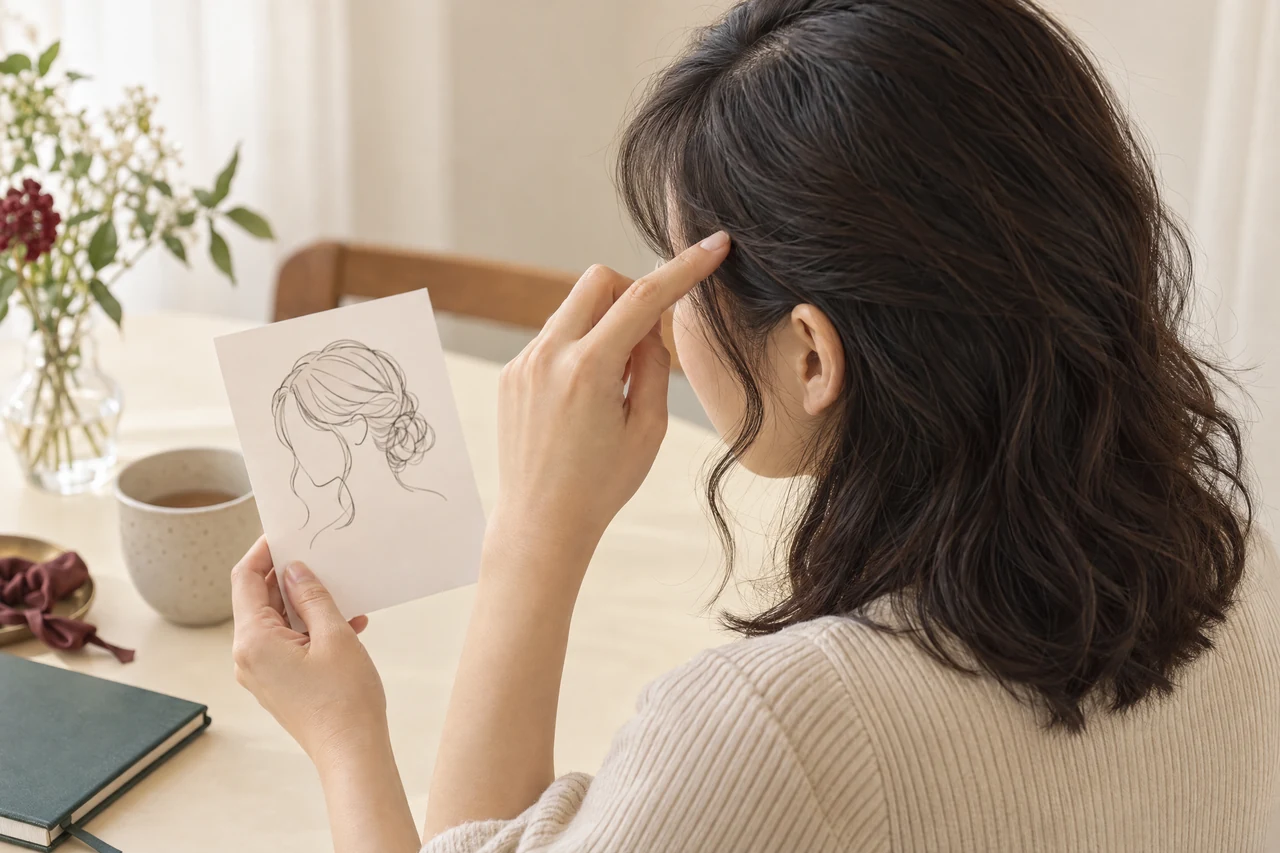
Choose a small set of references that agree on the main structure. Explain what you like in each: the parting in the front view, the bun height in the side view, or the amount of loose length at the back. Avoid combining a very full updo with a very full half-up style without discussing how much hair each needs. Send current hair photographs showing length and layers alongside the references, and mention recent colouring, straightening, extensions or scalp sensitivity.
The checklist below contains 6 preparation steps. Use the six-point checklist below to organise your decision before arranging a wedding hair trial. Ask about availability and what the proposed appointment includes, rather than assuming a trial, wedding-day visit or later restyling is part of one package. For a Sheung Wan enquiry, include your date, venue and required ready time so the practical arrangements can be discussed alongside the shape.
Review bridal hair to check its service scope and the details to share before arranging the related work.
Keep a preferred option and a practical alternative
If hair down is your first choice, decide whether securing the sides would still feel like your look. If a large chignon is the priority, discuss a more compact gathered shape in case your length or density calls for it. An alternative should preserve what matters most to you, such as an open neckline or visible natural texture. Agree on it through consultation; it is not a reason to arrive expecting an unplanned complete change during a tight wedding schedule.
Compare wedding hair structures by visible outline and the detail to test
| Structure | What it keeps visible | Main trade-off | Check before choosing |
|---|---|---|---|
| Full updo | More neckline, earrings and dress-back detail | Most length is gathered rather than moving freely | Bun size, collar clearance, pin comfort and veil position |
| Half-up | Loose length with a defined crown and sides | The free section still moves across shoulders and back | Shortest layers, fullness left below the fastening and face-framing pieces |
| Ponytail | A clear gathering point and a visible moving tail | The tail may cover back details or catch against the collar | Comfort at the roots, finished tail length and its path when turning |
| Hair down | Length, texture and movement around the shoulders | More hair may cross the face or cover outfit details | Wave softening, front-section control and your preferred shoulder placement |
Your preparation checklist
- Identify the neckline, shoulder or back detail you most want visible, using front and back outfit photographs.
- Show your current length, shortest layers and natural dry texture; explain what happens when you usually curl or gather your hair.
- Choose references with compatible front, side and back outlines, and label the exact features you like.
- Bring the veil and essential accessories where possible, and explain when each will be worn or removed.
- Test sitting, turning, speaking and looking down; report pulling, pin pressure or hair crossing the face.
- Confirm the date, venue, ready time, appointment scope and quotation, with a practical alternative agreed before the wedding.
Frequently asked questions
Is an updo always the safest wedding choice?
No single structure suits everyone. Consider layers, comfort, the veil and the day’s movement, then agree on a realistic option rather than assuming a universal best style.
Does half-up hair provide the same control as a full updo?
It secures only part of the hair. The loose lengths still move and respond to weather, so compare both the face-framing detail and the free section.
How many inspiration photographs should I use?
Choose a small set with clear front, side and back views. Explain the features you like and any parts you do not want, rather than combining incompatible details.
Compare a wedding hair outline that works with your outfit
Share your current hair photographs, preferred structure, dress neckline and veil details with Vit So in Sheung Wan. Include the wedding date, venue and required ready time so suitability, availability and the relevant service scope can be discussed. Ask for confirmation of the proposed work and quotation before making arrangements. Sending an enquiry does not confirm a booking.
Start your WhatsApp enquirySources & further reading
- Hairstyles that pull can lead to hair loss
Repeated tension from overly tight gathered hairstyles and the need to change a style that causes pain or scalp stinging.
- 29 Wedding Hairstyles With a Veil for Every Bridal Style
Veils can accompany loose and gathered structures; placement above or below a chignon affects its visibility.



