






Root Perm vs Down Perm: Upward Support or Closer Sides
Root-focused discussion addresses support near the crown or parting; side-control discussion addresses projecting sides. The two aims can coexist in a photograph without both being necessary for your hair. Mark the area that bothers you first, then assess whether cutting or styling already offers a useful change before considering chemical work.
Look at your hair after your normal wash and drying routine, not only when it is wet or freshly covered in styling product. If the front loses its lift but the back of the crown already looks balanced, describe the front specifically. If the outline projects above the ears while the top sits comfortably, the sides deserve attention rather than an automatic request for more height. A narrow side outline can make existing top height more noticeable without adding lift to the top itself.
The distinction is also made in Cutdomos Hair Studio's root and down perm guide: root work targets lift near the scalp, while down work helps selected projecting sections sit flatter. These are useful descriptions of design goals, not proof that one technique or combination will suit everyone.
Review root perm for men to check its service scope and the details to share before arranging the related work.
Review down perm to check its service scope and the details to share before arranging the related work.
A Root Perm vs Down Perm Decision by Area
Use a finger to show where you want the outline to move upward or inward. Include the point where the change should stop: before the fringe, above the ear or short of the back. Ask the stylist to look at the transition between the proposed area and untreated hair. The aim is a connected shape, not a lifted patch beside an abruptly flattened patch. You do not need to know the chemical method to describe these boundaries clearly.
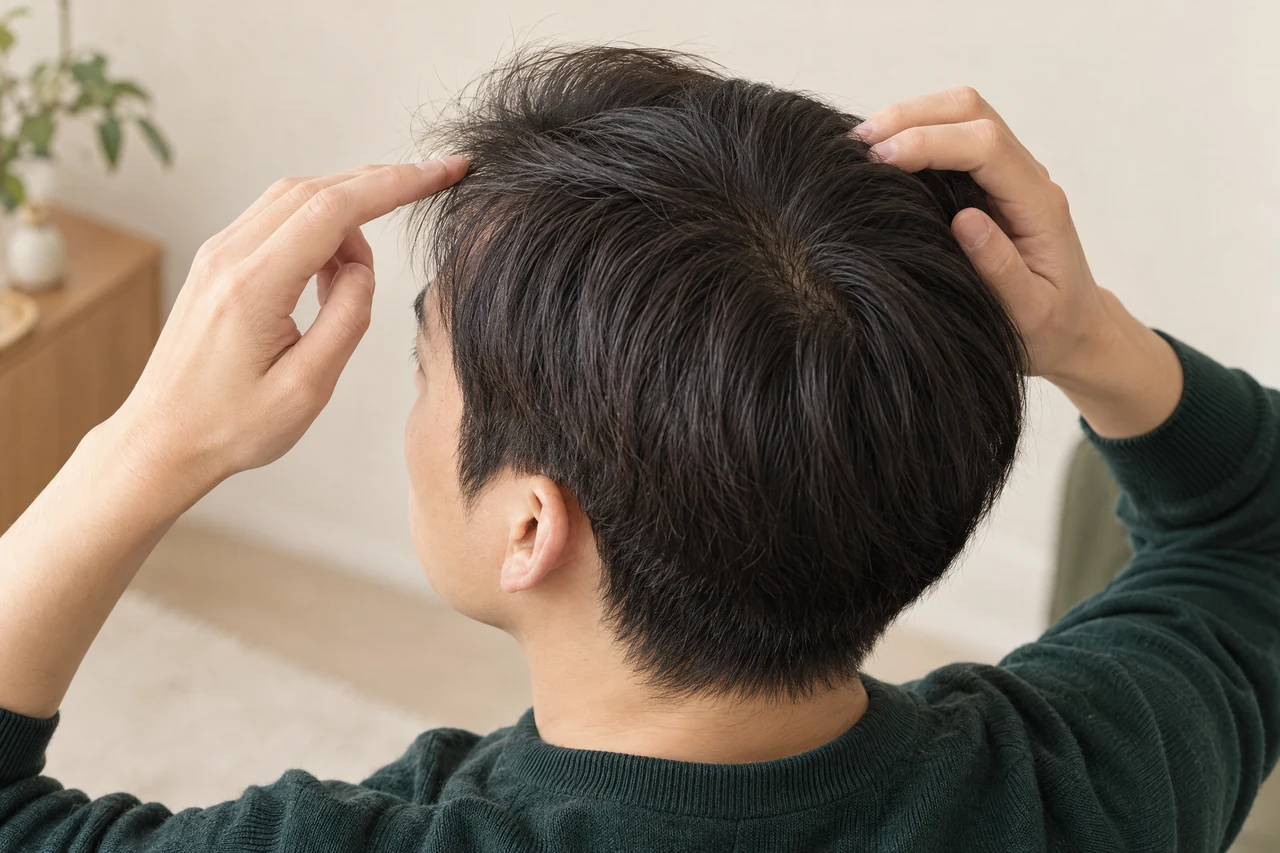
Local Root Work Versus Full-Head Movement
In a root perm vs full head perm for men comparison, the key difference is the intended area and outline. Local support near the roots is not the same as adding bends through many lengths. A broader treatment does not automatically create better crown height, and a local treatment does not establish what the fringe will look like.
Separate the hair's starting direction from the line it makes farther along the strand. You may want the parting to look less compressed while keeping the fringe almost straight. Alternatively, you may like your current crown height but want the fringe to turn away from your eyes. These requests concern different parts of the hairstyle. A reference showing lifted roots and curved ends should therefore be discussed in parts rather than accepted as a single package.
Length matters when comparing the reference with your own hair. A longer fringe can show a bend over a more visible distance; a short top has less length available to express the same shape. Tell the stylist which lengths you intend to keep after cutting. Do not choose a full-head service solely because a reference has more movement than your current haircut.
Review men's perm to check its service scope and the details to share before arranging the related work.
Coverage Is Different from Curl Strength
Full-head describes breadth of coverage, not how tight every curl must be. Local describes a limited area, not an inherently mild chemical process. Ask where visible bends are intended, where support is intended and where your existing direction should remain. If you want a soft finish, explain whether that means shallow bends, little extra width or a fringe that remains easy to move. Those details are more useful than asking for the weakest perm.

Volume and Texture Are Different Visual Priorities
Choosing a volume perm or texture perm for men starts with the result you value: a fuller-looking silhouette or more visible movement and separation. The two descriptions can overlap, but neither defines one standard process. Explain the priority in a dry reference and compare it with your actual hair condition and daily styling.
Volume is easiest to discuss from the outline. Are you seeking a higher front, a rounder crown or simply less contrast between a flat top and broad sides? Texture is easiest to discuss within that outline: do you want visible groups of strands, gentle changes in direction or a more pronounced wave? A hairstyle can have clearly separated strands without a large overall silhouette. It can also look full while keeping a smooth surface.
For an office routine, consider how much visible separation you want after ordinary drying rather than only after a detailed salon finish. Tell the stylist whether you use a dryer, whether you prefer a matte or shinier product and whether you regularly move your parting. If you would rather explore shape without chemical work, volumising hair styling offers a relevant starting point for discussing a fuller-looking outline.
Height Versus Strand Definition
Choose references with a similar camera angle so you can compare height honestly. Then look closely at the fringe and top to distinguish bends from product-created separation. Ask which parts of the finish depend on daily styling. A perm does not remove the need to position the hair, and visible volume does not mean additional follicles. If your concern is increasing shedding or thinning rather than the position of existing hair, seek medical advice instead of treating a styling service as hair-loss care.
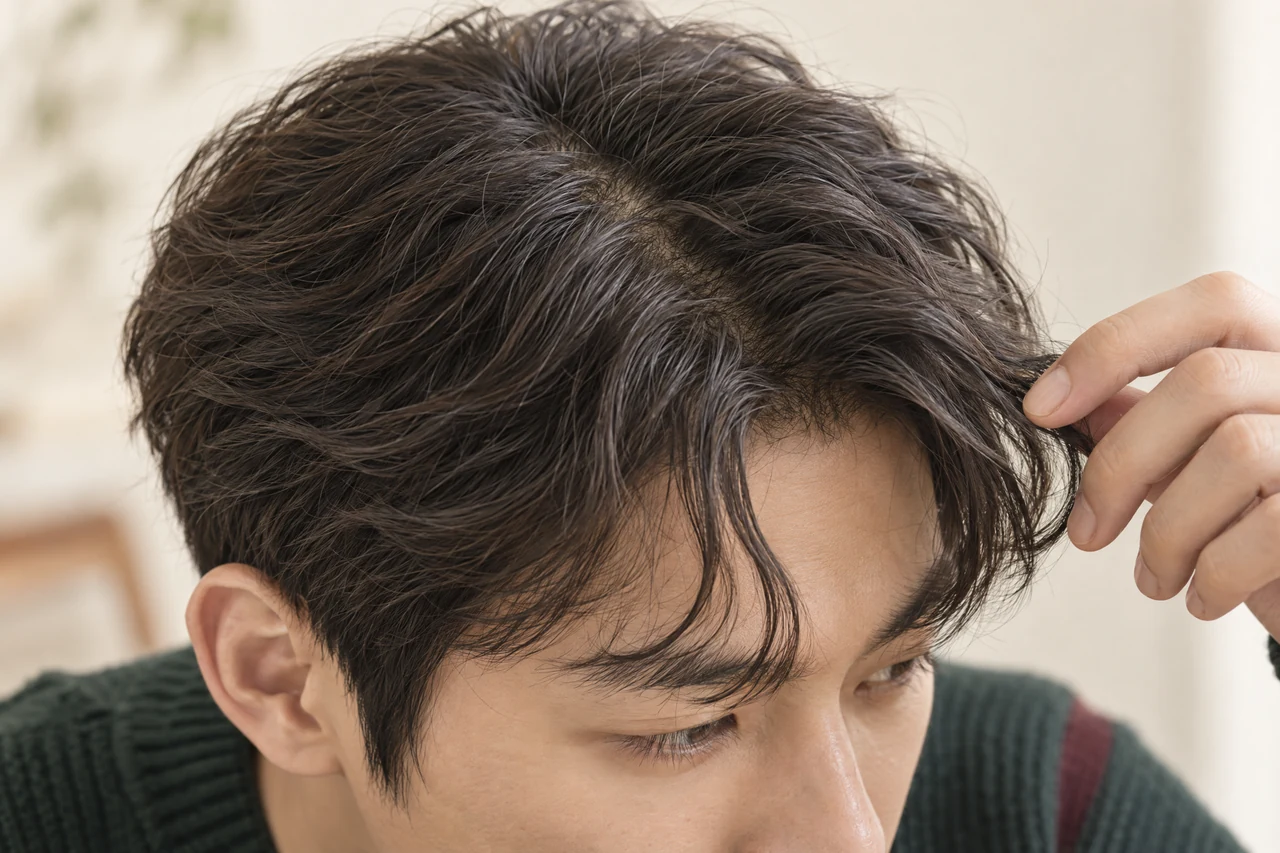
One Concern Does Not Require Three Treatments
A flat crown with wide sides may partly reflect the haircut's proportions. Discuss the shape before treating each observation as a separate chemical need. The assessment may favour one local change or a cutting and styling alternative. Any combined proposal needs clear areas, method confirmation and an agreed quote rather than a bundle assumed from names.
Ask what could change through cutting alone. Keeping length at the sides and making it sit closer is different from removing that length to expose more of the ear area. The comparison in down perm vs fade is useful when deciding whether you want retained side coverage or a shorter outline. Neither approach should be selected simply because the sides look wide in a front-facing photograph.
Hair history also affects a combined proposal. Share previous bleaching, colouring, straightening and perming, including work done at home. Point out dry ends or areas that break when handled. The American Academy of Dermatology's colouring and perming advice notes that appearance-enhancing treatments can leave hair dry and brittle. Keeping coverage proportionate is useful, but a smaller area is not a promise of damage-free processing.
Keep the Scope Proportionate to the Goal
Before agreeing to combined work, ask the stylist to explain the purpose of each treated area. You should understand why the crown needs support, why a side section needs control and whether movement through the lengths adds anything you actually want. If a section already behaves as you prefer, make keeping it unchanged part of the request. When the plan is unclear, return to the outline rather than adding another service name.

Compare the Quote by Area and Included Work
Vit So's listed Down Perm price is HK$700. The listed partial perm is HK$900, while the listed full-head perm is HK$1,600. These entries are not interchangeable: a request for root support does not automatically establish that it falls under the partial-perm entry. Confirm the category and exact area for your proposed work before comparing totals.
For side control together with cutting, the listed men's wash, cut and blow-dry plus Down Perm package is HK$780–HK$880. Confirm the actual charge and package contents when enquiring. Do not assume that root support, extra texture work or other unlisted additions are included. A useful quote names the cutting, chemical coverage and any care being proposed, so you can distinguish a targeted adjustment from a broader redesign.
Agree on the Plan Before the Visit
Send current dry-hair photographs with your reference and explain the result you are prioritising. Ask for the likely service scope and time allowance, then confirm these after assessment. If the proposal changes because your hair condition or retained length differs from the photograph, ask for the revised inclusions and total before work begins. An enquiry helps establish the plan; it is not itself a confirmed appointment.

Choose a Direction You Can Maintain at Home
Ask to see how to dry the lifted area and how to position the controlled sides without repeatedly pulling them into place. For a Hong Kong commute, describe what changes between leaving home and arriving at work. If you exercise before work or wear headwear, include that routine in the conversation. These details help define a practical finish rather than a look that only makes sense immediately after styling.
The American Academy of Dermatology's guidance on avoiding hair damage recommends gentle scalp shampooing, conditioner after shampoo and avoiding towel rubbing and tugging. It also advises the lowest heat setting when heat tools are used. Follow the specific first-wash instructions for the treatment performed, and keep routine handling gentle instead of using hotter air to force extra height.
When reviewing the shape later, use your usual parting and similar drying conditions. Record whether the front loses support, the sides project again or the bends through the lengths look different. These are separate observations and do not automatically call for repeating every treated area. During processing, excessive stinging or burning should be reported immediately; the AAD advises removing the solution and consulting a dermatologist rather than enduring it for a cosmetic result.
Bring a Clear Change-and-Keep Checklist
Use the six-point checklist below to prepare your enquiry. It separates the change you want from the length, direction and routine you want to retain. The strongest request is specific enough to guide assessment but open enough to consider a simpler option. You can arrive interested in root support and still decide that cutting or styling better serves your everyday goal.
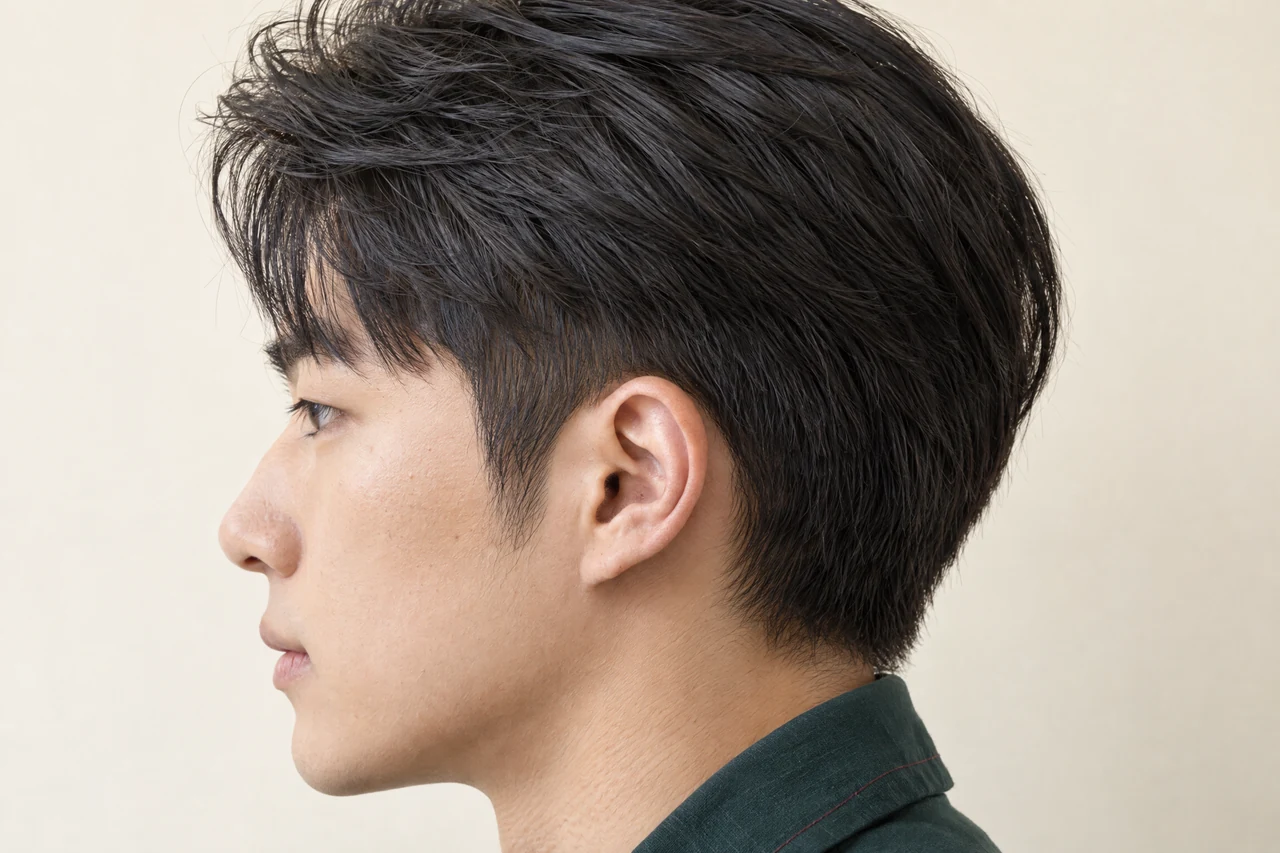
Compare the intended change before comparing service names.
| Direction to discuss | Main visual goal | What to clarify |
|---|---|---|
| Root-focused work | More support near the crown or parting | Exact root area and whether the fringe and lengths should stay unchanged |
| Down perm | Selected projecting sections sitting closer | Side boundaries, retained length and transition to the top |
| Full-head movement | Bends across a broader area | Where movement begins and how much width the design should have |
| Volume priority | A fuller-looking outline | Whether the missing fullness is at the front, crown or elsewhere |
| Texture priority | More visible strand direction and separation | Desired bend and how much definition depends on styling |
| Cutting or styling alternative | Adjusted proportions without chemical reshaping | Length you can remove and the daily routine you will use |
Your preparation checklist
- Photograph your current dry hair from the front, side and crown using your normal parting; show the area that loses support or projects outward.
- Mark the main change you want: upward support, a closer side outline or bends through the lengths. Explain which goal matters most.
- Name what should remain unchanged, including fringe direction, side coverage, back length or an area with movement you already like.
- Prepare your chemical-treatment history and describe dryness, breakage, scalp irritation or any previous reaction before considering new processing.
- Explain your actual routine, including drying, product use, exercise and headwear, and ask to compare a cutting or styling alternative.
- Confirm treated areas, method, aftercare, included cutting, quoted total and appointment availability before accepting the proposed work.
Frequently asked questions
Can root work also press the sides down?
Do not assume that. Root support and side control have different purposes. Ask which areas and directions are intended in the proposed plan.
Does a full-head service include root support?
The coverage label does not establish every design aim. Explain the crown height you want and ask what the proposed treatment is intended to change.
Will visual volume mean I have more hair?
No. A fuller outline reflects the position of existing hair. A cosmetic service does not add follicles or treat hair loss.
Find the Smallest Useful Change for Your Hair
Enquire with Vit So in Sheung Wan using current dry-hair photos and a reference showing the height, side outline or movement you want. Include the lengths you wish to keep and your treatment history so the discussion can focus on a proportionate plan. Confirm scope, price and availability before arranging your visit; an enquiry is not a confirmed booking.
Start your WhatsApp enquirySources & further reading
- Root Perm vs Down Perm: What Is the Difference?
Salon explanation of root lift versus selected-section flattening, distinct from curls through the lengths.
- Coloring and perming tips for healthier-looking hair
Potential dryness and brittleness from chemical treatments, and response to excessive stinging or burning during perming.
- How to stop damaging your hair
Gentle cleansing, conditioning, towel handling and low-heat advice; medical assessment for thinning or hair-loss concerns.



