







Perm planning while a straightened fringe grows out starts with a separate front map
Begin with the hair you intend to keep unchanged. Show the central fringe, the shorter strands near your temples and any longer pieces that once sat within the straightening section. Your current haircut may not follow the old treatment boundary. A strand swept to the side today could still belong to yesterday's fringe. Ask the hairdresser to distinguish the visible fringe shape from the area that may carry earlier processing before discussing where waves should begin.
Record what you know about that front treatment: its approximate date, the service name, whether heat was used and whether later appointments repeated it. Keep uncertain details labelled as uncertain. A remembered name such as smoothing or straightening is useful information, but it does not fully describe the product or procedure. If you have a receipt or message from the earlier salon, bring it. You do not need to guess ingredients to make the record look complete.
A practical map for perm planning while a straightened fringe grows out
Use separate notes for the front being grown out, the strands immediately beside it and the lengths proposed for waves. Include newer growth and older lengths within each area rather than describing a whole section as fresh. Marking boundaries on a photograph can communicate your request, but it cannot establish hair condition or chemical suitability. The map should help the hairdresser ask better questions, not act as permission to proceed.
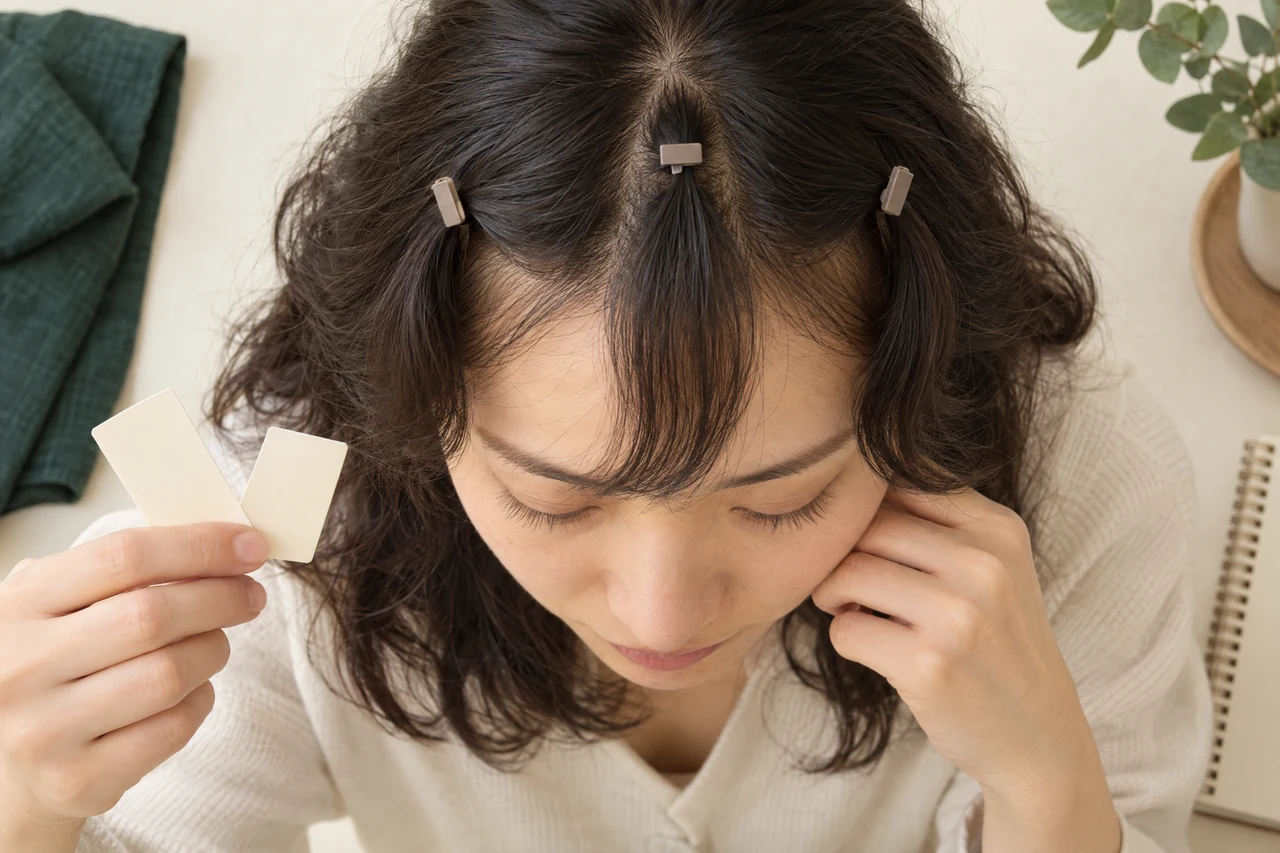
Leaving the fringe out does not clear the remaining lengths
An excluded front section answers where you do not want another process. It does not answer whether the back, sides or ends should receive one. Those lengths may have their own colour, bleach, previous perm or straightening history. They may also differ from the shorter front in how they feel and behave during ordinary washing and styling. Discuss the actual strands proposed for treatment, including any neighbouring pieces whose history is unclear, rather than assuming that everything outside the fringe is untreated.
If lightening is part of that wider history, the guide to can you perm bleached hair explains why current colour and appearance are not enough to settle the question. For this grow-out plan, the extra issue is keeping the front's record separate while checking all other proposed sections. A darker shade, a tidy blow-dry or a good photograph should not be used to replace that discussion. Tell the hairdresser about repeated processing even when it happened before your latest cut.
When the assessment should change the plan
The American Academy of Dermatology's colouring and perming guidance warns that appearance-enhancing treatments can leave hair dry and brittle and urges caution with perms. That supports a cautious consultation, not approval for this particular combination. If the proposed lengths are breaking, difficult to handle gently or have an unresolved history, discuss deferring chemical work. Do not stretch strands repeatedly at home or apply a small amount of perm solution as a self-test.
Judge the visible join before choosing a wave label
The join matters because the fringe and the new wave area will be seen together, even if their treatment plans are separate. Look at your usual parting from the front and side. Where does the longest fringe piece end? Does it lie above the proposed wave start, cross it or sit beside a shorter layer? A reference photograph may show a flowing outline, but it rarely reveals how much front styling created that outline. Ask what is realistic with the front left unchanged.
Imagine, for example, a shoulder-length cut with a growing fringe resting around the cheek and a desired wave beginning lower down. That hypothetical goal leaves room for the front to remain smoother while movement appears below it. A different request, with waves close to the temples and a short straight fringe, asks for a more obvious contrast. Neither outline is automatically wrong. The relevant choice is whether you like the contrast and can manage it without demanding another chemical change to the front.
Separate placement from treatment suitability
The guide to perm just the ends of hair helps describe preserved lengths and the transition into curved ends. Here, use that placement language to show where movement should stop near the growing front. A lower wave start may make the outline easier to describe, but it is not a safety shortcut. The proposed wave area still needs assessment, and a partial goal still needs agreement on what can actually be offered.

Choose a non-chemical front option you can live with
Leaving the fringe untreated does not mean leaving its daily appearance unplanned. Decide whether you would prefer it swept aside, softly divided at the centre or kept shorter while the old lengths are gradually cut away. Discuss these choices before committing to a wave pattern elsewhere. A cut may change which strands frame your face, so explain the length you want to retain. Do not assume that removing every previously straightened end immediately is necessary or acceptable to you.
A temporary styling rehearsal can help you judge the outline without deciding on chemical treatment. Ask how the front could sit beside the proposed waves, then compare that styled version with your ordinary air-dried fringe. The comparison is especially useful if you do not normally use a brush or heat tool. A look that only works after careful front styling might still suit an occasional outing, but it may not be the everyday solution you hoped a perm would provide.
Non-chemical does not mean unlimited heat or pulling
For temporary styling, follow the American Academy of Dermatology's gentler hair-care advice: air dry when possible, choose the lowest heat setting and avoid pulling or tugging. Do not repeatedly iron the front to force it to match a reference. If you are concerned about thinning or hair loss, or changes in care do not help, seek advice from a dermatologist rather than treating a perm or haircut as a medical solution.

Agree on the service scope and a fallback before booking
Explain the request as separate decisions: which front strands remain untouched, which lengths you want considered for waves and which visible compromise you would accept. The hair perm service page is a starting point for discussing the proposed area, but it does not establish that a fringe-excluded treatment fits a particular service category. Ask what the hairdresser would actually treat and whether the boundary is workable. A partial description should not become an assumed booking or an assumed quote.
Confirm the actual charge and what it includes once the scope has been discussed. Ask whether any proposed cut, styling or other work is included or quoted separately. More importantly, agree what happens if the wave area is not suitable on assessment. You might choose a cut and styling discussion instead, or leave with a plan to wait. Knowing that fallback avoids feeling that you must proceed chemically merely because you arrived hoping for a perm.
Protect the priority, not just the appointment
State which outcome matters most: keeping length, avoiding further front processing, reducing daily styling or achieving movement now. These priorities can conflict. If an acceptable visual join would require a front process you do not want, change the wave goal or postpone it instead of quietly abandoning your boundary. Likewise, a promise that the fringe will stay untouched is not enough if the rest of the hair cannot support the proposed work.
Prepare an enquiry that shows both the front and the wave goal
These 6 preparation points help keep the old front treatment and the proposed wave area separate. Take current photographs in ordinary light with the fringe sitting as you normally wear it. Include a front view, a side view and the back lengths, without using a newly straightened finish as the only record. You can also bring a styled photograph, but identify it as styled so it does not obscure the everyday shape you need the plan to accommodate.
Use the checklist to support a conversation rather than to diagnose your own hair. You do not need a perfect date for every appointment; an honest gap in the history is more useful than a confident guess. After the consultation, make sure you can explain the agreed boundary and the daily front routine in your own words. If the answer remains unclear, ask again before booking. A well-defined enquiry can end with a decision not to perm yet.
Ask what would make you pause
Ask the hairdresser which findings would lead to a revised scope or deferral, and raise any current scalp symptoms before chemical work is considered. Excessive stinging or burning during a perm is not something to endure for the style; the AAD guidance cited above advises immediate removal of the solution and consultation with a dermatologist. Tell the person carrying out the service promptly. This article provides planning questions, not a diagnosis, compatibility test or guarantee of results.
Options to discuss while the previously straightened front remains a separate decision
| Proposed direction | Visible trade-off | What still needs confirmation |
|---|---|---|
| Waves elsewhere; front left untreated | The fringe may remain smoother than neighbouring waves. | History and condition of every proposed wave section; workable boundary. |
| Lower wave start | Movement appears below a smoother upper outline. | Whether the placement suits the cut and can be offered appropriately. |
| Cut or parting adjustment first | The front shape changes without adding a chemical process. | How much length you are willing to lose and the everyday styling routine. |
| Temporary styling or deferral | No new lasting wave pattern is created now. | A manageable interim look and what to reassess before a future enquiry. |
Your preparation checklist
- Photograph the fringe in its ordinary dry position from the front and side.
- Show the back and side lengths proposed for waves, including shorter layers.
- Record the old front straightening, repeated appointments and any uncertain details.
- List colour, bleach, perm and straightening history in the other proposed sections.
- Bring a wave reference and identify the start position, not only the style name.
- State your length priority, acceptable front styling and fallback if chemical work is deferred.
Frequently asked questions
What does adding waves without reprocessing an old straightened fringe involve?
It involves agreeing which front strands stay untreated, assessing the proposed wave lengths independently and planning how the different shapes will meet. It is not simply a full-head perm with the fringe omitted. A cut or temporary front routine may be part of the discussion, and the assessment can still lead to deferral.
Does waiting until the fringe is longer make the rest suitable for a perm?
Length alone does not settle the proposed treatment. A longer fringe may offer different parting or cutting choices, but you still need to identify its earlier processing and the separate history of the lengths intended for waves. This guide cannot give a waiting period that clears either area for chemical work.
What if I want the new waves but dislike a smoother front?
Say so before booking, because an untreated front may not provide the continuous texture in your reference. Ask about a lower wave start, a different cut or a temporary styling rehearsal. If none gives an acceptable outline without further front processing, postponing the perm is a reasonable choice rather than forcing the fringe into the same plan.
Ask about your grow-out boundary before arranging a perm
Send a WhatsApp enquiry to +85253057561 with current front, side and back photographs, the old fringe-straightening history and your preferred wave placement. Explain that the front is being grown out and should be discussed separately. Enquire with Vit So at 252 Hollywood Road, Sheung Wan, Hong Kong; suitability, service scope, charges and appointment availability require confirmation. If consultation language matters to you, confirm it when enquiring.
Start your WhatsApp enquirySources & further reading
- Coloring and perming tips for healthier-looking hair — American Academy of Dermatology
General caution about dryness, brittleness and perm processing, including what to do with excessive scalp stinging or burning. It does not approve a perm beside an old straightened fringe.
- 10 hair care habits that can damage your hair — American Academy of Dermatology
Practical advice on reducing heat and pulling during everyday styling, plus guidance to consider a dermatologist for persistent problems, thinning or hair loss.



