







Brand relationship: OWNSTRAND and Vit So are brands under the same owner. This article offers selection guidance, not an independent review or product test. Confirm individual styles, availability and visit arrangements with OWNSTRAND.
Choose wig materials for shift workers by the shortest turnaround
Use a four-stage map: wear, clean, dry by the permitted method, then store fully dry. Write down when you remove the wig and when it must next be ready to leave home. Mark the tasks that need your attention separately from drying that can happen while you rest. Sleep and commuting still need their own time; a routine that requires you to wake repeatedly to manage it is not a good fit just because the calendar gap looks long.
Map an ordinary shift, a changeover and an unexpected early call-in. These are planning scenarios, not a demand to wash after every wear. Ask the supplier how to judge cleaning needs for the particular piece and your wearing conditions. If the required routine cannot finish within a changeover, identify the alternative before buying. That might be a different style, a confirmed professional-care arrangement or an acceptable non-wig option, rather than forcing a wet piece into your next shift.
OWNSTRAND's guide to human hair vs synthetic wigs is useful for mapping washing, detangling and styling workload against the exact fibre instructions. OWNSTRAND and Vit So share the same owner, so this is a related-brand resource, not an independent product review. For the wider material trade-offs, Vit So's human hair vs synthetic wigs discussion can help you define your preferences. Then return to the rota: convenience on one morning does not establish a workable cleaning cycle.
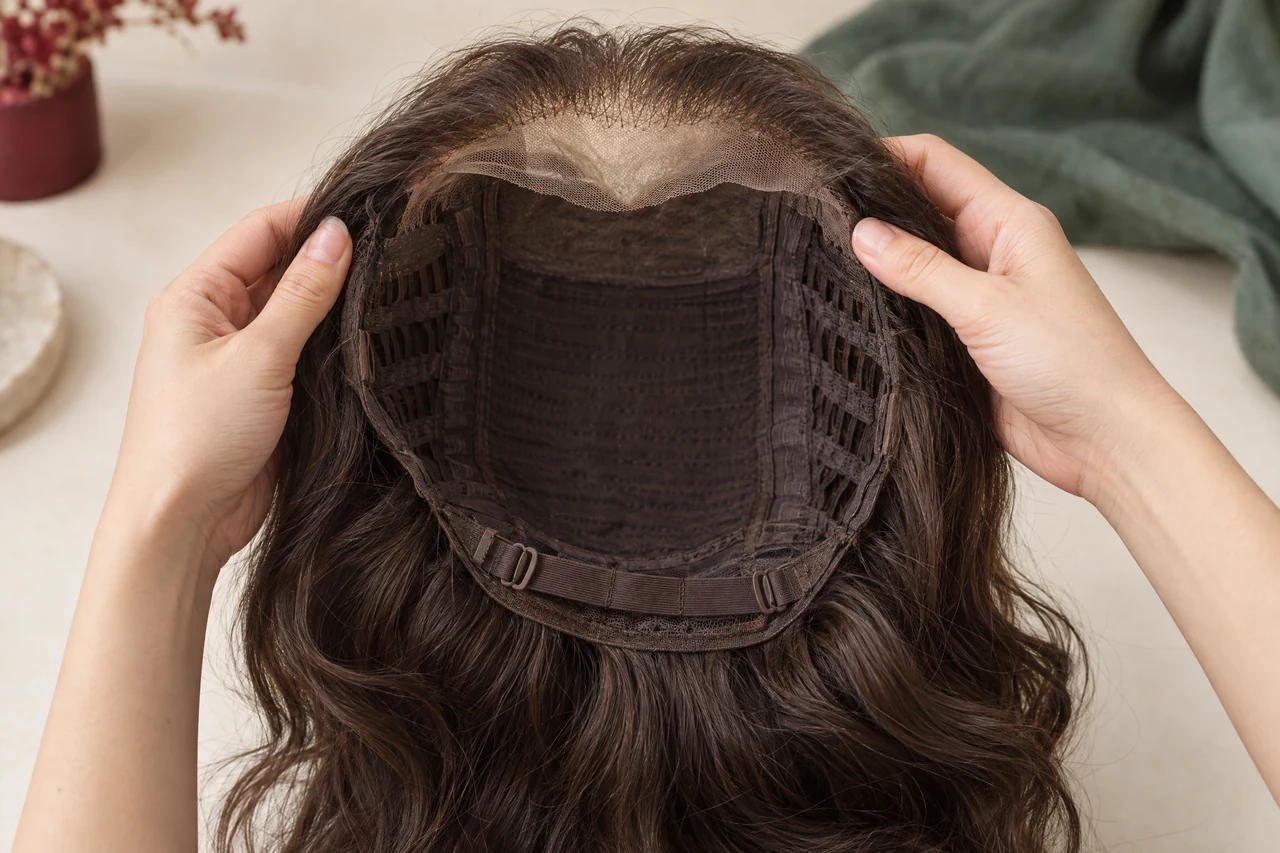
Separate easy styling from permitted drying
A set synthetic style may mean less work once the wig is dry. Cancer Research UK says most synthetic wigs come ready to wear, but warns that hair dryers and heated styling tools can melt fibres or cause frizz; manufacturer information must be checked before direct heat is used.[1] This makes the care label important when time is scarce. Less restyling does not mean instant drying, and an unapproved hot blast is not a sensible way to rescue a rushed departure.
Human hair can be worth considering if changing the parting or finish matters to you, but the required work must fit your shifts. Cancer Research UK notes that some real-hair wigs need professional styling and advises asking whether a particular wig can be washed at home.[1] Ask what happens after washing: is arranging needed, which methods are allowed, and which tasks require a professional? Include those tasks in the turnaround rather than counting only the period when the piece is wet.
Use OWNSTRAND's human hair wigs page to frame questions about the exact hair description, construction and permitted drying method. It does not make human hair a blanket approval for heat or chemical processing. A blend or heat-friendly fibre also needs its own instructions; do not borrow a routine from a different wig. Before requesting prices, ask whether the named piece can be cared for with the tools, support and space you actually have at home.
A heat-friendly label is not a drying plan
Ask whether a heat allowance applies to drying, restyling or both, and obtain the stated limits and handling instructions. Do not infer that permission for one tool authorises another or protects the whole cap. If the answer is incomplete, leave the drying-method field unresolved. A piece remains a possible choice, not a practical shortlist candidate, until the seller supplies care guidance you can follow.
Match wig drying space and wear schedule to the actual cap
Identify a drying location that can remain available for the whole required period. In a shared flat, the basin edge may be free when you finish work but needed while you sleep. Check the stand's footprint, stability and room for the hair to hang without being folded against other objects. Keep the location away from cooking heat, steam and direct heat sources. A closed cupboard or work locker is not a substitute for the drying arrangement specified for the piece.
Inspect the cap as well as the hair. Ask which support is approved for drying and which is intended only for display or storage. Cancer Hair Care recommends a supplier-approved drying stand and cautions that a head-sized stand may stretch a wet wig.[2] Its guidance helps explain why a head form that looks tidy in a photograph is not automatically suitable. Ask how the exact cap should be supported and how to check its lining, nape and adjustment areas before storage.
OWNSTRAND's wig for hot humid weather guide considers weight, cap coverage and fit without promising coolness. Use it when discussing a warm room and long wearing hours, but separate wearing comfort from drying readiness: the guide provides no measured drying time for your home. Words such as breathable or lightweight cannot settle both questions. If you use an extra liner, ask about its own cleaning and drying routine and include the extra item in your space plan.
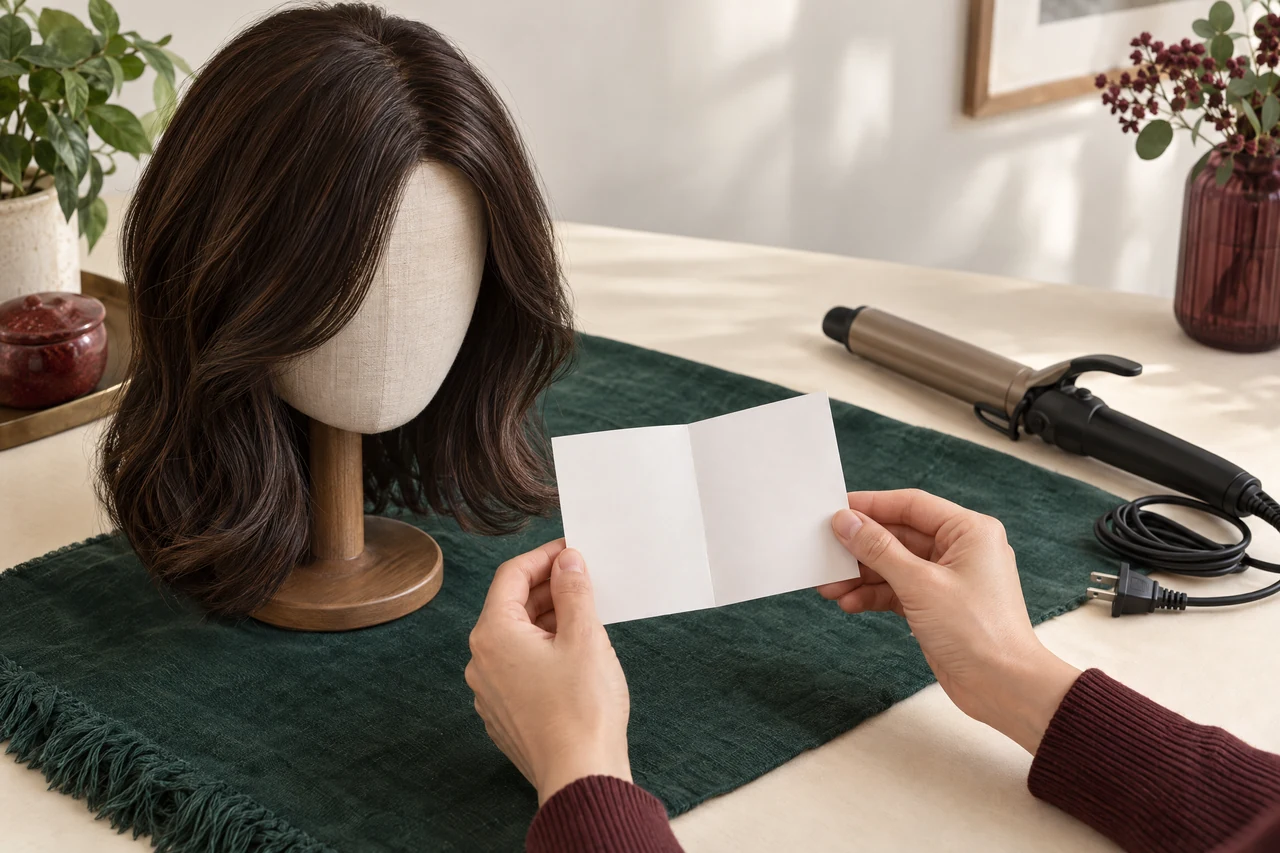
Make fully dry storage a separate step
Cleaning ends with a ready-to-store piece, not simply with dry-looking ends. Ask the supplier how to assess readiness without pulling the cap or disturbing the construction. Include the hair and cap areas covered by the instructions. If you are unsure whether a lining is still damp, continue with the approved drying arrangement rather than closing the piece into its bag. Set aside space for that final check; otherwise a routine can appear finished while the storage decision remains unresolved.
Cancer Hair Care's synthetic-wig advice includes gently blotting with a towel rather than rubbing or squeezing, and waiting until the wig is completely dry before styling.[2] Follow the exact maker's directions where products differ. The planning point is to allow for gentle handling and the later styling check, not to shorten the routine with force. General drying estimates are not a promise for your cap, hair length or room, so do not schedule a departure solely around an estimate from a generic guide.
Vit So's wig care guide offers broader handling and storage context; here, the decision is whether your home can accommodate the wet-to-dry transition on changing shifts. Separate the drying location from the final storage place in your notes. A bag may be useful once the piece is fully dry, but it should not become a shortcut because the stand is in someone's way. Resolve that household conflict before selecting a wig that depends on the space.
Try the routine against a changed shift before committing
Consider a hypothetical late-shift worker who usually has a clear day before wearing the wig again. On that day, a longer care routine might be manageable. Now move the next departure to early the following morning. If the approved drying support cannot stay in place, or the piece still needs professional styling, the same choice becomes uncertain. Do not invent a faster drying method to make the example work; record the gap and ask whether a different piece or care arrangement would resolve it.
A second hypothetical worker has a longer gap but no private drying area. The limiting factor is space, not elapsed time. Measure where the approved support could stand and agree when the area can be used. If no stable location exists, a set synthetic style does not fix the problem by itself. Ask about realistic alternatives and their care needs. A spare piece can help only if its cost, fit, storage and separate cleaning routine are also manageable.
Keep the final appearance simple enough for your tiredest changeover, not only your best-rested day. Vit So's discussion of a haircut for a busy lifestyle can help you describe preferred length and everyday styling limits when discussing how a wig relates to your usual look. That styling conversation is separate from confirming wig care. A silhouette you like should stay on the shortlist only when its specific maintenance requirements also fit the rota.
Mark each stage as workable, unresolved or incompatible
For each candidate, give every stage one of these three descriptions. Workable means you understand the instructions and have the necessary time and space. Unresolved means information is missing. Incompatible means a known requirement clashes with your routine. Do not average away an incompatible drying stage because the hairstyle looks appealing. Resolve missing details first, and exclude a known mismatch unless you can make a realistic change.
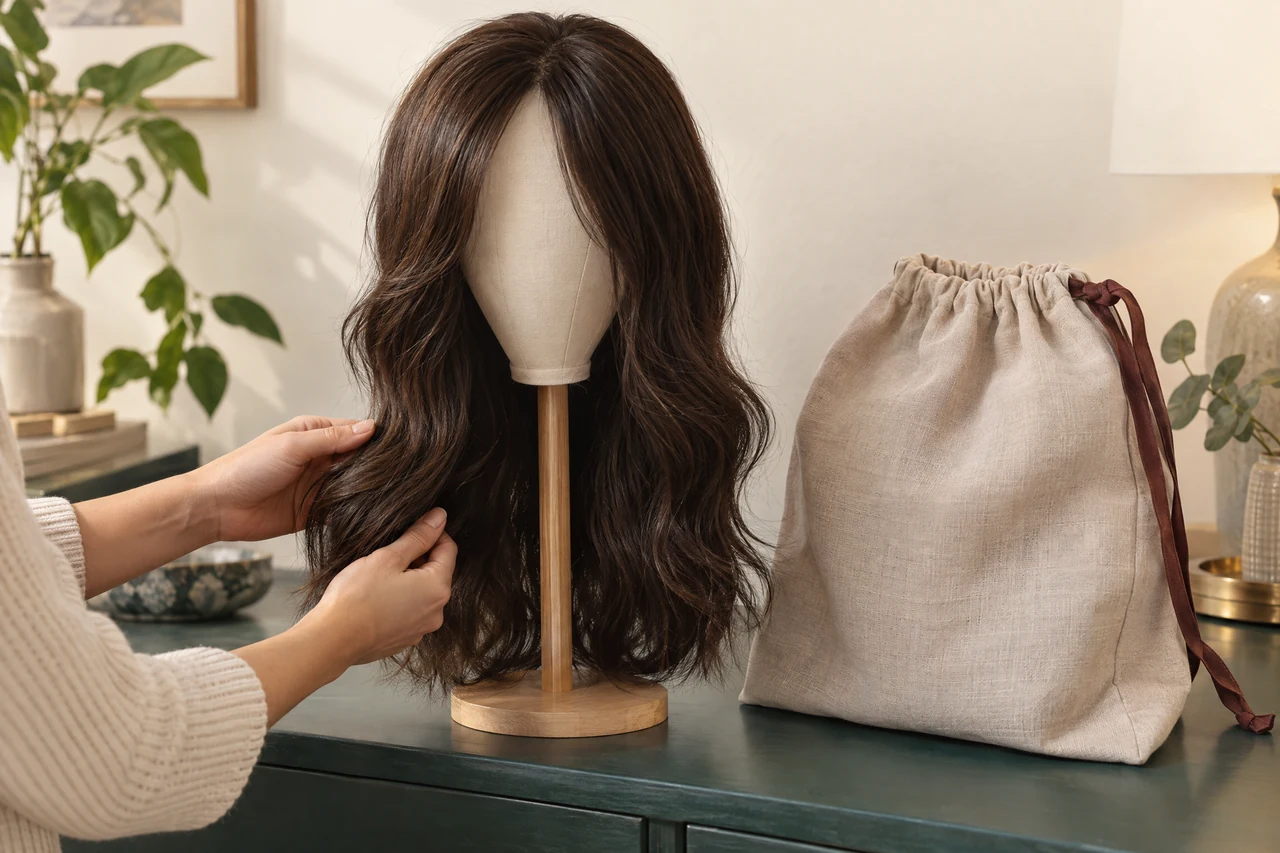
Ask for a specific care answer before a quotation
Send the supplier your actual shift pattern, shortest turnaround and proposed drying location alongside the style you are considering. Ask for the precise fibre and cap description, written care directions, approved support and any professional-care needs. Request clarification where a listing is incomplete. A general reply that the material is easy to manage does not answer whether it fits your room and rota. Once those points are clear, request a quotation for the exact colour, size and option.
For an OWNSTRAND enquiry, confirm availability, fitting arrangements and service timing directly. Catalogue listings are not stock confirmations, and an enquiry does not place an order. OWNSTRAND has one Kwun Tong store; do not assume a visit takes place at Vit So's Sheung Wan location. If a service is needed between shifts, ask about appointment availability and collection before relying on it. Professional care can be useful, but it still needs to fit your travel and work commitments.
This is a cosmetic selection guide, not a medical suitability assessment. Persistent scalp irritation, pain or treatment-related wearing requirements belong with a care professional rather than a material comparison. For ordinary selection, finish with a clear answer to one question: can the whole care cycle reach a fully dry, wearable state before the next departure? If not, change the candidate or the arrangement before discussing price. That is a more useful decision than choosing a fibre name first.
Four checks for a shift-compatible wig shortlist
| What to compare | What to confirm | Reason to pause |
|---|---|---|
| Set-style synthetic fibre | Approved drying method and post-dry arranging | The rota depends on unapproved heat |
| Human hair | Home-care permission and any required professional styling | Styling or service time misses the next departure |
| Blend or heat-friendly fibre | Exact fibre instructions and scope of heat permission | Care is inferred from another material |
| Cap and drying support | Approved support and access to cap areas for checking | The support cannot remain in the available space |
Your preparation checklist
- Record the shortest gap between removing the wig and leaving for the next shift.
- Map wear, cleaning, permitted drying and fully dry storage separately.
- Obtain written care directions for the exact fibre and cap.
- Confirm the approved drying support and reserve its full footprint.
- Allow for final dryness checks and any required styling or professional care.
- Choose an acceptable fallback for a shift change before requesting a quotation.
Frequently asked questions
Does a night shift make synthetic fibre the obvious choice?
No. A set style may reduce arranging once dry, but it still needs its approved cleaning and drying routine. Compare the specific cap and available space with your shortest turnaround. Human hair remains an option if its extra tasks fit; neither material label decides the rota question.
Can I count sleeping time as drying time?
Only if the permitted drying arrangement can remain safely in place while you rest. Do not count time when the stand must be moved into a bag or cupboard. Sleep does not confirm dryness: allow for a check and any finishing tasks before leaving. Follow equipment instructions if any powered method is permitted.
Will a short wig necessarily dry before an early shift?
No universal turnaround follows from length alone. The exact cap, fibre and approved method still matter. Ask for the maker's guidance and leave room for checking the whole piece. A shorter silhouette may suit your styling preferences without settling when its cap will be ready.
Should I buy a second wig to cover cleaning days?
Consider one only after identifying the actual gap. It may provide an alternative, but it adds another purchase, fitting decision and care cycle. Confirm that you can store both pieces properly and afford the complete arrangement. A second wig does not make an unsuitable drying location suitable.
Bring your rota into the style conversation
Ask Vit So to discuss a manageable silhouette and how it blends with your usual look. For a particular wig's care instructions, quotation or visit arrangements, use the OWNSTRAND guides already linked above. Share the shortest turnaround and drying-space restriction before choosing.
Start your WhatsApp enquirySources & further reading
- Cancer Research UK — Wigs, hats and scarves
Ready-to-wear synthetic styles, direct-heat cautions and the need to confirm whether human-hair wigs require professional styling or can be washed at home.
- Cancer Hair Care — Wig washing and styling
Gentle synthetic-wig towel blotting, supplier-approved drying supports, potential stretching on a head-sized support and waiting until fully dry before styling; exact maker directions take precedence.



