







Salon hair treatment vs at home care: different roles
If the ends are difficult to comb, review washing, conditioning and handling as well as possible salon care. If strands keep breaking after several chemical services, a discussion of the processing history is more important than simply using a richer mask. Neither a salon visit nor a home product is a promise to restore severely damaged hair.
Start with a description of the task that is difficult. Hair that catches at the ends after washing presents a different question from hair that feels coated near the roots. Wanting softer lengths is also different from wanting naturally wavy hair to become straight. A conditioning service and a shape-changing procedure should not be compared as though they were different strengths of the same product.
Home care gives you repeated opportunities to change how you wash, condition and handle your hair. A salon appointment can add a discussion, help with application and an explanation of the proposed steps. Neither setting automatically makes the formulation suitable. The important question is which missing part of your care the appointment would address, beyond what you already do successfully at home.
Salon hair treatment vs at home care starts with the problem
Write down where the concern appears and when you notice it. Describe whether the ends catch during combing, the lengths feel rough once dry or the roots lose movement after conditioning. These observations are more useful than simply saying your hair needs repair. Choose a main goal you can recognise during ordinary washing and styling, while noting anything you want to preserve, such as curl definition or root fullness.
What a salon discussion adds
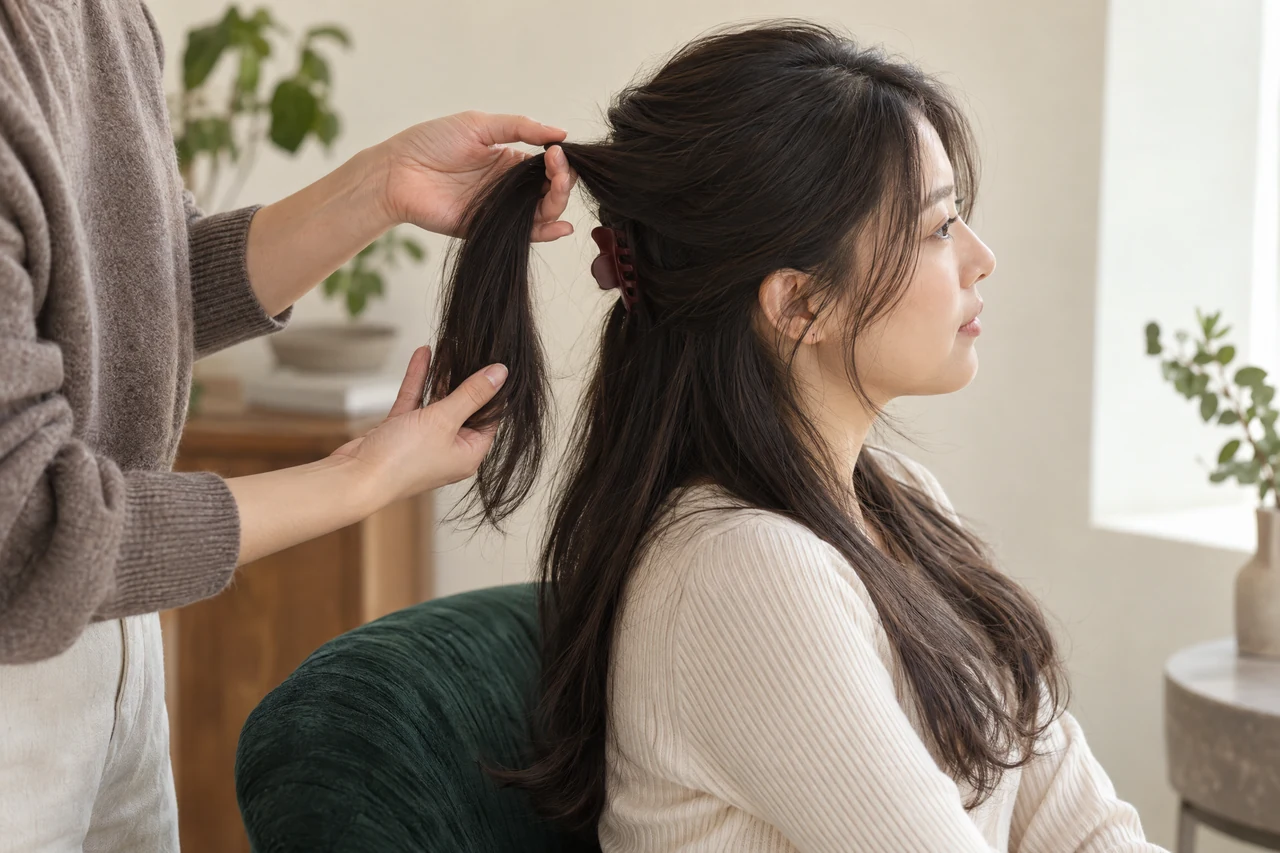
Explain which sections were bleached, coloured or straightened, what feels rough and what you have already tried. Professional discussion can help separate hair-shaft concerns from scalp symptoms and identify the questions needed before another service. Confirm the actual proposed care rather than assuming every treatment menu describes the same steps or ingredients.
The useful advantage is information applied to your particular lengths. A stylist can discuss whether the concern is concentrated in older processed ends or also affects the less-treated upper lengths. Ask which areas would receive the proposed product and why. If a treatment is recommended alongside another chemical service, clarify its purpose rather than assuming the extra step makes every combination suitable.
If your lighter ends have a different processing history from the roots, the guide to hair care after bleaching helps you focus the discussion on those lengths instead of treating the whole head identically.
Ask whether the proposal is conditioning or a heat-assisted smoothing procedure. The FDA guidance on heated hair smoothing products explains that some formulations can release formaldehyde when heated and advises checking ingredients and asking the salon about them. This is a reason to identify the actual procedure, not to assume every hair mask has the same risk. A professional-use label alone does not answer your questions about suitability.
Review hair treatment to check its service scope and the details to share before arranging the related work.
Bring details that a product label cannot know
Bring product names or clear label photos, describe how you apply them and explain which chemical services affected which sections. Mention previous reactions and any current scalp discomfort before agreeing to care. Ask to leave with practical directions: where to apply your usual conditioner, what needs rinsing out and what signs should prompt a follow-up. A salon discussion can inform cosmetic care; ongoing scalp symptoms or unexpected hair loss need healthcare advice rather than another conditioning purchase.
What home care still needs to do
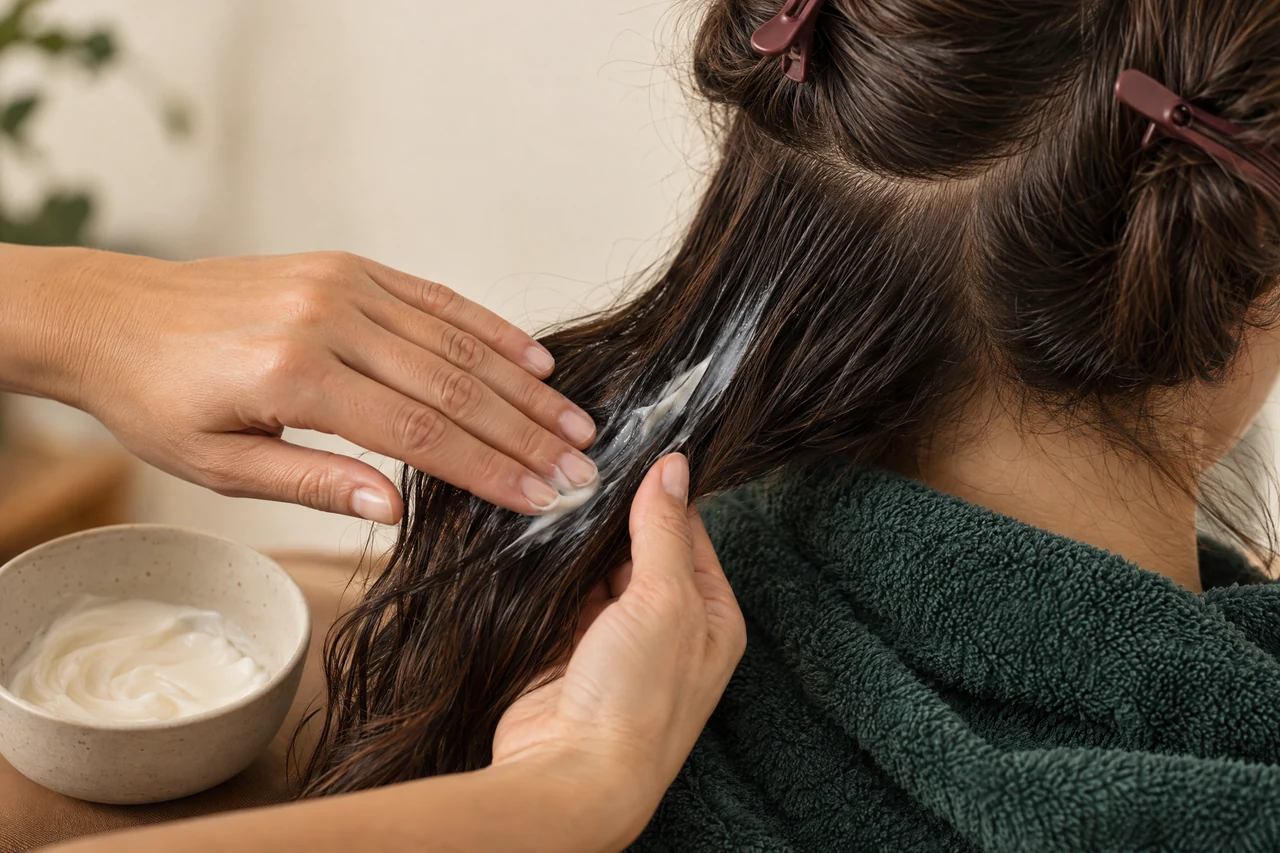
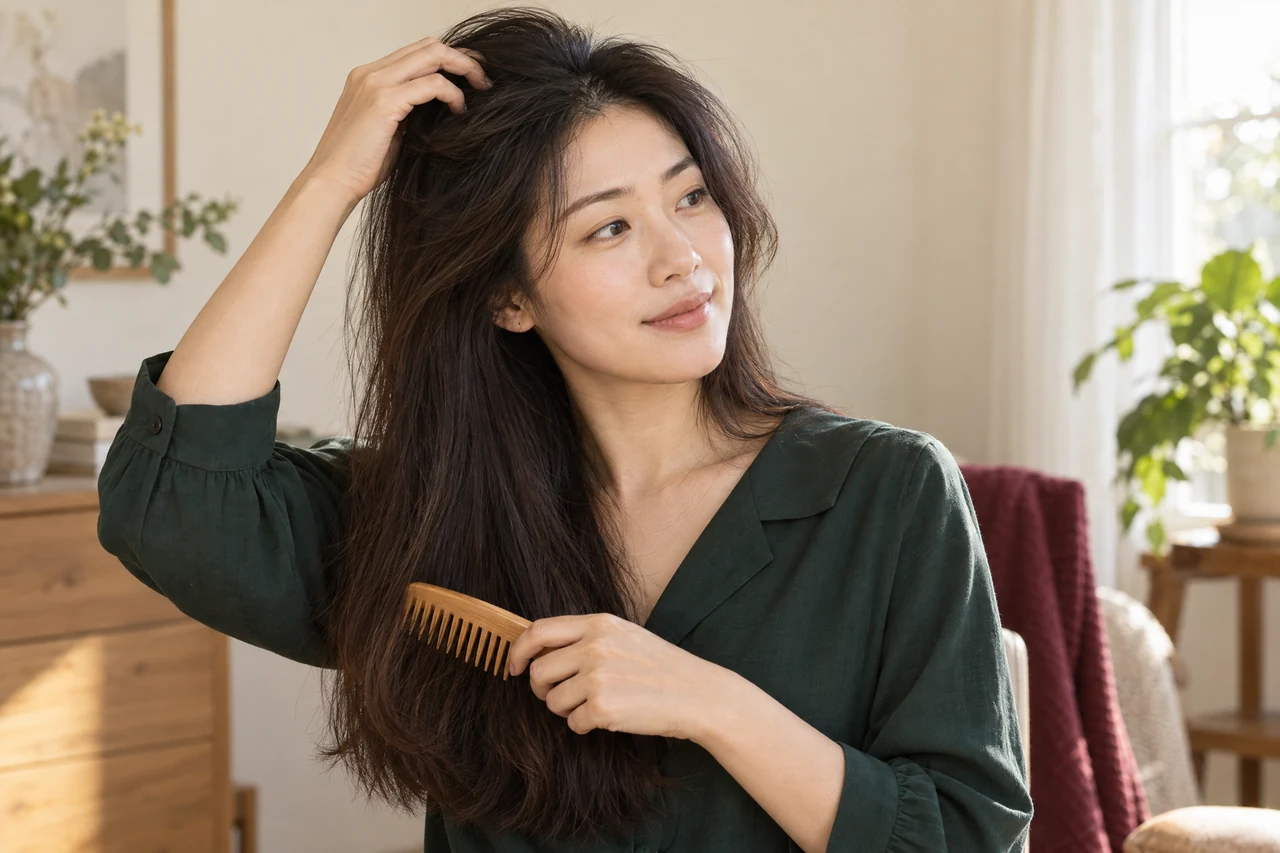
Home care includes following product directions, gentle detangling and reducing avoidable friction or repeated heat. A hair mask or salon treatment for dry hair is not a substitute for those habits. Choose a routine you can sustain and review how the lengths feel after normal washing, rather than judging only the salon finish.
The American Academy of Dermatology's hair-care advice recommends conditioning after shampooing, avoiding vigorous towel rubbing and reducing heat exposure. It also advises gentle wide-tooth combing without tugging. These are practical changes to make even if you book salon care: an appointment does not remove the friction or heat your lengths encounter afterwards.
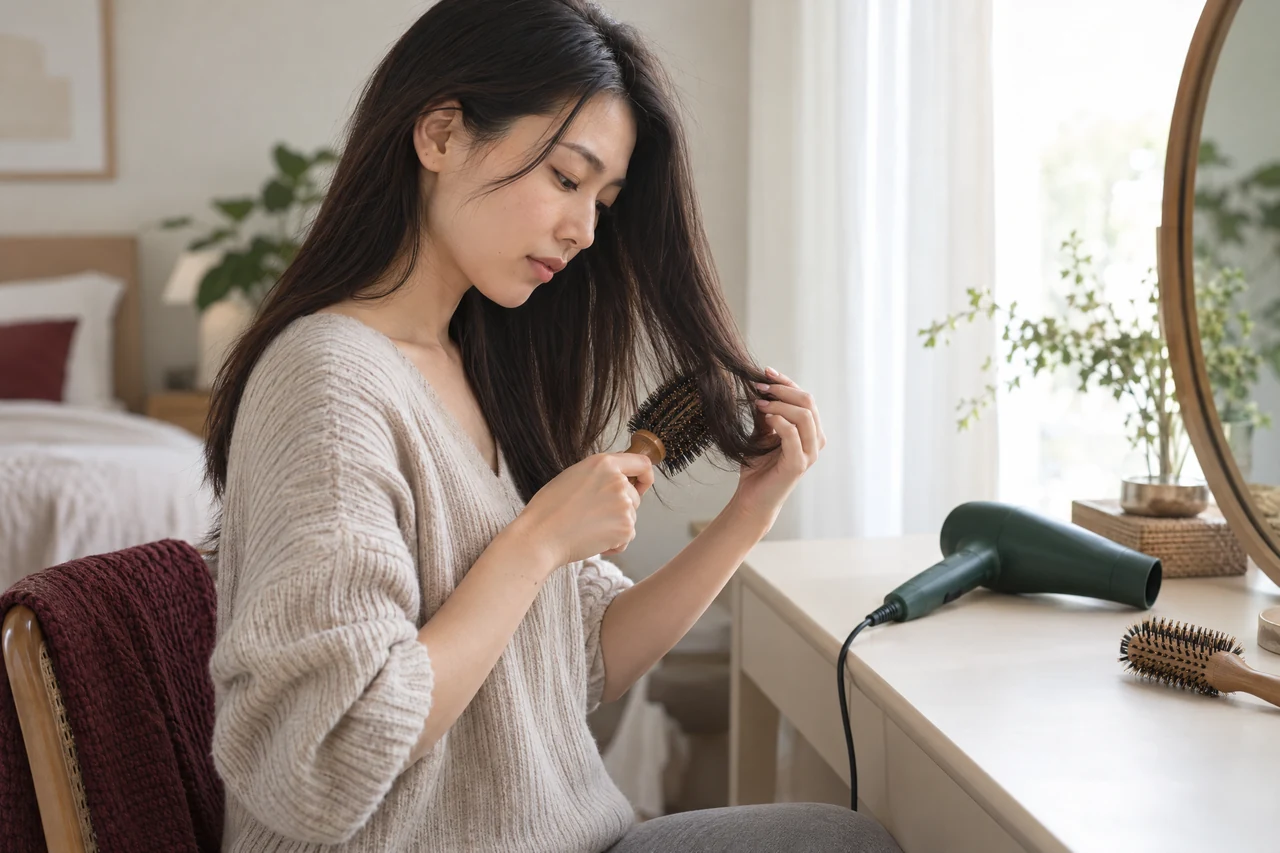
Detangling needs to respect texture. The AAD advises allowing straight hair to dry a little before gentle combing, while textured hair or tight curls should be combed while damp. Do not force a brush through resistance to reproduce a salon finish. Read the directions for your actual products, use gentle sections and ask for help if your usual method repeatedly catches the same fragile areas.
An elaborate routine has little value if you rush it every wash. A simpler approach may mean using the conditioner you already own correctly, allowing time for careful rinsing and avoiding unnecessary extra styling passes. Keep rinse-out and leave-in instructions distinct. Do not leave a mask on indefinitely, combine products or add heat merely because those changes sound more intensive.
Continue with hair mask vs conditioner for that specific comparison and the preparation questions it raises.
Repeatable care matters more than a complicated routine
Fit the routine to your real bathroom and working day. If you wash before an early commute, choose steps you can follow without hurried detangling or incomplete rinsing. If you style for work, consider whether you can achieve an acceptable finish with less heat. Keep other habits reasonably steady when changing a care step, so you can describe what improved or became less comfortable without guessing which of several new products caused it.
Decide whether the visit is worthwhile
Are salon hair treatments worth it? The answer depends on your hair, the proposed care, its limits and the full charge. A useful comparison names the benefit you want, such as easier combing, and checks how it will be reviewed. Do not buy a visit on the assumption that a higher cost guarantees permanent repair.
A salon visit may be worthwhile when you have persistent difficulties despite a careful routine, cannot explain how previous processing affects the current lengths or need guidance on a proposed service. If you mainly skip conditioner and detangle in a rush, improve those habits first rather than expecting a treatment to compensate. You can also use a discussion to decide not to add a service that does not match your goal.
The confirmed moisture treatment entry is HK$1,500. That is a named service price, not evidence that every conditioning visit costs the same or that its result is permanent. Confirm whether washing, finishing and any requested cutting are included in your proposed visit. Ask about applicable length charges and whether suggested home upkeep is optional before deciding on your budget.
Check the hair salon price list for published entries, then confirm the amount for your agreed scope.
Compare your total outlay with the problem you want help solving. A home container covers repeated applications but requires your own preparation and handling. A salon charge covers the agreed service rather than a container alone. Include travel and the time you need to set aside, without assigning an invented value to them or assuming the most expensive route will be the most useful.
Compare the complete scope with your main goal
Before agreeing, ask what change the service is intended to provide and how you should assess it after ordinary washing. Easier combing may be a more relevant benefit than extra shine if knots are your main concern. If your priority is keeping natural waves, ask explicitly about that. A clear answer about purpose, inclusions and limits lets you decide whether the proposed care deserves space in your routine and budget.
Judge care in your everyday finish
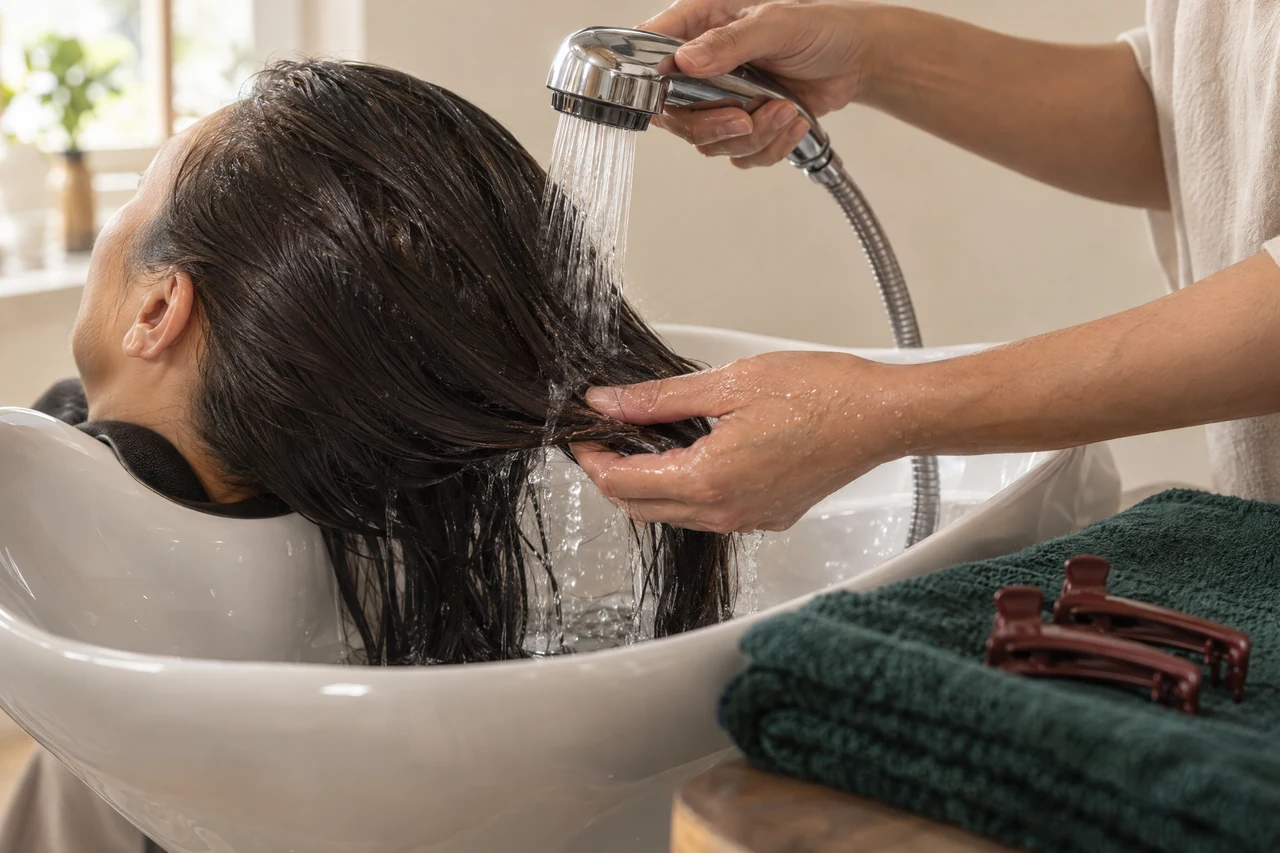
A smooth salon finish can reflect careful drying, brush technique and finishing products as well as the care step. Enjoy that finish, but do not use it as your only measure of treatment value. After your normal wash, consider whether the relevant lengths are easier to manage using your usual level of styling effort.
Separating hair treatment results vs blow dry finish helps you compare the benefit you wanted from care with the appearance created by finishing technique.
Describe softness, combing resistance and root movement separately. Softer ends with heavier roots may call for a discussion about product placement or use, not simply a stronger treatment. If the original difficulty remains, report what happens during washing and drying. The AAD also recommends seeing a dermatologist when care changes do not help, especially if thinning or hair loss is a concern.
Keep a useful record rather than chasing perfect shine
A short note about the affected area, the products used and the handling difficulty is enough to make a follow-up more specific. Photos can show the outline, but they cannot establish strength or diagnose the cause of breakage. Avoid deliberately stretching strands or brushing harder to test whether a treatment worked. Ordinary, gentle handling is the setting in which the benefit needs to matter.
Choose where to put your next effort
Home-first care makes sense when the missing step is a manageable daily habit. Discussion-first care makes sense when the uncertainty concerns processing history or the proposed salon procedure. Combined care makes sense when you want help with the current lengths and are ready to maintain the agreed routine afterwards. None of these choices requires buying every suggested product or committing to a series of visits before understanding the first proposal.
Leave with a plan you can actually follow
For a visit in Sheung Wan, explain the concern you want to address and the home routine you can realistically maintain. Keep the agreed instructions accessible after the appointment. If the recommendation depends on steps you cannot sustain, say so before committing. The better decision is the one that resolves a specific gap in your care without leaving you uncertain about what the service includes or what you need to do next.

Compare salon and home care by the task you need help with, not by presumed strength.
| Decision point | Salon care can contribute | Home care still contributes |
|---|---|---|
| Understanding processed lengths | Discussion of where previous services overlap and what care is proposed | Accurate history and observations between visits |
| Application | Help with sectioning and applying the agreed product | Following directions and using appropriate placement |
| Detangling difficulty | Discussion of the affected areas and handling technique | Gentle handling during each normal wash and styling session |
| Desired appearance | A finished look that may include professional drying | Checking manageability with your ordinary styling effort |
| Budget | The full agreed charge and any confirmed additions | Product use, replacement cost and your own time |
| Limits | No automatic guarantee of permanent repair | No single mask replaces advice on complex processing or persistent symptoms |
Your preparation checklist
- Name the main difficulty and its location: catching ends, rough lengths or roots that feel weighed down.
- Record which sections were bleached, coloured, permed or straightened, including home processing.
- Bring product names or label photos and describe application, rinsing, detangling and heat habits honestly.
- Ask whether the proposal is conditioning or shape-changing smoothing, and what practical benefit it targets.
- Confirm the complete charge, included washing and finishing, applicable length additions and any suggested upkeep.
- Agree how to review the benefit after normal washing and keep the actual aftercare instructions for reference.
Frequently asked questions
Can a home mask replace every salon visit?
No single product replaces a discussion of complex chemical history or persistent breakage. Equally, a salon visit does not replace routine gentle care at home.
Should I stop my usual conditioner after salon care?
Follow the directions for the actual service and products. Do not remove or add steps solely because you have had a salon treatment.
How can I compare costs fairly?
Compare the total visit, included washing or finishing and any suggested upkeep. A product price and a salon headline price do not represent the same scope.
Clarify which part of your hair care needs help
Enquire with Vit So in Sheung Wan about your lengths, processing history and the routine you already follow. Share your main goal so the proposed care and complete charge can be discussed before you decide. An enquiry is not a confirmed appointment; service scope and availability need confirmation.
Start your WhatsApp enquirySources & further reading
- 10 hair care habits that can damage your hair
Daily conditioning, gentle detangling adapted to texture, reduced friction and heat, and seeking dermatological advice when appropriate.
- Hair Smoothing Products That Release Formaldehyde When Heated
Why consumers should identify the actual heated smoothing formulation and ask about ingredients rather than treating all salon care as equivalent.



