







Why is my grey hair still visible after colouring? Start with location
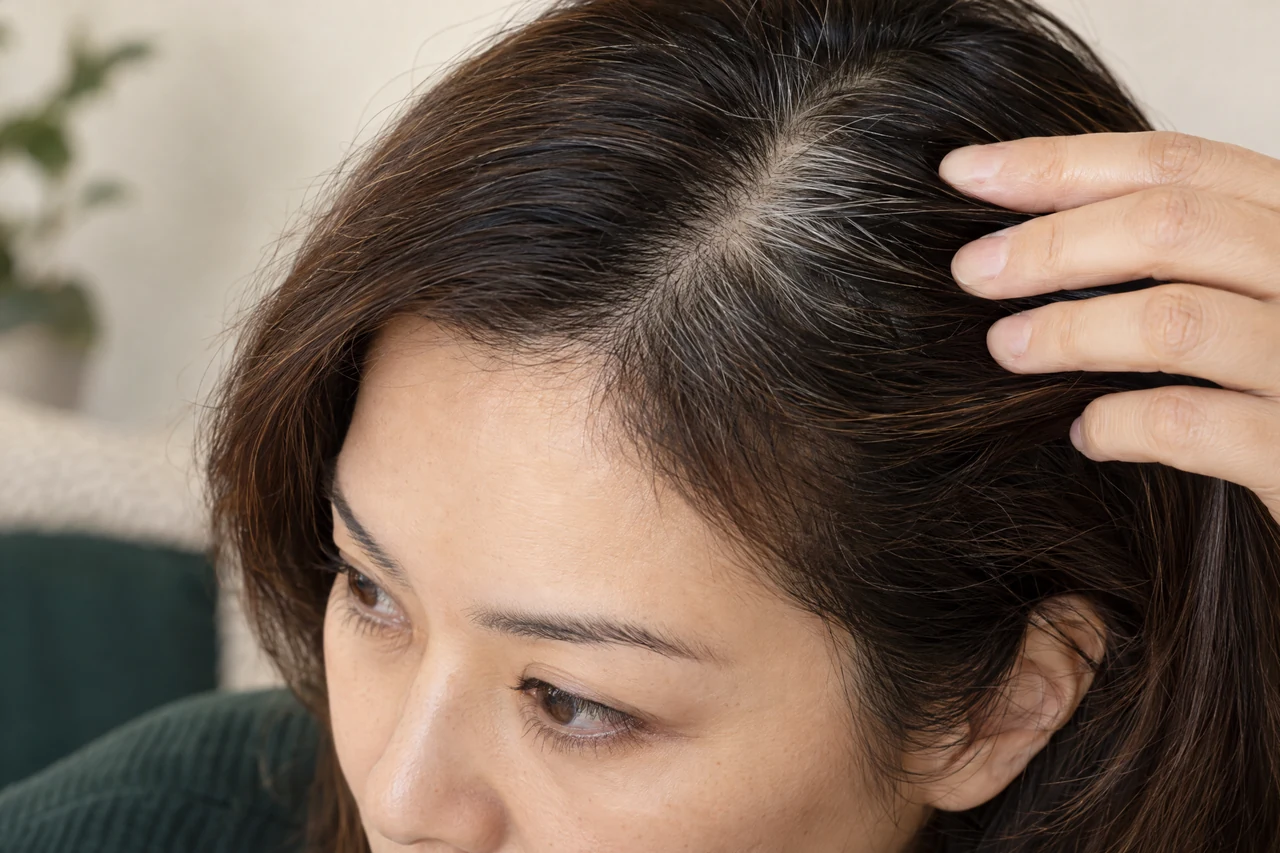
Locate the visible white hair: at the new roots, within the coloured length or in a concentrated pale area. These observations lead to different questions. Record when the colouring was done and whether the lighter appearance was present immediately or appeared later, rather than assuming that all visible white strands mean the same thing.
Look along the same strand from the scalp towards the length, without pulling it out. Is the pale section only next to the scalp, or does a lighter line continue through the coloured hair? A root edge that became noticeable later raises a regrowth question. A strand that already looked pale when you left the appointment raises a question about the original finish. Neither observation, by itself, establishes the product or application responsible.
Check your usual parting before creating a new one for a close-up. Moving the part can expose a different concentration of white hair. Also note whether the area becomes obvious only when your hair is tucked behind an ear or tied away from your face. This makes the enquiry specific to the way you actually wear your hair.
Review root touch up to check its service scope and the details to share before arranging the related work.
Why is my grey hair still visible after colouring at the temples?
Describe the left and right temples separately. You may notice a cluster rather than evenly scattered white strands, so an overall photograph can hide the detail that matters. Include a relaxed hairline view and another with the hair gently moved aside. Avoid labelling the area as resistant or missed before it has been examined; explain instead whether the strands appear white, lightly tinted or brighter than the neighbouring hair.
Compare translucency with a difference in depth
Why does grey hair look lighter after colouring? Naturally white and darker strands can show different apparent depth within the same chosen colour. A translucent finish may also preserve lighter lines intentionally. Show both areas together and explain whether the issue is uneven brightness, see-through colour or a result that differs from the agreed coverage goal.
Use depth to describe how light or dark the hair looks. Use tone to describe the colour direction, such as warm brown or cool brown. Translucency describes a lightly tinted appearance rather than a solid-looking colour. These descriptions can overlap, but they are not interchangeable: a warm strand may be acceptably dark, while a cooler strand may still look too pale for your preference.
In its explanation of demi-permanent colour and grey blending, Wella describes a colour glaze that lightly tints grey hair with translucent colour while leaving the strands visible. This is a manufacturer example of a finish that can retain visible grey; it does not identify which product was used on your hair. Ask what level of concealment the actual service was intended to achieve.
Look at white and darker strands in the same frame
Keep the pale strand beside a darker neighbouring section when photographing it. A very tight crop removes the comparison needed to understand the contrast. Take the picture in soft daylight rather than direct sun, and avoid combining a bright outdoor photograph with a dim bathroom photograph as evidence of fading. If the difference changes when you turn your head, mention that too. A reflection can change the appearance without explaining how much colour the strand contains.

Check the agreed goal before choosing a stronger change
A blending brief and a fuller-coverage brief can lead to different expectations of visible white hair. Describe the finish originally discussed and what now feels too light or too mixed. If you like the warm shade but not the pale strands, say so; increasing overall darkness and changing the tone are not the same request.
Turn a broad request such as 'hide the grey better' into an appearance goal. You might want the temple area to look closer in depth to the top, while keeping the brown lengths unchanged. Alternatively, you might accept fine lighter lines but dislike a concentrated bright patch. These are useful preferences to discuss, not promises that every area can be treated independently with the same result.
Continue with grey blending vs full coverage for that specific comparison and the preparation questions it raises.
Review grey coverage to check its service scope and the details to share before arranging the related work.
Retaining variation is not automatically an error
Variation can belong to the agreed design, but you do not have to like it simply because it was intentional. Explain the difference between the consultation reference and your current preference. If you now want a more uniform finish, ask how that would affect the look of the whole head and the contrast with future white roots. If the original goal was fuller concealment, show where the result falls short of that expectation without assuming another application is the only remedy.

Prepare a follow-up record without adding a home formula
Photograph the parting and affected areas in neutral daylight without filters, and note any colour products used since the appointment. Share the date of colouring, earlier dye or bleach and the change you want. Ask about assessment before adding more chemical colour; a second application is not a universal solution to visible white strands.
Keep any appointment notes or messages describing the intended finish. Record the date you first noticed the pale area and whether you have photographs from immediately after colouring. If you do not know a previous product name, say so rather than guessing. Include home tint, colour-depositing products, henna and previous lightening where relevant, even if they were used only on part of the hair.
When pale sections run through previously coloured lengths rather than only the roots, a colour correction discussion can help frame the enquiry around the existing colour history and the areas needing assessment. This is a different starting point from booking root work because the hairline looks bright.
Bring the timing, colour history and comparable photographs
Send a small, clearly labelled set rather than many unlabelled close-ups. Include the usual parting, the affected hairline and an overall view that shows the lengths. State whether any temporary root concealer is present in the photograph. Keep the original image files so filters and screenshots do not become the only record. If there is an upcoming event, give its date and ask whether assessment and any suitable follow-up can fit the available time.

Observe change without trying to strip or darken the hair
While waiting for advice, follow the aftercare instructions supplied for your colouring service. Do not repeatedly wash the hair to test whether the pale strands disappear, or add another colour product simply to make the photographs look more even. Either step can change the condition you are trying to describe. If you have already changed your routine, record what you used and when.
The American Academy of Dermatology's colouring and perming advice notes that appearance-enhancing treatments can leave hair dry and brittle, and that sun exposure can fade and weaken treated hair. Those care considerations support assessing the hair before another treatment; they do not prove why a particular white strand is visible.
For everyday handling while you prepare the follow-up, hair care for colour-treated hair helps keep the care discussion separate from your request for a different coverage finish.
Keep comfort separate from the colour question
A lighter strand is an appearance concern; burning, a rash or swelling needs a different response. The AAD advises following manufacturer instructions when testing store-bought colour and not dyeing if allergy symptoms occur, with dermatology advice for further testing. If you have discomfort after colouring, seek medical advice rather than covering the area with another dye. Tell the salon about the symptoms as well as the colour concern so a cosmetic follow-up is not mistaken for a safety assessment.

Agree on the next step and how you will judge it
Ask the stylist to describe the proposed scope before discussing a shade change. Would the assessment focus on new roots, a concentrated area of visible white hair or the coloured lengths? Ask what would remain unchanged and what could look different afterwards. The most useful answer connects the proposed work to your specific concern rather than treating all visible grey as the same issue.
Use the 6-step follow-up checklist below to organise your enquiry. It is an editorial preparation aid, not a test of whether a colouring service succeeded. Bring it back to your ordinary routine: the parting you wear to work, the hairline visible with your glasses and the overall colour you see in daylight.
Choose a comparison you can repeat at home
Before any suitable follow-up, explain what would count as improvement for you: less brightness at the temples, less translucency through a particular section or a more consistent overall depth. Ask what variation may remain and how to observe it afterwards. A close-up should complement, not replace, your view of the whole hairstyle. Confirm the proposed work, charges and appointment arrangements separately; an enquiry does not reserve a treatment or guarantee that further colour is appropriate.

Visible grey after colouring: observations to bring to a follow-up
| What you can observe | Question to ask | What not to assume |
|---|---|---|
| A pale edge beside the scalp that appeared later | Is this new growth, and are the coloured lengths still acceptable? | That the whole head needs recolouring |
| Lightly tinted strands visible immediately after colouring | Was the agreed finish translucent blending or fuller concealment? | That every visible strand was left uncoloured |
| A bright cluster at one temple | How does this area compare with its original appearance and the agreed goal? | That a photograph proves resistance or an application error |
| The same strands look brighter near a window | Can we compare the area and surrounding hair in similar soft light? | That changing reflection necessarily means fading |
| Pale lines continue through previously coloured lengths | Which parts of the existing colour history need assessment? | That a root-only service will address the lengths |
Your preparation checklist
- Locate the concern at the roots, temples, parting or coloured lengths, and describe each affected area separately.
- Record the colouring date and whether the lighter appearance was immediate or developed later.
- Take unfiltered photographs in comparable soft daylight, including neighbouring darker strands and an overall view.
- List previous colour or bleach and any products used since the appointment, including temporary concealers.
- State what you like about the current colour and what you want changed: transparency, brightness, tone or overall consistency.
- Ask for assessment of the relevant area, then confirm any suitable work, aftercare, charges and timing before arranging the visit.
Frequently asked questions
Does visible grey prove the colour failed?
No. New growth, a blending goal, translucency and differences between hair areas need to be separated. Compare the result with the agreed aim and ask for an assessment rather than inferring the cause from one photo.
Must I go black to hide lighter white strands?
No single shade is the only valid goal. Explain whether you want greater consistency while retaining warmth or a different overall depth. Suitability and the method need assessment.
What photographs are most useful?
Take the parting, hairline and affected lengths in similar daylight, with white and darker areas visible together. Avoid filters that change contrast and include the date the photos were taken.
Make your visible-grey follow-up more specific
Enquire with Vit So in Sheung Wan using your colouring date, comparable photographs and a clear description of the finish you want. Explain whether you want less translucency, a more even appearance or a different overall depth. Ask about assessment and suitable next steps before arranging further colour; an enquiry is not a confirmed booking.
Start your WhatsApp enquirySources & further reading
- Does Demi-Permanent Color Cover Grey Hair
Manufacturer explanation of grey blending and a translucent colour glaze that leaves grey strands visible.
- Coloring and perming tips for healthier-looking hair
Hair-treatment damage, sun-related fading and manufacturer-led testing precautions when allergy symptoms occur.



