






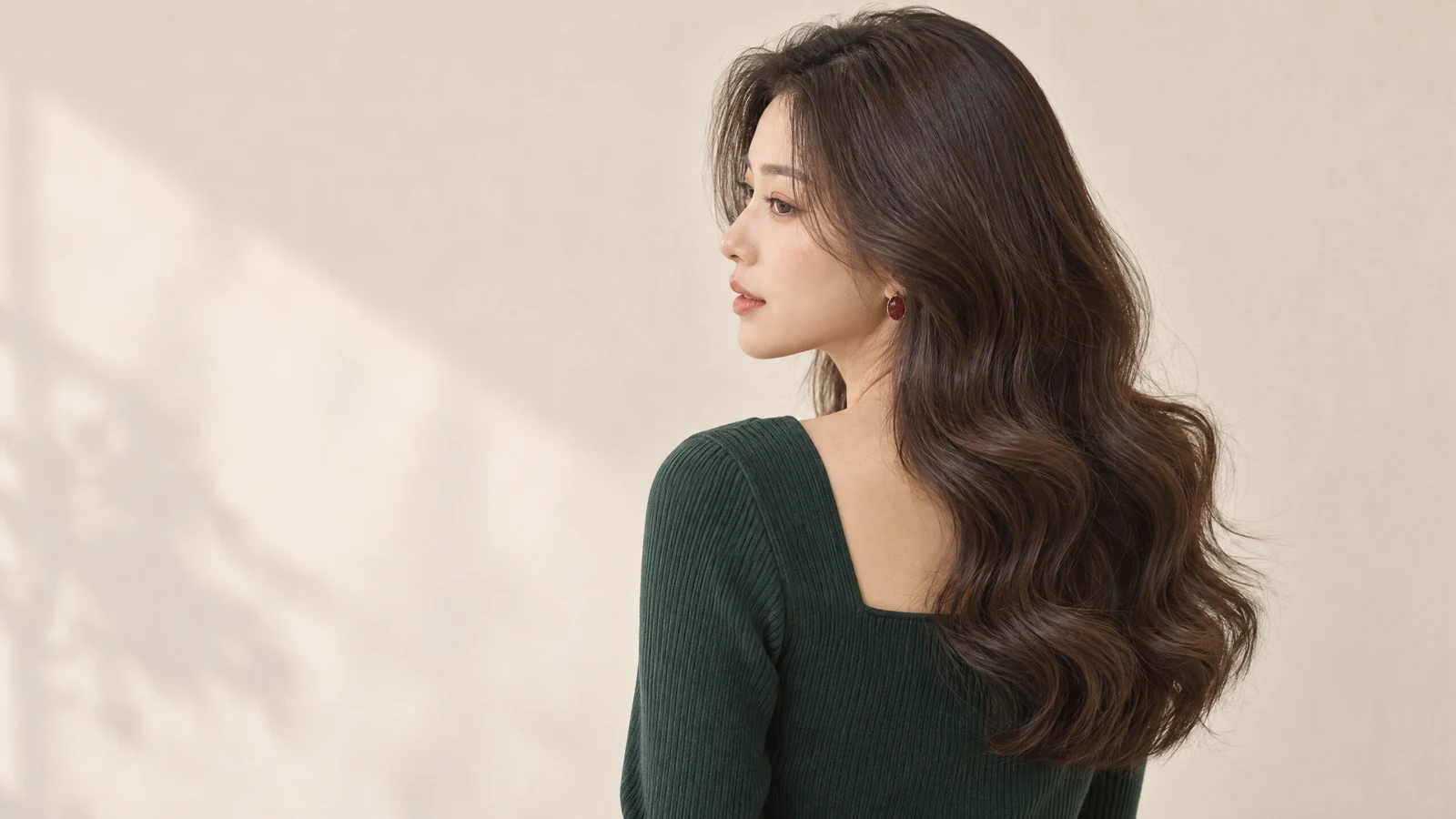
Body wave perm vs spiral perm: read the overall silhouette
A wavy perm goal emphasises movement across the silhouette, whereas defined spirals put more attention on individual strands. A loose curl perm may sit between those descriptions. Compare the outline from the front and side, not only a close-up of one curl. Hair length, cut and condition still determine which direction is worth exploring.
The simplest visual distinction is whether you notice broad rises and dips across the hair or individual strands turning into recognisable curls. Broad waves can read as a continuous surface. Spirals give the eye more separate shapes to follow. Neither direction is inherently more elegant or more natural: the useful question is which texture you want to see when you look in the mirror at normal distance.
The Campus guide to permanent waves describes body waves as looser, larger waves and spirals as twisted, bouncy curls. That is helpful vocabulary for a reference discussion. It is not a reason to assume that every salon uses these terms for an identical service or that your hair will reproduce a photographed pattern.
Use body wave perm vs spiral perm to describe density
Here, curl density means how closely the visible turns sit together, not how many hairs grow on your scalp. A head of densely growing hair can still have widely spaced waves. Look at the outline beside the cheek, behind the ear and across the back. Say whether you want distinct curls throughout or mainly broad movement below a quieter upper section. This gives the stylist a shape to assess rather than just a style name.

Soft and beach-like movement are styling goals
A loose wave perm and a soft wave perm both suggest wider, less sharply defined movement. A beach wave perm usually suggests a relaxed, irregular-looking finish rather than identical curls. Explain which feature you like: the spacing, the ends or the uneven texture. These descriptions do not promise that your hair will dry into the same look without styling.
A reference can look relaxed for different reasons. The bends may be widely spaced, some strands may be tucked behind an ear, or the ends may be straighter than the middle. A brushed-out finish can also look softer than the same hair arranged into separate bundles. Identify the feature you want to keep instead of treating every relaxed photograph as the same design.
Consider how much irregularity you actually enjoy. If you want each side to fall in a tidy, similar outline for work, a deliberately tousled reference may not describe your everyday preference. If you enjoy separated pieces and changing directions, say so. The aim is to distinguish an intentionally relaxed finish from hair that feels untidy to you.
Describe the wave rather than a guaranteed finish
Useful wording might be: ‘I like the broad bend below the ear, but I do not want curled ends all around my face.’ For a more textured goal, try: ‘I prefer visible gaps between the strands, with some ends looking less rounded.’ Ask what styling produced the reference and which parts would need deliberate shaping at home. A soft appearance and a minimal routine are separate preferences.
Definition changes apparent length and visual width
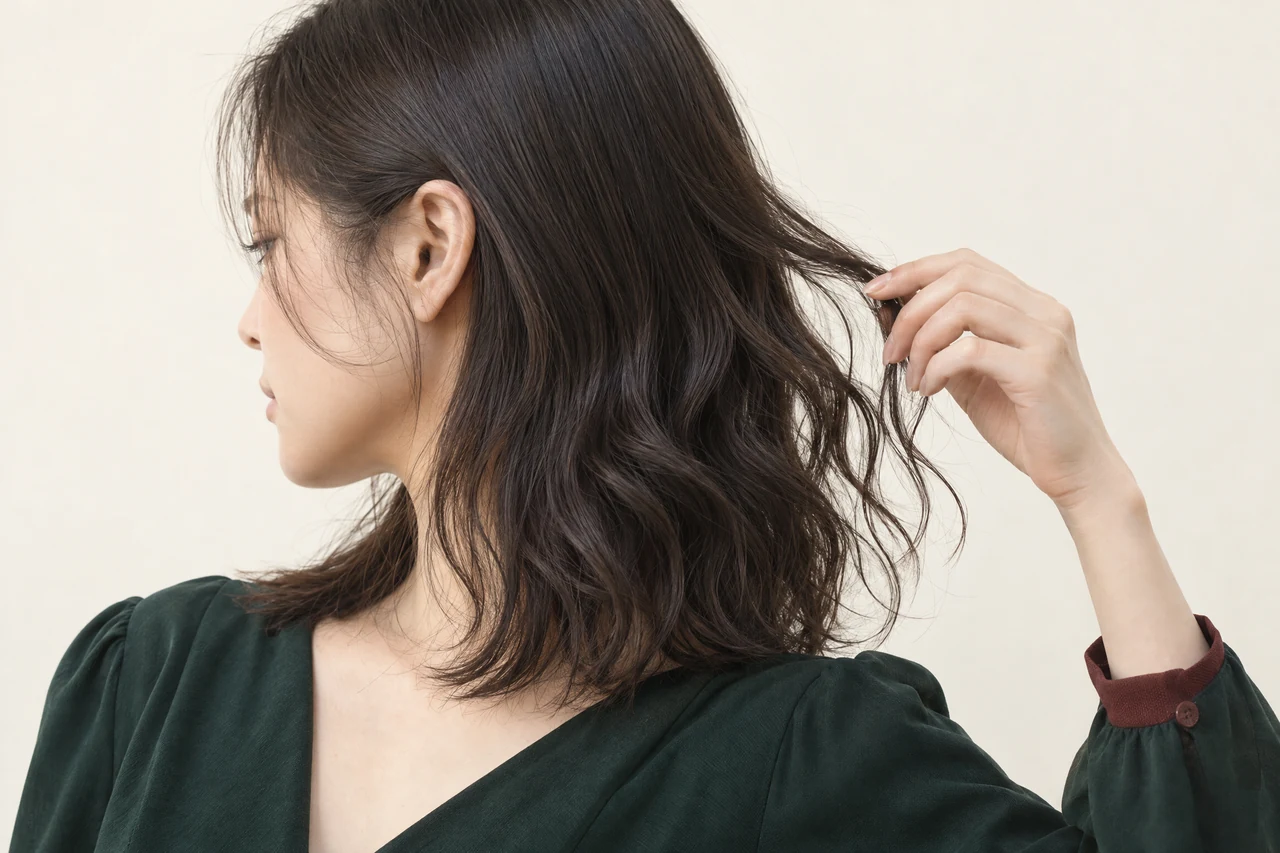
A bouncy curl perm goal calls for more visible spring and definition, which can change how long the hair appears. A C curl perm instead describes a simpler curved end, often directed inward. Bring the discussion back to the shape you want around the face and shoulders; the two descriptions need not mean the same amount of overall movement.
A strand following repeated curves does not hang like the same strand held straight. This is why a curl reference can appear shorter without describing a shorter haircut. Do not estimate the difference from a fixed percentage. Mark the dry end position you want to retain, such as below the collarbone, and discuss it together with the proposed cut and pattern.
Width deserves its own decision. You may like the definition in a close-up but not want a full outline beside your cheeks. Conversely, broad waves can still produce a generous silhouette if the movement spreads outward. View the hairstyle from the front and back, then identify where fullness would be welcome and where you prefer a narrower line.
Continue with perm for short hair for that specific comparison and the preparation questions it raises.
Continue with perm for long hair for that specific comparison and the preparation questions it raises.
Compare a full curl with a bend at the ends
An inward end bend leaves much of the hair looking relatively straight, while a defined curl repeats its turning shape through a longer stretch. If you mainly want the ends to sit neatly, do not choose a spiral reference just because its bottom edge looks rounded. If you want movement throughout, an ends-focused picture may understate your goal. Agree on which parts should remain visually quiet.
Natural-looking hair still needs a realistic routine
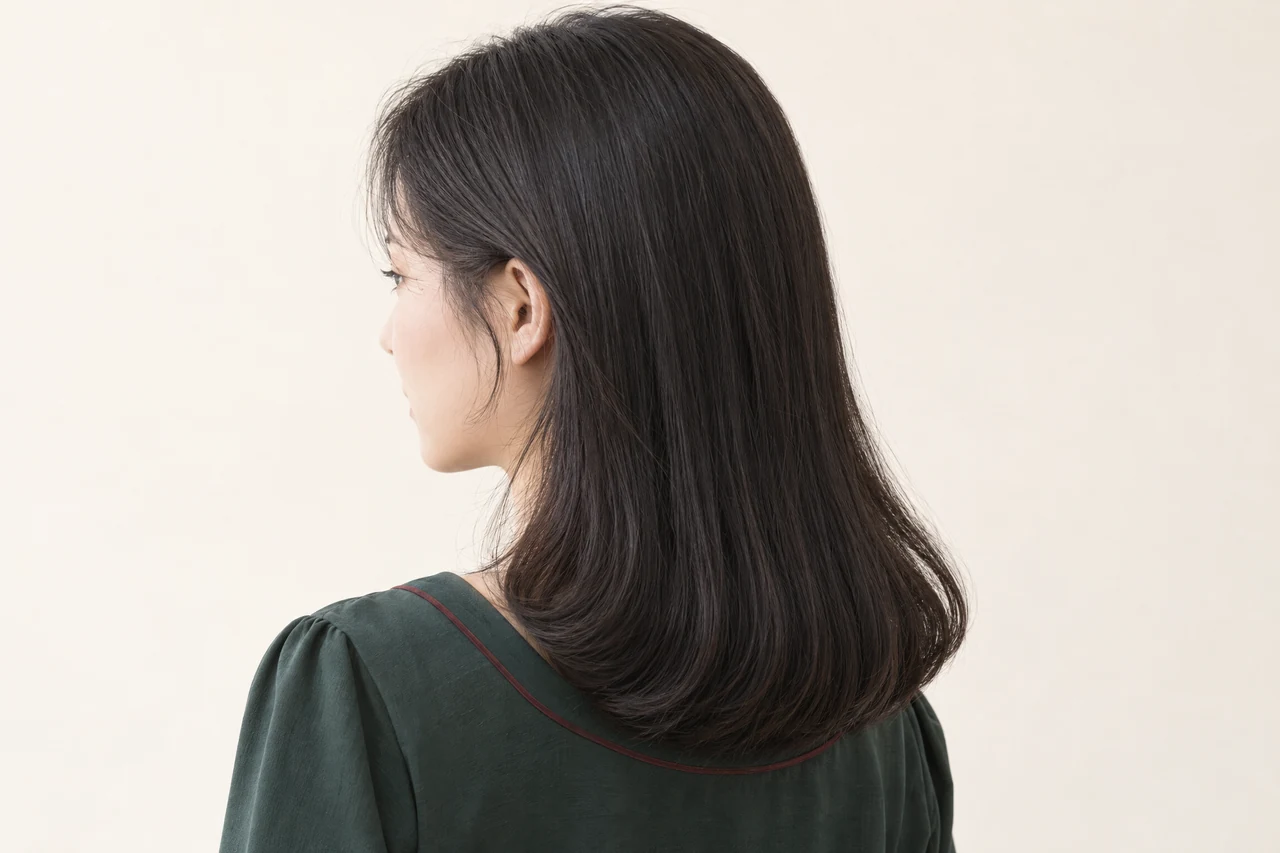
For a natural-looking finish, compare the reference style with your own hair density, layers and everyday drying habits. Softer movement is not automatically easier to maintain, and tighter curls are not automatically longer-lasting. Ask how the proposed finish would be refreshed between washes and whether its visual length fits the haircut you want to keep.
A natural looking perm should fit how you normally wear your hair. Think about whether you wash before work, dry it in the evening or tie it back during exercise. Broad movement may still need shaping to show clearly. Defined strands may require gentler handling to preserve their separation. Choose the routine you would willingly repeat, not the one that sounds simplest in a style caption.
For naturally curly or coily hair, the American Academy of Dermatology's curly hair care advice recommends detangling wetted hair with leave-in conditioner and fingers or a wide-toothed comb, working in sections and avoiding dry brushing to reduce breakage and frizz. This supports gentle handling; it is not a specific first-wash instruction for a new perm. Get that instruction for your actual service.
Discuss perm aftercare alongside the desired finish, so the washing, drying and refresh steps are clear before you choose the curl direction.
Choose movement you are prepared to maintain
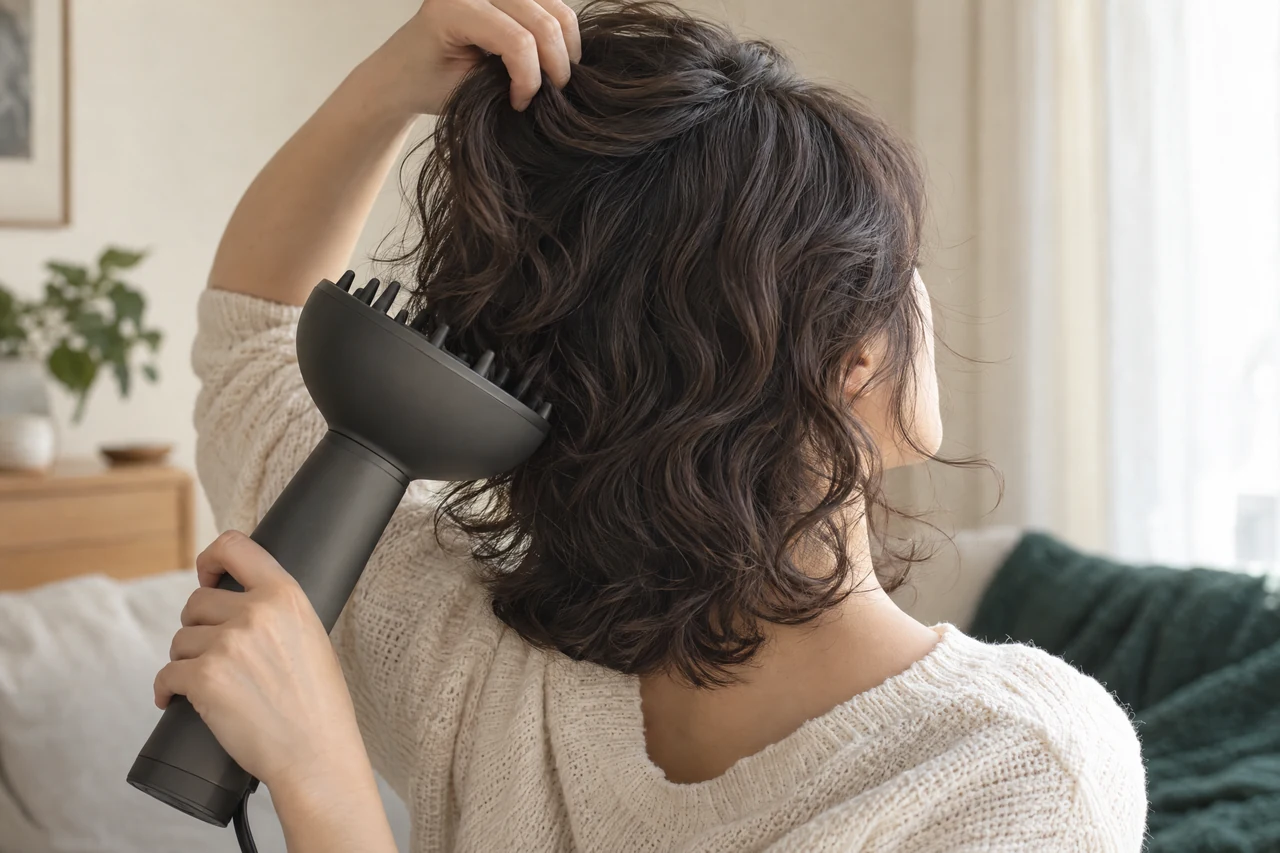
Ask for an explanation of the everyday finish as well as the polished finish. Would you need to encourage the waves with your hands, use a diffuser or reshape selected strands? Tell the stylist if you dislike styling products or do not own the suggested tool. For your Hong Kong commute, mention whether you usually wear your hair down outdoors or keep it tied back; that changes which parts of the shape matter most.
Compare your starting hair with the reference
Your existing texture is part of the comparison. If your hair already forms mixed waves and curls, show it without stretching it straight or arranging it into a special finish. You may want more consistent movement, clearer separation or less visual width rather than simply ‘more curl’. These are different requests, even when the saved reference uses the same spiral label.
Bring details of previous colour, bleach, straightening and perms, including where treated lengths remain. Describe ends that tangle easily or strands that break during normal handling. A looser-looking design should not be treated as an automatic shortcut around a hair-condition assessment. The stylist needs to judge the proposed change on the hair you have now.
Continue with digital perm vs cold perm for that specific comparison and the preparation questions it raises.
Separate the appearance from the service method
Once the visual target is clear, ask which available service could reasonably approach it and why. Do not choose a processing method solely because an online picture calls the hairstyle a body wave. Keep the conversation focused on your desired pattern, condition and dry finish. A useful recommendation explains the relationship between those factors instead of relying on the name alone.

Turn your preference into a clear consultation request
Prepare a preferred reference and a contrasting picture that shows what you do not want. Explain the difference in plain terms: wider bends, more separated curls, less fullness at the cheeks or a quieter end line. Your normal front and back photos help place those preferences in the context of your existing haircut.
Use the hair perm service guide to discuss suitability and scope after identifying your preferred visual direction. The listed full-head perm price is HK$1,600. That service category does not establish a separate body wave or spiral package; confirm the applicable service, haircut inclusion and any additional charge for your enquiry.
Agree on the everyday version of the look
Before proceeding, ask the stylist to summarise the expected outline, the dry length to protect and the home routine. If one part of the reference is unsuitable, decide what matters most. Keeping the visible length may be more important to you than matching every curl. Leaving with a clear priority is more useful than agreeing to an appealing label whose details remain uncertain.

Broad-wave and spiral-style goals: compare the visible features, not an assumed processing recipe
| Decision | Broad-wave direction | Spiral-style direction |
|---|---|---|
| Main visual emphasis | Flowing bends across the hairstyle | Recognisable turns in separate strands |
| Curl spacing | Wider gaps between visible bends | More closely repeated turns may be desired |
| Apparent length | Discuss the dry end position even with loose movement | Repeated curves may make the hair appear shorter |
| Width around the face | Decide where broad waves should spread | Decide where defined curls should add fullness |
| Home styling | Ask how to encourage movement without flattening it | Ask how to maintain strand separation without rough handling |
| Best reference detail | Show the wave spacing and quieter areas | Show the definition and overall silhouette |
Your preparation checklist
- Save a preferred curl reference and a contrasting image; identify the specific feature you want to avoid.
- Photograph your normal dry hair from the front and back without a special curl-setting finish.
- Name the dry length you want to retain and the positions where extra width would or would not suit you.
- Prepare your colour, bleach, straightening and perm history, including the treated lengths still present.
- Describe your washing schedule, available drying tools and willingness to use styling products.
- Confirm the proposed service, price, inclusions and home-care instructions before agreeing to proceed.
Frequently asked questions
Can a perm create loose waves?
Loose waves can be a consultation goal, but feasibility depends on the hair, the intended placement and an available suitable method. A style label or photograph cannot confirm the outcome.
What matters in a loose curls vs tight curls perm comparison?
Compare curl spacing, apparent length, visual width and your drying routine. A tighter reference curl may look shorter or fuller, but that does not establish a fixed maintenance advantage.
How do I describe a natural looking perm?
Point out the relaxed movement, curl spacing or curved ends you like, and show your normal unstyled hair too. Natural-looking is a visual preference, not a guarantee of no daily styling.
Find a curl direction that fits your everyday hair
Send Vit So your normal hair photos, preferred wave or curl reference and treatment history for an enquiry in Sheung Wan. Explain the visible length and styling effort you want to keep. Suitability, service scope, price and appointment availability need confirmation; an enquiry is not a confirmed booking.
Start your WhatsApp enquirySources & further reading
- What is a Permanent Wave? Everything You Need to Know About Perms
Common visual descriptions of body waves as looser, larger waves and spirals as twisted, bouncy curls.
- 6 curly hair care tips from dermatologists
Gentle section-by-section detangling and avoiding dry brushing for naturally curly or coily hair, not a perm-specific first-wash schedule.



