






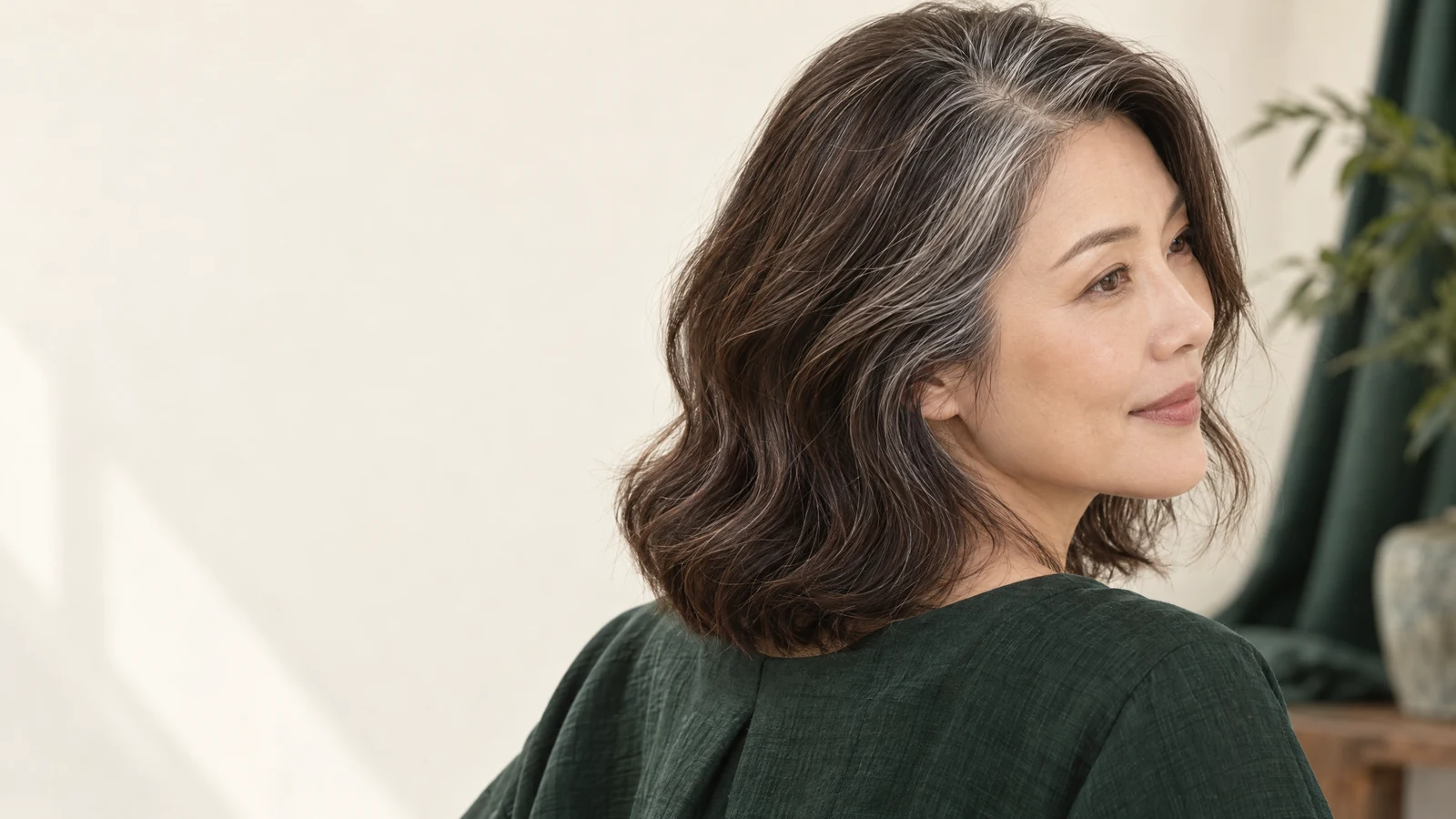
Warm balayage with natural silver strands kept untoned: two separate goals
Wanting warm balayage does not mean wanting every pale strand to look golden. Your preferred picture might include honey or caramel ribbons through darker lengths, while the natural white hair at your temple remains a different visual feature. Explain that difference directly. A request for a warm overall finish can otherwise sound like permission to coordinate the silver with the coloured hair, even when that is precisely what you want to avoid.
Decide what you mean by untoned before discussing shade names. You may mean no deliberate colour application to selected natural white strands, rather than a requirement for those strands to look paper-white in every light. Natural silver can still appear warmer beside caramel hair or under a warm lamp. Separating product contact from visual appearance gives the consultation a realistic starting point and avoids treating every warm reflection as proof that the silver was coloured.
A brief for warm balayage with natural silver strands kept untoned
A useful brief is: keep the identified natural silver out of deliberate tonal colour, add warm brightness to selected darker lengths, and explain any unavoidable compromise before proceeding. This is more precise than asking for a warm blonde with grey blending. It also sets a priority. If the stylist cannot confidently work around the retained strands, say whether you would prefer fewer highlights, a different placement or no chemical change that day.
Map the silver before choosing the warm ribbons
Show the silver with your everyday parting, then move the hair to reveal where those strands continue. A conspicuous temple patch may contain darker hairs, and isolated white strands may pass through the same lengths you want highlighted. The visible feature is therefore not necessarily a neat section that can be lifted away as one piece. Ask the stylist to assess the distribution in person rather than promising exclusion from a photograph alone.
The guide to how to keep a natural white streak when colouring hair helps you describe the feature to retain. For this warm-and-silver plan, add an extra question: where should the new warm ribbons sit relative to that feature? You might prefer the closest coloured ribbon further back, or want the front white hair to remain the strongest face-framing line. Neither choice requires all other grey hair to disappear.
Preserving natural white hair beside warm highlighted lengths
Treat a concentrated silver section and scattered white hairs as different requests. A defined front area may be easier to discuss than excluding every individual white strand throughout a dense head of hair. Explain whether all natural whites matter equally or whether the visible front feature is your priority. That distinction can change the feasible placement, but it is a discussion about limits, not a guarantee that the retained area will remain completely untouched.

Choose warmth and brightness without matching the silver
Describe the warm lengths in terms of both colour and brightness. A medium caramel ribbon against dark brown hair makes a different statement from a very pale golden ribbon. The first may leave the white feature as the lightest area; the second may compete with it. Compare the width and number of coloured ribbons too. A smaller amount of warm brightness can preserve the visual distinction more clearly than a near-continuous blonde surface.
Use bronde balayage as a reference for balancing brown depth and blonde brightness, not as a formula for colouring the natural silver. Point to the exact part of a picture you like: the warm mid-lengths, the darker space between ribbons or the softness near the roots. A photograph showing an all-over beige finish may be a poor overall target if its appeal depends on every light strand sharing the same tone.
Read two references in comparable light
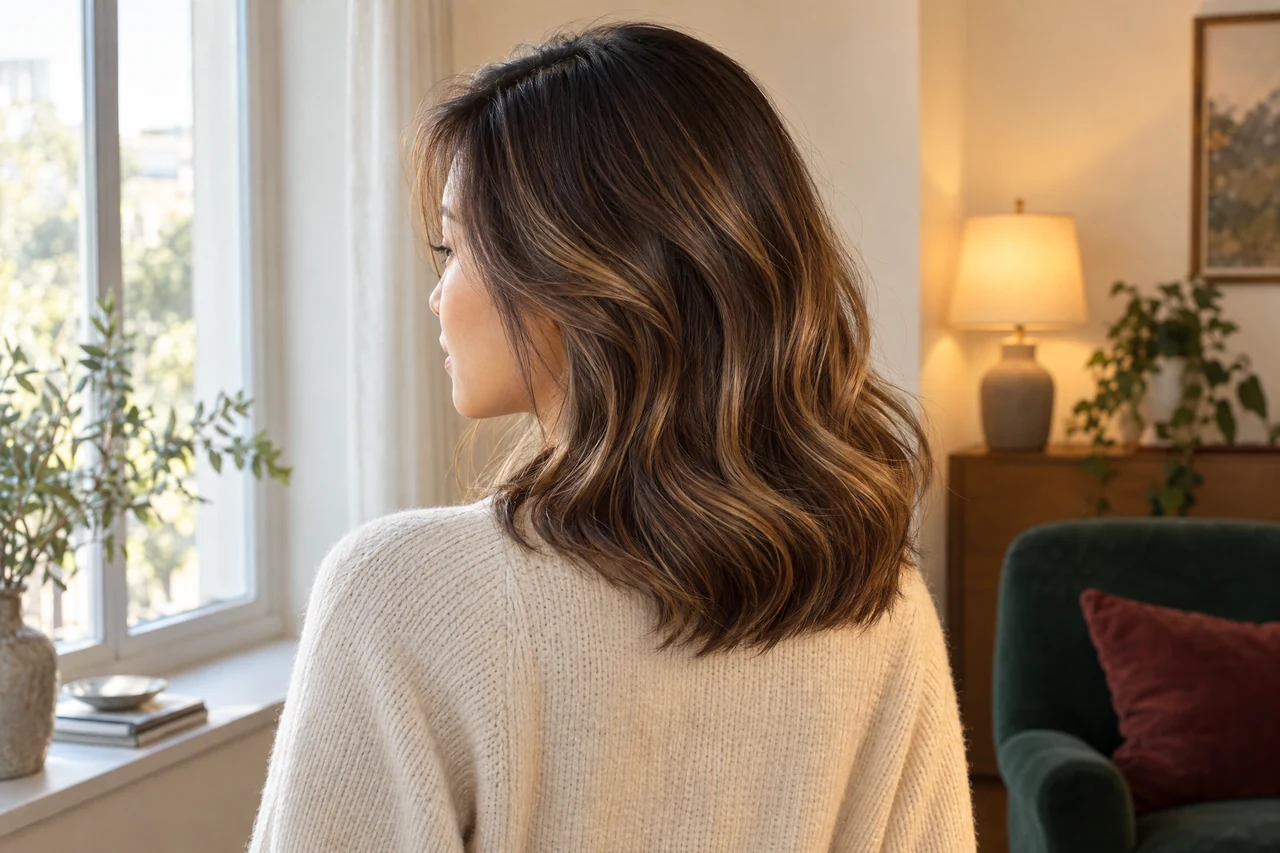
Bring one image for the warmth you want in the highlighted lengths and another for the silver contrast you want to retain. Neither has to represent your whole head. Compare them in neutral daylight as well as your usual indoor lighting, without colour filters where possible. The warm-ribbon image below illustrates that half of the brief only; it does not demonstrate that natural silver was protected during a colour service.
Ask what each tonal step would actually touch
Do not assume a product called a toner or glaze leaves natural silver unchanged. Wella Professionals' explanation of demi-permanent colour describes products used for toning highlights and balayage, and explains that a translucent glaze can lightly tint grey hairs. This supports asking about the specific proposed product. It does not establish that every toner behaves alike, nor that a gentle-sounding name means the white hair will retain its original appearance.
Ask the stylist to explain the lightening stage and any later tonal application separately. Which hair is intended to receive each product? Would the tonal colour be restricted to selected ribbons or applied more broadly? How would the retained area be managed during application and rinsing? A service description alone does not settle these questions. They depend on the hair's distribution, the chosen products and whether a workable separation can be maintained.
Selective toning is a question, not a promise
If a tonal adjustment would help the lightened ribbons, ask whether selective application is realistic. Simply omitting toner could leave those ribbons looking different from your reference, while an all-over application could conflict with keeping silver untoned. The right decision may be a less ambitious placement or accepting a different warmth. Do not request a home formula or fixed processing time to solve this boundary: both need an assessment of the actual hair.
Check colour history, hair condition and reaction concerns
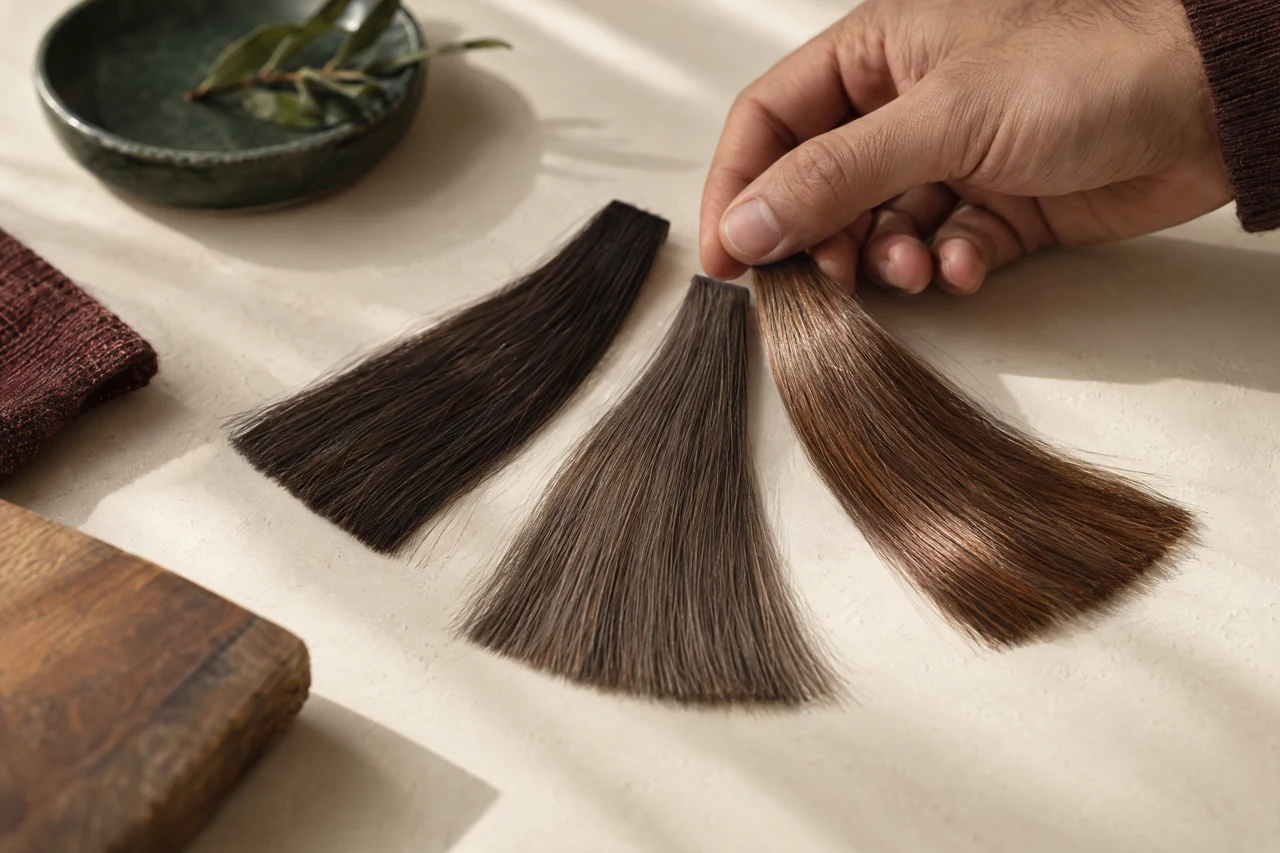
Tell the stylist about previous permanent colour, bleach, colour-depositing masks and home toners, including anything used on the white feature. Naturally white regrowth and older lengths that already carry colour are not the same starting point. If a formerly coloured white section is now yellowish or beige, excluding it from new colour will not necessarily restore an untouched appearance. Agree whether the appointment is about preservation going forward or attempting a separate correction of existing colour.
Safety information belongs beside the design brief, not hidden behind it. NHS guidance on hair dye reactions advises following product instructions and not continuing use after a reaction to a patch or strand test. Tell the stylist about previous reactions before arranging colour and confirm the required checks. Seek medical advice if reaction symptoms worsen; sudden mouth or throat swelling or difficulty breathing needs emergency help. Keeping silver excluded is not an allergy-prevention plan.
Know when to postpone the colour decision
A strand assessment can help discuss how a selected piece of hair responds to the proposed process; it is not the same as a dermatologist investigating an allergy. Postpone chemical work if reaction concerns remain unresolved, the scalp is currently sore or irritated, or the stylist finds the intended lightening unsuitable for the hair's condition. You can still clarify the design priorities without committing to treatment. Preserving the feature matters less than avoiding an unsuitable process.
Plan future refreshes around the same exclusions
A later refresh needs the same two-part brief as the first appointment. Show whether the silver feature is still the priority and describe what has changed in the coloured lengths. Do they look too pale, too warm or simply less defined? Avoid asking to refresh everything when only selected ribbons need attention. Discuss colour-depositing home products before using them across both areas, because adding or correcting tone may conflict with wanting the white strands to remain untoned.
The confirmed Balayage / Ombré service price is HK$2,500 and includes one bleaching session. When enquiring about ombre hair, explain that your request also includes natural-silver exclusions and ask which tonal steps are proposed. The listed service price is not a personalised quotation for every possible correction or additional treatment. Confirm suitability, service contents and the actual charge before agreeing; do not assume that leaving selected hair out creates a different published price.
Agree what a successful compromise looks like
Set the outcome priorities in order before chemical work: the retained silver feature, the acceptable warmth of the ribbons and the amount of brightness. Recheck the shape with the hair worn as you normally wear it, rather than only styled to display the highlights. If protecting the feature means fewer or differently placed ribbons, decide whether that compromise still appeals to you. A clear stopping point is more useful than an exact colour promise.
Compare the intended colour zones, not just the name of the finish.
| Area or choice | Preferred appearance | Question to resolve |
|---|---|---|
| Natural silver feature | Visible natural white strands, excluded from deliberate tone | Can this area be separated through the proposed stages? |
| Selected warm ribbons | Caramel, honey or another agreed warm direction | What lightening and tonal adjustment would those ribbons need? |
| Remaining dark hair | Enough depth to keep the two lighter features readable | How much uncoloured darker space should remain? |
| All-over tonal application | More coordinated light areas | Would that coordination change silver you wanted untoned? |
| Reduced highlight placement | Less new brightness, with the silver still prominent | Is this the preferable compromise if isolation is difficult? |
Your preparation checklist
- Photograph the silver feature with your usual parting and hair worn loose.
- Identify whether every white strand or one visible area must be excluded.
- Bring a separate reference for warm ribbons, without expecting a whole-head match.
- Record previous colour, lightening, home tonal products and any reaction history.
- Ask where lightener and any tonal product would be applied and managed.
- Confirm acceptable compromises, necessary checks, service contents and the actual quotation.
Frequently asked questions
Can I keep the silver untoned if the warm balayage needs toner?
Possibly, if the stylist judges a selective approach workable for your hair and the products involved. It is not something a photograph can guarantee. Ask what would happen if the white strands cannot be reliably separated, and choose your preferred alternative before treatment rather than assuming all-over toning is harmless to silver.
Does preserving natural white hair beside warm highlighted lengths mean no colour products at all?
No. It means distinguishing the hair you want coloured from the natural white hair you want excluded. Other strands may receive lightener or tonal colour, subject to assessment. Be explicit about whether untoned means no deliberate pigment application to the retained section, and ask about practical limits through the whole proposed process.
What if my silver already looks warm before the appointment?
Show it in daylight and explain any previous colour or colour-depositing products. Leaving it out of new tone is a preservation choice, not a promise to remove an existing warm appearance. If you want correction as well, discuss that as a different goal and ask whether it conflicts with keeping the section untreated.
Enquire about warm ribbons with a retained silver feature
Send Vit So a WhatsApp enquiry on +85253057561 with clear photos of your natural silver, your usual parting and the warm lengths you like. Explain your colour history and the exclusions that matter most. Ask about an assessment at 252 Hollywood Road, Sheung Wan, Hong Kong; suitability, price and appointment arrangements require confirmation. If consultation language matters, confirm it when enquiring.
Start your WhatsApp enquirySources & further reading
- Does Demi-Permanent Color Cover Grey Hair — Wella Professionals
Professional product education explaining that some demi-permanent colours used for highlights and balayage can blend or lightly tint natural grey. Useful for discussing tonal exclusions, not an endorsement or a claim about Vit So's products.
- Hair dye reactions — NHS
Public-health advice on following dye instructions, stopping after a reaction, medical investigation of previous reactions and recognising symptoms needing medical or emergency help.



