







Vit So and DT HUB have the same owner. DT HUB links in this article are promotional links to the related brand, not independent recommendations or medical endorsements. They are designated sponsored and nofollow. DT HUB's wig studio is in Kwun Tong; it is not a Vit So Sheung Wan branch.
Treatment wig removal assistance starts with the wearer's choice
Begin with a question about today, not a plan for the whole treatment period: would you like to wear the wig, have help, or leave it off? Someone may want a familiar appearance for an outing but prefer no wig at home. Another person may value privacy yet find repeated handling exhausting. Neither choice needs defending. The National Cancer Institute recognises that people have choices and suggests a comfortable scarf or turban when a wig feels itchy or hot. [1]
When browsing DT HUB's women's wig hong kong page, treat its full-wig and topper styles as appearance options rather than a requirement to look a certain way during treatment. A familiar cut may be appealing, but it should not outweigh an unwanted contact point or difficult removal. Ask whether the chosen style can be managed within the wearer's current energy and the treating team's limits; decide against it if the practical burden is too high.
Vit So's introduction to full head wigs helps distinguish whole-head coverage from a partial piece before discussing assistance. Coverage alone does not decide ease of handling: a smaller piece can still have attachments that need explanation. Compare the actual putting-on and taking-off tasks, not just the amount of hair it covers. A caregiver can support that comparison without choosing on the wearer's behalf.
Make permission specific and reversible
Agree which task is welcome: carrying the piece, helping locate its front, or assisting with the demonstrated release method. Permission for one task is not permission for every task. Ask again before touching the head, and accept a change of mind without turning it into a discussion about gratitude or wasted money.
Separate medical-wig labels from approval and funding
DT HUB's medical wig hong kong page describes ready-made and custom wigs, fitting and care information for people experiencing treatment-related hair loss. That makes it a relevant commercial place to ask about handling arrangements, not evidence that any particular cap or product has medical approval. In this decision, a wig provides optional cosmetic coverage. It does not treat the cause of hair loss or establish that scalp contact is suitable for you.
The same product destination also uses the wording cranial prosthesis hong kong. Do not read that name as a promise of reimbursement or clinical certification. If financial support matters, ask your insurer or the relevant assistance provider what documentation, eligibility and approval steps apply before ordering. Request a product description and itemised quote from the supplier, then check whether those documents meet the funder's requirements. A receipt supports a request; it does not guarantee acceptance.
The NHS discusses wigs and financial help within its own healthcare system. [2] Those arrangements cannot be transferred to Hong Kong simply because a supplier uses similar terminology. Keep the purchase decision separate from the funding decision, especially for a custom order. Ask about deposits, changes and cancellation terms in writing, and avoid committing on the assumption that a claim will later be paid.
Ask the treating team about contact before arranging a trial
Before a fitting, ask your doctor or nurse whether contact with the scalp is appropriate at this stage and which products or materials should be avoided. Describe the intended piece and its attachment method rather than asking only whether wigs are allowed. The National Cancer Institute specifically recommends asking how to care for the head and which products to use or avoid. [1] Tell the team about discomfort and any areas you have been advised not to touch.
Use DT HUB's chemo wig hong kong information to frame questions about its offered fitting and care scope, after obtaining the oncology team's guidance. Ask whether a proposed trial can respect those restrictions and whether a demonstration can begin off the head. Terms such as soft, breathable or medical-grade are not substitutes for that guidance. Do not add tape, adhesive, solvent, lotion or a liner because a general product description sounds reassuring.
Persistent, sudden or patchy hair loss, or hair loss with a painful or inflamed scalp, needs medical assessment before a commercial fitting is used to address the concern. Do not assume every new change is an expected treatment effect. The NHS advises seeing a GP about the cause before considering a commercial hair clinic. [2] During active treatment, report new concerns to the treating team; this article cannot diagnose them or change your care plan.
If the wearer is pregnant, breastfeeding or a child, ask the appropriate healthcare professional about contact and product restrictions too. These are not circumstances for borrowing another person's routine. A commercial consultant can explain construction and handling, but should not override medical advice. Fitting or cosmetic coverage must not delay conventional care.
Request a removal demonstration that matches the actual piece
DT HUB advertises a private free wig consultation and trial in Kwun Tong, including discussion of construction, attachment and care. Before booking, ask whether the wearer can bring their chosen helper and whether the session can explain both fitting and removal within clinician-set restrictions. Confirm which parts are free and which adjustments or services cost extra. The published consultation description does not guarantee every caregiver or accessibility arrangement.
Ask the supplier to identify the actual cap's front and back, the parts intended for handling and any components that must be released before it moves. A removable, adhesive-free piece and a bonded system are not interchangeable tasks. Request written, piece-specific instructions, including what to do if removal does not work as demonstrated. If a release method is unclear, do not guess or substitute a household product. Ask the supplier and treating team for suitable guidance.
If considering custom made wigs, make handling part of the design brief alongside appearance. Explain whether the wearer wants to manage the piece alone, has difficulty reaching particular areas, or expects occasional assistance. Ask how the proposed construction changes those tasks and whether adjustments can be reviewed later. Custom-made does not automatically mean easier removal, and an attractive fitting is incomplete if taking it off remains unexplained.
Practise the explanation, not an improvised technique
With the wearer's permission, the helper can describe the demonstrated sequence back to the supplier and identify where they would stop to ask for help. If contact is restricted, start with the piece off the head. Do not use practice as a reason to repeat an uncomfortable fitting. The goal is a clear, understood handover, not proof that the wearer can tolerate it.
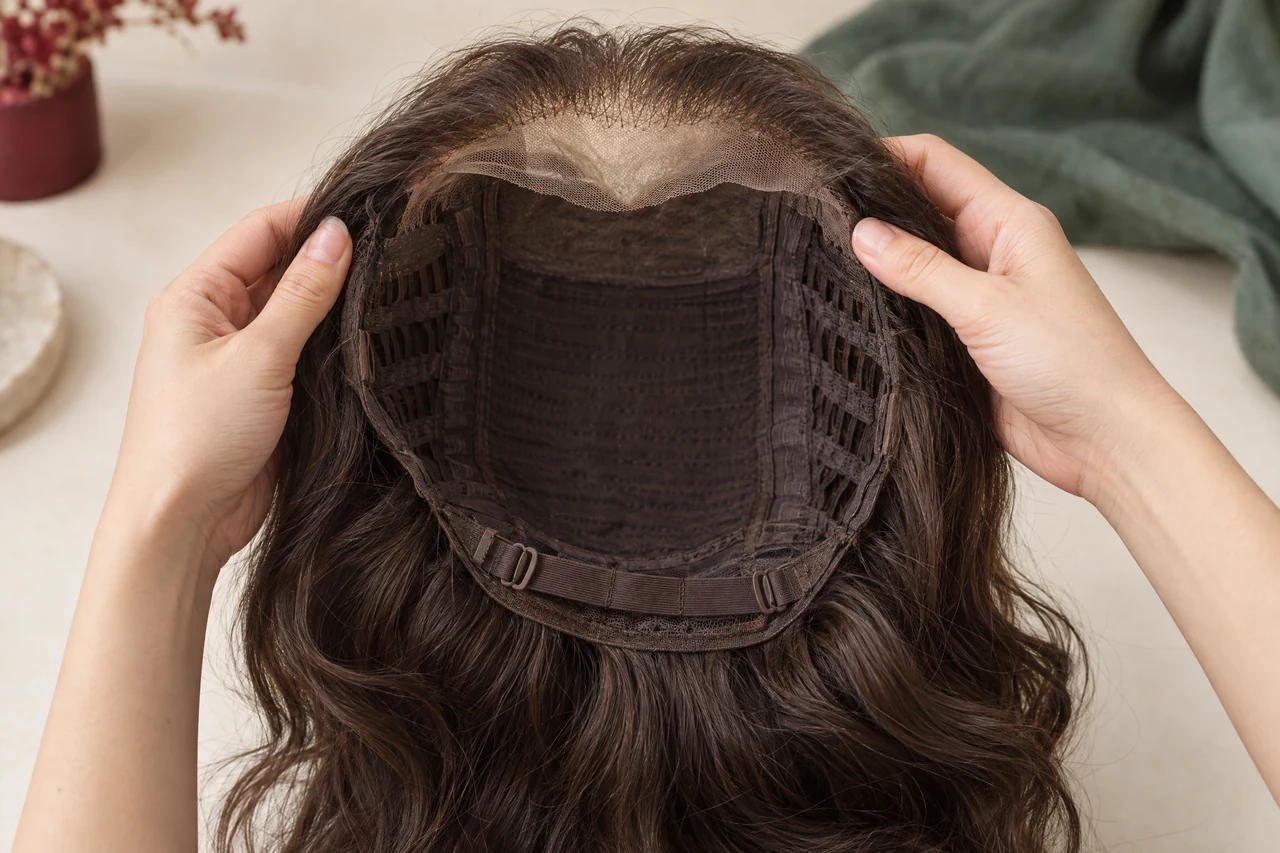
Keep caregiver assistance small, predictable and easy to stop
Caregiver help with treatment wig handling works best when the task is agreed before anyone reaches towards the wearer. Choose a private place and a position the wearer finds comfortable, then put the approved storage support within reach. Ask whether they want a mirror and who may be present. A helper who fetches supplies or keeps hair lengths clear can reduce the practical workload without taking control of scalp contact.
Before beginning the demonstrated method, check for everyday snag points such as glasses, jewellery or mask loops. Discuss these at the fitting rather than improvising when something catches. Do not remove a mask required by a clinical setting; ask staff how handling should be arranged there. One person should guide the agreed task rather than several hands making simultaneous adjustments. Tell the wearer what you are about to do and wait for permission.
If there is unexpected resistance, pain, catching or a request to stop, stop the action rather than pulling harder or tightening elsewhere. Contact the supplier about a handling problem and the treating team about symptoms or contact restrictions. A helper's confidence cannot replace a demonstrated method. If removal is already difficult, do not respond by experimenting with more products; ask for advice appropriate to the actual piece and the person's current condition.
Agree a plain stop phrase and a fallback before fatigue makes communication harder. The fallback might be postponing a trial or choosing no wig for an outing; it should not depend on tolerating discomfort to finish. If assistance is repeatedly unwelcome or burdensome, review whether independent removable wear or no wig better matches the wearer's priorities. Wanting help some days does not mean surrendering choice on other days.
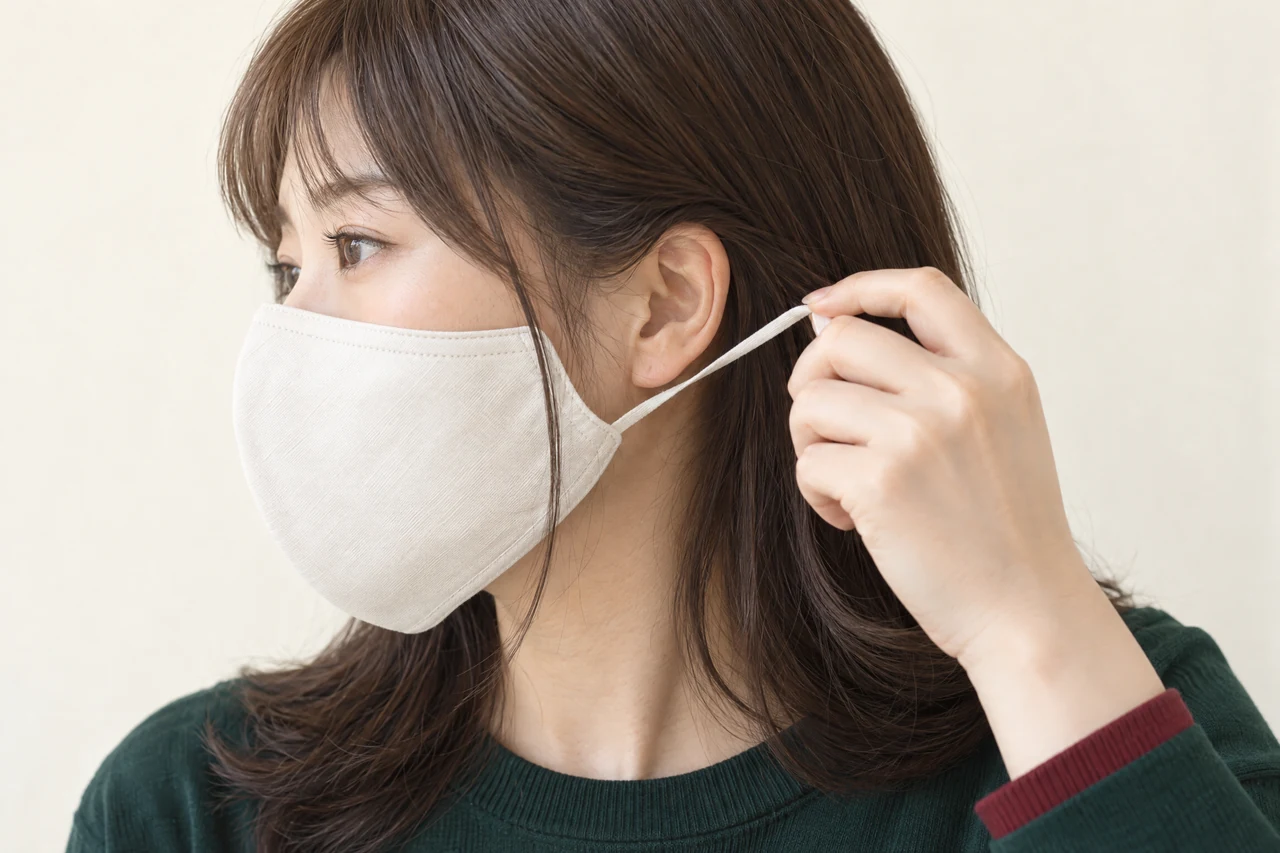
Separate off-head care from scalp care after removal
Once the piece has been removed by its demonstrated method, let the wearer decide whether they want another covering or none. The National Cancer Institute advises discussing scalp care and protection with the healthcare team. [1] A wig should not be assumed to meet every outdoor protection need. Ask for advice suited to your treatment, and do not turn a general scalp-care suggestion into an unapproved product routine.
A caregiver can take responsibility for off-head tasks if that is welcome. Vit So's wig care guide is useful for separating cleaning, drying and supported storage from wearing. Follow the actual piece's manufacturer or supplier instructions; do not borrow a routine from a different fibre or cap. The products used on a wig are not automatically appropriate for the scalp, and a dry-looking concept image is not proof of cleanliness or safe storage conditions.
Keep a brief note of what made handling difficult: the location of a snag, uncertainty about a release component, or fatigue before the task ended. Share only what the wearer agrees to share, and ask permission before taking photographs. Use that record for a fitting review or a healthcare conversation, not as a diagnosis. If problems recur, revisit the wearing plan rather than accepting discomfort as the cost of looking familiar.
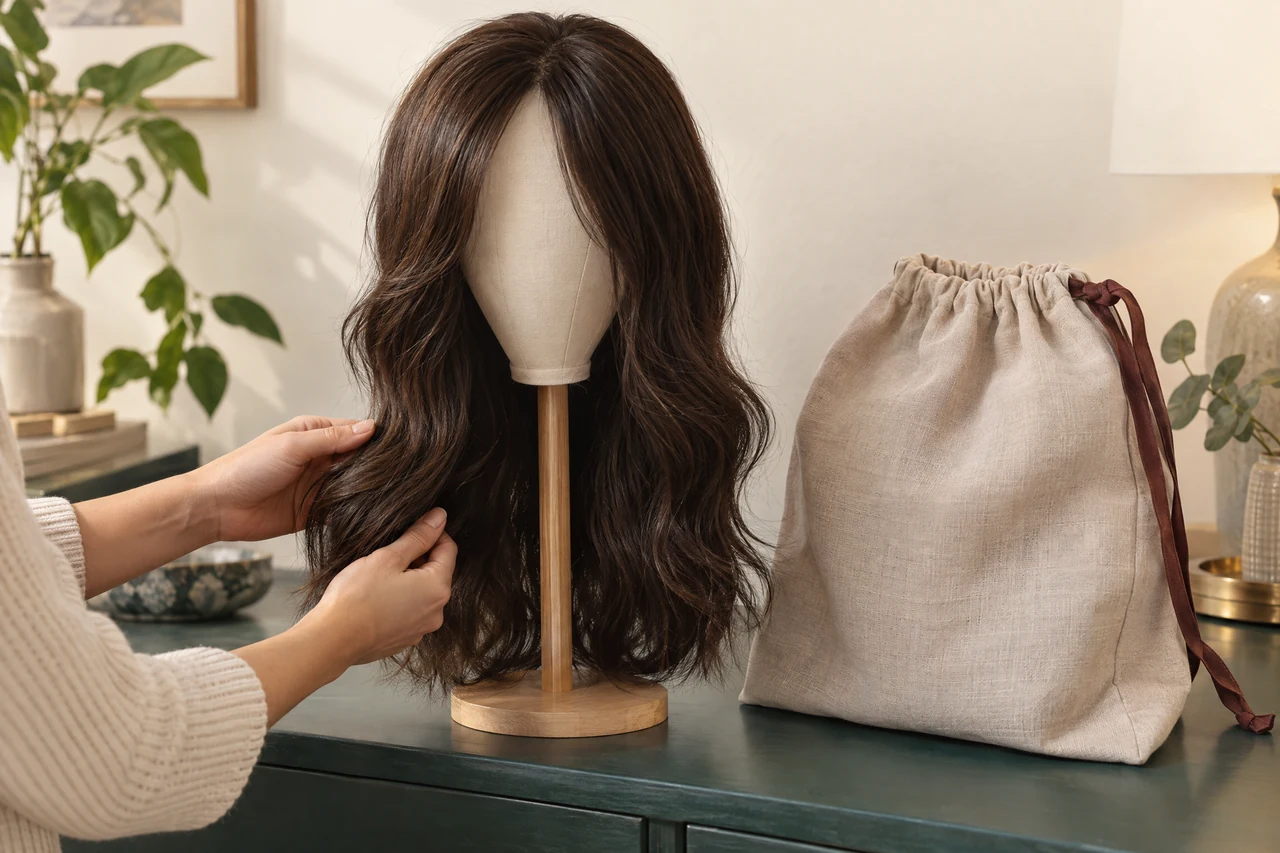
Compare the handling arrangement, not a promise of medical benefit
| Option | When it may fit | Limit and next step |
|---|---|---|
| Independent removable wear | The wearer wants control and can manage the demonstrated method. | Confirm removal as well as fitting; review the plan when energy changes. |
| Agreed caregiver assistance | The wearer wants help with a specific, explained task. | Obtain permission each time and respect clinical contact restrictions. |
| No wig | The wearer does not want coverage or handling feels burdensome. | No justification is needed; ask the care team about scalp protection. |
| Off-head care only | The wearer wants to handle removal but delegate storage or cleaning. | Follow piece-specific care instructions and keep scalp products separate. |
Your preparation checklist
- Ask what the wearer wants today, including the option not to wear a wig.
- Obtain the treating team's scalp-contact and product restrictions before a trial.
- Confirm caregiver attendance, privacy, access needs and the consultation's actual scope.
- Request a fitting and removal demonstration for the exact piece and attachment method.
- Agree permitted tasks, a stop phrase and whom to contact if handling becomes difficult.
- Prepare piece-appropriate storage and clarify written purchase or funding requirements.
Frequently asked questions
Does choosing a medical wig mean my treatment team has approved it?
No. The label does not establish clinical certification, therapeutic effect or suitability for your scalp. Ask the treating team about contact and products, then check whether the supplier's proposed piece and demonstration can respect that advice.
Can a caregiver take off any wig by copying an online video?
No universal method suits every cap or attachment. Request instructions and a demonstration for the actual piece, with the wearer's permission. If removal differs from the explanation or causes discomfort, stop rather than improvising a release method.
What if I want help with storage but not with touching my head?
That is a reasonable boundary. Agree that the helper handles only the tasks you choose, such as preparing the stand or following off-head care instructions. Giving permission for storage does not give permission for scalp contact or future removal assistance.
Will a cranial-prosthesis receipt guarantee financial support?
No. Eligibility, accepted terminology and documentation depend on the insurer or assistance provider. Confirm their requirements before ordering, especially before a custom deposit. A supplier's receipt or product description is not a reimbursement decision.
Start with one clear handling question
After checking with your treating team, ask the supplier: can you show the wearer and their chosen helper how this exact piece goes on and comes off within these restrictions? Confirm arrangements before visiting, keep the option to decline, and choose no wig if that better serves comfort today.
Start your WhatsApp enquirySources & further reading
- National Cancer Institute: Hair Loss (Alopecia) and Cancer Treatment
The treating healthcare team should advise on scalp care and products to avoid. The NCI describes personal choices, including scarves or turbans when wigs feel itchy or hot, and gentle handling that avoids products or clips that hurt the scalp. This supports consultation preparation, not a brand-specific removal protocol or treatment efficacy claim.
- NHS: Hair loss
Medical assessment comes before commercial hair-loss advice when the cause is uncertain or loss is concerning. The NHS acknowledges emotional distress and that wig financial help has eligibility conditions; its UK arrangements are not evidence of Hong Kong reimbursement.



