







Volumising hair styling begins with the outline
Describe where you want a change: a less flat crown, more movement through the lengths or a stronger-looking edge. These are different design aims. Salon styling for flat hair may involve adjusting the direction and balance of the outline, but the result still depends on your hair's starting condition and the way you maintain it.
Look at the hair from the side as well as the front. A crown that sits close to the head can appear flat even when the ends look substantial. Conversely, lifting the top may do little for lengths that separate into narrow, wispy sections. Point to the area that bothers you rather than asking for volume everywhere. This helps distinguish a local styling adjustment from a wider change to the haircut.
The outside edge, or perimeter, is where the longest ends meet. Keeping that line connected can create a more substantial-looking outline, while shorter sections above it can change movement. The useful question is not whether layers are good or bad, but where they would sit and how much hair would remain at the edge. If ponytail fullness matters, show your usual tying position before discussing shorter face-framing sections.
Continue with haircuts for fine hair volume for that specific comparison and the preparation questions it raises.
Setting realistic volumising hair styling goals
Choose a priority you can recognise in the mirror: a gentler slope behind the crown, less exposed separation at your usual part, or ends that read as a continuous line. Explain whether you prefer a softly rounded finish or visible texture. An airy, separated look and a compact, substantial-looking edge are not identical results. Your preferred balance should guide the discussion, rather than choosing the tallest reference photograph.

Fine strands and visible density are different
A fine hair stylist discussion should distinguish strand diameter from the amount of hair covering an area. Hair styling to make hair look thicker is about appearance, not regrowth. Describe any recent change in density separately; new thinning or unusual shedding belongs with a healthcare professional, even if you also want help with the outline.
In its explanation of fine and thin hair, Davines distinguishes the diameter of individual strands from the number of strands on the scalp. You can have fine strands and plenty of them. For a styling enquiry, this means a soft strand texture alone does not tell the stylist how much weight can be removed or how much coverage should be preserved.
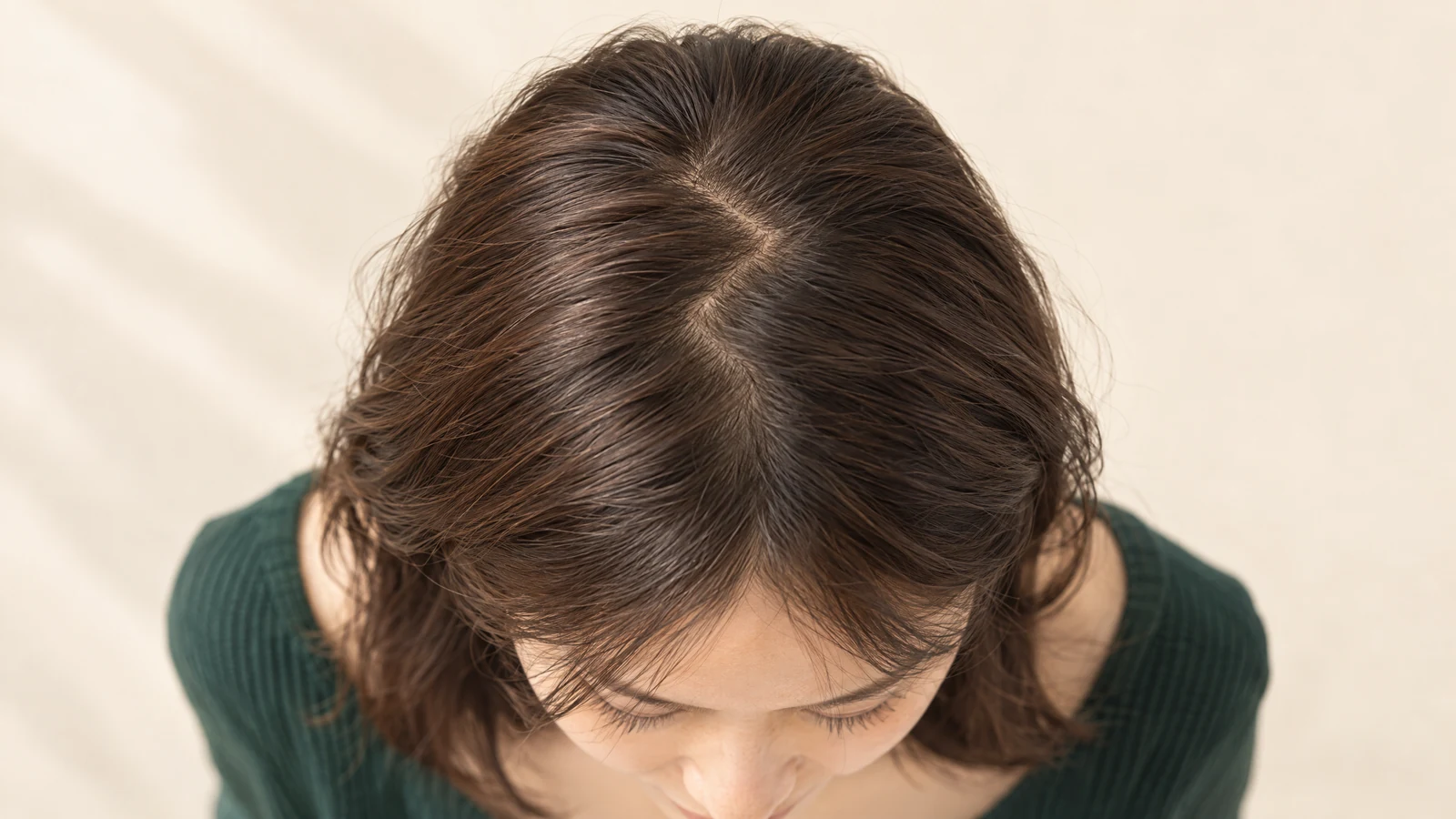
Avoid judging density from a single strongly lit photograph. Instead, describe whether the parting has always looked this way and show comparable pictures from your usual routine. A consultation can address how the existing hair falls, but it should not turn an observation about scalp visibility into a diagnosis. If the change is new, seek healthcare advice separately from your cosmetic design enquiry.
Continue with fine hair vs thin hair for that specific comparison and the preparation questions it raises.
What to discuss with a fine hair stylist
Describe behaviour rather than relying only on the word fine. Does the crown settle while the ends stay mobile? Do the lengths tangle, feel coated after conditioning, or separate when you brush them? Mention bleaching, colouring, straightening and previous perms. These details help frame choices about gentle handling, retained weight and styling effort without assuming every fine-haired client needs the same cut.
Ask about the complete visit, not product contact time
For fine-hair styling in Hong Kong, Vit So receives clients at 252 Hollywood Road, Sheung Wan. Describe where the hair looks flat, its strand texture and the time you normally spend styling. Discuss cut, shape and finish as ways to explore visual fullness; this is a cosmetic design enquiry, not a promise to increase follicle density, treat hair loss or stimulate regrowth.

Root height, length and daily effort
Root lift styling can be discussed as a temporary drying and shaping choice; it does not automatically mean a root perm. Compare how your crown looks after normal drying with how it looks after deliberate styling. If a chemical service is being considered, it needs its own suitability discussion and confirmed scope rather than being added by default.
Parting is a useful variable to discuss before making a larger commitment. A straight centre line, an off-centre line and a softly irregular part arrange the surface hair differently. Ask to compare them with the fringe and face-framing lengths in place. A different part may change which side looks fuller, but the hair's natural direction can limit how comfortably it stays there. Choose a direction you are willing to reset after washing.
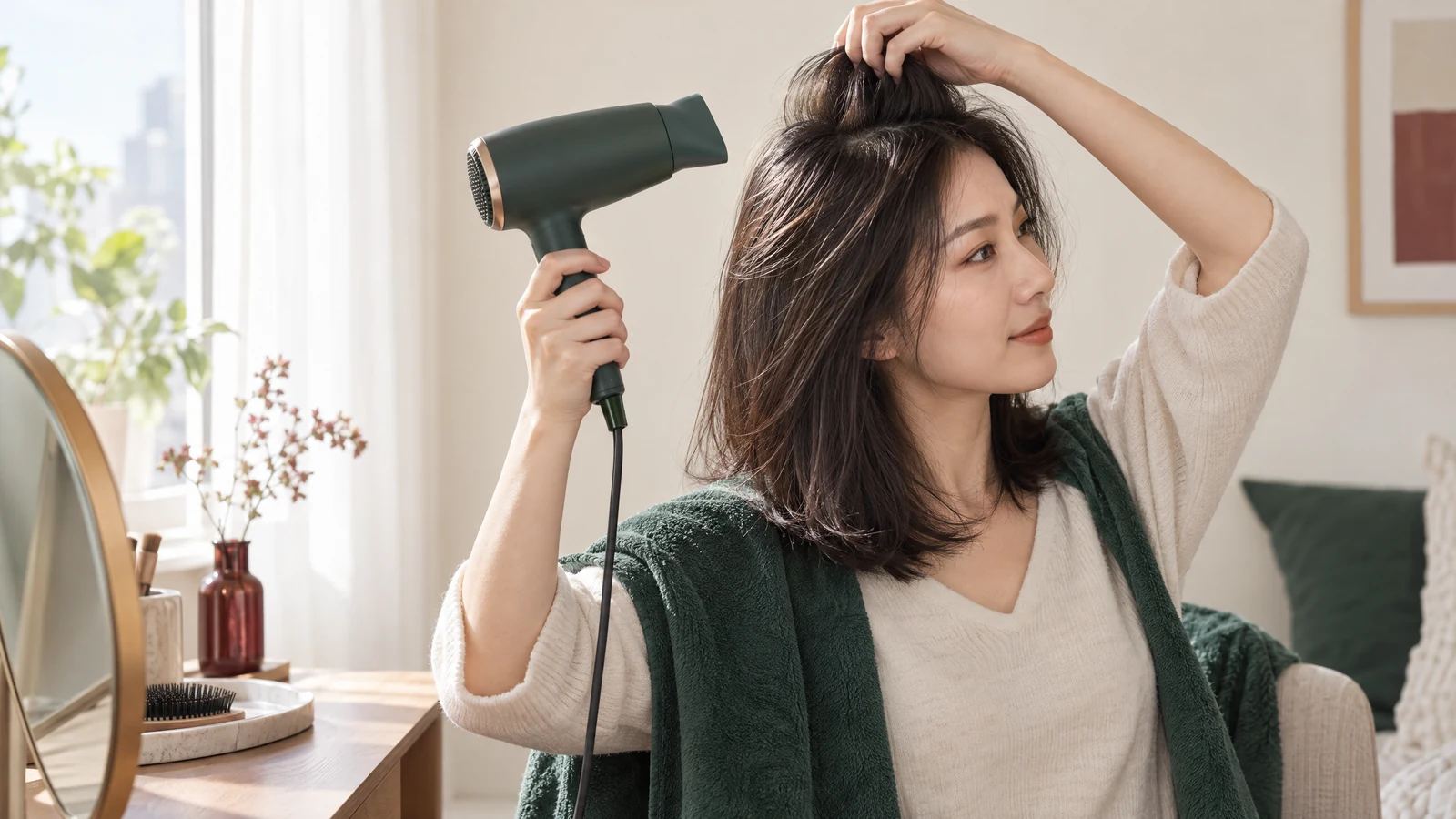
For a drying-based option, ask which small area needs attention and how to support it without pulling hard. A focused crown adjustment may suit your routine better than creating lift across the whole head. Be clear if you normally air-dry or do not use brushes. The consultation should compare that baseline with the proposed finish rather than presenting a tool-heavy routine as effortless.
Continue with how to make fine hair look fuller for that specific comparison and the preparation questions it raises.
Choosing root lift styling without assuming a perm
Keep heat exposure proportionate to the styling goal. The American Academy of Dermatology's healthy-hair advice recommends limiting heat styling, using low or medium settings and a heat-protection product. These are care recommendations, not a guarantee of lift. Discuss how to protect hair from heat styling if your preferred outline would require regular drying or hot tools. No particular device or product is assumed to be part of your visit.
Preparing a practical design enquiry
Bring a view of the front, side and crown in ordinary light, together with a photo of your hair after a normal day. Say how often you wash it, which products you use and whether you air-dry. A plan that fits these habits is more useful than choosing a salon finish that requires tools or time you do not use at home.
Reference photographs are most helpful when you identify a specific feature in each one. You might like the crown height in one image but want to keep the longer ends shown in another. Say so explicitly. Also show a finish you dislike, such as a heavily separated edge or excessive width beside the cheeks. This makes the boundaries of the design clearer without expecting your hair to match a model's texture or density.
Include the moments when the shape becomes inconvenient. If the crown flattens after wearing headwear, explain that routine rather than comparing only freshly styled hair. If you tie the lengths back for exercise or work, show the lowest and highest positions you actually use. Do not sacrifice necessary coverage or tying length merely because a shorter silhouette looks fuller in a photograph.
Your normal hair is useful evidence
List the products already in your routine and where you apply them. The American Academy of Dermatology advises applying conditioner to the ends for fine or straight hair and gently absorbing moisture with a towel or T-shirt instead of roughly rubbing it dry. Ask how your own wash-and-dry habits fit the proposed outline. You do not need to buy a new collection of products before making an enquiry; an accurate description of what you already do is more useful.

Check fullness against the way you wear your hair
A finished outline needs to work when you turn your head, tuck a side behind your ear or put on glasses. Before agreeing on a design direction, consider the silhouette both loose and in your usual tied style. Crown height that suits loose hair may disappear when the top is pulled back; short sections that add movement can also slip out of a ponytail. Discuss which version matters most to you.
For retained length, separate the amount you are willing to trim from the areas you want left alone. Keeping long front pieces does not necessarily mean retaining every internal section, and wanting fuller ends does not automatically mean choosing a short bob. Ask how a proposed shape would look with minimal styling, then compare that with the more deliberate finish. This makes the maintenance trade-off visible before a larger change.
Judge the outline, not just the highest moment
After a styling change, notice whether the main issue was solved: a flatter side balanced, a crown less close to the head or ends easier to keep together. Review it again after your normal wash and drying routine. If you request a follow-up, bring photographs that show where the shape settled and explain what you did at home. Useful feedback describes the location and timing of the change rather than simply saying all the volume disappeared.
Choose the visit around the change you need
If you want a temporary finish without committing to a new shape, ask about a wash and blow dry and describe the area where you want lift. If the concern is the haircut's outline, say that you want to discuss cutting as well as the finish. A styling enquiry should establish which work is being requested, rather than treating consultation, cutting and chemical treatment as interchangeable.
The listed wash and blow dry price is HK$240, while women's wash, cut and blow dry is HK$480 and men's wash, cut and blow dry is HK$380. These are separate listed services, not a dedicated volume package. Confirm which service fits your enquiry and what work it includes. Hair below the chest carries a listed HK$200 supplement where applicable; ask whether that applies to the service discussed.
When you are ready to book a hair appointment, send your ordinary-day photographs, preferred outline and length boundaries with the enquiry. Request confirmation of the service scope, full visit time and applicable charge before arranging your day. Sending an enquiry does not confirm an appointment or commit you to a chemical service.
Make the home routine part of the service discussion
Ask what the finish depends on: deliberate parting, crown drying, a brush technique or optional styling product. Explain which steps you can repeat and which you would rather avoid. The most useful plan gives you a clear priority for daily styling and makes any remaining compromise explicit, whether that means softer crown height, retained length or a less separated edge.

Compare design routes for a fuller-looking outline before choosing a service
| Your priority | Option to discuss | Main trade-off |
|---|---|---|
| Less flatness around the part | Compare natural and adjusted parting directions | A new direction may need resetting after washing |
| More crown height for an occasion | Temporary drying and shaping | The finish changes with washing and daily wear |
| A more substantial-looking end line | Review perimeter weight and layer placement | Less separation may mean a more compact outline |
| Keep a practical ponytail | Preserve tying length and suitable front sections | Very short face-framing pieces may not stay tied |
| Explore chemical root support | A separate suitability and scope discussion | It is not an automatic addition or a density treatment |
Your preparation checklist
- Photograph the front, side and crown in ordinary light, including your end-of-day hair.
- Mark the area where you want fullness and describe whether you prefer soft height or visible texture.
- Explain the length and tying positions you need to retain before discussing layers or trimming.
- List washing, conditioning and drying habits, together with existing products and chemical history.
- Confirm the requested service, home styling effort, full visit time and applicable price before agreeing to the appointment.
Frequently asked questions
Will styling increase my actual hair density?
No. Styling can alter the visible outline and separation of hair. It does not increase the number of strands or treat hair loss.
Do I need a root perm for more height?
Not necessarily. Drying direction, parting and haircut structure may be worth discussing first. A root perm is a separate chemical-service decision, not a guaranteed answer to every flat crown.
Can I keep my current length?
Explain which length you want to retain and where the hair looks flat. The trade-off between length, perimeter weight and daily styling can then be discussed; keeping every part of the existing shape may limit the options.
Is volumizing hair styling different from volumising hair styling?
The spelling differs, but both describe styling intended to create a fuller-looking outline. What matters in the enquiry is the area you want changed and whether you are considering a temporary finish or a haircut adjustment. Neither term means increased hair density.
Discuss a fuller-looking outline that fits your routine
Enquire with Vit So in Sheung Wan using photographs of your usual hair and a clear description of the crown, parting or ends you want to change. Explain the length you need to keep and how you normally dry it. The service, timing and applicable price need confirmation; an enquiry is not a confirmed booking.
Start your WhatsApp enquirySources & further reading
- Tips for healthy hair
American Academy of Dermatology advice on conditioner placement for fine or straight hair, gentle moisture absorption and reduced heat exposure.
- Fine vs Thin Hair: Key Differences + Styling Tips
The distinction between individual strand diameter and hair density; fine hair can also be dense.



