







Grey root touch up while keeping copper lengths: start with what stays
Begin with a positive instruction rather than only saying that you dislike the roots: keep the orange-red reflection through the lengths, keep their present depth, and reduce the visible white at the parting. This gives the colour discussion a clear boundary. A root enquiry can otherwise drift towards making everything look more uniform, even when the variation in your copper is something you like. The aim is not necessarily one flat shade from scalp to ends; it is a root area that belongs with the colour below it.
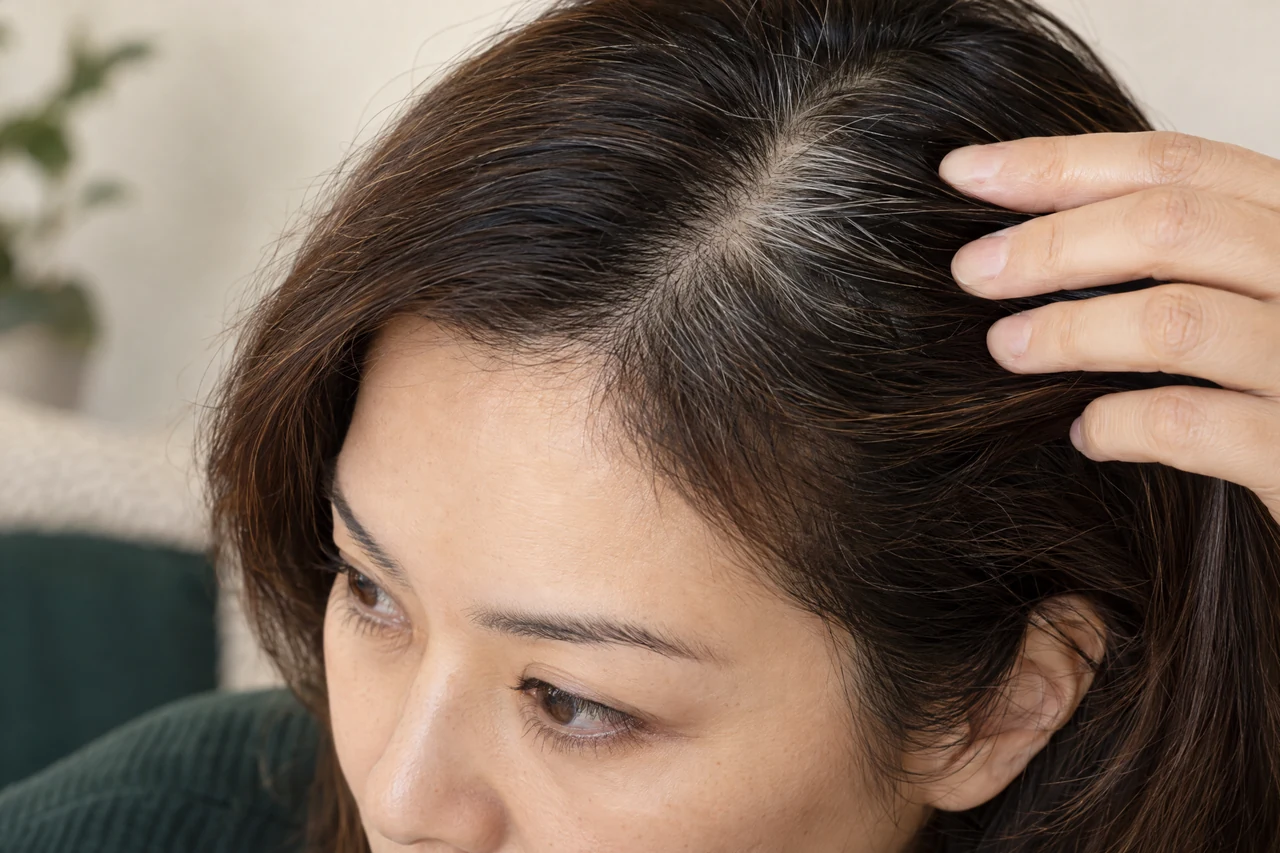
Locate the white regrowth in your usual hairstyle. It may be most noticeable beside the face, along a side parting or when you tie your hair back. Show these positions rather than presenting only a photograph of the back. Also include the whole length so that preserving copper remains part of the same discussion. The root touch up service information is the relevant starting point for checking the published scope, but your photographs and colour history still matter when confirming whether it fits your request.
A grey root touch up while keeping copper lengths needs a root-to-length reference
Use your current hair as the main reference if it already has the copper you want. A saved inspiration photograph can explain the direction, but it should not silently replace the warmth or brightness you are asking to preserve. If your favourite copper appears only through the middle lengths, point to that area specifically. An exact visual match cannot be promised from a phone photograph; the root colour needs assessment beside the actual hair, including any differences between the middle and ends.
Describe the copper you like without asking for cooler hair
Copper can describe quite different looks: bright orange-red, a softer terracotta reflection, or a warm brown with copper appearing mainly in light. Say which feature matters most. Keeping the warmth does not necessarily mean making the roots as bright as the lightest ends. You might prefer a slightly deeper root that still reads warm beside them. Conversely, matching the darkness alone would miss the point if the new root area looked cool against lengths whose orange-red reflection you intentionally chose.
Separate depth from tone when comparing references. Depth describes how light or dark the hair looks; tone describes the colour direction you notice within it. The guide to auburn vs copper hair colour can help you explain whether you want more brown-red depth or a clearer orange-red copper impression. Bring that description back to your existing lengths. A shade name alone is not enough to decide what belongs at the roots, and there is no need to treat every warm reflection as unwanted brassiness.
Compare the warmth in similar light
Take one photograph beside a window without a colour filter and another in your usual indoor light. Keep the same parting and show both roots and ends where possible. This makes it easier to discuss whether your copper looks soft indoors but brighter in daylight. Do not ask for a correction solely because a warm lamp makes the colour look more orange. Explain which everyday appearance you enjoy, while recognising that lighting and phone processing limit what a photograph can establish.

Choose coverage, visible white or a genuinely new shade
The amount of white you want hidden is a separate decision from whether you like copper. Fuller-looking root coverage, a softer finish with lighter strands still apparent, and leaving some natural white visible are not interchangeable goals. In its professional grey-root guide, Wella describes precise root application and matching colour to existing lengths, while distinguishing translucent blending from higher-coverage options. That supports asking about the intended finish; it does not establish which formula, product or outcome will suit your hair.
Consider a hypothetical reader who loves warm copper waves but dislikes a pale line along the parting. Matching the copper direction at the roots could meet that goal without a length change. Another reader might accept a few lighter strands if the overall root area feels less conspicuous. A third may actually want a darker auburn throughout. Only the last request necessarily includes a new overall colour direction. Say which description fits you before deciding that every visible white strand must disappear or that all the lengths must be recoloured.
Covering white regrowth without cooling existing copper hair: define a satisfactory finish
Explain what you would notice most after the visit: an obvious pale root boundary, individual light strands, or a root area that feels too dark beside the copper. These observations help prioritise the finish. Allowing some white to remain is not the same as requesting complete coverage, and fuller coverage is not a promise of an invisible boundary as hair grows. The table compares the decisions rather than prescribing a formula; the suitability of each option needs to be assessed in person.
Keep any length refresh separate from the published root service
Vit So's confirmed price for Express root touch-up is HK$800 for regrowth within 3 inches. This is the published root-service price and boundary, not a quotation for recolouring all your copper lengths. Describe the extent of your new growth when enquiring and ask whether the proposed work falls within that service. The word Express is a service name, not an individual appointment-time guarantee. Confirm the actual work and charge before the visit, particularly if old colour bands or areas beyond the regrowth also need attention.
If the lengths have faded in a way you dislike, say exactly where. A duller end, a lighter middle band and an unwanted cool patch are not the same concern as white new growth. Discussing root touch up vs full head colour helps distinguish the area being treated from the name of the appointment. Ask what an additional refresh would change, which parts it would touch and whether it has a separate charge. Do not agree to a length application simply because it is presented as the routine way to finish a root visit.
Agree where the colour work stops
If you want the ends left unchanged, say so before chemical work starts. Previous lightening, old permanent colour and warmer or lighter sections should be identified rather than assumed to be uniform. Ask how the boundary between new growth and existing colour will be handled. If your history is unclear, the lengths feel fragile or assessment raises concerns, defer additional chemical work until its suitability is clarified. Protecting your preferred copper can mean declining an unnecessary refresh, not adding another step.

Prepare a clear enquiry and disclose reactions before colouring
Send the information that changes the decision, not a large collection of unrelated inspiration images. The checklist below contains six preparation points. Together they show the visible root area, the copper to retain and any previous work that may affect the discussion. Approximate dates are useful if exact records are unavailable, but do not guess a product name or formula. Say when the last colour was done, whether it was a salon or home application, and which sections were treated. A written keep-and-change instruction is especially useful alongside photographs.
An initial message could read: 'I want the white at my parting less visible, but I like the warm copper through the lengths and do not want a cooler or darker full-head result. Here are current photographs and my recent colour history. Please confirm whether the root service is suitable and whether anything beyond the roots is proposed.' Add any language requirement and ask for confirmation. An English-language website does not establish that a particular consultation can be conducted in English. An enquiry is also not a confirmed appointment.
When to pause and seek appropriate advice
Disclose previous dye reactions and current scalp discomfort before arranging colour, and confirm the required testing and product instructions. The NHS guidance on hair-dye reactions lists burning, itching and blisters as possible symptoms and advises not continuing dye use after a reaction. If your scalp is sore or you have had an unexplained reaction, defer chemical work pending appropriate advice. Seek healthcare if reaction symptoms worsen; sudden mouth or throat swelling or difficulty breathing requires emergency help. A salon colour consultation cannot diagnose an allergy.
Judge the roots and preserved copper as two outcomes
After the service, assess whether the root area meets the coverage goal you agreed and whether the lengths still have the warmth and depth you wanted. Use a similar parting and lighting to your earlier photographs. A root shade can look different against wet hair, a new blow-dry or strong indoor light, so explain the observation rather than assuming the whole colour is wrong. If the roots seem too dark or too cool beside the copper, identify the position and share a clear photograph before attempting another colour at home.
Maintenance should follow the feature you want to preserve. Ask for care instructions appropriate to the actual colour work and your hair condition, including guidance on any products you already use. Do not add a cool-toned colour product merely because you associate warm hair with brassiness; reducing warmth is not your stated aim. Equally, do not start layering copper colour products through the lengths without discussing whether a change is needed. Keeping the routine simple makes later changes easier to describe without confusing new regrowth with a shift in the existing colour.
Plan the next visit around your own visible boundary
Keep a record of when the white roots start to bother you in your normal hairstyle. Use that observation to discuss future visits rather than adopting a fixed schedule as a guarantee. New regrowth and copper fading can become noticeable at different times. One visit may call for root work while the lengths remain right; another may justify a separate tone discussion. Reassessing those needs protects the choice you made at the start: warmer lengths are not automatically lengths that need correcting.
Compare the finish you want before agreeing the areas to colour.
| Choice | Root goal | What happens to the copper lengths? | Question to confirm |
|---|---|---|---|
| Match the existing copper direction | Reduce visible white with a compatible warm root shade | Leave unchanged if their colour still suits you | What root depth and coverage are realistic? |
| Allow some white to remain visible | Accept lighter strands or a softer-looking finish | Keep their warmth as a separate preference | How much visible white would be acceptable? |
| Add a separate length refresh | Address roots while also considering disliked fading | Change only the agreed areas or tone | What will the refresh alter, and what is its charge? |
| Choose a new overall shade | Coordinate roots with a genuinely different colour goal | Reconsider the current copper rather than preserve it | Do you really want this broader change? |
Your preparation checklist
- Photograph the white regrowth at your usual parting and beside the face in clear light.
- Include a full-length photograph showing the copper warmth you want to retain.
- State what must stay unchanged: warmth, depth, brighter sections or the ends.
- Record recent salon or home colouring, lightening and other chemical work by area.
- Disclose previous dye reactions, current scalp discomfort and any uncertain product history.
- Ask about suitability, testing, separate length work, the actual charge and appointment confirmation.
Frequently asked questions
Does covering white roots mean my copper hair must become darker?
Not automatically. The coverage goal and the depth of the overall colour are different decisions. Explain that you want the lengths to stay warm at their present depth, then ask what root finish can sit beside them. Assessment may identify limitations, but a darker full-head result should not be assumed from the presence of white regrowth alone.
Should I ask for a toner with every root visit?
Only discuss additional tone work if there is a specific change you want beyond the roots. If the copper lengths still suit you, a refresh is not automatically part of your goal. Ask which areas would be treated, whether the warmth or depth would change, and what separate charge applies before agreeing the work.
What if a few lighter strands remain but I like the copper?
Check whether you asked for fuller coverage or accepted a finish with some lighter strands visible. Photograph the area in comparable light and explain whether it is new growth, individual strands or a pale boundary that concerns you. Request a follow-up assessment rather than darkening the entire head to address a local observation.
Ask about white roots while keeping your copper
Send current root and length photographs, your recent colour history and the warmth you want to keep to WhatsApp +85253057561. Ask whether Express root touch-up is suitable and whether any separate length work is proposed. Visits are at 252 Hollywood Road, Sheung Wan, Hong Kong. The proposed service, actual charge, testing requirements and appointment need confirmation before you attend.
Start your WhatsApp enquirySources & further reading
- Retouching Grey Roots? Read This First — Wella Professionals
Professional background on precise root application, matching existing lengths and the distinction between translucent blending and higher coverage. Product-specific performance and timing claims are not promises for this service.
- Hair dye reactions — NHS
Further reading on possible dye-reaction symptoms, following product instructions, stopping after a reaction and when medical or emergency help is needed.



