







Brand relationship: OWNSTRAND and Vit So have the same owner. This article provides cosmetic selection guidance, not an independent review or product test. Confirm styles, supply and visiting arrangements directly with OWNSTRAND.
Men's full wig with longer natural back hair: decide what stays visible
Separate your appearance goal from a treatment decision. You may want fuller coverage at the front while keeping a familiar longer nape, or a different hairstyle that hides the natural back completely. OWNSTRAND's non-surgical hair replacement Hong Kong guide describes cosmetic hairpieces, not regrowth or treatment. OWNSTRAND and Vit So have the same owner, so this referral is not an independent recommendation. Start by saying which natural hair you want to preserve and which part should remain visible.
A full wig and a top piece solve different coverage problems. The American Cancer Society describes a full wig as covering the entire head and a topper as adding coverage at the top. [1] OWNSTRAND's men's wigs page focuses on full-wig options, but the category does not establish a particular cap's depth at the nape. Ask where its back edge sits and whether the retained length can be accommodated without pushing that edge upward or changing the intended silhouette.
Bring that question to a discussion about the actual item, rather than assuming a catalogue hairstyle proves compatibility. The wig shop Kwun Tong page describes sample viewing and measurements for custom human-hair work at OWNSTRAND's only salon, Unit 2103, 50 Hoi Yuen Road, Kwun Tong. Confirm the product, appointment and fitting arrangements before travelling. Ask specifically whether a no-cut comparison can be arranged; neither a viewing enquiry nor a custom category confirms that your preferred construction is available.
Keep the natural back visible when partial coverage is enough
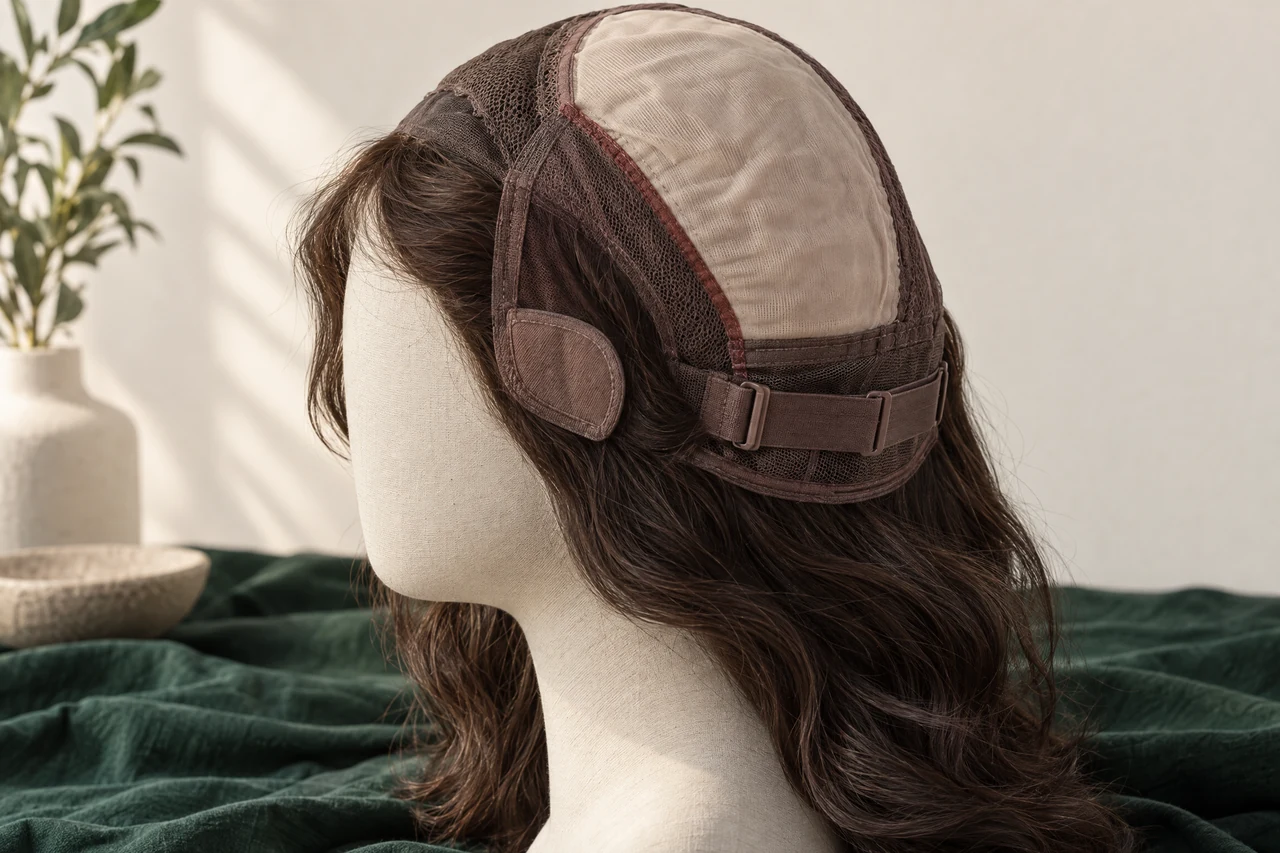
A partial piece is the first comparison when the desired coverage is confined to the front or top and the natural back is part of the hairstyle you like. It leaves more of that retained hair outside the piece, but creates a blending task at the coverage boundary. Vit So's hair topper vs wig guide offers the broader coverage comparison. Here, focus on where a candidate piece would finish relative to your longer back, not simply whether its front looks convincing.
Ask to see the boundary from both rear diagonal angles as well as directly behind. A short, dense piece above a softer long back may leave a ledge; a much longer piece can lie over the natural hair and hide the join differently. Neither effect can be judged from the product name. Describe the movement and texture of your own dry hair, including curls or an outward-turning nape, so the proposed transition is discussed before any trimming is agreed.
Keeping the back exposed also means keeping responsibility for its appearance. Natural hair continues to grow and may need a different washing or styling routine from the piece. Ask how the transition would be maintained and whether adjustments involve the piece, your natural hair or both. If preserving every centimetre matters, say so clearly. A suggestion to trim for blending is a choice to evaluate, not permission to cut or a condition you must accept without alternatives.
Preserved length and preserved appearance are different requests
You can keep your natural hair physically intact while covering it completely, or keep it visible as part of the finished style. Tell the fitter which you mean. For example, keeping a long back for days without a wig differs from wanting those same ends to show during wear. The first request needs comfortable containment; the second needs an intentional transition between the piece and the exposed natural length.
Full cap coverage over retained back hair needs a realistic trial
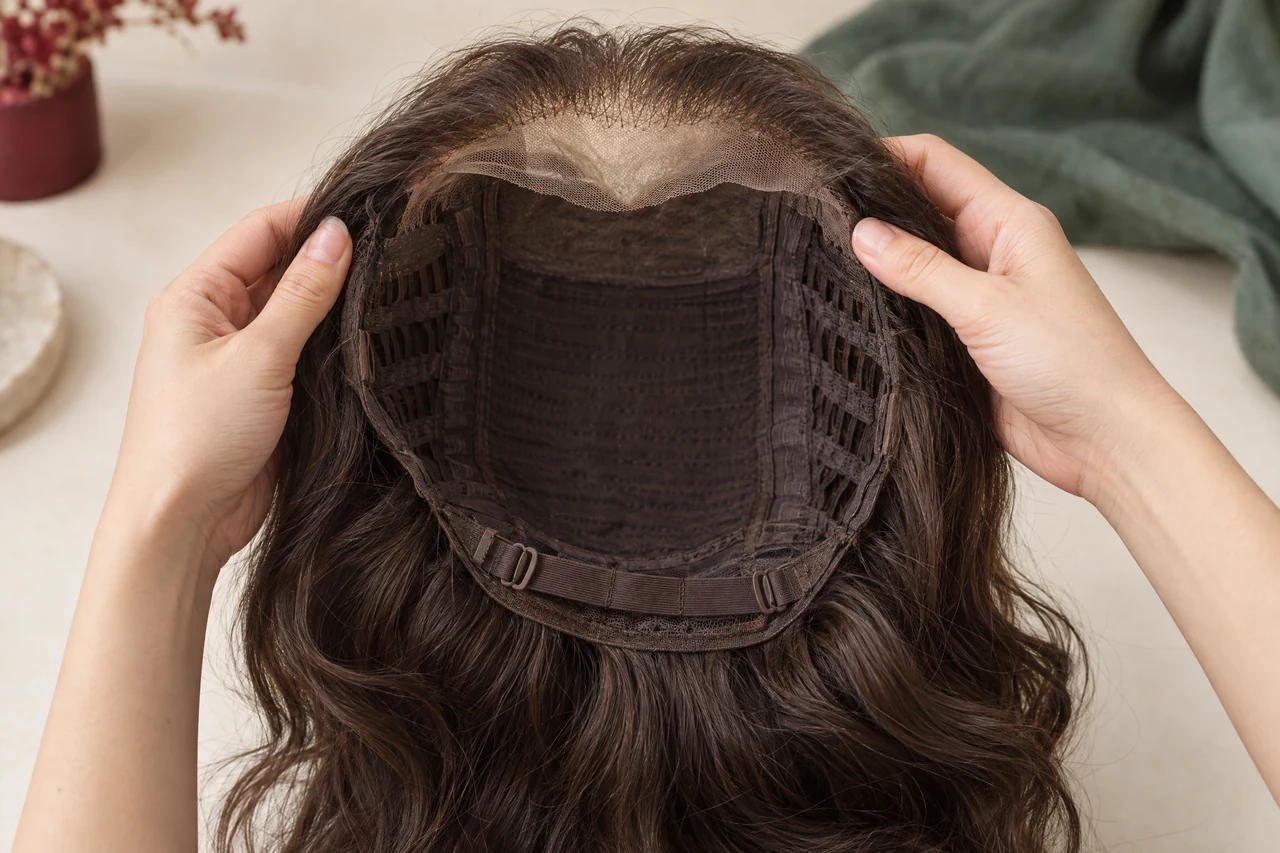
A full cap lets you compare a more self-contained hairstyle, but the retained hair still occupies space beneath it. Read the full head wigs guide for the wider coverage starting point, then ask about this particular constraint. The important trial uses the arrangement you could repeat at home, rather than a tightly compressed version that feels acceptable for only a moment. Extra room must be assessed with the whole cap positioned correctly, not gained by shifting the front hairline or ear positions.
Ask the fitter to demonstrate an appropriate low-bulk arrangement for your length and the candidate cap, keeping the natural hair loose rather than pulling it tightly. Avoid assuming that a single bun at the back is the answer: a concentrated bundle may change the rear profile or press beneath an edge or adjustment band. This is a practical issue to inspect, not a universal rule about bun size. Compare the profile before and after placement, and identify exactly where any fullness appears.
The American Cancer Society notes that wig sizing can vary by brand and advises checking the specific size chart and following the supplied fitting directions. [1] A larger size is therefore not an automatic solution to retained-hair bulk. It might provide room in one area while leaving another area loose. Check the front, ears and back together, and ask whether a different size or construction is appropriate. Do not treat a generic circumference label as evidence that the nape will fit.
Choose between hidden ends and a deliberately exposed back
For a fully covered look, check whether the natural ends remain contained during ordinary movement. If you want them to emerge below a full wig, assess that as a separate blended design. The wig's own nape and the exposed hair can create two visible lengths or an abrupt change in density. Do not describe accidental escaped ends as successful blending simply because the natural hair has not been cut.

Compare the rear outline, not only the front hairline
Use an original four-dimension comparison: coverage, rear profile, movement and fixing. These are discussion prompts, not a clinical test or a scored guarantee. Coverage asks whether the area you want concealed stays covered. Rear profile asks whether the retained hair creates a mound or a second outline. Movement asks what changes when you turn or look down. Fixing asks whether the demonstrated method is actually permitted for the item and compatible with the hair you want to keep.
For a visible join, compare colour and texture beside your own hair rather than against a screen image. The American Cancer Society recommends comparing hair and wig colour references in outdoor light. [1] You can also ask to view the proposed combination near a window without assuming lighting will solve a mismatch. Check whether the retained back contains more grey, has a different shine, or falls in a different direction. A colour name alone does not explain all of those differences.
Move slowly through ordinary actions: turn each way, look down, then return upright. Use a rear mirror or a short photograph sequence, with permission where needed, to see whether a join opens or the nape edge lifts. Put on your usual collared shirt or jacket if relevant to the appointment. Notice whether the collar pushes exposed ends upward or catches the finished outline. A stationary mirror view cannot answer that daily-use question, although a short trial cannot prove all-day comfort either.
Confirm permitted fixing without sacrificing the retained hair
Ask what the specific piece permits: internal adjustment, a compatible liner or grip, clips, or another stated method. Do not add clips, tape or adhesive simply because the cap feels loose over long hair. Find out which surfaces each attachment is intended to contact and how removal works without trapping the retained lengths. A description such as removable, bonded or glueless is not a complete instruction. OWNSTRAND's hair-system page does not confirm an attachment or installation service, so do not assume one is included.
The American Academy of Dermatology warns that repeated pulling from tight styles can cause traction-related hair loss and advises pulling hair back loosely beneath coverings. It identifies pain, stinging and scalp crusts as reasons to change a hairstyle. [2] Do not accept those sensations as a normal trade-off for preserving long hair under a cap. Stop the trial if it pulls or hurts, and seek medical advice for symptoms or hair loss rather than treating extra tension as a fitting adjustment.
A liner or grip adds another layer, so evaluate it together with the hair arrangement rather than introducing it after the fit comparison. Ask whether it is recommended for that item and whether it changes the nape profile or ear position. For treatment-related scalp sensitivity, speak with the care team about wearing needs first. This article discusses cosmetic selection only; it does not establish medical suitability, diagnose discomfort, or show that any accessory prevents irritation for every wearer.
Practise removal as well as placement
Ask for a demonstration of taking the piece off while releasing any permitted attachments first. You should understand how to avoid dragging the cap across hair caught at the back. If placement looks manageable but removal requires pulling on retained strands, the routine is not resolved. Request clarification or another option before deciding; easy-looking application alone is not enough.
Make the no-cut enquiry specific enough to compare options
Prepare current front, side and back photos with your natural hair dry and arranged as you usually wear it. Add one image of the outline you want, then state whether the back should remain visible. Vit So's custom made wigs guide can help you describe design priorities. Custom work should begin with the constraint, not the assumption that a maker can provide every requested cap. Ask what can genuinely be customised and what would remain unchanged in the proposed design.
Request two concrete comparisons where available: a partial piece retaining the visible back and a full cap using a demonstrated hair arrangement underneath. Write down the difference in rear shape, the fixing instructions and any proposed trimming. Do not compare one option with carefully arranged hair and the other with a hurried bundle. Repeat the same movements and use the same everyday accessories. If only one route can be shown, identify the missing information instead of declaring the other route unsuitable.
Choose the route that meets your coverage goal without an unresolved join, persistent bulk or pulling. If a cap cannot accommodate your retained length, you can continue comparing constructions, consider partial coverage, or decide separately whether a haircut is acceptable. Confirm the quotation, supply and fitting arrangements for the actual option before committing. Keep written care directions for both the piece and its permitted accessories. Preserving your natural hair is a legitimate design priority, but it cannot override an unsuitable fit.
Compare the retained-back constraint before choosing full or partial coverage
| Decision point | Partial piece with visible back | Full cap over retained hair |
|---|---|---|
| Coverage | Confirm the target area is covered without hiding the natural back. | Confirm the intended whole-head outline with retained hair underneath. |
| Nape profile | Inspect the transition into exposed natural length. | Inspect any bundle, lifted edge or extra rear fullness. |
| Movement | Look for a join opening when turning or looking down. | Look for cap movement or natural ends escaping. |
| Fixing and upkeep | Confirm attachment, removal and maintenance of the blend. | Confirm a repeatable loose arrangement and permitted cap fixing. |
Your preparation checklist
- State whether the longer back must remain visible or simply remain uncut.
- Bring ordinary-light photos showing the current rear length and direction.
- Ask where the proposed piece ends and where retained hair will sit.
- Inspect the rear profile with your normal collar and accessories.
- Repeat turning and looking down using the same hair arrangement.
- Confirm permitted fixing, comfortable removal and item-specific care.
- Record any proposed haircut separately from the product decision.
Frequently asked questions
Must I cut my longer back hair before trying a full wig?
Not automatically. Explain that preserving length is a priority and ask whether the candidate can be assessed over an appropriate loose arrangement. If it does not fit, discuss other constructions or partial coverage first. A haircut should be a separately agreed styling choice, not an assumed consequence of the enquiry.
Can I leave my natural back showing below a full cap?
Possibly, but assess it as an intentional blended style rather than ordinary full coverage. Check the cap's own nape, the exposed natural length and their colour and density together. A second outline, lifted edge or accidental escaped ends may make that particular combination impractical.
Will ordering a larger cap solve a bulky nape?
Not necessarily. More room does not tell you whether the retained hair sits evenly or whether the front and ears remain positioned properly. Check the specific sizing and construction with the planned hair arrangement. Request a different option if extra rear space creates looseness elsewhere.
What if the try-on works only when my hair is pulled tightly?
Pause rather than using tightness as the solution. AAD advises loose hair beneath coverings and identifies painful tension as a warning. [2] Ask about another arrangement or coverage option. For scalp symptoms, worsening hair loss or treatment-related wearing concerns, consult an appropriate healthcare professional.
Discuss the outline you want to keep
Invite Vit So to discuss the visual transition and styling priorities around your longer natural back. For OWNSTRAND products or a visit, use the guides already linked to ask about the exact cap, supply, quotation and fitting arrangements. Make preserving length explicit before agreeing to any haircut.
Start your WhatsApp enquirySources & further reading
- American Cancer Society — Wigs for Hair Loss
General full-wig versus topper coverage, brand-specific sizing, following fitting directions and comparing colour in natural light; not proof of retained-long-hair fit or brand quality.
- American Academy of Dermatology — Hairstyles that pull can lead to hair loss
Repeated pulling, loose hair beneath coverings and warning signs including pain, stinging and scalp crusts; not a product-specific safety guarantee.



