






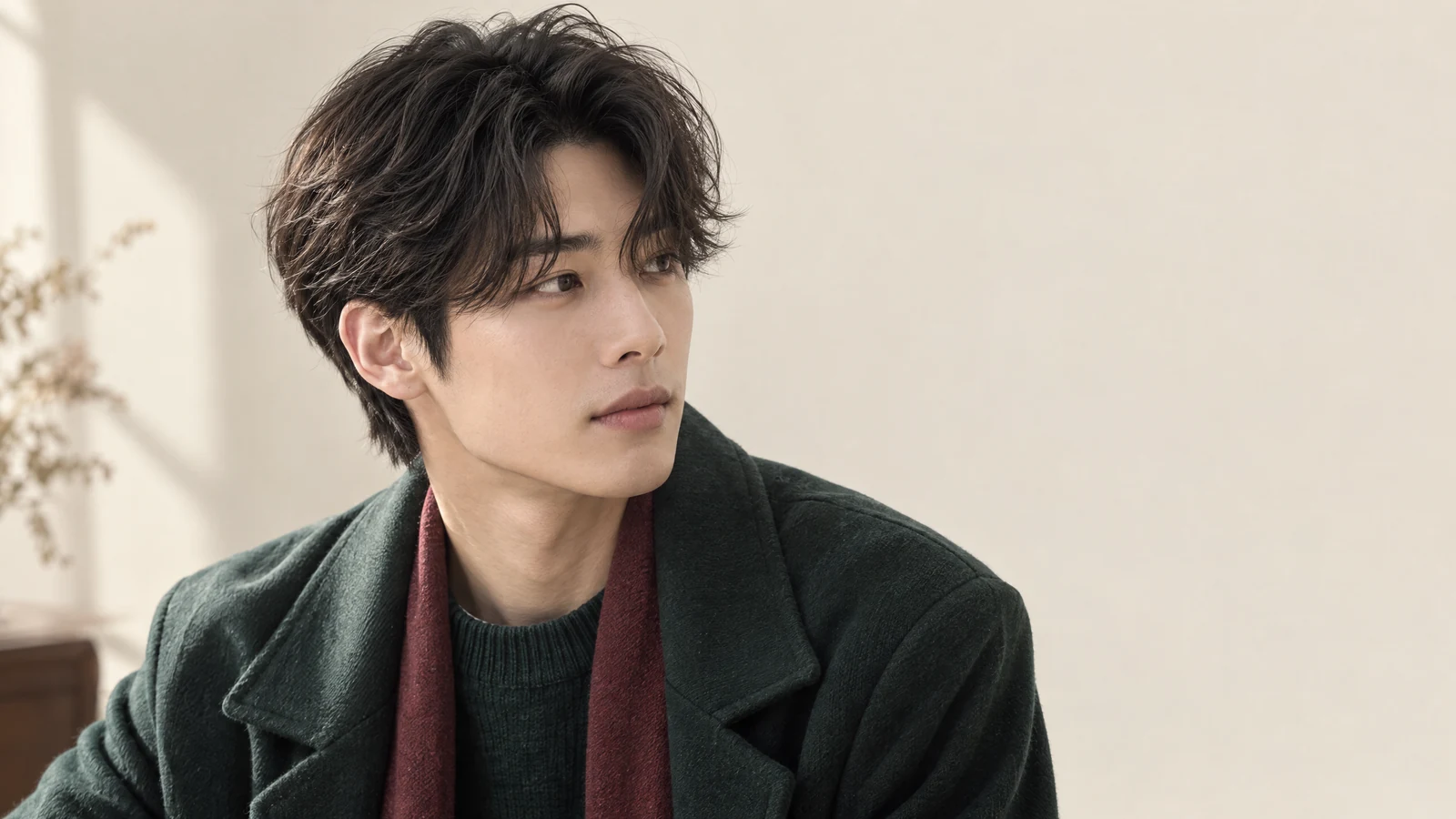
Soft Perm for Men: Small Bends and Subtle Separation
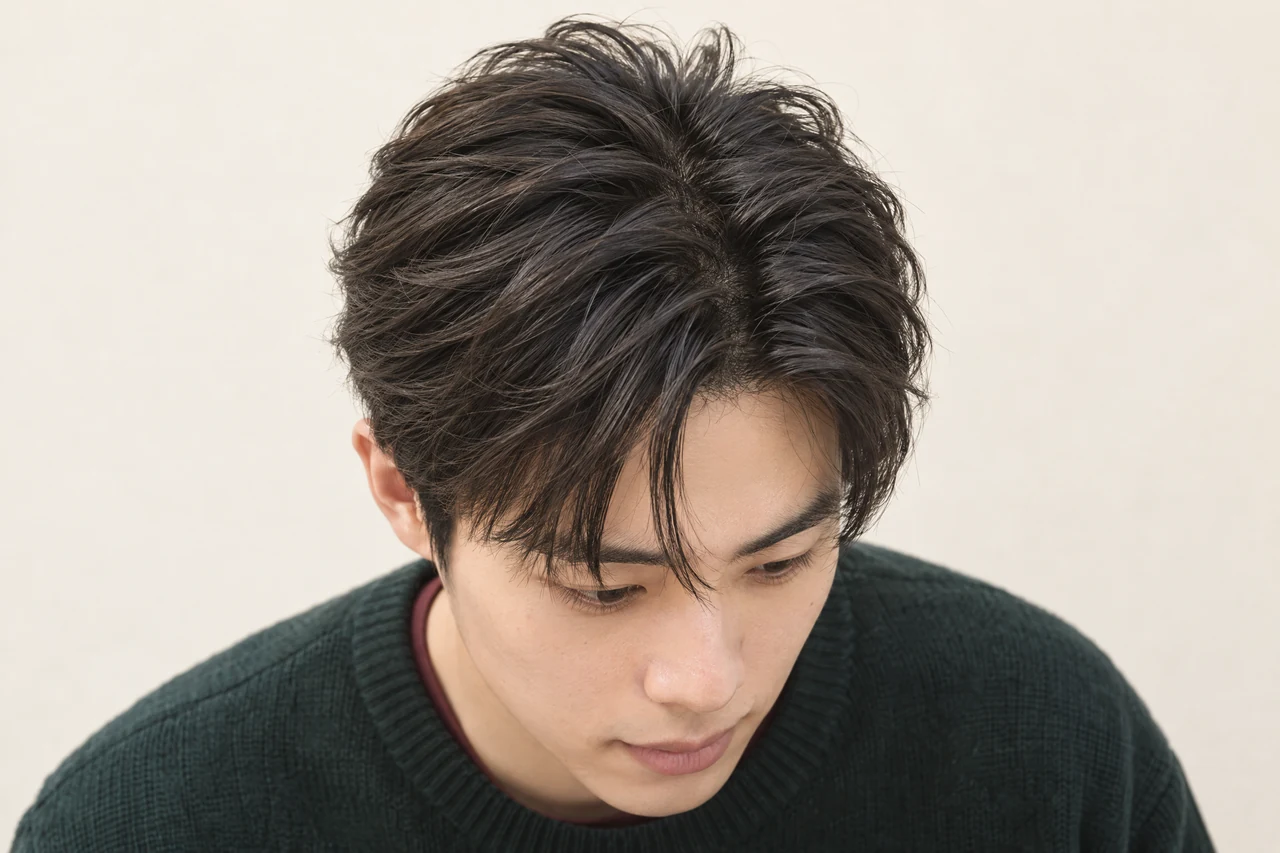
A subtle perm for men is often sought when straight strands feel too rigid but obvious curls are not wanted. Look for where the bend begins and how separate the strands remain. A reference with heavily styled texture may look quieter when worn with less product, so describe the everyday finish as well as the photograph.
Start by asking what would make your existing hair feel less straight. You might want the fringe to turn away from the forehead, the top to stop falling in a solid sheet, or the ends to sit with a slight curve. These are different preferences. A photograph showing a lifted front does not necessarily show much wave through the rest of the hair, so identify the actual strand you want to discuss.
Subtlety also has a trade-off: movement that is deliberately restrained may not look obvious from every angle. Decide whether that is welcome or disappointing. If you mainly want your hair to look less rigid at work, a quiet bend may be the right visual direction. If you expect a clearly wavy appearance in casual photographs, explain that before choosing the softer reference.
Choose haircut reference photos that show the bend itself, and mark any polished finish or extra height that you do not need for everyday wear.
Reading a Soft Perm for Men Reference
Follow a visible strand from its starting point to its end. Does it gently turn once, curve across the forehead, or change direction repeatedly? Then look at the gaps between strands. Fine separation can make a simple bend look textured without producing a row of curls. Describe these features separately: gentle curvature, some visible gaps, and no rounded curls at the fringe. That is more useful than asking for everything in the image to be equally soft.
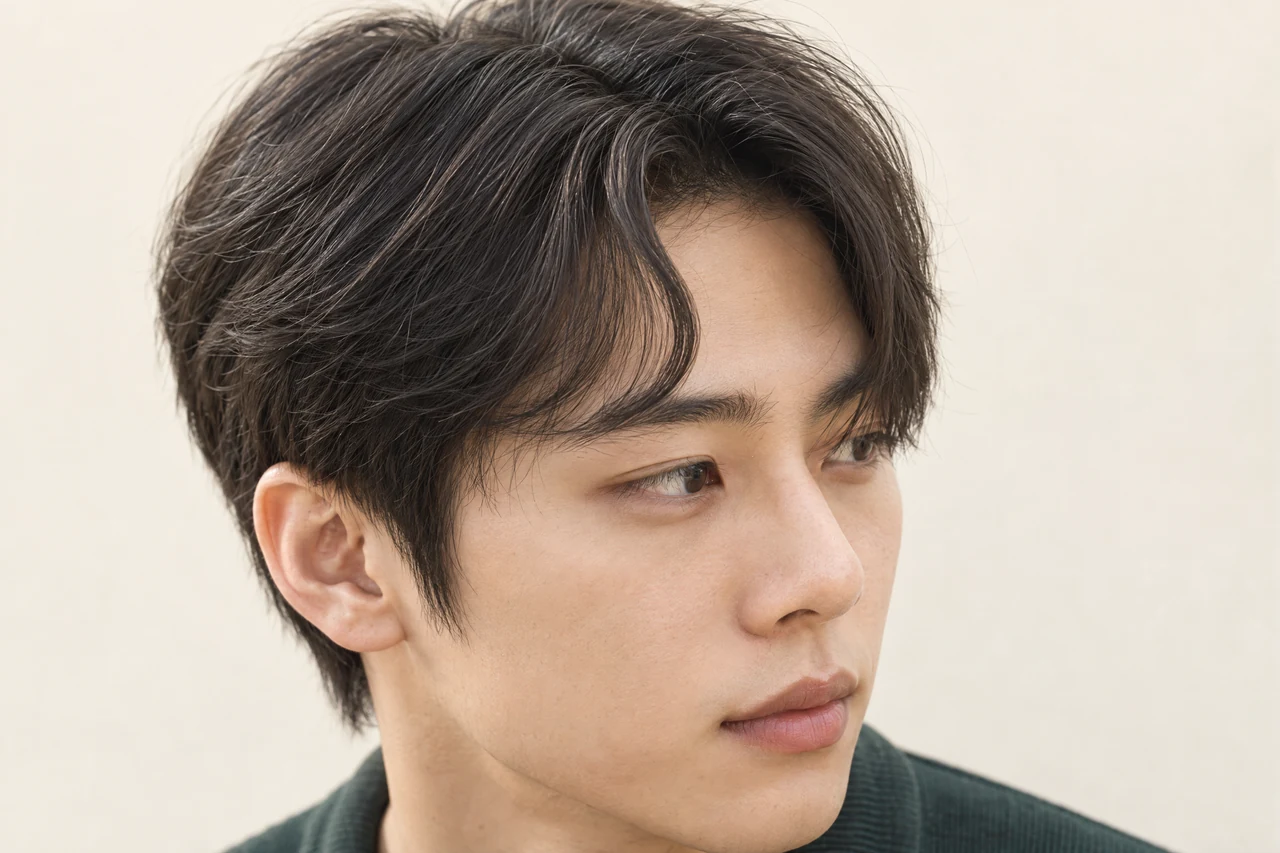
Wavy Perm for Men: More Visible Shape
A loose wave perm for men needs enough retained length for a relaxed wave to be visible. The cut, layer placement and fringe length affect the outline as much as the style name. Ask which parts of your current haircut can support the desired movement and whether growing selected areas first would be more realistic.
In a wavy reference, look for a strand that turns in one direction and then returns in the other. That sequence gives you something concrete to point to. Ask whether you want it visible across the top, at the front, or mainly along longer side sections. A wave around the temple can make a strong impression even when the crown is relatively quiet; you do not need the same amount of movement everywhere.
More visible waves also make the ends and their resting position more noticeable. Consider whether you like an outward finish near the ears or would prefer a narrower outline. If your priority is an open forehead, a wave that falls forward may conflict with it. Retain the curved movement you like while discussing a different direction for the fringe.
Continue with can men get a perm with short hair for that specific comparison and the preparation questions it raises.
Length Choices for a Wavy Perm for Men
Compare your current fringe, top and ear-level hair separately with the reference. A long fringe does not mean every section has enough length for the same wave. Ask which lengths must remain after cutting and where shorter layers would interrupt the visible pattern. Avoid setting a universal minimum from a photograph: strand direction, the planned cut and the intended bend all need assessment. If selected areas need to grow, ask what can be tidied meanwhile without removing the length you are trying to keep.
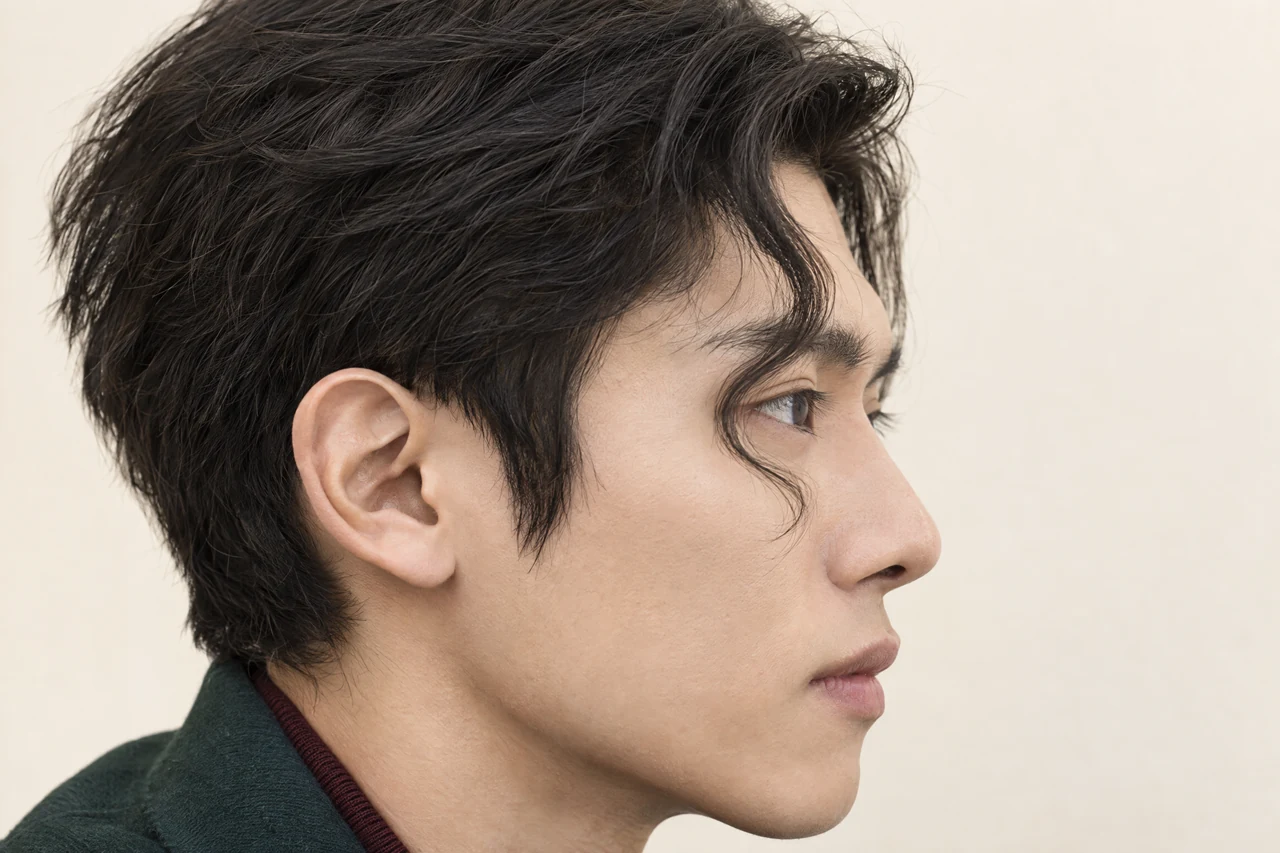
Natural Appearance Depends on the Whole Outline
A natural looking perm for men is a preference, not a measurable guarantee. Compare the crown height, side width and fringe direction together rather than judging one curl. A restrained bend may still look conspicuous if the sides become wide, while more visible waves can suit a balanced cut and a consistent drying routine.
Translate natural into an everyday picture. Do you mean a matte finish, an uneven rather than perfectly mirrored parting, little forehead exposure, or hair that you can rearrange with your fingers? Those preferences can point towards different outlines. For someone wearing glasses, the strand beside the frame may matter more than the wave at the back. Bring your glasses to the discussion rather than judging the hair in isolation.
Check the profile as well as the front. A front photograph can hide height at the back of the crown or extra width above the ears. Ask where the hair should stay close to the head and where movement is welcome. A restrained side outline can make clearer waves on top feel intentional without requiring every section to be tightly controlled.
Continue with middle part perm for that specific comparison and the preparation questions it raises.
Matching the Fringe, Crown and Sides
Set your fringe preference first: across the forehead, opening near the centre, or moving towards a side. Next, describe whether the crown should have gentle height or a flatter finish. Finally, decide how much fullness you accept above the ears. This separates shape from curl intensity. You may prefer a visible front wave with quieter sides, rather than a soft bend everywhere. Ask to see how these choices connect in the planned haircut, including the shape when you are not deliberately posing or lifting the front.
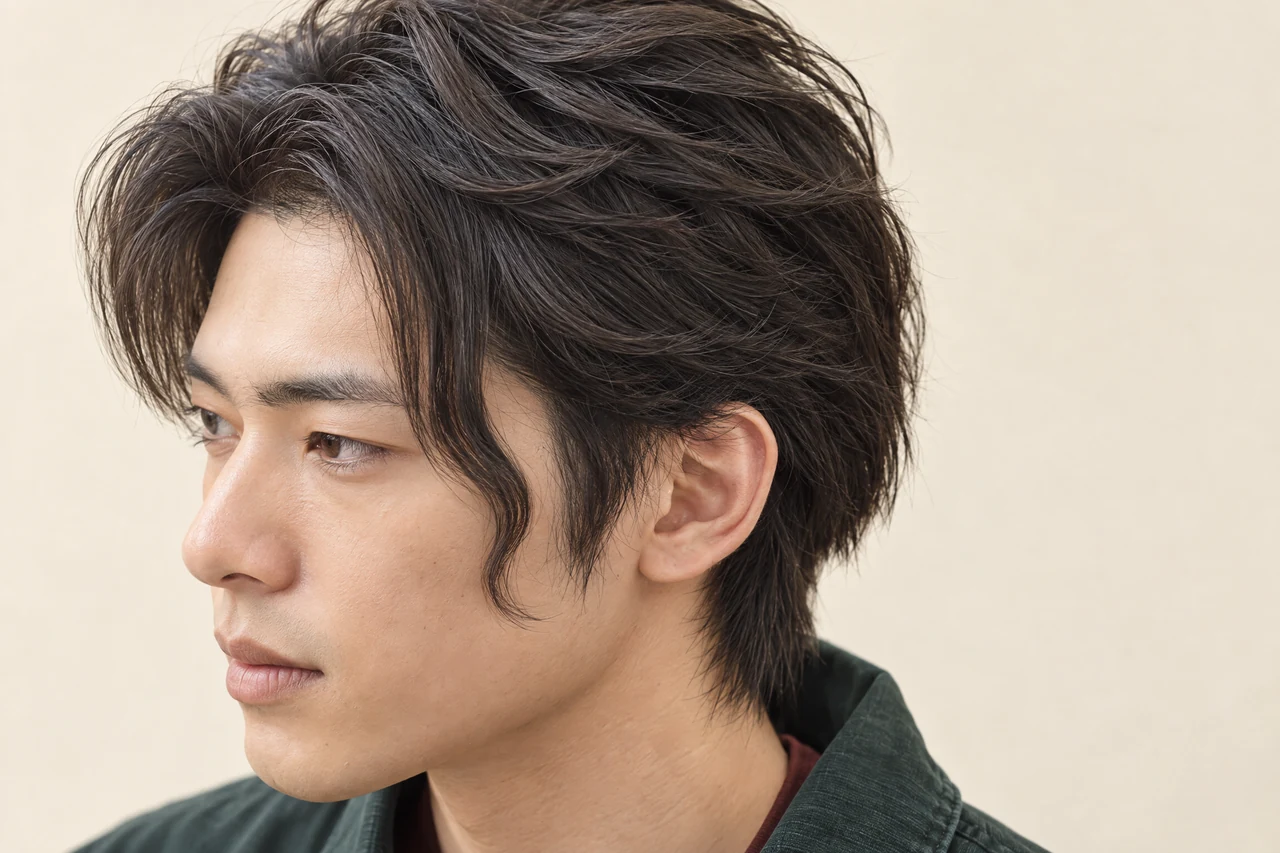
Shadow Names and More Defined Texture
A shadow perm for men may be used in style guides for texture that looks more defined than a soft bend. Names vary between salons and do not confirm a bookable technique. Bring the image and explain the amount of separation and movement you like, then ask what is feasible for your actual hair.
When a labelled image attracts you, cover the label and compare the hair. Are the strands grouped more clearly? Is the fringe more curved? Is the outline fuller? This helps distinguish a real visual preference from a fashionable name. You can like the separation in a defined reference while rejecting its width or forehead coverage. Discuss that combination rather than treating the named style as an indivisible package.
Visual softness is not a chemical safety rating. The American Academy of Dermatology's colouring and perming advice notes that appearance-enhancing treatments can leave hair dry and brittle and urges caution when perming. Share previous bleaching, colouring, straightening and perming, including treatments still present in the lengths. That history matters even if the requested bend looks almost straight.
Using Names as Conversation Starters
Ask what the term means in the service being proposed: the intended appearance, the area being treated, or a particular method. Then return to the image and your normal routine. There is no need to memorise a formula or choose equipment yourself. The useful decision is whether the proposed shape matches your preferences and whether your hair can reasonably support it. A soft, wavy or shadow label alone does not confirm a standard Korean procedure or a separately bookable service at Vit So.
Decide How You Will Wear the Movement at Home
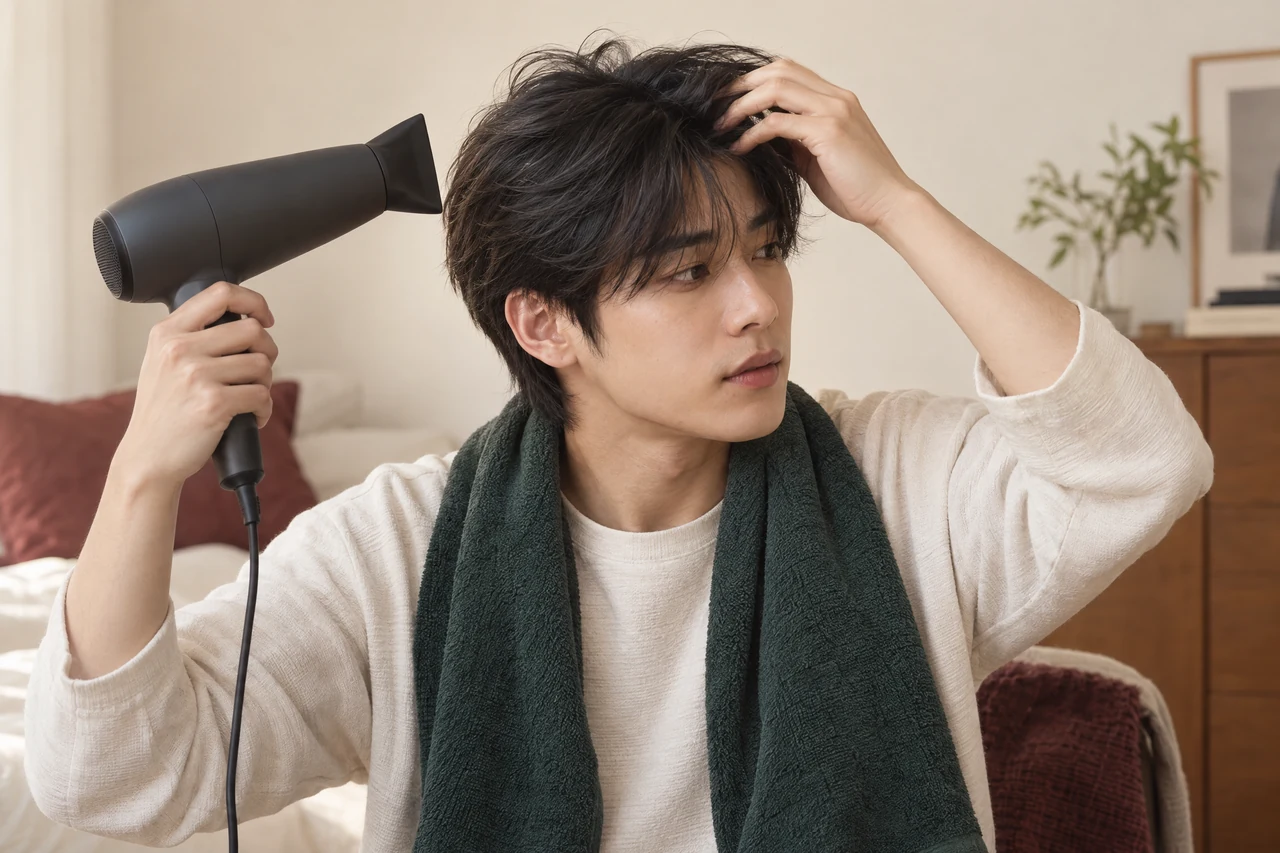
A finish that looks relaxed can still involve careful drying and product placement. Tell the stylist whether you normally leave hair to air dry, direct the fringe with a dryer, or use a styling product before leaving home. If you dislike using products, say so. Ask what the proposed bend would look like with minimal styling, rather than assuming it will reproduce the reference without its finishing steps.
Gentle handling supports a sensible routine. In its guide to avoiding hair damage, the American Academy of Dermatology recommends conditioner after shampoo, absorbing water with a towel rather than rubbing, and the lowest heat setting when using a dryer. These are general care recommendations, not a prediction of how visible your particular wave will be.
Ask for perm aftercare guidance that separates the first wash instructions for your treatment from the regular drying and styling steps you will use afterwards.
Compare a Workday Finish with a Weekend Finish
Explain how your morning changes after exercise or when you have less time. Ask which part of the outline needs attention first: restoring the parting, directing the fringe, or controlling the sides. Prefer a shape whose essential steps you are willing to repeat. A more defined finish for occasional evenings can remain optional; it should not be mistaken for the minimum routine required to wear the haircut comfortably.
Prepare a Clear Enquiry About Your Preferred Bends
Bring a current photograph in your normal dry finish alongside your preferred reference. Explain the movement you want to add and the areas you want to keep quieter. The checklist below has six preparation steps. It is a way to organise your preferences, not a test you must pass before asking for advice.
Review men's perm to check its service scope and the details to share before arranging the related work.
Keep the style description separate from the quote. The listed men's wash, cut and blow-dry, full-head perm and pre-care hair protection package is HK$1,680. That package does not establish a separate soft, wavy or shadow treatment: confirm suitability, proposed scope, inclusions and actual charges before arranging the work.
Agree on What to Keep and What to Change
End the discussion with a plain description of the plan: where the bend should be visible, which lengths should remain, and how you intend to dry the hair. Ask about the less-styled appearance and how future trims could affect the wave you want to retain. If the reference requires more length or your current condition makes processing unsuitable, discuss a cut-first or grow-first option instead of forcing the photograph into the appointment.
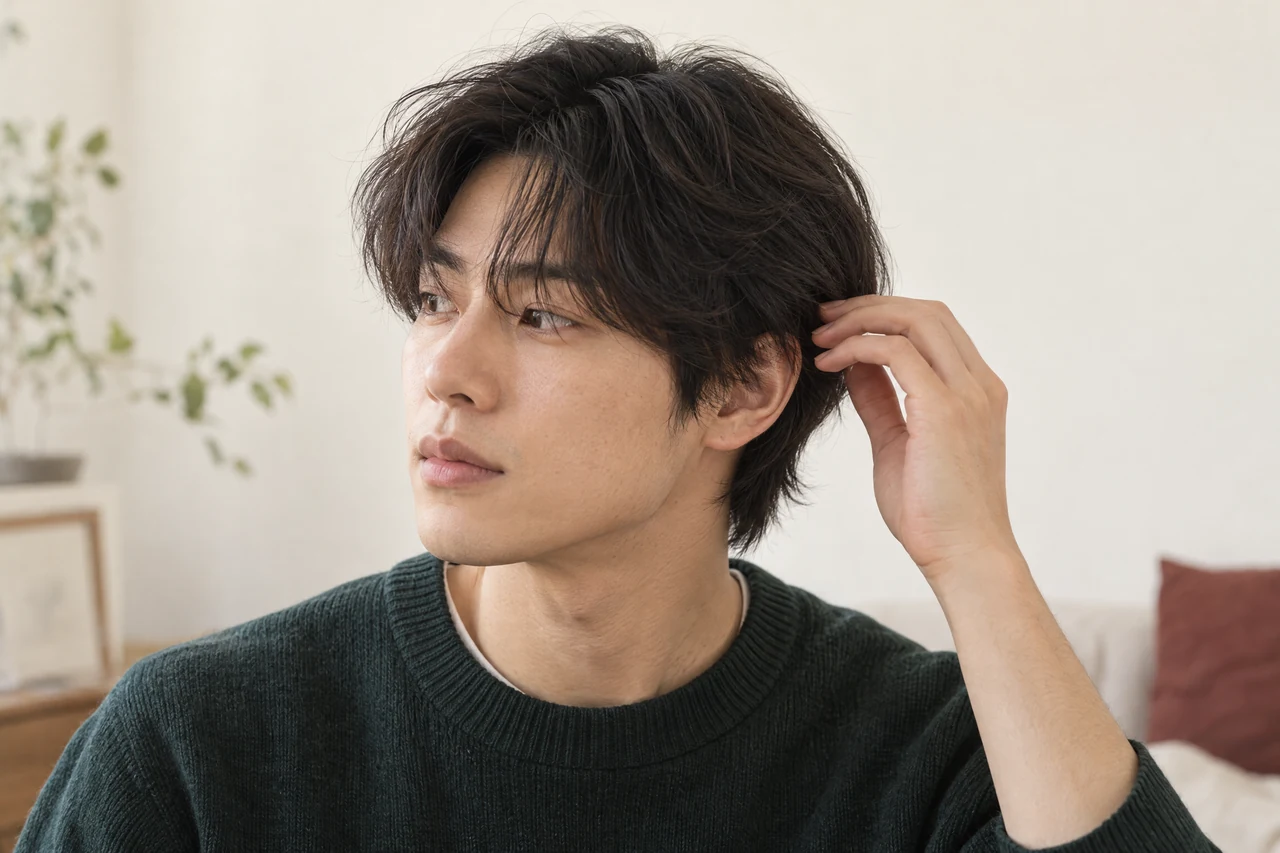
Compare visible features in a soft or wavy reference, not assumed treatment strength.
| Decision | Softer-bend preference | More visible-wave preference |
|---|---|---|
| Strand shape | A gentle turn or shallow arc | A clearer sequence of turns along a strand |
| Fringe | Subtle direction with limited curl emphasis | A wave that remains an obvious part of the front |
| Retained length | Identify the length needed for the desired single bend | Keep enough length in the relevant sections to show the sequence |
| Overall outline | Check that quiet bends do not come with unwanted side width | Balance more visible movement with the crown and ear-level shape |
| Daily finish | Ask how much movement remains with minimal styling | Ask how you will maintain separation without unwanted fullness |
| Chemical suitability | Requires assessment of condition and treatment history | Requires assessment of condition and treatment history |
Your preparation checklist
- Choose a reference where you can identify the strand or area showing the movement you like.
- Record your current fringe, top and side lengths in photographs taken in your usual dry finish.
- State where you want visible waves and where you prefer a quieter or narrower outline.
- Prepare your treatment history, including bleaching, colour, straightening and previous perms still present in the lengths.
- Describe your usual washing, drying and product routine, including what you will realistically do on rushed mornings.
- Confirm the proposed scope, retained length, home-care instructions, package inclusions and actual quote before arranging the service.
Frequently asked questions
Does a softer-looking wave mean less chemical risk?
No. The visual softness of the result does not establish the effect of the process on your hair. Previous treatment and present condition must still be assessed.
Can I ask for movement without round curls?
Yes, describe gentle bends, strand separation and the parts you do not want to look tightly curled. That communicates a preference, not a guarantee that every length or hair condition can achieve it.
Should I copy the exact fringe in a photograph?
Use it as a discussion point. Identify the features you like, then compare forehead coverage, growth direction and current length. The whole image should not be treated as a reproducible result.
What if I already have some natural movement?
Show your hair in its usual dry state and identify what is missing: more visible bends, a different fringe direction or a better-balanced outline. Ask whether cutting and styling can address that goal before deciding to add a chemical service. Existing movement does not automatically mean a perm is necessary or unsuitable.
What should I do if the perm solution causes excessive burning?
Tell the stylist immediately rather than enduring it for the sake of the result. The American Academy of Dermatology's advice cited above says excessive stinging or burning while perm solution is on the scalp requires immediate rinsing and consultation with a dermatologist.
Turn a soft or wavy reference into a practical hair plan
Send Vit So your preferred image, current dry-hair photographs and treatment history for an enquiry in Sheung Wan. Explain how visible you want the bends to be and how you normally style your hair. Suitability, service details and appointment availability need confirmation; an enquiry is not a confirmed booking.
Start your WhatsApp enquirySources & further reading
- Coloring and perming tips for healthier-looking hair
General perm-related dryness and brittleness risk, caution with perm solution, and action for excessive stinging or burning.
- How to stop damaging your hair
Conditioning after shampoo, gentle towel drying, lower dryer heat and avoidance of forceful handling.



