







How to choose a new hairstyle with a stylist from your current concerns
Describe the part of your current hair you dislike: the shape around your face, the weight at the sides, the colour contrast or the effort needed each morning. If you do not know what would suit you, start with these observations and the features you want to keep. They offer a more useful direction than asking for a completely different look without boundaries.
Replace a broad complaint with an observable detail. Instead of saying your hair looks boring, explain whether the front hides your face, the ends feel too solid, or the colour looks too warm for your preference. Note when the problem appears: immediately after drying, after tucking hair behind your ears, or after wearing it tied up. This helps separate a shape concern from a finish you simply dislike.
The L'Oréal Professionnel consultation guide describes consultation as a discussion about desired changes, including maintenance, styling and how a cut or colour might work for your hair type. Use that discussion to understand a proposal, rather than expecting the stylist to guess your preferences from your appearance.
Continue with haircut reference photos for that specific comparison and the preparation questions it raises.
Decide how to choose a new hairstyle with a stylist using clear priorities
Put your main concern ahead of secondary wishes. You might want less width at the sides but still like your overall length. Say which matters more if the proposed solution affects both. Useful phrases include 'I want the front to feel more open, but I still need to tuck it behind my ears' and 'I like this colour depth; I only want to discuss the outline.' These are ways to describe a preference, not promises that every combination is achievable.

Compare changing the cut with changing the colour
Changing the cut affects length and outline, while changing colour affects tone and contrast. Decide which of those is behind your dissatisfaction before combining both. Ask what each option would involve for your existing hair and routine, including maintenance. You may prefer one targeted change rather than altering several features at once.
Ask a practical question: if your colour stayed exactly as it is, would a different outline resolve your concern? Then reverse it: if the shape stayed, would a different tone or placement be enough? These comparisons will not predict a finished result, but they can reveal whether you are mainly reacting to length, silhouette or colour contrast.
When colour is the main uncertainty, the hair colour page can help you frame questions about shade and coverage before deciding whether a cut also needs to change.
Continue with how to plan a haircut and colour on a budget for that specific comparison and the preparation questions it raises.
Separate outline from visual contrast
A photograph may attract you because of its brighter front pieces rather than its shorter length. Ask what would remain appealing without that colour contrast. Equally, a darker shade cannot substitute for removing length if the end line itself is what bothers you. Explain the effect you want to see, then let the stylist discuss which service could address it on your existing hair.
Consider each option's upkeep
For a cut, ask about the front pieces when unstyled and the shape as it grows. For colour, ask how visible regrowth and changes in tone may affect the look. Share previous colouring, bleaching, perming or straightening, including home products. Agree what maintenance you are willing to do; do not choose a service solely because its freshly finished photograph looks effortless.
Use a smaller change to clarify a bigger decision
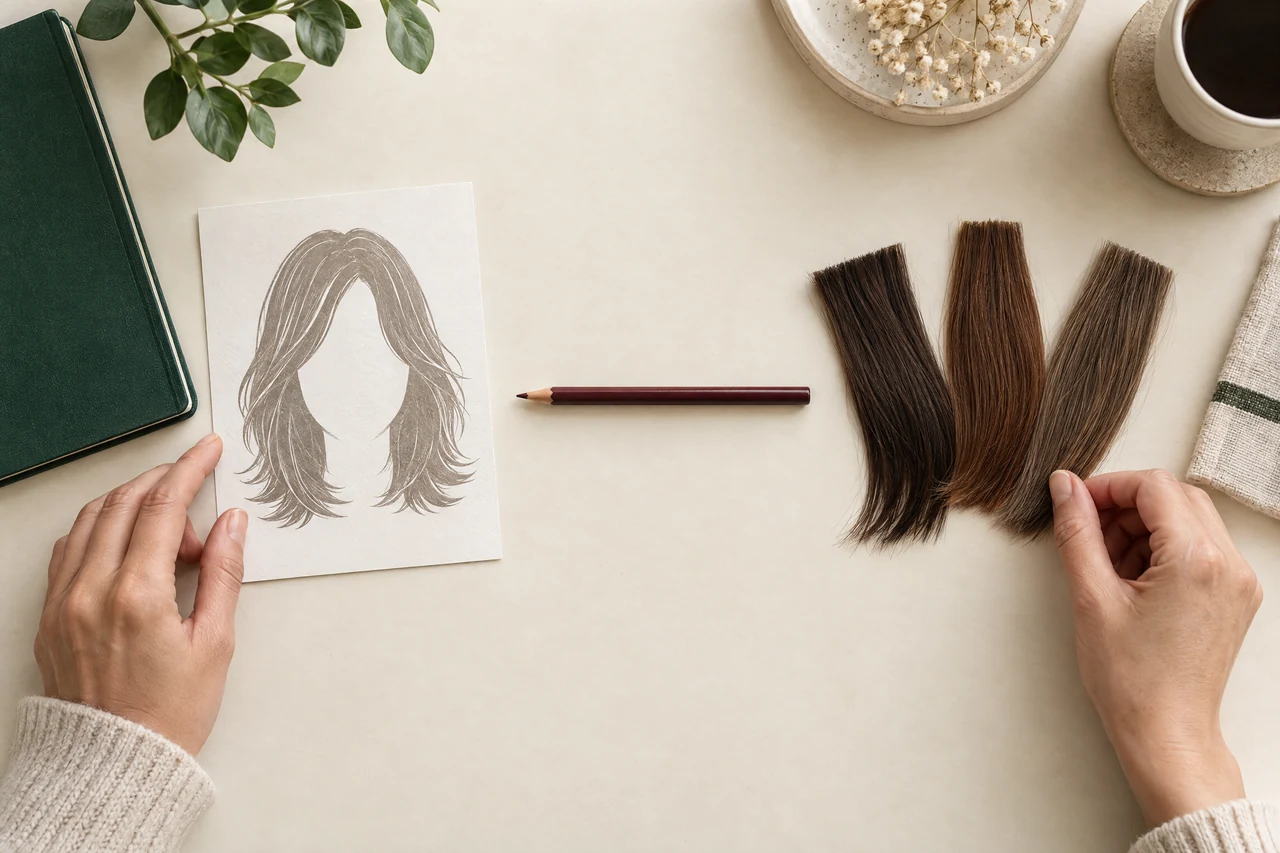
If a major restyle feels uncomfortable, discuss a smaller adjustment to the fringe, face-framing pieces or outline while keeping your main length. Explain what would make the change feel too large. A staged approach can help you evaluate your preferences, but not every proposed change is easily reversible, especially where colour or short layers are involved.
Small should describe the commitment as well as the visible area. A short fringe changes a limited area, yet may affect your morning routine and take time to grow back. Likewise, a narrow lightened section still involves processing. Ask what will be removed or altered, what remains unchanged, and what you would have to live with if you decided not to continue.
Keep the length you are not ready to lose
Show a physical boundary rather than saying 'not too short'. Indicate the preferred dry end point on your body, then discuss the shortest front pieces separately. Keeping length at the back does not mean every section will fit into your usual ponytail. Demonstrate how you tie or tuck your hair so the stylist can explain where a proposed adjustment may change that habit.
Choose a change you can evaluate
Give the first adjustment a clear purpose, such as seeing whether you prefer a more open face frame while keeping the main length. Afterwards, assess it during normal washing, drying and tying rather than only in the salon mirror. Notice whether you enjoy the shape without extra tools. That information gives a later discussion direction; a second, bigger change is an option, not an obligation.

Understand what temporary styling can show
Trying another parting or finish may help you explore a new direction before cutting. Ask whether a styling appointment is appropriate and confirm its scope and price separately. Temporary styling cannot reproduce every result of a new cut or chemical service, so use it to discuss preferences rather than as proof of a future outcome.
A different parting can help you compare how much forehead you like to show. Tucking the ends inward may suggest a shorter outline, but the hidden length still contributes weight. A wave can help you explore softness around the face, yet does not establish how a new cut would move naturally. Ask the stylist to distinguish what comes from the finish and what would require a structural change.
Review hair styling to check its service scope and the details to share before arranging the related work.
Explore a different parting or finish
Start with a low-commitment comparison you can understand: the usual parting versus another direction, or a natural finish versus a more polished one. If tools are involved, ask what skill and effort recreating that finish would require. The American Academy of Dermatology's styling advice notes that excessive heat can damage any hair type. Factor heat use into the routine, not just the appointment-day appearance.
Do not treat styling as a preview guarantee
Describe what you learned from the styling comparison: you prefer less coverage at the front, dislike extra width, or enjoy movement at the ends. Do not assume that pinned hair predicts the exact outline of a bob or that tonged waves predict a perm. Confirm the proposed service and any charge before arranging a separate styling visit.
Compare the options against an ordinary day
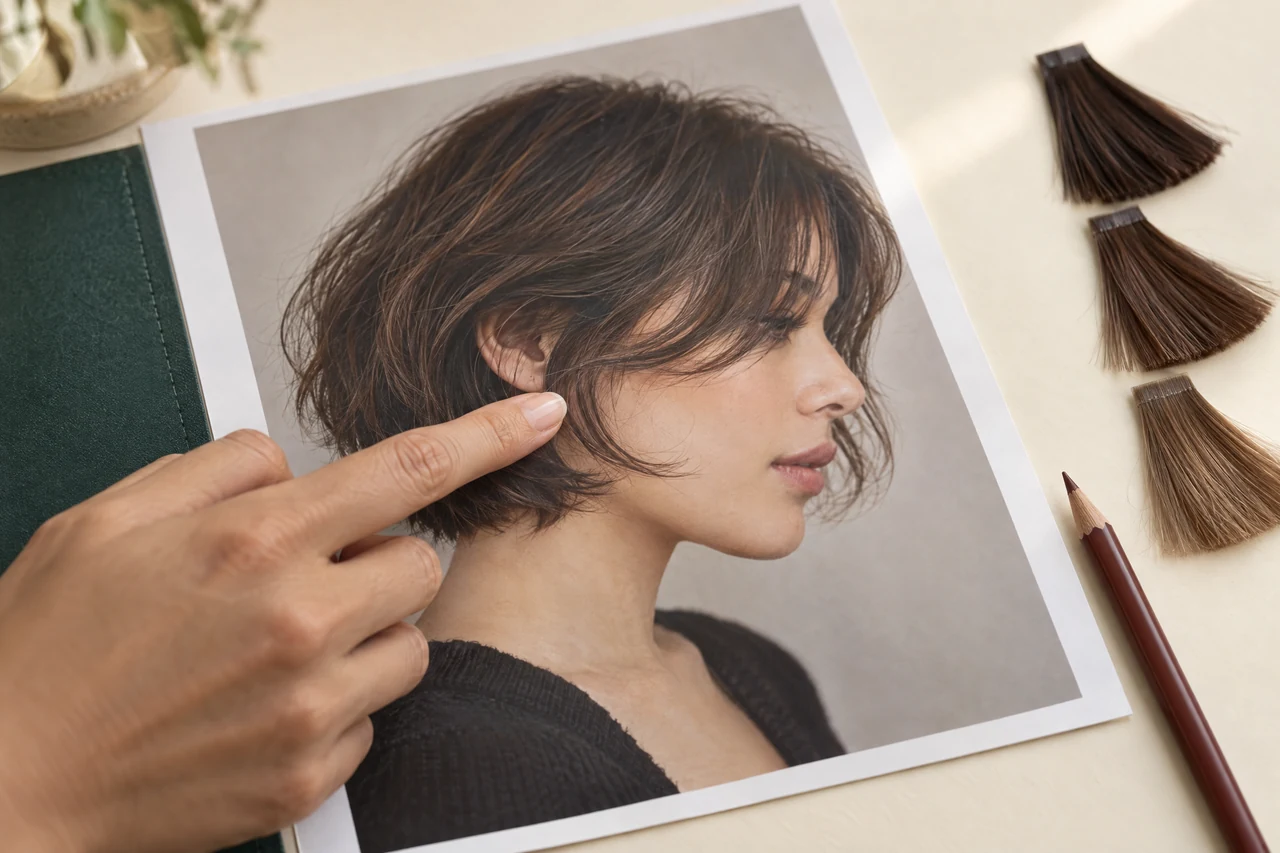
Picture the proposed hairstyle on a normal workday, not only during an event. Tell the stylist whether you usually air-dry, use a dryer, wear glasses or tie your hair for exercise. For a Sheung Wan appointment, bring the routine you actually follow during your Hong Kong commute into the conversation. If you dislike styling, a proposal that relies on daily shaping needs careful discussion.
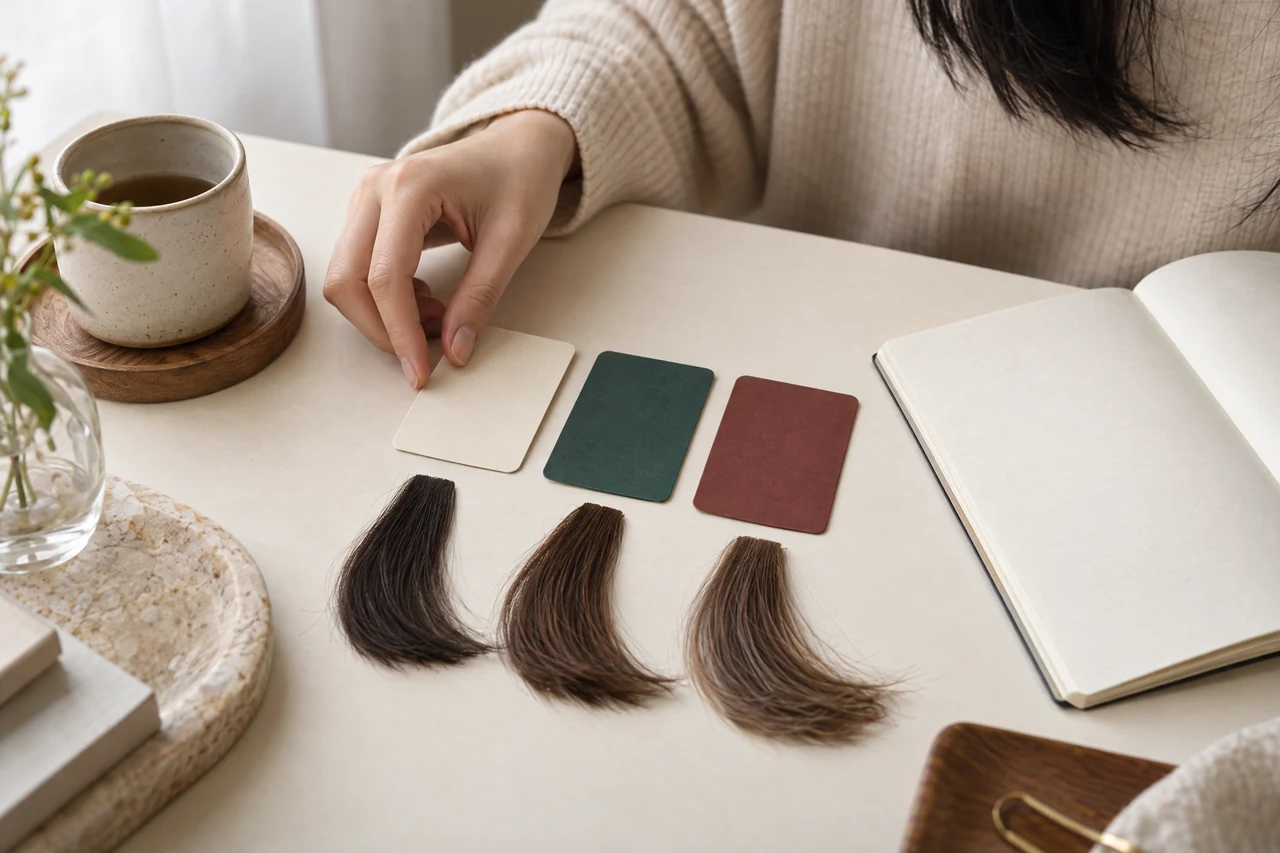
Use the comparison table to decide what deserves attention first. It does not rank the options by attractiveness. A larger restyle may be right when you welcome the change and understand its implications; a smaller adjustment may be right when a specific feature is the problem.
Ask what the simplest home finish involves
Request an explanation of the least elaborate finish the proposed shape allows, including how to dry the front and where products would be used. Ask which aspects would look different without those steps. If preserving an easy routine is your main boundary, explore a haircut for a busy lifestyle before agreeing to a shape whose appeal depends on extra work.

Agree on the first change before work begins
Use these 6 decision-checklist steps before agreeing to a new look. Review your answers with the stylist and resolve any conflict between the chosen option and your boundaries. If you are still undecided, say what information is missing: the shortest length, the daily finish or the colour upkeep. You can continue discussing or defer a change rather than agreeing simply because several options have been presented.
Summarise what is changing and what is staying
Before cutting or processing starts, restate the agreed plan in plain language. Include the main length, the front outline and any colour work, as applicable. Ask the stylist to correct anything you have misunderstood and confirm the service scope and quote. If an extra step is proposed during the appointment, discuss its purpose and implications before adding it to the plan.
Compare the commitment behind each route to a new look
| Route | What it helps you explore | What to clarify before choosing |
|---|---|---|
| Different parting or temporary finish | Front coverage, softness or polished versus natural styling | The work needed at home; it cannot predict a new cut exactly |
| Targeted cut adjustment | One concern while retaining the main length | Shortest pieces, tying ability and the dry outline |
| Colour change with the current cut | Tone, depth or the distribution of contrast | Existing processing, suitability, regrowth and maintenance |
| Full restyle | A substantially different length or silhouette | The simplest daily finish and which lengths cannot be retained |
| Combined cut and colour | A coordinated change in outline and contrast | Why both are needed, individual assessment and the full scope |
Your preparation checklist
- Name the main concern and point to where it appears on your own hair.
- Show the dry length and shortest front pieces you are comfortable keeping.
- Explain your normal drying, tying and tool habits, not an ideal routine.
- Share previous colour and chemical services, including home treatments and any reactions.
- Compare a targeted adjustment with a larger change, including upkeep and grow-out.
- Restate the agreed change, confirm the service scope and quote, and resolve uncertainty before work begins.
Frequently asked questions
Can I enquire without knowing the exact hairstyle I want?
Yes. Describe your current hair, concerns, routine and comfort with change. Those details can give the discussion a useful starting point even without a final reference image.
Should I change the cut and colour together?
Not automatically. Compare which change addresses your main concern, what upkeep each involves and whether your hair is suitable. A combined plan needs individual assessment.
Can styling show exactly how a shorter cut would look?
No. Styling can explore a direction, but it cannot establish the exact movement or outline of hair after it is cut. Confirm any styling service and charge rather than assuming a free trial.
What if I want a new hairstyle but do not know what suits me?
Explain what you want to feel different and what you already like. Ask the stylist to compare realistic options for your hair and explain their daily implications. There is no need to identify a single perfect style before enquiring; a useful choice balances personal preference with the change you are comfortable maintaining.
Explore a new look without losing the features you value
Enquire with Vit So about your hair goals in Sheung Wan. Share your current concerns, the length or colour you want to keep, and how much change feels comfortable. Ask about the appropriate service, scope and price before arranging a visit. An enquiry is not a confirmed booking.
Start your WhatsApp enquirySources & further reading
- Mirror Mirror: discover what a hair consultation can do for you.
Consultation can address desired changes, maintenance, styling and how a cut or colour may work for an individual's hair type.
- Hair styling without damage
Excessive heat can damage any hair type, making heat-tool habits relevant when considering a finish that needs regular styling.



