







How often should I touch up grey roots? Start with visible contrast
White roots may feel noticeable sooner against dark, uniform lengths than within a mixed finish, but personal preference matters. Check the hairline and usual parting in everyday light. Decide whether the boundary actually bothers you or simply differs from the first-day colour, and use that observation to guide an enquiry.
Start at normal mirror distance with your hair arranged as you usually wear it. A close-up can reveal individual white strands that do not change your overall impression. Then look more closely at the area that concerns you. Describe whether you see a continuous pale band, a concentrated patch at the front, or scattered strands. These are more useful observations than saying that your colour has expired.
Set an appearance threshold you can explain: perhaps you are comfortable with visible silver strands but dislike an obvious boundary beside the parting. Or you want the front to look consistently dark when it is tucked behind your ears. Your threshold can change for an occasion without becoming a permanent maintenance requirement. Keep the everyday preference separate from the finish wanted for a particular event.
How often should I touch up grey roots if I prefer a mixed finish?
A mixed finish is not judged by the complete absence of white hair. Look instead at how the new growth joins the coloured strands: does the mix still look intentional, or has a distinct band interrupted it? If you like the silver at your temples but dislike the dark boundary behind it, explain both preferences. For a dark base, the guide to grey blending for brunettes helps you describe the depth you want to keep while discussing the visible white strands.
Record new-growth length rather than guessing from the date
How much regrowth is too much for a root touch up? Vit So lists HK$800 for new growth within three inches, but that is a price scope rather than a universal suitability limit. Longer growth, previous dye and colour differences need assessment. Send current photographs and approximate length instead of deciding from time alone.
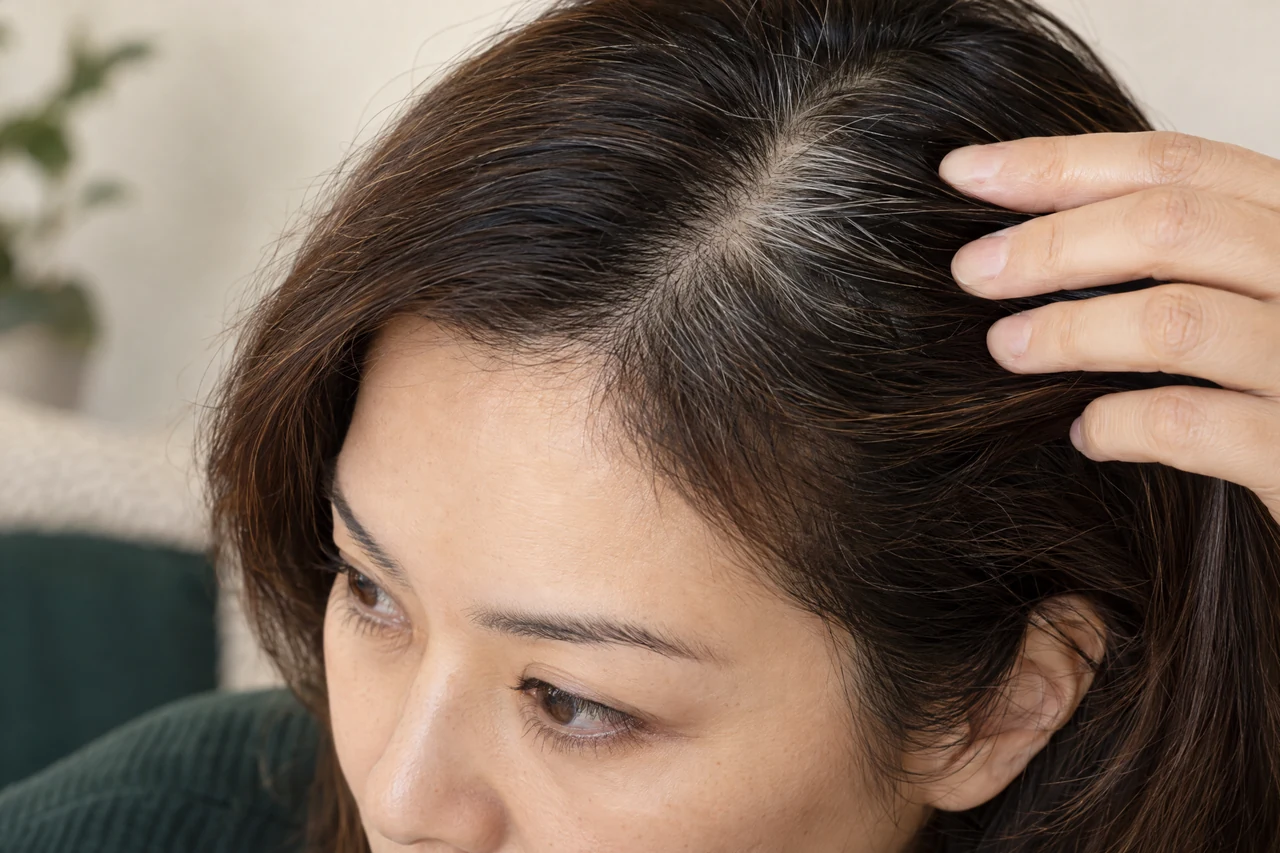
On a dry section near your usual parting, gently separate the hair and look for the change between natural growth and previous colour. Estimate the distance along the strand rather than the width of exposed scalp. A ruler held nearby can provide a reference without pressing against the skin. On wavy hair, gently extend the section without pulling. If the boundary is unclear, say so instead of reporting a precise measurement you cannot verify.
Keep the last colouring date alongside the estimate, not in place of it. Record any home dye or other colour service since that visit. A pale area at the scalp and a warmer area further down may represent different concerns. Discuss root touch up vs full head colour if you are unsure whether only the new growth needs attention or the lengths also need a change.
Review root touch up to check its service scope and the details to share before arranging the related work.
The listed three-inch scope is not a recommended waiting target
Do not wait for that length simply to make a visit feel worthwhile. Equally, growth within the listed range does not establish that a straightforward root service will achieve every colour goal. Ask whether the assessment includes joining the new colour to the old shade and whether any work through the lengths needs a separate quote. A longer gap is a reason to describe your current hair carefully, not proof that you must colour the entire head.

Different areas may become noticeable at different times
A concentrated white hairline can stand out while scattered strands elsewhere remain comfortable. Record where the contrast is strongest and whether changing the parting changes what you see. Do not assume that every visible white strand requires the same action; the desired consistency and current hair should guide the maintenance discussion.
Make your observation relevant to daily styling. A centre part exposes a different strip from a side part. Hair tucked behind the ears can reveal the temples, while a loosely tied style can expose the edges around the face. Take photographs with your usual arrangement first, then gently move the hair to show the area beneath. A hidden section need not define your appearance preference, but showing it gives the stylist a fuller picture.
Use similar lighting and camera distance when comparing photographs. Stand near a window without strong direct glare, and avoid colour filters. Include the coloured lengths rather than cropping every image to the scalp: their darkness and tone explain why the new roots stand out to you. Changing the parting may help you feel comfortable temporarily, but it does not change the amount of growth or determine the eventual service scope.
Compare the parting, temples and less visible sections
Label the locations in your enquiry using simple descriptions such as left temple, front hairline or crown. Say which area matters most when you wear your hair normally. Ask whether the planned maintenance will address all the areas you want changed, rather than assuming that a concern concentrated at the front automatically means a particular partial service is available. Agreeing on the visible priorities keeps the discussion focused without overlooking the rest of your hair.

Revisit the colour goal if repeated upkeep no longer fits
If frequent root maintenance no longer fits your routine, consider whether a more mixed appearance would feel acceptable. That is a change in colour goal, not a guarantee of fewer visits. Existing dye and the tone through the lengths still matter, so discuss a possible transition and an acceptable interim appearance before changing the plan.
Separate wanting fewer visits from wanting less visible white hair. Those preferences can pull in different directions when the lengths are uniformly dark. Before choosing a softer look, decide what you would accept between appointments: visible silver at the front, lighter strands among the brown, or a noticeable period of natural roots beside old dye. Bring a reference for the overall mix, not just a polished photograph of freshly coloured roots.
Continue with grey blending vs full coverage for that specific comparison and the preparation questions it raises.
Continue with transition from dyed hair to grey for that specific comparison and the preparation questions it raises.
Ask about a softer contrast without expecting a maintenance-free result
Ask what can realistically change at the next visit and what would need a longer transition. Old dark dye may still create a boundary even when new white growth is left visible. A softer finish should therefore be discussed alongside the condition and tone of the lengths. If retaining a consistent dark appearance remains your priority, say that openly and plan around the upkeep it requires rather than choosing a mixed finish you do not actually like.

Allow hair condition and scalp comfort to influence timing
Appearance is not the only consideration when arranging repeated colour. The American Academy of Dermatology's advice on preventing hair damage notes that dyeing can damage hair and recommends allowing more time between touch-ups, particularly when the air is dry. This is care advice, not a measure of when grey roots become visually unacceptable. Discuss the balance between your desired finish and your hair's current condition rather than using a calendar alone.
Tell the stylist about recent bleaching, perming or straightening, and mention new roughness or breakage. Keep these observations separate from colour complaints: a warmer brown through the lengths and increased snapping are not interchangeable problems. An upcoming event is a reason to enquire early, but not a reason to omit treatment history or rush into another application.
Repeat the product checks, not just the previous appointment
The FDA's hair dye guidance explains that reactions can occur despite previous uneventful colouring, because sensitivity can develop and formulations can change. Follow the current product instructions and check the required skin-test arrangements before each use; a negative test does not rule out every reaction. Do not dye an irritated, sunburned or damaged scalp. If you have had a dye reaction, seek healthcare advice and share that history before arranging more colour.

Turn your observations into a practical maintenance enquiry
A useful enquiry states what you see, what you want changed and what you can fit into your routine. Include your approximate regrowth length and the date of the last colour, then identify the area that bothers you most. Explain whether your goal is consistent coverage or a visible mix. This lets the discussion address your actual maintenance need instead of trying to choose an appointment from a general timetable.
When you are ready to book a hair appointment, send current photographs and mention any occasion or travel dates that affect your availability. Ask for confirmation of the proposed work, price scope and preparation requirements before making plans to visit Sheung Wan. An enquiry starts that discussion; it does not by itself confirm a booking.
Use the next cycle to refine your own reminder
After an agreed colour service, note when the first visible growth appears and when it actually starts bothering you. Those are different milestones. Keep a photograph of the finish you liked and another of the boundary you no longer wanted. Use the record to set a personal reminder to review your roots, not an automatic instruction to dye. Reconsider it whenever your parting, coverage goal or availability changes.

What your grey-root observation means for a maintenance discussion
| What you notice | What to record | Useful next discussion |
|---|---|---|
| A pale band beside an otherwise satisfactory dark colour | Approximate new-growth length and a view including the lengths | Whether root-only maintenance can match the existing shade |
| White strands visible within a mix you still like | How the mix looks at your normal parting | Whether to keep observing rather than change colour immediately |
| A prominent temple but comfortable colour elsewhere | Usual loose and tucked-back views | Which areas the proposed maintenance would cover |
| New roots plus unwanted warmth through old colour | The root boundary and the separate warmer section | Whether the lengths need additional assessment or quoted work |
| A wish for fewer visits | The silver and interim boundary you would accept | Whether to revise the coverage goal and transition plan |
| Scalp irritation or a previous dye reaction | Symptoms and product history | Healthcare advice and preparation checks before further dyeing |
Your preparation checklist
- Photograph your usual parting and front hairline in clear, unfiltered light, with some coloured length visible.
- Estimate the new-growth length along a gently separated strand; report uncertainty if the boundary is hard to identify.
- Record the last colouring date and any subsequent home dye, bleaching, perming or straightening.
- Describe your acceptable finish: uniform colour, scattered silver or a softer mix, and identify the area you most want changed.
- Share scalp discomfort, past reactions and changes in hair condition before discussing another colour application.
- Confirm service scope, any additional quoted work, current product preparation requirements and appointment availability.
Frequently asked questions
Is a set number of weeks the right schedule for everyone?
No. Visibility, the starting pattern and your preferred finish vary. Record the regrowth and what bothers you, then discuss a suitable maintenance approach.
Should I wait until roots reach three inches?
No such waiting recommendation is implied. Three inches describes the listed HK$800 service scope. It does not establish the best timing or suitability for your hair.
What if I want to return less often?
Explain that preference before agreeing a colour goal. A softer mixed appearance may be worth discussing, but tone, old dye and new growth can still need attention. No reduced-visit guarantee is made.
Plan grey-root maintenance around the finish you want
Share clear current photographs, approximate regrowth length and your preferred level of white-hair visibility with Vit So. Include your colour history and availability so you can discuss suitable maintenance and confirm the scope before a Sheung Wan visit. An enquiry is not a confirmed booking.
Start your WhatsApp enquirySources & further reading
- How to stop damaging your hair
Hair-damage prevention advice supporting consideration of hair condition and more time between dye touch-ups, especially in dry air; not a universal grey-root appearance schedule.
- Hair Dyes
Repeated-exposure sensitivity, current product instructions, skin testing before each use and avoiding dye on an irritated, sunburned or damaged scalp.



