






Brand relationship disclosure: OWNSTRAND and Vit So are brands under the same owner. This article offers selection guidance, not an independent review or product test. Confirm individual styles, supply and visit arrangements with OWNSTRAND.
One everyday wig or two looks: map your actual wearing days
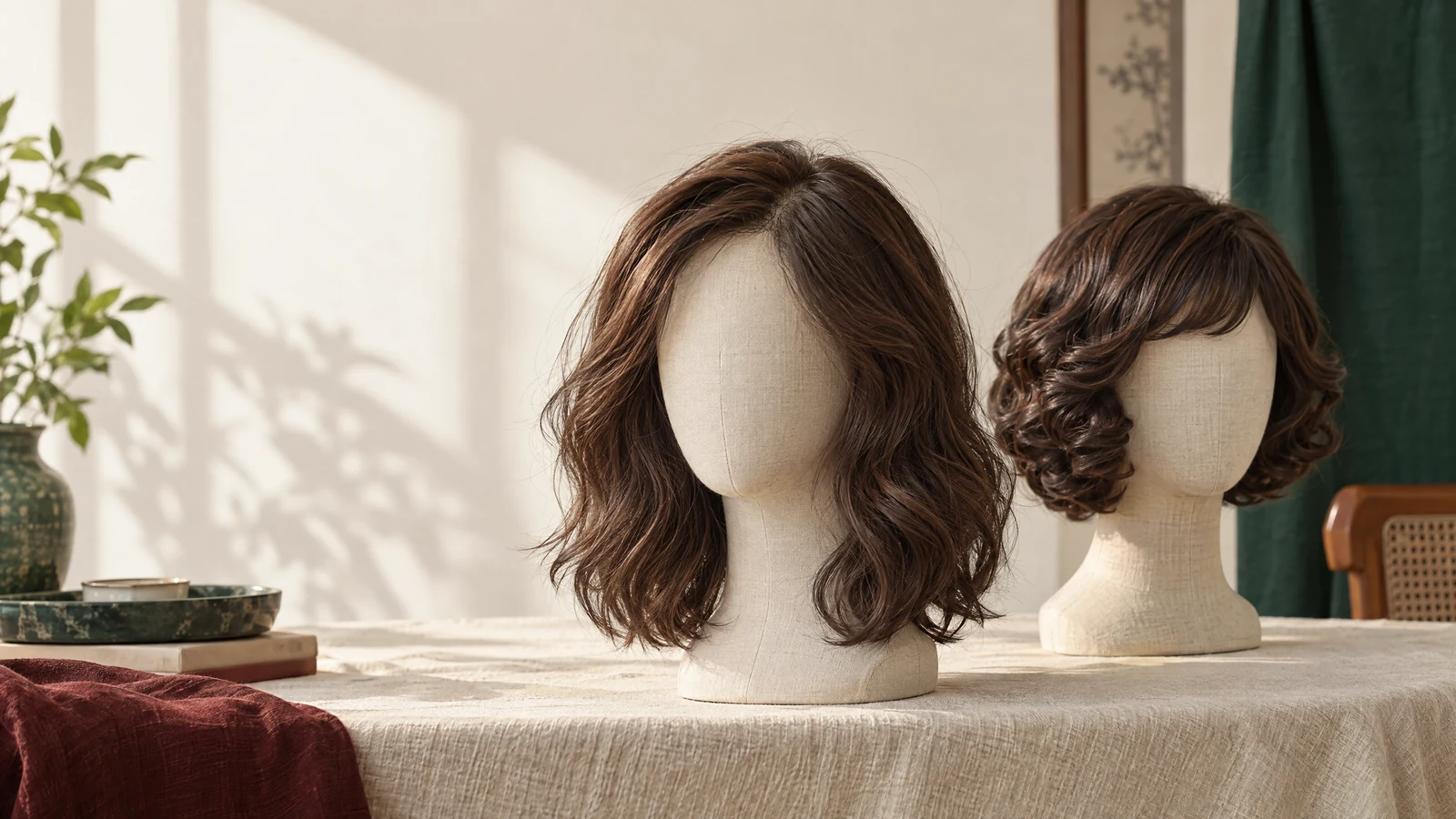
Write down the outline you need on an ordinary day before choosing a second style. Where should the ends sit when you wear a jacket? Do you want a fringe clear of your eyes or softer movement around the jaw? OWNSTRAND's women's wigs page treats full-head coverage, silhouette and day-to-day fit as separate comparison points. Use it to frame everyday shape questions, then confirm the details of a particular item rather than assuming the category answers them.
Look at a normal stretch of your calendar rather than an imagined social life. Note work, errands and recurring evenings out, plus any known occasions with a genuinely different style requirement. The thinking behind a haircut for a busy lifestyle also helps here: a look must fit the preparation time you actually have. Count a wearing day once in your budget comparison, even if you move from the office to dinner without changing your wig.
Now describe what the second look would do that the first cannot. A short outline and a longer wave may serve different preferences; two similar lengths in nearly identical colours may simply duplicate a role. Duplication is not always wasteful, especially if continuity matters, but call it a backup rather than a new wardrobe function. Pleasure in changing your appearance is also a valid reason to buy, provided you budget for it honestly rather than inventing frequent occasions.
Compare complete quotes, not two attractive thumbnails
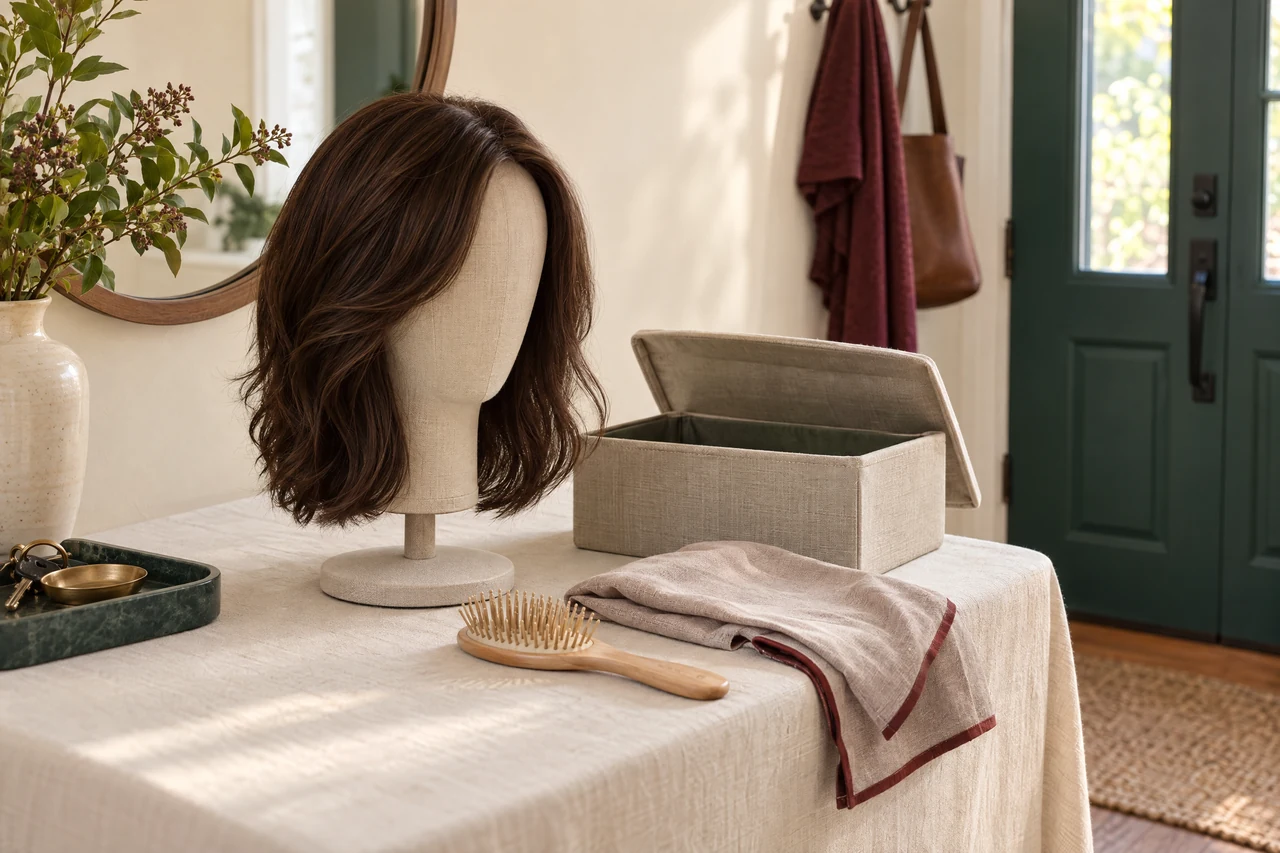
Turn your shortlist into two identifiable items with a style name, preferred colour and stated size. If you want to buy wigs online Hong Kong, OWNSTRAND's shop is a browsing-to-enquiry route: ask for each exact item's quotation, availability and ordering arrangements. Request a one-piece option and a two-piece option on the same basis. A listing or enquiry is not a stock confirmation, and a second unit should not be assumed to bring a discount or the same service inclusions.
Ask what the quoted amount covers before comparing totals. Clarify any fitting, initial cutting or styling, necessary accessories and delivery arrangements. Then ask which later care or adjustment services, if available, would be charged separately. Keep uncertain costs visible as questions rather than silently treating them as zero. A lower purchase quote may still be unsuitable if achieving your planned everyday finish requires repeated work you neither want to do nor have included in your budget.
Wig wardrobe budget trade-offs across four dimensions
Make wig wardrobe budget trade-offs concrete with four headings on your notes: realistic occasions, permitted style changes, storage and downtime, and complete quoted commitment. Compare both options under each heading without assigning arbitrary scores. For a rough spending check, divide a comparable quoted total by your own planned wearing days over the same period. Treat the result as a planning estimate, not a prediction of lifespan. If the second piece has very few realistic days, ask whether its distinct look is still worth the additional commitment.
Give one versatile piece a realistic job description
A versatile wig need not transform dramatically. It may simply have an outline you like with casual clothes and evening outfits, without changing its texture. OWNSTRAND's wigs Hong Kong homepage offers a starting point for comparing shapes and a separate handmade custom human-hair route. Describe your everyday finish and occasional variation, then ask whether one specific option could meet both. The site's custom fitting description does not establish the services or terms attached to every catalogue item.
First check that you are comparing the right product scope. The guide to full head wigs distinguishes a whole-head silhouette from a partial piece. Within a full wig, length alone does not establish whether your intended hairline or parting change is possible. Ask which areas can be rearranged and whether an accessory would expose the cap edge. A familiar base shape with small approved changes can be more practical than choosing a longer piece solely because it seems to offer more possibilities.
Protect the everyday version before authorising an alteration. Cutting a long piece into a short look is not a reversible wardrobe change: the removed length will not grow back. Ask what the proposed trim would preserve and what it would permanently remove. If your two favourite looks depend on incompatible lengths or fringes, one piece may be an awkward compromise. Conversely, a change of outfit may already provide enough variety without buying or altering another wig.
Price the restyling effort before choosing two presets
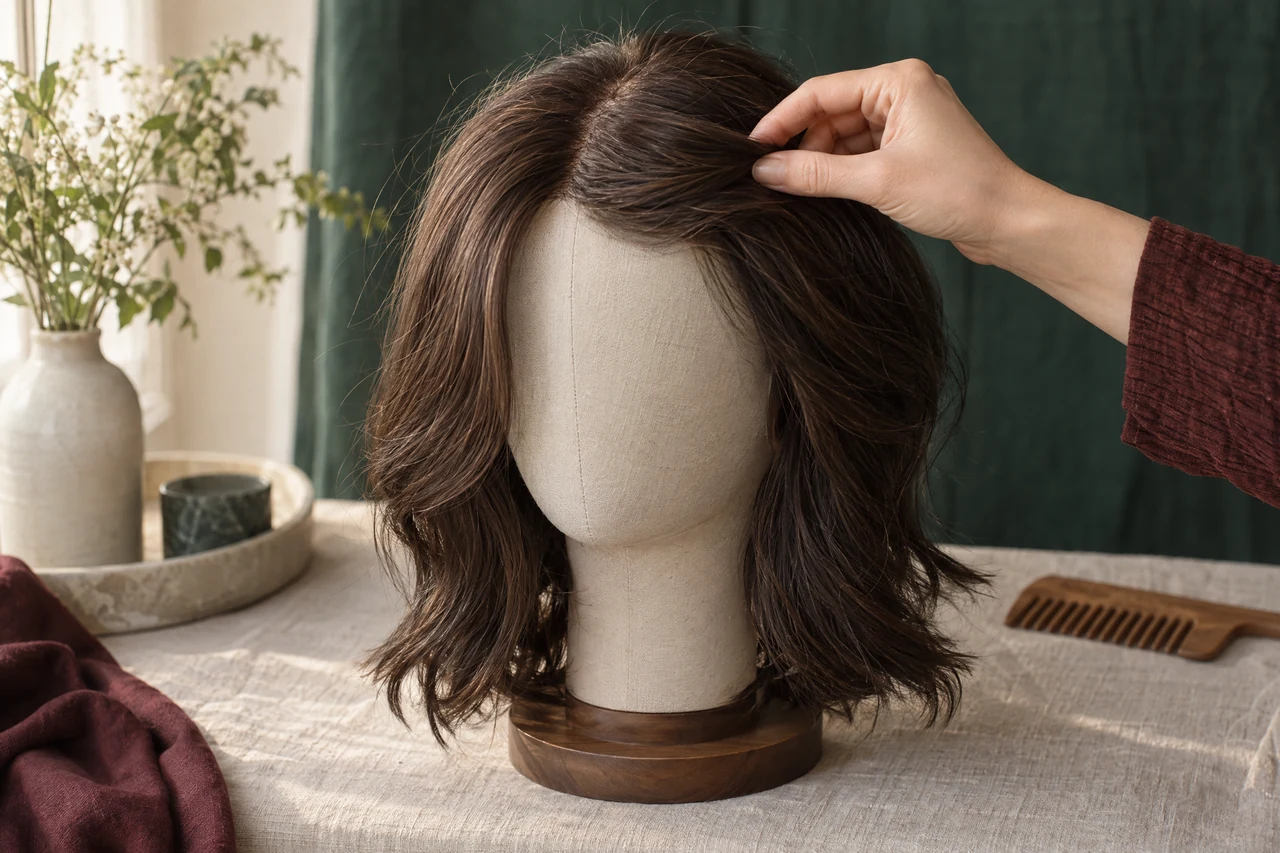
Preset looks can reduce the need to change a wig's texture before leaving home, but they do not eliminate care. Cancer Research UK says most synthetic wigs come ready to wear and advises checking manufacturer information before exposing them to direct heat. It also notes that some real-hair wigs need a hairdresser to style and set them.[1] These are general care considerations, not proof that a particular catalogue wig will retain the exact finish in its image.
Use the discussion of human hair vs synthetic wigs to identify the workload question, then ask for the shortlisted item's own care instructions. Can the planned change be made without heat, or does it require an approved tool and technique? The American Cancer Society cautions against a hair dryer or curling iron unless the wig is heat resistant.[2] Neither a human-hair description nor a heat-friendly category label tells you the appropriate setting for an individual piece.
Can you restore the weekday look before the next wear?
Describe the complete sequence, not just the enjoyable change: preparing the wig, making the approved adjustment and returning it to the everyday finish. Ask who would do each stage and what happens after washing. If you do not want that work, two distinct preset silhouettes may be useful. If the second style is needed only occasionally, leaving the everyday piece unchanged and delaying another purchase may be better. Do not attempt an unconfirmed heat or chemical process simply to make the one-piece budget work.
Check whether two pieces fit your home and care schedule
Make room for the wig when it is not on your head. The American Cancer Society recommends a wig stand for short-term storage and describes room-temperature drying in its washing advice.[2] Ask how the exact item should be dried and stored, then identify a suitable place rather than buying first and finding space later. Two looks require an arrangement for both pieces, including the one awaiting its next wear. A travel plan may also need protection that is different from your home setup.
A second piece can solve downtime rather than add style variety. Cancer Research UK suggests considering two wigs if professional cleaning leaves you without one to wear.[1] That is a conditional reason, not a recommendation that everyone buy two. Ask whether your chosen piece can be cleaned at home, whether any professional care is needed and how wearing gaps would be managed. If you are comfortable with an existing alternative during those gaps, duplication may not be necessary.
Fit each option separately before treating them as interchangeable. The American Cancer Society says brand size charts may vary and should be checked before purchase.[2] Do not assume that the second wig will fit because the first one does, even if both use the same size word. Take your usual glasses and explain any daily contact points during an agreed fitting. Persistent discomfort or treatment-related wearing needs belong with a care professional, not a tighter adjustment or a larger wardrobe budget.
Choose now, add later, or keep a clearly justified pair
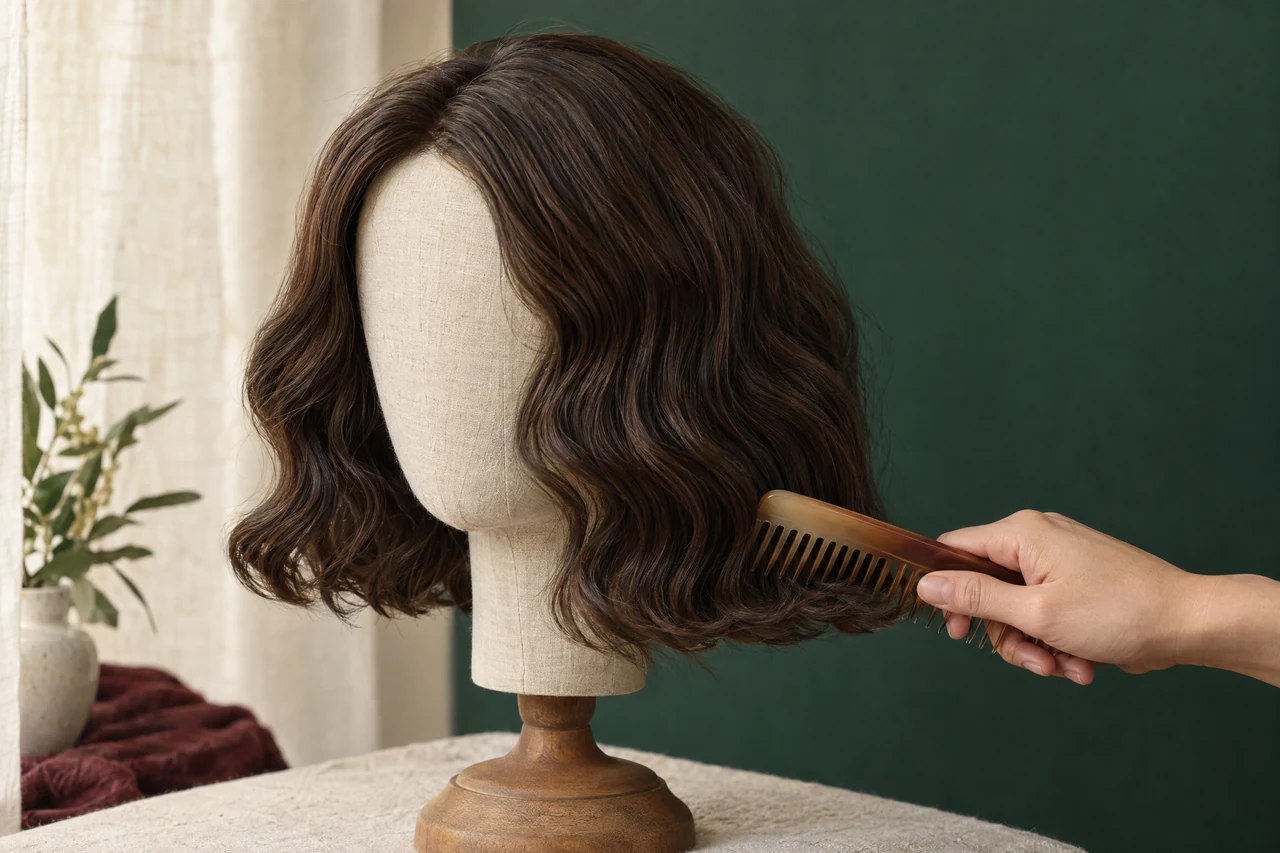
Compare three practical outcomes: one unchanged everyday look, two pieces with distinct jobs, or one piece now with a second decision postponed. Buying in stages keeps the second commitment optional while you discover your preferences, but it cannot reserve a future colour or supply date. If you already know both looks will be worn regularly, staging may offer less benefit. The purpose is to match the commitment to what you know, not to make one purchasing pattern sound universally sensible.
Before agreeing, repeat the reason for every item in plain language. You should be able to name its wearing occasions, acceptable preparation, storage place and confirmed quoted terms. Keep fit and your preferred outline ahead of an expensive label: Cancer Research UK notes that paying more does not guarantee a more realistic appearance.[1] If neither shortlisted option meets the essential everyday job, pause and revise the shortlist rather than purchasing both in the hope that extra choice will compensate.
OWNSTRAND and Vit So have the same owner; this is selection guidance, not an independent recommendation or a product test. Use the linked OWNSTRAND pages for item enquiries and confirm visit arrangements with its single Kwun Tong store. Vit So's Sheung Wan salon is a separate business location, not another OWNSTRAND branch. A useful decision can be modest: one confirmed everyday solution, or a pair whose separate roles you can explain without relying on assumptions about stock, service or future use.
Compare the wardrobe commitment before choosing the number of wigs
| Decision point | One everyday piece | Two preset looks |
|---|---|---|
| Recurring occasions | One silhouette suits ordinary days and known outings. | Each piece has a distinct, recurring job or an intentional backup role. |
| Permitted changes | Keep variations within the item's confirmed limits; trimming is irreversible. | Choose different starting shapes without assuming either needs no care. |
| Storage and downtime | One care schedule; decide what to wear during drying or cleaning. | Plan space and care for both; a spare helps only if it is ready and fits. |
| Quoted commitment | Confirm the piece, necessary setup and separately charged work. | Confirm both exact options and shared versus duplicated costs; do not assume savings. |
Your preparation checklist
- List real wearing days and name the separate job, if any, for a second look.
- Keep exact style names, colour options and sizes beside the shortlist.
- Ask which parting, texture or accessory changes are permitted for each item.
- Clarify complete quotes, inclusions and any separately charged services.
- Plan storage, drying and an acceptable alternative during care downtime.
- Confirm each item's fit, availability and visit or delivery terms before committing.
Frequently asked questions
Is a second colour enough reason to buy another wig?
It can be if you genuinely want and will use that colour change. Compare it with clothes you already wear and identify occasions for it. If it serves the same role as the first piece, budget for personal enjoyment rather than claiming it reduces costs or adds essential coverage.
Should a second piece match the first as a backup?
A matching direction may be useful when you want a consistent appearance during care downtime. Ask whether the second option fits and can be supplied in the intended shade. Similar photographs do not establish an exact match, and rotation alone does not prove a particular replacement interval.
What if I want a very different look for one known event?
Separate that event preference from your everyday requirement. Ask whether an approved, reversible adjustment would satisfy you, then compare it with the complete commitment for another piece. A single event can justify a purchase you value, but it does not demonstrate repeated use or better value.
Can I buy the everyday piece first and add the other later?
Yes, staging the decision lets you learn whether the first piece meets your routine before committing again. Keep the second style as a preference, not a promised future purchase. Reconfirm its specifications, quotation and supply when you are ready; current browsing cannot secure future availability.
Bring a wardrobe brief, not just two favourite pictures
Invite Vit So to discuss your preferred outline and style priorities. For exact wig specifications, quotations or a Kwun Tong visit, use the OWNSTRAND guides already linked above. Explain the job each look must do and which care commitments you are prepared to accept.
Start your WhatsApp enquirySources & further reading
- Cancer Research UK — Wigs, hats and scarves
General synthetic readiness and heat caution, possible human-hair styling needs, a conditional second-wig reason during professional cleaning, and the limits of price as an appearance proxy.
- American Cancer Society — Wigs for Hair Loss
General heat-resistance caution, short-term stand storage, room-temperature drying and checking the chosen brand's size chart. These points do not establish individual OWNSTRAND specifications or medical suitability.



