







Perm enquiry after trimming bleach but retaining processed layers: what did the cut remove?
A haircut removes the hair that is cut away, not a treatment history from the strands left behind. The most obvious pale ends may disappear from the outline while shorter highlighted pieces remain inside the shape. Hair does not necessarily share one continuous colour boundary: face-framing pieces, scattered highlights and earlier layered cuts can leave different treatment patterns. The useful question is therefore not whether the haircut looks fresh, but which previously treated sections are still part of it.
Consider a hypothetical shoulder-length style with light ends and some older highlights higher up around the ears. A trim into a bob might remove much of the pale perimeter without removing those higher highlighted pieces. Once the top hair falls over them, the whole cut may appear dark in a photograph. That appearance should not be described as proof that all bleach has gone. Tell the hairdresser about the earlier highlights even if they are no longer prominent when your hair is worn down.
Keep removal and retention in separate notes
Write down what was definitely removed and what might remain. For example, distinguish pale ends cut from the longest back section from uncertain lightening in shorter side layers. If the haircut has already happened, say so and describe the previous length. If it is only planned, ask about the intended cut before assuming how much processing it will remove. This gives the enquiry a practical starting point without pretending that a home description can certify the retained hair.
Checking hidden bleached layers before a short hair perm: build the retained-hair map
A retained-hair map is simply a record of the sections expected to remain after the cut and what is known about their history. Start with the shortest crown layers, then the face-framing pieces, sections behind each ear, the lower back and the perimeter. Note whether each area was lightened, coloured, straightened or previously permed. Include old work that may still be present, not just your latest appointment. A place marked uncertain is more useful than a confident label based only on its present shade.
For the proposed haircut, describe the length you want in each area rather than drawing one horizontal cut line across a photograph. Keeping a longer front and a shorter nape creates different retained sections. Leaving crown layers untouched while trimming the bottom may preserve exactly the strands whose history needs closer attention. Ask the hairdresser to relate the treatment record to the planned shape. A map should support that discussion, not become a do-it-yourself instruction to remove particular strands or apply chemicals selectively.
Record what you know without testing it at home
Ordinary photographs can show length, layering and visible colour variation. They cannot reveal every previous treatment or determine how a section would respond to a perm. If comfortable, take another view with the upper hair loosely lifted so the underside is visible, without pulling on fragile strands. Record anything you already notice during normal washing or combing, such as repeated tangling or short broken pieces. Do not repeatedly stretch wet hair, run home chemical trials or treat smoothness as a pass mark.
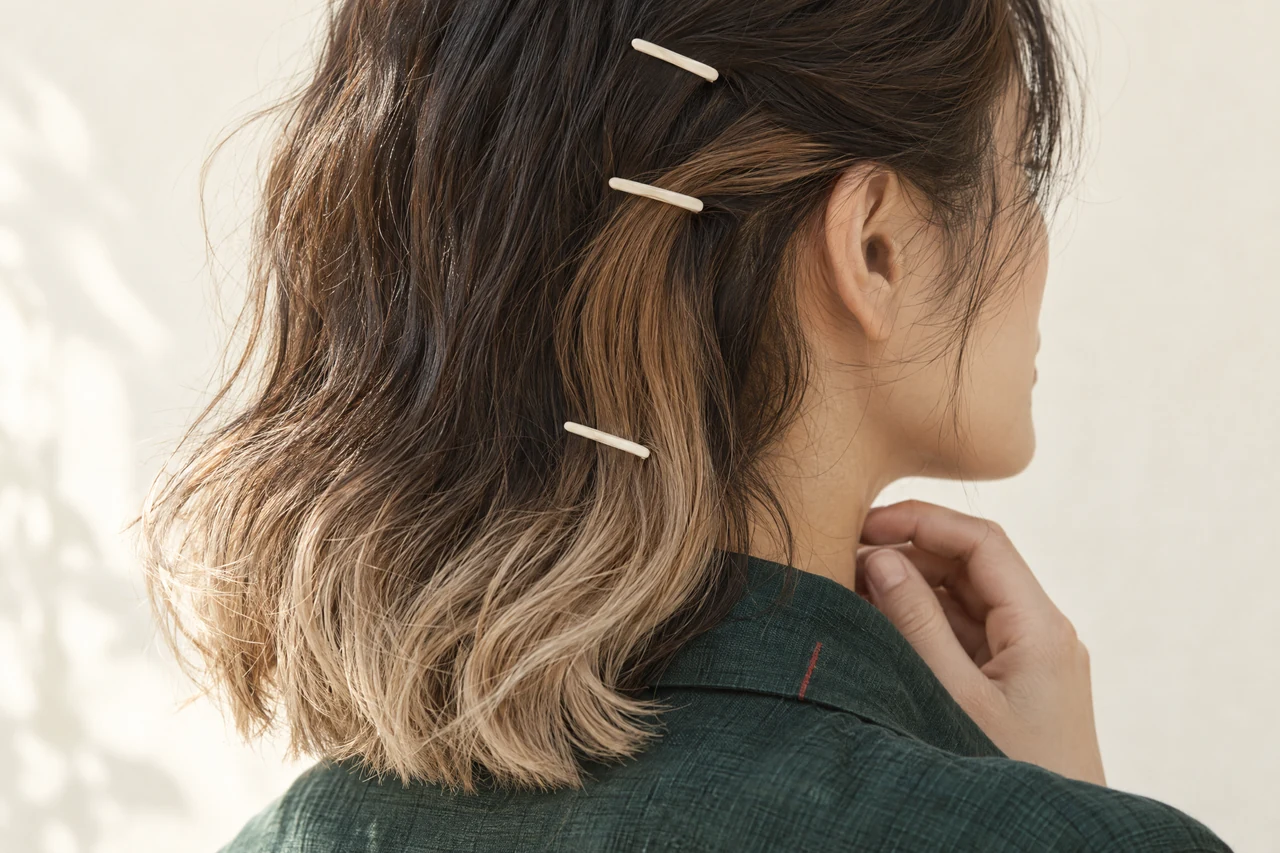
A natural-looking shade is not a chemical suitability check
A dark or natural-looking finish does not tell you whether the lengths were lightened before that colour was applied. Likewise, a soft feel after conditioning does not supply the missing history of an internal layer. The American Academy of Dermatology's colouring and perming guidance notes that appearance-enhancing treatments can leave hair dry and brittle and urges caution with perming. This supports taking earlier processing seriously, but it does not decide whether a particular section can receive another service.
If your main uncertainty is can you perm bleached hair, use that broader guide to prepare the history discussion, then bring the enquiry back to what your haircut actually retains. Do not replace this question with a fixed number of weeks since bleaching. A calendar date helps describe the sequence of treatments; it does not establish the condition of the strands still present. Any decision needs the remaining lengths, the proposed chemical work and the desired outline considered together.
Uncertainty can be a reason to pause
If you cannot recall which layers were lightened, be explicit about that gap rather than calling them unprocessed. Uncertainty may mean the enquiry cannot progress to an agreed perm plan yet. Repeated breakage or difficulty handling a retained section is also a reason to defer more chemical work while discussing it. Scalp irritation should not be hidden to secure an appointment. If there is excessive burning or stinging during a perm, alert the hairdresser immediately; the AAD advises immediate rinsing and dermatological consultation.
Decide whether removing more hair would still leave the cut you want
Once possible retained lightening has been identified, the next decision is not automatically to cut shorter. Removing more hair may conflict with the shape you wanted from the first trim. You might lose the length needed to tuck the sides behind your ears, keep a soft line beside the jaw or cover the nape. Those are legitimate priorities. A useful consultation weighs a cut you would enjoy without a perm against a much shorter cut chosen only in the hope of making chemical work possible.
When comparing a bob perm, check the shortest retained layers as well as the visible bottom edge. A reference with curved ends does not explain how your shorter internal pieces would sit around the ears. Discuss where movement should begin and how much cheek-level width you want. The haircut and styling goal still need to work together, even if suitability is eventually established. Do not assume that removing one suspect area guarantees the rest of the head can be treated.
Set a minimum length before considering further cutting
Tell the hairdresser which features you are unwilling to lose, such as ear-tucking length or a longer front corner. Ask what each proposed cut would leave, not simply how much would come off. If removing the uncertain lengths would cross your minimum, a postponed perm may be the better choice. This turns an open-ended request for shorter hair into a decision with a clear boundary. It also leaves room to discuss whether a different outline would be worthwhile on its own.

Compare a postponed perm with temporary movement
Postponing a perm need not mean abandoning the wish for a different outline. A cut that sits well without chemical movement, a change of parting or carefully chosen temporary styling may help you judge what you actually like. Separate the visual aim from the method: an inward-facing end, a softer side outline and movement throughout the crown are different requests. A temporary trial can clarify those preferences, but it cannot predict a future perm result or prove that retained processed lengths are suitable.
Temporary styling is not automatically harmless because it avoids another chemical service. The AAD's hair-damage prevention advice recommends gentle handling, air drying where possible and the lowest heat setting when heated tools are used. Ask for an approach your current hair can tolerate rather than repeatedly brushing or heating a reluctant section. If a temporary shape needs more daily effort than you want to spend, that is useful information for revising the haircut goal rather than a reason to rush into a perm.
Agree what a later review would need
A postponed decision should have a purpose beyond waiting for an arbitrary date. Ask what information or change would make a later assessment more useful: a clearer treatment record, a revised cut or confirmation of which processed lengths remain. New growth and later trimming can change what is present, but waiting does not erase the history of a strand you still keep. Do not promise yourself a perm after a set interval. Revisit the actual retained hair and your priorities when you next enquire.

Send an enquiry that allows the plan to change
Use these 6 preparation checks to describe the cut, retained processing and movement you want. Photos of the current front, sides and back are helpful, alongside an older photo if it shows the lightened areas more clearly. Put dates and treatment positions in your message, marking what you do not know. Include your minimum acceptable length and whether you would consider a non-chemical finish. These details make the first exchange more useful without asking for a definitive chemical decision from pictures alone.
Use the hair perm service information to frame an enquiry only after explaining that some processed layers may remain. Ask what needs to be assessed before service scope and an appointment can be confirmed. Do not book on the assumption that the trim has resolved the bleach history, or that a smaller area of treatment must be appropriate. If the plan changes to a cut or temporary styling, confirm the service and actual charge rather than treating it as a substitute with the same contents.
A perm enquiry after trimming bleach but retaining processed layers should name the uncertainty
A useful message might say: ‘The pale ends were trimmed, but older highlights may remain behind my ears and in the crown layers. I want to keep enough length to tuck the sides back, and I would consider temporary movement if a perm is not appropriate.’ This hypothetical wording gives a hairdresser something specific to discuss. It does not diagnose the hair, request a guaranteed result or conceal the possibility that the safest next step is not further chemical work.
What each option changes when processed layers may remain
| Option to discuss | What it changes | What it does not establish |
|---|---|---|
| Keep the recent trim | Preserves the new length while retained sections are identified. | A darker outline does not prove all lightened hair was removed. |
| Revise the cut further | May remove specific treated lengths, with a change to the shape. | Cutting shorter does not automatically approve chemical work on every remaining area. |
| Postpone the perm | Avoids adding that chemical service while history and priorities are clarified. | Waiting alone does not certify a strand that remains in the haircut. |
| Try temporary movement | Helps compare end direction, side width and styling effort. | A styled curve cannot predict chemical response; heat and handling still require care. |
Your preparation checklist
- State whether the cut is already done or still proposed, and describe the current length.
- Identify earlier bleach or highlights by location, including hidden side and crown layers.
- List colour, straightening and previous perms in order, marking dates or details you cannot recall.
- Prepare current front, side and back photographs, plus older colour photographs if available.
- Name the shortest length you will accept and the places where you want movement.
- Describe ordinary handling difficulties and whether you would consider postponement or temporary styling.
Frequently asked questions
If the pale tips are gone, can I describe my hair as unbleached?
Not unless the remaining sections are actually known to have no bleach history. Say that the pale tips were removed and explain where earlier lightening may still remain. A darker finish or shorter outline cannot supply that information. If you are uncertain, an honest note about the missing history is more useful than calling the whole cut unprocessed.
Does checking hidden bleached layers before a short hair perm mean I should lift and test every strand?
No. You can provide ordinary photographs and describe treatment locations without repeatedly pulling, stretching or chemically testing your hair. An underside view may help show the layers, but photographs cannot establish chemical suitability. Ask what needs to be assessed in person and avoid treating a home handling exercise as permission to proceed.
Should I cut much shorter now so I can definitely have a perm later?
Do not choose a much shorter cut on that promise. First establish which sections the proposed cut would retain and whether the new shape meets your priorities without a perm. Further cutting may be worth discussing, but it is not a guarantee. If the required length loss is unacceptable, postpone chemical work and compare a suitable non-chemical finish instead.
Enquire about the layers left after your trim
Send Vit So your current hair photographs, earlier bleach history, proposed or completed cut and minimum length you want to keep via WhatsApp +85253057561. Mention hidden processing and any uncertainty before requesting a perm. The location is 252 Hollywood Road, Sheung Wan, Hong Kong. Assessment arrangements, suitability, service scope and appointment availability require confirmation; a message is an enquiry, not a confirmed booking.
Start your WhatsApp enquirySources & further reading
- Coloring and perming tips for healthier-looking hair
American Academy of Dermatology guidance on dryness and brittleness associated with appearance-enhancing treatments, caution with perms and what to do if excessive stinging or burning occurs. General guidance, not individual perm clearance.
- How to stop damaging your hair
American Academy of Dermatology advice on gentle handling, conditioning and limiting heat exposure. Useful for considering a temporary styling option without describing it as damage-free.



