






What a deep conditioning treatment describes
Deep conditioning hair treatment usually describes a more focused conditioning step, but products and directions differ. Some salon menus use the term for a mask; others use it for a broader visit. Ask for the actual product type, application area and steps rather than assuming the name means steam, a machine or a particular ingredient.
A useful starting question is: what will this proposal help me notice in everyday handling? Ends that catch during combing suggest a different priority from roots that fall flat after washing. You might want less resistance when separating a knot, a softer feel through previously coloured lengths, or comfortable movement without a coated finish. Describe the location and the task that feels difficult rather than asking for the strongest treatment available.
The review Shampoo and Conditioners: What a Dermatologist Should Know? explains that conditioners can reduce static and friction between hair fibres, making combing and detangling easier. Those are meaningful cosmetic benefits. A smooth surface or brighter-looking shine is not, by itself, evidence that a damaged strand has recovered its original structure. This distinction helps you judge the proposal by a realistic outcome.
A deep conditioning treatment is not one universal recipe
Translate the menu name into a short description you can understand: a rinse-out mask on selected lengths, for example, or a sequence of different products with separate directions. Ask whether the formula is chosen for your current hair or simply included in a package. If two proposals have similar names, compare the actual steps before deciding that one is more substantial. A longer name does not explain placement, suitability or the intended finish.
Comparing salon deep conditioning with routine care
Salon deep conditioning may involve professional application and a discussion of hair history, but the words do not establish what washing or finishing is included. A product's recommended contact time is also not the total appointment time. Compare the care step and the complete visit separately before deciding whether the proposal meets your needs.
For a visit around work in Sheung Wan, request an estimate for the complete appointment rather than planning your return to the office around the mask's waiting period. Clarify whether the quote covers washing, product application, rinsing and the finish you want. If you are adding a haircut or colour, ask how the conditioning step fits into that work and whether it is a separate charge. Confirm the total scope before agreeing to an upgrade.
Home care and a salon visit can solve different practical problems. At home, you need a product whose directions fit your washing routine. In a salon discussion, the valuable question is how the proposed application accounts for your different hair sections and past processing. Professional application does not automatically make every formula suitable, just as using a mask at home does not automatically replace advice about fragile lengths.
Review hair treatment to check its service scope and the details to share before arranging the related work.
Continue with hair mask vs conditioner for that specific comparison and the preparation questions it raises.
Separate the product step from the whole visit
Ask what happens before and after the conditioning product is applied. Hair preparation, rinsing and styling are separate parts of the visit, even when sold together. Find out whether a smoother appearance is expected from the conditioning step, the blow-dry, or both. This gives you a fairer comparison with your home routine, where you may leave the hair to dry naturally and use fewer finishing products.
What intensive conditioning can mean
An intensive conditioning treatment is a description to investigate, not proof that badly damaged strands will return to their original state. Explain whether you want easier detangling, softer ends or less roughness. Ask how the proposal will be adjusted for fine hair, previously bleached sections and areas that are already breaking.
Hair can need different handling along its length. Newer roots may feel comfortable while older lightened ends catch easily. Explain which areas have been bleached, coloured, permed or straightened, including processing that remains in the lengths even if it happened some time ago. Ask whether those areas will receive the same product and amount. For fine strands, the useful trade-off may be improved softness at the ends while retaining movement elsewhere, rather than coating every section equally.
If a proposal also mentions rebuilding or bond repair, ask what that claim refers to and how the product differs from ordinary conditioning. The guide to bond repair vs deep conditioning helps you compare those care goals without treating the labels as interchangeable. It is reasonable to want better handling now while also discussing whether visibly split or repeatedly breaking ends need a separate assessment.
Intensity is not a promise of instant recovery
Set a modest, observable goal before the appointment: fewer catches during gentle combing, for example, rather than hair becoming undamaged again. The conditioner review describes the sealing of split ends as temporary, so a tidier-looking end is not proof of a permanent fix. If strands keep snapping during ordinary handling, tell the stylist rather than assuming an increasingly rich formula will solve everything. Protecting the lengths you keep may also require changing how you wash, dry and detangle them.
Choosing aftercare without overloading the hair
Softness is only one part of a useful outcome. Notice whether the hair still moves comfortably and whether the roots feel weighed down after your normal wash routine. Follow the actual product and service directions rather than extending contact time or layering several masks because the treatment is described as deep.
Keep your first observations specific. Note whether the ends separate more easily, whether finer sections feel coated, and whether the roots become flat immediately or only later in the day. Compare hair dried in a similar way, because an elaborate salon finish is different from your usual quick morning routine. For that distinction, read hair treatment results vs blow dry finish before judging every visible change as a conditioning result.
The American Academy of Dermatology's hair-care advice recommends conditioner after shampooing and gentle handling when removing tangles. That supports keeping up ordinary care, not stacking an extra mask onto every wash regardless of the formula already used. Ask which rinse-out or leave-in step belongs in your routine and whether a proposed mask replaces or accompanies your usual conditioner.
Continue with hair porosity and hair treatment for that specific comparison and the preparation questions it raises.
Review softness and weight together
If the hair feels heavy, first review the product, amount, application area and rinse with the person advising you. Keep a note of what you used rather than changing every part of the routine at once. A formula that suits dry ends may be less comfortable near fine roots. If the scalp burns, develops a rash or remains uncomfortable, stop using the suspected product and seek appropriate medical advice; another conditioning layer is not a response to skin irritation.
Heat, steam and equipment: clarify the proposed step
A cap, mist or warming device may make a treatment look more elaborate, but its presence does not explain the product's purpose. Ask whether heat is actually proposed, why it is used with that formula and what the product instructions require. A description such as deep or intensive should not be taken as confirmation that equipment is included. Nor should an illustration of a procedure be read as proof that the same procedure is offered at Vit So.
As a home-use example, John Frieda's deep-conditioning guide tells readers to apply treatment to the lengths after shampooing, wait for the period specified by the product and rinse thoroughly. The practical lesson is to check the actual directions, not to borrow a waiting time or add heat from an unrelated tutorial. This manufacturer's example does not establish the product or sequence used for a salon proposal.
Treatment warmth and finishing heat are separate questions
Clarify the conditioning step and the styling step separately. A heated blow-dry at the end is not evidence that the mask needed warming while it was on the hair. The American Academy of Dermatology advises using the lowest heat setting when styling and reducing avoidable heat exposure. Discuss a finish appropriate to your hair's condition, and speak up if any part of the visit feels uncomfortably hot rather than assuming discomfort means the care is working.
Turning a treatment name into a clear enquiry
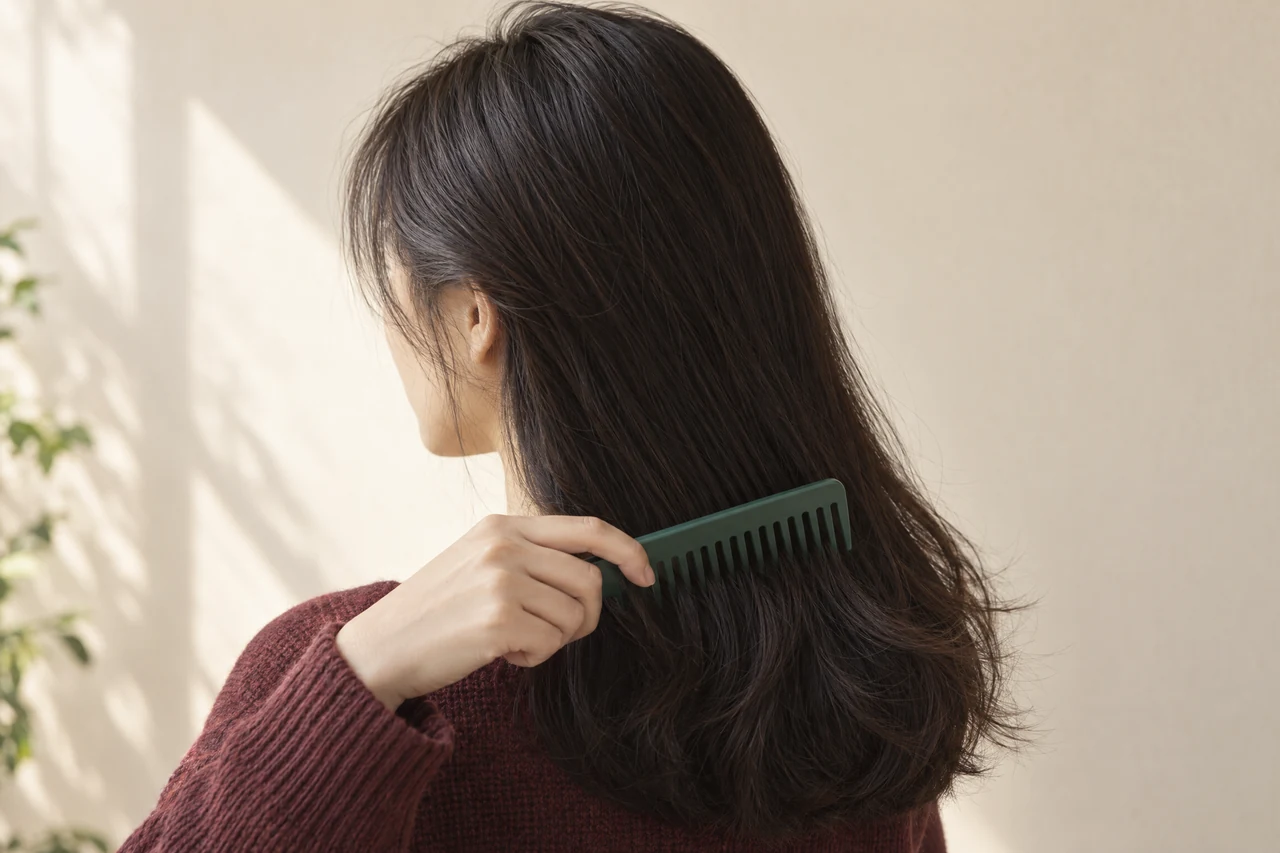
Before enquiring, gather your product names and hair history. A current photo of the lengths can help show the area you mean, but also describe how it feels during washing or combing. Explain your preference in plain language: softer ends while keeping natural waves, for instance, or easier detangling without flatter roots. These details make the conversation more useful than asking for a dramatic repair based on a polished reference photograph.
Use the 6-point checklist below to compare proposals. It is a decision aid, not a damage score or a recommended treatment schedule. Choose a proposal you can explain back clearly: what is being applied, where it will go, what is included and how you will look after the hair. If those details remain unclear, request clarification before arranging the visit rather than relying on the menu's strongest adjective.
Agree on what you will review at home
Ask what to watch for after returning to your normal washing and drying habits, and what information to share if the result feels too heavy or rough. A helpful follow-up describes the product used, the affected area and when the change appeared. Enquiring about care does not commit you to a package; it gives you the opportunity to confirm suitability, the complete quote and appointment availability before making a decision.
Compare the information behind conditioning labels before choosing a proposal.
| Label or proposal | What to clarify | Useful way to judge it |
|---|---|---|
| Routine rinse-out conditioner | Application area and rinsing directions | Comfortable everyday combing without unwanted weight |
| Deep or intensive mask | Actual formula, preparation and contact instructions | Whether it meets your stated goal for the affected lengths |
| Salon conditioning visit | Washing, application, rinsing, finishing and total quote | Whether the whole visit suits your needs and available time |
| Proposal mentioning heat or steam | Whether equipment is included and why it suits the product | A clearly explained procedure rather than an assumed upgrade |
| Proposal mentioning repair | Which product claim is being made and its limits | Better handling distinguished from a promise of permanent restoration |
Your preparation checklist
- Locate the concern: ends that catch, rough mid-lengths or roots that feel heavy, and note when it happens.
- List past bleaching, colour, perming or straightening that remains in the hair, plus products currently used at home.
- State your preferred outcome, including what you want to preserve, such as natural waves or root movement.
- Ask for the actual product type, treated areas, application directions and any proposed heat or equipment.
- Confirm the complete visit, intended finish, estimated appointment time and total quote before agreeing to it.
- Agree on aftercare and the signs to review after your normal wash, including both easier combing and unwanted coating.
Frequently asked questions
Is deep conditioning the same as moisture care?
They may overlap in purpose, but names are not a reliable match for procedures. Compare the proposed product, steps and treated areas; do not assume every salon uses these terms interchangeably.
Does deep conditioning always use steam?
No. The label alone does not establish whether heat or equipment is involved. Ask about the actual procedure before making an appointment.
Can deep conditioning make hair greasy?
Hair may feel coated or heavy if the formula, amount, placement or rinsing does not suit it. Review those factors and the product directions rather than automatically adding another treatment.
Should I leave a deep conditioner on overnight?
Only use a product in that way if its own directions allow it. A rinse-out mask is not automatically an overnight or leave-in product. Follow the specified contact time and rinsing instructions; extending them because your ends feel rough is not a reliable route to a better outcome.
Discuss softer, easier-to-manage lengths without guessing the procedure
Enquire with Vit So in Sheung Wan about your hair history, the areas that feel rough and the movement you want to keep. Ask which confirmed care option fits those needs, what the complete visit includes and how to maintain it at home. An enquiry is not a confirmed booking; suitability, the quote and availability still need to be agreed.
Start your WhatsApp enquirySources & further reading
- 10 hair care habits that can damage your hair
Conditioning after shampooing, gentle detangling and reducing avoidable heat exposure in everyday hair care.
- Shampoo and Conditioners: What a Dermatologist Should Know?
Conditioners' effects on friction, static and manageability, and the temporary nature of split-end sealing.
- How to Deep Condition Your Hair Like A Pro
A manufacturer's home-use example of application to lengths, following the actual product's waiting instructions and thorough rinsing.



