







Brand relationship disclosure: OWNSTRAND and Vit So share the same owner. This article provides selection guidance, not an independent review. Confirm individual styles, availability and visit arrangements with OWNSTRAND.
Reshapable synthetic bob wigs: permission is not a requirement
Before paying for flexibility, ask for the exact manufacturer's permissions for the change you have in mind. OWNSTRAND's guide to heat-friendly synthetic wigs distinguishes limited styling options from unrestricted heat use. It is a starting point for an enquiry, not a care label for your chosen bob. OWNSTRAND and Vit So are sister brands under the same owner; this article is selection guidance, not an independent review or a report of product testing.
The word reshapable describes a possibility, not a daily obligation. A bob supplied with inward-facing ends may suit you without any heated adjustment. Someone who specifically wants occasional outward-facing ends has a different requirement. Write down that change before comparing fibres, because buying an extra feature without a real use for it can add questions and maintenance rather than solve a styling problem. Neither shopper needs to treat the broader category as a promise about every model.
Cancer Research UK advises checking manufacturer information before exposing synthetic wigs to direct heat, and explains that dryers, straighteners and curling wands can melt fibres or cause frizz.[1] That warning does not mean every synthetic bob is unsuitable for every heated method. It means suitability must come from the exact product guidance. A softer feel, convincing photograph or familiar brand name cannot establish permission to use the tool already sitting on your dressing table.
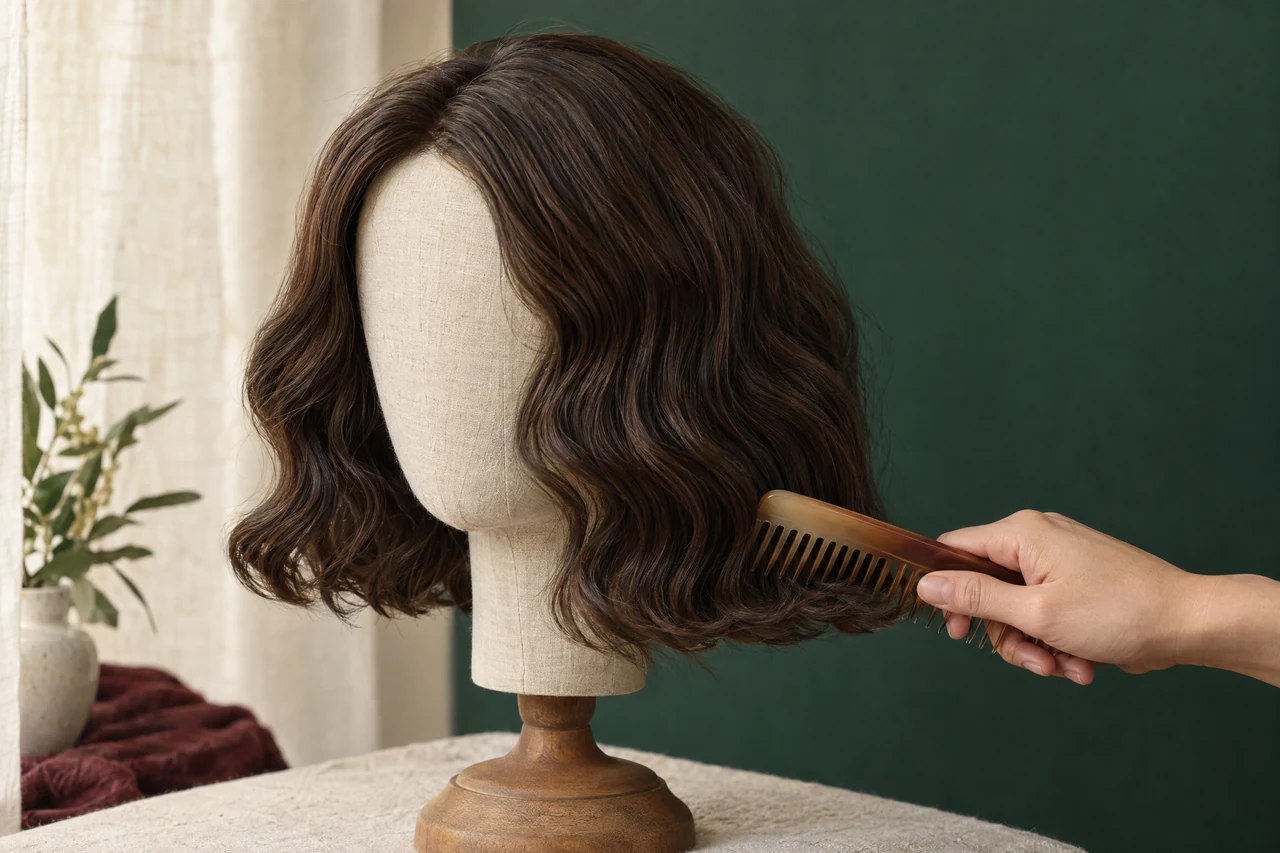
Choose a preset bob when the original shape does the job
If your aim is a familiar outline rather than a new finish for each occasion, compare the supplied shape first. OWNSTRAND's synthetic wigs guide asks shoppers to separate fibre wording, care directions and styling limits. Use it to prepare questions about a preset no-tool option, while still checking the individual item. A no-heat approach does not mean no care: the model's approved washing, drying, brushing and storage routine still matters after ordinary wear.
The American Cancer Society notes that many wig styles need only to be shaken before wearing, especially shorter styles, and recommends minimal brushing for short wigs.[2] This supports considering a ready-shaped bob before assuming you need a straightener. Follow the particular wig's directions rather than turning general advice into a compulsory routine. Gentle arranging can help a supplied style sit neatly, but it should not be sold to you as a guaranteed way to create a different lasting curl.
Consider an everyday bob whose ends already turn inward and whose fringe falls where you like it. If that is the look you would choose on both weekdays and evenings, documented heat flexibility may be less important than fit and the original perimeter. The Vit So guide to human hair vs synthetic wigs puts this material choice in a wider routine context. Keep this purchase focused on what you would actually change, rather than starting a general search for the most versatile fibre.
Describe the bob ends before asking to reshape them
Decide whether you want the ends near the jaw, below it or approaching the shoulders, then specify whether they should turn inward, sit straighter or flick outward. OWNSTRAND's bob wigs page treats bob as a shape rather than a fixed measurement. Use that distinction when asking about actual lengths and front, side and back views. Its short-style listings are not all automatically heat-friendly synthetic bobs, and a category name cannot settle the details of an individual design.
Length and end direction are separate decisions. A shorter nape with longer front pieces creates a different outline from an even perimeter, even if both ends are styled inward. Heated tools cannot add missing length or make cap construction irrelevant. Before treating an unwanted profile as a heat-styling problem, compare the supplied cut with your reference picture. If the main difference is the perimeter or fringe length, a different original model may be more sensible than planning repeated corrections.
For clearer vocabulary, the Vit So bob haircut guide helps distinguish length and outline. Use those descriptions to communicate your preference, not to import natural-hair styling methods into a wig routine. Ask how the specific bob sits when correctly fitted and worn with your usual neckline. A photo on a display head cannot establish where the ends will fall on you, so request measurements and any available viewing arrangements before assuming the silhouette will match.
Separate a tidy-up from a different finish
A tidy-up means arranging the existing shape according to its care directions. A different finish means asking the fibre to hold a new direction or texture. Bring one reference for the supplied look you like and one for the occasional change. If you cannot explain the difference, keep comparing original shapes before buying heat capability simply because the label sounds more adaptable.
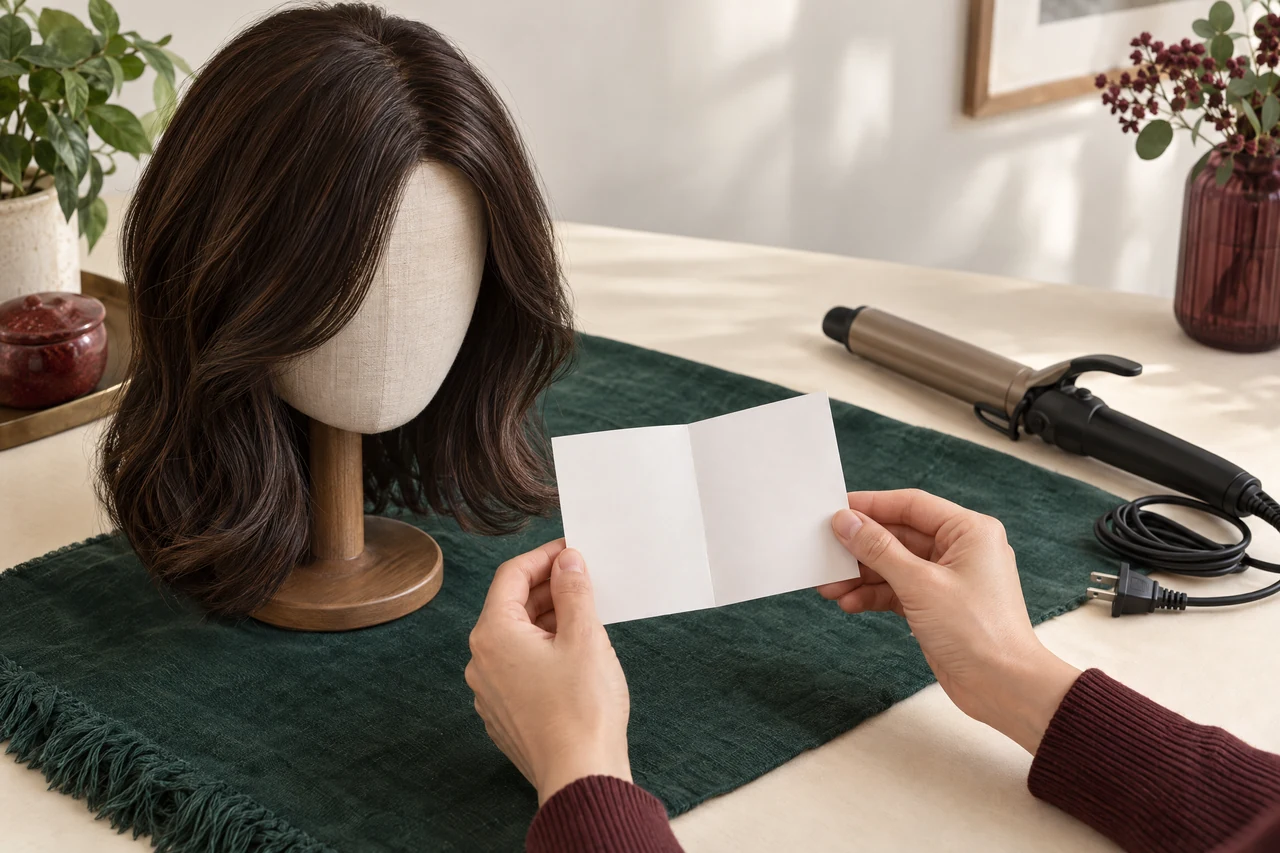
Synthetic bob heat rating checks must be model-specific
Useful synthetic bob heat rating checks begin with identity: the maker, exact style and stated fibre. Then look for written guidance naming the allowed device and method, including any temperature limit and preparation conditions. Do not borrow a setting from another bob, even within the same brand. The American Cancer Society warns against dryers and curling irons unless a wig is heat resistant.[2] A broad heat-friendly label still leaves the practical details of your intended tool unresolved.
Ask for the units as well as the number if a temperature is provided. A maximum is a limit, not a target that must be reached, and a tool's vague low setting may not identify its actual temperature. Permission for one method does not automatically cover a heated brush, dryer, steam treatment or another device. This is a pre-purchase documentation check, not a home experiment: if the instructions are absent or contradictory, resolve them before choosing the model for heated restyling.
The Vit So article on how to protect hair from heat styling offers a natural-hair heat-stress perspective, but it cannot supply a synthetic wig's operating limits. A heat-protectant intended for natural hair does not turn unapproved fibre into approved fibre. Ask which products, if any, the maker permits, and how the changed finish should be cared for afterwards. No universal temperature or heating sequence is appropriate for the range of products covered by this guide.
Weigh occasional flexibility against the routine it brings
A documented heat-friendly bob may be worth comparing when you like its supplied shape and genuinely want an occasional alternative that the maker permits. It is less convincing as a purchase when you dislike the original outline and hope heat will rescue it every morning. Consider the effort of understanding directions, obtaining an appropriate tool and preserving the result. Flexibility has practical value only if the allowed change fits your expectations and the ongoing care fits your available time.
Ask what happens after washing and drying: should the altered end direction remain, need resetting or return towards the original finish? Do not assume that all heat-friendly fibres behave the same way. Also ask about any model-specific maintenance that applies even when you leave the supplied style unchanged. A shopper seeking occasional variety needs that answer as much as someone planning frequent restyling. Heat-friendly is not a promise that every subsequent care step will be simpler.
Fit stays important whichever fibre you choose. The American Cancer Society says sizing can vary between brands and advises checking the relevant size chart.[2] Confirm the exact cap size and adjustment information rather than choosing by hairstyle alone. During any available fitting, consider the ear areas and nape with your usual accessories. If wearing causes pain or scalp symptoms, pause and seek appropriate professional advice; treatment-related wearing needs belong with your care team, not with a cosmetic styling claim.
Use four dimensions, without a performance score
Compare four dimensions: supplied shape, desired change, documented permissions and care effort. This is an editorial decision aid, not a tested ranking. A strong fit on the first dimension may remove your need for heat entirely. If the second matters but the third is unresolved, keep the purchase undecided. If the fourth feels unrealistic, look for an original shape that asks less of your routine.
Make the enquiry specific enough to answer
Prepare the style name, preferred colour and size, plus a short description of the ends you want. Ask whether the particular model is standard synthetic or documented heat-friendly fibre, and request its original care sheet. A useful question is whether that exact model permits your intended occasional change with your named tool. A less useful question is whether synthetic bobs are heat safe in general, because an answer about the category cannot resolve the product you may buy.
Keep product confirmation separate from visit planning. Ask OWNSTRAND about current availability, the quotation and any fitting or styling arrangements for the selected item; a listing or enquiry is not an order. OWNSTRAND has one Kwun Tong store, not a network of branches attached to Vit So. If you want to visit, confirm the arrangements first instead of assuming that a catalogue style will be there to try or that a particular service is available for it.
Choose the preset bob when its supplied outline already meets your goal and you are comfortable with the stated care. Choose a documented heat-friendly candidate only when the desired change is meaningful, expressly permitted and worth the routine involved. If either fit or heat guidance remains unclear, compare another model rather than buying on the strength of a label. The best outcome is a bob you want to wear as supplied, with optional flexibility you understand rather than compulsory corrections.
Compare the supplied bob with the occasional change you actually want
| Decision point | Preset synthetic bob | Documented heat-friendly bob |
|---|---|---|
| Original outline | Choose ends and perimeter you already like. | Start with a supplied shape you like too. |
| Occasional change | Do not assume heat reshaping is allowed. | Confirm the exact change and permitted method. |
| Tool information | Follow its care label; no permission by inference. | Request named tools, limits and preparation conditions. |
| Routine | Preserve the supplied finish with approved care. | Confirm care of both supplied and altered finishes. |
Your preparation checklist
- Record the maker, exact model, fibre description and preferred colour.
- Describe the supplied length and end direction you want to keep.
- Name the occasional change and the tool you expect to use.
- Obtain written permission, any temperature limit with units, and method conditions.
- Check cap sizing and care after washing, drying and restyling.
- Confirm the quotation, current supply and visit arrangements before committing.
Frequently asked questions
If I never plan to heat-style, should I still compare heat-friendly bobs?
You can compare them for their original shape and fit, but heat capability need not be your priority. Check whether the model has any special maintenance requirements even without restyling. A preset synthetic bob that already matches your preferred ends may be the more straightforward choice for your routine.
Does a low-temperature setting make a regular synthetic bob safe to reshape?
No permission can be inferred from a low setting. Cancer Research UK warns that direct heat can damage synthetic fibres and advises checking manufacturer information.[1] If the exact model's directions do not permit your intended tool and method, do not use it to find out what the fibre tolerates.
Can I make inward ends flick outward just by combing them?
Approved gentle arranging may tidy the original finish, but it does not establish a lasting new shape. If a different end direction matters, first compare a bob supplied that way. For a heat-friendly alternative, ask whether its own instructions cover the change rather than assuming all ends can be reset alike.
Does a bob listing prove that the style is heat-friendly and available to try?
No. Bob describes the outline, while fibre, construction and heat permissions are separate specifications. OWNSTRAND's listings require availability confirmation. Ask about the exact colour and size, and confirm any viewing or fitting arrangements before travelling; an image or category entry is not evidence of current stock.
Choose the outline before choosing the tool
Invite Vit So to discuss your preferred bob silhouette and style blending. For an OWNSTRAND product or visit enquiry, use the already linked guides to identify the exact model and request its specifications, care directions and current arrangements.
Start your WhatsApp enquirySources & further reading
- Cancer Research UK — Wigs, hats and scarves
Ready-to-wear synthetic styles and checking manufacturer information because direct heat can melt fibres or cause frizz.
- American Cancer Society — Wigs for Hair Loss
Many shorter wigs require little styling; dryers and curling irons require heat-resistant fibre, and brand-specific sizing should be checked.



