






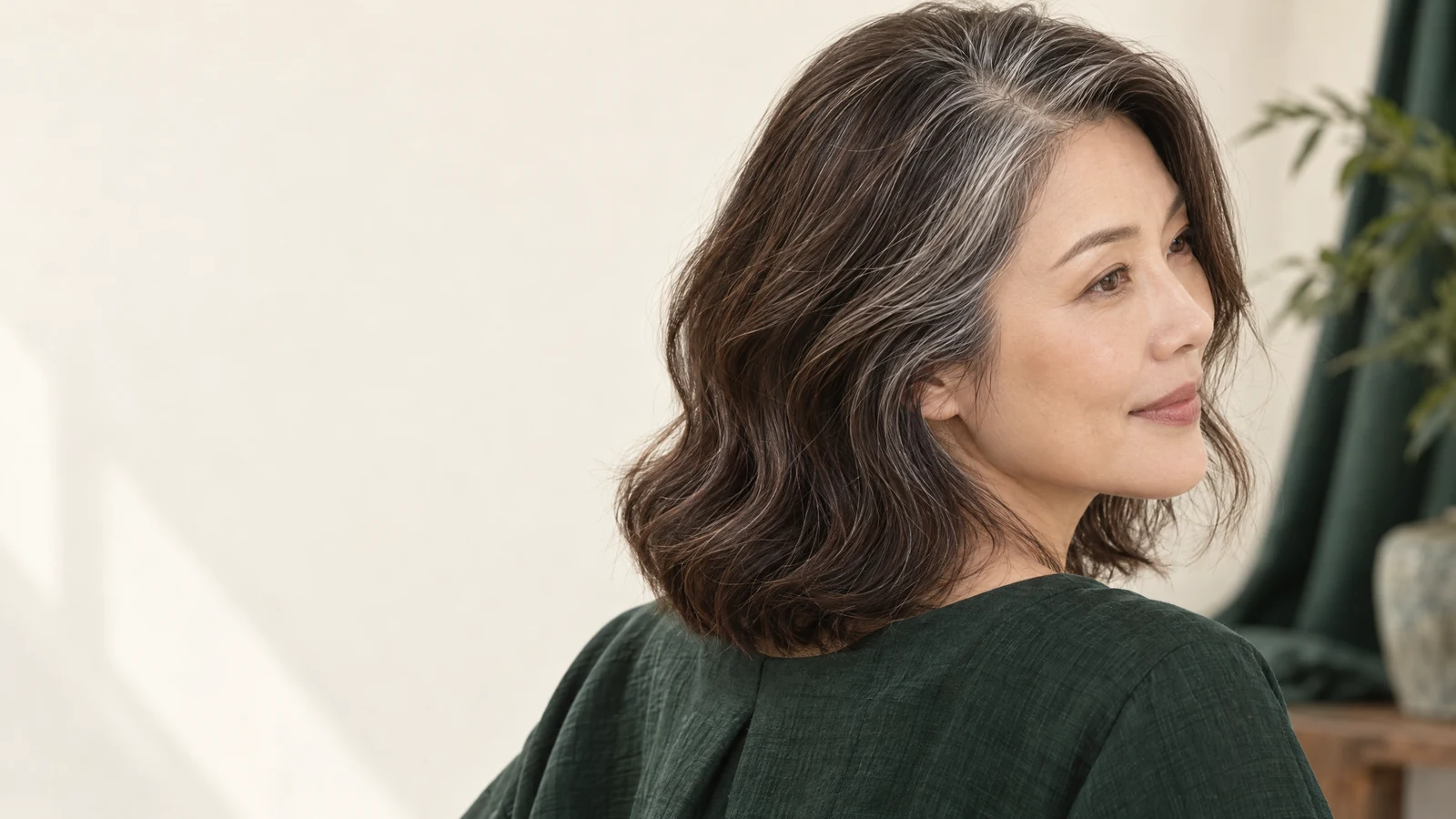
Grey coverage: decide which areas matter most
Grey hair coverage is not a single appearance. Full grey coverage describes a wish for greater consistency, whereas natural-looking grey coverage may leave a little variation. Show the areas you notice most in normal daylight, and say whether you want those strands darker or simply less prominent. No fixed coverage percentage is promised.
Begin with the view you actually see each morning. A cluster at the front may concern you more than scattered white strands underneath. If you wear your hair tucked behind your ears, photograph that position as well as your usual loose style. Specify whether your priority is a quieter hairline, a consistent parting or a change across the whole head. This avoids treating every visible white strand as an equally important target, and gives the consultation a clear starting point.
An initial design discussion is different from maintaining an established shade. If you already like the colour on your lengths and only want the new growth addressed, explain that boundary rather than requesting another all-over colour by default.
Review root touch up to check its service scope and the details to share before arranging the related work.
Setting a grey coverage goal at the hairline
Describe the finish in observable terms: fewer bright strands beside the face, a brown rather than black overall appearance, or a more uniform front when the hair is pulled back. A reference image can show the depth you like, but point out the relevant area. Ask how that preference relates to the colour already on your lengths. Choosing a darker appearance at the front does not automatically mean that every previously coloured section needs the same treatment.
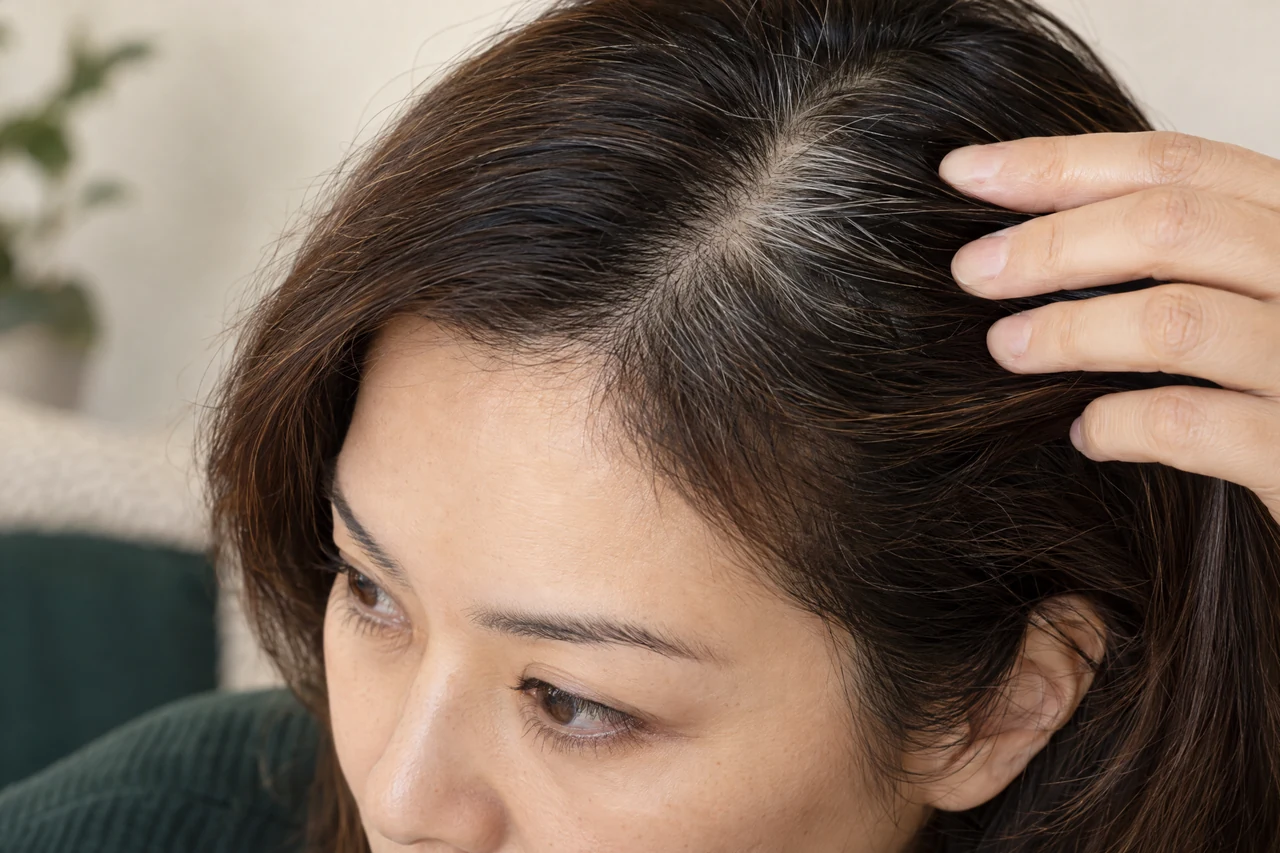
Grey blending: keep contrast without hiding every strand
Subtle grey blending keeps some white strands part of the design rather than treating them all as something to conceal. The surrounding depth and placement matter as much as the shade. A grey blending salon enquiry should describe what you want to retain; the actual method, products and number of visits need an individual discussion.
Blending is a visual goal, not a promise that a named technique will suit every starting head of hair. You might want scattered white strands to look less isolated, or prefer a recognisable silver line near the face while keeping the rest darker. Those requests need different conversations about placement. Explain how much lightness you would accept in the surrounding hair, as well as how much natural white you want to keep. A softly varied finish can still look noticeably different from your present colour.
For a dark base, grey blending for brunettes explores the specific balance between retained depth and visible white strands. It is useful preparation when you like being brunette and do not want a reference photograph's overall lightness copied.
Continue with grey blending vs full coverage for that specific comparison and the preparation questions it raises.
Discussing grey blending hair colour in context
Bring your maintenance preference into the design discussion early. Keeping visible white strands may fit your wish for a varied appearance, but it does not establish a maintenance-free service. Ask which elements of the proposed finish would need attention later: the new growth, the surrounding shade or any separately coloured areas. If you cannot return often, say so before selecting the look. Agree on an approach you would be comfortable wearing between visits, not only immediately after styling.

Separate natural white strands from a fashion silver shade
White hair coverage concerns naturally unpigmented strands, not the creation of an all-over silver fashion colour. Grey hair colouring should take account of where those strands sit, how much darker the surrounding hair is and any old dye. Include a view of the parting and both temples so the colour discussion starts with a useful picture.
A photograph of uniformly silver hair may be inspiring, but it does not explain how its wearer reached that shade. Mark whether you like its lightness, its cool tone or simply the visible white near the face. If your wish is to retain your own streak, you do not need to describe that as an all-over silver colour request. The guide to how to keep a natural white streak when colouring hair helps you explain that particular boundary.
Use unfiltered photographs in soft daylight and include a wider view, not just an extreme close-up. Strong reflections can make individual strands appear brighter; warm indoor light can change how the surrounding brown looks. These views help communicate appearance, but they cannot replace an assessment of your actual hair.
Record white-hair distribution before choosing a colour
Make a simple note of the front hairline, each temple, the parting and any white area underneath. Write 'hide', 'soften' or 'keep' beside each relevant area. Different preferences in different places are worth stating rather than averaging into one request. Also mention whether you change your parting or wear your hair tied back. The colour should be discussed in the positions you use, because a strand hidden beneath loose hair may become prominent when you put it up.
Prepare a white-hair colour enquiry in Sheung Wan
For salon grey hair coverage or a softer blended finish, share recent photographs, the dates of previous colouring and any bleach or home dye history. Vit So's location is 252 Hollywood Road, Sheung Wan, Hong Kong. Mention whether frequent root upkeep is practical for you; an enquiry is the starting point for discussing scope, not a confirmation of an appointment or a particular result.
List what has been applied to the hair that is still on your head, not only your most recent appointment. Include box dye, colour-depositing products and henna if used. Product packaging or an ingredient photograph is more useful than guessing from a marketing name. Note whether old colour remains on the lengths while the roots are untreated. If you cannot remember an exact date or product, label the information as approximate rather than leaving that part of the history out.
The listed tinting price is HK$800–HK$1,000. This is the general tinting range, not a dedicated grey blending quote. Ask which service category the proposed work falls under and whether it involves additional colouring or lightening. Confirm the total, applicable length charges and any separate services before proceeding.
Use book a hair appointment to send the intended work and possible dates; wait for confirmation before travelling.
Bring a colour history and a realistic maintenance preference
Say what normally prompts you to seek colour: a bright front line, a contrast at the parting, or a general wish for a different appearance. Mention travel plans or an event if these affect your available dates, without assuming the proposed colour can be completed in a particular time. Before agreeing, clarify the intended areas, what will remain unchanged and what preparation is required. Keep photographs of your current hair separate from images of the finish you hope to achieve.
White strands, contrast and the usual cut shape
For grey coverage at Vit So in Sheung Wan, explain where the grey hair appears and whether you want to hide it or reduce its contrast with the rest of your colour. The appointment address is 252 Hollywood Road. Previous colouring and regrowth matter to the discussion; no fixed coverage percentage or identical result for every client is established here.

Share sensitivity history and plan care for coloured hair
A previous trouble-free colour appointment does not establish that the next product will be suitable. The FDA's hair dye safety guidance explains that reactions can occur after earlier use without problems. It recommends following the product directions and doing the skin test before every use, while noting that a negative test does not rule out a reaction during colouring. Share previous reactions before arranging the work and ask what preparation applies to the proposed product.
Keep the care plan practical. Ask for the cleaning and conditioning instructions relevant to your agreed colour rather than adopting an online routine for a different service. The American Academy of Dermatology's colouring and perming advice notes that sun exposure can leave coloured hair faded, dry and brittle, and recommends a wide-brimmed hat outdoors. This is hair-care advice, not a measure of how well a design conceals white strands.
Separate colour preferences from scalp concerns
Tell the salon about current irritation or a previous reaction before discussing a shade as ready to apply. If you have had a dye reaction, seek advice from a healthcare professional rather than treating a softer-looking colour as a safer substitute. The appearance you prefer and the suitability of a product are separate questions.

Agree what a successful finish should look like
Before proceeding, return to the areas you marked at the start. Confirm whether each should look darker, less contrasting or visibly white. This is more useful than relying on 'natural' alone, which might mean a consistent deep brown to you and a varied finish to someone else. Ask to discuss the expected appearance at the front and on the lengths separately, especially when previous dye has already created different colour zones.
Observe the same areas as the hair changes
After colouring, distinguish the appearance of existing coloured strands from new hair growing at the scalp. If you have a concern, record where it appears and when you first noticed it, using comparable lighting and your usual parting. Share that information before trying another colour product. A useful follow-up explains whether the issue is a bright strand, a change in tone or a contrast between roots and lengths.

Use these grey-colour goals to describe the service you want to discuss
| Your priority | What to show or explain | What to clarify before agreeing |
|---|---|---|
| Greater colour consistency | The white areas you want darker and the depth you prefer | Which areas will be coloured and how much variation you accept |
| A softer mixed appearance | White strands you want retained and surrounding depth you like | The proposed method and the elements likely to need future upkeep |
| A distinct natural white streak | Its position with your hair loose and tied back | The boundary you want preserved and how nearby hair will be treated |
| Maintain an existing colour | New growth beside the lengths you already like | Whether the request is root maintenance rather than a new overall design |
Your preparation checklist
- Photograph your usual parting, both temples and hairline in soft daylight, plus any area exposed when you tie your hair back.
- Mark the areas you want to hide, soften or keep white; state the overall depth you are comfortable wearing.
- List previous colour and chemical services, including home products, with approximate dates and packaging details where available.
- Share past reactions or current scalp concerns before arranging colour, and confirm the preparation required for the proposed product.
- Explain your realistic return-visit availability and confirm the scope, total price and appointment arrangements before travelling.
Frequently asked questions
Can I keep some white strands visible?
Yes, retaining white strands can be a colour goal to discuss. Mark the areas you wish to preserve. Suitability and the method must be assessed rather than assumed from a photograph.
Does coverage mean every white strand will look identical?
No. The appearance depends on the starting hair, the chosen colour approach and the desired finish. State how much variation you can accept before agreeing a plan.
Is this a way to reverse grey hair?
No. These are cosmetic colour choices for existing hair. They do not reverse greying, treat a medical condition or change how future hair grows.
Start with the white strands you want to change
Send Vit So photographs of your current hair, your colour history and the areas you want to hide, soften or preserve. Include possible dates and your maintenance preference so the grey-colour enquiry can focus on your priorities. Confirm the proposed work and appointment before visiting Sheung Wan.
Start your WhatsApp enquirySources & further reading
- Coloring and perming tips for healthier-looking hair
Sun protection and the care of coloured hair.
- Hair Dyes
Hair-dye sensitivity after earlier use, product directions and the limitations of a negative skin test.



