







Wedding hair when front breakage limits face framing starts with location
First identify which front pieces cannot do the job shown in your reference. Are they above the eyebrow, beside one temple, or short around both ears? Describe where they naturally fall without stretching them. A few short strands may be new growth, a previous haircut or breakage; a photograph alone cannot settle the cause. If you already know that lengths have snapped, share that information. The styling discussion can then focus on what those particular sections can reasonably contribute.
Fine hair describes strand thickness, whereas local breakage concerns an uneven or shortened area. Someone can have substantial hair at the back but very little usable length beside one temple. Adding height to the bun would not solve that placement problem. If fine strands are also a concern, the guide to wedding hairstyles for fine hair helps separate overall proportions from the limitations of the front. Keep those two observations distinct when explaining what you want changed.
A useful brief for wedding hair when front breakage limits face framing
Choose the visual priority before asking for a technique. You might want the forehead partly softened, one ear visible, or the front kept clear of your eyes. These are different goals from requiring identical curled tendrils on both sides. A useful reference can supply the mood and overall outline while its face-framing detail is replaced. That gives the hairdresser room to suggest a shape based on your actual shortest pieces rather than imitate unavailable length.
Compare a visible front, a changed parting and a gathered outline
Leaving short pieces visible can make more sense than repeatedly brushing them into longer hair. A soft front need not mean loose strands hanging into the eyes. It may be a small amount of natural texture beside the temple, with the longer side lengths arranged separately. The trade-off is accepting some irregularity rather than a continuous smooth curve. Check that you like this from the front as well as in a flattering side photograph, especially if the two sides differ.
Changing the parting may alter which longer strands sit beside the fragile area. Try a modest change first and observe the hair's natural direction before adding strong hold or heat. A deeper parting is not automatically better: it may expose the opposite temple or require constant persuasion to stay put. In a hypothetical case with breakage concentrated on one side, a softer asymmetric outline could be more practical than making both sides appear identical. The table compares decisions, not guaranteed results.
Bridal styling with fragile short pieces around the face need not be symmetrical
A gathered back can still have a relaxed front, so the choice is not simply hair up versus hair down. Compare how much of the front must travel towards a fixing point. If the shortest pieces cannot reach comfortably, leave them out of that structure and reassess the outline. An intentional difference between the sides can look more coherent than a matching finish that depends on pulling, heavy coating or repeated curling of the fragile sections.

Disclose processing before adding heat, colour or extensions
Bring the sequence of chemical services, not just the most recent appointment. Explain whether front highlights were refreshed, whether lightener overlapped earlier work, and whether you use heat frequently on the same face-side pieces. You do not need to identify the precise cause yourself. This history helps the hairdresser discuss handling limits and whether more processing should wait. A softer feel after conditioning is useful information, but it is not a reason to assume another chemical service is suitable.
The American Academy of Dermatology's guidance on preventing hair damage recommends lower heat, limited hot-tool contact and avoiding tugging. For a wedding plan, that supports questioning repeated passes simply to make a short piece resemble a longer reference curl. It does not provide an individual safe setting or prove that heat will be appropriate. Explain if the front already snaps during ordinary handling, and be open to a less manipulated finish instead of demanding more heat.
Do not make an urgent service the rescue plan
If fragile sections are breaking, defer further bleaching or other chemical work until their suitability has been assessed. Extensions are also not an automatic answer to missing front length: discuss attachment location, weight and removal before considering them. The damaged hair care guide explains why easier handling and repaired appearance should not be confused with restored strength. Neither a wedding deadline nor a treatment name establishes that an additional service will be suitable for those sections.
Build the support without recruiting fragile front pieces
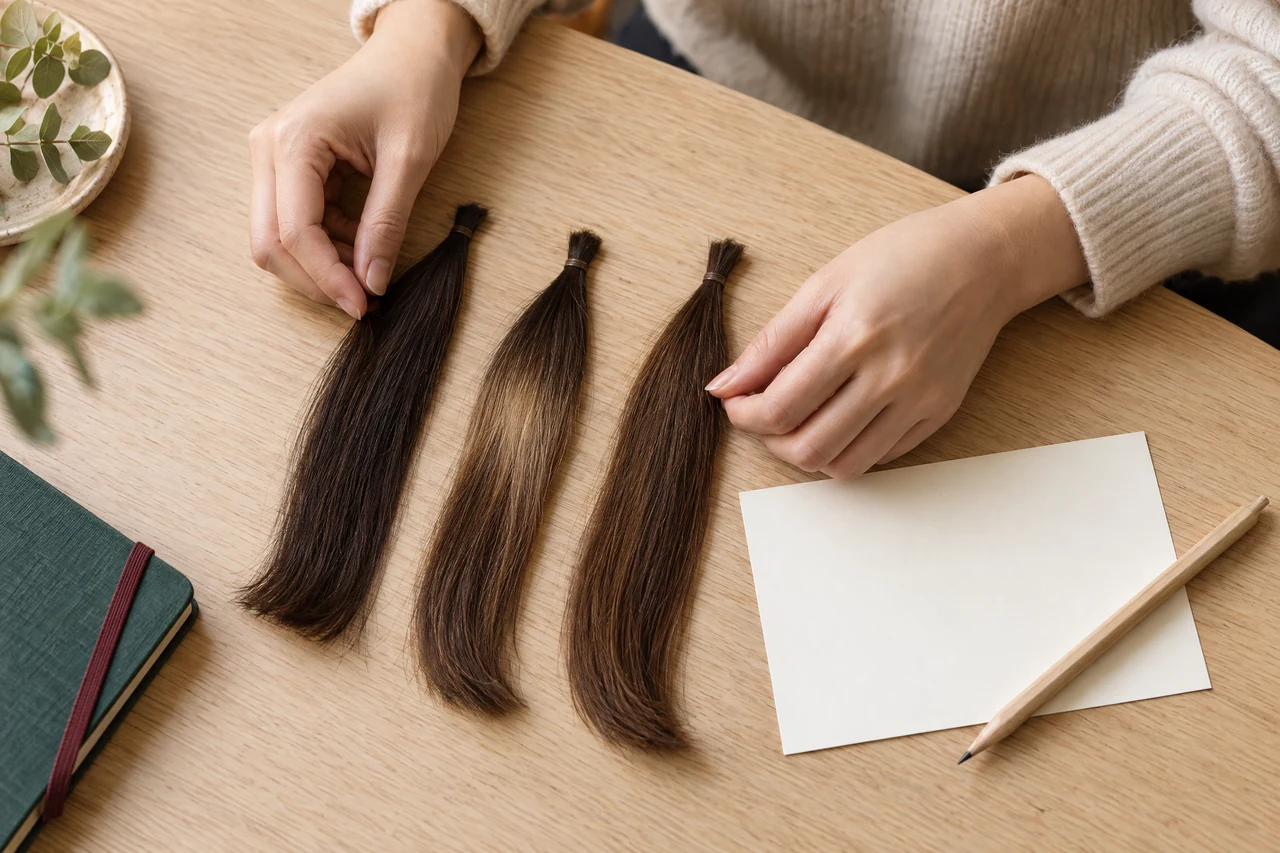
Ask which parts of the proposed style provide its support and which are only there for the appearance. A low gathered shape may allow longer sections to form the back while short front pieces remain separate, but bun height alone does not prove gentleness. The important discussion is whether the arrangement relies on tension through the fragile area. A smooth photograph cannot reveal this. Ask to see a version with less front tension before deciding that a sleek outline is essential.
Comfort is a reason to revise the style, not something to tolerate for the photographs. The AAD's advice on hairstyles that pull explains the risks of repeated tight styling and identifies pain, scalp stinging and crusts as reasons to change a hairstyle immediately. This does not mean every bridal updo causes hair loss. It does mean that pain should not be accepted as proof of secure fixing, especially when you are already concerned about the front.
Separate the veil from the face-framing detail
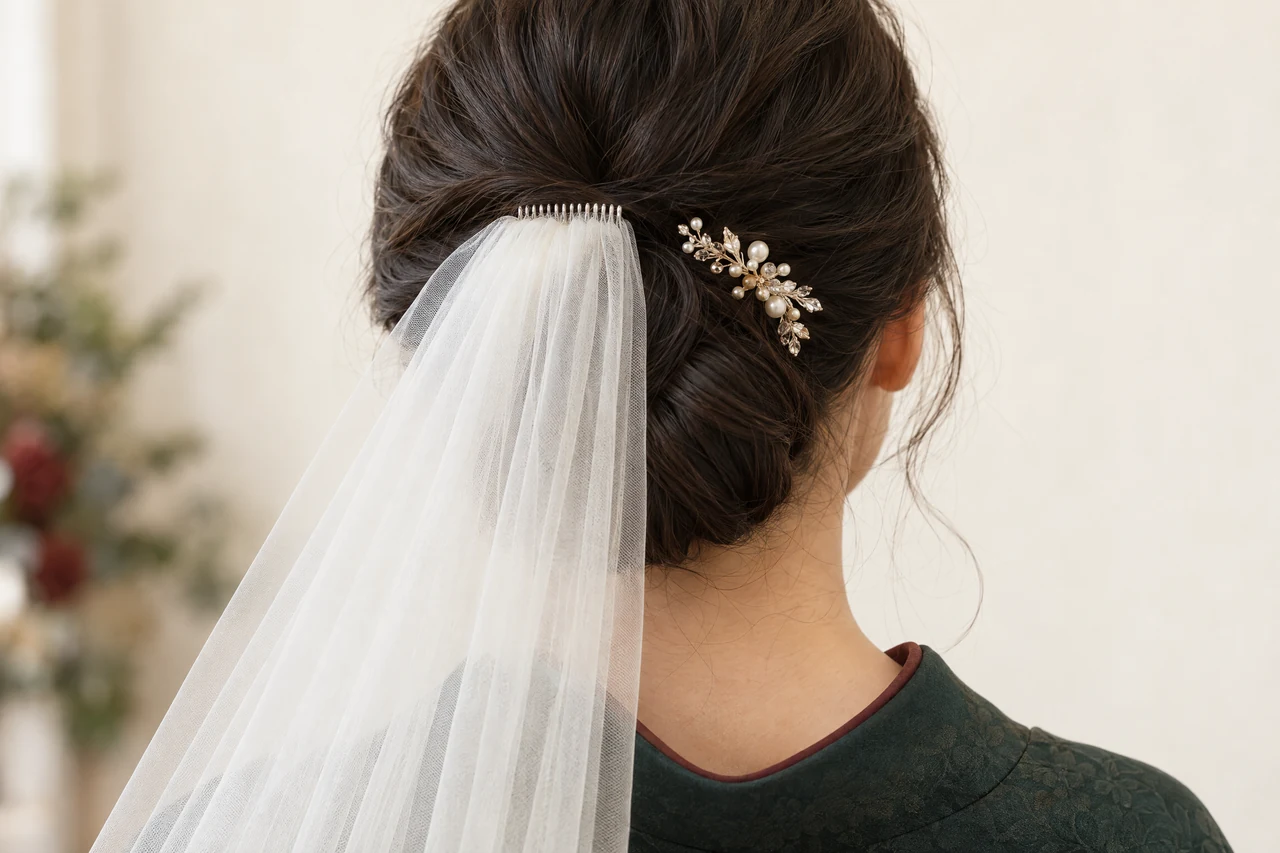
Bring the actual veil and essential accessory, including any comb attached to them. Discuss their fixing and removal without using the fragile front as an anchor. A decoration that looks delicate may still have a rigid comb or catch nearby strands when removed. Check where each item sits, whether they interfere with each other and who will remove the veil. If the accessory demands an unsuitable structure, changing that accessory may be the better compromise than changing the front.
Use the trial to test the front before decorative details
Begin with the parting and face-side arrangement rather than completing a decorated bun first. Check the outline straight on, from both sides and while looking down. Once you prefer the front, add the gathered structure and then the accessory to see whether either changes it. A trial should help expose compromises, not prove that every photographed detail will last unchanged throughout the wedding. Avoid testing every alternative by repeatedly heating or pulling the same fragile pieces into new positions.
The checklist below contains 6 preparation points for a front-breakage styling enquiry. Use them to make the discussion specific, rather than sending only a polished reference with no view of your own hair. Include what you would accept if the shortest pieces cannot form the requested curl or reach the fixing point. A front and side photograph in ordinary light can be more informative than a heavily smoothed portrait that hides the uneven lengths you need the hairdresser to consider.
Choose a fallback with fewer front adjustments
Agree on one workable alternative instead of a succession of fixes on the day. For example, the preferred outline might leave short pieces visible, while the fallback changes the parting and gathers only the longer side hair. Describe which difference you can accept: less symmetry, a softer forehead line or a smaller accessory. Record the decision with simple front and side photographs. The fallback should reduce handling demands, not depend on tighter fixing when the first version feels uncomfortable.
Plan the wedding day around comfort and realistic limits
Let everyone involved in the hair plan know that the short front pieces are a constraint, not an unfinished detail awaiting stronger styling. Consider how dressing, earrings, a veil change or outdoor movement may affect them. Ask the stylist to explain any agreed minor adjustment and what should be left alone. Repeatedly combing the front back into position is not a useful default. If loose pieces move, return to the acceptable outline discussed beforehand rather than pursue perfect symmetry through increasingly forceful corrections.
A styling consultation cannot diagnose why hair is becoming shorter or thinner. If you have unexplained hair loss, a receding hairline or scalp symptoms, seek assessment from a qualified healthcare professional rather than treating everything as cosmetic breakage. The dermatology guidance above recommends medical advice for hair loss and persistent concerns. Meanwhile, avoid painful styles and postpone additional chemical work on actively breaking sections. There is no honest promise that a wedding hairstyle will repair them or that they will regrow by a particular date.
Make the enquiry about adaptation, not a repair guarantee
When enquiring about bridal hair, explain your date, desired front outline and known fragile sections before asking whether a reference can be adapted. Include the veil, dress neckline and any later hair change that matters. Ask what needs an in-person assessment and whether a trial is appropriate. Confirm availability, service scope and the quotation directly; a message is an enquiry, not a confirmed booking. If you need a particular consultation language, confirm that too.
Compare what the front must do before choosing the bridal outline.
| Approach | Useful when | Trade-off to check |
|---|---|---|
| Leave short pieces softly visible | You accept a relaxed forehead or temple line. | Natural irregularity may remain; check both sides and eye clearance. |
| Try a different parting | Longer nearby strands can sit differently without forcing the front. | The new direction may expose another area or require too much hold. |
| Gather longer sections separately | You want a defined back without making short pieces reach it. | A low bun is not automatically low tension; assess the front independently. |
| Simplify the accessory | The preferred comb or veil needs support the hair cannot comfortably provide. | Accept a smaller visual detail rather than ask fragile strands to carry it. |
Your preparation checklist
- Photograph the front and both temples with the hair resting naturally in ordinary light.
- Describe where pieces are shortest and whether snapping is continuing during normal handling.
- List recent colour, bleach, perm or straightening services and repeated front-section heat use.
- Bring a reference and identify the forehead coverage or side outline you actually like.
- Show the actual veil and essential accessory, together with the dress neckline and planned changes.
- State an acceptable fallback and confirm trial needs, availability, consultation language and quotation.
Frequently asked questions
Must I hide every short front piece for the wedding?
No. A few softly visible pieces may fit the outline better than trying to pull them into longer hair. Their position, comfort and movement matter more than making every strand disappear. Check whether they sit near your eyes and whether you like the front from both sides before deciding how much control you need.
Would cutting a fringe solve the uneven front?
A fringe could change the outline, but it is not automatically suitable when available front length is uneven. Ask what can be cut coherently and how it would sit without repeated heat styling. Do not cut longer surrounding hair merely to match the shortest broken piece before assessing the overall shape and your willingness to maintain it afterwards.
Can I simply add extensions to create matching face-framing tendrils?
Do not assume extensions are a suitable fix beside fragile sections. Attachment and removal introduce practical demands that must be assessed, and added hair does not repair existing breakage. Discuss whether the desired front can instead be adapted with visible short pieces, a changed parting or longer neighbouring strands, without depending on the fragile area for support.
Ask about a bridal outline that respects the fragile front
Send Vit So a WhatsApp enquiry on +85253057561 with your wedding date, front and side photographs, processing history and preferred reference. Explain which shorter pieces concern you and what compromise you would accept. The address is 252 Hollywood Road, Sheung Wan, Hong Kong. Confirm availability, consultation language, the proposed service and quotation directly before making arrangements; an enquiry does not confirm a booking or guarantee repair.
Start your WhatsApp enquirySources & further reading
- How to stop damaging your hair — American Academy of Dermatology
Practical dermatology guidance on reducing heat, pulling and other damaging hair-care habits, with advice on seeking assessment for persistent concerns. It is general guidance, not approval for a particular bridal technique or chemical service.
- Hairstyles that pull can lead to hair loss — American Academy of Dermatology
Explains risks from repeated tight hairstyles, discomfort that warrants changing a style and the value of dermatological assessment for hair loss. It does not establish the cause of an individual's short front pieces.



