







Can Men Get a Perm with Short Hair After a Cut?
A short Korean perm for men is a style request, not a promise that every cropped top can show waves. If the cut removes most of the length needed for the bend, the finished effect may be smaller than the reference. Discuss the shortest retained sections first and ask whether growing them would better support the goal.
Start by describing what you mean by short. Closely clipped sides with a longer top offer different design options from a crop that is short everywhere. Point to the actual area you want to change: the fringe turning away from your eyes, the top appearing less straight, or the crown having a softer outline. A request for movement in one area does not mean every area needs treatment.
A perm changes the existing hair rather than adding length. As explained in Chemistry LibreTexts' Permanent Hair Wave, permanent waving alters disulfide links in hair keratin and reforms them while the hair is reshaped. That mechanism does not establish a universal minimum length or guarantee a particular silhouette. The stylist still needs to assess whether your retained sections can support the intended shape.
Review men's perm to check its service scope and the details to share before arranging the related work.
Can Men Get a Perm with Short Hair and Keep the Intended Bend?
Ask the stylist to identify which sections would carry the bend after cutting. If keeping your usual fringe line would remove that space, decide which matters more: the familiar short outline or more visible movement. A tighter-looking curl is not simply a substitute for a longer, looser wave. Changing the shape to suit today's length should be an agreed style choice, not an unnoticed compromise.

Straight Hair Does Not Behave Uniformly
A Korean-inspired finish for men with straight hair may aim for softer movement, but straight hair can be fine, dense, rigid or previously treated. These differences affect the options. Describe how your hair falls without product and which sections resist your usual styling; the style label alone cannot establish suitability or a particular method.
Look at your hair after an ordinary wash and dry, before wax or a deliberately polished finish. Does the fringe fall forward while the crown points sideways? Do the sides stand away from the head even when the top lies flat? These observations help separate a length limitation from a direction or outline issue. Explain the behaviour rather than diagnosing your own hair as too strong or too weak for a perm.
Short hair can still include previously coloured, bleached or chemically straightened lengths. Share what remains on the top and fringe, even if the sides have since been clipped. The American Academy of Dermatology's colouring and perming advice notes that appearance-enhancing treatments can leave hair dry and brittle. Shortness is not a reason to ignore processing history, and a stronger solution is not a sensible default response to straightness.
Considering Direction, Density and Previous Processing
Fine strands and low density are different observations: one describes individual hairs, while the other concerns how much hair fills an area. Tell the stylist whether your concern is a flat top, gaps between fringe sections or a bulky outline. If chemical treatment is considered, ask how the retained hair's condition affects the plan. Excessive stinging or burning during a perm should be reported immediately; AAD advises rinsing off the solution and consulting a dermatologist rather than enduring it.
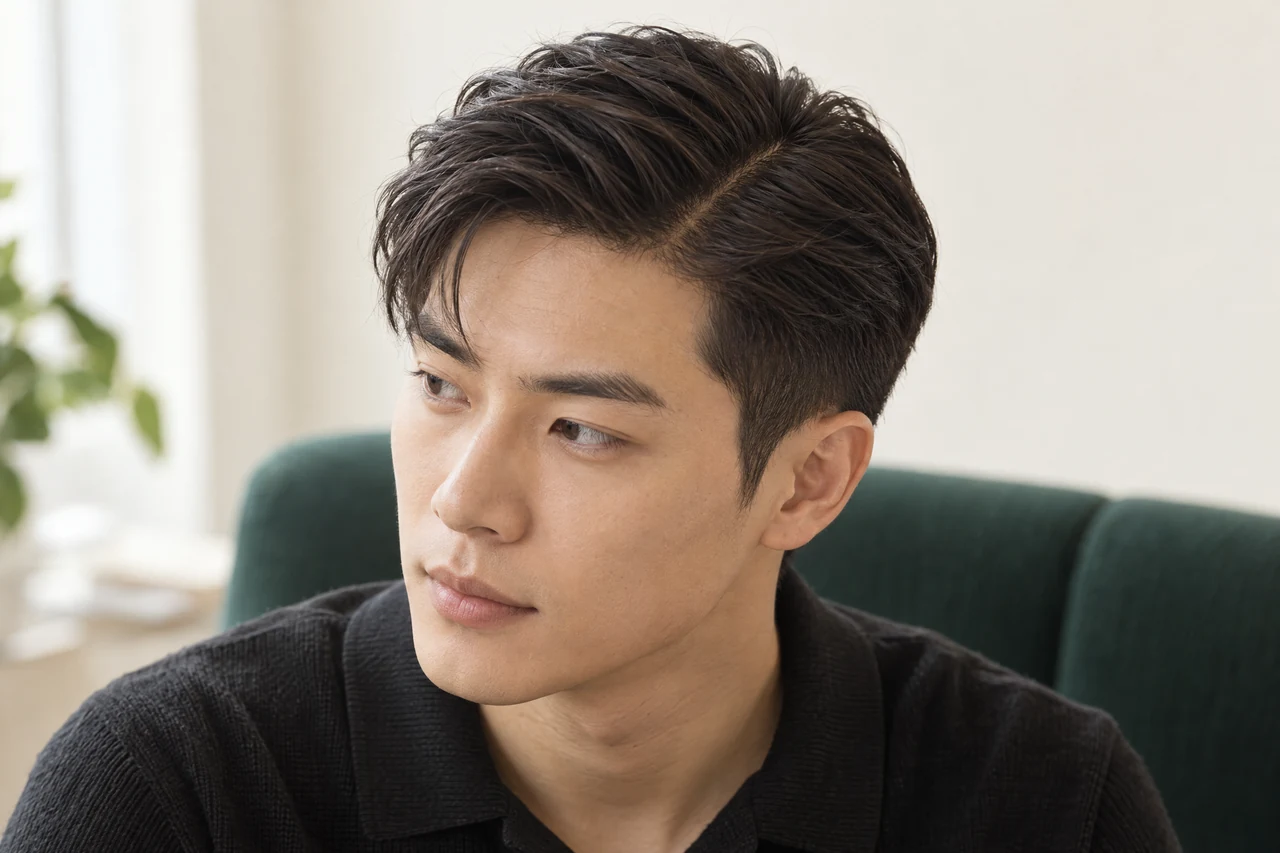
Fringe Length Versus Crown Length
A longer fringe with a shorter crown presents a different problem from a uniformly cropped top. Ask where the desired bend would begin and whether the planned layers leave enough visible movement. The answer may involve keeping one area longer, changing the reference or postponing treatment rather than applying the same length rule everywhere.
For the fringe, discuss its intended resting position when dry. Do you want it above the eyebrows, lightly covering part of the forehead, or opening towards the sides? A strand that reaches a certain point when pulled straight may rest higher when curved. The relevant question is whether the finished fall gives you the coverage and clearance you want, including when you wear glasses.
For the crown, compare the current top with the proposed layers. A longer front cannot supply missing length at the back of the top. If the reference shows movement flowing from front to crown, ask whether your present cut can create that connection. When forehead coverage is the main priority, use the men's fringe haircut guide to clarify the fall and weight before deciding whether a chemical change would help.
Continue with soft perm for men for that specific comparison and the preparation questions it raises.
Choosing Where to Keep More Space for Movement
Choose the area where a visible bend matters most, then agree what can stay shorter elsewhere. You might retain the fringe while tidying around the ears, or keep more crown length while preserving a modest front outline. These are design options to assess, not instructions to perm a particular zone. The sides should complement the top without being assumed to need the same wave pattern.

Growing Out Before Making a Chemical Change
If the current length limits your goal, discuss an interim cut that keeps the areas needed for a later assessment. Temporary styling can help you judge the direction you prefer, although it does not predict a perm result. Waiting for selected sections to grow may be more useful than choosing a treatment solely to act immediately.
An interim haircut should have a clear boundary: which areas may be tidied and which are being kept for future movement. Avoid asking for your usual short cut everywhere while expecting the top to become longer. A focused haircut consultation for growing out hair can help you explain that the fringe or crown is being retained deliberately, rather than simply left untidy.
Set the next assessment around an observable change, not a guaranteed calendar date. For example, ask to review the options once the crown connects more comfortably with the front, or once the fringe can move towards the side without immediately dropping forward. Take occasional photographs in the same natural position so you can see the shape changing. Growth alone does not establish chemical suitability, but it may broaden the shapes available.
A Useful Interim Cut or Styling Direction
Try the drying direction you are willing to use on an ordinary morning. Ask for a demonstration that keeps the sides controlled without forcing the top into exaggerated height. If the difference you wanted was mainly the fringe sitting slightly to the side, temporary styling may be enough for now. If you still want a sustained wave pattern, keep that as the longer-term goal rather than escalating heat or product use to imitate it every day.

Read the Reference for Length, Not Just Texture
A reference can look short because the sides are close, while the top is substantially longer than yours. Examine where the fringe ends, how much hair overlaps the crown and whether the side view shows repeated waves or only a gentle turn. The length supporting those details matters more than the name attached to the photograph.
Decide what you would accept if the current cut only allows subtle movement. Would a slight change in direction feel worthwhile, or would you be disappointed without visible waves? That answer helps distinguish adapting the goal from waiting for more length. Do not agree to a small effect just because treatment is available if your real preference remains a longer, more flowing shape.
Choose an Everyday Finish You Would Actually Wear
Compare the reference with your routine in Hong Kong, including commuting, exercise and any workplace appearance requirements. If you usually dry quickly and leave without product, say so before choosing a photograph with sharply separated, sculpted strands. Ask which parts of the proposed appearance come from the cut, which may come from treatment and which depend on styling. The concept illustrations here show directions to discuss, not promised results on your own hair.

Protect the Useful Length at Your Next Haircut
Whether you perm now or wait, future cuts should reflect the length decision. Removing the ends that carry the visible turn can change the appearance even if other treated hair remains. Chemistry LibreTexts also explains that new growth is not treated by the earlier perm. A changing outline therefore needs reassessment rather than an automatic assumption that the same process should be repeated.
An interim cut is a separate option, not a failed perm appointment. Men's wash, cut and blow dry is listed at HK$380. If chemical work is proposed, confirm its scope and the total quote separately instead of assuming a short top receives a special reduced rate. Ask what will be included and whether the planned cut preserves the areas needed for your chosen movement.
Review men's haircut to check its service scope and the details to share before arranging the related work.
Make the Length Decision Clear Before Work Starts
Agree on what happens if the assessment does not support the reference: a cut-only visit, a revised style or postponement. This avoids making the haircut shorter first and discovering afterwards that the remaining sections no longer suit your intended bend. The useful outcome is a clear, wearable plan, whether that involves a perm today or keeping selected areas for later.
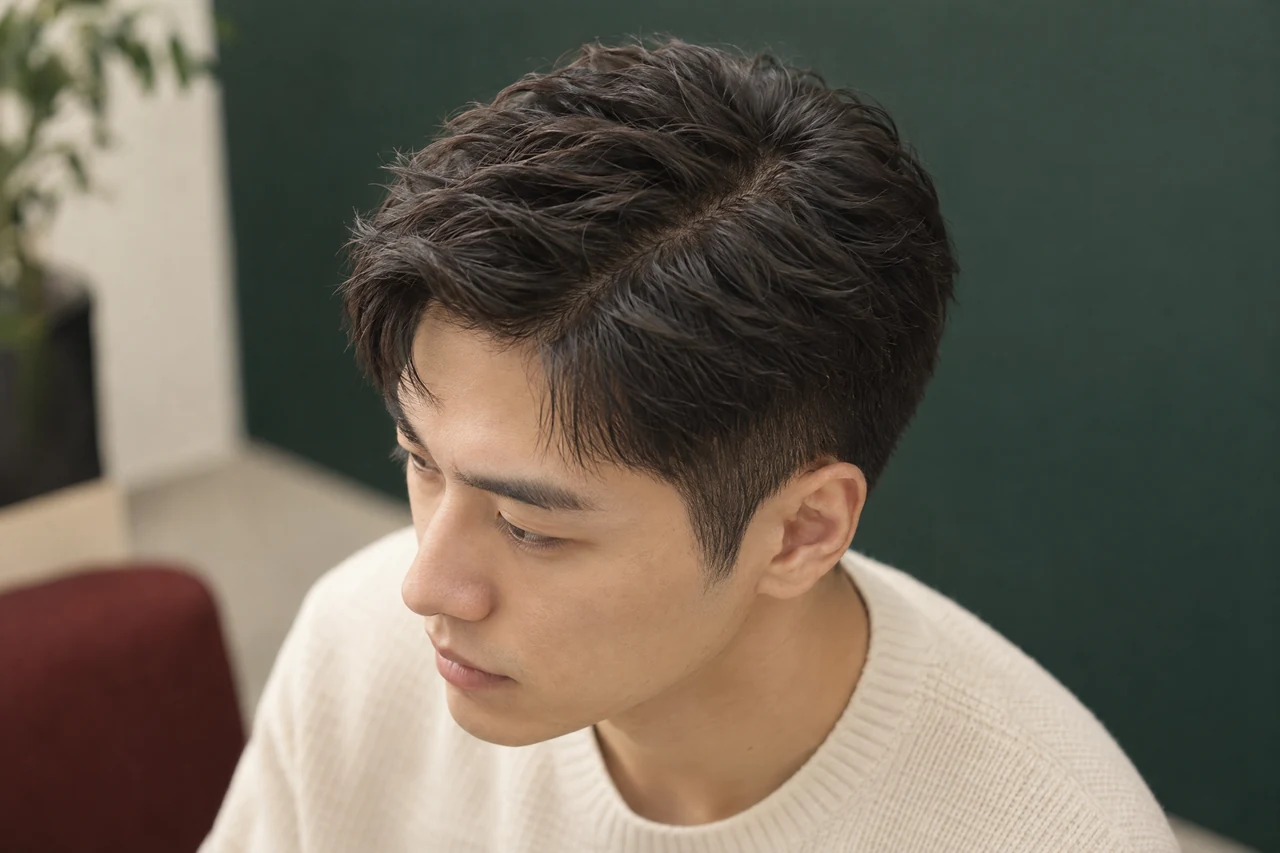
Short straight hair: compare today's retained length with the movement you want
| Current shape | Main length question | Useful option to discuss |
|---|---|---|
| Uniformly cropped fringe and top | Can the retained sections show the intended bend rather than just a small directional change? | Adapt the reference or keep selected areas longer before reassessing. |
| Longer fringe with a shorter crown | Is the goal only front movement, or a connected wave across the top? | Keep the crown for a connected shape; assess a front-focused goal separately. |
| Longer top with closely clipped sides | Does the top retain enough space after the planned layers? | Agree the top's dry outline without assuming the short sides need curls. |
| Short top with previously processed lengths | Is the retained hair suitable for further chemical work? | Share the processing history and consider a cut or delay if needed. |
| Main concern is a slightly misplaced fringe | Is the problem direction rather than missing waves? | Try an achievable drying direction before choosing chemical treatment. |
Your preparation checklist
- Identify the exact area you want to change: fringe, crown, sides or a connection across the top.
- Bring a photograph of your ordinary dry hair and a reference with a comparable visible length.
- State which areas may be shortened and which must remain available for the intended bend.
- Share colouring, bleaching, straightening or previous perming that remains in the retained hair.
- Choose your acceptable outcome if only subtle movement is feasible now, and whether you would prefer to wait.
- Confirm the cut, proposed treatment scope, total quote and alternative plan before work begins.
Frequently asked questions
How long should men's hair be for a perm?
There is no single minimum that applies to every style, area and process. Ask about the length that will remain after cutting and the space needed for your intended bend, with the actual hair condition assessed.
Does short straight hair need a stronger process?
Do not assume that. Length and straightness do not determine the process by themselves. The aim, condition and history of the hair must be considered rather than choosing intensity from a photograph.
Can a change of drying direction be enough?
It can be worth discussing if you mainly want a small shift in the fringe or crown. A cut and temporary styling may offer a useful alternative without assuming that chemical treatment is necessary.
Find out which short sections are worth keeping
Send Vit So your current dry-hair photographs and preferred short-hair reference for an enquiry in Sheung Wan. Explain whether you value a close-cut outline or more visible movement, and ask about assessing the retained length before cutting. Suitability, service scope, price and appointment availability need confirmation; an enquiry is not a confirmed booking.
Start your WhatsApp enquirySources & further reading
- Coloring and perming tips for healthier-looking hair
Hair treatments can cause dryness and brittleness; caution is needed with perm solutions, and excessive stinging or burning requires immediate action.
- Permanent Hair Wave
Permanent waving changes and reforms disulfide links while reshaping existing hair; newly grown hair is not treated by an earlier perm.



