







Long haircuts for men need a length boundary
For a men's long hair trim, show the dry length to retain and agree on the areas that can be shortened before cutting. The phrase just a trim means different things to different people. Distinguish the overall perimeter from shorter layers, front pieces and any ends you specifically want assessed.
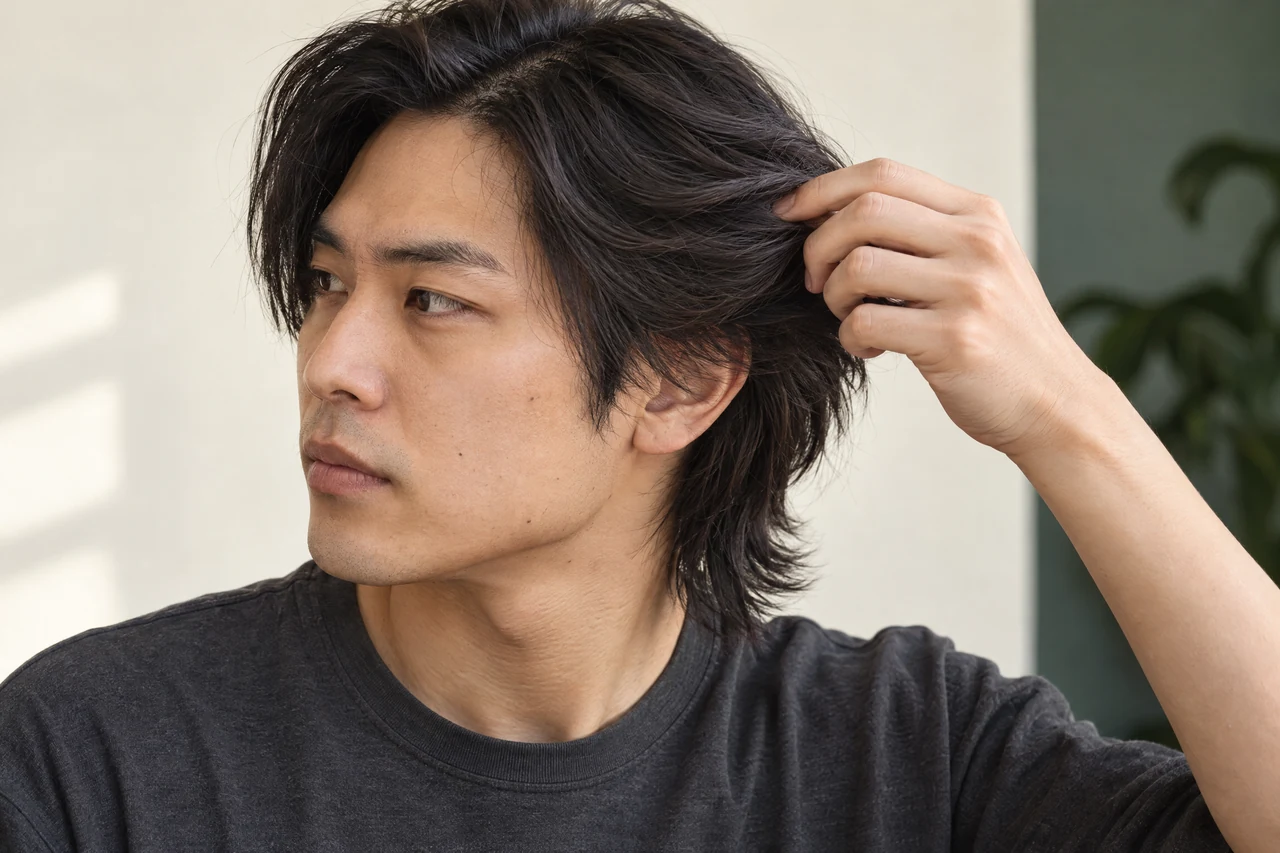
Use your own hair to show the boundary rather than relying on a hairstyle name. Point to where the back should fall against your neck or collar, how much of the ear should remain covered, and whether the front must still tuck behind the ear. These are separate requirements. Keeping the longest back section does not automatically preserve the front pieces that make the whole haircut feel long.
Describe the result in its usual state. If you normally wear waves without straightening them, show the resting length rather than stretching a strand down. Bring haircut reference photos that show the front and back, and identify the particular outline you like. A photograph with swept-back hair may hide a much shorter face-framing section than you expect.
Long haircuts for men: show the shortest acceptable result
A useful instruction is: keep the back below this collar position when dry, keep the front long enough to tuck, and discuss any additional shortening before proceeding. Show the maximum change with your fingers on your own hair. If a fuller end line would require more removal than that limit allows, choose which matters more today. The stylist needs permission for a specific change, not an open-ended request to make everything neat.

Use a medium-length stage deliberately
When growing from short hair, the sides, front and back may reach awkward stages at different times. Choose a temporary parting and decide which sections should keep length. Small adjustments elsewhere may improve the current outline, but repeated all-over shortening can work against the longer shape you are trying to reach.
Medium length haircuts for men can work as an intentional ear-tucked or softly parted shape while the remaining sections catch up. Decide whether the next useful milestone is front hair that stays behind the ear, a back length that clears the collar, or enough length for a loose tie. Work backwards from that function. Do not automatically shorten the longest section to match the shortest if that longest section is essential to the goal.
A former close-cut side can create a different problem from a generally uneven grow-out. Ask whether the contrast should be softened now or allowed to remain while the sides gain length. Continue with growing out an undercut for that specific comparison and the preparation questions it raises.
A temporary shape can support the longer goal
For men growing out short hair, an awkward side does not always call for a shorter side. Test how it behaves with the part moved slightly, with a gentle ear tuck, or after drying in a different direction. If a section still disrupts the outline, discuss a local adjustment and its effect on the next stage. Keep a photo of the agreed shape so the next consultation can distinguish new length from an area that was intentionally left alone.

Layers and weight do not require the same cut
A heavy interior and an uneven perimeter are separate concerns. Explain where you want movement and where you prefer thickness, especially if you tie the hair back. Layering can change how pieces fall or escape a tie, so consider your daily use before asking for more layers everywhere.
The perimeter is the outer end line you see when the hair hangs down. Layers introduce different lengths within the shape. A substantial perimeter can suit someone who wants a fuller-looking lower outline, while selective longer layers may help separate the movement around the face. Neither choice is automatically better. On finer-looking ends, extensive shortening within the shape may leave less visible substance at the bottom.
If your main complaint is width beside the ears, point to that area rather than asking to thin the whole head. The comparison of layering vs thinning out hair helps explain why changing the length pattern and removing weight are not interchangeable requests. Ask what the proposed technique will leave at the ends and around your preferred parting.
Keep the outline substantial where it matters
Demonstrate a loose tie if that is part of your routine. Show which front and side sections currently reach it, and decide whether loose face-framing pieces would be welcome or inconvenient. If you want every reachable section to stay included, preserve those lengths as part of the brief. A layered look shown loose in a reference photograph may behave quite differently when gathered behind your head.
Assess ends without promising a zero-loss trim
If worn or uneven ends concern you, ask which parts need attention and what length change the proposed trim involves. Keeping every millimetre may conflict with reshaping the perimeter. Agree on a realistic priority, and confirm applicable service and length charges rather than assuming a small trim has its own lower rate.
Ask to see the proposed end line before committing to it. A softly irregular finish and a denser, more continuous outline are different visual choices. Removing only the longest points may improve balance without making all the ends equally full. If you prefer maximum retained length, say whether some unevenness is acceptable for this visit. That gives the consultation a clear trade-off rather than a promise that no length will change.
The listed men's wash, cut and blow dry price is HK$380. A short amount removed does not establish a separate discounted trim service. The published note also lists an additional HK$200 for hair below the chest, with applicable services to be confirmed when arranging the visit. Share your current length and requested work so the relevant charge can be clarified.
Check the hair salon price list for published entries, then confirm the amount for your agreed scope.
Make the trade-off explicit before cutting
Separate the immediate decision from the eventual haircut. You might prefer a conservative perimeter adjustment now and postpone a more substantial reshape until other sections are longer. Alternatively, you may value an even outline enough to accept a clearly shown reduction. Neither preference should be assumed from the word tidy. Repeat the agreed boundary before cutting, especially if the suggested layer pattern has changed during the discussion.

Make the retained length useful in daily life
Consider when you actually want the hair away from your face. An ear tuck may be enough at a desk, while exercise may make a loose tie more practical. Try your usual movement during the consultation rather than judging only the front mirror view. Glasses can push ear-level sections outward, and a shirt collar can change where the back rests. Explain these contacts before they are treated as unwanted length.
When tying longer hair, comfort matters more than pulling every short piece into a tight finish. The American Academy of Dermatology's advice on preventing hair damage recommends loosely pulled-back styles and covered bands made for hair instead of tight ponytails or buns. If the haircut only works by pulling hard on the front, discuss a looser arrangement or a different retained-length plan.
Care also supports the lengths you choose to keep. The American Academy of Dermatology's healthy hair tips recommend shampooing the scalp, conditioning after washing, and gently detangling from the ends upwards. The guidance distinguishes straight hair, which can dry a little before combing, from thick curly hair, which can be detangled with conditioner in the shower. These are handling choices, not a guarantee about growth or the finished haircut.
Test a finish you can repeat at home
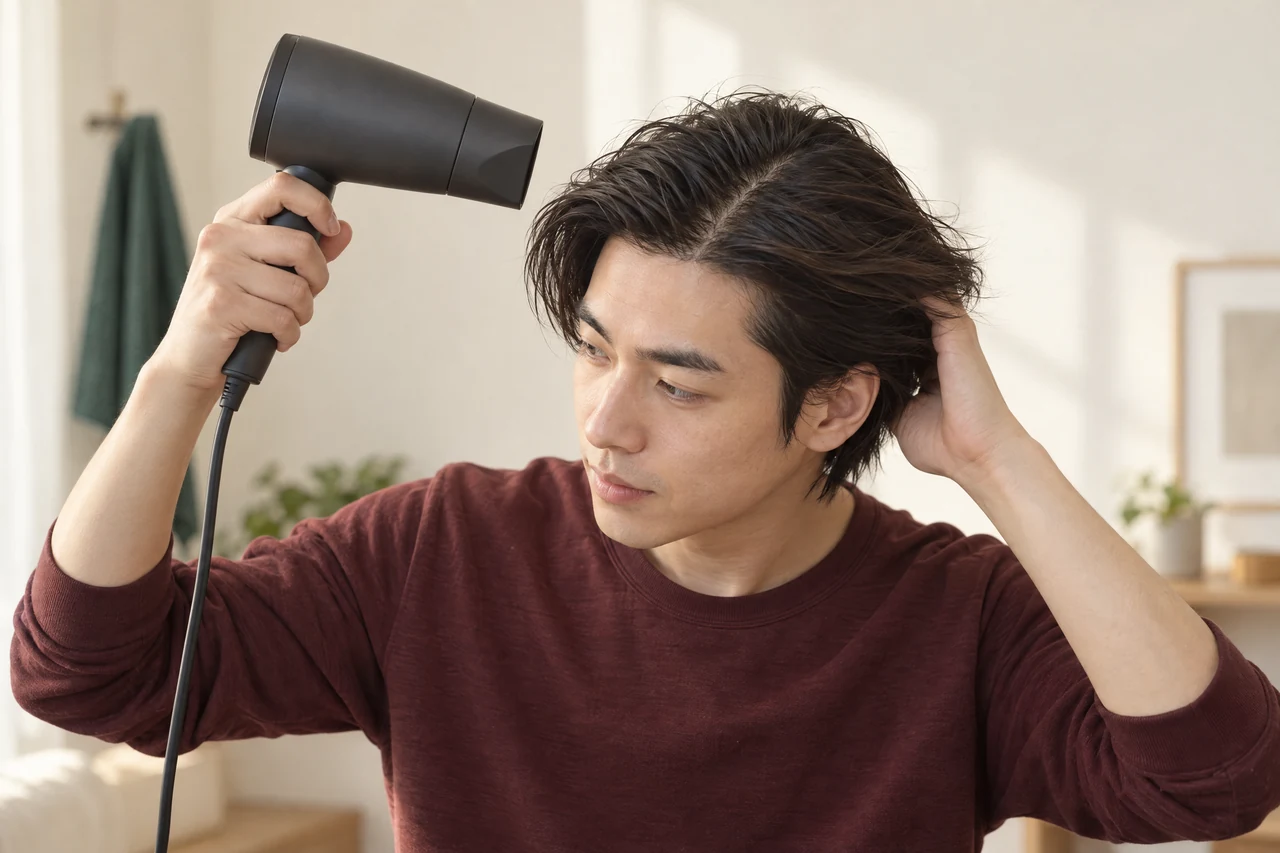
If you use a dryer, ask how to guide the part and side sections without relying on a tightly brushed finish. The AAD damage-prevention advice recommends the lowest heat setting and air drying when possible. Absorb water gently rather than rubbing the lengths roughly. A useful finish lets you recognise the intended shape after your normal wash, not only after elaborate salon styling.
Prepare a clear long-hair consultation
Take current photographs with the hair loose and dry before sending an enquiry. Include the back, where uneven ends can be hidden in a front view. Explain whether your present length is a destination or a stage towards something longer. Mention previous colour, bleaching or perming if those lengths remain, and describe the tools you actually use at home. This gives the conversation more useful detail than simply requesting a long hairstyle.
Review men's haircut to check its service scope and the details to share before arranging the related work.
Leave with the next priority understood
After the cut, check the hair loose and in your usual tuck or tie. Ask which section should gain length next and what change would make a future assessment useful, such as losing the ability to tuck the front or noticing an increasingly uneven end line. A follow-up decision can respond to how your hair behaves; it does not need a promised growth timetable or an automatic all-over trim.

Compare long-hair priorities before choosing the scope of a trim
| Main priority | What to preserve | What to discuss | Trade-off |
|---|---|---|---|
| Grow towards a loose tie | Front and side sections needed to reach the tie | Local outline adjustments while shorter sections catch up | Some temporary unevenness may remain |
| Keep a fuller lower outline | Weight at the perimeter | A clearer end line with limited internal shortening | Less layered movement may remain |
| Reduce width beside the ears | Useful overall length and end substance | The precise side area and proposed weight adjustment | Less bulk must not be confused with shorter hair everywhere |
| Add face-framing movement | The agreed longest outline | Where the shortest front layer will fall when dry | Shorter pieces may escape a tuck or tie |
| Improve uneven ends | The shortest acceptable dry length | How much removal a more continuous end line needs | Maximum retention may limit how even the finish becomes |
Your preparation checklist
- Photograph your current dry hair from the front, side and back, using your normal parting rather than a special styled finish.
- Show the shortest acceptable back length and separately identify front pieces that must remain long enough to tuck or tie.
- Choose the main problem to address: uneven ends, side width or the fall of existing layers. Do not group them under a vague request for tidiness.
- Bring your usual hair band or glasses so the retained length can be assessed against a real daily habit.
- Explain any remaining colour or perm history and the amount of drying or styling you are willing to do at home.
- Confirm the proposed shortening and applicable service charge before cutting, then check the finished hair in its usual loose or gathered position.
Frequently asked questions
How to ask for a men's trim without losing length?
Show the dry length you want preserved, set the maximum acceptable shortening and identify only the areas that need adjustment. Discuss any conflict between retaining length and reshaping ends.
Should I avoid every trim while growing long hair?
Not necessarily. Protect the length needed for your goal and assess whether selected areas can be adjusted without restarting the whole grow-out.
Do layers always make long hair easier?
No. They change weight and movement, but can also create shorter pieces that escape a tie. Explain your routine and preferred thickness first.
Plan a trim around the length you want to keep
Send Vit So your current hair photos, preferred dry-length boundary and daily tuck or tie routine to discuss a long-hair trim in Sheung Wan. Include your target shape and preferred visit time. An enquiry starts the discussion; the appointment and applicable charge still need confirmation.
Start your WhatsApp enquirySources & further reading
- How to stop damaging your hair
Loose tying, covered hair bands and low-heat drying practices for reducing avoidable damage to retained lengths.
- Tips for healthy hair
Scalp-focused shampooing, conditioning and texture-appropriate gentle detangling for longer hair.



