







Brand relationship: OWNSTRAND and Vit So have the same owner. This guide provides cosmetic selection information, not an independent product review. Confirm styles, supply and visit arrangements with OWNSTRAND.
Hair topper choice with short regrowth starts at the base
For product questions, OWNSTRAND's hair toppers page separates partial coverage from full wigs and asks readers to compare the footprint and attachment method. OWNSTRAND is Vit So's same-owner sister brand, so this is a disclosed enquiry route rather than an independent recommendation. Ask for the exact model's base dimensions and underside layout: a style photograph cannot show whether its attachment points would fall beside, within or beyond your short-strand area.
Make two separate observations in ordinary light. First, identify the part or crown area you want covered. Second, note the hair around that area where attachments might sit. Your longest ends do not describe every possible fastening location. Someone can have shoulder-length hair overall yet a short, sparse section beside the front of a proposed base. Conversely, short strands within the coverage area do not automatically mean every surrounding attachment point is unsuitable.
Treat 'regrowth' here as your description of the short strands you are seeing, not a diagnosis based on a photograph. There is no universal minimum length established by the sources used here that clears every topper for use. The exact clips, their position and the surrounding hair need to be considered together. Do not buy a piece simply because its listed hair length resembles your haircut or because a larger base appears to cover more.
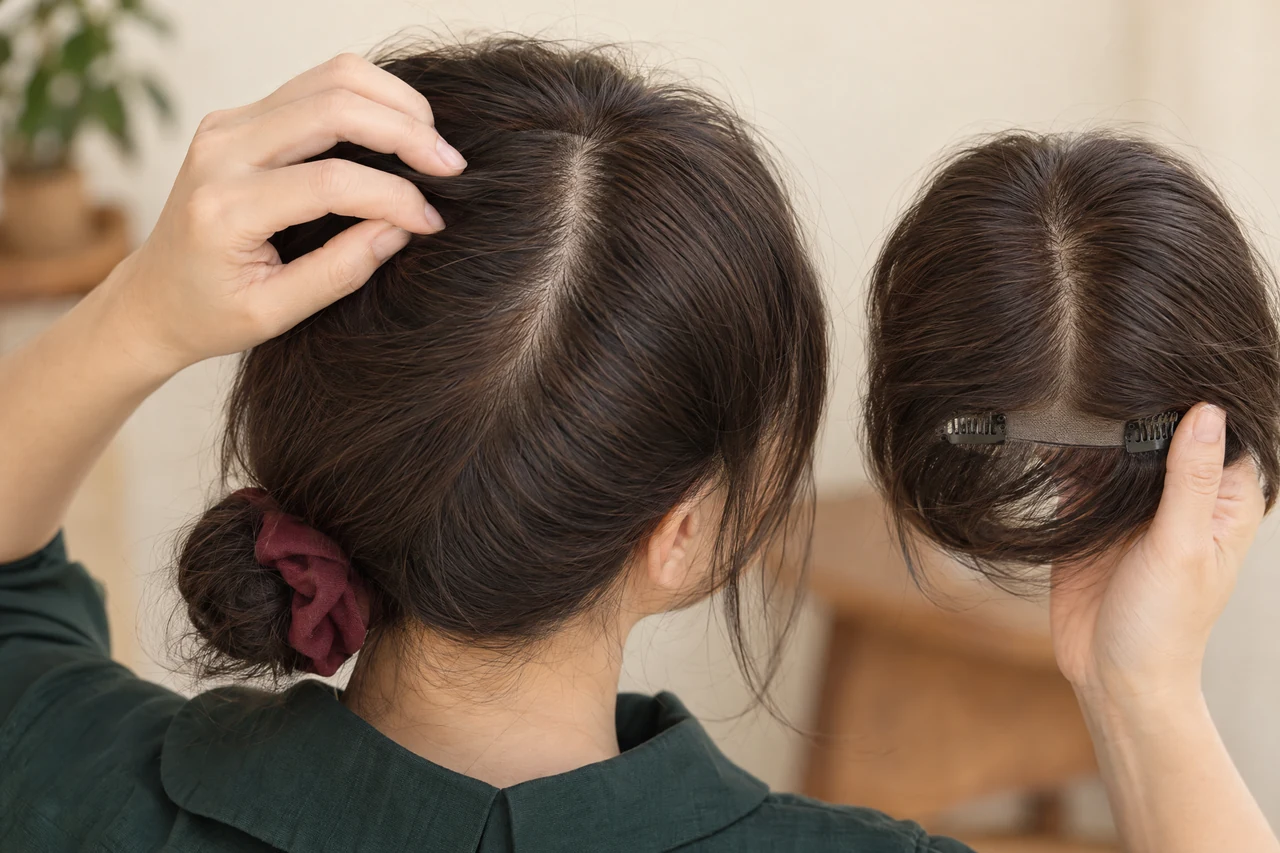
Check support at each proposed attachment point
Ask the fitter to show where each fastening would land before discussing colour or cutting. The useful question is whether that specific location offers suitable hair for that specific attachment, not whether there is some hair somewhere under the base. If the proposed front fastening would depend mainly on very short strands, record that concern. Do not assume longer hair at the back compensates for an unsuitable point at the front.
Base size can change where the edges and clips sit, but 'larger' is not a reliable synonym for 'gentler'. A different footprint may reach a different surrounding area; it also changes coverage and the amount of hair to blend. Ask about the actual weight and fastening layout where available. A missing underside image or specification is an unanswered question, not permission to copy details from another topper in the same collection.
Consider a hypothetical crown piece whose side points seem workable but whose front point feels pulling during a guided fitting. That is a reason to stop and reconsider the model or format, not to fasten the other points harder. Avoid improvising with extra clips, backcombing or adhesive to make an unsuitable arrangement hold. If an alternative fastening is proposed, ask whether it is intended by the maker and appropriate for your situation.
Short regrowth topper clip support: four practical checks
For short regrowth topper clip support, use four checks to structure the conversation: coverage footprint, attachment hair, comfortable placement and manageable removal. These are questions for a cosmetic fitting, not a medical score or a home strength test. An unresolved attachment or comfort concern should keep that option on hold even if the colour looks convincing. Include removal because a piece that catches short strands when taken off has not solved your day-to-day wearing problem.
Keep a clear stop rule for pulling and scalp symptoms
The American Academy of Dermatology explains that repeated pulling can cause traction alopecia. It identifies pain from tightly pulled hair, scalp stinging and crusts as reasons to change the pulling style immediately.[1] This is general guidance, not a measured risk for a particular topper. For your selection decision, do not treat pain as proof of a secure fit or something to tolerate until you become accustomed to the piece.
If a trial causes pulling, stop and ask for help removing the piece gently rather than repeatedly opening and reclosing clips on the same area. New breakage, a changing hairline or patches of loss also warrant attention; the AAD recommends a dermatologist for hair-loss assessment.[1] Vit So's discussion of do hair extensions damage natural hair gives related traction context, but extensions and toppers are different products. Neither a salon discussion nor an attractive blend diagnoses the cause of short strands.
Treatment-related wearing needs belong with your care team
If shedding or scalp sensitivity is connected with current treatment, ask your care professional about wearing needs before pursuing a fastening method. Bring those requirements into the product enquiry without expecting the fitter to make a medical judgement. A cosmetic piece can change visible coverage; it does not establish that shedding has stopped, that hair can tolerate added tension or that regrowth will follow a particular timetable.
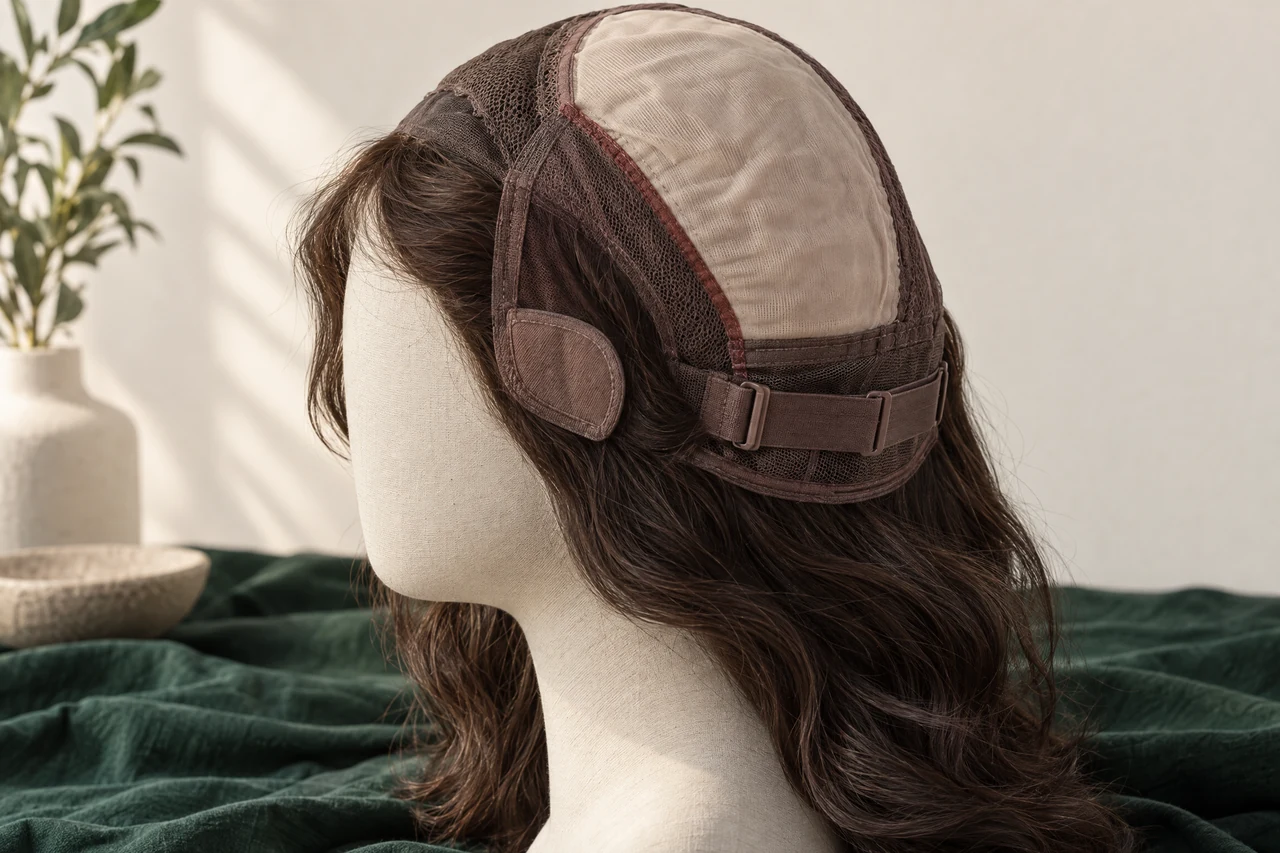
Compare another format when clip support is uncertain
When suitable attachment hair is uncertain, OWNSTRAND's hair topper vs wig guide offers a useful change of question: do you want local coverage blended with your own hair, or a full-head silhouette? Its distinction concerns coverage and styling, not a guarantee that a wig will be more comfortable. You can also use Vit So's hair topper vs wig discussion to clarify which surrounding hair you want to keep visible.
For a full-coverage enquiry, OWNSTRAND's women's wigs page recommends comparing the exact cap, hairline, parting and fibre. Ask explicitly how the proposed wig is secured; full-head coverage does not automatically mean clip-free or pressure-free wear. The American Cancer Society notes that sizing can vary by brand and advises checking the specific brand's chart.[2] A familiar size label is therefore a starting point, not confirmation that the cap fits you.
Pausing a clip-in purchase is also a valid outcome. You might prefer a loose hairstyle, or discuss a comfortable hat or scarf instead, without committing to another hairpiece. Head coverings still need care: the AAD cautions about constant rubbing and tightly pulled hair underneath them.[1] Compare the contact points and your daily routine rather than assuming every non-topper option is harmless. No cosmetic format has to be chosen just because short strands are visible.
Move to blending only after support is workable
Once the attachment questions are answered, discuss the visible transition into your own hair. Vit So's hairpiece fitting page is a relevant starting point for coverage and blending conversations; confirm the service arrangements for your chosen piece. Look at the front, sides and back in your usual parting. Short strands may remain visible around an edge, so decide whether that appearance is acceptable before requesting a cut that cannot be undone.
A guided fitting should reflect ordinary use without becoming a vigorous stability test. If comfortable, try a gentle head turn, put on your usual glasses and consider how you would remove the piece at home. Describe any shifting or catching rather than trying to fix it by pulling your hair tighter. A brief comfortable try-on can inform the discussion, but it cannot prove that a piece will remain comfortable throughout every activity or wearing duration.
Fibre and styling instructions come after the support decision, not instead of it. Human hair, synthetic fibre and different base descriptions do not establish the same heat tolerance or upkeep. The American Cancer Society cautions against hair dryers or curling irons unless the wig is heat resistant.[2] For your exact topper or wig, follow its original instructions and confirm what trimming or styling is permitted. A more expensive material does not resolve an unsuitable fastening location.

Make the enquiry specific without predicting readiness
Prepare clear photos of your usual part, crown and surrounding hair without filters or tightly pulling the strands aside. Explain where you see short hairs and what you want covered, while allowing an in-person fitting to answer placement questions that images cannot. Include how often you expect to wear a piece and whether you can comfortably put it on and take it off yourself. Those details make an enquiry more useful than simply requesting the most natural-looking topper.
Ask for the exact model name, base measurements, fastening details and care instructions, followed by a quotation and confirmation of supply. Catalogue entries are references, not evidence that a colour or model is available now. For OWNSTRAND, check visit and sample-viewing arrangements for its single Kwun Tong store. Vit So's Sheung Wan location is separate; do not assume the same stock, product fitting or ordering services are available at both businesses.
End with a decision that matches what is actually known: explore this exact topper further, compare a different format, or defer the purchase. If deferring, agree what fitting questions remain unanswered rather than setting a promised readiness date. Revisit placement when your hair or wearing needs change, and seek clinical advice for symptoms. Visible short strands alone do not predict future density, establish the cause of shedding or make a product suitable on a fixed schedule.
Cosmetic choices when short strands overlap possible attachment areas
| Option | Question to resolve | Reason to pause or reconsider |
|---|---|---|
| Exact clip-in topper | Does each intended fastening have suitable surrounding hair? | Pulling, catching or an unresolved attachment location. |
| Different topper footprint | Where would the new perimeter and attachments sit? | More coverage without a workable support arrangement. |
| Full wig | What cap size, contact points and securing method does this design use? | Pressure, rubbing or an unconfirmed fastening method. |
| Defer a hairpiece; use another cosmetic approach | Can a loose style or comfortable covering meet today's preference? | Persistent symptoms or uncomfortable contact still need attention. |
Your preparation checklist
- Identify the coverage area separately from the proposed attachment areas.
- Ask for the exact model's base measurements and fastening layout.
- Point out short or sparse sections beside every proposed fastening.
- Stop for pulling or discomfort; do not improvise a stronger hold.
- Discuss gentle removal, daily activities and acceptable blending before cutting.
- Confirm construction, fibre, price, supply and visit arrangements for that item.
Frequently asked questions
How many centimetres of regrowth are enough for a topper?
There is no universal threshold established by the sources used here. Overall length is not the same as suitable hair at each attachment point. Ask about the exact model and its intended placement; do not use a ruler reading alone as clearance to clip onto a short or sparse area.
Can a larger base avoid the short strands?
It may put the perimeter in a different place, but that needs to be checked against the actual clip layout and surrounding hair. A larger footprint also changes coverage and blending. It is an option to investigate, not a guaranteed way to reduce pulling or make unsuitable hair support a piece.
Does choosing a full wig remove the attachment problem?
It changes the coverage and blending requirements, but you still need to check the securing method and cap contact points. Some designs use attachments, and fit is individual. Do not assume full coverage means no clips, no friction or comfortable wear on a sensitive scalp.
When should I try again if I pause the purchase?
Base another enquiry on changed hair or wearing needs, not a promised number of weeks. Note which attachment questions were unresolved and bring updated observations. If there is pain, breakage, scalp irritation or unexplained loss, seek a qualified care professional rather than waiting for a cosmetic fitting to explain it.
Discuss support before choosing a silhouette
Ask Vit So about your preferred parting, blending and styling limits. For exact OWNSTRAND product details or a Kwun Tong visit, use the product and comparison pages already linked above. Bring your attachment concerns first, and leave room for a different format or a decision not to buy yet.
Start your WhatsApp enquirySources & further reading
- American Academy of Dermatology — Hairstyles that pull can lead to hair loss
Repeated tension, pain and scalp warning signs; clinical assessment of hair loss. General guidance rather than a topper-specific test.
- American Cancer Society — Wigs for Hair Loss
Brand-specific wig sizing and heat-tool restrictions. Practical fit and care guidance, not endorsement or medical clearance for this reader.



