






Brand relationship: OWNSTRAND and Vit So are brands under the same owner. This guide offers selection reference, not an independent review. Confirm styles, supply and visit arrangements with OWNSTRAND.
Wig density for video calls starts with the crown outline
For a quieter meeting silhouette, compare how closely the crown sits and how gradually it meets the sides. For a fuller look, notice where the extra height appears rather than assuming that more hair everywhere is better. OWNSTRAND's guide to low density wigs distinguishes overall fullness from individual fibre thickness and cautions against choosing from percentage labels alone. Use its descriptions to frame questions, not as independent proof that a particular piece will look lower on your camera.
Ask to compare candidates from the same front and slight-turn angles, with similar lighting, length and parting. Explain that you want to see the crown rather than only a glossy close-up of the lengths. The sister brand's wig shop Hong Kong page confirms one shop in Kwun Tong and advises checking visit and fitting arrangements. Requesting matched views is your enquiry, not a promise that a video-call demonstration, particular sample or free try-on will be available when you visit.
A crown preference still needs to work with the rest of the style. A close top with broad sides can feel fuller than a lifted top with narrow sides, while a fringe changes how much forehead remains visible. When browsing OWNSTRAND's wigs Hong Kong page, shortlist whole outlines rather than isolated highlights. Its catalogue supports enquiries about specific options; a listed image does not confirm current stock. Keep the style name beside your notes so the next conversation concerns a defined piece, not an abstract density number.
Set a repeatable camera and light baseline
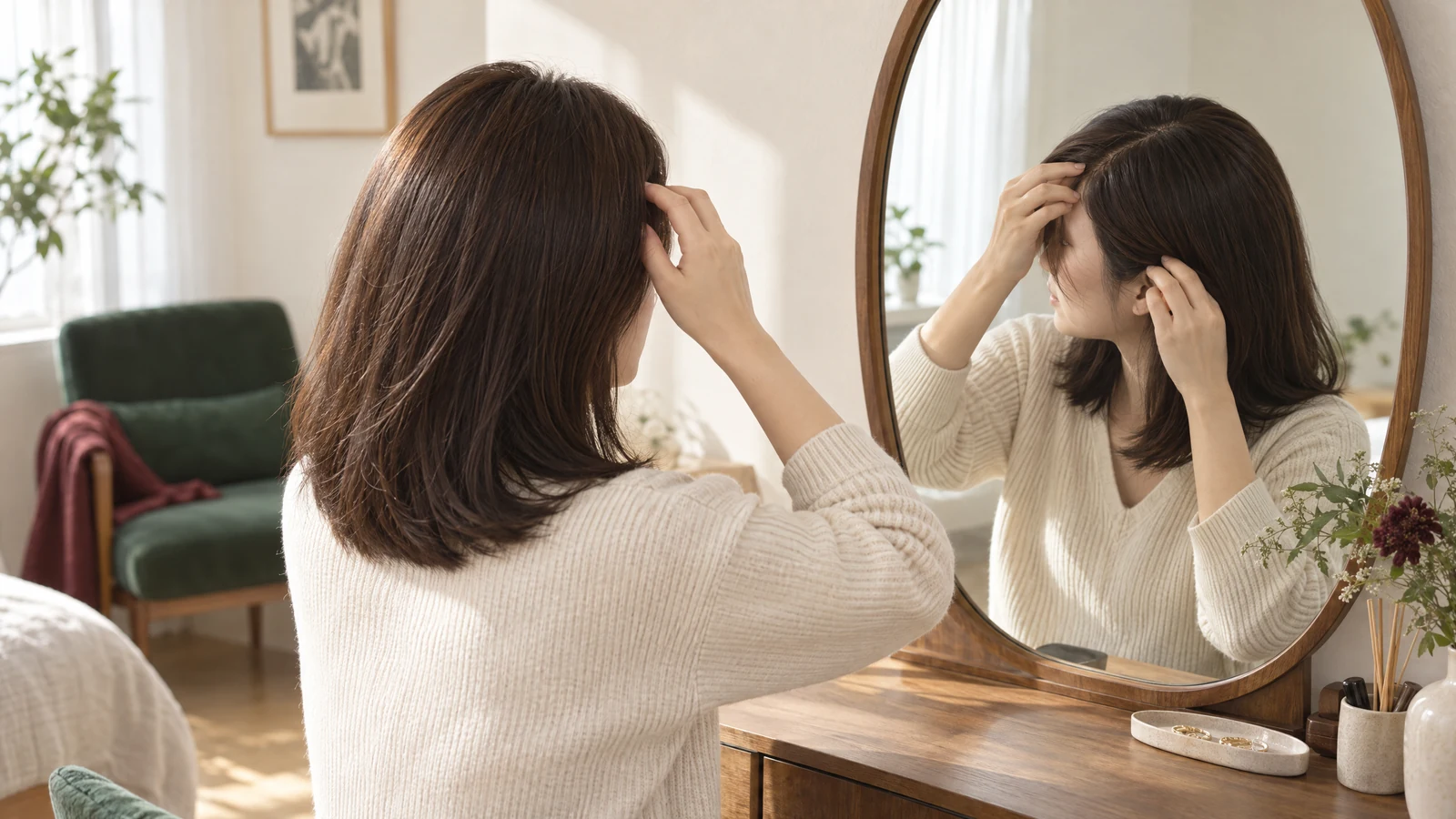
Make the first comparison in a setup you can repeat. Harvard IT advises front-facing light, facing a window for natural light, avoiding overhead-light shadows and positioning the camera at eye level. [1] These are useful starting conditions, not wig-selection research. Place the device securely and leave enough headroom to see the crown. Sit at the same distance for both candidates and keep your posture ordinary. If one view crops the top while the other includes it, you cannot fairly compare their apparent height.
Then repeat both candidates under the overhead light you actually use for meetings, keeping that light unchanged between them. This second view checks a real wearing situation rather than trying to flatter one option. Do not brighten only one image, switch backgrounds midway or move the lamp until a favourite wins. Where your software permits, disable beauty effects and artificial background effects for the comparison. Their purpose is presentation, whereas your purpose here is to see an outline clearly enough to make a choice.
Keep the reference setup simple
Mark the chair and device positions with a removable note, and record whether the ceiling light was on. Use the same plain background and avoid a bright window directly behind you. Save a neutral front view before turning. If daylight changes noticeably between candidates, repeat the pair rather than correcting one screenshot by eye. You need comparable conditions, not studio equipment or a claim that the image reproduces every detail accurately.
Use a camera angle wig volume comparison in four checks
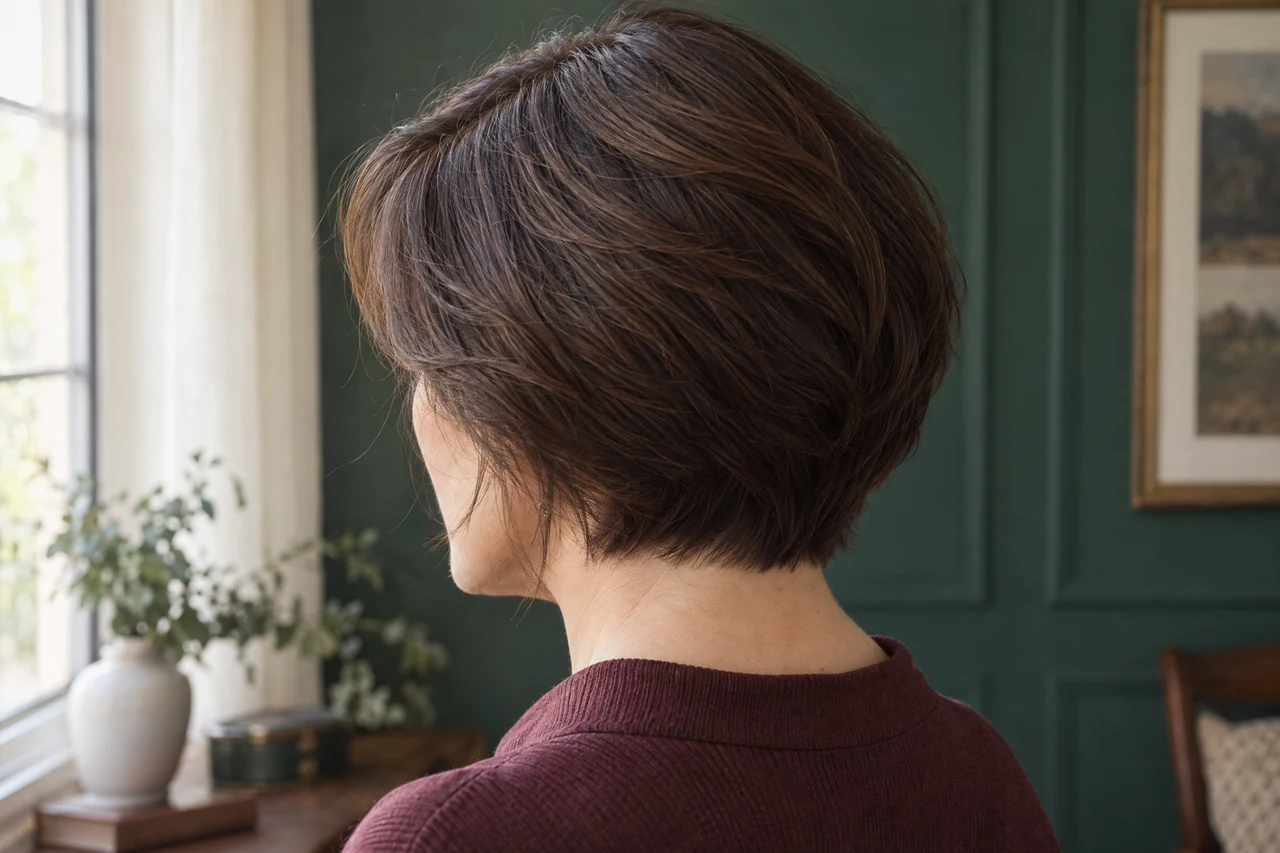
Use four outline checks: crown height, front opening, part visibility and side width. Crown height means the top profile visible above your forehead, not the brightness of the hair. Front opening means how much of the forehead and eye area remains clear once the fringe or front strands settle. Part visibility asks whether the separation reads as you prefer at normal meeting size. Side width compares the outer edges beside the temples and cheeks. These are original observation prompts, not a validated scoring scale.
Start with your head facing forward, then turn slightly as if looking at another screen. Keep the turn similar for each candidate. A higher camera shows a different amount of the top, so comparing it with a low laptop view can confuse angle with volume. The guide to hair styling for photo shoot provides a related way to think about photographic angles and lighting. For this decision, keep your notes tied to the front and slight-turn views from your ordinary meeting setup.
Write descriptive observations rather than totals: 'crown closer, sides wider' is more useful than awarding a wig eight points. If one candidate wins at eye level but feels too broad when you turn, note that trade-off. Check the image at the size you normally see during a meeting before enlarging it. Close inspection can help with a specific parting question, but it should not replace the everyday view. Decide which outline you enjoy seeing rather than trying to diagnose how much hair a screenshot contains.
Separate reflections, fibre texture and parting
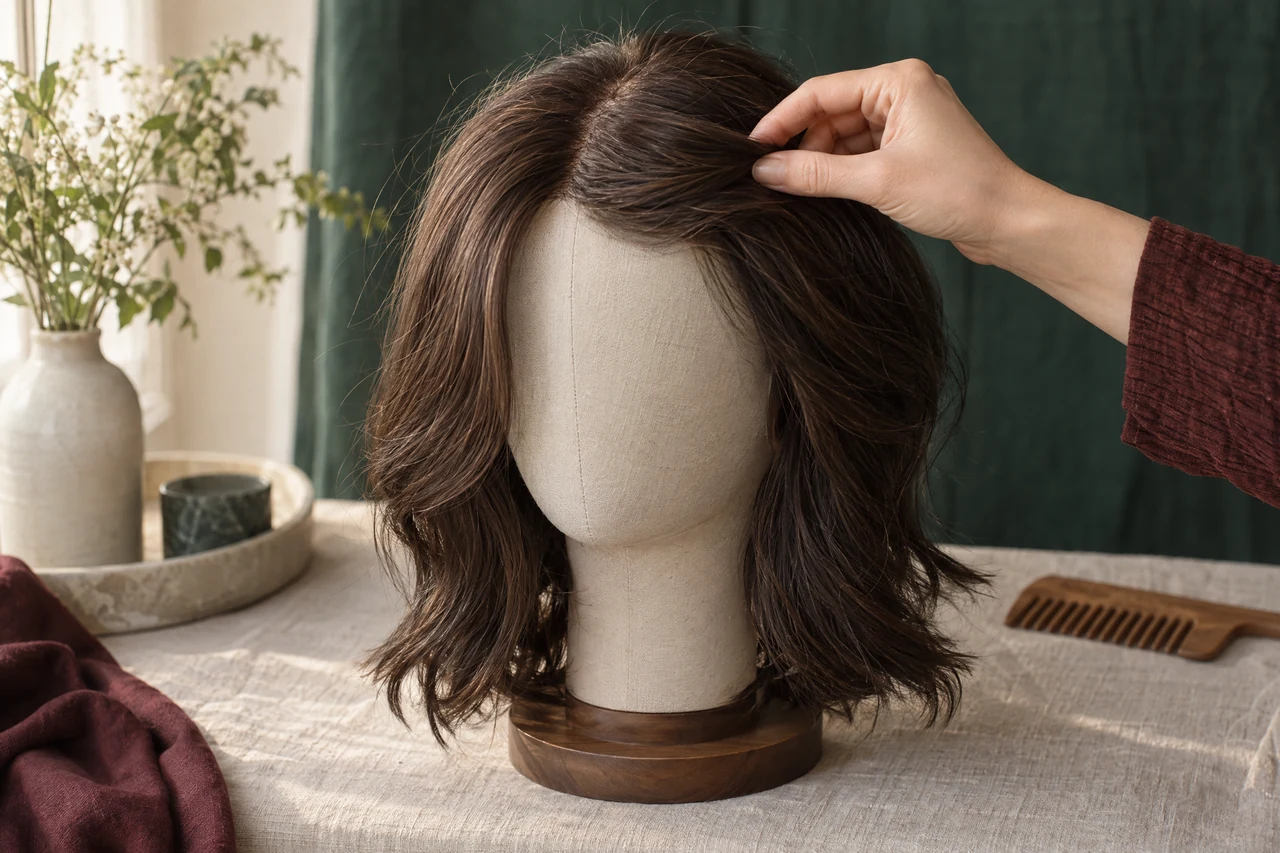
A bright band on the crown is a reflection in that image, not a measurement of hair amount. If moving the light changes the band while the outer edge remains similar, do not treat the new brightness as a density change. Likewise, a darker screenshot does not establish better fibre quality. The distinction explained in fine hair vs thin hair is helpful: individual strand texture and overall amount are different questions. Ask about both, but avoid inferring either from a single polished photograph.
Parting deserves its own check because the camera may show a visible line without revealing how the base is constructed. Compare the same intended part position where the style allows it; do not force a fixed part into another direction. For colour matching, the American Cancer Society recommends comparing a hair reference in natural light. [2] Use that as a separate colour check beside the meeting view. Neither daylight nor a webcam can by itself confirm the exact fibre, cap construction or suitability of a particular item.
Check the line, then ask about the base
If the part looks too prominent to you, first repeat the view without changing posture or light. Then ask what parting area and construction the exact piece has. More overall fullness is not automatically the answer to a local parting concern. A supplier's construction term needs clarification for that item; it should not be converted into a familiar foreign cap label without supporting specifications. Keep coverage questions separate from your preference for crown lift.
Choose a lower or fuller shape without losing the whole outline
Choose the lower-looking candidate if you prefer its closer top and the rest of the style still frames your face as intended. Choose the fuller-looking candidate if you enjoy the extra crown presence without feeling that the sides dominate the picture. Neither choice is inherently more professional or more natural. The broader guide to how to make a wig look natural helps place the crown within hairline, colour and complete silhouette rather than treating one feature as the entire decision.
If the candidates have different lengths or curls, identify that mismatch before blaming density. A rounded short cut and long waves distribute their visible volume differently, even when both are described as light. Try to narrow the comparison to similar cuts, or acknowledge that you are choosing between complete styles rather than isolating hair amount. If you like a candidate except for one area, ask what can be adjusted and what the adjustment would involve. Do not assume every cap or fibre allows the same changes.
Bring ordinary movements into the choice: speaking, looking sideways, lowering your gaze to notes and returning to the camera. Check whether front strands need repeated repositioning and whether your usual headset interferes with the outline. An option that photographs well in a still pose may still require a routine you do not want. Decide how much arranging you are willing to do before a meeting. A low-density description cannot promise easier handling, less heat or a more comfortable fit.

Turn your comparison into a specific fitting enquiry
Send the two style names with a short preference: 'I want the closer crown of this option, but less width at the temples.' Explain your normal camera height and lighting, and ask whether relevant samples can be viewed. OWNSTRAND's published custom human-hair process includes sample viewing, head measurement and a return fitting with washing, cutting and blow-drying. Confirm which steps apply to your enquiry. Its single shop is at Unit 2103, 50 Hoi Yuen Road, Kwun Tong, Hong Kong; do not assume a walk-in arrangement.
Before deciding, ask for the exact fibre, cap details, size information, quotation and supply status. The American Cancer Society notes that size charts can vary by brand and cautions against heat tools unless the wig is heat resistant. [2] Those are general checks, not assurances about an OWNSTRAND item. A pleasing screen outline does not establish physical fit or comfort. If you have scalp symptoms or treatment-related wearing needs, ask a care professional about those needs separately rather than trying to resolve them through a density comparison.
Keep one clear preference and one unresolved question
Finish with the outline you prefer and the detail that still needs confirmation. For example, you may prefer a lower crown but need to know whether the front can stay open with your usual part. This keeps the conversation actionable without turning a reference photo into a production guarantee. Confirm timing, appointment availability and any alteration terms for the exact option before committing; a catalogue entry or enquiry message does not complete a purchase.
Four outline checks under matched camera conditions; these describe preferences, not product grades.
| Check | Lower-looking preference | Fuller-looking preference |
|---|---|---|
| Crown height | Closer top profile, with enough shape for your taste. | More visible lift, without changing camera height to flatter it. |
| Front opening | A clear forehead or eye area with less front bulk. | More front body while retaining your preferred opening. |
| Part visibility | An understated separation; ask about local coverage separately. | More surrounding fullness; verify the part rather than assuming concealment. |
| Side width | Narrower edges beside the temples and cheeks. | Broader framing that still feels balanced when you turn. |
Your preparation checklist
- Shortlist similar cuts and record each exact style name.
- Keep camera height, distance, posture and background unchanged.
- Compare both with front light, then both under your usual overhead light.
- Note crown height, front opening, part visibility and side width.
- Repeat ordinary turns with your usual glasses or headset.
- Confirm sample arrangements, item specifications, fit, quotation and supply before deciding.
Frequently asked questions
Should I buy the lowest density label for online meetings?
Not automatically. Choose it only if you prefer the complete closer-looking shape under matched conditions. The label does not tell you how the crown, sides and fringe will sit together, nor does it guarantee comfort. A fuller silhouette may suit your preference just as well. Ask what the description means for the specific style.
The crown looks shiny under my ceiling light. Is the wig too dense?
Shine alone cannot answer that. Repeat the view with front-facing light while keeping the camera and posture fixed, then compare the outer crown edge rather than the bright band. If your concern is the reflection itself, ask about the actual fibre and its care instructions. Do not improvise a dulling treatment from the screenshot.
Can I compare a supplier's model photo with my laptop preview?
Use the model photo for inspiration, not a direct volume measurement. The camera height, distance, pose, light and styling may differ. Request comparable views or arrange sample viewing if available. You can still name what you like about the model's outline, but the image cannot establish how the same piece will fit or appear on you.
What if I like the crown but not the visible part?
Treat them as separate observations. Confirm the intended part position and ask about the exact base and local coverage before changing the overall fullness. Do not assume that adding more hair throughout will solve one visible line. Discuss possible adjustments and their limits with the supplier; avoid cutting or altering an unfamiliar piece yourself.
Bring a clear crown preference to the conversation
Invite Vit So to discuss face-framing, outline and style blending using your matched reference views. For OWNSTRAND product specifications, samples or a Kwun Tong visit, enquire through the guides already linked above. Keep styling preferences separate from the supplier's confirmation of fit, supply and arrangements.
Start your WhatsApp enquirySources & further reading
- Harvard University Information Technology — Adjust settings to look your best on Zoom
Front-facing light, window-facing natural light, overhead-light shadows and eye-level camera guidance used to establish a repeatable baseline. Not a wig test.
- American Cancer Society — Wigs for Hair Loss
General natural-light colour comparison, brand-specific sizing checks and heat-tool cautions. No medical or product-specific suitability claim.



