







Vit So and DT HUB have the same owner. The DT HUB links here are promotional service references, not independent recommendations or evidence of colour longevity. Each provider's product details, appointment scope and quote should be confirmed separately.
Treat hair colour with a weekly wash routine as a starting condition
Start with what you currently do, rather than adopting a new calendar because you are considering colour. The American Academy of Dermatology advises washing according to how often hair becomes dirty or oily; its guidance varies with hair type and scalp needs. [1] An approximately weekly habit may describe your usual week, but it does not mean every week must look identical. A sweaty commute, exercise or heavier styling-product use is useful information to share at consultation.
When comparing hair colour kwun tong, explain that this is your existing routine and ask how the proposed colour care would fit it. DT HUB's page describes consultation around the starting colour and maintenance preferences. That gives you a place to ask questions, not evidence that washing weekly guarantees longer-lasting colour. Say whether you want modest overall change or clearly visible lighter sections, and ask what each option would require at home.
A useful description includes whether your roots become oily before your usual wash, whether the ends feel dry afterwards and which products remain in your hair between washes. These are different observations. Dry-feeling ends do not, by themselves, establish that the scalp should go longer without cleansing. If your hair needs washing sooner, the colour plan should accommodate that rather than making you feel that you have failed the routine.
Describe a real week, including the exceptions
Bring the names or labels of your current shampoo, conditioner and styling products. Explain how you normally dry your hair and whether swimming or frequent heat styling is part of your week. This helps the colourist identify questions that a simple statement such as 'I wash on Sundays' leaves unanswered.
Choose the visible change you can live with between appointments
Separate overall colour from the lighter strands that catch your eye. For highlights hong kong, DT HUB's page distinguishes foil highlights, face-framing work and balayage. Ask where the lighter hair would sit when worn down and when tied back. A small bright area near your face may matter more to you than a larger, less obvious area underneath; a smaller application is not automatically a lower-upkeep choice.
Lower contrast is worth discussing if your priority is a subtle appearance as the hair grows. More noticeable ribbons may suit you if visible dimension is the main aim and you are comfortable discussing later tone adjustments. Neither choice can be ranked by wash frequency alone. Ask the colourist to distinguish the placement you want from the tone you want, because you may remain happy with one while wanting to revisit the other.
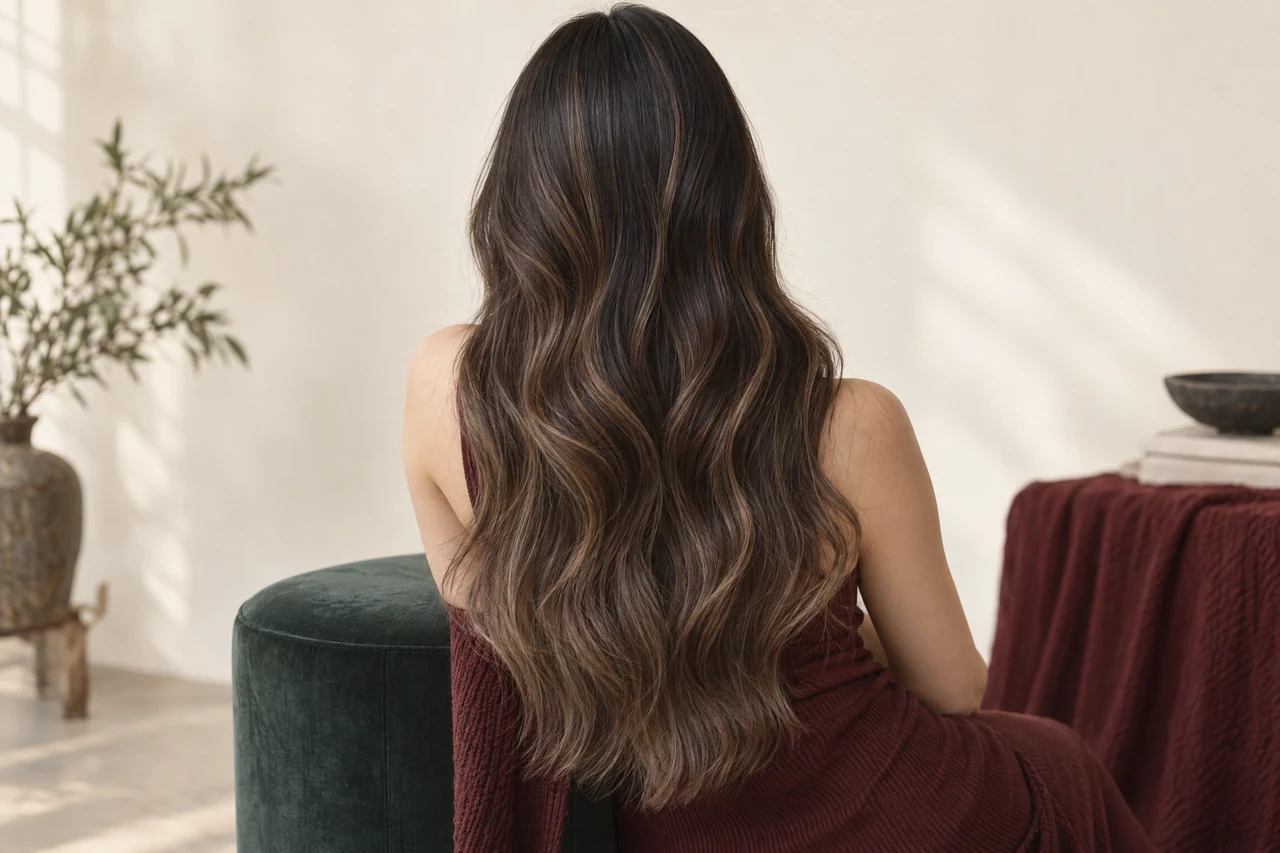
Use the Vit So hair colour page to prepare questions about shade and coverage before deciding on technique. Identify whether your priority is changing the overall base, blending a root area or adding light through the lengths. A reference picture should help explain that preference, not stand in for an assessment of your current hair or a promise of an identical result.
If auburn is your preferred direction, the separate guide to how long does auburn hair colour last is a useful place to frame questions about changing warmth and your own tolerance for it. Do not convert an expected change into a fixed expiry date. Take observations in comparable light and ask whether the issue is new root contrast, a changed tone through the lengths or simply a different photograph.
Make each wash practical without turning every wash into a toning session
Colour upkeep with infrequent washing is most useful when the instructions distinguish cleansing, conditioning and optional colour adjustment. Ask which product cleans the scalp, which conditions the lengths and whether any recommended product adds pigment. If your only wash that week uses a toning product, you need to understand its intended role rather than assume it replaces your usual cleanser and conditioner. A generic 'use weekly' suggestion is not a complete plan for your routine.
Follow the directions for the actual product, including where it should be applied, how it should be rinsed and any stated limits on use. Do not extend contact time or add extra applications simply because you wash less often. Ask what to do when you are content with the tone, and when an unwanted change should be discussed with the colourist rather than managed by adding another product. You do not need a complicated shelf of products to ask these questions clearly.
The AAD recommends concentrating shampoo on the scalp and using conditioner after washing, with conditioner placement depending on hair type. [1] This is general care guidance, not a universal colour-preservation formula. Tell the colourist if a suggested routine leaves the roots feeling coated or the lengths difficult to detangle. The Vit So article on hair care for colour-treated hair helps separate softness and handling from shade adjustment, so those concerns can be discussed on their own terms.
Between washes, handling still matters. The AAD advises gentle detangling, absorbing moisture without rough towel rubbing and limiting excessive heat, using low or medium settings and heat protection. [1] These recommendations concern hair handling; they do not establish how many extra weeks a particular colour will last. Mention repeated straightening or curling so the plan reflects your actual styling, not only what happens in the shower.
Ask what the product is meant to change
A useful question is: 'Is this for cleansing, easier combing or changing the visible tone?' Then ask whether it belongs in every wash or only in a stated situation under the product directions. The answer should help you decide what to use, not pressure you to make every wash a colour correction.
Confirm the dye product and the hair area separately
For hair dye kwun tong, ask both what dye would be used and which parts of your hair would receive it. DT HUB's page lists root touch-ups, full colour and toner refreshes, but the menu name alone does not define your appointment. Confirm whether the plan concerns new growth, selected lighter strands or the lengths, and whether a separate tone-refining step is proposed. This also makes the later quote easier to compare.
A label or ingredient list can help identify a product and its directions. It cannot tell you that your individual result will remain unchanged through weekly washing. Likewise, 'ammonia-free' is not an all-purpose safety assurance. The FDA notes that reactions can occur despite previous trouble-free use, and advises following directions and completing the skin test before every use. It also cautions that a skin test without a visible reaction cannot rule out a reaction during dyeing. [2]
Tell the provider about previous reactions and any current scalp discomfort before agreeing to colour. FDA guidance says not to dye an irritated or damaged scalp and to seek healthcare advice about a reaction. [2] Do not treat discomfort as a reason to add conditioner, switch to a plant-labelled dye without checking it, or wait for the next scheduled wash. This is a general safety boundary, not an assessment of what is causing your symptoms.
Consider henna through ingredients and future colour plans
If you are exploring henna hair colour hong kong, ask for the actual product name and complete ingredients before comparing it with another dye. DT HUB's page discusses henna with other plant dyes and possible added conditioning ingredients. That makes product-specific clarification important: 'henna' does not, by itself, tell you everything in the mixture or establish its suitability for you.
The page also describes colour options in relation to the starting shade and says henna is not a way to lighten dark hair to blonde. If your aim is a lighter, cooler reference colour, ask whether the proposed service matches that aim before discussing wash habits. If your aim is added warmth, ask how it may appear on your existing dark and lighter areas. Keep questions about colour appearance separate from questions about reactions or product testing.
Explain any previous henna or home colour and whether you may want bleach, a different dye or a perm later. The DT HUB page itself raises future-service compatibility and strand testing as discussion points. A strand test concerns the proposed work on a hair sample; do not confuse it with a skin test or a medical assessment. Do not choose henna on an assumption of guaranteed permanence, no damage or universal safety. If pregnant or breastfeeding, seek a healthcare professional's advice about the actual product rather than relying on its plant-based description.
Compare the quote by work included, not promised longevity
Use the hair colour price hong kong guide to identify cost questions rather than calculate your own final bill. DT HUB's guide separates techniques and discusses length, density, work required and possible additional sessions. Ask for a current written estimate based on the same goal and application area. Weekly washing does not determine how much initial colour work is needed, and a longer interval between washes is not proof of a smaller future upkeep bill.
Clarify whether consultation, lightening if proposed, colour application, toner, conditioning and finishing are included or separate. Then ask what would count as a later root service or tone refresh and how that would be quoted. An estimate from photographs may be useful for planning, but ask what remains subject to an in-person assessment and whether changes require your approval before work begins. Avoid comparing a partial service with a full transformation just because both are labelled colour.
Choose the simpler plan if it meets your visual priority and its care instructions fit your real routine. Choose more pronounced lightening only if its appearance matters enough to you to discuss the extra work and possible later adjustments. If either plan depends on you delaying needed cleansing or accepting a colour-longevity guarantee, ask for a revised explanation. A good next step is a clarified consultation, not a commitment based on wash count.
Compare the goal before comparing a wash schedule
| Your priority | Option to discuss | Limit to clarify | Useful next question |
|---|---|---|---|
| Subtle overall change | A shade closer to the existing base | Subtle does not mean unchanged | Which change might I notice first? |
| Visible lighter strands | Placement and contrast of highlights | Placement and tone are separate concerns | What shows when I tie my hair back? |
| Changed tone, placement still liked | Whether tone-only work fits the concern | A refresh is not automatically the right service | Which hair area would be treated? |
| Considering henna | The exact mixture and intended shade | A plant-based name is not a safety guarantee | What ingredients and later-service limits apply? |
| Manageable spending | A written quote for matched application areas | Fewer washes do not establish lower costs | What is included now and quoted separately later? |
Your preparation checklist
- Describe your usual wash habit and when dirt, oil or activities make it change.
- Bring current product labels and explain what stays in your hair between washes.
- Identify your main visual priority: overall shade, lighter strands or root appearance.
- Share previous colour, henna, bleach or perm information, including the treated areas.
- Ask for current product directions and disclose prior reactions or scalp discomfort.
- Confirm application areas, quote inclusions and what might be separate future work.
Frequently asked questions
Will weekly washing guarantee that my colour lasts longer?
No. It is one part of your routine, not a personalised prediction. Discuss the actual colour work and care products, and wash when your hair and scalp need cleansing rather than preserving a fixed interval. [1]
Should my only wash always use a purple or blue shampoo?
Do not assume that. Ask what the exact product is intended to do and whether it fits your current tone and cleansing needs. Follow its directions rather than turning a general weekly suggestion into an automatic rule.
Does choosing henna remove the need to ask safety questions?
No. Obtain the complete product information and explain previous reactions and colour work. Questions about visible shade, skin-testing requirements and compatibility with future services need separate answers.
Should I request a root service or a full colour appointment?
Describe where the unwanted change is visible first. Ask the colourist which area needs assessment and what work is proposed. A menu label or your wash frequency cannot establish the appropriate application area by itself.
Bring your routine to the colour consultation
Prepare current hair photographs, product labels and a short description of your wash and styling habits. Ask Vit So about a colour direction and care plan you can realistically follow. If comparing DT HUB, confirm its own application plan and quote separately. You can ask for clarification or postpone a decision; there is no need to accept a fixed colour-longevity promise.
Start your WhatsApp enquirySources & further reading
- Tips for healthy hair — American Academy of Dermatology
Wash frequency should respond to hair and scalp needs rather than a colour-retention target. AAD also supports scalp-focused shampoo application, conditioner after washing, gentle detangling and towel handling, and limiting excessive heat; these are general handling recommendations, not evidence of guaranteed colour longevity.
- Hair Dyes — U.S. Food and Drug Administration
Follow the actual product directions and check ingredients. FDA advises a skin test before every use and cautions that it cannot rule out a later reaction. Hair-dye reactions require healthcare advice; an irritated or damaged scalp should not be dyed. This is general consumer safety, not a diagnosis, prescription, proof of brand safety or a Hong Kong regulatory approval claim.



