







Vit So and DT HUB have the same owner. The DT HUB links are promotional enquiry references within this related-brand article, not independent salon recommendations. Neither brand's service description establishes accessibility for an individual reader.
Perm styling with limited hand mobility starts with a task map
Describe the difficult action before describing the curl. You might be able to smooth the front easily but struggle to reach the back, hold a dryer while moving it, or separate damp hair with clips. If you are using DT HUB's hair perm kwun tong page to begin an enquiry, explain those differences. The page describes choosing a method around hair condition and maintenance preferences; it does not establish which movements will be manageable for you.
Walk through your existing routine without adding strenuous tests. Notice opening a bottle, dispensing product, reaching the scalp, rinsing, handling a towel and checking the back. An action may work at the start but become difficult after the rest of the routine. Record where you need to stop or ask for help, rather than treating a completed hairstyle as proof that every stage was comfortable. You need not disclose a diagnosis to explain a practical requirement.
Chelsea and Westminster's NHS hand-therapy leaflet advises arranging frequently used items within reach, balancing activity with rest and avoiding prolonged tight grips. [1] It addresses joint protection, particularly in an arthritis context; it does not explain every cause of limited mobility. Use it as a planning prompt, not a personal treatment plan. If you need tailored advice on tools or movements, ask a healthcare professional such as an occupational therapist.
Rehearse temporary curls without mistaking them for a perm
A temporary curl appointment can help you discover whether you like a wider outline, movement near your face or ends that sit differently. Before booking through the perm salon kwun tong enquiry page, ask whether a nonchemical rehearsal is available and whether your helper can join the demonstration. The page mentions home-styling guidance, but that is not confirmation of companion attendance, adapted equipment or access arrangements. Explain what you need and request a direct answer.
Ask for the finish you would accept on an ordinary day, not only a polished salon finish. A blow dry enquiry is useful for discussing a temporary outline and distinguishing washing, cutting and finishing in the proposed service. Ask what the stylist did to achieve it. If the attractive result depends on a brush-and-dryer technique you cannot repeat, keep that finish as an occasional assisted option rather than making it your daily standard.
Afterward, observe how the temporary style wears and try only familiar, comfortable care steps when appropriate. Temporary curls may wash out, and untreated hair will not behave exactly like chemically reshaped hair. The rehearsal therefore cannot certify the future perm's tangling, drying behaviour or suitability. Its useful result is a clearer preference and a list of practical questions. Leave chemical suitability to a separate hair assessment.
Ask to perform the manageable part yourself
Watch the demonstration, then try the parts you can comfortably carry out with the actual tool or dispenser. Your helper can rehearse the agreed assisted steps. Ask the stylist to explain what can be omitted without changing your acceptable finish, and what cannot. Stop if an action is uncomfortable or tool control is uncertain. A successful rehearsal is an honest account of the work, not a test you must pass.
A digital label does not remove the drying work
When comparing digital perm hong kong enquiries, ask how the specific proposed curl should be handled after washing. DT HUB's page describes heated rods and home routines involving product, scrunching and air drying or a diffuser. Even if daily curling-iron work is no longer part of the plan, dispensing cream, lifting damp lengths and handling a dryer may remain. Ask which of those actions your chosen shape needs, rather than assuming the method eliminates styling work.
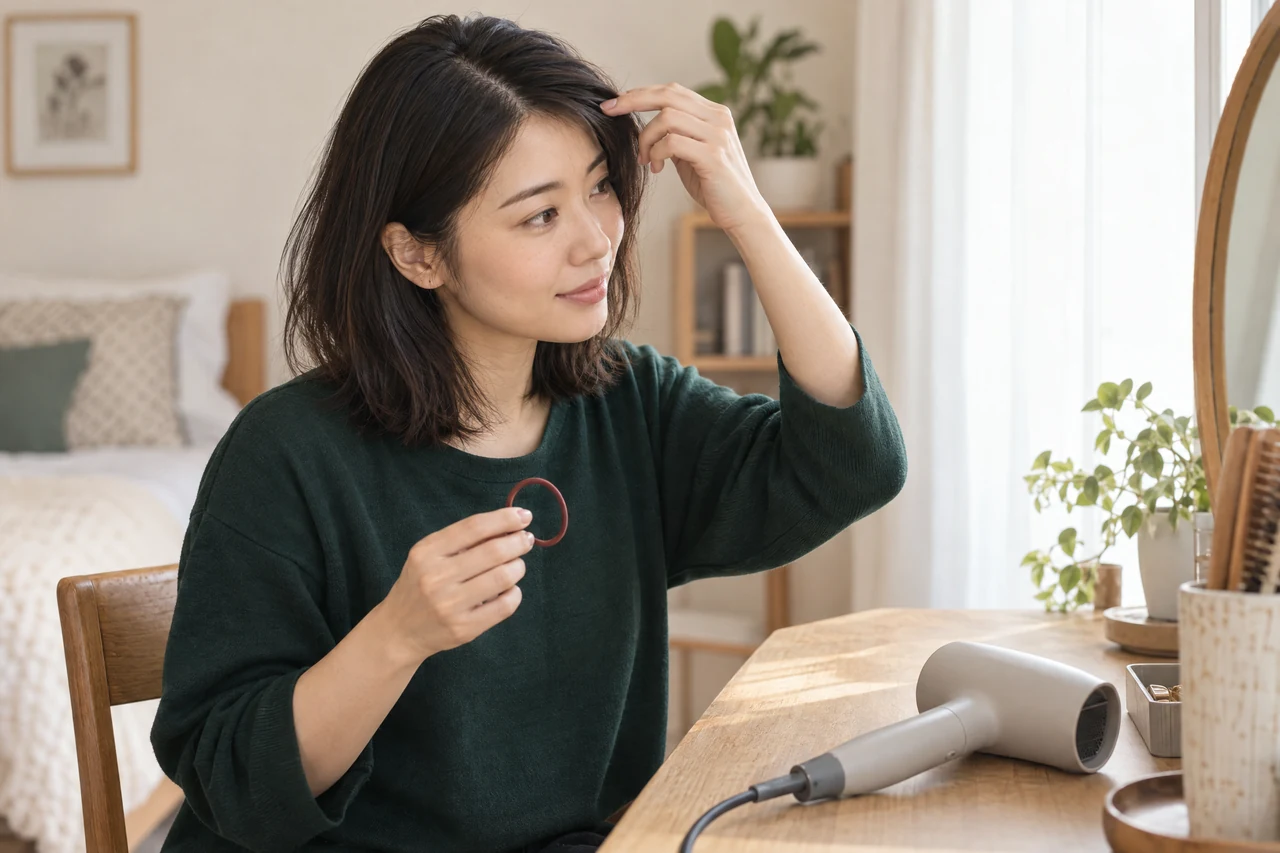
Air drying and assisted diffuser drying deserve separate rehearsals. With air drying, consider whether the hair can dry before you need to go out and whether you accept the less-directed outline. With a diffuser, consider grip, reach and the ability to stop safely. Do not improvise a clamp or strap to hold a hot electrical tool. If tool handling is uncertain, leave it to suitable assistance or choose a finish that does not require it.
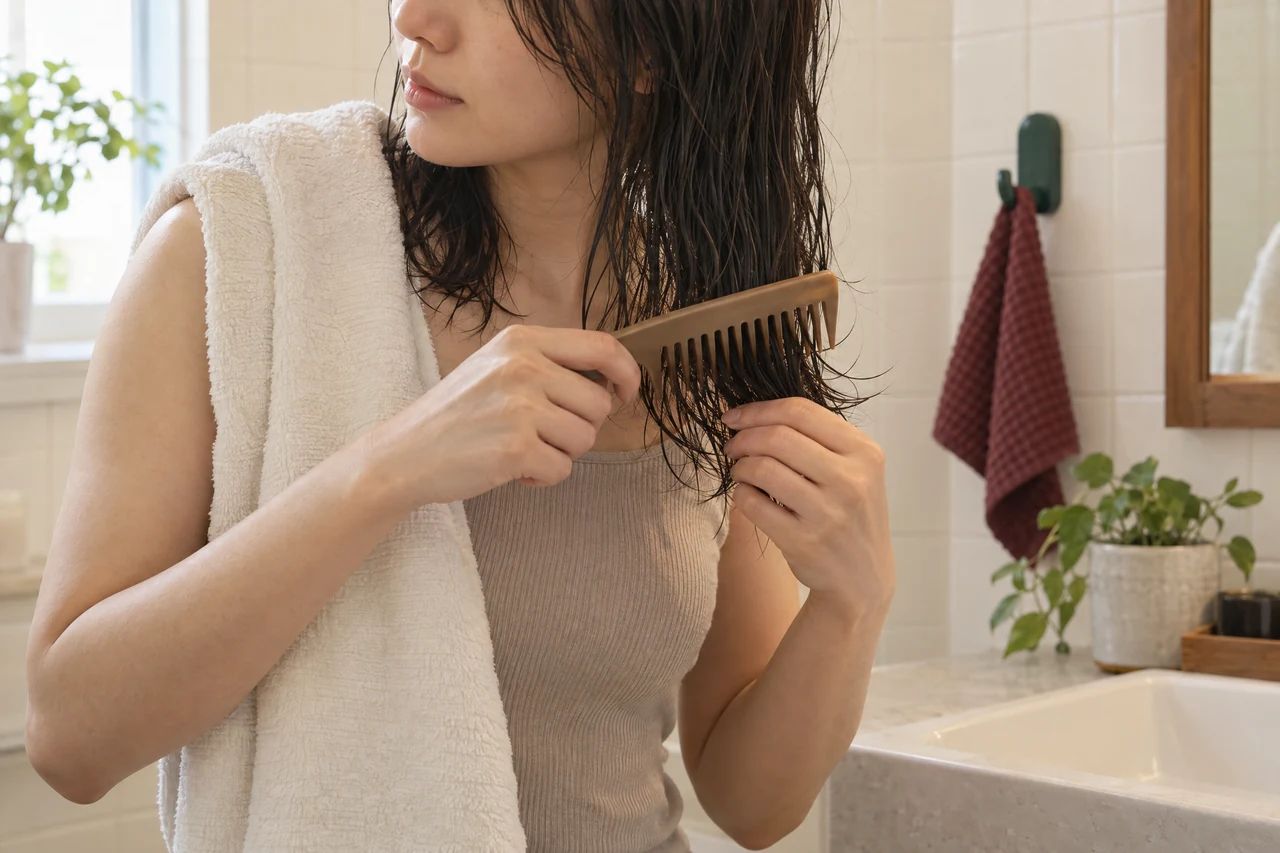
Detangling also deserves attention. AAD's advice for naturally curly or coily hair describes wet, conditioned detangling with fingers or a wide-toothed comb and working in sections. [2] These are manual tasks, not effortless background care. That guidance is not a universal schedule for every perm. Use the perm aftercare guide to prepare questions, then obtain washing and care directions for the actual formulation used, including what your helper should do.
Turn a Korean curl reference into an assistance plan
A reference picture may show a soft wave beside the cheeks while hiding the work done at the back. DT HUB's korean perm hong kong destination describes Korean S-curls as a styling approach rather than one chemical method. Use that distinction to ask where the wave would start, how much front-hair adjustment it needs and whether the unassisted finish differs from the picture. A soft-looking curl can still require handling you would rather avoid.
Write down curl care tasks needing assistance as specific actions. 'Help with hair' is too vague to plan around. Does someone need to rinse the back, separate tangled lengths, open containers, apply product evenly or complete drying? Agree which steps you want to retain yourself and which you want help with. The helper's involvement should follow your preferences, not an assumption that another person will automatically take over the whole routine.
Also ask when that assistance is available. Help for an appointment does not necessarily cover the first home wash or every later wash. The NHS leaflet includes getting help where possible among its task-planning approaches. [1] In this setting, that means checking real arrangements rather than promising greater independence. If an essential step depends on help that is rarely available, revise the shape or postpone the perm instead of planning around an uncertain offer.
Give a helper instructions they can repeat
Ask for a short sequence that names the product, the hair area and the intended finish. A written note or demonstration recording, made with everyone's permission, can be more useful than a vague instruction to copy the stylist. Agree how you will signal a pause and what help you do not want. If the helper cannot perform the sequence comfortably either, the routine needs simplifying; willingness alone does not settle the practical question.

Ask what Japanese styling means for your actual hair
Treat japanese perm hong kong as an invitation to ask about the actual service. DT HUB's page presents soft-wave styles and describes rod placement, formulations and an air-drying demonstration. The word Japanese does not, by itself, establish a standard product or a routine suitable for your reach and grip. Ask which proposed steps differ from the digital or cold option being discussed, and why those differences matter for your preferred finish.
Keep hair suitability separate from routine suitability. A manageable demonstration cannot establish that previously coloured, bleached or otherwise processed hair is suitable for another chemical service. Conversely, hair judged suitable for a perm does not make the home routine manageable. The hair perm service guide can help frame a discussion about design and everyday care. Bring your treatment history and describe uncertain details honestly; do not fill gaps with guesses or assume a conditioning step removes chemical risk.
Request written directions covering the first wash, ordinary drying and what to do if the planned routine is not working. Do not borrow a fixed waiting period from a different method or another person's appointment. If your usual easy way of securing hair is restricted by the service's initial instructions, discuss the alternative before proceeding. A plan is incomplete when it handles the finished curls but leaves the early care arrangements unresolved.
Choose the routine that still works when help is limited
Choose temporary curls when the main uncertainty is whether you like the outline, or when you want an occasional assisted finish without committing to a new chemical texture. Consider an assessed perm when you like the ordinary finish, understand its essential care and have workable assistance for any difficult tasks. Retain a simpler shape when the rehearsal relies on movements you cannot comfortably repeat. Keeping familiar hair is a legitimate choice, not a failed attempt at curls.
Simpler does not automatically mean shorter. Less length may reduce the amount of hair to handle, but a short fringe can need frequent direction changes. Longer hair may preserve a familiar way of securing it, while bringing more washing and detangling work. Ask which single change would remove your most difficult task without introducing another. Discuss your natural fall and acceptable dry shape before adding chemical curl or making a major cut.
Finally, plan for a day when the usual helper is unavailable. Decide what finish is acceptable and which tasks can wait without leaving essential washing or care unresolved. If pain, weakness or altered sensation is new or worsening, seek medical advice rather than expecting a hairstyle to solve it. This is styling guidance, not a diagnosis. A good decision leaves you with a routine you understand and a realistic next step, including the option to pause.
Compare the work involved, not a promised maintenance level. None of these options guarantees accessibility.
| Option | When it is useful | What to check | Main limitation |
|---|---|---|---|
| Temporary curls | You are unsure about the outline or want an occasional finish. | Ask which styling steps created the result. | They cannot predict every feature of chemically permed hair. |
| Assessed perm with air drying | You accept the ordinary dry outline without directed heat styling. | Rehearse dispensing, detangling and damp-hair handling. | No dryer does not mean no manual care. |
| Assessed perm with assisted drying | A helper can reliably perform the required drying steps. | Agree availability, tool control and written directions. | Appointment help may not cover home washes. |
| Retain or refine a simpler shape | The proposed curl routine creates difficult essential tasks. | Discuss natural fall, front-hair handling and preferred length. | A shorter cut is not automatically easier to manage. |
Your preparation checklist
- Name the difficult movement and hair area, not only the desired curl.
- Ask whether a temporary rehearsal and helper participation are available.
- Compare your acceptable ordinary finish with the polished reference.
- Separate essential wash-and-dry tasks from optional finishing.
- Confirm who will help, when they can help and the fallback routine.
- Obtain the actual service scope and product-specific aftercare before deciding.
Frequently asked questions
Is a perm automatically easier than using a curling iron?
No. It may change which styling actions you need, but washing, detangling, product handling and drying remain relevant. Compare the proposed routine with what you comfortably do now, not with a general low-maintenance description.
Can a temporary curl rehearsal prove that a perm will work for me?
It can clarify your preferred outline and expose difficult styling tasks. It cannot reproduce every behaviour of chemically reshaped hair or establish chemical suitability. Use its findings in a separate consultation rather than treating the rehearsal as approval.
Should I buy adaptive grooming tools before the consultation?
You do not need to buy equipment to justify your requirements. Start with familiar tools and identify the task that is difficult. For individual advice on equipment suitability or safe movement, ask an occupational therapist or another appropriate healthcare professional.
What if I like the curls but cannot manage the back myself?
Ask which back-of-head tasks are essential and rehearse them with the person who would help. If reliable assistance is unavailable, discuss a different outline or keep curls as an occasional assisted style. Do not assume that a method name resolves the reaching problem.
Book a conversation about the routine first
Bring a curl reference, your treatment history and the tasks you want help with. Ask for a realistic demonstration and a written service scope, without committing to chemical curls that day. Vit So is in Sheung Wan; DT HUB's linked enquiries concern its Kwun Tong service. Confirm access and assistance directly with the chosen salon.
Start your WhatsApp enquirySources & further reading
- Joint protection and energy conservation — Chelsea and Westminster Hospital NHS Foundation Trust
The NHS hand-therapy leaflet recommends arranging frequently used items within reach, balancing rest and activity, avoiding prolonged tight grips and seeking help with tasks where possible. The article uses this only to frame routine planning; the source is arthritis-focused, does not diagnose limited hand mobility, and does not establish that a perm or grooming device improves function.
- 6 curly hair care tips from dermatologists — American Academy of Dermatology
AAD describes wet, conditioned detangling with fingers or a wide-toothed comb and working in sections for naturally curly or coily hair. It supports asking how those manual tasks would be performed, not a universal chemically permed-hair schedule or a promise of accessibility.



