







Compare the Lengths for Hair Extensions Colour Matching
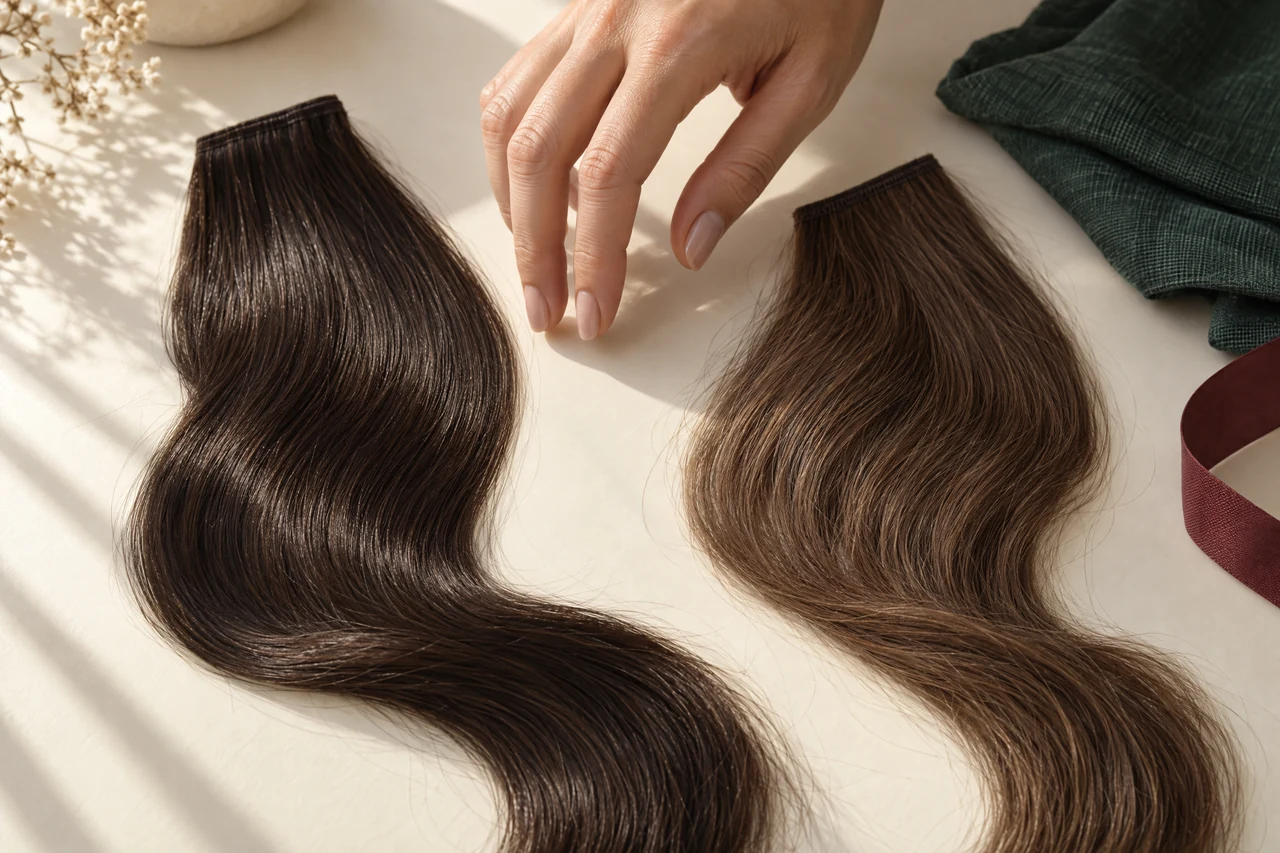
Compare the added hair with the lengths it will sit beside, not only the root colour. A lighter end, mixed highlights or a change in tone can create more than one matching point. Use consistent light and show the natural texture; a filtered photograph or a single shade label cannot specify an exact match.
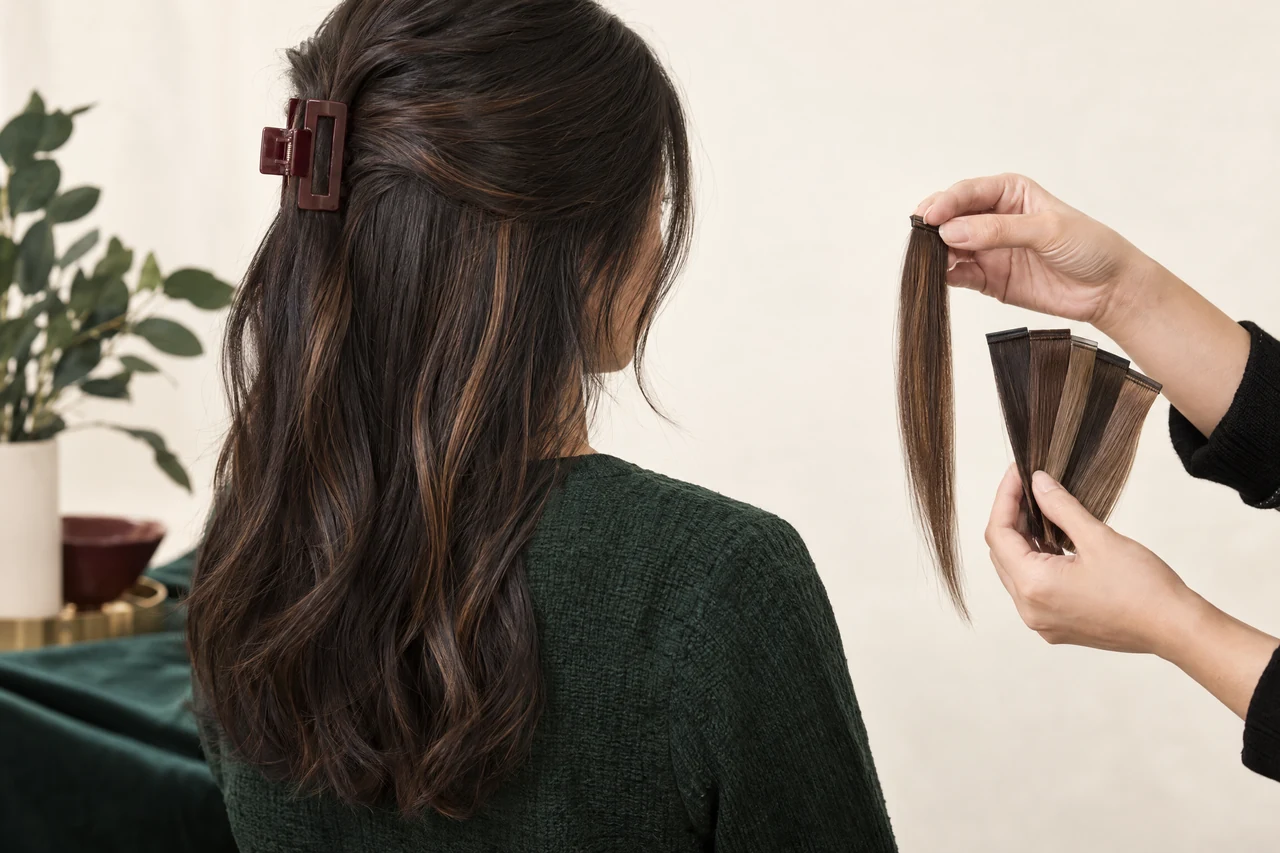
Start by deciding which existing colour you want to keep. Dark regrowth above lighter brown lengths does not necessarily call for uniformly dark extensions. Hold a proposed sample beside the area where your own ends will overlap it. Compare depth first: does the added hair look noticeably darker or lighter? Then compare tone: does it look more golden, red, neutral or cool? Similar depth with different warmth can still leave an obvious boundary.
The supplier's Perfect Locks colour-matching guide recommends natural lighting and matching the mid-lengths rather than the roots. Use this as a practical comparison method, not a promise that daylight establishes an exact match. Check the same sample under ordinary indoor lighting too, especially if you spend your working day in an office.
Review hair extensions to check its service scope and the details to share before arranging the related work.
Hair Extensions Colour Matching Should Follow the Visible Blend
For highlighted hair, compare the darker background and lighter strands separately. A sample matching only the brightest highlight may look like a solid pale block underneath. A rooted or mixed-colour option may suit the pattern better, but the position of its colour transition matters as much as its shade. Ask whether that transition will align with your visible lengths when fitted. For a clearer vocabulary, compare warm vs cool brown hair colour before describing the mismatch as simply 'too brown'.
Review Texture and Density Alongside Shade
A smoother or denser strand group may reflect light differently from your own hair. Look at how the proposed hair moves, where its ends sit and whether the texture remains different after ordinary styling. These checks explain why a colour match alone does not establish a natural-looking blend or remove the need for shaping.
Compare hair in the way you normally wear it. If you air-dry with a loose wave, a perfectly straight sample cannot show the everyday relationship between the materials. Ask to see the proposed texture and explain how much styling you are willing to do. A blend that requires daily curling may not suit someone who wants to wash, dry and leave home with minimal preparation.
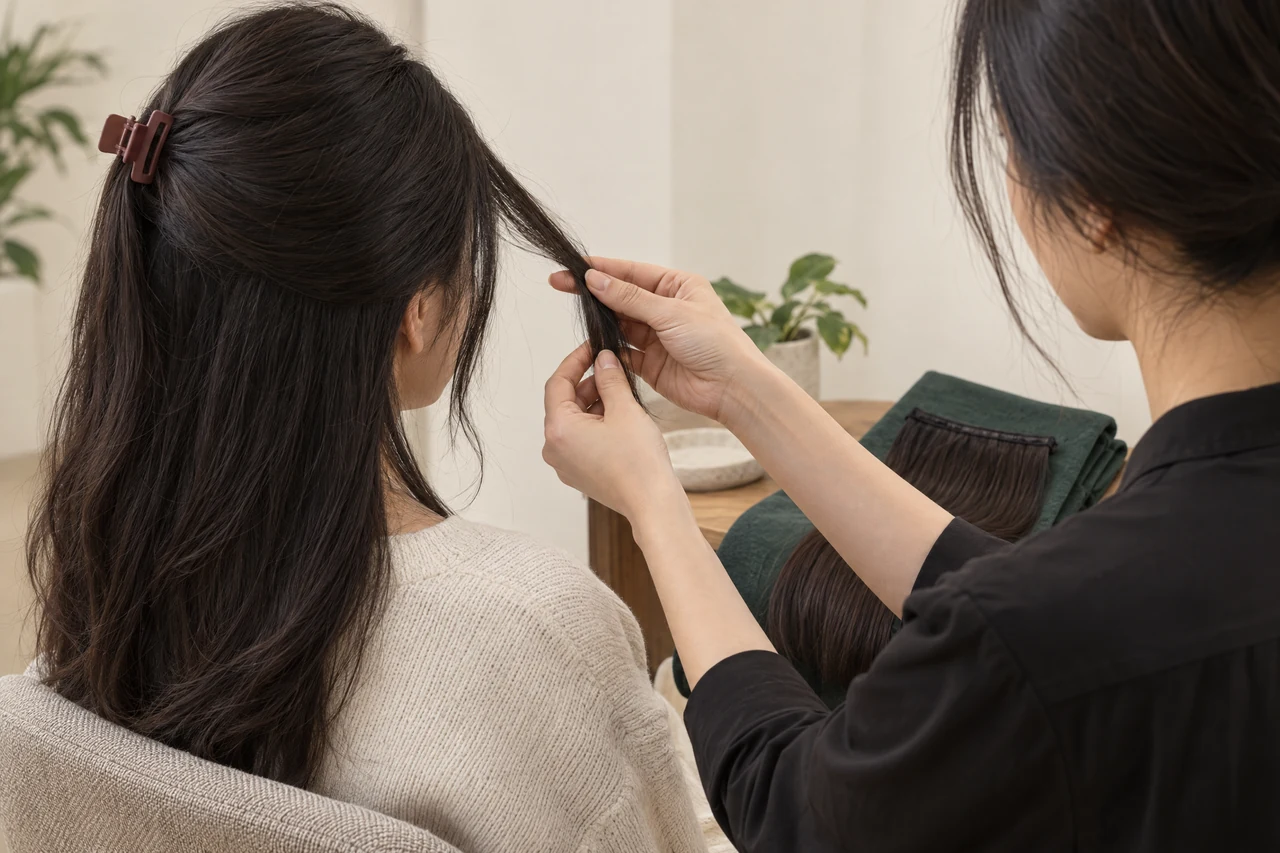
Look beyond the sample held flat against your head. View the side profile, the back and the ends over your shoulder. Dense added hair beneath wispy original ends can create a visible change in fullness even when the shades are close. More hair is not automatically a better colour blend; placement and the retained haircut both need consideration.
Continue with hair extensions for short hair for that specific comparison and the preparation questions it raises.
The Same Colour Can Still Look Like a Different Material
A glossy sample can appear brighter where it catches light, while a textured group can show deeper shadows. Do not choose a darker shade solely to correct a shiny appearance. First establish whether the difference is colour, surface finish or movement. If a blunt line remains where your own hair ends, ask about shaping that boundary. Recolouring the extensions will not necessarily resolve a heavy haircut line or a different wave pattern.
Check Whether the Extension Fibre Can Be Coloured
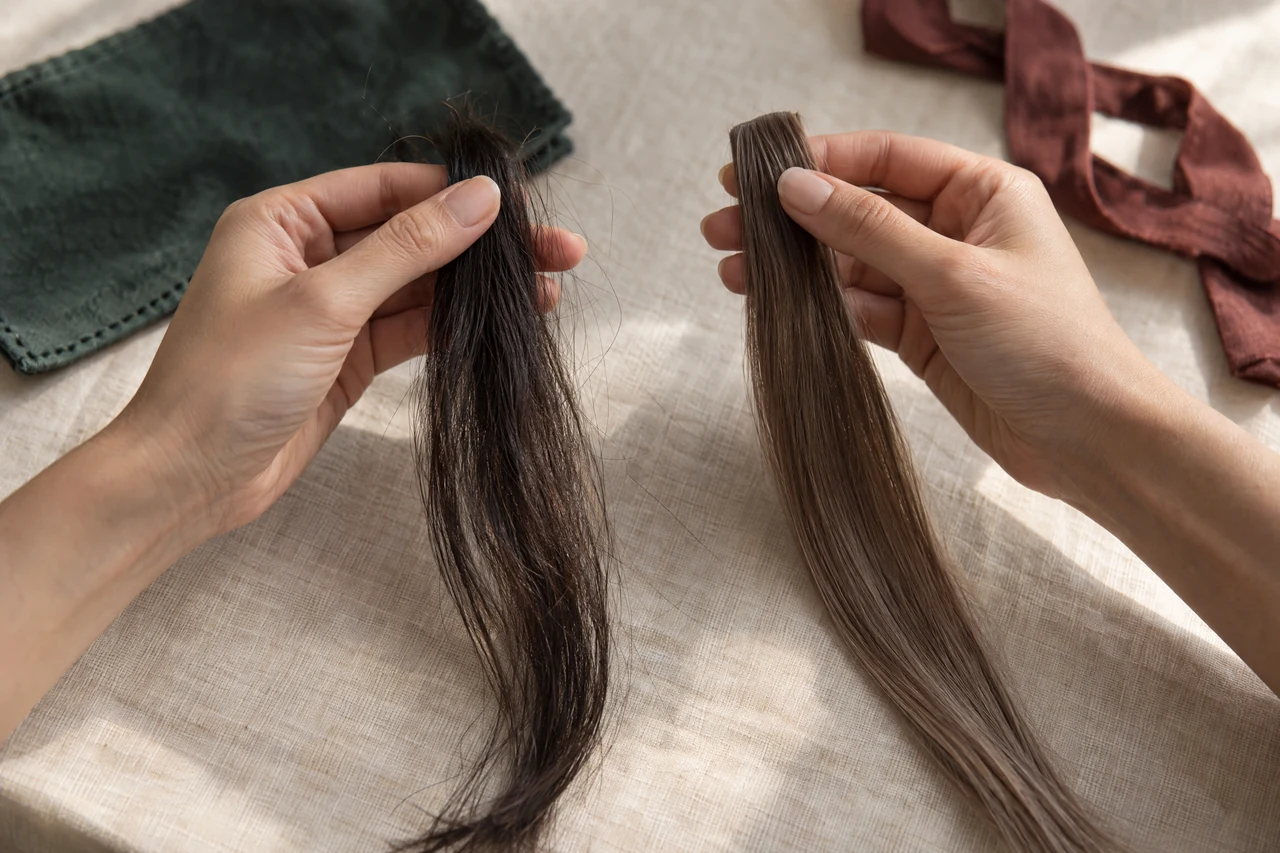
Before colouring extensions, identify the fibre and any previous processing. Human hair is not a blanket guarantee of colour compatibility, and synthetic fibres should not be treated as ordinary untreated hair. Keep the supplier's instructions and ask for assessment of the actual material. If its processing history is unclear, selecting a suitable supplied shade may be more appropriate than altering it.
Bring the packaging, product name and care instructions rather than relying on a description such as 'real hair'. Explain whether the extensions have already been toned, coloured or treated with colour-depositing products. An unfamiliar set cannot be assessed fully from its appearance. Factory processing and later colour work may affect what further adjustment is sensible.
In its guide to dyeing extensions, RiRi advises against dyeing its synthetic extensions because ordinary hair dye may fail to take or damage the fibres. That warning is a reason to check the actual supplier's restrictions, not permission to experiment with a different dye. A heat-friendly label also does not establish colour compatibility.
Previous Processing Changes the Colour Question
Separate making hair darker, adjusting an unwanted tone and making it lighter. These are different requests, even if the target photograph looks like a small change. Perfect Locks limits its own colour advice to professional assessment and warns against bleaching its extensions. Do not transfer one supplier's allowances to another material. Where colouring is permitted, ask about a strand test and assessment of the dried result before committing the whole set. A strand test checks the material's response; it does not replace skin-safety precautions for colour used on your own hair.
Plan Original Hair and Attachments Separately
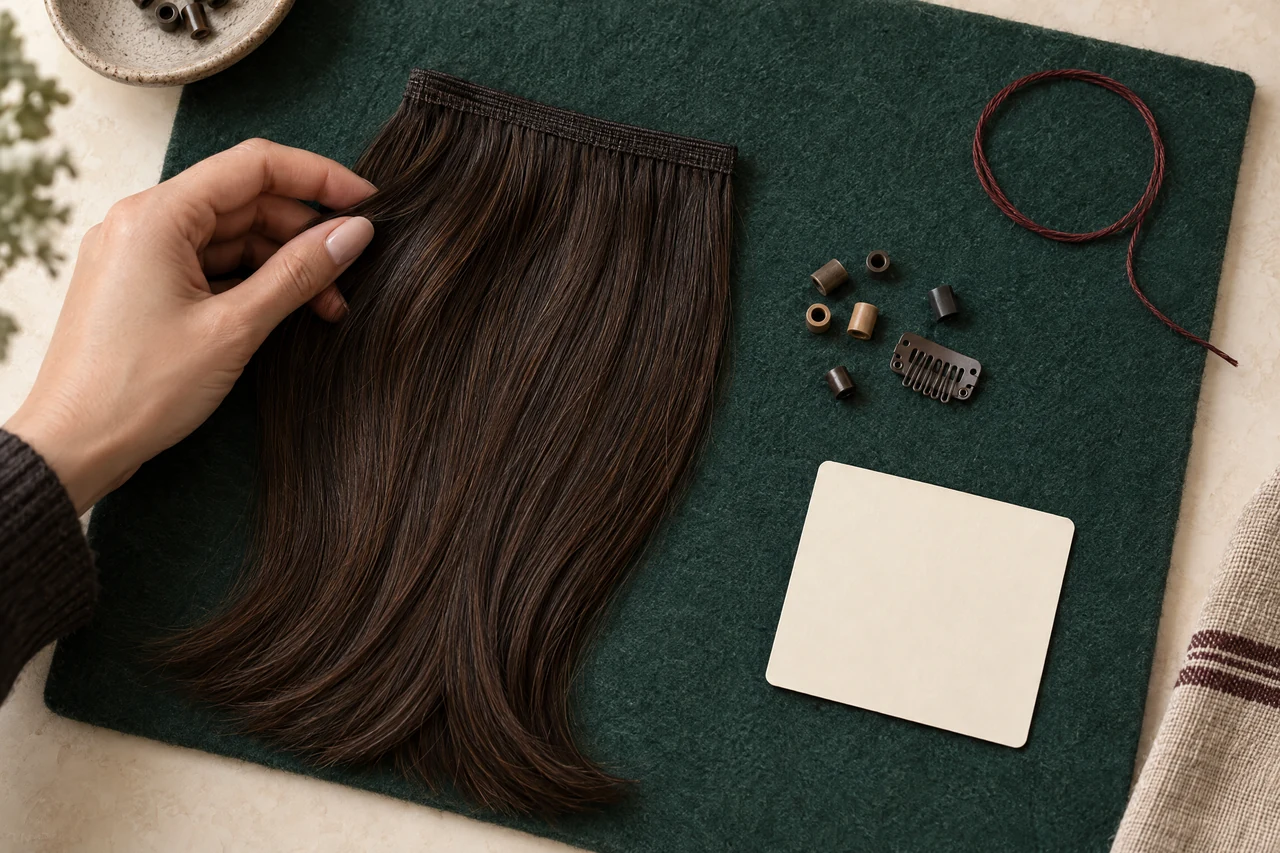
A proposed colour change to your own hair does not automatically make the extension fibre or attachment compatible with the same work. Explain the current system and desired change before discussing the order of colouring and fitting. Confirm which work is feasible and whether visits need to be separated; neither simultaneous colouring nor a particular sequence is promised.
If your original hair is the part you want to change, say whether the request concerns regrowth, all the visible lengths or a few highlighted areas. The target may require reassessing the extension shade afterwards. Choosing added hair against the old colour and then substantially changing your own lengths risks planning around the wrong reference point.
RiRi also warns that dye contact can weaken extension bonds. The practical question is not simply whether the fibre accepts colour: the stylist must understand the attachment, the areas that can be accessed and the product restrictions. Mention any existing extensions before arranging a colour appointment, including removable pieces you plan to bring.
Review hair colour to check its service scope and the details to share before arranging the related work.
A Colour Appointment Needs a Confirmed Sequence
Ask which shade decision should be settled first, whether existing extensions need professional removal and when fitting can be considered. Leave room for any required testing rather than assuming everything can happen during one visit. The FDA's hair-dye safety guidance advises following product warnings and conducting a patch test before each use, including salon colouring. Tell the salon about previous reactions and confirm its testing requirements in advance. This safety guidance concerns dye use, not the aesthetic quality of a match.
Choose a Supplied Shade or a Confirmed Adjustment
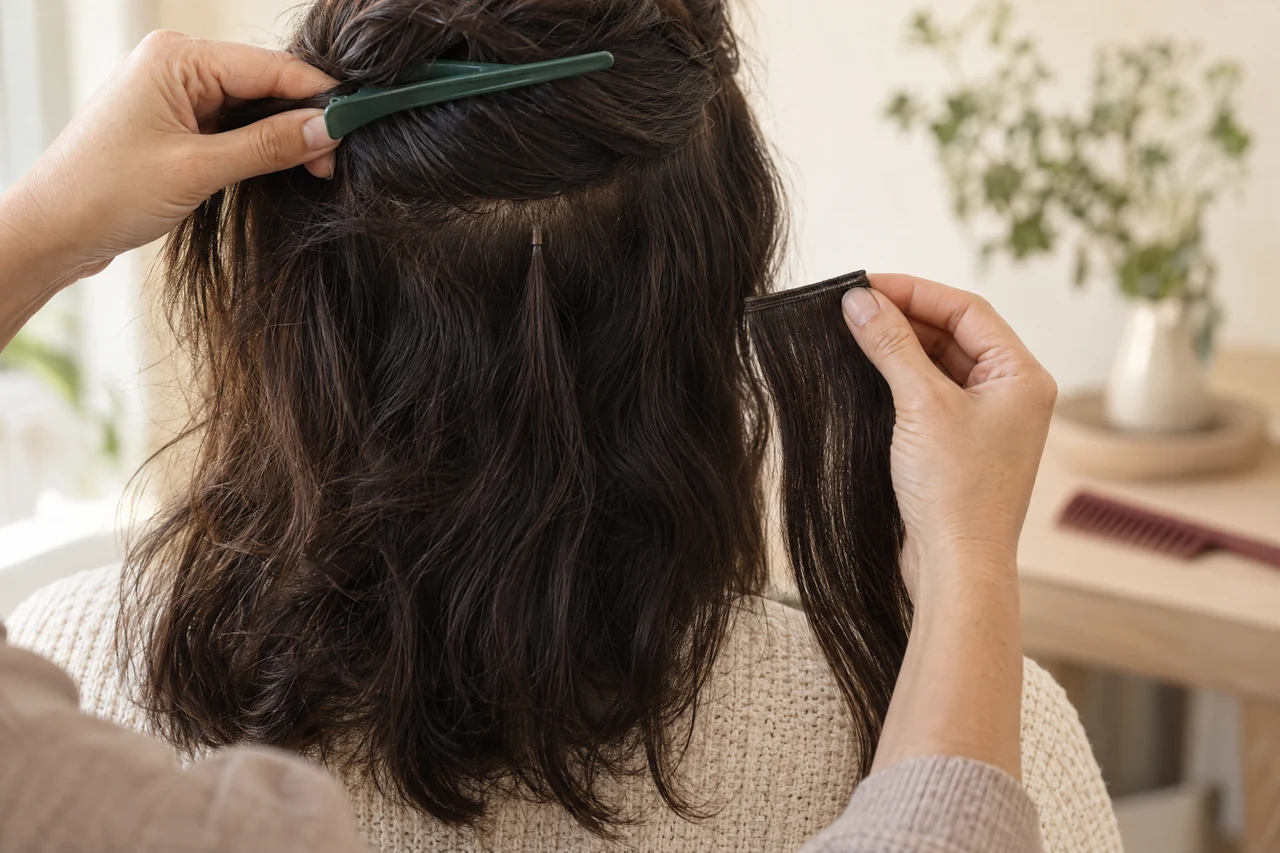
A matching problem does not always need a chemical solution. Compare a closer supplied shade, a dimensional option and a change to the amount or position of added hair before discussing recolouring. If you like your own colour, avoid treating a mismatched set as a reason to change all your original hair. The better decision may be to reconsider the extensions rather than expand the appointment.
For extensions bought elsewhere, check the seller's exchange conditions before removing seals, cutting, wearing or colouring them. Those actions may affect eligibility, depending on the seller. Do not assume that a colour correction costs less than replacing an unsuitable set. Ask for the scope and quote separately for any original-hair colour, extension adjustment, fitting and blending cut.
Define What Would Count as a Better Match
Describe the specific boundary you want to soften: a warmer strip at the ends, a pale block beneath dark layers or a transition that starts too high. Decide whether you want a close continuation of your current colour or an intentionally brighter finish. These goals require different comparisons. A sample should help you choose between them, not persuade you to accept an unexpected contrast as the only available option.
Prepare Photos and Plan for Colour Changes Over Time
For an enquiry in Sheung Wan, send recent front, side and back photographs showing both roots and ends. Take them in consistent daylight without beauty filters, and avoid mixing photographs from before and after different colour appointments. Add a target image, but explain whether it shows the shade, the highlight pattern or simply the length you like. Photographs help identify questions; they do not replace comparison with the actual hair.
Your original hair and added hair may not keep the same appearance throughout wear. Record changes under similar lighting before deciding that more toner is needed. An indoor photograph taken at night cannot be compared fairly with an earlier daylight image. Explain any new shampoo, colour-depositing treatment or colour appointment when seeking advice.
Agree on hair extension aftercare before buying products for colour upkeep, because a product suitable for your own coloured hair may have separate restrictions around extension fibres or attachments. Ask which products are permitted, where they may be applied and what to do if the blend changes.
Use a Six-point Preparation Checklist
The 6-point checklist below is an editorial preparation aid, not a test that certifies a perfect match. Use it to organise what you want to preserve, what needs changing and which material details are still missing. A clear enquiry makes it easier to discuss a realistic option without committing to a colour process before its suitability has been assessed.
Ways to address an extension colour mismatch
| Option | When to discuss it | Main trade-off or check |
|---|---|---|
| Choose a closer supplied shade | You like your original colour but the sample looks too dark, light or warm | Compare actual lengths and check the seller's exchange conditions before altering the set |
| Consider a rooted or mixed-colour option | Your hair has regrowth, highlights or a gradual transition | Check where the colour transition will sit, not only the lightest end |
| Adjust original-hair colour | You already want to change your own visible colour | Reassess the extension match against the intended result and confirm the appointment sequence |
| Assess professional extension toning or colouring | The identified supplier permits the proposed work on the actual fibre | Review previous processing, strand testing and attachment restrictions; no universal allowance |
| Reconsider texture, placement or shaping | Shade is close but the overlap still looks distinct | Colour work alone may not resolve shine differences, wave mismatch or a heavy end line |
Your preparation checklist
- Identify the colour you want to preserve: regrowth, darker lengths, highlights or lighter ends.
- Prepare recent unfiltered photographs showing front, side and back views in consistent daylight.
- Bring supplier details for any existing extensions, including the fibre, shade and care restrictions.
- Disclose previous colouring of both your own hair and the added hair, plus any history of dye reactions.
- Explain your usual parting, texture and tied-back style so the visible blend can be discussed in daily movement.
- Confirm the feasible sequence, testing requirements and separate quote before agreeing to colouring or fitting.
Frequently asked questions
Can you colour hair extensions?
It depends on the actual fibre, its processing history and the attachment system. Do not apply ordinary hair colour on the assumption that a human-hair label makes the work suitable.
Can a photograph provide an exact shade match?
A photograph helps explain the colour pattern but is affected by lighting, filters and the screen. Comparing the actual visible lengths and proposed hair gives better context.
Should I colour my own hair before fitting extensions?
There is no universal sequence. Share the intended colour change, existing processing and proposed attachment so the feasible order and appointment scope can be confirmed.
Can you color hair extensions at home to fix a mismatch?
Do not start with a box dye or toner on an unidentified set. Check the supplier's restrictions and exchange options first. Even an apparently small adjustment may affect the fibre, attachments or eligibility for a return. Professional assessment is a separate step from choosing a target shade.
Do highlighted extensions need to match every lighter strand?
Not necessarily. Compare the overall background colour, the amount of lighter hair and where the brighter areas begin. The useful goal is a coherent visible pattern beside your own lengths, rather than finding one highlight that happens to match a sample.
Discuss a shade that works with the hair you want to keep
Contact Vit So in Sheung Wan with recent photographs, your desired colour direction and details of any current extensions. Ask about comparing suitable shades and the feasibility of any colour change before arranging fitting. An enquiry starts the discussion; it is not a confirmed booking or approval for a particular process.
Start your WhatsApp enquirySources & further reading
- Color Match Hair Extensions Guide
Supplier guidance on comparing mid-lengths in natural lighting and assessing the usual texture; colour-processing permissions apply to its own products.
- Can You Dye Hair Extensions? Here's What The Experts Have To Say...
Supplier warnings about ordinary dye on synthetic extensions and dye contact with bonds.
- Cosmetics Safety Q&A: Hair Dyes
Hair-dye package warnings and patch testing before each use, including salon colouring.



