







How to detangle damaged hair with manageable sections
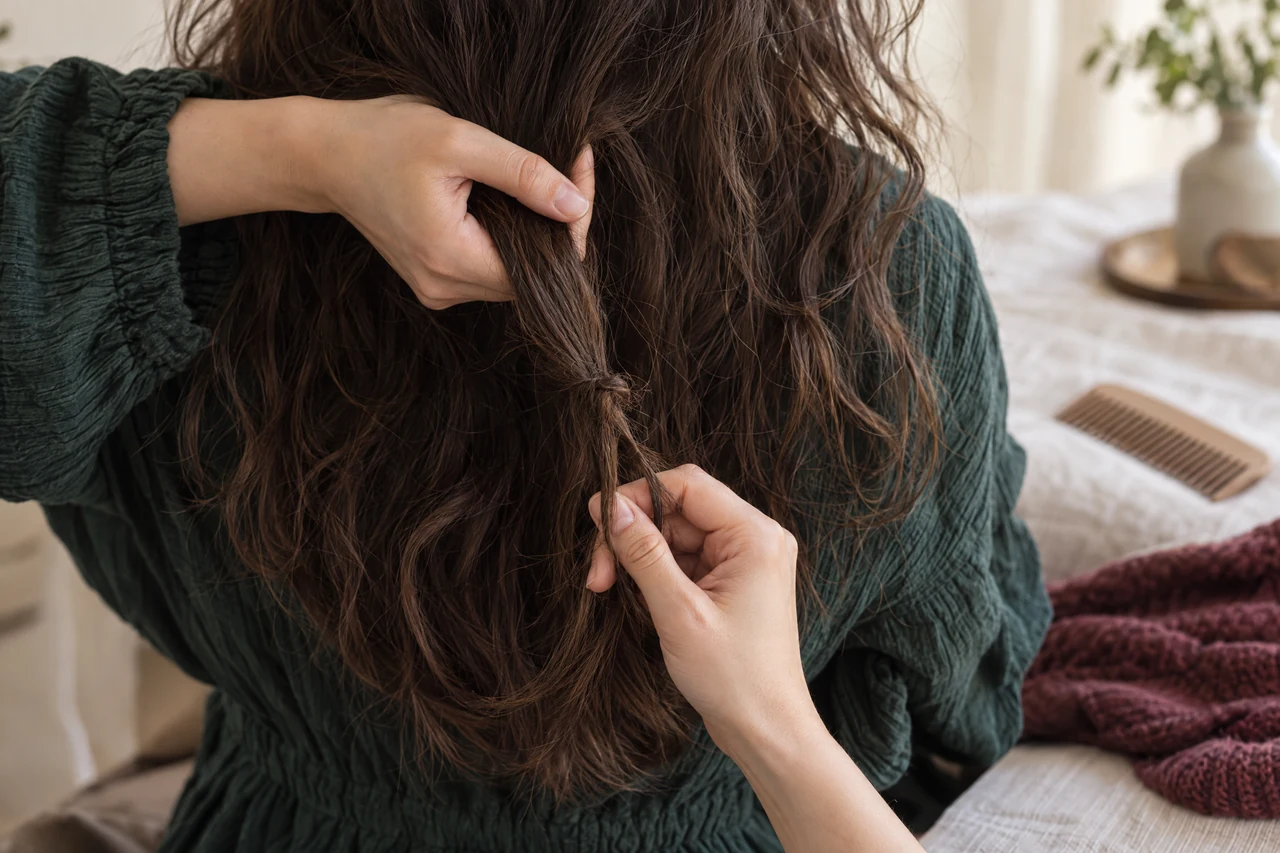
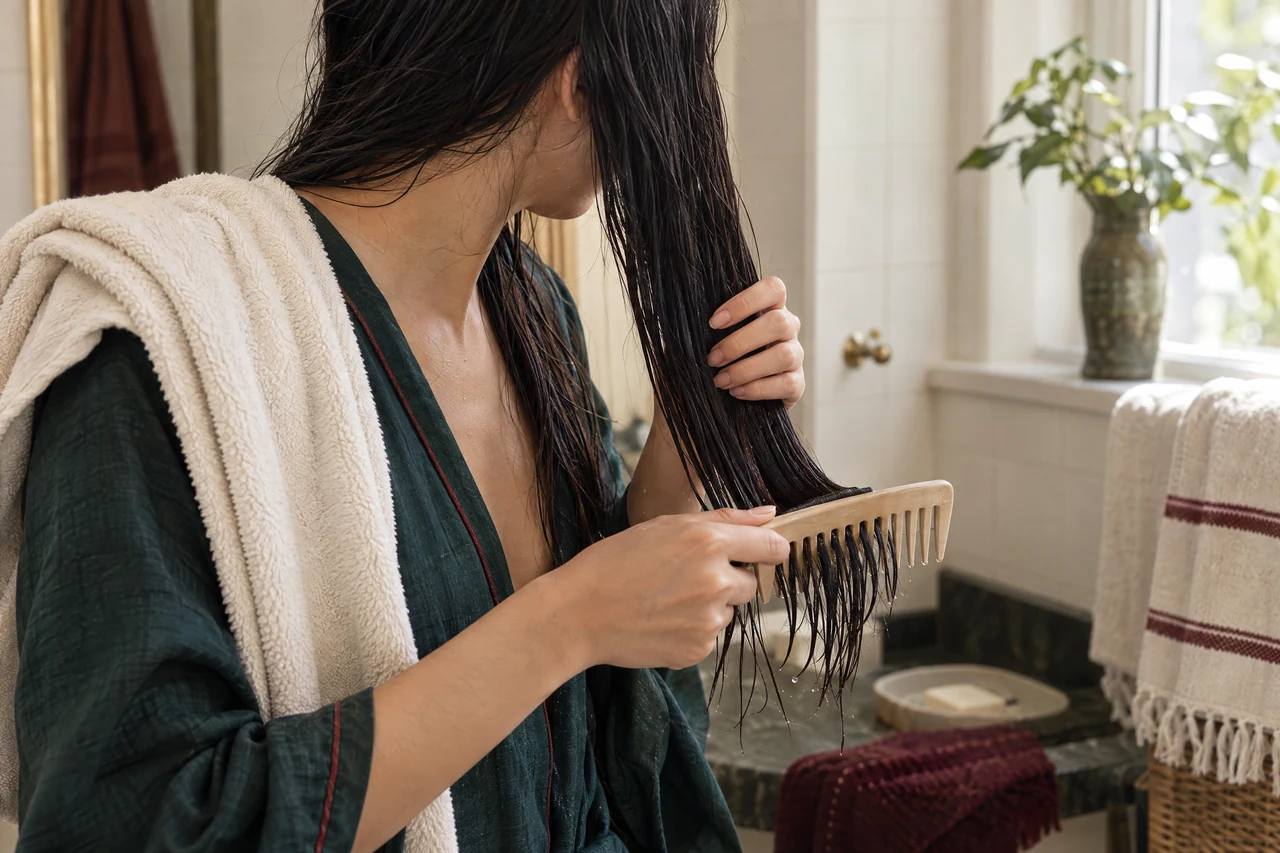
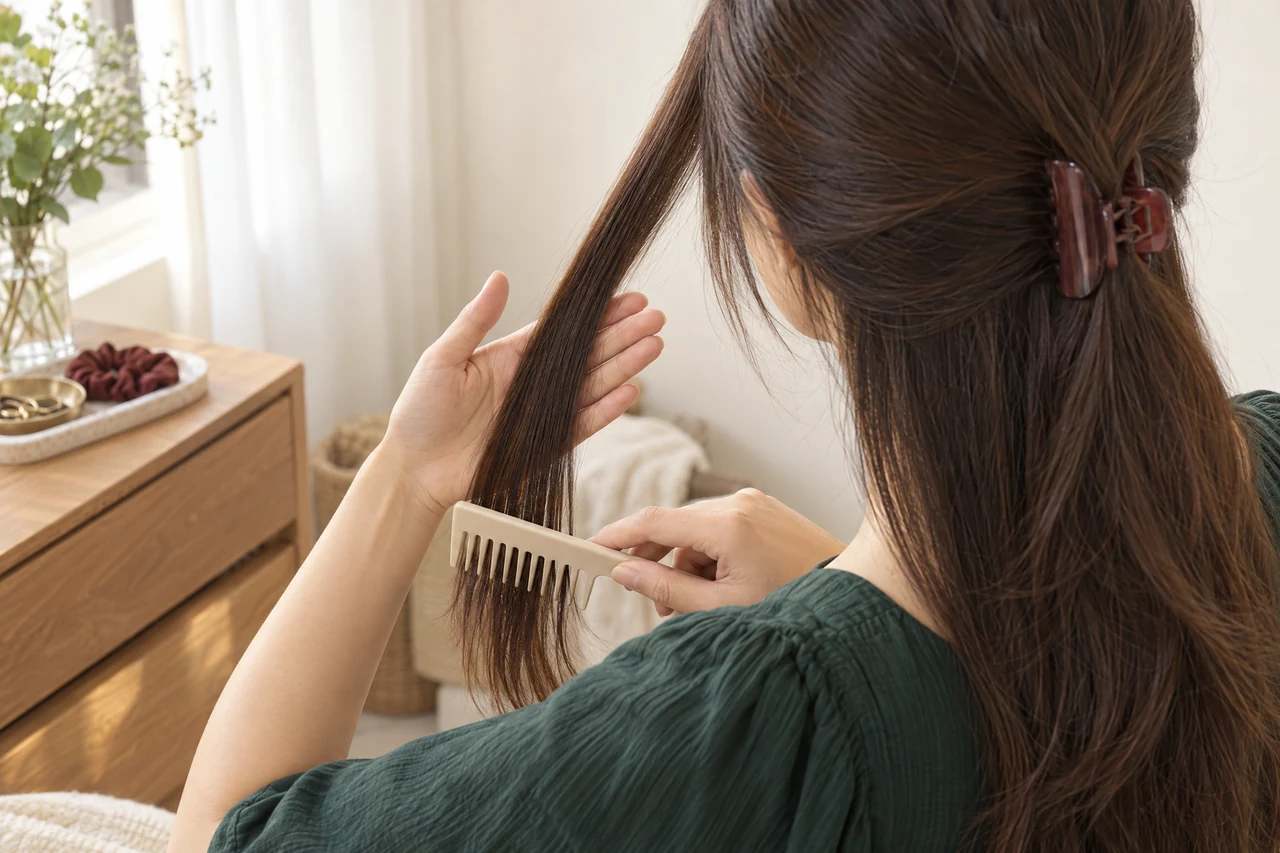
Work with small, comfortable sections and support the hair above the area you are handling to reduce pulling. Begin with loose tangles near the ends and progress patiently only as they release. A wide-toothed comb may help with an appropriate conditioning product, but it should not be pushed through a knot that will not give without force.
Before reaching for the comb, look at the area in good light. A few loosely crossed strands are different from a dense patch that feels fixed together. Only separate hair that comes apart easily; do not divide a compact knot by pulling its sides. Bring an accessible section forward so you can see the ends without twisting your arm or pulling the hair across your shoulder.
A manageable section is one you can support comfortably and see clearly, not a prescribed width. Keep other lengths out of the way only if they can be moved without catching. Place your supporting hand above the loose tangle, without squeezing hard, and use short, gentle movements below it. Supporting the hair reduces the pull you feel at the scalp, but it does not make forceful combing safe for the strands.
How to detangle damaged hair from loose ends upwards
Start with the lowest loose tangles, then move your starting point higher only when the area below is clear. Do not begin at the roots and push every knot towards the ends. The American Academy of Dermatology's healthy hair tips recommend slowly detangling the ends before working higher. Once a section moves freely, leave it alone rather than adding repeated passes for shine. If the comb stops, withdraw it gently instead of levering the teeth through the obstruction.
Match handling to the product directions
Use any conditioner or detangling product as directed, including whether it is intended for wet or dry hair and whether it must be rinsed out. Do not soak or stretch fragile strands to test them. Improved slip can make handling more comfortable, but does not establish that the hair has regained its original strength or can tolerate further processing.
Check the label before application: intended hair state, placement, amount, contact time and rinsing instructions all matter. A rinse-out conditioner and a leave-in detangler are not automatically interchangeable. Avoid leaving a rinse-out formula on indefinitely because the hair still catches. If you are unsure whether your existing products have overlapping roles, compare hair mask vs conditioner before adding another layer to the routine.
There is no single wet-or-dry rule for every texture. The AAD guidance distinguishes thick curly hair, which can be combed before conditioner is rinsed out, from straight hair, which should be allowed to dry a little first. These are general care directions, not permission to work through resistance on severely damaged lengths. Choose a product intended for your hair and follow its directions; if suitable conditioning still does not allow gentle handling, pause.
Slip helps handling but does not prove strength
Judge the immediate aim by easier movement and less pulling, not by how glossy the hair appears. A smoother-feeling section can still contain fragile or split strands. Do not tug on a wet strand to see how far it stretches, or treat an easy comb-through as clearance for more bleaching or straightening. If you notice snapping during ordinary handling, record that change and discuss the hair's processing history before arranging further chemical work.

Why does my hair still tangle after conditioning?
Why does my hair still tangle after conditioning? Rough or split ends, friction and the condition of processed lengths may still affect catching even when slip improves. Record where knots recur and how you wash, dry and sleep with your hair. Review those factors before adding more product or pulling harder through the same resistant areas.
Describe the pattern as precisely as possible. Is it always the final part of the ends, a patch at the nape, or the same previously lightened section? Does catching appear during washing, after drying or after wearing the hair loose against a collar? Those observations help separate an immediate handling problem from a routine that repeatedly brings strands into contact with fabric. They are more useful than simply reporting that the conditioner has stopped working.
If the ends repeatedly catch and you can see actual splits, discuss the length you want to keep alongside the affected area. Conditioning and removing split ends are different decisions; do not assume extra product will make every damaged end stop catching. Continue with trim or treatment for split ends for that specific comparison and the preparation questions it raises.
Look for repeated knot locations and friction
Review contact points in ordinary Hong Kong routines: a bag strap trapping loose hair, a jacket collar at the nape, or a towel rubbed through the lengths after washing. Change an obvious source of snagging where possible and observe whether handling becomes easier. Keep the rest of the routine reasonably consistent so you can describe what changed. Recurring knots do not, by themselves, establish a particular deficiency or tell you which treatment ingredient to buy.
Stop at tight mats or repeated snapping
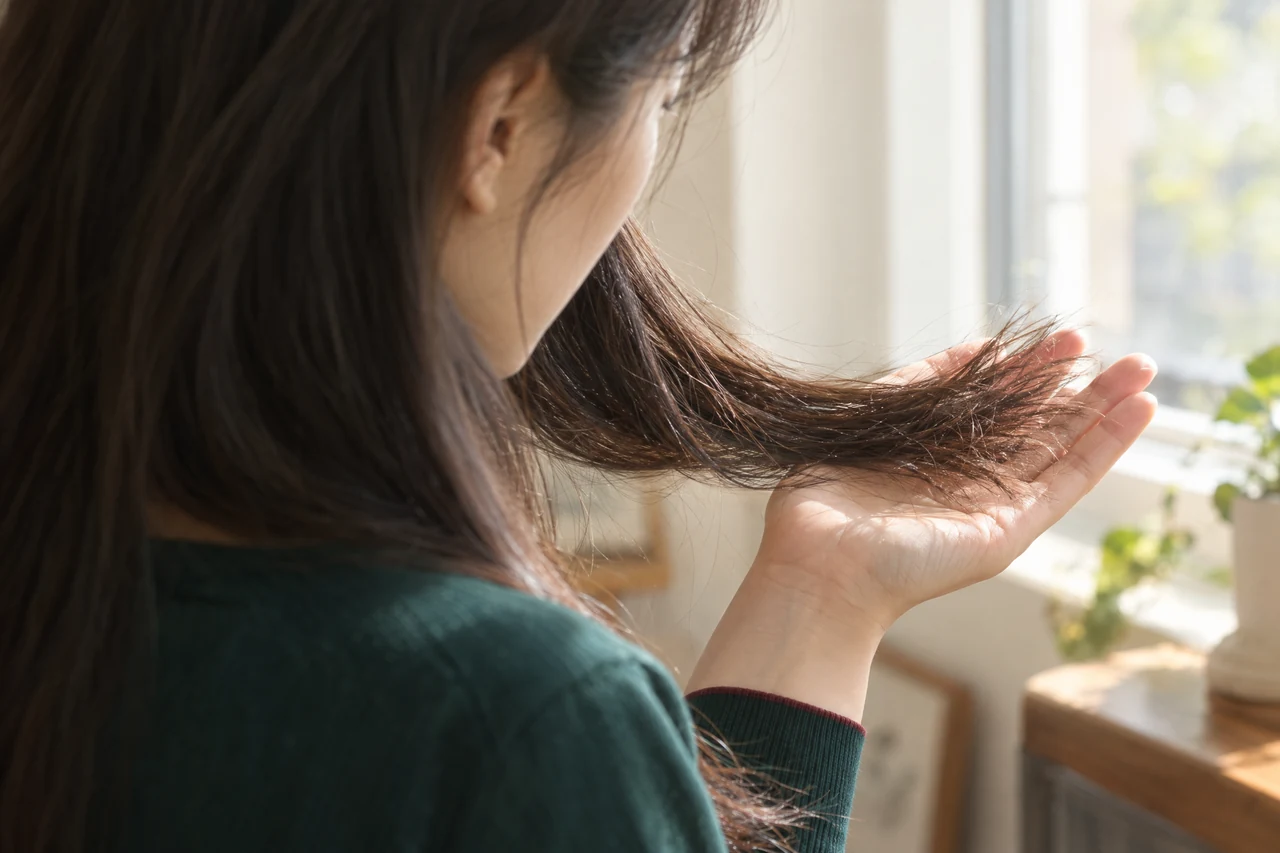
If a tangle is compact, painful to handle or repeatedly causes snapping, stop and ask about appropriate help. Do not cut or pull blindly through mats, and do not use the same technique around extension attachment points. Any extension-specific handling should follow the relevant fitting instructions rather than a generic damaged-hair routine.
Stopping means putting down the tool and leaving the resistant area alone, not switching to a finer comb or a faster brushing motion. Do not turn persistent resistance into an endurance task. Contact an appropriate hair professional, explain whether the area is near the scalp, and ask whether they can assess it before agreeing to any service. Do not assume a standard treatment appointment includes specialist detangling or guarantees that all length can be retained.
Continue with damaged hair care for that specific comparison and the preparation questions it raises.
If you have fitted hair, tell the person advising you which attachment method was used and when it was fitted. Do not apply this guide's loose-tangle movements to a connection or try to remove a fitting yourself. Review hair extensions to check its service scope and the details to share before arranging the related work.
Seek help instead of escalating force
For persistent scalp pain, skin changes or concerns about thinning or hair loss, seek medical advice rather than relying on cosmetic care. The AAD's guidance on stopping hair damage recommends considering a dermatologist when care changes do not help, particularly when thinning or hair loss is a concern. For a resistant knot without scalp symptoms, ask about suitable professional assessment before attempting anything further at home.

Reduce fresh tangles between gentle handling sessions
Washing and drying should not undo the careful work you have just done. Clean the scalp gently rather than rubbing shampoo through a pile of lengths. Avoid rubbing the hair vigorously with a towel; the AAD recommends gently absorbing moisture instead. Keep the lengths from becoming trapped under a strap or caught in a zip when dressing or commuting.
Choose a comfortable, loosely gathered style only when the hair can be arranged without resistance. A loose braid is an option for already manageable hair, not a way to compress a mat out of sight. Avoid tight ties and do not pull fragile ends straight to make a style look neater. The aim is less avoidable catching during daily life, not a perfectly polished finish at every moment.
Make the routine easier to repeat
Keep a suitable product and a clean, undamaged wide-toothed comb within reach. Choose a moment when you are not rushing to leave home. If your arm becomes tired or you cannot see the section clearly, pause rather than compensating with faster strokes. Comb only as much as needed to arrange the hair; repeated brushing is not a repair method.
Prepare an enquiry around the area that keeps catching
A useful enquiry starts with the knot location, the current length and what happens during normal care. Share recent bleach, colour, perm or straightening history, even if different areas were treated at different times. Include the product names and whether you use them on wet, damp or dry hair. A clear photograph can show the area, but it cannot confirm strand strength or replace seeing the hair directly.
If your aim is more comfortable routine handling, ask about hair treatment with those details rather than selecting a treatment name from shine alone. Explain your length priorities and ask whether conditioning, a trim discussion or another form of help is appropriate. For a compact mat, first confirm whether the requested assessment is available; do not book an unrelated service hoping it will cover the problem.
Use this 6-point checklist before attempting gentle handling or making an enquiry. It is a practical preparation list, not a test of hair strength.
Describe the difficulty without recreating it
You do not need to pull a knot on camera or perform a stretch test to demonstrate the problem. Explain where resistance begins, whether it hurts and whether strands have snapped. At Vit So in Sheung Wan, enquire about an appropriate next step and confirm the scope before visiting. An enquiry starts a conversation; it is not a confirmed booking or a promise of specialist mat removal.
Choose the next step by the resistance you encounter, not the amount of product you can add.
| What you notice | Useful next step | What to avoid |
|---|---|---|
| Loose crossed strands near the ends | Support a manageable section and gently work from the lowest loose area | Dragging a comb from the roots through uncleared lengths |
| Hair moves more easily with a suitable conditioner | Follow its directions and stop once the section is manageable | Treating slip as proof of restored strength |
| The same ends catch again after care | Record the location and discuss visible splits and length priorities | Repeating harder passes or layering products without review |
| A dense mat, pain or repeated snapping | Stop and ask about appropriate assessment | Cutting blindly or escalating force |
| Resistance beside an extension attachment | Contact the fitting professional and follow method-specific advice | Applying a generic detangling routine to the connection |
Your preparation checklist
- Locate the resistant area in good light and distinguish an easily released loose tangle from a compact mat.
- Read the product directions for hair wetness, placement and rinsing before deciding how to handle the lengths.
- Choose an accessible section that you can support comfortably, with a suitable wide-toothed comb ready.
- Stop if gentle movement no longer releases the strands, or if pain or repeated snapping occurs.
- Note recurring knot locations and contact with towels, collars, straps or ties without recreating the problem.
- Prepare product names and processing or extension history, then confirm appropriate help and service scope before visiting.
Frequently asked questions
Should I brush harder when a knot will not move?
No. Increased force can add stress to fragile strands. Stop at persistent resistance and seek help for a tight mat or repeated breakage.
Is wet hair always easier to detangle?
Follow the product directions and consider the condition of the hair. Wetness alone does not make fragile strands safe to pull or stretch.
Can the same routine be used around extensions?
Do not assume that. Attachment points and fitted hair have specific care needs. Follow the fitting instructions and ask for advice rather than pulling through the connections.
Explain the catching area before choosing more care
Enquire with Vit So in Sheung Wan about your recurring tangles, the lengths you hope to keep and your processing history. Mention persistent resistance or snapping before arranging a visit so the appropriate next step and available service scope can be discussed. An enquiry is not a confirmed booking.
Start your WhatsApp enquirySources & further reading
- Tips for healthy hair
Gentle ends-first combing, texture-dependent wetness considerations, conditioner use and absorbing moisture without rough towel rubbing.
- How to stop damaging your hair
Fragility and breakage, avoiding tugging and tight styles, and seeking dermatological advice when care changes do not help or hair loss is a concern.



