







Thick bob haircut with an upward growing nape: locate the lift
A bulky bob and a lifting nape can look similar from a distance, but they need different questions. Internal bulk is fullness within the body of the cut: the hair may feel crowded behind the ears or form a broad back even when the lower strands settle downwards. An upward nape pattern concerns the direction of strands close to the lower hairline. Both can be present, so pointing to the whole back and asking for it to be thinner leaves too much undecided.
Professional education recognises that growth patterns matter to both length and styling. Sam Villa’s growth-pattern guidance discusses crown-length decisions and redirecting fringe or nape swirls with a dryer and comb. It does not prescribe a safe nape length for everyone. For your bob, the useful observation is where the movement begins: at the roots, within the middle lengths, or only at the tips. A smooth styled photograph cannot settle that distinction.
Checking a thick bob haircut with an upward growing nape when dry
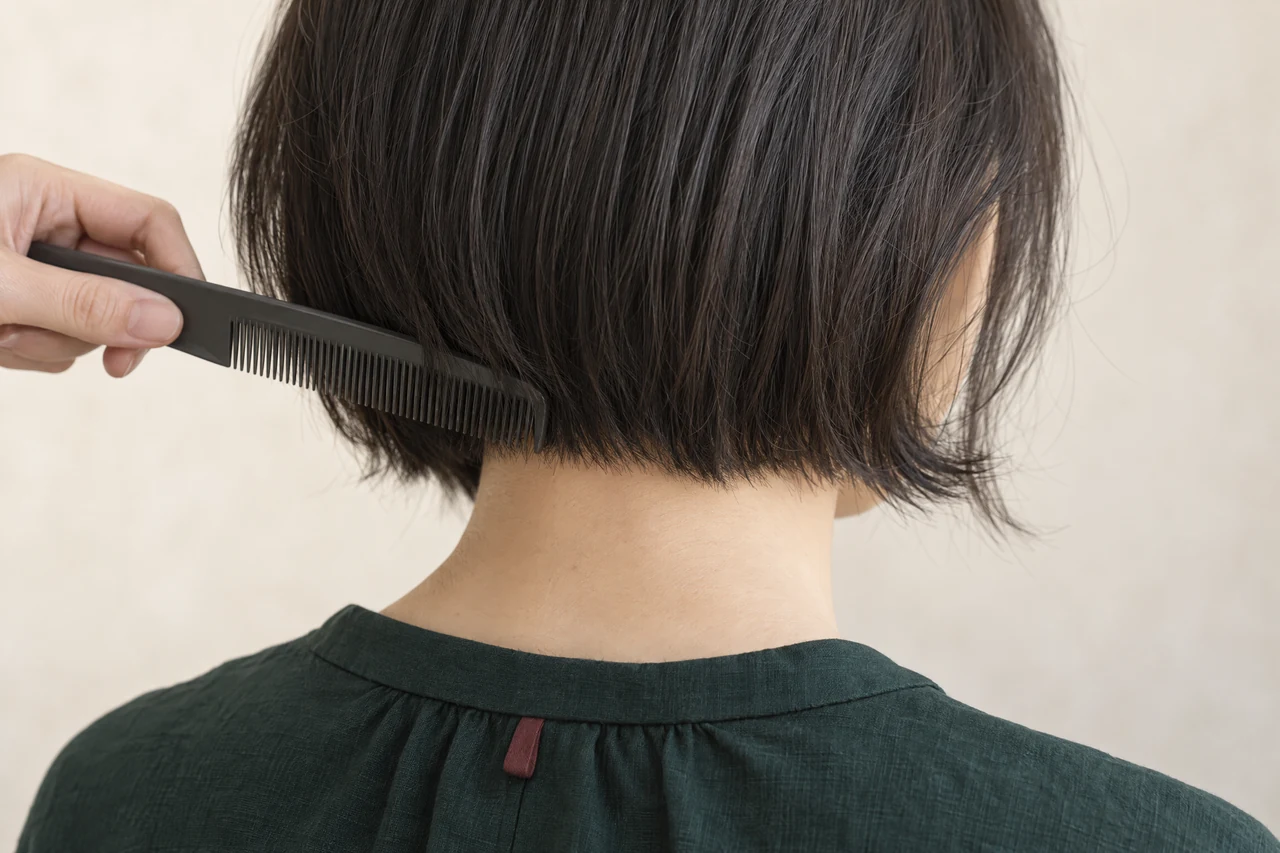
Ask the hairdresser to look at the back before it is washed or firmly brushed into position. Keep your head comfortably upright rather than tilting forwards to stretch the neck. With the longer hair gently moved aside, the lower strands can be observed without forcing them down. If the problem appears only where the ends touch a collar, mention that too. This is a practical shape check, not a diagnosis made from a photograph.
Retain lower coverage without keeping every bulky area
Coverage is the hair that lies over the lower nape and helps form the visible bottom line. It is not identical to the total amount of hair in the back. You may want to keep those lower covering pieces while reducing fullness higher up or behind the ears. That request is more precise than keeping everything long. It gives the hairdresser a boundary to discuss, while leaving room to assess whether the rest of the bob can feel less crowded.
Retaining coverage has a trade-off. The lower edge may continue to look substantial, and the neck may remain less exposed than in a tightly cropped reference. That can be acceptable if your main priority is avoiding short strands projecting beyond the outline. More covering length is not a guarantee of flatness, however. Ask whether the proposed edge reaches beyond the troublesome area when dry, rather than assuming a particular named bob length will provide enough overlap.
State what may remain visible
A useful consultation sentence is: ‘I want less fullness above the nape, but I would rather keep some lower weight than expose these upward strands.’ Then explain whether a small amount of natural movement is acceptable. Wanting every strand hidden is a different brief from wanting a lighter outline with a few visible wisps. Neither preference is wrong, but the hairdresser needs to know which compromise you would be comfortable seeing after an ordinary wash.

Change the back edge only after checking its dry landing point
The back edge controls where the bob ends and how much neck shows. Raising it may create a more compact silhouette, but it can also reveal lower strands that were previously covered. Leaving it lower may protect that overlap while preserving a heavier-looking bottom line. The important distinction is between changing the outline and removing weight inside it. A request to make the back smaller should specify which of those changes you actually want, because they are not interchangeable.
Before agreeing to a shorter back, compare bob vs lob for the relationship between the side lengths and rear edge. A longer front does not necessarily mean the nape remains covered. Conversely, keeping the back slightly lower need not require every part of the cut to be the same length. Show side and rear references together, then ask which visible proportion would change if the lower covering pieces were left intact.
An exposed nape should be an intentional choice
A deliberately cropped underneath area can suit someone who wants an exposed hairline and accepts its natural direction. It is not the same promise as a softer bob that conceals the lower growth. If that idea appeals, discuss what would be visible as the short area grows rather than judging only the freshly finished shape. If exposed upward strands would bother you, pause before a major shortening; restoring coverage requires growth, not another finishing product.
Choose selective weight removal away from the coverage boundary
Selective weight removal means deciding which crowded area should lose hair, rather than applying the same thinning request throughout the bob. Ask the hairdresser to identify the dense section and show how it relates to the surface and lower edge. If the fullness is mainly behind the ears, that should be discussed there. If it sits across the rounded back, ask whether the covering length can be protected while a smaller internal adjustment is considered above it.
The distinction explained in layering vs thinning out hair is useful here: changes in length relationships and changes in selected bulk can overlap, but they are not the same instruction. Shorter internal pieces may create movement you do not want near an already lifting nape. Keeping a substantial edge while removing too much hair behind it can also change how continuous the outline looks. Ask for the location and intended effect, not simply a preferred tool.
Use a conservative first decision when the underneath is already short
Suppose the lowest strands are already short and push upwards, while the middle of the bob feels heavy. That hypothetical situation favours checking the middle bulk separately instead of shortening the lowest section again. Agree which area will be left alone and whether a modest first adjustment can be reassessed dry. Removing more hair is not automatically better: once coverage is lost, the immediate choices narrow to styling, accepting exposure or waiting for length to return.
Test an everyday finish without promising permanent root change
A gentle finishing demonstration can help you judge whether the proposed cut suits your routine. Ask to see how the nape behaves with the amount of drying you would actually do at home, rather than only with a carefully shaped salon finish. If keeping the edge neat requires sustained brushing or repeated attention to one small section, that effort belongs in the haircut decision. Temporary redirection may be useful, but it should not be described as permanently changing the way new hair grows.
Do not compensate for an unsuitable outline by continually adding more heat. The American Academy of Dermatology’s styling advice recommends partial air drying before styling and reducing blow-drying frequency to help limit damage; it also warns that excessive heat can damage any hair type. Keep a styling trial comfortable and stop if it causes discomfort. The point is to compare realistic finishes, not to force the lower strands flat at any cost.
Keep chemical work out of an unresolved cutting question
If you are considering straightening or another chemical service, first establish whether the concern is root direction, crowded lengths or an edge that exposes the hairline. Do not add chemical work simply because the dry assessment is unclear. Share previous treatments and any current hair or scalp concerns before discussing suitability. Where damage or health concerns are present, seek advice from a qualified healthcare professional rather than treating a haircut or chemical finish as a medical solution.
Prepare a nape-specific enquiry and agree what stays
These 6 preparation points help separate the part you want lighter from the part you want covered. Use the checklist below to collect ordinary evidence, not to produce perfectly styled pictures. A rear photograph with your head upright is especially useful, but include a side view so the hairdresser can understand the relationship to your ears and jaw. Say whether you usually leave the hair loose, tuck it behind your ears or wear a high collar during the day.
For a cut-led enquiry, the women's haircut service page provides a relevant starting point for discussing scope. The confirmed price for women’s wash, cut & blow-dry is HK$480; confirm the proposed service and appointment details when enquiring. Explain that you want to compare retained lower coverage with selective weight removal, rather than asking for an undercut by default. If consultation language matters to you, confirm it beforehand instead of assuming that an English website guarantees an English-speaking consultation.
Agree on a visible boundary before cutting
End the discussion with a clear account of the intended change: where the bob should feel lighter, which nape pieces should remain covered, and how much neck exposure is acceptable. Ask what can reasonably improve and what natural movement may remain. If the proposed cut depends on more daily styling than you want, reconsider its edge or length first. A satisfactory brief protects the part you value instead of treating all fullness as unwanted weight.

Compare the change you want with the coverage you are willing to give up.
| Option | Intended change | Nape trade-off |
|---|---|---|
| Retain lower covering length | Keep overlap across the lower hairline | The bottom line may still look substantial; flatness is not guaranteed. |
| Keep the rear edge slightly lower | Leave more of the neck covered | A less cropped back may suit coverage priorities better than a high edge. |
| Selective internal weight removal | Reduce a specific crowded zone | The covering pieces and surface need separate protection. |
| Raise or crop the underneath edge | Expose the neck and compact the outline | Short upward strands may become more visible; choose exposure deliberately. |
| Temporary styling test | Compare a manageable everyday finish | Any improvement must be weighed against effort and heat exposure. |
Your preparation checklist
- Bring an ordinary dry rear photograph with your head upright and the nape visible.
- Add side photographs showing the bob’s edge relative to your ears, jaw and neck.
- Identify exactly where the hair feels bulky and where the lowest strands lift.
- Describe the lower coverage you want to keep and whether visible wisps are acceptable.
- Explain your usual drying, ear-tucking and clothing habits, including collars that touch the ends.
- List previous chemical treatments and current concerns, and confirm language and appointment requirements.
Frequently asked questions
Will cutting the nape shorter make upward-growing strands lie flat?
Not reliably. A shorter edge changes length and exposure, but it cannot promise to change root direction. It may reveal strands that longer hair previously covered. Have the lower hairline assessed dry, then compare keeping coverage with an intentionally exposed nape before agreeing to shorten it.
What should I ask about reducing bob weight without exposing a nape cowlick?
Ask which internal area is actually dense, which pieces cover the lower hairline, and whether those covering pieces can remain untouched. Discuss the surface and bottom line separately. A precise location-based request is more useful than asking for the whole back to be thinned or undercut.
What if my nape is already too short to cover the lifting strands?
Further shortening cannot restore the lost overlap. Discuss a manageable temporary finish, an outline that deliberately accepts exposure, or allowing the lower area to grow while other parts are adjusted. Avoid a fixed regrowth deadline: the length needed depends on the current cut and the coverage you want.
Ask about a lighter bob with the nape coverage you want
Send a WhatsApp enquiry to +85253057561 with ordinary rear and side photographs, your current bob length and the area you want to keep covered. Vit So is at 252 Hollywood Road, Sheung Wan, Hong Kong. Ask to compare the back edge and internal bulk before shortening the underneath area. Appointment availability, consultation language and the proposed service require confirmation; an enquiry is not an instant booking.
Start your WhatsApp enquirySources & further reading
- How to control hair growth patterns — Sam Villa
Professional education introducing growth-pattern considerations and temporary redirection of fringe or nape swirls. It provides context for assessment, not a universal nape-cutting prescription.
- Hair styling without damage — American Academy of Dermatology
Dermatologist guidance on partial air drying, limiting blow-drying frequency and avoiding excessive heat when comparing an everyday finish.



