







Hair treatment for dry curly hair: define softness and shape
Describe whether the problem is roughness, knots, a heavy feel or loose-looking curl bundles. Those observations are not interchangeable. A conditioning step may help slip without being intended to straighten the hair. Compare the outline under similar washing and drying conditions so the care discussion does not confuse a different finish with a changed curl structure.
Start with a location rather than describing the entire head as dry. Ends that catch on clothing may need a different application from the smoother lengths near your face. Notice whether the rough feeling is present immediately after rinsing, only when fully dry or after sleeping. A few flyaway hairs do not tell you how easily the main bundles move past each other, so describe both appearance and handling.
The review On Hair Care Physicochemistry explains that conditioning agents can smooth the hair surface and reduce friction between fibres. That supports a practical goal of easier combing and a softer feel, rather than a promise to rebuild living hair or set a particular curl diameter. Ask what the proposed care actually involves, especially if the menu uses broad words such as smoothing or repair.
Review hair treatment to check its service scope and the details to share before arranging the related work.
Set two goals for hair treatment for dry curly hair
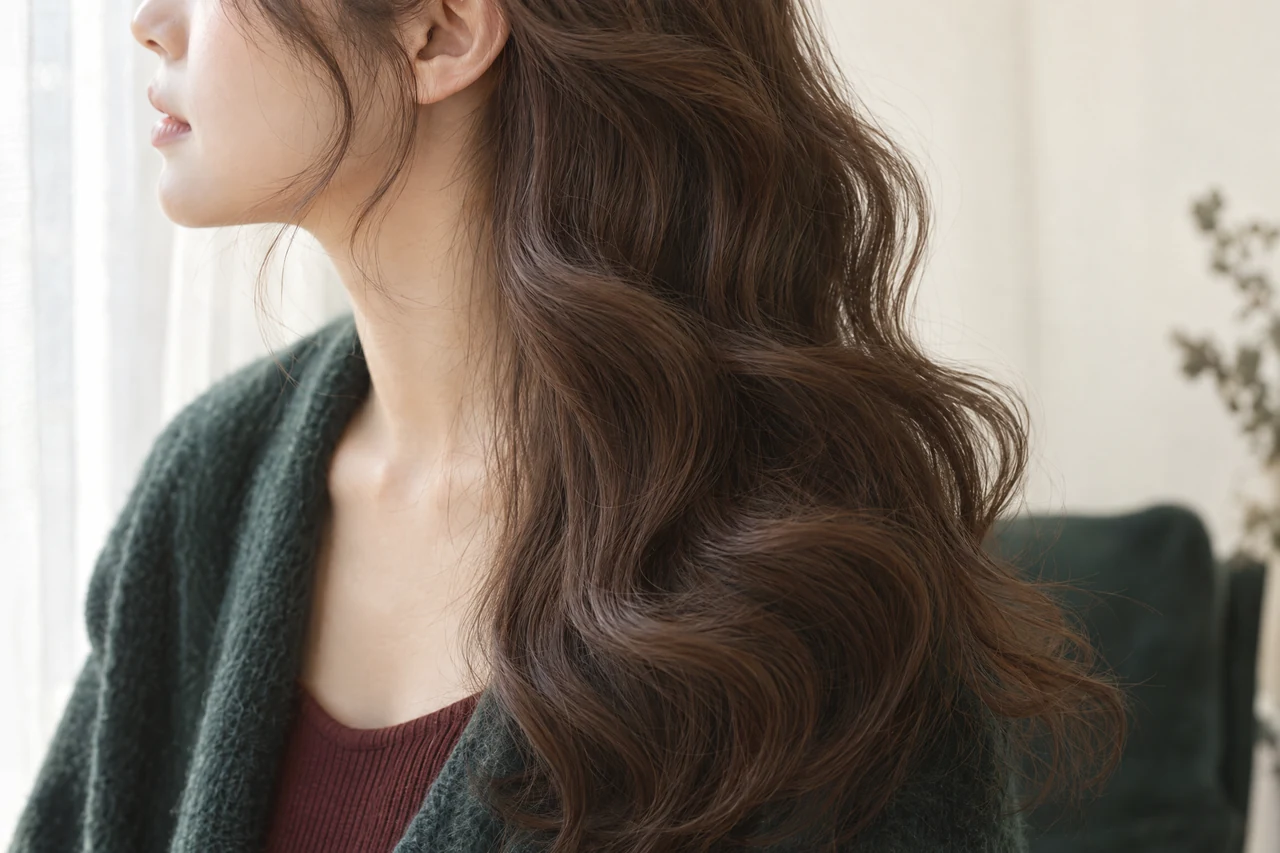
Describe your feel goal as less snagging, more comfortable detangling or softer ends. Then give a separate shape goal: keep the spring at the ends, retain the width around the cheeks or avoid flattening the crown. Bring a photograph of your own curls on an ordinary day you liked. A polished reference image alone may leave the stylist guessing whether its shine, tighter bundles or overall volume is the feature you want.

Hair treatment after perming
Hair treatment after perming should take account of the procedure, products and directions from that service. Explain when the perm was done and which lengths now feel dry. Do not apply a generic washing timetable or assume any mask fits the same routine. Discuss preserving the curl outline as a separate goal from improving slip.
Natural curls may have no chemical curl service behind them, but colour, bleach and regular hot-tool styling still belong in the history. Permed hair adds another specific procedure to that picture. Share the service date, whether the whole head or selected areas were treated, and any written washing or styling directions. If you do not know the method or product name, say so rather than choosing an aftercare routine from a similar-looking online photograph.
For guidance on organising the first wash and everyday styling questions, use perm aftercare alongside the instructions from your own service. When those instructions are unclear, contact the provider before experimenting with another mask, heated treatment or chemical change.
Review hair perm to check its service scope and the details to share before arranging the related work.
Use the actual perm-care directions
Explain whether the dry area is newly permed, previously coloured or part of older processed ends. The same head can contain lengths with different histories, so even application from roots to ends is not automatically the right choice. Ask which product belongs on which area and whether the suggested salon finish reflects what you can realistically do at home. Clarifying those details is more useful than buying the richest product available.

Can conditioning loosen permed curls?
Can conditioning loosen permed curls? A looser-looking outline can reflect weight, drying or bundles being separated; it does not by itself show that conditioning reversed the perm's structure. Compare photographs and feel under similar conditions, and mention any recent layer changes. Do not assume that another perm is the right response to a single loose-looking finish.
Look at the finished hair without stretching a strand to test it. Is the crown flatter while the ends still curve? Are the bundles broader, or have they been brushed into many separate strands? A heavy, coated feel suggests a product-application discussion; visibly scattered bundles suggest reviewing handling. Neither observation is a diagnosis, but both give the stylist a clearer starting point than simply saying the perm has disappeared.
Keep the comparison fair. A freshly washed, fully dry photograph should not be compared with wet curls or a finish created with a curling tool. Record whether you air-dried or used a diffuser and whether you changed your parting. If you recently cut layers, include that detail because the new outline changes what you see around the face and at the ends.
Review bundle handling and product weight first
If your routine layers a mask, leave-in cream and oil, check the purpose and instructions of each before adding anything else. Where directions allow adjustment, review one variable at a time, such as the amount or placement of a styling product, while keeping drying similar. This helps identify a finish you prefer without treating every change as evidence that the chemical service needs repeating. Persistent unexpected changes deserve a follow-up with the original provider.
Detangle without repeatedly pulling apart the pattern
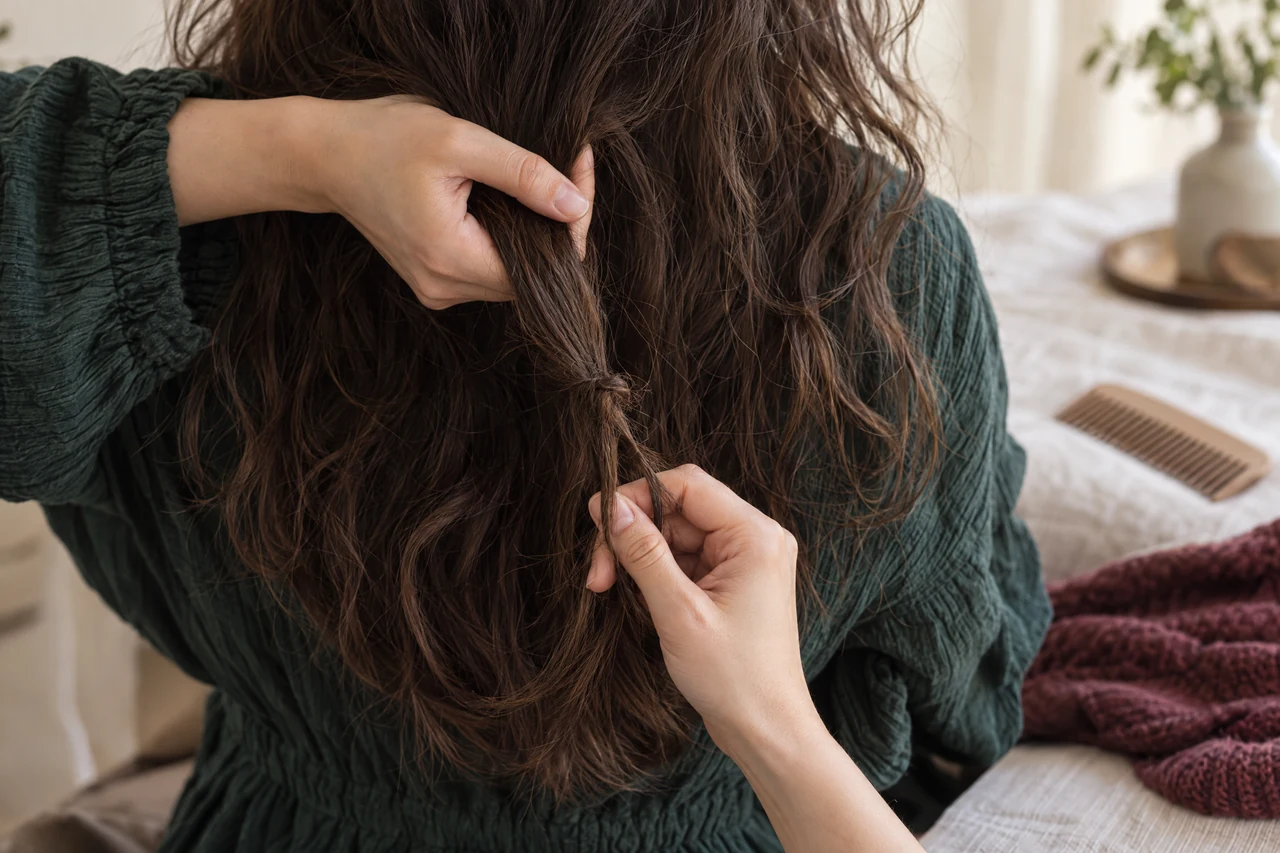
Follow suitable product directions and work patiently through manageable sections without dragging through resistance. Review how brushing and drying affect the bundles you want to keep. If knots remain tight or strands repeatedly snap, stop forcing the hair and seek help. More product or more combing is not a guaranteed way to preserve curl definition.
For naturally curly or coily hair, the American Academy of Dermatology's curly-hair guidance recommends working in sections with thoroughly wetted hair, leave-in conditioner and fingers or a wide-toothed comb. It advises avoiding dry brushing to reduce breakage and frizz. Apply that advice with the actual product directions; for freshly permed hair, also clarify the service-specific handling instructions.
Support a small section above the tangled area and work from the ends towards the knot, without pulling against the scalp. Keep the cleared lengths separate so they do not immediately tangle again. Once the section moves comfortably, you do not need to keep combing simply to prove it is smooth. The aim is to remove resistance, not repeatedly stretch every curve into a straight line.
Continue with how to detangle damaged hair for that specific comparison and the preparation questions it raises.
Stop when resistance needs force
A knot that tightens as you pull is a reason to pause and reassess, not switch to a stronger grip. Show the difficult area to your stylist if it keeps returning or becomes matted. Scalp pain, sores or persistent irritation need a healthcare discussion rather than more cosmetic conditioning. For ordinary tangles, allow enough time to work gently instead of rushing through them before leaving home.
Match the product step to your drying routine
A rinse-out conditioner, a mask and a leave-in product are not interchangeable instructions. Use the specified amount, contact time and rinsing method rather than keeping a rinse-out product in the hair to chase extra softness. With dense curls, divide the hair enough to reach the intended lengths instead of coating only the outer layer. With fine curls, discuss whether the proposed placement leaves the roots feeling too heavy.
The comparison in hair mask vs conditioner can help you decide whether another step has a useful role in your routine. A richer texture does not by itself establish that you need to use both. Explain whether you want easier detangling during washing or a more comfortable feel after drying, as those are different points in the routine.
Keep drying gentle and repeatable
After rinsing, gently squeeze or blot the hair rather than vigorously rubbing bundles apart. If you diffuse, follow the dryer instructions and discuss a lower-heat, gentle-airflow approach instead of holding hot air against one spot. If you air-dry, avoid repeatedly raking through the lengths while checking progress. Ask the stylist to demonstrate a finish that fits your morning schedule, then judge the fully dry shape rather than the wet outline.
Prepare a clear curl-conditioning enquiry
Use this 6-point preparation checklist to make your curl-conditioning enquiry specific. It is a practical editorial checklist, not a treatment schedule. The comparison below helps identify what to discuss first; you may recognise more than one concern, but you do not need to solve every concern with the same product.
For a visit in Sheung Wan, share how you normally wash, dry and wear your curls, including whether you tie them back for work or exercise. If the main problem appears after sleeping, mention that timing. The AAD guidance also suggests loose nighttime styles to reduce friction against the pillowcase. Choose a comfortable option that does not pull, and ask how it fits any perm-care directions.
Agree on the service and the finish separately
Before arranging care, confirm the proposed products, whether any shape-changing procedure or hot-tool finish is included, the charge and the aftercare you will receive. Say explicitly that you want to retain your curls. A smooth salon finish can be attractive, but it may not show how your usual bundles behave after washing at home. Ask how to assess softness and outline under your normal routine rather than expecting an identical finish every day.

Dry-curl observations and the first discussion they suggest
| What you notice | What to review first | Shape goal to explain |
|---|---|---|
| Rough ends but a curl outline you like | Conditioning placement and friction during handling | Keep the existing bends while improving slip |
| Soft lengths with a heavy, flatter crown | Product amount, layering and rinsing instructions | Retain root lift without leaving ends uncomfortable |
| Knots and scattered bundles after brushing | Sectioning, detangling tools and when you brush | Remove tangles without repeatedly separating the finished bundles |
| Dryness on recently permed lengths | Service history and the provider's actual directions | Discuss softness separately from chemical curl changes |
| A loose-looking finish after a routine change | Comparable dry photographs and drying method | Identify the preferred outline before considering further services |
Your preparation checklist
- Describe the curl outline you want to keep and the uncomfortable feel you want to improve.
- Photograph your fully dry everyday hair without pulling the curls straight, and note the washing and drying method.
- List the perm, colour, bleach and heat-styling history of the lengths that now feel dry.
- Bring product names or label photographs, including the instructions for masks and leave-in products.
- Point out recurring knots, heavy areas or fragile ends, and stop forcing any section that repeatedly snaps.
- Confirm the proposed care, finish, charge and personal aftercare directions before agreeing to the service.
Frequently asked questions
Will conditioning turn my curls straight?
Do not assume that a cosmetic conditioning step is a straightening procedure. Clarify the actual products and steps, and state that you want to keep the curl outline.
Should loose-looking curls be permed again?
Not automatically. Compare handling, drying, product weight and recent cutting changes first. Fragile or recently processed lengths need assessment before more chemical work.
Should natural and permed curls follow identical aftercare?
No universal routine covers both. Follow directions for any chemical service and the actual products, and adapt handling to the condition of your lengths.
Discuss softer-feeling curls without losing sight of your shape
Send Vit So your everyday curl photographs, processing history and the areas that feel dry. Explain which bends and volume you want to keep so the enquiry can focus on suitable care and a realistic home routine. Confirm the service details, price and availability before visiting 252 Hollywood Road, Sheung Wan; an enquiry is not a confirmed booking.
Start your WhatsApp enquirySources & further reading
- 6 curly hair care tips from dermatologists
Sectioned detangling of wet curly or coily hair with suitable conditioning and tools, avoiding dry brushing, and reducing nighttime friction.
- On Hair Care Physicochemistry: From Structure and Degradation to Novel Biobased Conditioning Agents
Conditioning agents reduce inter-fibre friction and improve softness and combability; rinse-out and leave-in formulations have different uses, and hair cannot be biologically repaired.



