







Should I straighten hair that flips out at the same point each day?
Notice whether the flip appears at the jaw, collar or shoulders and whether one side turns more than the other. These details can help distinguish a length or growth-direction issue from a wish to remove waves throughout the hair. Bring a normal dry-hair view so the discussion is not based only on a styled photograph.
Look at the bend before brushing it away. Does the whole side sweep backwards, or does a small section turn out only at the bottom? A smooth upper length with a flick at the collar calls for a different discussion from waves running from the roots to the ends. The first question is where the direction changes, not which straightening product sounds strongest.
Compare the outline with your head upright and with your usual clothing on. A raised collar, a shoulder or repeated ear-tucking may change where the ends rest. Notice whether the flip appears immediately after washing, after your commute or only after sleeping. These observations are clues to discuss, not a home diagnosis of the cut or the hair's condition.
Should I straighten hair that flips out or review the cut?
Review the cut first when you like the texture above the ends and dislike only the bottom line. Ask the stylist to look at the dry fall on both sides and behind the neck. Avoid requesting a perfectly identical outline solely because one side turns more: growth direction and everyday handling may differ. Agree whether your priority is a more even perimeter, less contact with the collar, or easier morning styling.

Short hair changes the available shape and length
Hair straightening for short hair needs discussion of the actual length, desired line and existing treatment history. Straighter ends may sit closer to the face or reveal uneven lengths differently. Ask whether the cut itself can address the concern and whether enough length is available for the proposed procedure; a short style does not establish suitability.
Moving the perimeter above a contact point may reduce that particular obstacle, but it also exposes more neck and changes the shape around the jaw. Keeping the length and growing past the shoulders is a different option, with an in-between period to manage. Neither choice should be presented as a guaranteed way to stop flipping. Tell the stylist which length boundary you are not willing to cross.
Weight matters as well as length. Ask what a proposed adjustment would remove and what support it would leave at the ends. Cutting away more hair is not automatically a better correction. If you want a defined bob haircut, discuss the perimeter and retained side length rather than asking for thinning simply because a section turns out.
Review women's haircut to check its service scope and the details to share before arranging the related work.
Consider what a straighter end would look like
Compare an inward curve, a straight drop and a softly outward finish in your reference images. These are different silhouettes. A completely straight end might look sharper or less rounded than the outline you actually want. Show how much movement you would keep near the cheeks, and ask whether a temporary preview can demonstrate the difference before committing to a shorter cut or a chemical change.
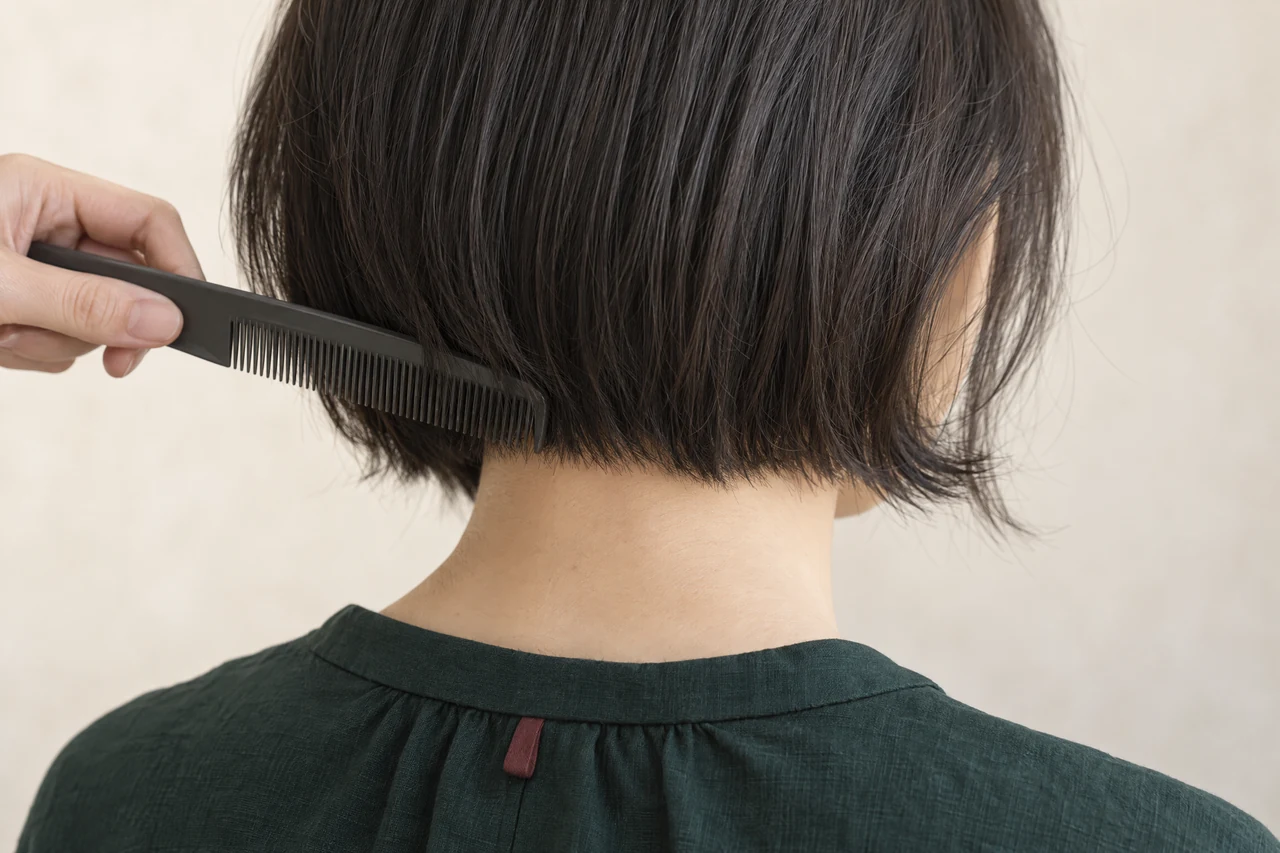
Compare a cut adjustment with temporary drying
A different landing point or a change in drying direction may alter how the ends sit, though neither is a universal fix. Discuss how much length you can give up and how much styling you are willing to do. A temporary straighter finish can help test your preference without proving that a chemical process is needed.
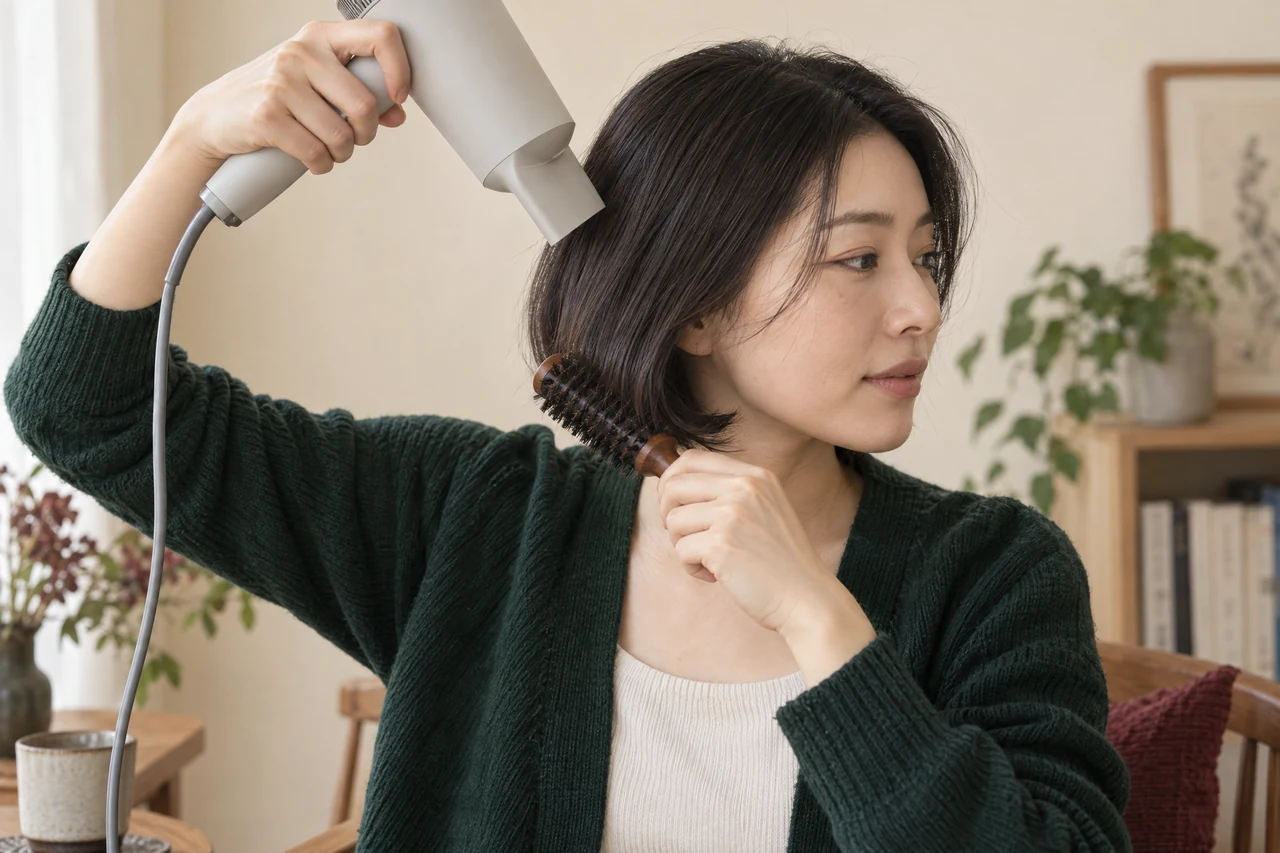
For a gentle styling comparison, let the hair partially air-dry, then work in manageable sections without pulling hard on the ends. Keep the dryer moving and direct the airflow along the hair while guiding the section towards the intended fall. Ask for a demonstration suited to your brush and dryer. Repeatedly heating an already dry flick is not a useful substitute for learning where the direction needs guidance.
The American Academy of Dermatology's hair-styling guidance recommends partial air-drying before styling and reducing blow-drying frequency. It also advises using flat irons only on dry hair at low or medium heat. Treat these as damage-reduction principles, not proof that heat can correct every short-hair outline. You do not need to use an iron simply to collect useful observations.
Review blow dry to check its service scope and the details to share before arranging the related work.
Try to identify the smallest useful change
Change the drying approach before changing several products and the cut together. Photograph the finish once it has cooled, then notice how it behaves during a normal day. If you like the outline but cannot reproduce the technique comfortably, say so. The decision is not just whether the stylist can turn the ends inward; it is whether the amount of effort makes sense for your routine.
Keep chemical straightening as a separate decision
If the goal remains a lasting straighter shape, share earlier colour, bleach and perm work. Clarify whether you dislike only the ends or the movement throughout the hair. Ask what changes are realistic and what styling may still be necessary; removing curl does not guarantee that contact with clothing or natural growth direction stops influencing the outline.
Make the treated area explicit. Ends around a short bob are not the same consultation as a curly fringe or the whole head. Ask how the proposed process would work within your available length, how it would meet untreated hair, and how future cutting could change that boundary. A local concern does not establish that an ends-only service is available or suitable, and it does not establish a reduced price.
Product questions belong beside the shape discussion. The FDA's consumer guidance on hair-smoothing products explains that not all such products contain formaldehyde and recommends checking ingredients, asking about the Safety Data Sheet and discussing ventilation. This is a reason to identify the actual product and process, not to assume every straightening method has the same ingredients or risks.
Review hair straightening to check its service scope and the details to share before arranging the related work.
Review history, limits and the outline you would keep
Mention home colouring and older processing even if most of it seems to have grown out. Point out areas that feel unusually fragile or have started breaking. Ask what volume you would retain and whether the chosen finish requires ongoing drying. A useful consultation may lead to postponing chemical work while the cut, length or current hair condition is reviewed; that still moves the decision forward.

Choose a finish that works after the salon
Evaluate the ends in the circumstances that matter to you. If you usually walk outdoors before work, tuck hair behind your ears or wear a collared jacket, mention those habits. A finish photographed immediately after styling answers only part of the question. Decide whether you need a polished outline for an occasion, a manageable weekday shape, or simply less time spent correcting one side.
Keeping a soft outward flick is also a valid choice when you enjoy the rest of the cut. You can ask whether it could look more intentional without forcing all the ends inward. If you are growing the hair longer, temporary styling or a carefully limited trim may suit your goal better than repeatedly shortening the bottom line whenever it reaches the neck.
Stop chasing the ends when styling becomes uncomfortable
Stop applying heat if the scalp feels painfully hot, and pause if the hair is becoming more brittle with repeated styling. Tell the stylist about the change rather than increasing the temperature. For a bad reaction to a smoothing product, the FDA advises stopping use and contacting a healthcare provider. Breathing difficulty or other severe symptoms need urgent medical attention, not another cosmetic appointment.

Bring evidence of the flip and agree the scope
Bring front, side and back views of your ordinary dry hair, plus an image of the outline you prefer. Useful haircut reference photos show where the ends land, not only a close-up of smooth strands. Explain which photographs show air-dried hair and which show a styled finish. There is no need to recreate an uncomfortable routine just to obtain an image.
The confirmed price for women's wash, cut and blow dry is HK$480. The confirmed wash-and-blow-dry price is HK$240, while ionic straightening is listed at HK$1,600. These are different service scopes, not a promise that each option solves the same flip. Ask what your proposed appointment includes and obtain confirmation before assuming a cut is included with straightening or that local treatment has its own listed charge.
Leave with a clear next step rather than a treatment label
For an enquiry at Vit So in Sheung Wan, describe the location of the flip, your length limit and the styling effort you can manage. Ask whether the first visit should focus on cutting, temporary drying or assessment for chemical work. Confirm the agreed scope, quote and appointment availability before visiting. An enquiry starts that discussion; it is not itself a confirmed booking.

Options for short ends that turn out: compare the purpose before choosing the appointment
| Option | What it lets you explore | Main trade-off to discuss |
|---|---|---|
| Keep the flip | Whether a soft outward finish fits the rest of the cut | Accepting movement rather than correcting every end |
| Adjust the cut | A different perimeter, retained weight or landing point | Losing some length or changing the outline; no universal fix |
| Temporary drying | A straighter or inward finish without chemical processing | Daily technique and heat exposure; the finish is temporary |
| Grow beyond the contact point | A longer outline while protecting the length goal | An in-between stage with possible changes in direction |
| Assess chemical straightening | A lasting change to eligible hair rather than a styling preview | Treatment history, product suitability, transition and remaining styling needs |
Your preparation checklist
- Identify where the bend starts and where the ends meet the jaw, neck, collar or shoulders; note whether it affects one side or both.
- Bring everyday dry-hair photographs and a preferred outline, labelling which views show temporary styling.
- State your minimum retained length and whether preserving fullness matters more than a completely straight perimeter.
- List previous colour, bleach, perm and straightening work, including home products and any recent discomfort or breakage.
- Describe your usual dryer, brush, ear-tucking and clothing habits so any suggested styling is realistic at home.
- Confirm the first step, included services, actual quote and availability before treating the enquiry as a booking.
Frequently asked questions
Does an outward flip mean my hair needs straightening?
No. Length, growth direction, the cut and drying can all affect the ends. Identify the pattern first and discuss less intensive changes before assuming a chemical process is necessary.
Will a shorter cut always stop the ends turning out?
No. Changing the landing point may help some shapes but can create a different outline. Discuss the length you want to retain and compare the likely trade-offs.
Can I straighten only the ends?
A local goal can be raised in the consultation, but feasibility, availability and pricing need confirmation. Earlier processing and the transition to untreated hair also matter.
Find the smallest useful change for your short-hair ends
Send Vit So ordinary dry-hair photographs, your preferred retained length and your treatment history. Explain whether you want to review the cut, learn a temporary drying approach or discuss a lasting straighter outline. An enquiry can help clarify the appropriate scope and quote for a visit in Sheung Wan; your appointment is confirmed only after the details and availability are agreed.
Start your WhatsApp enquirySources & further reading
- Hair styling without damage
Partial air-drying, reduced blow-drying frequency and dry-hair low- or medium-heat flat-iron guidance for a temporary styling comparison.
- Formaldehyde in Hair Smoothing Products: What You Should Know
Checking actual smoothing-product ingredients, asking about the Safety Data Sheet and ventilation, and stopping use and seeking healthcare advice for a bad reaction.



