






Perm aftercare starts with clear first-wash instructions
Ask when to wash your hair and whether there are any restrictions on tying, heat styling or products after the procedure. Keep the advice with your treatment details so it is easy to check later. Do not replace those instructions with a fixed waiting period from an unrelated method or a different salon's article.
Make the advice practical before you leave: explain whether you normally wash before work, exercise in the evening or need your hair tied back. Ask whether the first-wash instruction also applies to wetting the hair for a refresh. These are different activities, so a vague instruction to avoid washing may not answer everything you need to know. If you have already left and cannot remember the advice, contact the salon that performed the procedure rather than choosing the most convenient online answer.
Once washing is permitted, scalp cleansing and curl styling have separate jobs. The American Academy of Dermatology's healthy hair tips recommend applying shampoo to the scalp and using conditioner after washing. Clean the scalp gently rather than piling the lengths into a tangled mound. Follow the product's rinsing directions; conditioning does not require vigorous rubbing of the ends.
Record the perm aftercare advice for your treatment
Keep a short note of the treatment date, the areas processed, the first-wash instruction and the finishing steps demonstrated. Include whether your final appointment look involved a brush, diffuser or another tool. This helps distinguish the movement created by the perm from the extra shaping used to finish it. Ask to see any step you cannot repeat, such as setting the parting or arranging the ends, before trying it alone at home.

Practise the drying approach for the intended finish
To understand how to style permed hair, ask for the drying and finishing approach appropriate to your own curl goal. Work gently through tangles and avoid pulling the shape straight while trying to create definition. Air-drying, diffusing and other approaches need to be considered with the actual finish; no one technique is required for every perm.
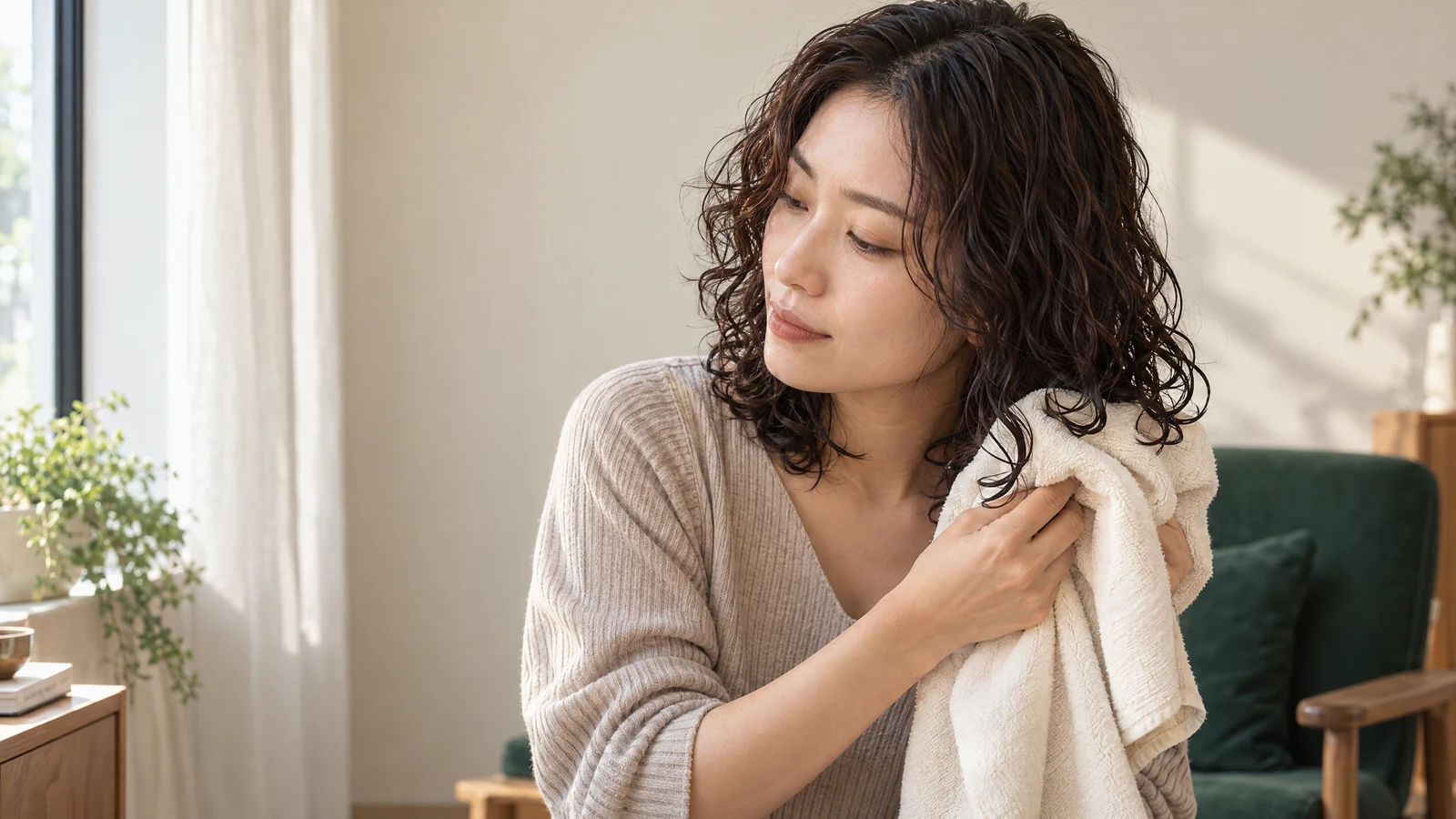
Begin by absorbing excess water gently. The American Academy of Dermatology's advice on preventing hair damage recommends using a towel to absorb water rather than rubbing roughly, and avoiding pulling or tugging during styling. For a curl routine, that means resisting the urge to scrub the ends dry or force a comb through a knot. Detangle slowly from the ends, with an appropriate wide-tooth comb and conditioning support, instead of dragging through the full length in one stroke.
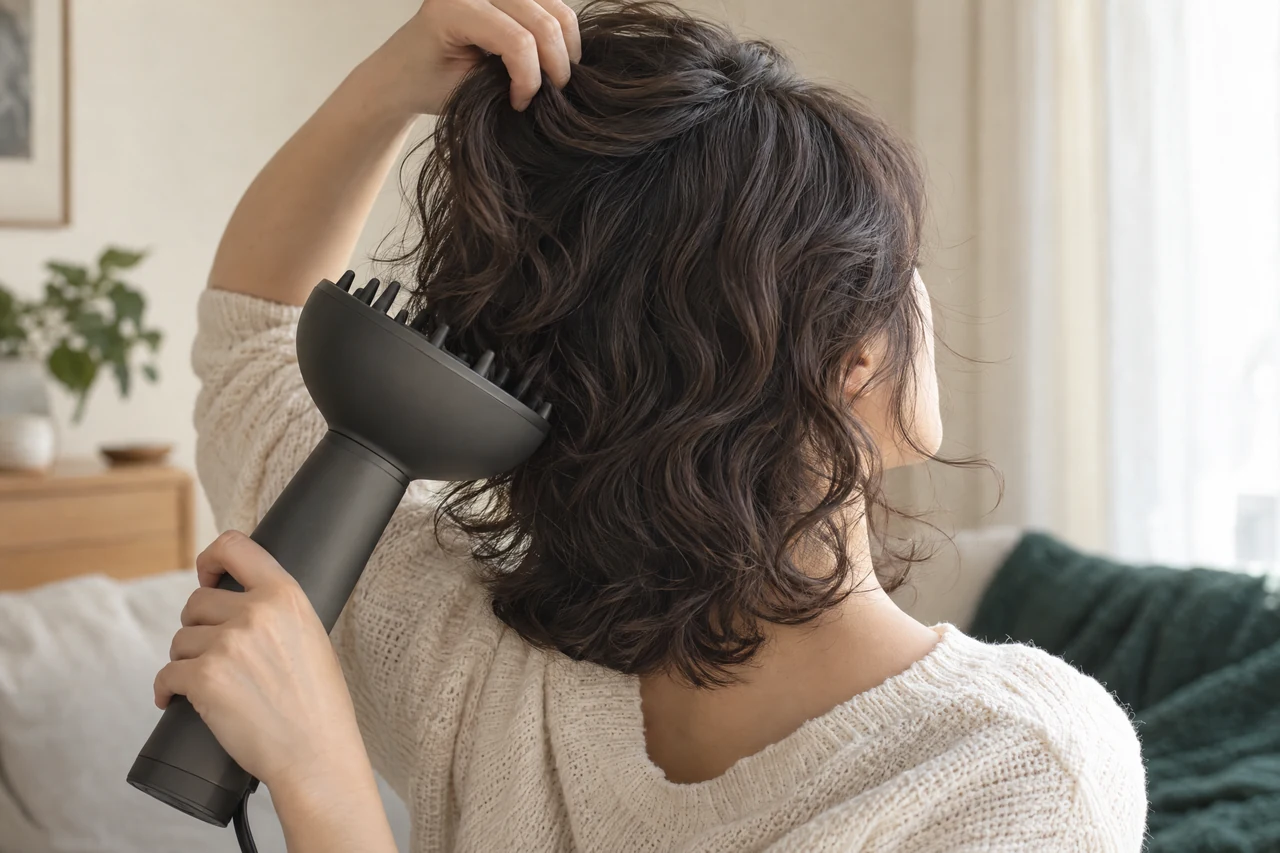
If a diffuser is part of your demonstrated routine, ask how to position it without stretching the lengths, and which airflow and heat settings to use. Air-drying can reduce tool use but may not reproduce a deliberately lifted root or a shaped fringe. For a busy morning, agree on the parts worth drying first and the parts that can be left alone. Choose a repeatable finish rather than a complicated sequence you will abandon.
If you regularly use a dryer or curling tool, learn how to protect hair from heat styling alongside the drying directions for your perm.
Gentle handling matters more than copying a product list
A styling cream cannot compensate for pulling every bend straight while drying. Practise with the same gentle hand position shown during your appointment, and notice whether you are lifting the roots or stretching the ends. For heat use, the AAD's healthy hair guidance recommends limiting excessive heat and choosing low or medium settings. Heat protection is an additional precaution, not permission to repeatedly heat the same section until it resembles a photograph.
Loose curls need a repeatable refresh routine
For loose curls, observe how the ends sit after your normal wash and drying routine, then compare the next day's shape. Ask which refreshing steps suit the treatment rather than repeatedly adding heat to chase a reference photograph. A manageable routine should balance the movement you want with the time and handling your hair can tolerate.
Check what actually needs refreshing. A flattened front section, a displaced parting and tangled ends are not the same problem. When wetting is allowed under your treatment instructions, ask whether dampening the affected section and gently arranging it is sufficient. Let the section settle before adding another step. Constantly touching and rearranging all the hair makes it harder to tell which action helped, especially when your goal is a soft wave rather than tightly defined curls.
Choose an everyday benchmark: the movement you can achieve with your normal equipment and available time. A reference image may show a carefully finished style rather than an untouched wash-day result. If you want airy ends for an office day, explain that preference instead of trying to maximise definition everywhere. On days when the shape already feels comfortable, leaving it alone can be a more useful choice than adding more styling product.
Compare wash-day movement with the next day's shape
Look at the front, sides and back after your routine, then again before the next refresh. Note whether the difference follows sleep, tying or changing the parting. Describe the visible change plainly: the front sits flatter, the ends separate more, or the left side turns outward. This gives your stylist something specific to discuss. Avoid judging longevity from a single morning when the drying method or product amount was different.
Follow curl changes without expecting a fixed expiry date
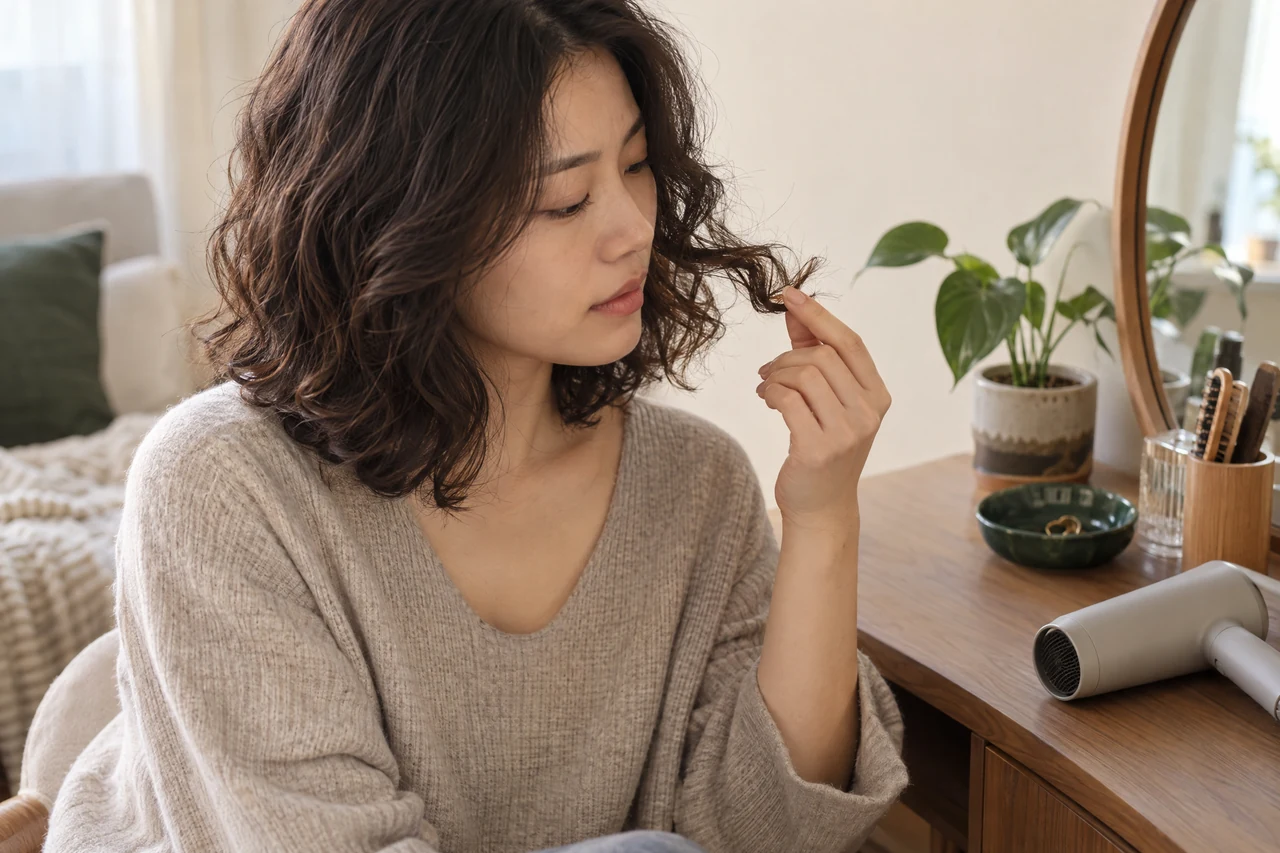
The visible finish can change as roots grow, ends are cut and styling habits vary. A Korean-inspired style name does not specify one lasting period. Keep occasional photographs under similar drying conditions if you want to discuss changes later. The useful question is how the current shape behaves, not whether every perm should retain identical curls for a set number of months.
When asking how long a perm lasts, separate the untreated new growth from the previously processed lengths. A flatter-looking crown may sit above ends that still have movement. A haircut can also remove some of the curled section or change how the remaining hair falls. Before a trim, explain whether you want to keep the current curl position, reduce width or gradually remove the processed ends. A cut is not a neutral event in the shape of a perm.
Keep a photograph of your usual dry finish, without adding extra hot-tool styling just for the picture. Record any recent cut and any change of product or drying method. If a section becomes difficult to handle or looks unexpectedly different, send that information to the treating salon. Persistent scalp symptoms or concerns about thinning need healthcare advice rather than an attempt to hide them with more styling.
Continue with uneven curls after a perm for that specific comparison and the preparation questions it raises.
Continue with can i get a perm again on permed hair for that specific comparison and the preparation questions it raises.
Separate growth, haircut and styling changes
A useful follow-up starts with where the change appears, not an assumption that another perm is needed. Compare the root area, middle lengths and ends separately. Mention whether the change appeared after washing, a cut or a different finishing technique. Reperming is a new chemical-service decision, not a routine refresh step. Take the old treatment history into that discussion rather than using more processing to chase the original appointment finish.
Keep short men's curls focused on parting and direction
Men's perm aftercare follows the same treatment-specific first-wash principle; a shorter haircut does not establish a different universal waiting time. When asking when men can wash hair after a perm, include the actual procedure and its instructions. For a short style, practise finding the parting after washing and guiding the fringe gently in the demonstrated direction. Avoid flattening the whole top with a brush if you want to retain separate, softly bent sections.
To maintain a Korean-inspired perm for men, describe the feature you want to keep: a curved fringe, a lifted front or light texture on top. The word Korean alone does not supply a drying recipe or lifespan. Keep changes in side width separate from changes in top movement. If your next appointment concerns the overall design of a men's perm, bring your current dry-shape photographs and explain which part of your routine is working.
Watch the fringe as well as the curl
The question of how long a men's perm lasts is often also a question about when the fringe becomes inconvenient or the haircut outline changes. Notice whether the front now falls into your eyes even though it still bends. Explain how much length you are willing to lose before a maintenance cut. Side flattening treatments have their own regrowth considerations; do not treat every change at the sides as proof that the top curls need reprocessing.
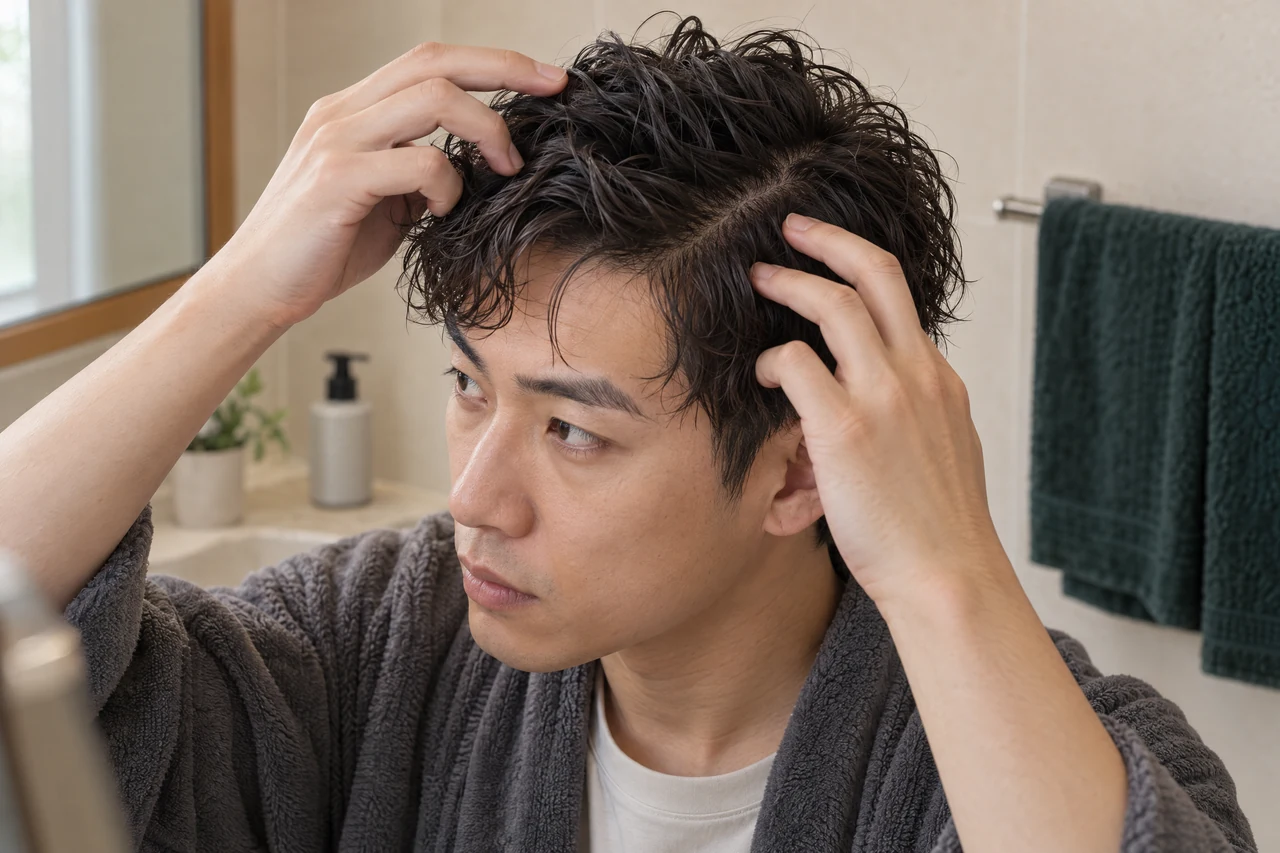
Choose a small product routine you can evaluate
Ask what each product is meant to do before adding it to your routine. Rinse-out conditioner supports detangling and manageability; a styling product may help you arrange the finish. Confirm whether a suggested product is used on damp or dry hair, where it goes and whether it must be rinsed out. Start with the advised amount and evaluate the result before adding more. A longer product list is not automatically better aftercare.
Use the 6-point aftercare checklist below to organise your routine and your next enquiry. If your main concern is rough-feeling lengths rather than lost curl, discuss conditioning needs without assuming a treatment will recreate the original shape. Keep the care goal separate from any decision to change the perm.
Review hair treatment to check its service scope and the details to share before arranging the related work.
Change one step before changing the whole routine
If the finish feels coated or looks too heavy, note where and when you applied the product. If it feels dry, note the washing and heat use as well. Bring the product names or label photographs to your enquiry so the discussion is concrete. You do not need to replace everything at once. An understandable routine lets you keep the useful steps and identify the one that needs adjustment.
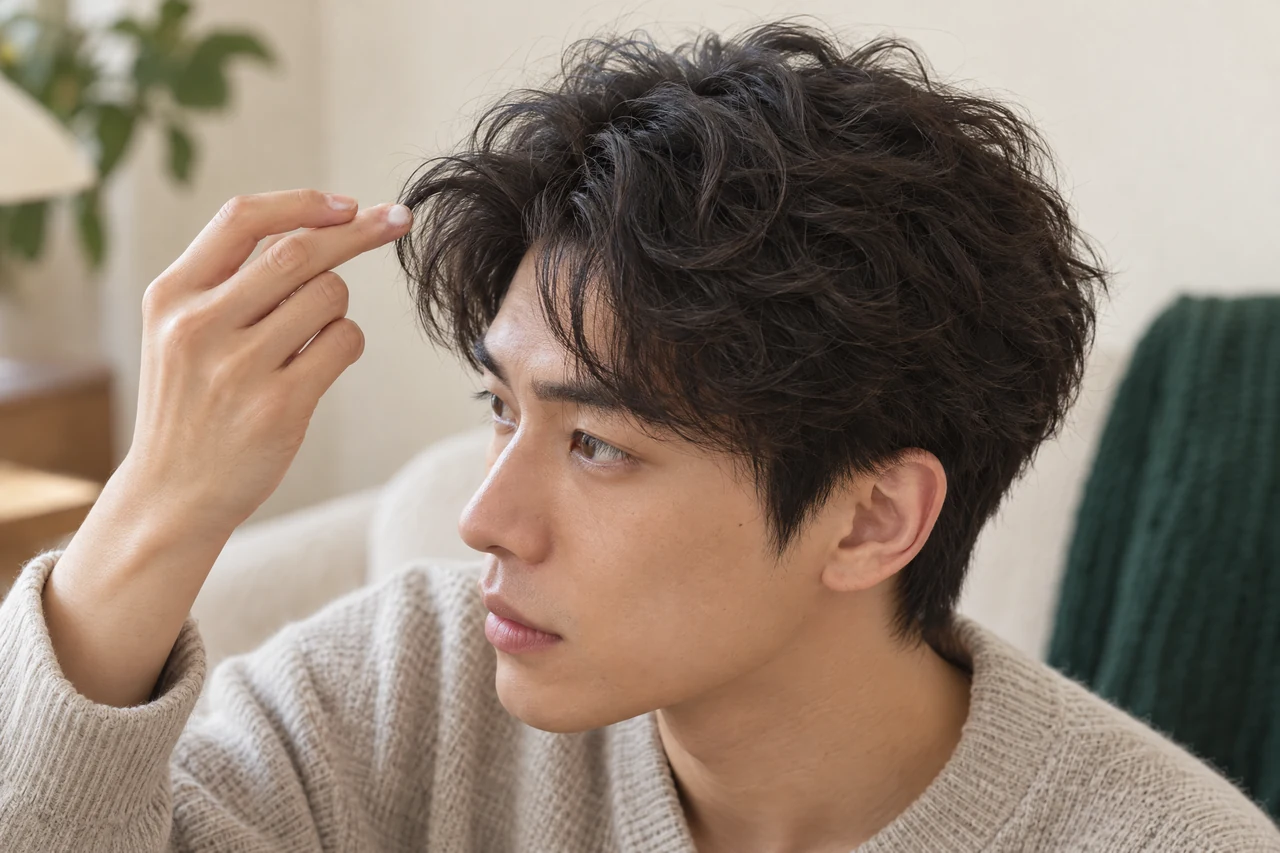
Perm aftercare choices: match the next step to the actual change
| What you notice | Useful routine choice | What not to assume |
|---|---|---|
| The first-wash advice is unclear | Clarify washing and wetting with the treating salon | Every perm has the same waiting period |
| Roots sit flatter but ends still move | Review root drying, parting and new growth separately | The entire perm has stopped working |
| Loose ends look different the next morning | Check a targeted refresh against your usual dry finish | More hot-tool passes are the only answer |
| Short fringe bends but falls too low | Discuss retained length before a maintenance cut | Another perm is automatically needed |
| Lengths feel coated after styling | Review product amount, placement and rinsing directions | Adding another product will improve definition |
Your preparation checklist
- Save the treatment date and processed areas together with the first-wash and wetting instructions.
- Confirm conditioner use, rinsing directions and the function of any suggested styling product.
- Practise the parting and drying direction with the equipment you actually have at home.
- Choose an achievable everyday finish and identify which sections need a next-day refresh.
- Take occasional photographs after the same routine, noting cuts and product changes.
- Share unexpected changes with the treating salon before arranging more chemical processing.
Frequently asked questions
When can I wash my hair after a perm?
Follow the first-wash instructions for the specific procedure and products used. Ask for clarification if they are unclear; a universal waiting period cannot be assumed from the word perm.
How long does a perm last?
The visible curl changes with the hair, treatment, growth, cutting and routine. There is no single guaranteed lifespan; ask what changes to expect from the proposed finish.
How long does a Korean perm last?
Korean is not one fixed processing recipe or lasting period. Discuss the actual method and your routine, then monitor changes in the shape rather than relying on a style label.
How do I maintain loose perm curls?
Follow the suggested wash and drying routine, handle the ends gently and clarify appropriate refreshing steps. Avoid treating repeated hot-tool styling as a substitute for advice about the treatment you received.
Do I need a particular product sold by the salon?
Ask what function and amount suit your hair, such as conditioning or light definition. The styling advice does not establish that a specific product is stocked or required.
Make your perm routine easier to repeat
For an aftercare enquiry with Vit So in Sheung Wan, share the treatment date, current dry-shape photographs and the step you find difficult. If another salon performed your perm, ask it to clarify the original first-wash instructions. Any proposed visit, service scope and availability must be confirmed; an enquiry is not a confirmed booking.
Start your WhatsApp enquirySources & further reading
- Tips for healthy hair
General guidance on scalp-focused shampooing, conditioner, gentle detangling and reducing excessive styling heat; not a specific perm's first-wash timetable.
- How to stop damaging your hair
General guidance on absorbing water without rough towel rubbing, avoiding tugging while styling and reducing damaging handling; not evidence for a guaranteed curl lifespan.



