







Men's perm enquiry with bleached top and untreated sides: identify two different goals
A reference photograph can hide two requests inside one hairstyle. You may like the bend through the fringe and longer top, while also wanting less width above the ears. Those changes concern different areas and may involve different decisions. Describe them separately: where should a wave start, and where should the outline sit closer? This makes it possible to consider a narrower haircut without treating the bleached top as part of an all-or-nothing booking.
The men's perm page is a useful starting point for describing movement and coverage, but a service label cannot settle the suitability of mixed-history hair. A top-only request still concerns the lightened lengths. A wider service does not make those lengths safer to process. Explain which area you would prefer to leave untouched, even if that means the finished plan differs from the photograph.
Choose the improvement that matters most
In a hypothetical enquiry, a customer with a lightened fringe might mainly dislike side hair sticking out after drying. A sensible question would be whether the haircut can reduce that width while the fringe stays chemically unchanged. Another customer may prioritise top waves and accept their current sides. Neither preference determines suitability, but identifying the priority prevents an unnecessary second goal from becoming an assumed part of the appointment.
Map the bleached area beyond the visible colour line
Describe where bleach was applied, not simply where the hair looks blonde today. Include the fringe, crown, upper sides and any longer strands that fall over the shorter side hair. A dark toner or later colour can make the boundary harder to see; it does not remove the earlier lightening from your history. If you cannot remember the coverage, say so. An uncertain border is information to investigate, not a reason to assume that every dark strand is untreated.
The question can you perm bleached hair is especially relevant to the top lengths that would receive new movement. Bring dates and locations of lightening, colour, previous perms and straightening where known. Separate what you know from what you suspect. A photograph may help communicate the layout, but it cannot demonstrate how those lengths would tolerate another chemical process or replace an assessment of the hair itself.
Separating top wave goals from unbleached side control at the boundary
Ask the hairdresser to explain the proposed treatment area in relation to the haircut, rather than using the top of the ear as a universal dividing line. Longer top strands can lie across the upper sides, and a blended haircut may not have a sharp separation. If the proposed side area includes previously lightened strands, it is not a wholly untreated zone. If a clear, workable boundary cannot be established, narrowing or deferring the chemical plan deserves discussion.

Untreated sides still need their own suitability decision
Untreated describes the history you report; it is not a guarantee of strength, comfort or a predictable result. Side length, growth direction and the outline you want all matter to planning. Point to the actual concern: sideburns, hair directly above the ear or the upper side where the top meets the shorter hair. A complaint about general width should not automatically become a request to chemically flatten all of those areas.
Discuss down perm as a possible side-control enquiry, not as a default add-on because the top has been bleached. Ask whether the named area is suitable, whether nearby lightened lengths affect the plan and whether a haircut could meet the same priority. The presence of a published service does not confirm that it is available for your particular combination of hair history and goals, or that two chemical services should be performed together.
A local request is not permission to overlap
Agree on what is meant to remain unchanged before any work starts. If keeping the bleached top out of the proposed chemical area is essential to the plan, ask how that scope can realistically be maintained. This is a professional planning question, not an invitation to attempt sectioning and chemical application at home. Where the intended separation cannot be supported, a non-chemical adjustment or a decision not to proceed is more useful than a vague promise of careful handling.

Compare a measured haircut with temporary styling and postponement
A narrower outline does not always require a chemical change. Ask what adjusting side length, weight or the transition into the top could achieve. Going shorter has a trade-off: the contrast between the lightened top and darker sides may become more visible, and you may lose a softer connection that you like. Explain whether keeping side coverage or a particular sideburn length matters. A cut-only plan should describe what it can improve and what it will not change.
The published men's wash, cut & blow-dry price is HK$380. That gives a concrete reference for discussing a haircut-led option, not a quote for an unassessed chemical combination. Confirm the service and actual charge when arranging the appointment. Choosing a haircut first can leave the wave request open for later consideration, but it does not create a guaranteed future date when the remaining bleached lengths will qualify for a perm.
Keep a styling trial gentle and realistic
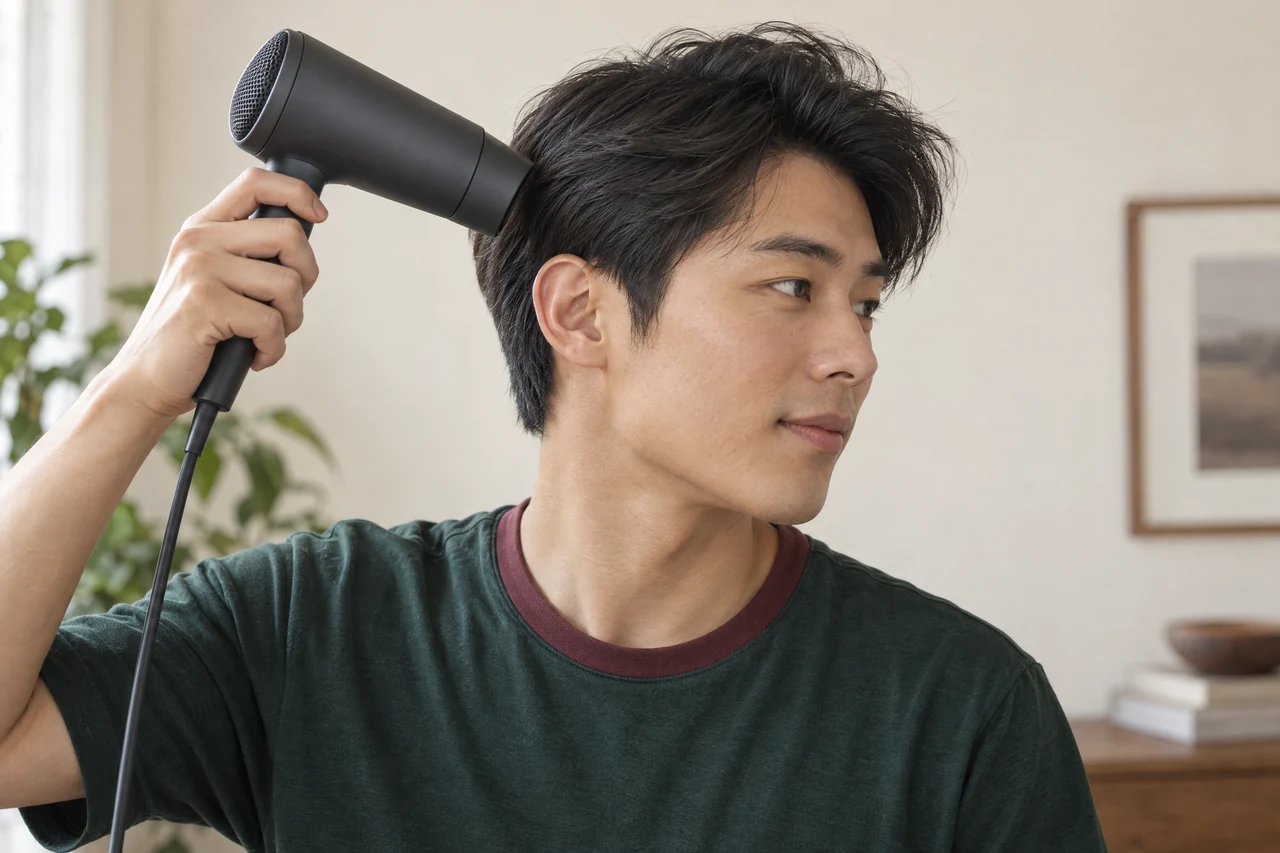
A temporary arrangement can help show whether changing the parting or drying direction addresses the shape you dislike. It is not a strength test or proof that a perm will reproduce the look. The American Academy of Dermatology's hair-damage prevention advice recommends conditioner after shampoo, gentle combing, air-drying where possible and the lowest heat setting. Repeated high-heat styling is not a sensible substitute for deferring chemical work on fragile lengths.
Recognise when leaving the top unchanged is the better decision
Report new breakage, tangling that is difficult to manage gently, or a marked change in how the lightened lengths feel during normal washing and drying. Do not repeatedly stretch wet strands at home to try to pass your own suitability test. These observations are reasons to pause the enquiry and explain the concern; they do not let you diagnose damage or select a weaker chemical formula. A professional assessment may still conclude that the requested top change should not proceed.
The American Academy of Dermatology's colouring and perming guidance warns that cosmetic treatments can leave hair dry and brittle and urges caution with perms. Gloss, a conditioning treatment or a darker colour should therefore not be treated as permission to process the bleached top. Elapsed time alone is not a suitability decision either. Discuss preserving the current lengths, revising the desired shape or letting the haircut change as previously treated hair is removed.
Scalp concerns are not a styling problem to work around
Tell the hairdresser about current scalp discomfort before agreeing to chemical work. The same AAD perming guidance advises immediate rinsing and dermatology consultation if excessive stinging and burning occur while perm solution is on the scalp; alert the professional immediately rather than enduring it for a result. Its hair-damage advice also recommends seeing a dermatologist when care changes do not help, especially if thinning or hair loss worries you. A hairstyle enquiry cannot establish the cause of those concerns.
Prepare an enquiry that allows a split plan or a clear no
These 6 preparation points keep the two goals separate. Use the checklist to gather useful details without turning the enquiry into a demand for a particular technique. Take natural dry-hair views of the front, both sides and the back, and describe your normal styling rather than presenting only a heavily arranged reference. If an earlier salon record is available, share it. Missing information should stay visibly uncertain instead of being filled in with guesses.
Your enquiry can be straightforward: the top has been bleached, the sides are believed to be untreated, movement is wanted in one area and a narrower outline in another. Ask whether a haircut alone is a reasonable starting point and what needs to be assessed in person. Also state if you would rather keep the top unchanged than risk losing length. This lets the conversation end with a useful alternative, even when the original chemical request is unsuitable.
What to confirm in a men's perm enquiry with bleached top and untreated sides
Before booking, confirm the agreed areas, what will remain untouched, the service contents and the actual charge. Ask whether the appointment is for assessment or includes an agreed service; a message exchange does not guarantee approval. Confirm your preferred consultation language if that matters, as an English-language website is not a promise of an English-speaking appointment. The aim is a clear next step that respects both histories, not a full-head solution chosen merely because it has a familiar name.
Different next steps for a bleached top beside untreated sides
| Option to discuss | What it addresses | Main limitation |
|---|---|---|
| Measured side haircut | Side width and the transition into the top | May expose more contrast; does not create new top waves |
| Gentle temporary styling | Parting and the appearance of daily direction | Needs restyling; is not a chemical-suitability test |
| Defer the top change | Avoids adding the requested chemical process to bleached lengths now | The desired wave is postponed, without a promised approval date |
| Separately assessed side-control service | A specifically identified side area | Untreated history alone does not approve processing or boundary management |
Your preparation checklist
- Record where bleach reached, including the fringe, crown and any upper side strands.
- List known dates and areas of colour, perms and straightening; mark anything uncertain.
- Photograph the natural dry outline from the front, both sides and the back.
- Point out the exact top movement wanted and the separate side area that feels wide.
- Describe breakage, scalp discomfort and your usual washing, drying and styling routine.
- State acceptable haircut changes, the top lengths to preserve and whether postponement is acceptable.
Frequently asked questions
Can the untreated sides be processed while the bleached top is left alone?
That is a question for separate assessment, not an automatic yes. The proposed area, its actual history, scalp comfort and the boundary with lightened strands all need consideration. If a workable scope cannot be established, discuss a haircut or temporary styling rather than treating the untouched top as proof that the side service is suitable.
Does separating top wave goals from unbleached side control mean booking two services?
No. It means describing two priorities without assuming either needs chemicals. The enquiry may lead to a cut-only plan, leaving the top unchanged, a narrower assessed scope or postponing all chemical work. Confirm what is actually proposed and charged before arranging the appointment.
Will waiting or colouring the bleached top darker make a perm suitable?
Neither gives automatic approval. A darker appearance does not erase the lightening history, and waiting alone does not establish the condition of the lengths that would be processed. Share the full history and discuss preserving or gradually cutting those lengths rather than relying on a fixed countdown or a change in shade.
Enquire about your top and sides as separate areas
Send Vit So a WhatsApp enquiry on +85253057561 with natural dry-hair photographs, the known bleach boundary and the change you want in each area. Ask about assessment and a haircut-led alternative at 252 Hollywood Road, Sheung Wan, Hong Kong. Suitability, service scope, appointment arrangements and the actual charge require confirmation; sending a message does not complete a booking.
Start your WhatsApp enquirySources & further reading
- Coloring and perming tips for healthier-looking hair — American Academy of Dermatology
General dermatologists' advice on dry, brittle hair after cosmetic treatments, caution with perming and responding to excessive scalp stinging or burning. It does not assess an individual bleached top or approve a side-control technique.
- How to stop damaging your hair — American Academy of Dermatology
Practical guidance on conditioner, gentle combing and reducing heat exposure, plus when persistent concerns or thinning warrant dermatology advice. Its general recommendations are not a guaranteed waiting period for perming previously bleached hair.



