







Partial hair straightening for curly fringe: mark the boundary
Show which front strands you mean and where the surrounding curls should remain unchanged. A central section, the whole fringe and the face-framing sides are different scopes. Photographs with your usual parting help explain the boundary, but do not establish whether a local process is feasible or offered as a separate appointment.
Start with the problem you notice rather than the treatment name. Is a central curl turning sideways over your brow, is the fringe separating into gaps, or are you spending too much time styling the whole front? These concerns call for different conversations. Identify the visible issue in naturally dry hair, then describe the desired change: a gentler bend, a more even fall or a clearly straight line.
Use your normal parting to show the front section. Include its depth from the hairline as well as its width across the forehead. A fringe that looks narrow from the front may draw hair from farther back. Point out the temple curls and longer face-framing pieces that must stay outside the proposed area. Do not pull extra strands forward just to make the outline look fuller in a photograph.
Review hair straightening to check its service scope and the details to share before arranging the related work.
Define partial hair straightening for curly fringe without widening the goal
A useful request is: 'I want this central front section to fall more evenly, but I want the curls beside my temples and throughout the rest of my hair unchanged.' Show the section as you speak. If the suggested boundary is wider than you expected, pause and ask why. You can prefer a less dramatic change within your original area rather than accepting a larger treatment solely to match an inspiration picture.
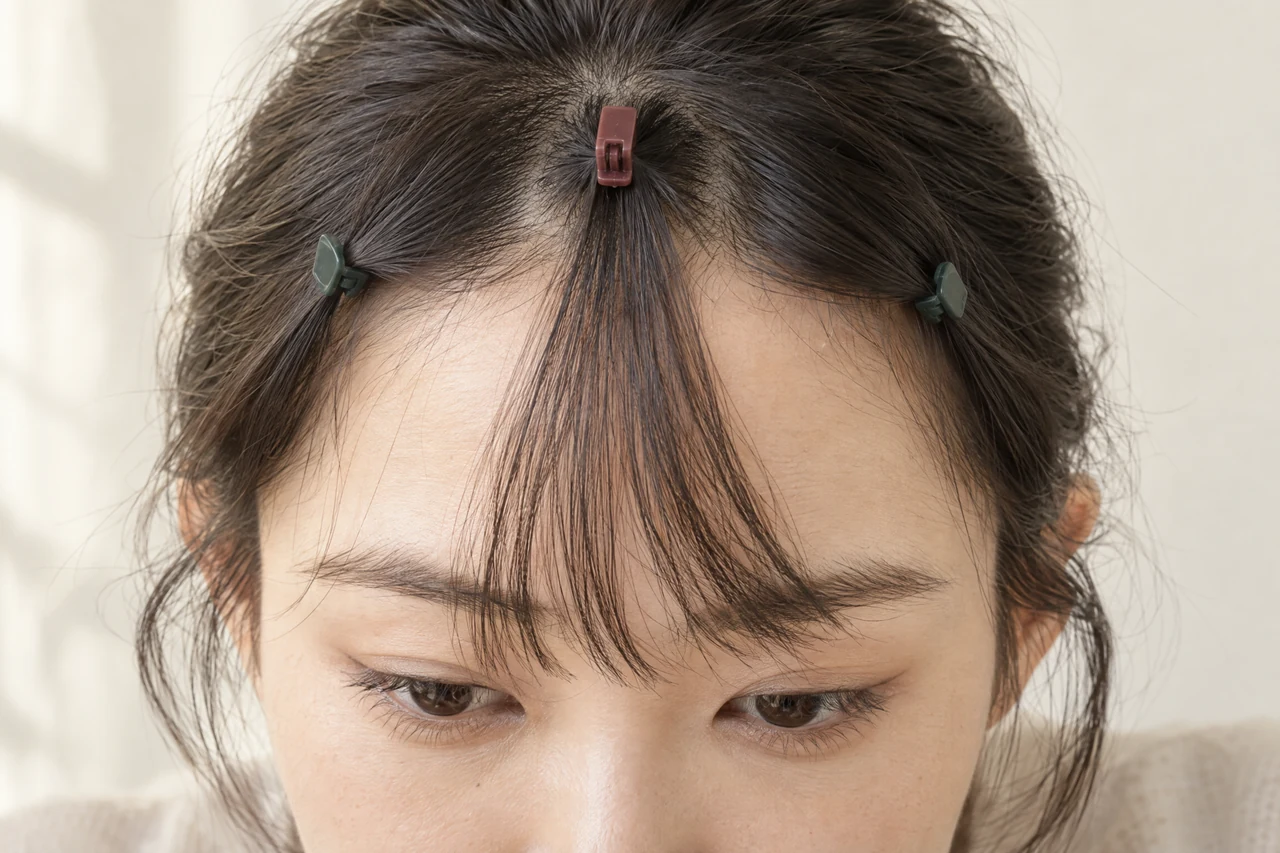
Check dry length and natural spring
Compare the fringe when wet, naturally dry and temporarily styled. Relaxing its curve may make the same length sit lower near the eyes. Discuss the length and movement you want before combining any cutting and straightening plans. A very short fringe or strong growth direction may need a different approach rather than simply stronger processing.
For the comparison, keep your head upright and avoid stretching the fringe with your fingers. Note where the ends sit relative to your brows and glasses. Look straight ahead, then turn slightly to see whether the fringe lifts away from your forehead. A longer-looking front may provide coverage you like, but it may also brush your lenses or need moving aside during work.
Distinguish the curl along the strand from the direction in which hair leaves the scalp. If a front section naturally opens at a particular point, changing its bend does not establish that the parting will disappear. Show how it behaves after your usual wash and drying routine. Describe whether you want to keep some root lift instead of asking only for 'straight' hair.
For decisions about retained length rather than processing, the guide to bangs for curly hair helps you compare the natural dry shape before agreeing on a cut.
A straighter fringe can sit lower than expected
Agree on the final resting position, not just how much hair should be removed. If you are considering both a cut and local straightening, ask how the stylist would establish that position and reassess it during the proposed work. Mention whether you sometimes wear the fringe curly: a length that feels convenient when temporarily straightened may give different coverage in its natural shape.

Blend the front with the curls beside it
A very straight front can contrast with curly sides, especially when tied back or parted differently. Describe whether that contrast is acceptable and how much daily styling you would do. Ask how any proposed local work might affect the boundary and previously treated strands; retaining the rest of the curls must be discussed explicitly.
Check the meeting point where the outer fringe reaches the longer curl beside it. Do you want the front to end visibly as a separate shape, or to turn gently into the side? Neither preference is automatically wrong. A deliberate straight-fringe contrast can suit your taste, while a softer front may be easier to combine with loose temple curls. The important point is agreeing on the contrast before a lasting change.
Preview your usual ways of wearing the hair: loose, tucked behind the ears and tied back without pulling tightly. Include any parting changes you actually make. If the same strand moves between the fringe and side section, identify that overlap. A boundary chosen only for a perfectly arranged front view may not reflect the way you wear your hair through the day.
Consider the transition in your everyday parting
Be specific about the maintenance you will accept. If you do not want to style the curly sides each morning, say so before discussing a very straight front. Ask what the proposed transition would look like without a polished salon finish. Photos of the temporary preview can help communicate the contrast you like, but cannot demonstrate how untreated and processed strands would behave together later.
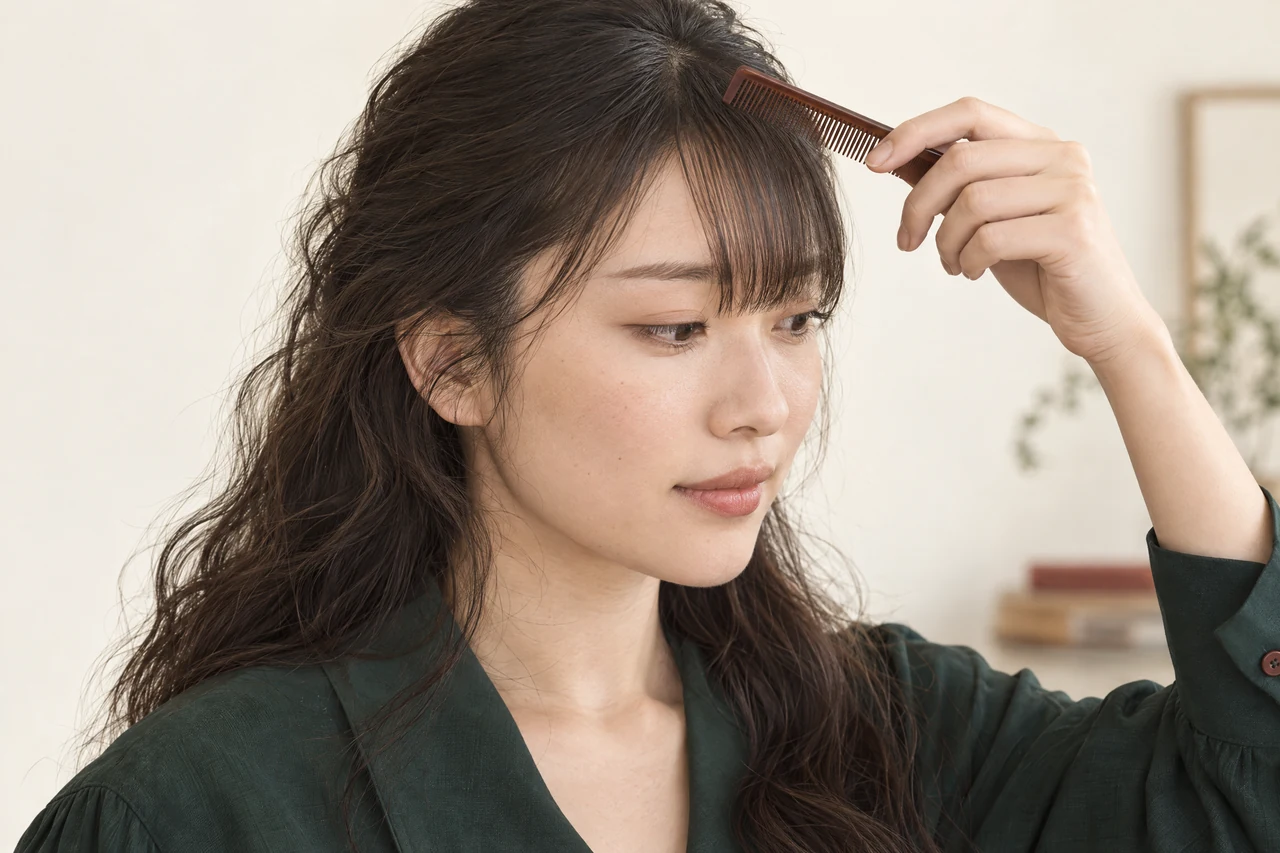
Compare styling and cutting before a local process
Temporary drying or styling can help you judge a straighter front before choosing a lasting change, although it cannot predict chemical suitability. A change in length or fringe shape may also address the concern. Ask whether local straightening is appropriate and available, how it would be priced and what care would follow rather than assuming a full-head entry covers it.
Use a temporary preview to answer a design question: do you actually prefer the front less curly? Look beyond the immediate smooth finish. Check whether you miss the original lift, whether the edge feels too dense and whether the new fall meets your glasses. A preview is useful even if you decide to keep your curls and change only the fringe outline.
Temporary heat styling still needs restraint. The American Academy of Dermatology's hair-styling guidance recommends flat irons on dry hair at a low or medium heat setting and warns that excessive heat can damage any hair type. Do not keep increasing the heat or repeating passes because a small curl resists your preferred shape. Discuss how to protect hair from heat styling if a temporary fringe routine is your preferred alternative.
Review women's haircut to check its service scope and the details to share before arranging the related work.
A temporary change can help test your preference
Cutting and styling answer different needs. A reshaped fringe can change coverage or remove ends you find awkward, while temporary styling lets you choose a different front for an occasion. A proposed local process changes the discussion to suitability and ongoing care. Compare these routes against your morning routine rather than treating the longest-lasting option as automatically the best value.
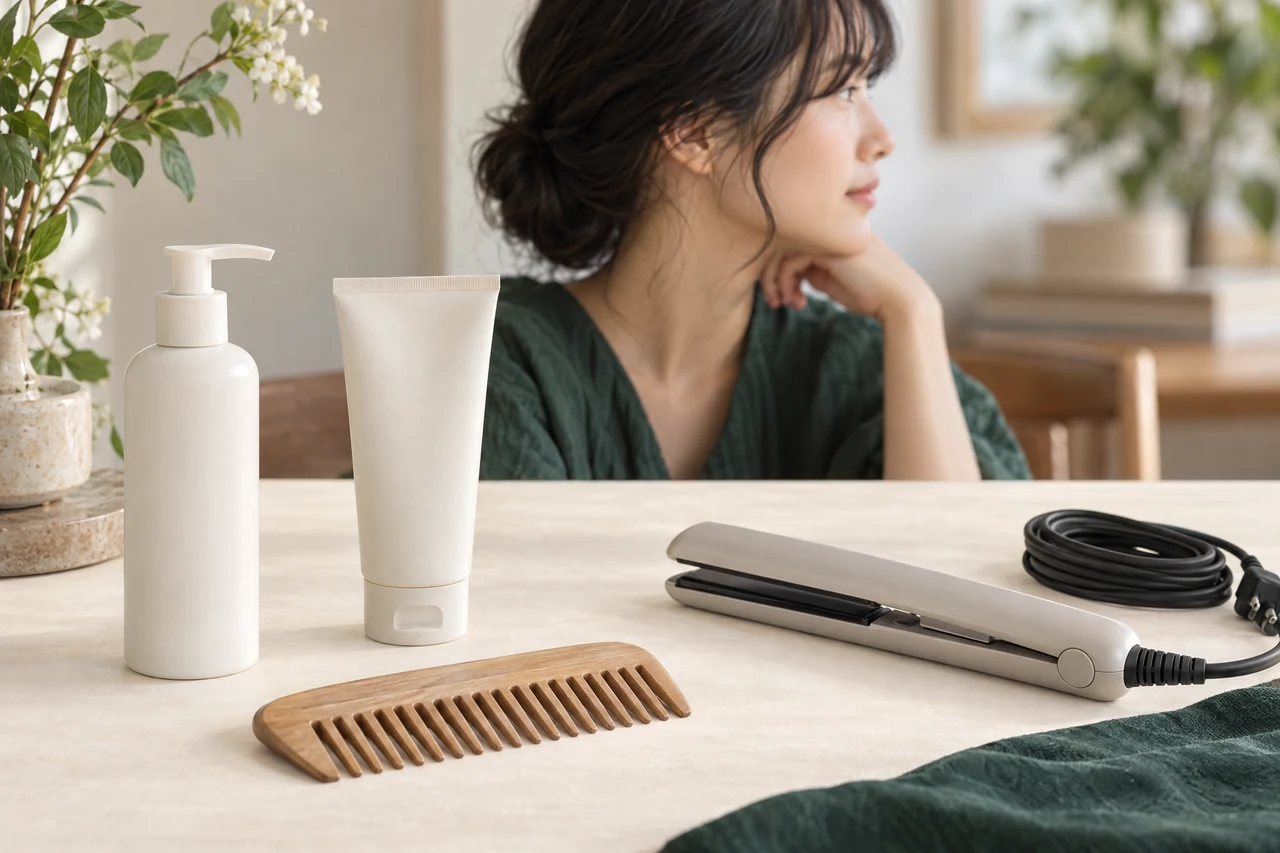
Share the fringe's history and ask what would be used
Record previous work on the front separately from the rest of your hair. Mention highlights near the face, colour, earlier straightening or smoothing, and frequent heat styling. Give approximate dates if you know them; if you do not, explain what you remember rather than guessing a product name. Recently trimmed ends do not establish that every remaining front strand is unprocessed.
Ask which product and method are proposed, where they would be applied and how neighbouring curls would be kept outside the treatment area. If a heated smoothing product is suggested, the FDA's consumer guidance on hair smoothing products supports asking about ingredients, the Safety Data Sheet and ventilation. It notes that not all smoothing products contain formaldehyde. This is a product-specific question, not a claim about every straightening method or the products used by Vit So.
Small scope still deserves a full suitability discussion
Mention tenderness at the hairline, unusual breakage or a previous product reaction before arranging chemical work. Do not try a home chemical treatment simply because the section is small. If scalp irritation or unexplained hair loss is present, seek medical advice rather than assuming a styling change will address it. You can still discuss a haircut or a non-chemical alternative while clarifying those concerns.
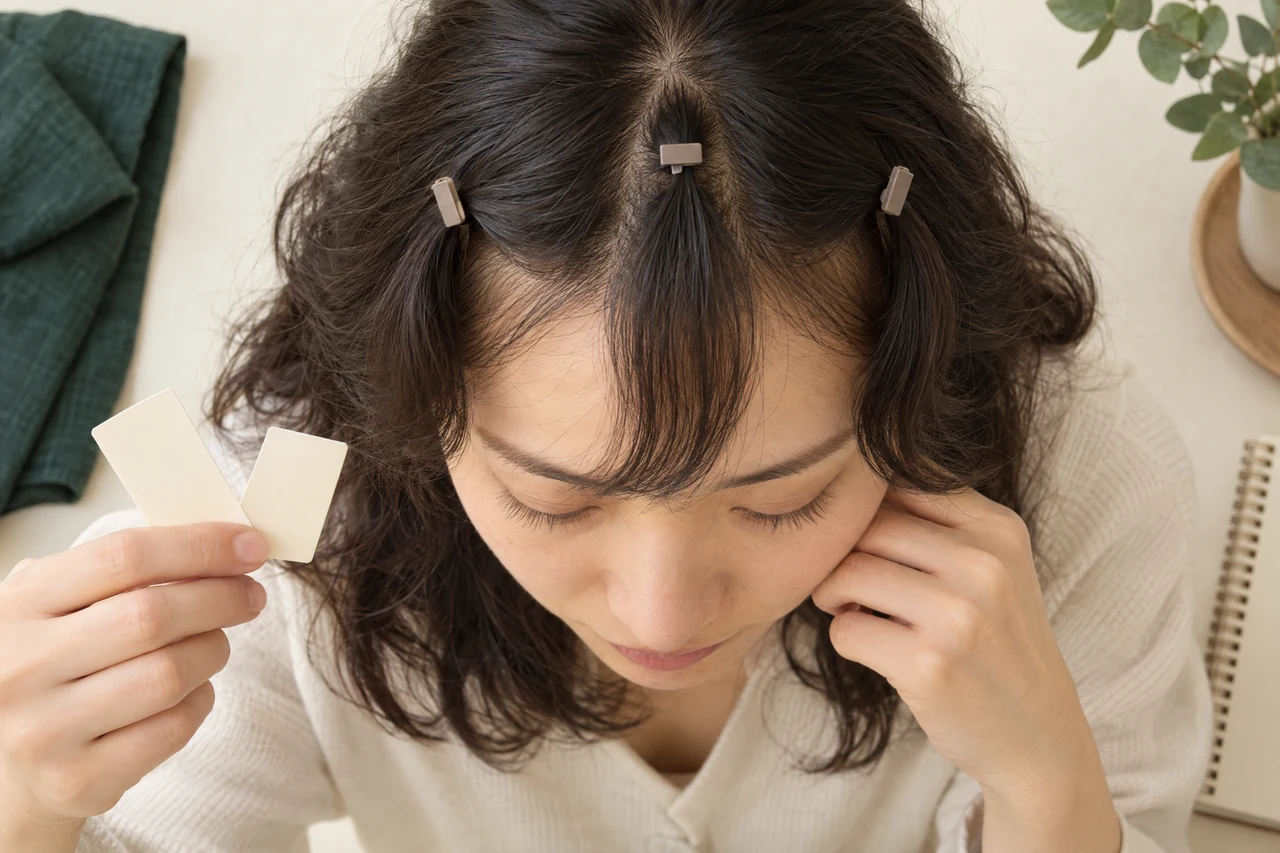
Prepare photos, care questions and a clear enquiry
Take a front and side photograph of your naturally dry fringe with the surrounding curls visible. Add a temporary styled view only if you already have one, and label it clearly. Show the target area on a copy of the photo so the original remains available. The checklist below contains 6 preparation steps for a focused fringe enquiry.
Continue with haircut reference photos for that specific comparison and the preparation questions it raises.
Ask how you would care for the front without disrupting the curls you keep. For those untreated curls, the American Academy of Dermatology's curly-hair advice supports detangling wet, conditioned hair in sections rather than dry brushing. Any processed fringe would also need instructions for the particular procedure; do not substitute a general curl routine for those instructions.
Confirm the area and quote before making arrangements
A fringe-only quote should identify the agreed area and what is included, such as any cutting or finishing. A full-head straightening entry does not establish a proportional fringe price, and a partial perm is not the same service. Ask about availability and the time needed for assessment before planning your visit to Sheung Wan. Keep the aim narrow: a more manageable front with the surrounding curls still part of the hairstyle.

Ways to address a curly fringe while preserving the surrounding curls
| Approach | Useful for | Main trade-off or question |
|---|---|---|
| Keep the natural curl and adjust the routine | You like the curl but want easier separation and handling | Compare your usual drying and detangling habits before changing texture |
| Reshape the fringe through cutting | Coverage, edge shape or an awkward retained length is the concern | Check the naturally dry position and which side lengths must stay |
| Temporary front-only styling | Testing a straighter look or preparing for an occasion | Needs repeat styling; heat use still requires care |
| Discuss a local straightening process | You prefer a lasting change to defined front strands | Suitability, boundary, curl transition, availability and quote need assessment |
Your preparation checklist
- Photograph the naturally dry fringe from the front and side, showing the surrounding curls and usual parting.
- Mark the front strands you want changed and the temple curls or face-framing pieces you want untouched.
- Describe the desired dry resting position, including brow coverage, glasses and root lift.
- Share colour, bleach, smoothing, straightening and heat-styling history for the front section.
- Compare a temporary styling preview or cutting alternative with the daily effort you would accept.
- Ask about the proposed product, suitability, treatment boundary, aftercare, availability and an itemised quote before arranging the visit.
Frequently asked questions
Is bangs straightening for curly hair a different goal from fringe straightening?
Bangs and fringe refer to the front hair in American and British usage. Clarify the actual strands and transition rather than treating the names as separate services.
Is a fringe-only treatment on the published price list?
A separate fringe-only straightening item is not established by the listed full service names. Ask about availability, suitability, scope and the quote before making arrangements.
Can I keep the sides curly?
Make that a clear priority and define the boundary. Whether the proposed procedure can meet it needs assessment; a narrow treatment goal does not guarantee a seamless result.
Should I cut my curly fringe shorter before discussing straightening?
Discuss the desired dry position first. A straighter fall may sit lower, but shortening in advance can also remove length you need for the intended shape. Bring the fringe as it is and explain how much coverage you want to retain.
What should I show if my fringe looks different every morning?
Bring ordinary examples rather than only your best styled photograph. Note the parting and whether each image shows air-dried or heat-styled hair. Include the side curls so the conversation covers both the front shape and the transition you want to keep.
Explain the front you want to change—and the curls you want to keep
Send Vit So your naturally dry fringe photos, a marked treatment boundary and the front section's processing history. Ask whether your narrow goal is suitable and whether local work is available, with scope and price clarified before a visit to Sheung Wan. An enquiry starts the discussion; it is not a confirmed booking.
Start your WhatsApp enquirySources & further reading
- 6 curly hair tips from dermatologists
General detangling advice for the untreated curls that a fringe-only discussion aims to preserve.
- Hair styling without damage
Dry-hair flat-ironing at low or medium heat and avoiding excessive heat during a temporary fringe preview.
- Formaldehyde in Hair Smoothing Products: What You Should Know
Product-specific ingredient, Safety Data Sheet and ventilation questions when heated smoothing is proposed.



