







Scalp care before recolouring a recently lightened hairline starts with two questions
First, describe the root concern without deciding its cause. Perhaps hair near the forehead feels coated after styling, or the fringe sits flat despite the rest of the hair feeling clean. Say where that happens, which products were used and whether normal washing changes the feeling. This is useful information for a cosmetic cleansing enquiry. It does not establish that you need exfoliation, that the scalp is unhealthy or that the front strands are ready for more colour.
Second, identify what you want changed about the hairline colour. You might dislike the warmth of already-lightened front pieces, want a softer contrast against darker hair, or notice untreated growth behind them. Those are not interchangeable requests. Looking at both concerns together helps the hairdresser understand the visit, but it does not mean treating both together is appropriate. Keep the cleansing aim separate from the colour aim until the proposed products, application areas and sequence have been discussed.
A coated-root concern is not colour preparation
The scalp care service is a place to enquire about cosmetic cleansing contents, not evidence that an exfoliating step belongs before every colour appointment. Ask what is actually proposed and why it would address your concern. A clean-feeling root area cannot confirm how recently processed strands will respond to another colour service. Equally, deciding against extra scalp care does not settle whether recolouring is suitable. Each decision needs its own reason.
Bring the lightening history and the aftercare already given
Start with the most recent lightening date and the treated area. Was it a narrow section around the face, a broader front panel or part of an all-over service? Include any colour applied afterwards and earlier bleaching in the same strands. If you do not know a product name or technical detail, say so rather than guessing. Messages, appointment notes or packaging photographs can help explain what happened, especially when different appointments involved different parts of the hair.
Bring the original washing and product advice too. Do not replace it with a new scrub, repeated clarifying washes or a colour-depositing product merely because another appointment is approaching. Ask the colour provider to clarify any uncertain instruction, including what to do if the roots feel coated while the processed strands feel dry. Useful preparation means preserving accurate information and checking the existing plan, not adding several unfamiliar products and then trying to work out which changed the feel.
Use these details to make a specific compatibility enquiry
The guide to a head spa for colour-treated hair explains why colour history and actual product compatibility matter. For this visit, make the question more specific: would the proposed cleanse fit the aftercare for these recently lightened front strands, and does it belong near the proposed recolour at all? A spa description or a colour-care label cannot answer that on its own. The six preparation notes below give you a practical starting point.

Define the hairline colour area before choosing a service name
The word roots can refer to hair growing from the scalp, the scalp area itself or the darker band visible beside lightened pieces. A photograph alone may not reveal which you mean. Explain whether you want untreated growth coloured, existing lightened strands made less warm, or the border between those areas softened. Also name what should stay unchanged. Keeping the rest of the colour intact is a clear preference, not an incomplete request for a larger service.
A root touch up enquiry concerns the proposed root-colour area; it should not be treated as an automatic name for recolouring already-lightened hairline pieces. Ask the hairdresser to identify the intended application area and whether previously processed sections would be involved. Avoid choosing by the apparent smallness of the front section alone. The assessment still needs to account for its processing history, your current scalp comfort and the change you actually want to see.
Show what needs changing and what needs leaving alone
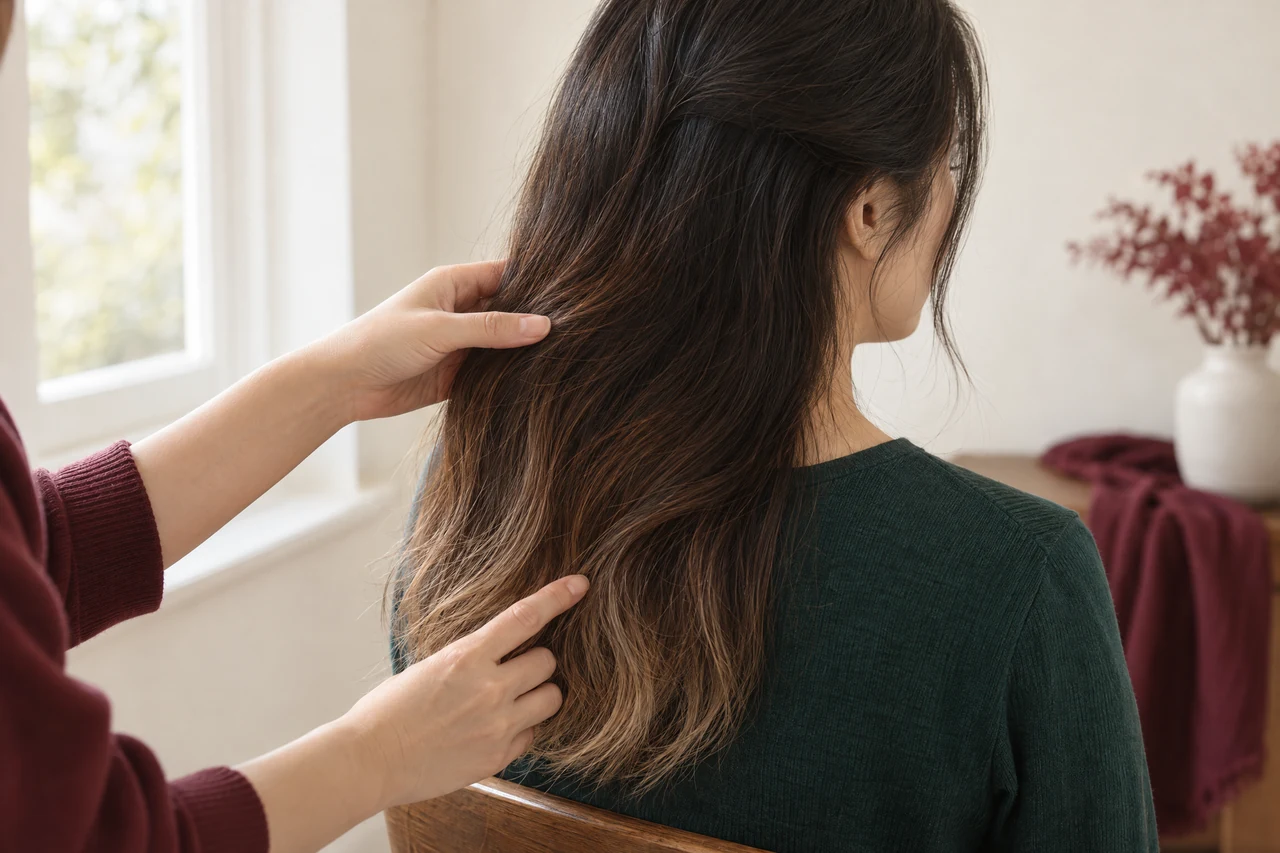
In a hypothetical example, someone has lightened face-framing pieces but now wants the front to look less bright. Their roots also feel coated after frequent styling. The colour enquiry is about those existing light strands; the cleansing enquiry is about product feel near the scalp. Booking a root service plus a scrub would skip the key questions. Showing both areas and explaining both goals allows the hairdresser to assess them without assuming one treatment prepares for the other.
Ask about sequence before trying to fit everything into one visit
The FDA hair-dye safety checklist says: “Wait at least 14 days after bleaching, relaxing, or perming your hair before using dye.” This is published consumer guidance, not a Vit So scheduling promise or permission to recolour as soon as that interval ends. Share the actual lightening date before arranging further dye use. Follow the relevant product directions and obtain an individual assessment; current discomfort or the condition of the processed area can still require deferral.
If cosmetic care is being considered, ask whether it has a clear purpose independent of the colour appointment. Confirm its method and products rather than assuming a stronger wash is helpful. Then ask whether the care and colour should be assessed separately, scheduled apart or reduced to the one service that is actually appropriate. Putting care on an earlier date does not automatically resolve suitability either. A separate appointment is an option to discuss, not a formula that makes every combination acceptable.
Scalp care before recolouring a recently lightened hairline needs a reason for each step
Use the comparison below to decide what you need answered, rather than to choose a treatment yourself. If your usual instructed routine addresses the coated feeling, an additional cleanse may offer no useful preparation. If the colour scope remains uncertain, settle that enquiry before arranging an extra service around it. If both concerns remain relevant, ask for a clear sequence and any stop conditions. An assessment may lead to fewer steps or a postponed visit rather than a combined booking.
Discomfort changes the decision from cosmetic care to appropriate help
Do not describe stinging, burning, persistent soreness or a rash as simply needing a deeper clean. The NHS guidance on hair-dye reactions lists these kinds of symptoms, including blisters, and advises medical help when a reaction worsens. It also identifies sudden mouth, tongue or throat swelling and breathing difficulty as emergency warning signs. Seek emergency help for those signs. A salon enquiry should not delay healthcare or be used to decide whether a reaction is harmless.
The FDA also advises against dyeing an irritated, sunburned or damaged scalp. If that describes your current condition, defer chemical work and seek appropriate healthcare rather than adding cosmetic care to make the appointment possible. Mention any previous dye reaction when enquiring, even if a later product seemed comfortable. The FDA explains that reactions can occur after previously uneventful use and remain possible despite a negative skin test. Cleansing, a soothing sensation or a test cannot guarantee safe recolouring.
Pausing extra care is not a treatment for a reaction
If symptoms arise while dye is still on the hair, the NHS advises washing it out immediately with mild shampoo; suspected reactions are not a reason to leave dye in place to preserve the shade. Seek suitable advice for the symptoms rather than applying another salon product to hide them. For a future appointment, describe what occurred and any healthcare advice you received. This article cannot diagnose the cause, select a medical treatment or decide when chemical work can resume.
Make a focused enquiry and confirm the scope before booking
A useful enquiry might say: “My front pieces were lightened recently. I want to discuss changing their tone, while the roots nearby feel coated after styling. I have the previous aftercare instructions. Should those concerns be assessed separately before I arrange anything?” Add the date, current comfort and photographs taken in ordinary light. This gives the hairdresser something more useful than a request to deep-clean and recolour on the same day. Photos support the discussion but cannot establish suitability remotely.
Confirm charges against the work actually proposed. The confirmed price for Professional scalp care is HK$980; this does not include or establish a quote for recolouring your hairline. A smaller-looking colour area does not justify assuming a different price or an express service. Ask which service applies, what it includes and whether an assessment or separate visit is needed before any charge is agreed. The better outcome of an enquiry is a clear scope, even when that means postponing part of your original plan.
Know what remains unconfirmed
Before treating a WhatsApp conversation as a booking, check the appointment availability, agreed contents and actual charge. Ask what preparation is required rather than carrying out an extra cleanse on your own. If you need a particular consultation language, confirm that too; an English website does not guarantee an English-speaking consultation. Keep the previous aftercare advice available until any updated instructions are clearly explained. A reply should help you decide the next step, not be interpreted as a guarantee of a colour result.
Keep the cleansing concern, colour request and safety question distinct when discussing the next visit.
| What you notice | Question to ask | What not to assume |
|---|---|---|
| Coated roots after styling, with no discomfort reported | Is an additional cosmetic cleanse needed? | A scrub is required before dye |
| Recently lightened front strands look too warm | Which processed strands would the colour plan involve? | A root touch-up name defines the work |
| Untreated growth beside lightened hairline pieces | Where would new colour start and stop? | The whole front area has the same history |
| Unclear washing advice after lightening | Can the original provider clarify the instructions? | A stronger wash overrides previous advice |
| Burning, rash, soreness or damaged skin | What appropriate healthcare is needed? | Cosmetic care can clear you for colour |
Your preparation checklist
- Record the date of the latest lightening and any colour applied afterwards.
- Describe the front sections treated, including older processing in those strands.
- Bring the existing aftercare instructions and photographs of relevant product labels.
- Note the root feeling, recent styling products and any current scalp discomfort.
- Show the colour change you want and the areas you want left unchanged.
- Ask whether assessment, care and colour need separate visits, with charges confirmed.
Frequently asked questions
What does separating cosmetic root cleansing from planned hairline colour mean for my booking?
It means discussing the purpose and suitability of each service before deciding the appointment contents. You may need only a colour assessment, only cosmetic care, separate appointments or a delay. Do not start by assuming that cleansing must happen first or that both services will be approved together.
Should I use a scalp scrub at home to prepare the hairline?
Do not add a scrub as automatic preparation. Follow the existing aftercare instructions and ask about the root concern before introducing another method. Tell the hairdresser what you have used and whether your scalp is comfortable. Scrubbing cannot establish that recently lightened hair is ready for more dye.
Does a comfortable scalp mean I can recolour the front pieces now?
Comfort is useful information, but it is not clearance for further dye use. The lightening date, product instructions, previous processing and proposed application area still matter. Bring that history for assessment, respect the published safety guidance and do not take the absence of symptoms as a guarantee of compatibility.
Ask about your hairline colour plan before adding scalp care
Send Vit So a WhatsApp enquiry on +85253057561 with the lightening date, existing aftercare advice, current scalp comfort and the front sections you want changed. Ask whether cosmetic cleansing and colour should be assessed or scheduled separately. The address is 252 Hollywood Road, Sheung Wan, Hong Kong. Appointment availability, service contents and the actual charge require confirmation; if physical symptoms are present, seek appropriate healthcare rather than waiting for a salon reply.
Start your WhatsApp enquirySources & further reading
- Hair Dyes | FDA
Consumer precautions on dye use after bleaching, irritated or damaged scalps, following product directions and the limitations of skin testing. This guidance does not establish an individual salon booking date.
- Hair dye reactions - NHS
Recognising possible dye-reaction symptoms, seeking appropriate healthcare and identifying emergency warning signs. It also explains immediate washing advice when a reaction is suspected.



