






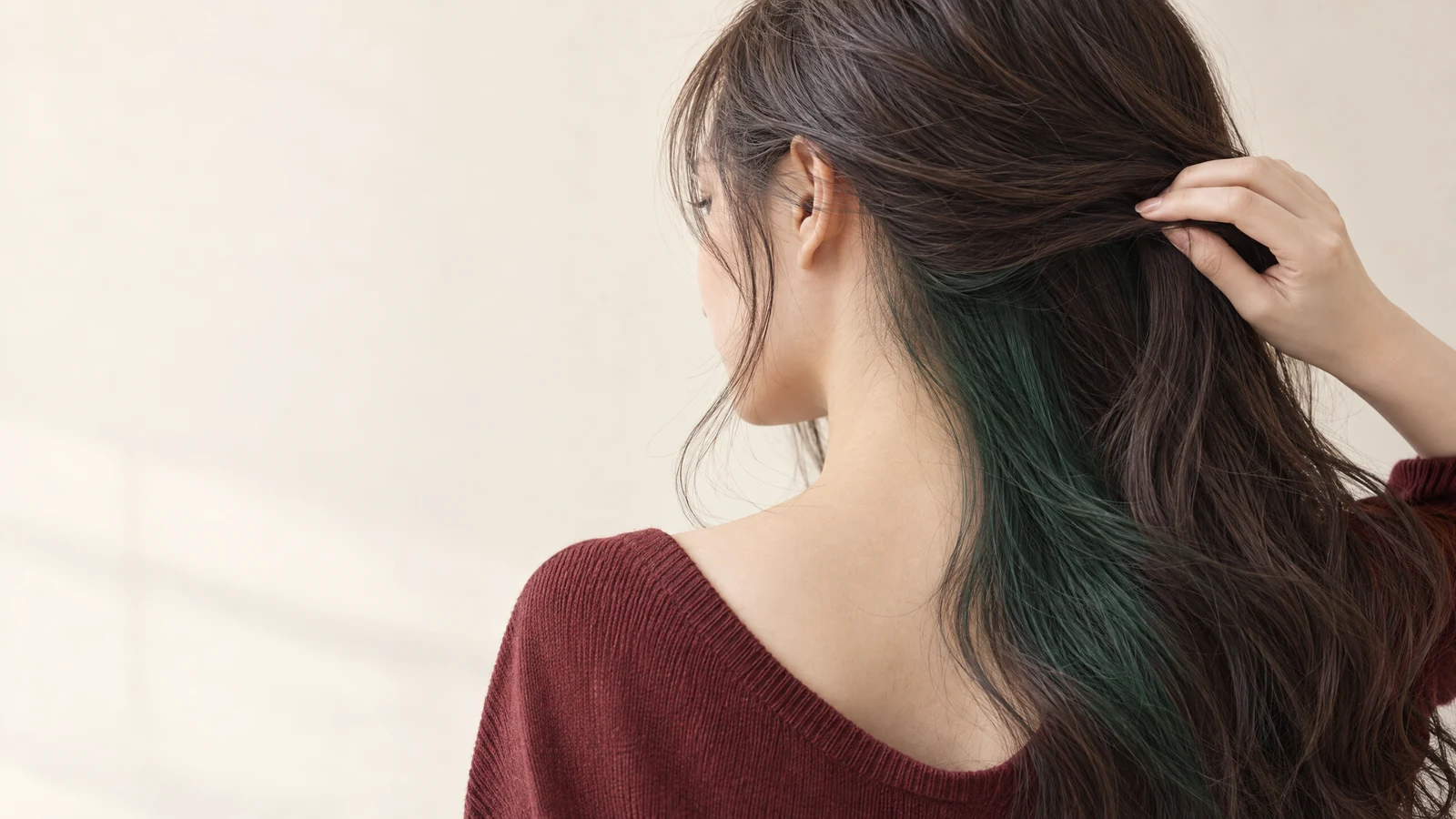
Peekaboo highlights: locate the underneath area
Peekaboo hair colour and underlayer hair colour describe a position beneath the upper hair, but neither defines identical sections on every haircut. Ask where the coloured area would begin and end. Layers, natural parting and how you brush the hair affect coverage, so a photograph taken from one angle cannot establish how hidden it will remain.
The starting point is a placement map, not a colour chart. L’Oréal Professionnel’s peekaboo hair guide describes colour applied to the bottom layer. For your own consultation, distinguish a narrow area behind the ears from a wider section across the lower back of the head. Both sit underneath, but they expose different amounts of colour as the upper hair separates.
Ask to see the proposed boundary with your hair resting in its normal parting. Identify which uncoloured strands would cover it and whether the coloured ends would extend below them. A long outer layer can cover the upper boundary while leaving bright tips visible. The useful question is not simply whether the roots are hidden, but where colour remains visible along the whole length.
If you are also changing the cut, consider how a layered haircut might change the length and weight of the covering sections. Agree on those boundaries before deciding the colour placement.
Review hair highlights to check its service scope and the details to share before arranging the related work.
Peekaboo highlights beneath your usual covering layers
A helpful reference shows hair at rest as well as lifted. Describe whether you want almost complete coverage when still, occasional narrow flashes, or a clearly visible lower panel. These are communication goals rather than measured percentages. Underlights hair references can help explain the lower position, but the name alone cannot tell a stylist how wide your coloured section should be.
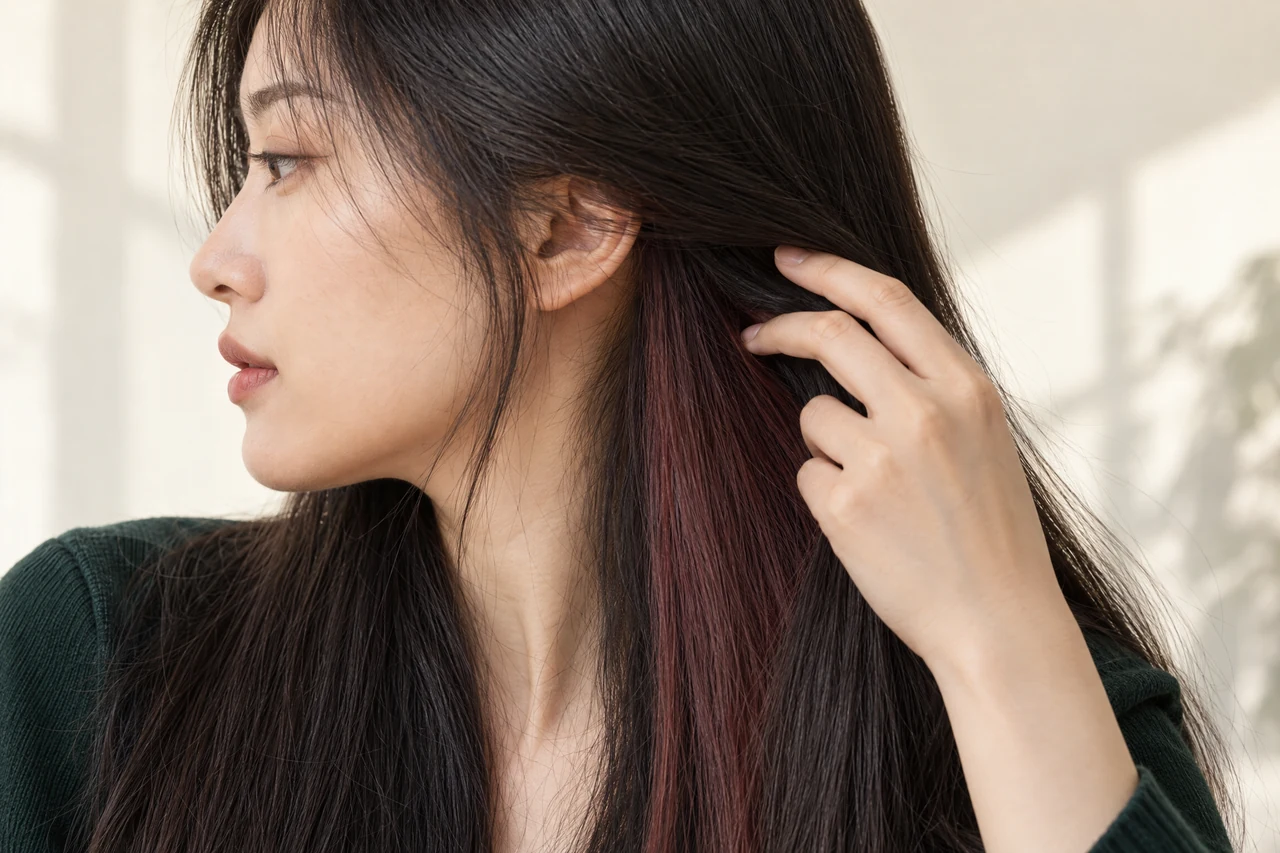
Hidden hair colour when the hair is tied back
Colour placed in the bottom layer can become visible in a ponytail, bun or half-up style. Show the styles you actually wear, including hair tucked behind the ears. If discretion matters for work or school, explain that boundary clearly; no underneath arrangement can promise complete concealment during movement or every hairstyle.
Make a distinction between enjoying a deliberate reveal and having to manage an unwanted one. If you tie your hair for exercise, food preparation or a work uniform, the exposed underside is part of your normal appearance, not an occasional exception. A placement that looks discreet in a loose portrait may therefore be unsuitable for your routine even if the section itself is small.
Observe the style from the side and back, not only in a front-facing mirror. Notice any colour near the ear, beneath the tie and at the hanging ends. You do not need an elaborate styling trial: your usual tie and the way you naturally gather your hair are more informative than a carefully arranged reference pose.
Continue with highlights that show in a ponytail for that specific comparison and the preparation questions it raises.
Hidden hair colour is not invisible in every style
For a strict colour policy, check the actual wording before making a chemical change. A rule against non-natural shades may apply to an underlayer too. If your main requirement is that nobody ever sees colour underneath hair, an underneath design cannot reliably meet that boundary. It is better to reconsider the idea than rely on keeping loose hair perfectly in place throughout the day.
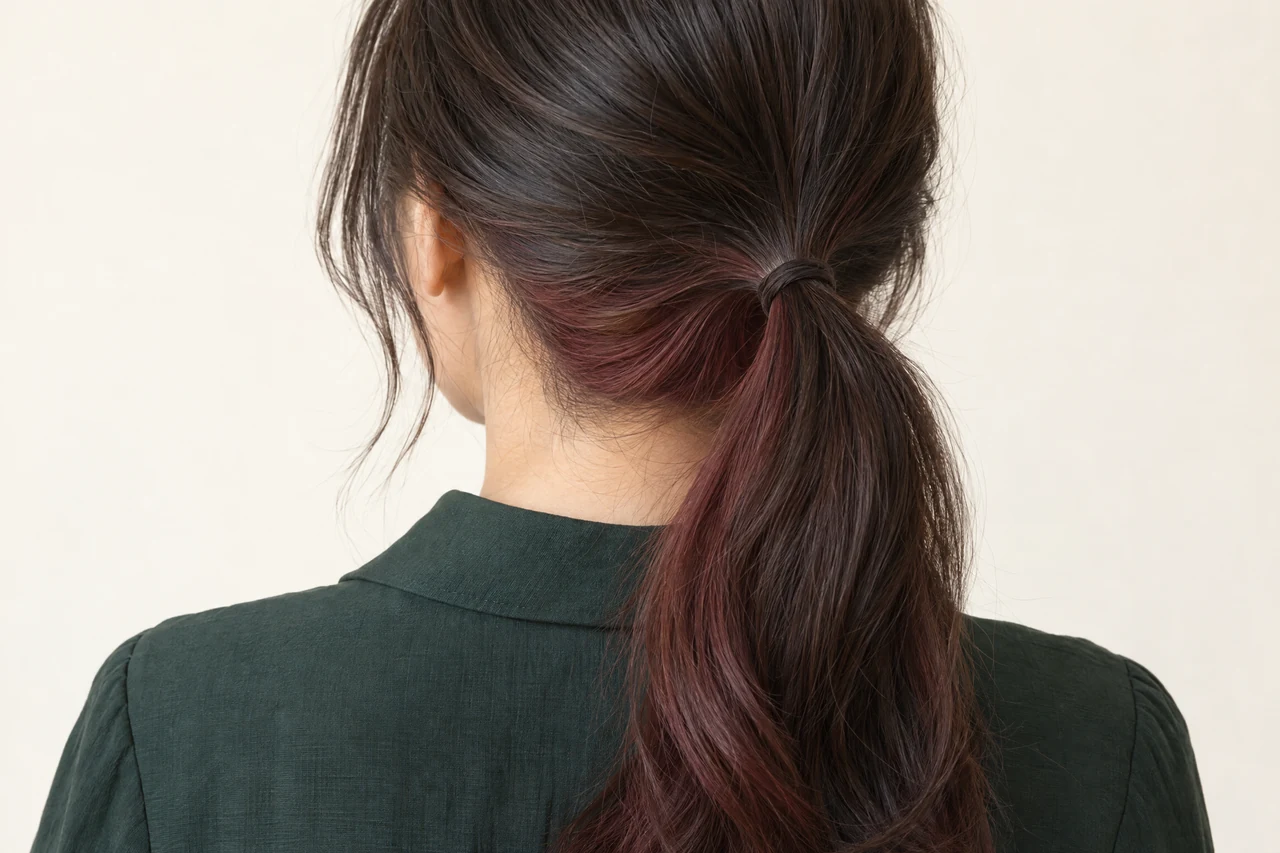
Blonde contrast against a black base
Blonde peekaboo highlights can create strong contrast even in a small lower section. Peekaboo highlights on black hair need assessment of the starting colour, existing dye and required lift. A bright reference cannot prove that one session will be suitable. Discuss both the amount of lightening and how much of the lighter area you want to reveal.
Separate the size of the section from its visual impact. A pale blonde strand beside black covering hair can be noticeable as soon as it appears; a deeper brown underlayer may make the boundary less striking. If a bright shade is essential, consider whether you would prefer less coloured hair rather than assuming a large panel will stay discreet. Neither adjustment removes the need to assess the starting hair.
The American Academy of Dermatology’s colouring guidance states that lightening hair more than 3 shades requires higher volumes of peroxide and causes more damage. This is a care consideration, not a prediction of your achievable blonde. Tell the stylist whether the black base is natural or dyed and which areas have already been lightened.
Continue with do highlights need bleach for that specific comparison and the preparation questions it raises.
Lightness and visibility are separate choices
Compare references by the contrast they show against the upper hair, rather than by the blonde name alone. A warm beige and a very pale cool blonde may create different impressions on the same dark base. Images found under peekaboo hair color use the US spelling, but your consultation still needs the same practical detail: the depth you want, the section you want coloured and the reveal you would accept.

Reducing the visibility of an existing lower section
If an existing underneath area shows more than expected, compare hair-down, tucked-back and tied-up photographs before changing it. Different styling or leaving covering layers longer may alter the reveal, but they cannot reverse the lightened hair. Any darker colour adjustment needs assessment and should not be treated as a permanent return to the original base.
First locate the source of the problem. Does the panel show through when the upper hair separates, extend below the dark ends, or appear mainly around the ears? If it became more visible after a haircut, reduced coverage may matter more than a change in colour. If the placement still feels right but the pale strip looks too strong, contrast may be the more useful thing to discuss.
A different parting or a gentler way of gathering the hair may change what you see without adding another colour process. Try only styles you could comfortably maintain. A solution that requires constant repositioning is unlikely to suit a busy day. Likewise, trimming coloured ends changes the length of that area; it does not necessarily hide colour closer to the roots.
If reducing contrast means taking a lightened panel darker, the guide to can bleached hair be dyed dark brown explains why the existing lightened hair needs its own assessment. Ask how the proposed adjustment could fade and what it would mean if you wanted the panel lighter again later.
Observe the reveal before considering another colour change
Bring current photographs alongside the original reference and explain what you want to keep. You might still enjoy the shade when deliberately revealed while wanting less exposure at rest. That is a different brief from removing the lower colour altogether. Avoid applying an all-over dark box dye simply to fix one visible edge: it changes areas you may already like and complicates the colour history you need to explain.
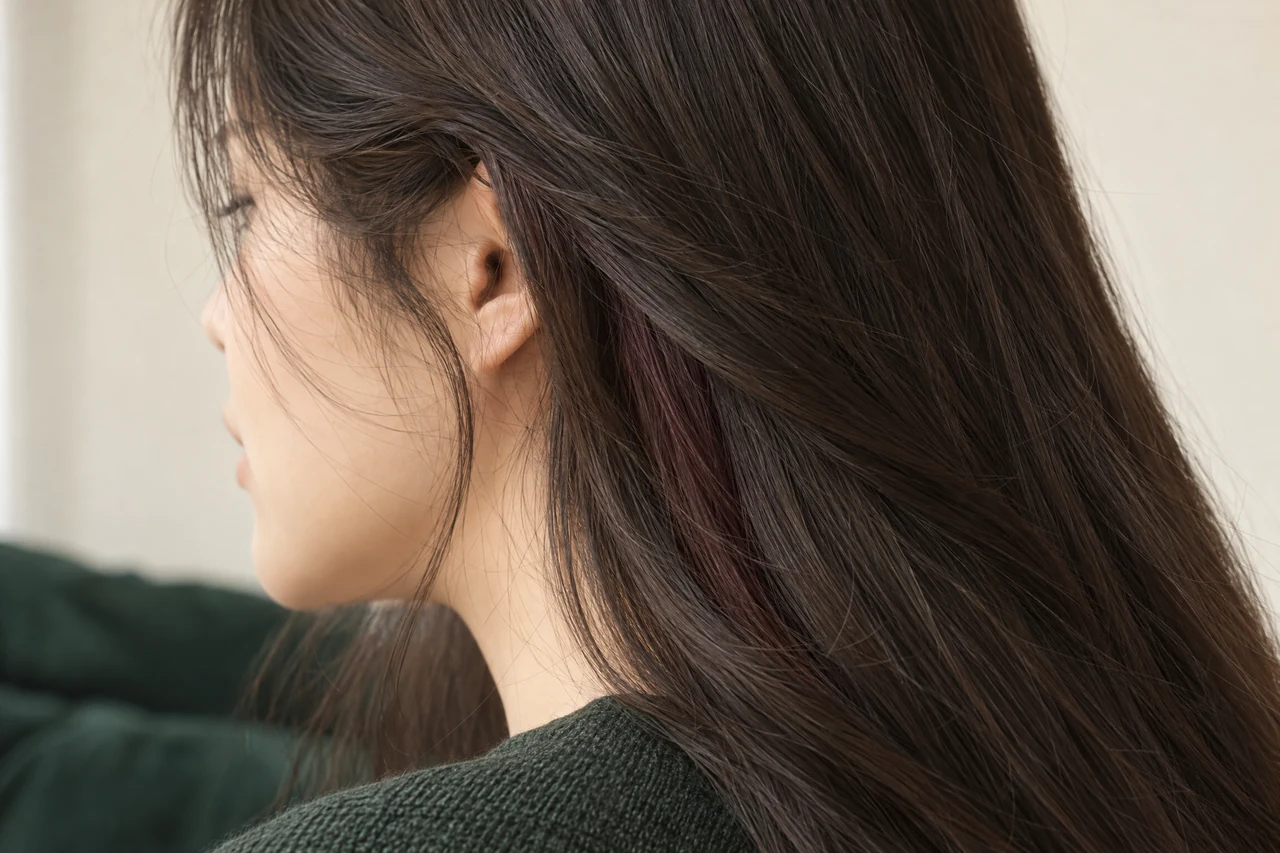
Turn your preferred reveal into a clear consultation brief
Use the comparison below to identify your priority, then prepare the five-item visibility checklist. It is an editorial preparation tool, not a salon measurement system. Pair a shade reference with an image showing the amount of coverage you like; they do not have to be the same photograph. Explain which detail matters most if the full combination is not suitable for your current hair.
A concise brief might ask for a narrow lower section covered by the usual outer hair, with colour welcome when intentionally lifted but not wanted at the resting ends. This states a preference without prescribing the sectioning method. If you found inspiration under hidden hair color, clarify whether the appeal is concealment, the surprise reveal or the strong contrast: these can lead to different choices.
Ask what the proposed quotation includes
A limited visible panel is not automatically limited work. Ask whether the proposed quotation covers lightening, subsequent colouring and any haircut needed to preserve coverage. No dedicated peekaboo price is established here. Confirm availability, the assessed scope and the total before arranging work, rather than applying a full-head highlights price or a general tinting price to a different design.
Plan for the lower colour after the first appointment
Concealed placement does not remove the need to care for coloured hair. Ask for instructions specific to the products and processes used, including washing, conditioning and heat styling. When checking the colour later, compare the same section in similar light. A lower panel can look darker while covered and much brighter when lifted towards a window; that change alone does not establish fading.
The AAD also advises sun protection for dyed, bleached or permed hair because sun exposure can leave it weak, dry, rough, faded and brittle. Plan practical protection for time outdoors, especially if you often wear the underlayer exposed. If you notice scalp irritation or unusual breakage, seek appropriate advice before another chemical change rather than treating it only as a visibility problem.
Revisit coverage when the haircut changes
Before shortening or thinning the covering hair, remind the stylist that an underneath section is present. Review whether you still want the same balance of hidden and revealed colour. Growing roots, changing ends and a new cut are different observations; keep them separate when deciding whether to refresh the shade, preserve the current placement or gradually move away from it.

Compare lower-layer choices by the reveal you want to live with
| Priority | Direction to discuss | Trade-off to check |
|---|---|---|
| Little colour at rest | A restrained section beneath intact covering hair | Movement can still uncover the section |
| A deliberate dramatic reveal | A broader or higher-contrast lower panel | Tied-back styles may expose it regularly |
| Blonde beneath a black base | Desired lightness and panel size considered separately | Starting dye and condition affect lightening decisions |
| Existing panel feels too obvious | Review coverage before changing contrast | Styling cannot reverse lightening; darker colour needs assessment |
| Strict no-colour requirement | Reconsider whether an underneath design fits | Concealment cannot be promised in every style |
Your preparation checklist
- Photograph your current hair loose in its usual parting, including a side and back view that shows the ends.
- Show the tied-back or tucked styles you actually wear and explain any workplace or school colour limits.
- Choose references for both shade contrast and covering proportion; identify which preference takes priority.
- Record previous dye, lightening and haircut changes, especially if an existing underlayer now shows too much.
- Confirm the proposed boundary, care expectations, assessed availability and quotation before agreeing to colour work.
Frequently asked questions
Can I make peekaboo highlights less visible?
Possibly by changing how the hair is worn or by reviewing the existing colour contrast. First identify where it shows; the haircut, placement and condition determine which options are sensible.
Are underlights the same as every underneath design?
The name can be used for lower-layer colour, but it does not define a universal method or section map. Show the area you mean and confirm the proposed approach.
Is this always a small or inexpensive service?
No. A small visible area can still require careful lightening or colour adjustment. Availability, sections and the quotation need confirmation before booking.
Discuss how much lower-layer colour you want to reveal
Send Vit So your current hair photographs, preferred coverage and usual tied-back styles for an enquiry in Sheung Wan. If an existing panel is too obvious, show where it appears and what you still like about it. Suitability, availability, scope and the quotation need confirmation; an enquiry is not a confirmed booking.
Start your WhatsApp enquirySources & further reading
- Peekaboo hair: how to get the look.
Definition of peekaboo hair colour by its bottom-layer position.
- Coloring and perming tips for healthier-looking hair
Care considerations for substantial lightening and sun protection for dyed or bleached hair; not an assessment of aesthetic concealment.



