







Two Block Perm and the Longer Top
Identify the strands you want to bend before deciding where treatment might be considered. The fringe, upper sides and crown can fall differently over the shorter section. A reference with generous top length may not translate to a freshly shortened cut, so discuss the haircut that will remain rather than the length you started with.
Begin with the top in its ordinary dry position. Notice where the fringe ends, whether the upper sides cover the temples, and how the crown meets the back. Longer hair can show a more extended curve, but it can also hang across the short section and hide the contrast you wanted. Shortening it may reveal the sides while leaving less room for a flowing wave. Neither choice is automatically better: the useful length is the length that supports your preferred outline.
The Miin two block haircut guide describes the basic framework as a longer top above shorter sides and back. For the cut-only decisions, explore the two block haircut guide before deciding whether your own top needs additional movement. A naturally wavy top may already supply enough bend once the surrounding weight is adjusted.
Review men's perm to check its service scope and the details to share before arranging the related work.
Locating Movement in a Two Block Perm
Point to the first visible bend in your reference rather than asking for curls everywhere. Movement near the fringe ends can turn the front without making the crown equally full. Bends through the upper sides can change the width above the ears, even when the lower hair stays short. Ask which strands will sit over the transition after drying and whether their ends should fall inward, forward or away from the face. This makes the desired proportion clearer than a curl label alone.

The Transition Above the Ears
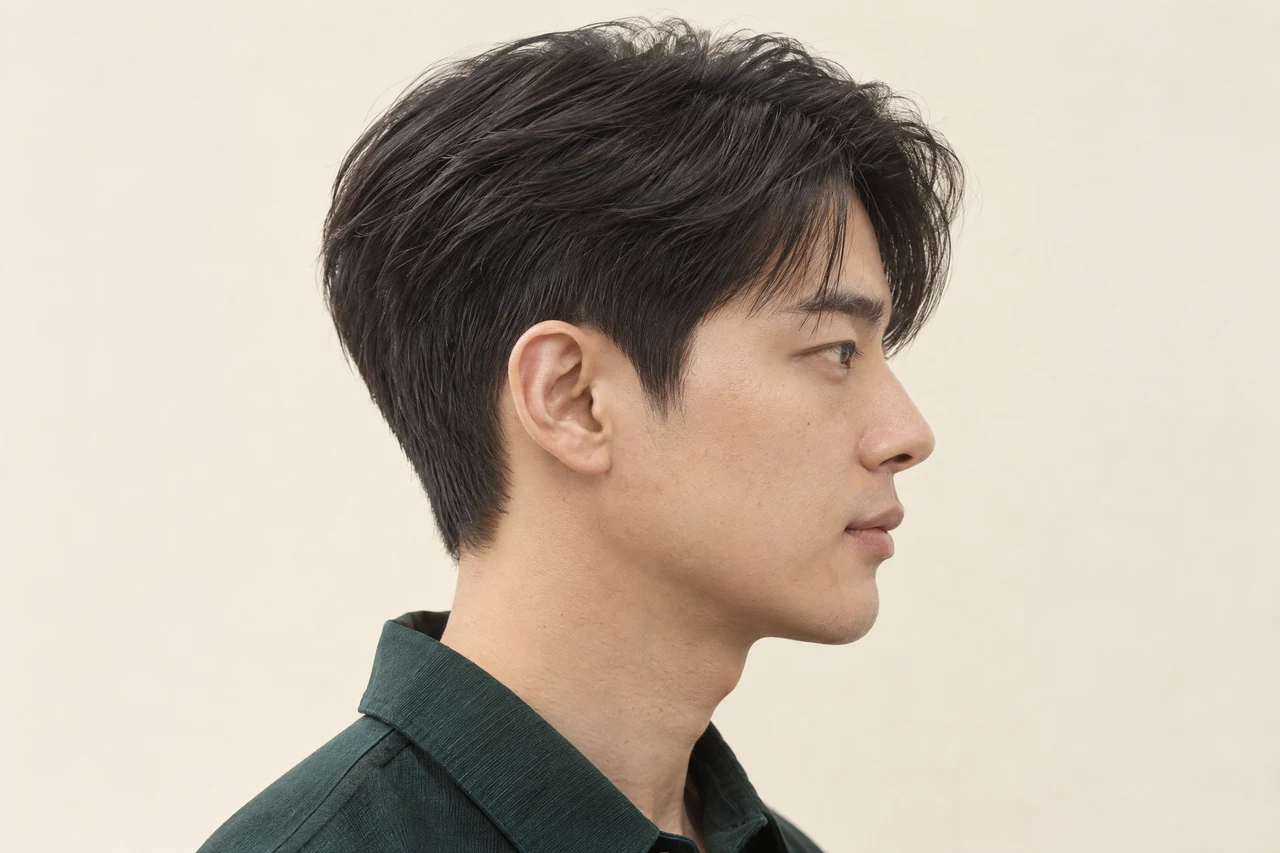
Look at the side view as well as the front. The weight of the upper section can hide or emphasise the transition, especially when it moves. Explain whether you like a clear separation or a softer blend. This is a cutting and proportion decision, not evidence that a particular perm method is required.
A clear separation makes the difference in lengths easier to see when the top is lifted or swept aside. A softer connection can make the change less conspicuous when the hair falls naturally. However, a soft-looking reference does not tell you how the underlying cut was made: longer strands may simply cover the shorter ones. Ask to see how the proposed top will sit both over the side and away from it.
The upper-side ends deserve particular attention. If they bend outward just above the ear, they can form a wider edge despite a closely cut lower section. Removing more lower hair may expose that edge without reducing it. Discuss the upper length and direction first, especially if your aim is a narrow side profile with relaxed movement on top.
If the main attraction is the opening at the forehead, the middle part perm guide addresses that separate fringe decision. A central opening does not determine where the short-to-long transition should sit.
Checking the Outline From the Side
Bring your glasses if you wear them daily. Check whether the longer section rests on the frame arms, leaves a gap above them, or moves outward where the arms meet the ears. Then turn to the back: the crown should be discussed alongside the lower rear outline, not as an isolated front-view effect. Ask for a shape you are comfortable wearing with the top loosely arranged, since a carefully separated salon finish can reveal more of the transition than your usual routine.
Flatter Sides Are a Separate Decision
Shorter sides may already sit close enough after a cut. If they still project outward, discuss growth direction and retained length before considering side control. Adding bends to the top and flattening the sides have different aims; neither should be included merely because a hairstyle photograph appears to show both effects.
Locate the width precisely. It may come from the short hair above the ear, the longer section falling over it, or both. Show the stylist the dry outline before pressing the sides down with your hands. If you want some coverage rather than an exposed side, say so before asking for a closer shape. Cutting away coverage and redirecting retained hair are different routes, with different implications as the sides grow.
Review down perm to check its service scope and the details to share before arranging the related work.
Share previous bleaching, colouring, straightening and perming, including home treatments. The American Academy of Dermatology's colouring and perming advice notes that appearance-enhancing treatments can leave hair dry and brittle. That supports checking the condition of the lengths you intend to keep; it does not identify a suitable technique from a hairstyle photograph. Report excessive stinging or burning immediately during treatment so it can be stopped and rinsed; the AAD also advises dermatological consultation in that situation.
Avoiding an Automatic Extra Treatment
Ask what a cut alone is expected to change and what would remain unresolved. If the lower sides already follow the head comfortably, the consultation can stay focused on top movement. If side control is proposed, confirm its area separately from the top perm and ask how it relates to the retained side length. A useful explanation should connect each part of the work to a visible concern, rather than treating a style name as a compulsory combination.
Regrowth and the Next Haircut
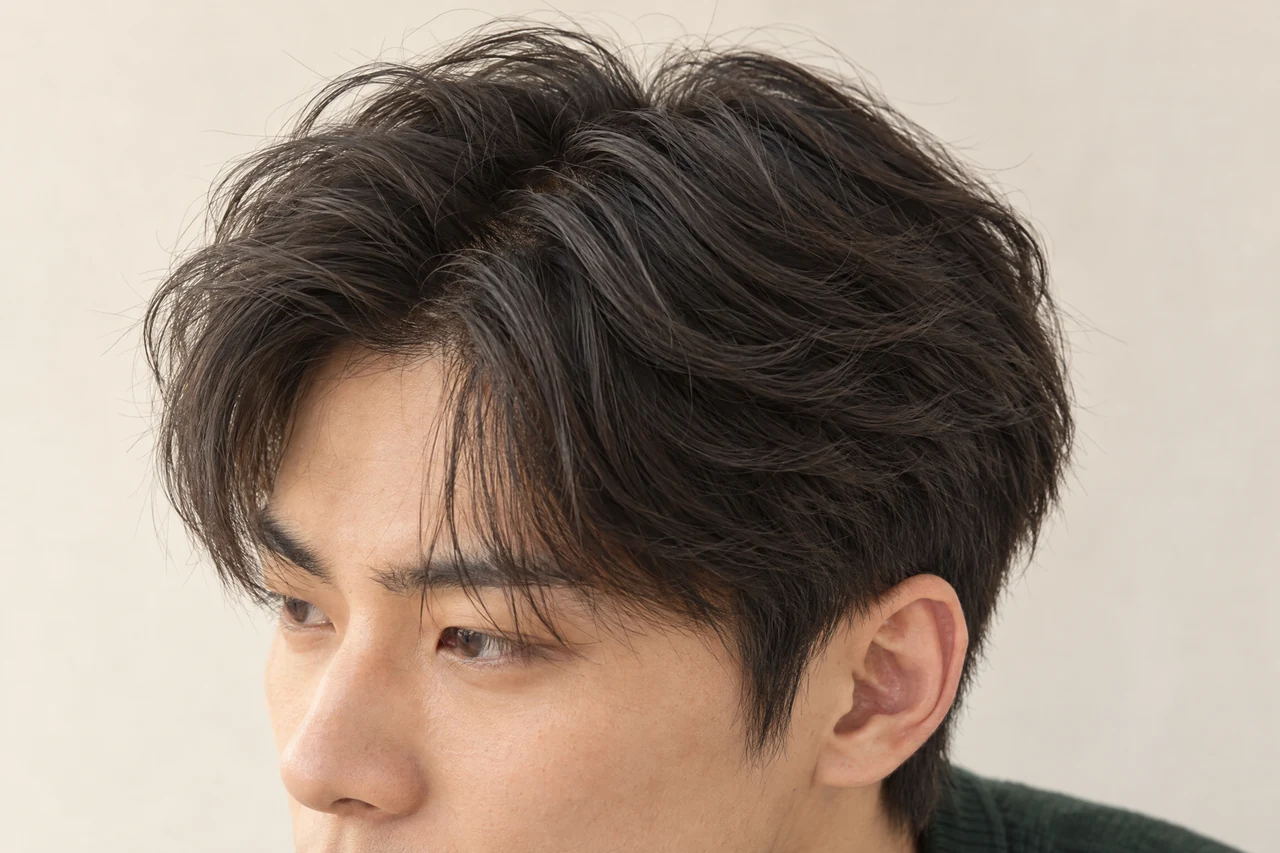
As the short section grows, the contrast with the top changes. A later haircut can alter how the permed lengths fall even without another chemical service. Tell the stylist which top strands you want to retain and which part of the lower outline bothers you, then consider the cut before assuming that a repeat perm is needed.
Before your next visit, separate loss of contrast from loss of movement. The sides may have become fuller while the top still bends in a way you like. Alternatively, the fringe may now fall into your eyes, although the ear outline remains acceptable. Those observations lead to different cutting conversations. Take a dry photograph with your usual styling so the follow-up is based on the shape you actually wear.
Review men's haircut to check its service scope and the details to share before arranging the related work.
Preserving the Top While Refreshing the Outline
Do not use 'keep the top' to mean that every upper strand must remain untouched. Explain whether you want to preserve fringe coverage, a particular wave, or the length that overlaps the sides. A small change in the upper-side ends can affect the transition as much as a closer lower cut. Ask how the top will settle against the refreshed sides and which existing bends would be removed. Agree on the haircut before discussing whether any remaining movement needs another chemical service.

Dry the Top Without Widening the Outline
Your home finish should support the same division of lengths discussed in the consultation. Ask the stylist to demonstrate how to arrange the longer hair without lifting every upper-side strand outward. A top that looks balanced with deliberate sectioning may look much broader when you dry it in all directions. Tell the stylist whether you normally air dry, use a dryer, or restyle after exercise.
The American Academy of Dermatology's hair-damage guidance recommends conditioner after shampooing, absorbing water without rubbing with a towel, air drying where possible and using the lowest heat setting when heat styling. Apply those handling principles to the longer lengths rather than scrubbing them simply because the lower hair is short. Follow the service-specific instructions you receive about your first wash and products.
Judge the Shape With Your Usual Finish
Start with a modest amount of the recommended styling product and observe the dry result before adding more. Notice whether the top remains separated or becomes a heavy sheet over the sides. After a humid commute or a workout, record which area changes first: the fringe, the crown or the edge above the ears. That information is more useful at a follow-up than saying the entire perm has stopped working. Do not assume that stronger hold or higher heat is the next answer.

Prepare a Clear Two Block Consultation
For an enquiry with Vit So in Sheung Wan, send current front, side and back photographs together with a reference showing the contrast you like. Mark the part you want to retain and the part you want to change. Mention whether you prefer visible short sides or a longer top that mostly covers them. These details help distinguish a haircut request from a discussion about top movement or side control.
The listed men's wash, cut and blow dry price is HK$380. This is a haircut price, not a quote for a two block perm. Ask which cutting and chemical services are being proposed, whether they are quoted separately or within a confirmed package, and what the actual total includes. The hairstyle name alone does not establish a treatment area, appointment duration or combined price.
Agree on the Length Before the Service
Use the comparison below to choose your main priority, then work through the preparation checklist. If your existing top is shorter than the reference, ask whether to adapt the movement or retain length while growing towards it. A useful plan can be a cut now and a later reassessment; it does not have to involve immediate perming. Confirm the proposed scope and appointment arrangements before visiting, especially if your request combines top movement with a change to the sides.

Compare how top movement and the short section contribute to a two block outline
| Your priority | What to assess | Trade-off to discuss |
|---|---|---|
| Show the short-to-long contrast | How much of the lower section remains visible when the top falls naturally | A lifted top reveals the transition more clearly than a top that covers it |
| Keep a flowing wave on top | The dry length and bend of the fringe and upper sides | Retaining more length may conceal the shorter section or add width |
| Keep the sides closer | Whether width comes from lower growth or overlapping upper strands | A closer lower cut does not necessarily change an outward-bending upper edge |
| Refresh the sides without a repeat perm | Which top bends still work and which lower areas have grown fuller | Removing upper lengths can also remove movement you hoped to preserve |
| Make home styling simpler | How the top settles with your normal drying and product routine | A highly separated reference finish may require more deliberate arranging |
Your preparation checklist
- Photograph your current dry front, side and back views without forcing the sides flat.
- Identify where the first visible bend should begin and where the longer ends should fall.
- Decide whether the top should reveal the short section or overlap it in your everyday finish.
- Bring your glasses and explain any routine that changes the ear-level outline, such as exercise or headwear.
- Share previous chemical treatments and any scalp discomfort before suitability is assessed.
- Confirm the retained top length, proposed service areas, total quote and home-care instructions before agreeing to the work.
Frequently asked questions
Does a two-length cut always need a perm?
No. The outline is created by cutting. A perm is only a separate option when additional movement is wanted and the retained hair is suitable.
Should the lower section be treated too?
Do not assume so. The desired outline, length and hair direction determine what should be discussed. A photograph is not enough to establish the treatment area.
Can I keep the top and shorten only the sides later?
That may be a useful direction to discuss. Show which movement you want to preserve and ask how the new side length will change the balance before confirming the cut.
Why does a two block perm look wider above my ears than in the reference?
Check whether the width comes from the longer strands bending outward or from the short section underneath. The reference may also have a more deliberately arranged finish. Share dry side photographs and your usual styling routine before deciding whether to adjust the upper length, the lower outline or the movement.
Plan the Top Movement and Side Contrast Together
Enquire with Vit So at 252 Hollywood Road, Sheung Wan, with current hair photographs and a reference showing your preferred overlap above the ears. Explain which top lengths you want to retain and whether the sides need a closer outline. Confirm suitability, service scope, price and availability; sending an enquiry does not confirm a booking.
Start your WhatsApp enquirySources & further reading
- Two Block Haircut: The Complete Guide for Men
The longer-top and shorter-sides framework, with top length, lower outline and fringe direction as separate choices.
- Coloring and perming tips for healthier-looking hair
Chemical treatment caution, dry and brittle hair, and the need to respond immediately to excessive stinging or burning.
- How to stop damaging your hair
Conditioning after shampoo, gentle towel handling and reducing heat exposure during everyday styling.



