






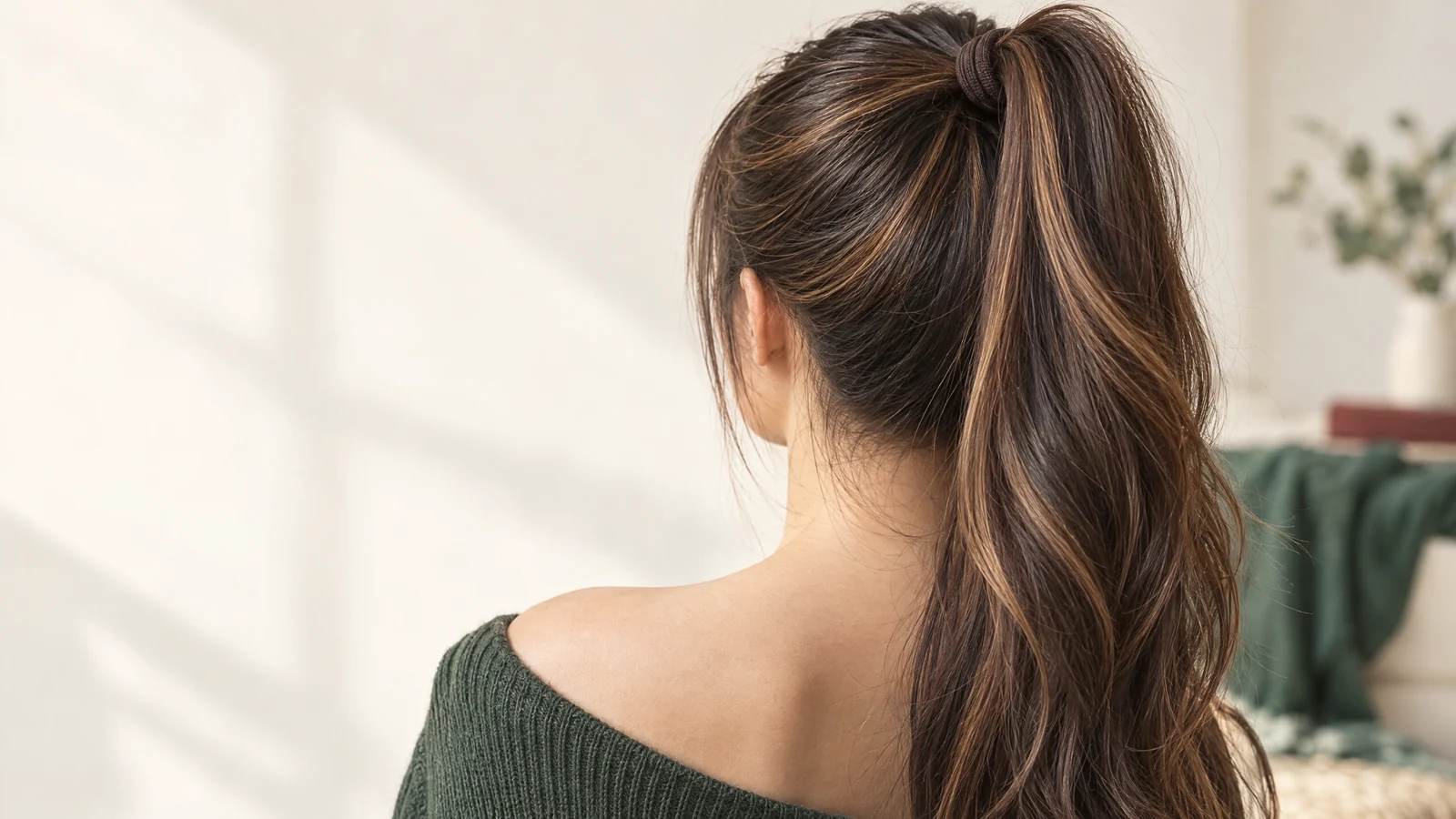
Highlights that show in a ponytail: start with your tied height
A high ponytail and a low ponytail gather hair in different directions. Tie your hair as usual and note where the underneath surface becomes visible. Decide whether you want a bright band, separate strands or only a small reveal. These observations help define placement; they do not determine a suitable chemical process on their own.
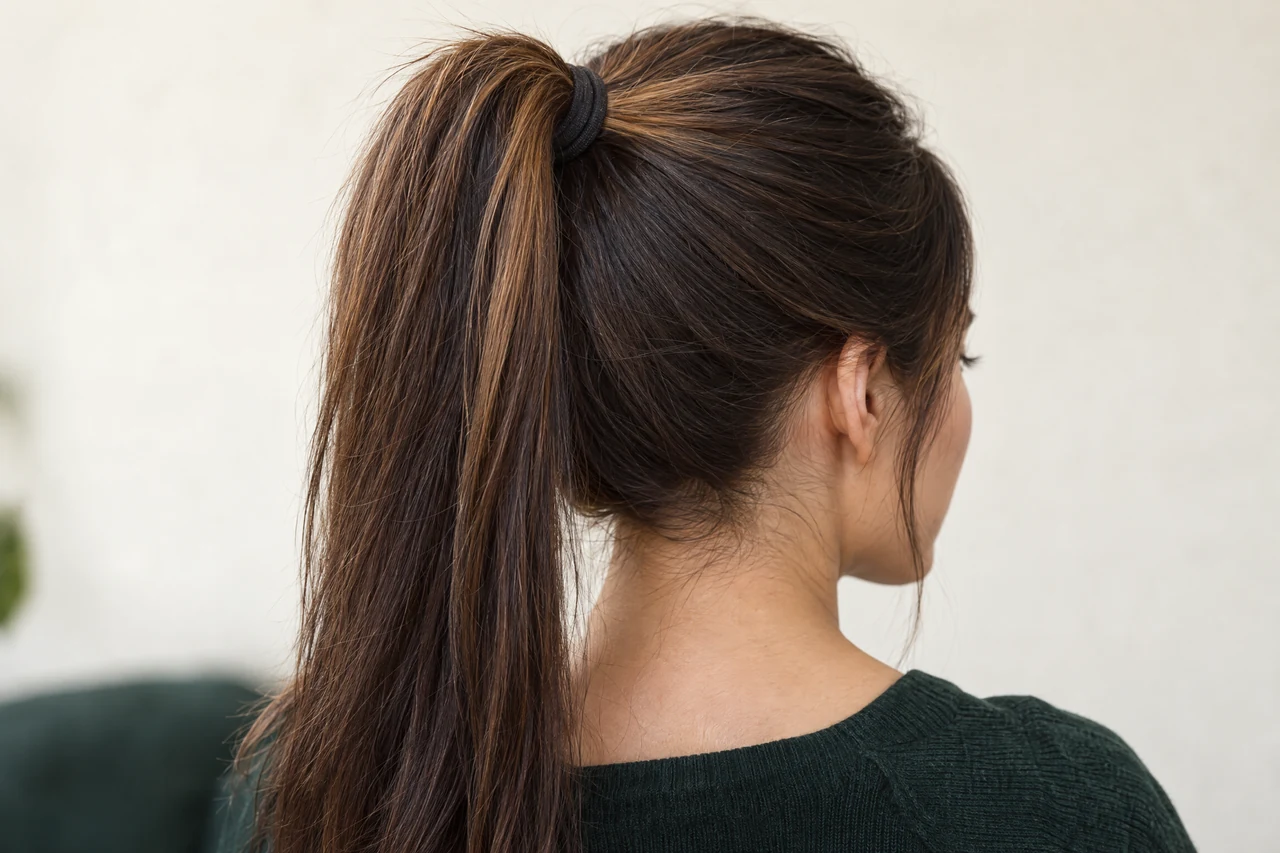
Start with the ponytail you wear for a normal working day or exercise session. Keep your usual parting and leave out the same fringe or side pieces. A polished high ponytail in a reference may expose sections that your relaxed, lower tie leaves covered. Conversely, hair drawn upwards from the nape can show colour along a surface that is difficult to see when the lengths fall down.
Separate the area on the head from the hanging tail. You might want fine lines travelling towards the tie, colour mainly through the tail, or an accent that appears below the gathered hair. These are different visual priorities. Point to the preferred area in a photograph rather than asking for more highlights everywhere. Also show whether you usually bring the ponytail over a shoulder, as that changes the view you notice most.
For a dark base, compare the amount of lightness with the size of the coloured sections. A narrow, strongly contrasting strand can attract more attention than a broader brown accent close to the base. The guide to highlights on dark hair helps separate contrast preferences from placement, so you can describe both without treating a colour name as a complete design.
Highlights that show in a ponytail at the sides and back
Use a rear view to inspect the hair above the tie, the upward-gathered nape and the tail itself. Then turn to each side without rearranging the style. Notice whether bright strands cluster together or remain separated by dark hair. If the front should stay quiet, say so explicitly: a rear reveal does not require a prominent face-framing line.
Ear-area colour when tucked back
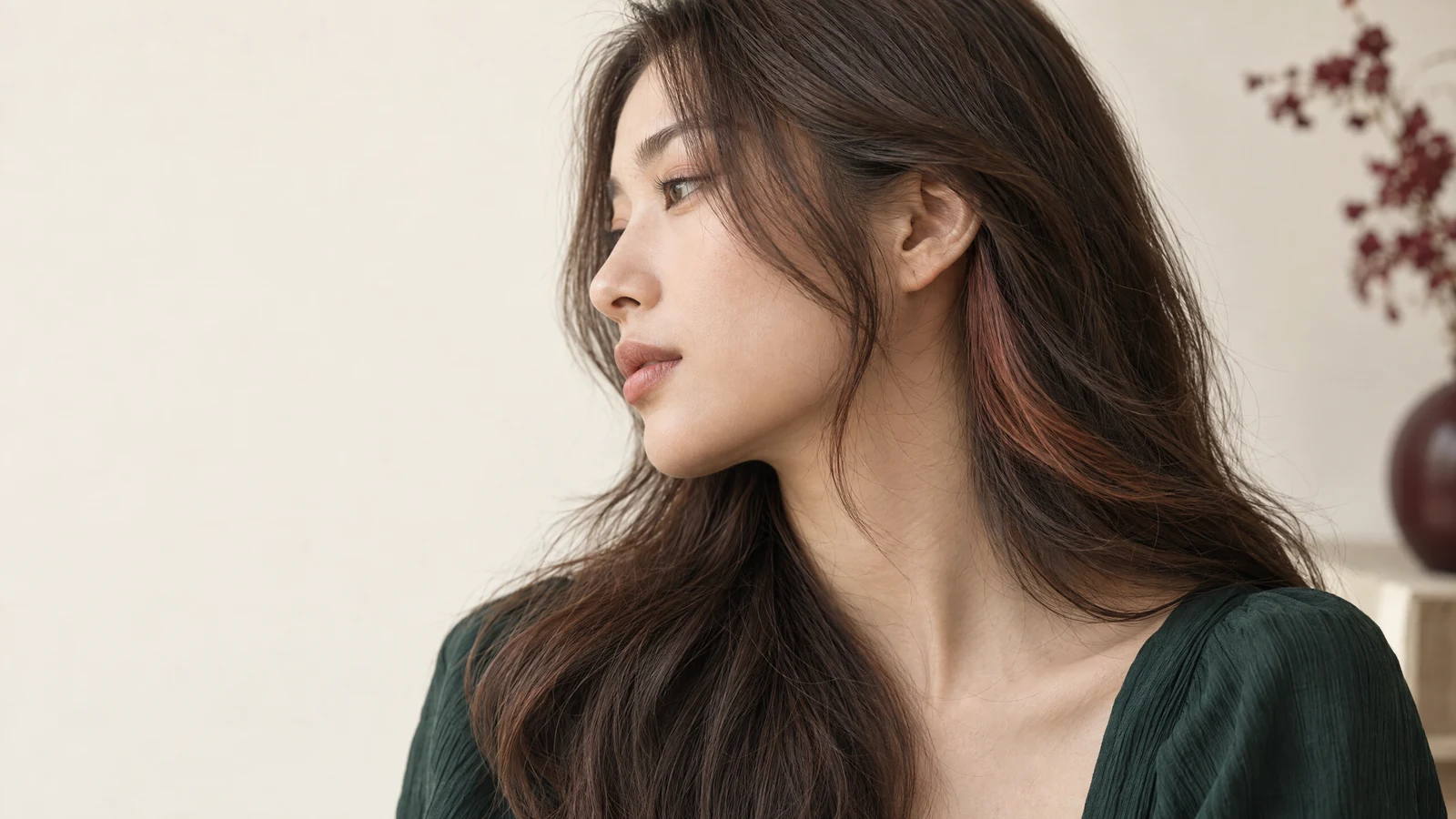
Highlights behind the ears may reveal when the hair is tucked back, yet disappear beneath upper layers when it is loose. Explain whether you want that occasional accent or visible side strands all day. Use side photographs with and without tucking, and describe the actual position rather than relying on a translated technique name.
Check how you tuck your hair. Sliding only the front section behind an ear does not expose the same surface as sweeping the whole side backwards. Glasses and habitual adjustments can also move the covering hair. Photograph the side after the movement you naturally make, rather than holding a large section up solely to create the brightest possible reveal.
L'Oréal Professionnel's peekaboo hair guide describes peekaboo highlights as colour placed in the underlayer for a surprise effect. That is a useful placement description, but it does not establish where your personal coverage boundary should sit. An ear-area accent and a broad coloured underlayer can both reveal through movement while creating quite different side and rear impressions.
Continue with peekaboo highlights for that specific comparison and the preparation questions it raises.
Distinguish a small side accent from a broad lower layer
Describe the accent by its position relative to the ear and the surrounding dark hair. Decide whether matching accents on both sides matter or whether visibility on your regularly tucked side is the priority. A wider lower layer may create a larger colour area when gathered; a small accent may be easier to overlook from the back. Neither choice should be selected from a close-up alone.
Compare loose, half-up and fully tied states
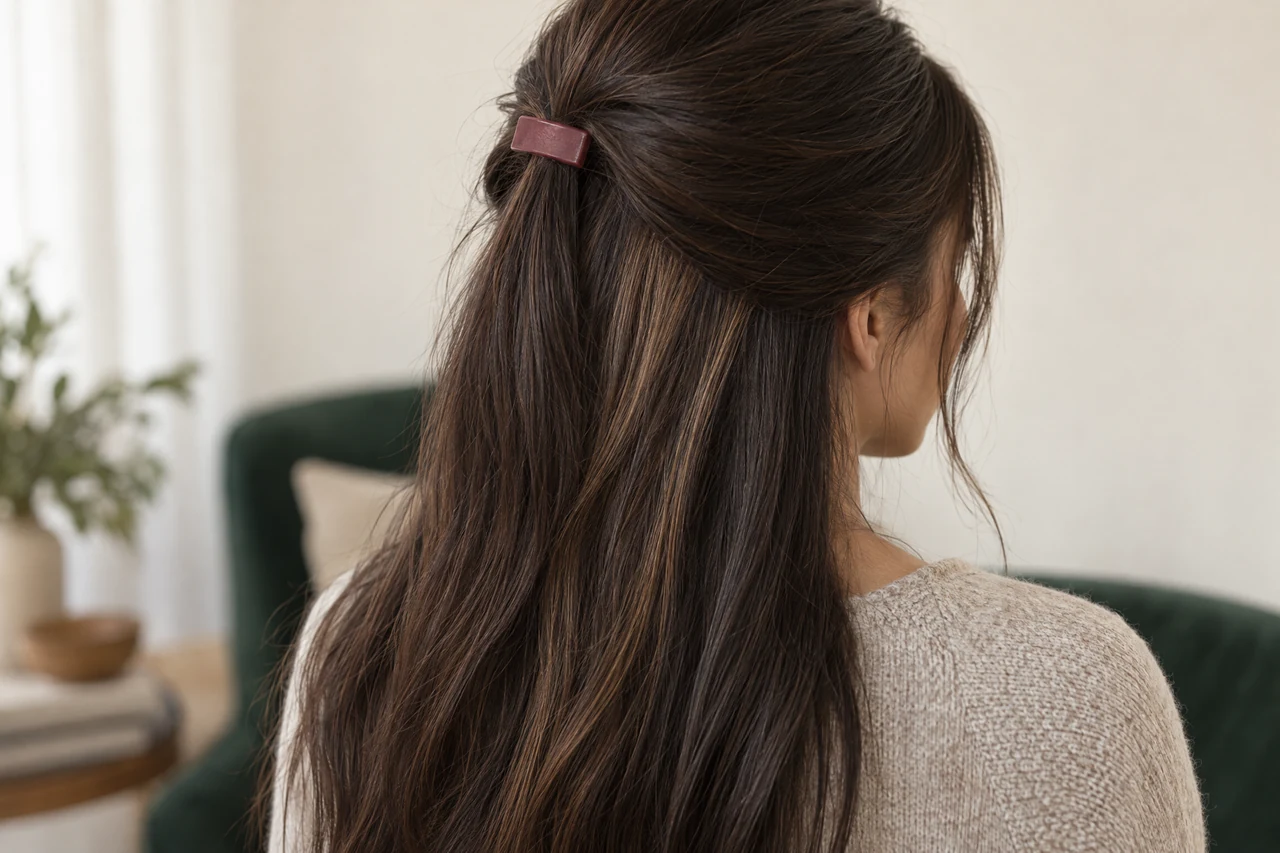
Inspect four states: hair loose, one side tucked, half-up and fully tied. A section that appears hidden at the front may form a visible block at the back. Consider the haircut and layers as well as the tie height, because future trims can change how much of the lower colour is covered.
The preview uses 4 everyday hair states: loose hair, one side tucked, half-up hair and your usual ponytail. This is an editorial comparison checklist, not a measurement of how much colour every haircut will expose. For each state, record what you want to see and what you prefer covered. The strongest reveal does not have to be your favourite; the aim is a pattern that remains appealing through your actual routine.
Half-up hair deserves its own check because lifting the top section removes some of the covering hair without gathering all the lower lengths. An accent that seems occasional in a full ponytail can remain clearly visible in a half-up style. Use your normal clip placement and the amount of hair you normally lift. A demonstration that takes a much larger top section can overstate the reveal you will see at home.
Repeat the comparison in your everyday texture. Smooth lengths, waves and curls arrange coloured sections differently, so a curled reference should not be your only guide if you usually wear the hair straight. Look at where strands overlap and separate rather than trying to copy the reference's brightest reflection. Keep camera angle and lighting similar between your own comparison photographs.
Check more than the front view
A front photograph records the fringe and sides but cannot explain the full nape or tail. Ask someone to photograph the rear without pulling sections apart. A short movement clip can also show the transition from loose hair to a ponytail. Keep it simple: gather the hair, turn gently and let the tail settle. This is more informative than repeatedly lifting the coloured section towards the camera.
Agree a visibility boundary before the colour plan
If you want colour to show only sometimes, explain the occasions when you prefer it covered. No placement guarantees invisibility in all movement. Mark the areas that matter most and ask whether the preferred reveal can be approached on your current hair, then confirm scope and quotation rather than assuming fewer visible strands mean a simpler service.
Make your preference specific. For an office routine, you might want the front and sides to read as mostly dark when loose, while accepting visible lines through a tied tail. If your work requires hair off the face or neck, assess that required style first. Concealment that depends on leaving the hair down may not suit a job where it must be gathered.
Choose the character of the reveal as well as its boundary. Fine strands separated by base colour create a different pattern from an uninterrupted bright panel. Lower contrast can make visible sections quieter, but it is not the same as hiding them. If you like a bold accent only for weekends, show both the desired weekend style and the weekday arrangement that needs to feel comfortable.
A comparison of partial vs full highlights can help explain the areas you want addressed, but a ponytail view alone cannot define the service category. Ask what the proposed work includes, whether lightening or toning is involved, and how the quotation relates to the agreed sections. A small visible accent is not automatically a quick or low-cost process.
Review hair highlights to check its service scope and the details to share before arranging the related work.
Make work and daily styling constraints explicit
Tell the stylist which requirement is firm and which preference can flex. If visible colour is prohibited in your required work hairstyle, do not depend on an underlayer staying hidden. If the concern is simply avoiding a dramatic front view, a discussion about placement and contrast may be more useful. Agree the acceptable trade-off before choosing the brightest reference.
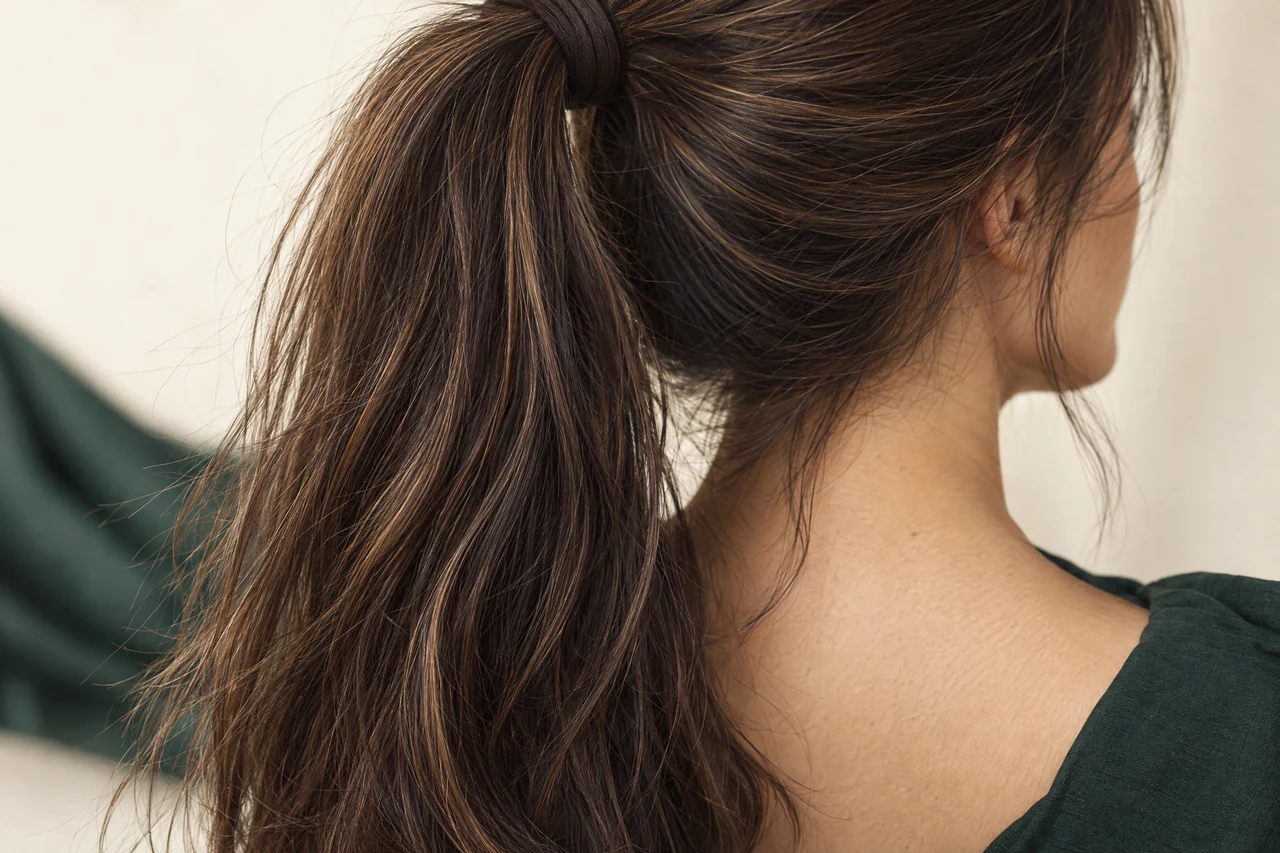
Plan the haircut and later trims around the reveal
The hair covering an accent is part of the design. Shortening the upper layers can leave less hair over a lower coloured section when loose. Shorter side pieces may also fall out of the ponytail, changing which strands remain exposed around the face. If you are considering a haircut alongside colour, discuss the intended dry shape before treating the current coverage as permanent.
Look at the tail's outline as well as the head. Long layers can create different visible ends within a gathered tail, while trimming the brightest tips can reduce colour there without changing the root placement. Say whether retaining a substantial ponytail or shortening the overall length matters more. Avoid adding layers solely to copy movement in a photograph if you would dislike those layers when the hair is down.
Keep a record of the coverage you want to retain
Save the loose and tied views together for future haircut discussions. If a later trim is planned, show which dark sections currently cover the accent and which bright ends you like in the tail. This gives the next consultation a clear reference for coverage, rather than relying on the general instruction to keep the colour subtle.
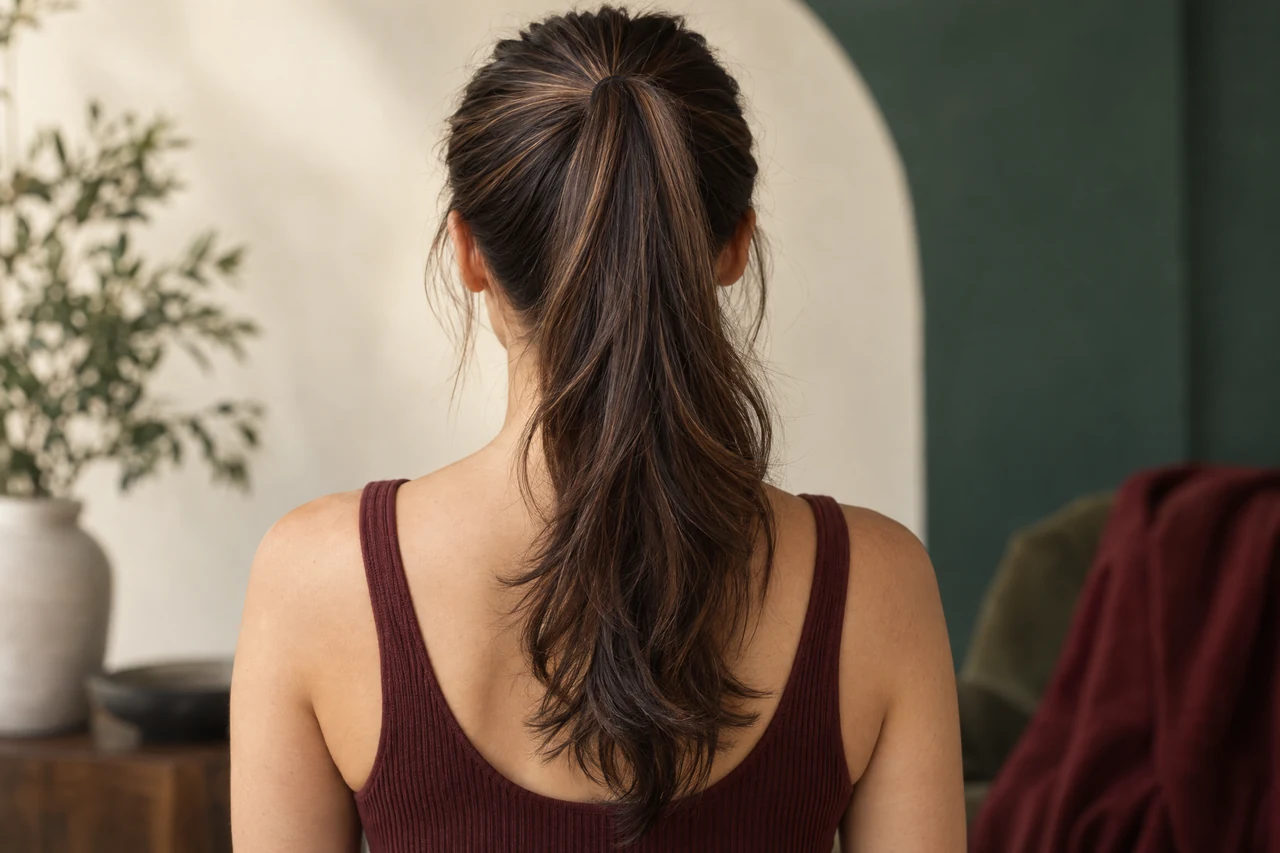
Prepare references and a comfortable daily routine
Choose clear current photographs in soft daylight, without a colour filter. Keep the phone far enough away to include the whole head and tail, and add a closer ear-area view only if that detail matters. Separate your own hair photographs from inspiration images. Note whether an inspiration is appealing because of its location, colour contrast or styling, so those preferences can be assessed independently.
Continue with haircut reference photos for that specific comparison and the preparation questions it raises.
Do not pull the hair tighter just to display more colour. The American Academy of Dermatology's advice on hairstyles that pull identifies tightly pulled ponytails as a potential cause of traction alopecia and advises loosening styles; a painful hairstyle is too tight. Preview at a comfortable tension, then discuss colour placement that works with that routine rather than making tension part of the desired effect.
Include hair history with the visual brief
Share previous colour and lightening, including home products, along with any perm or straightening history. Identify fragile areas or scalp concerns separately from the reveal you want. Ask for handling and aftercare advice appropriate to the proposed work. The useful outcome is a colour discussion grounded in both your photographs and your current hair, not an assumption that a reference can be reproduced unchanged.

What each everyday hair state can reveal during a ponytail placement discussion
| Hair state | Area to inspect | Decision it helps clarify |
|---|---|---|
| Loose | Side coverage, lower lengths and ends | Whether the accent should remain quiet or visible without gathering |
| One side tucked | Behind the ear and the exposed side lengths | Occasional side accent versus a line that stays in view |
| Half-up | Under the lifted top section and across the back | How much colour appears before the lower hair is gathered |
| Usual ponytail | Sides, upward-gathered nape, tie and hanging tail | Whether the preferred reveal sits on the head, in the tail or both |
| Alternative tie height | Changed gathering direction and loose side pieces | Whether a style you also use creates an acceptable different reveal |
Your preparation checklist
- Photograph your current hair loose, tucked, half-up and in your usual ponytail, keeping the lighting and parting comparable.
- Mark the side, nape or tail area where you want colour to show, and identify the front areas you prefer quieter.
- Choose between fine separated strands and a broader accent; describe contrast separately from the amount of coloured hair.
- State work requirements, your usual tie height, glasses-related tucking and whether you often change between tied and loose hair.
- Share planned haircut changes and previous colour, bleach, perm or straightening history before discussing feasibility.
- Confirm the proposed scope, quotation and aftercare, without assuming the size of the visible reveal determines the whole service.
Frequently asked questions
Should I send a tied-back photo before enquiring?
Yes, alongside loose-hair and side views. Use your usual tie height so the enquiry shows which areas become visible in everyday wear.
Will the colour always show equally in every ponytail?
No. Tie height, tension, parting and loose strands can change the reveal. Preview the styles you actually use rather than expecting one fixed view.
Can I keep the ear-area colour hidden at work?
That preference can guide the discussion, but coverage depends on haircut and movement. Do not assume ear-area or underneath colour will remain concealed in every situation.
Bring your everyday ponytail into the colour discussion
Send Vit So your current loose, side and tied-back photographs, together with the reveal you prefer and any work constraints. For a Sheung Wan consultation, these details help focus the enquiry on useful placement choices. Suitability, service scope, quotation and availability need confirmation; an enquiry is not a confirmed booking.
Start your WhatsApp enquirySources & further reading
- Hairstyles that pull can lead to hair loss
Comfortable ponytail tension: tightly pulled styles can cause traction alopecia, and painful styles should be loosened.
- Peekaboo hair: how to get the look.
Underlayer placement as the defining description of peekaboo highlights, used to distinguish it from a general request for visible side strands.



