







How to keep a natural white streak when colouring hair: map the area
Show the white streak from the front and with your normal parting. Indicate its current width and which neighbouring strands you want to retain or colour. This helps distinguish a natural pale feature from scattered white hair elsewhere. A photograph supports the discussion, but the actual boundary and suitable approach need assessment.
Begin by showing where the pale hairs emerge from the scalp, then where they fall through the lengths. A white area at the hairline may spread into a fan when brushed back but appear as a narrow ribbon when worn forward. Both views are useful. On a duplicate photograph, indicate the area you want kept visible without drawing an artificially straight border through the natural mixture of hairs.
Be specific about the strands around the edge. You might want the entire existing pale cluster untouched, including the fine white hairs that soften its outline. Alternatively, you may like a concentrated forelock but want scattered greys farther away coloured. These are different briefs. Say which matters more: keeping every pale strand in that local area, or keeping the overall impression of the streak.
DermNet's explanation of poliosis describes a localised patch of white hairs caused by a lack of pigment in those hair shafts. It is a clinical sign, not a diagnosis of its cause. You do not need to label an established feature medically to explain your colour preference. A newly appearing patch or associated skin change is a separate reason to seek medical advice rather than asking a colourist to identify the cause.
Review grey coverage to check its service scope and the details to share before arranging the related work.
How to keep a natural white streak when colouring hair with a clear brief
A useful request is: ‘Please keep this existing white section visible from the roots through the lengths. I would like the surrounding hair to look brown, but I do not want the white area tinted to match it.’ Follow that with your preference for the hairs immediately beside it. Ask the colourist to explain the proposed areas before application; the request itself does not establish a particular sectioning or isolation method.
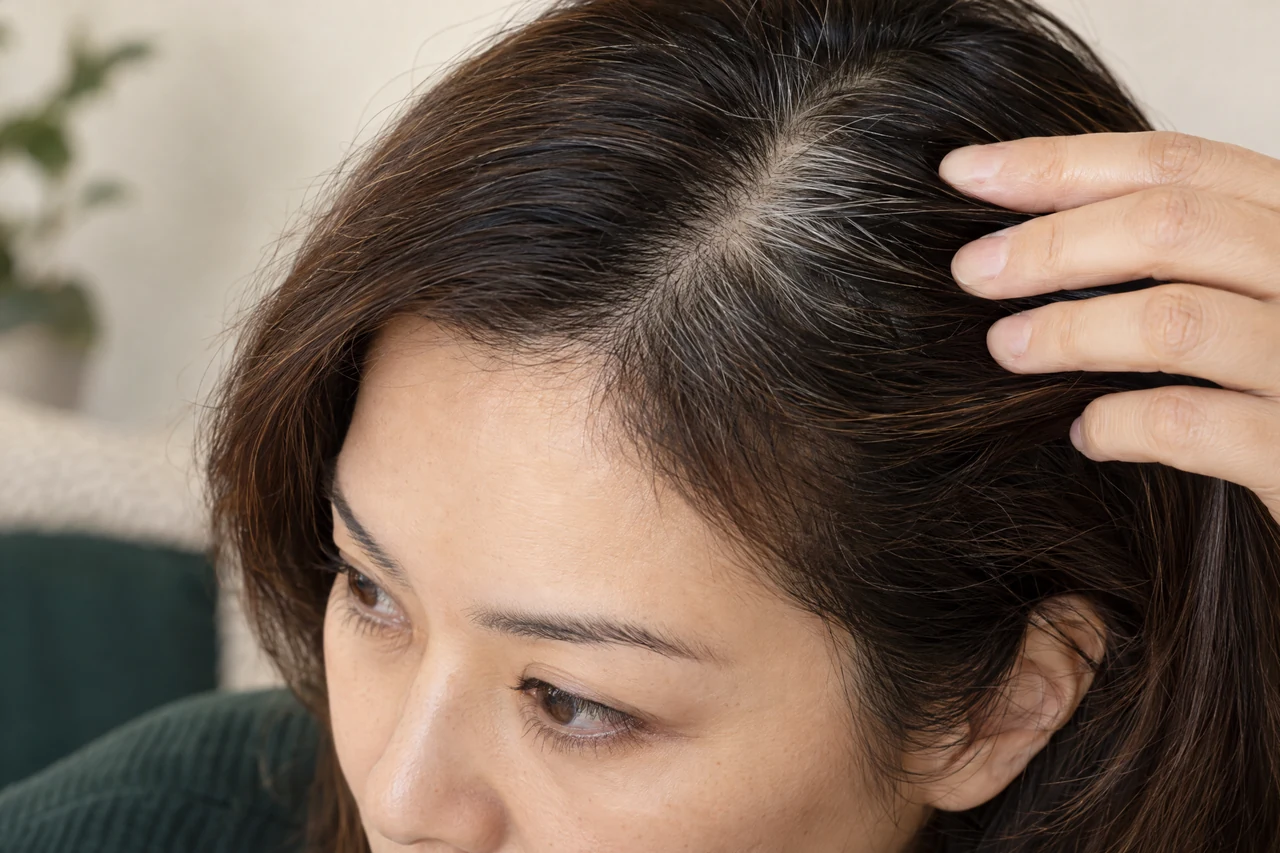
Surrounding colour controls the apparent contrast
A white forelock can look more prominent beside darker hair and softer beside a mixed surrounding colour. Explain whether you like a bold contrast or a quieter transition. The desired neighbouring depth should be discussed separately from the rest of the head, rather than assuming one all-over colour goal will preserve the feature you like.
For a pronounced feature, discuss retaining depth beside the streak rather than simply choosing the darkest colour on a shade chart. Deep surrounding colour can make pale hairs at the edge more noticeable as well as emphasising the main forelock. Consider whether you welcome that irregular silver outline. If not, show precisely what bothers you instead of asking for both complete coverage and a completely natural border.
For a softer look, discuss whether some existing white hairs outside the main cluster can stay visible. This changes the surrounding pattern rather than changing the streak itself. Warm or cool brown is another decision, but it should follow the choice of contrast. A warm indoor light can make the entire arrangement look different from a daylight reference, so compare pictures taken in reasonably similar light.
Continue with salt and pepper hair colour for that specific comparison and the preparation questions it raises.
Choose the depth beside the streak as well as elsewhere
Separate the immediate border from the crown, sides and lengths in your discussion. Ask whether the proposed surrounding shade will make the streak stand out more than it currently does, and whether keeping some neighbouring hairs unchanged would better suit your preference. Preserving a forelock is not automatically an all-over grey-blending design, nor does it require creating a new light section beside it.
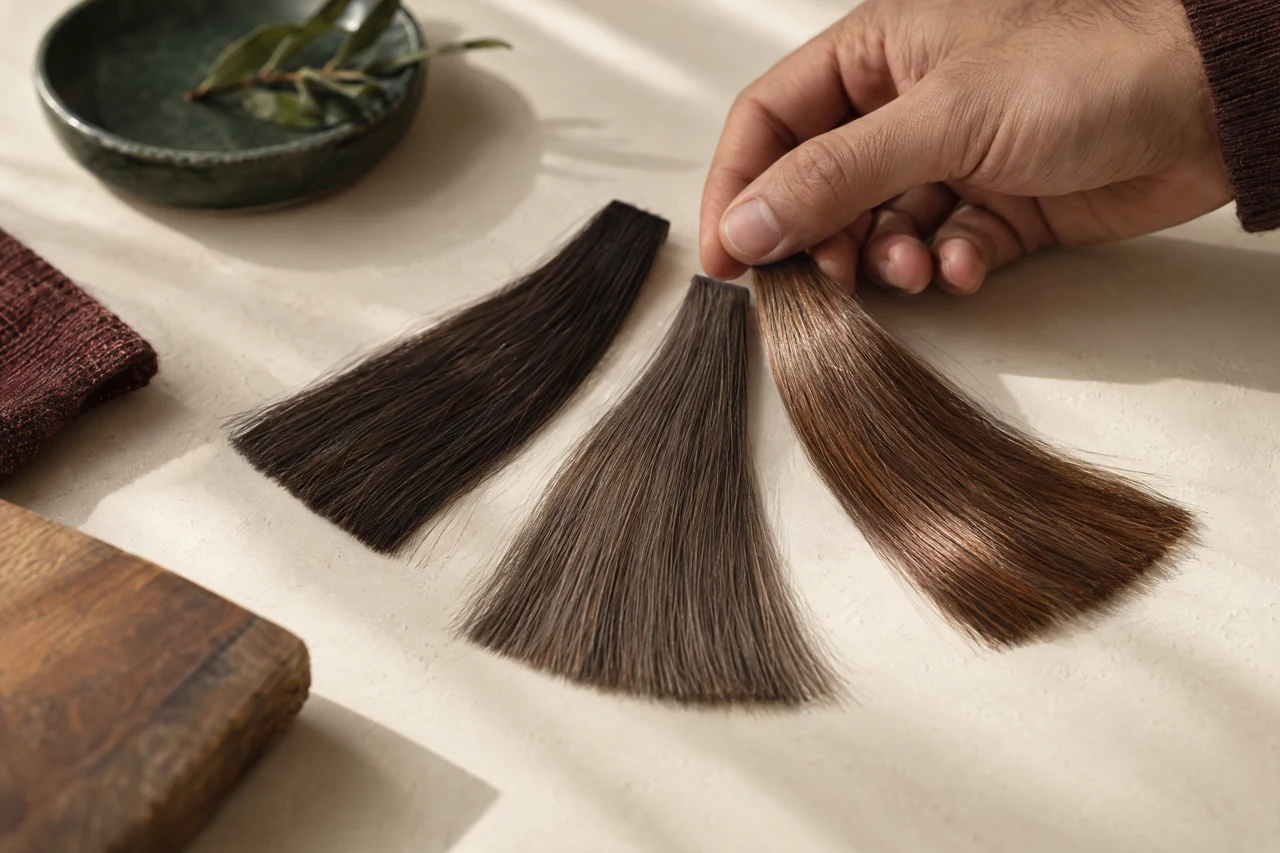
The usual parting and haircut affect the visible shape
A change in parting, fringe length or layers may expose or hide different pale strands. Show how you wear the hair on an ordinary day and mention any planned cut. The natural growth pattern cannot be arranged into a permanently fixed stripe, so judge the feature in the real shape rather than only a posed photograph.
Bring a loose-hair view and a view with the hair tucked, tied or brushed back if that is part of your routine. A forelock that looks central in a close-up may sit to one side when the hair falls naturally. Show your glasses and the way you move a fringe out of your eyes. These everyday movements help explain when you want the white section to be noticeable.
Useful haircut reference photos show both the desired shape and the lengths that must remain. For this brief, include your own current streak rather than relying only on someone else's pale front section. Say whether the reference appeals because of its placement, contrast or haircut; an inspiration image cannot establish the natural distribution of your white hairs.
View the streak in the hairstyle you actually wear
Before agreeing to a shorter fringe or new face-framing layers, ask how those cuts could alter the visible pale length. Cutting the ends does not move the roots of the streak, but it can change how much of the feature hangs beside the face. If you alternate between a side part and a brushed-back style, judge both rather than optimising a stripe for a single photograph.

Future root maintenance must respect the retained area
When discussing later root colouring, identify the area you still want left visible and whether its boundary has changed. A previous colour goal should not be assumed to remain the same as new hair grows. Confirm the intended areas and appropriate method each time, without expecting a guaranteed permanent width or identical outline.
At a later visit, show which roots need colour and which remain part of the retained feature. Mention changes since the last appointment, such as a different parting, a fringe trim or more pale hairs near the temple. Keep the most recent useful photographs on your phone, but let the current hair guide the discussion. An old image is a record of your preference, not a permanent application map.
Review root touch up to check its service scope and the details to share before arranging the related work.
If the surrounding lengths also need a refresh, clarify that separately. Ask whether any proposed gloss, toner or colour application would include the retained white hairs. Leaving an area out of root colour does not, by itself, answer what will happen during other colour steps. If the streak already has unwanted colour on it, explain the product and timing before asking for a remedy; adding further chemicals without assessment can complicate the request.
Repeat the keep-white preference at later enquiries
Include the preference in the enquiry even if you have visited before: ‘The white forelock is intentional and should stay visible.’ Then describe the separate maintenance task, such as dark regrowth elsewhere or faded brown lengths. This keeps your defining feature distinct from the areas you want changed and helps the salon assess the appropriate scope rather than assuming a standard all-over coverage goal.

Check product history and safety before surrounding colour
Preserving white hairs does not remove the safety considerations of colouring the neighbouring hair. Share previous reactions, current scalp irritation and the names of products used at home, including temporary root cover and henna-based products. Separate this history from your inspiration pictures so that a colour preference does not obscure information needed to assess the service.
The FDA's hair-dye safety guidance advises following product directions and doing the instructed skin test before every use. A reaction can develop after earlier colouring without problems, and a negative skin test does not rule out a reaction during dyeing. Its checklist also advises against colouring an irritated, sunburned or damaged scalp. Discuss relevant concerns before arranging the work rather than treating a smaller coloured area as proof of safety.
Ask about the retained area without choosing the technique yourself
Ask how the proposed colour steps will respect the white section, including any treatment of the surrounding lengths. The appropriate approach depends on the distribution of hairs, existing colour and products being considered. A photograph of foils or clips cannot confirm what is suitable for your hair. Avoid improvised home barriers or corrective bleaching based on an online picture, particularly when the unwanted colour or prior processing is uncertain.

Care for the white section and coloured hair together
Agree on home care for the full head, including whether any pigment-depositing product is intended to touch the white area. ‘Keep it white’ and ‘make it cooler silver’ are not interchangeable requests. Show the labels of products you already use before adding a toning shampoo or mask. If you notice an unwanted tint, record it in consistent light and ask for advice rather than repeatedly applying different products.
The American Academy of Dermatology's healthy-hair tips recommend concentrating shampoo on the scalp, conditioning after washing according to hair type and handling wet hair gently. They also recommend limiting heat styling and using low or medium heat with heat protection. These are handling and care principles, not a promise that the streak's colour or shape will remain unchanged.
Plan hair care for colour-treated hair around the surrounding coloured lengths as well as the retained section. Follow the advice for the actual service when discussing the first wash. Afterwards, compare the streak in your usual parting before deciding it has narrowed or changed colour. A different fall, styling product or light may change what you see without establishing what happened to individual hairs.
Use this 6-point checklist to prepare a clear keep-white brief. It brings the feature, surrounding colour and maintenance request into the same conversation.
Keep a useful record rather than measuring a perfect stripe
Save an unfiltered photograph in your ordinary style after the hair is dry, then use a similar view for later enquiries. If something looks different, describe whether it is the root boundary, the pale lengths or the contrast beside them. That observation is more useful than a demand to recreate a fixed width, and helps separate a styling change from a colour question.

Colour goals that can look similar in a photograph but need different briefs
| Your goal | What should remain visible | What to clarify before colour |
|---|---|---|
| Retain a bold white forelock | The existing pale cluster beside deeper hair | Whether fine white hairs at its edge also stay untouched |
| Retain a softer white feature | The forelock with some neighbouring natural variation | How much surrounding white hair you are comfortable seeing |
| Keep an all-over salt-and-pepper mix | A wider distribution of dark and pale strands | The overall mix, not only a single front boundary |
| Create a new fashion-silver section | A deliberately coloured pale section | Existing base, processing history and feasibility; this is not simply preservation |
Your preparation checklist
- Photograph the current white section from the front and near the roots with your everyday parting.
- Show how the pale lengths fall when loose, tucked or tied, and mention any planned fringe or layer changes.
- Identify the main cluster and the fine pale hairs at its edge that you want kept visible.
- Choose whether neighbouring hair should create bold contrast or a softer transition, and address scattered greys elsewhere separately.
- Share previous colour products, reactions and scalp concerns, and ask how proposed colour steps will respect the retained area.
- Confirm future root maintenance and home-care product use without assuming the streak will keep a fixed outline.
Frequently asked questions
Can I colour other areas while retaining a white forelock?
That can be a design goal to discuss. Mark the area to retain and the neighbouring colour you prefer. Suitability and the actual method need assessment before any arrangement is confirmed.
Will the streak keep the same width as hair grows?
No fixed outline is promised. Natural growth, trimming and a different parting can change how much white is visible. Use current photographs at each enquiry.
Is keeping a streak the same as asking for fashion silver colour?
No. This goal preserves an existing natural white area. Creating a new fashion silver section is a separate colour request with different feasibility questions.
Make your white streak part of a clear colour brief
For a Vit So colour enquiry in Sheung Wan, send current photographs with your usual parting and identify the white area you want retained. Explain the surrounding colour you prefer, any planned haircut and your recent product history. The proposed scope and suitable approach need assessment; an enquiry is not a confirmed booking.
Start your WhatsApp enquirySources & further reading
- Poliosis
The meaning of a localised white-hair patch and why its cause cannot be diagnosed from a hairstyle preference.
- Hair Dyes
Product directions, skin testing before each use, the limits of a negative test and precautions for an irritated scalp.
- Tips for healthy hair
Scalp-focused shampooing, conditioning by hair type, gentle handling and limiting heat styling.



