







Vit So and DT HUB have the same owner. DT HUB links in this article are disclosed promotional references to that related brand, not independent recommendations or medical endorsements. Commercial descriptions are not used as evidence of efficacy.
Read scalp images before buying a care plan as observations, not verdicts
Start by asking the person at the screen to describe the image without using a treatment name. Is the observation a visible flake, a shiny patch, a cluster of strands or an exposed part? Then ask them to separate what they can see from what they think it means. A useful explanation leaves room for uncertainty rather than turning every unfamiliar detail into a problem that requires payment.
DT HUB’s page for scalp diagnosis hong kong describes displayed, saved images and explanations, but also states that the team does not provide medical diagnoses. Ask who will interpret your images, what their role is and which conclusions fall outside that role. The word diagnosis in a service title should prompt these questions, not settle them. Request an observation summary without a package recommendation attached.
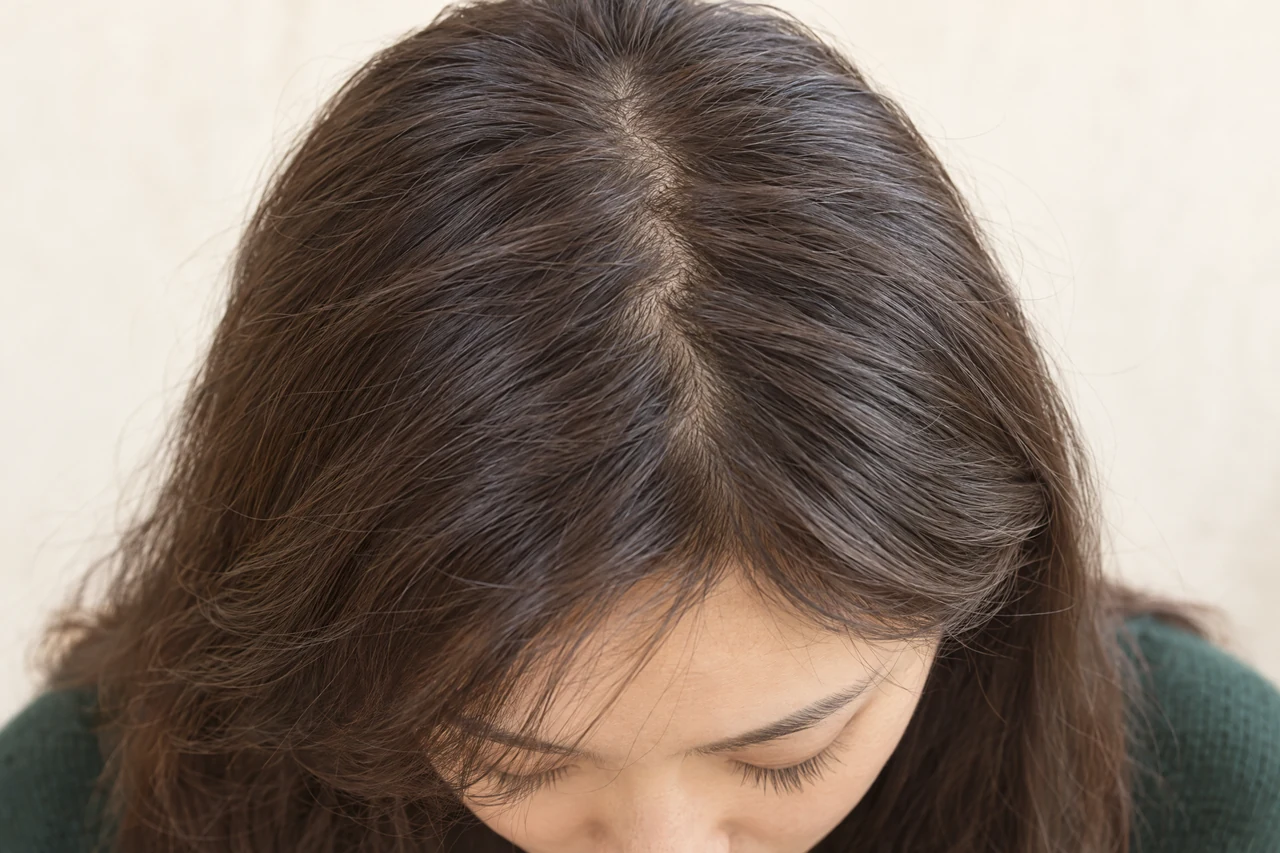
A parting view also cannot answer every question about hair quantity. Vit So’s guide to fine hair vs thin hair helps distinguish strand thickness from density when discussing appearance. For a claimed density change, ask whether the same measured area and counting method were used. An enlarged crop with more visible scalp is not, by itself, an established count of missing hairs.
What a medical assessment adds
The American Academy of Dermatology describes medical assessment as gathering information about onset and duration, examining the scalp and other relevant areas, and sometimes arranging further tests. [1] A camera view may contribute to that assessment, but it does not replace the history or the clinician’s judgement. Do not accept a confident explanation of an underlying cause merely because the screen is sharply focused.
Make the next image comparable before calling it a change
Comparable scalp image recording conditions mean returning to the same location with the same capture method, rather than choosing whichever patch looks most dramatic. Ask how the operator finds that location again. A wider reference view can help orient a close-up. Keep the date and the zone description with the original image; a timestamp alone does not establish that the next visit photographed the same place.
Discuss lighting, camera angle, magnification and the width of the part. For a contact camera, ask whether pressure against the skin is kept consistent. Record whether the hair was wet or dry, when it was last washed and what styling products were present. These notes make the comparison more transparent. They are practical documentation questions, not a home diagnostic protocol or instructions to change prescribed care.
If preparation changes, label that difference rather than hiding it. A view taken before washing and another after washing answer a narrower question about appearance under those conditions. Likewise, a straight part and a zigzag part expose different lines of skin. Keep both if useful, but do not present them as interchangeable evidence of improvement or decline. If capture conditions cannot be matched, ask the provider to say so.
Keep the record usable and private
Ask for the original files and a brief written description, not only a cropped promotional collage. Confirm how images are stored, who can access them and whether separate permission is requested for advertising. You should be able to bring your own record to another consultation without agreeing to public use of your scalp images.
Ask what extra cleansing would address—not what detox supposedly proves
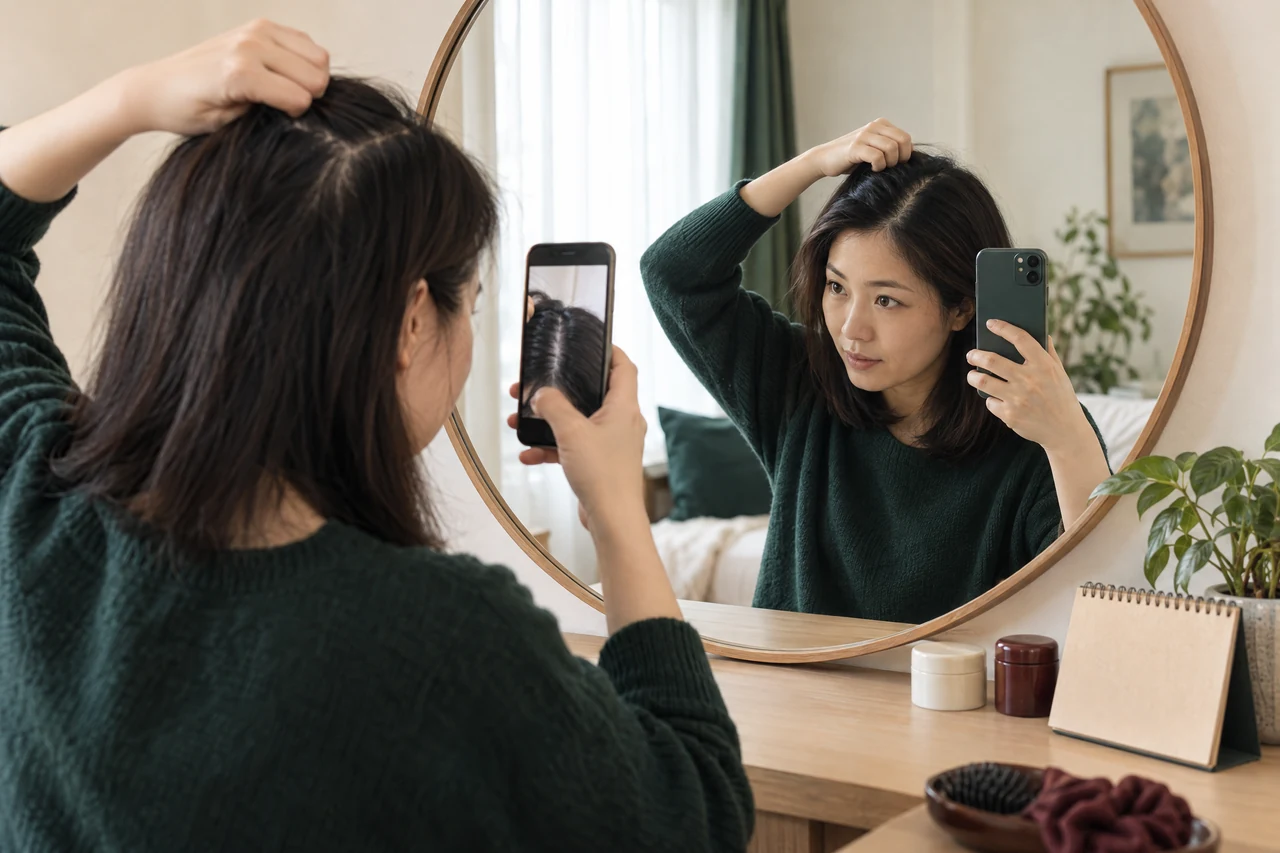
A pale speck or shiny area is a reason to ask a descriptive question, not an automatic reason to increase cleansing. Explain how your scalp feels and where products were applied. If the concern is simply an unwanted cosmetic feel after styling, ask what a limited cleansing service adds to your ordinary routine. If the concern includes persistent discomfort or unusual shedding, the next step should not be a stronger scrub chosen from an image.
The description of scalp detox hong kong lists cleansing stages and before-and-after camera views, while identifying the service as nonmedical scalp care. Treat detox as a menu label to unpack: what will touch the scalp, what is optional and what observation is being addressed? A clearer-looking surface after cleansing does not prove that physiological toxins were removed, a disease resolved or new hair growth began.
Ask why a multi-session course is needed rather than a single optional cosmetic appointment. A provider should be able to explain the purpose without relying on alarming words such as blocked or suffocated follicles. Decline an upgrade if the explanation keeps moving from visible residue to unverified medical consequences. Keeping a baseline image does not oblige you to accept the service offered beside it.
Keep length conditioning separate from an alleged scalp finding
Dry-feeling lengths and a scalp concern may exist at the same appointment, but they require separate explanations. DT HUB’s deep hair treatment kwun tong page describes conditioning categories for hair lengths and includes a boundary against treating scalp disease. Ask which part of the hair receives the proposed product and what cosmetic goal it serves. A scalp close-up is not enough reason to purchase a length-care package.
When asking about keratin treatment hong kong, clarify the exact service rather than assuming all keratin-labelled options are alike. The destination distinguishes repair-labelled care from straightening. Ask about the formula, any heat involved, intended application area and compatibility with your hair’s processing history. Whatever its cosmetic purpose, keratin care is not a remedy for a medical finding alleged from a scalp image.
If your main priority is how the lengths feel during everyday grooming, evaluate that priority separately from claims about the roots. A glossy finish or altered parting can change the overall picture without answering why your scalp hurts or why shedding has changed. Conversely, choosing not to buy a conditioning add-on does not mean neglecting a medical concern. Keep the goals and decisions on separate lines of the quotation.

Choose medical assessment before a cosmetic plan when symptoms warrant it
Seek medical assessment first for persistent, sudden or patchy hair loss, or loss accompanied by redness, pain or inflammation. You do not need a frightening camera image to justify asking for help. The NHS advises seeing a doctor if you are worried about hair loss and specifically recommends getting an idea of the cause before considering a commercial hair clinic. [2] A reassuring salon image should not override symptoms you can feel or changes you have noticed.
DT HUB’s scalp treatment kwun tong page groups imaging and scalp-care options together. Read it as a commercial menu, not independent proof of medical capability or hair-loss outcomes. Before choosing cosmetic scope, request a clear explanation of the observation and ask what would lead the provider to defer service and recommend a clinician. A package offer should not be the default response to a red flag.
Vit So’s scalp treatment page can help you frame questions about cosmetic scalp-care scope in Sheung Wan; it should not be read as a substitute for medical assessment. Vit So’s Sheung Wan location and DT HUB’s Kwun Tong location are distinct, not interchangeable branches. During pregnancy or breastfeeding, for children, or during chemotherapy, ask the relevant healthcare team before scalp-contact products, massage or chemical services. Do not delay conventional care while comparing packages.
Bring a timeline, not a self-diagnosis
Write down when the change began, whether it is progressing and what discomfort accompanies it. Bring the images and a list of recent products or services. Let the clinician decide what the findings mean and whether further examination is needed. The AAD emphasises that the cause may require information beyond the initial examination. [1] This article does not diagnose a scalp condition or recommend a medicine.
Buy only a clearly scoped plan with a meaningful review point
Before paying, separate the quotation into observation, optional cosmetic service and any recommended medical referral. Ask what is included in the price and what would be charged separately. Vit So’s guide to head spa packages is useful for checking contents and charges rather than assuming every package includes the same wash, conditioning or image record. An image consultation and a prepaid course are different purchases.
A review point should explain what will be reconsidered, not promise success after a predetermined number of visits. Ask whether follow-up images will use the same conditions and what happens if the cosmetic service does not address your stated concern. Confirm unused-session, cancellation and refund terms in writing. Do not accept an undefined improvement score as the only way the package will be reviewed.
Taking the images home is a reasonable decision when the explanation is incomplete. Choosing a narrowly described cosmetic appointment may also be reasonable if that is what you actually want and there is no reason to defer it for medical advice. Neither choice requires agreeing that a camera has diagnosed you. The best purchase decision is one you can explain without repeating a sales label.
Match the decision to the question the observation can reasonably support.
| Decision | When it may fit | What to require | What it cannot establish |
|---|---|---|---|
| Keep an observation record | You want a clear account of an appearance change | Original images, dates, locations and capture notes | The medical cause of hair loss |
| Consider optional cleansing | Your question concerns cosmetic feel or visible residue | An explanation of products, scope and alternatives | Physiological detoxification or regrowth |
| Consider length conditioning | Your priority concerns the lengths, not a scalp diagnosis | A separate goal and quotation | A remedy for medical scalp findings |
| Seek a clinician first | Loss is persistent, sudden, patchy or accompanied by pain and inflammation | A symptom timeline and available records | A diagnosis supplied by this article |
Your preparation checklist
- Ask for a plain description of the visible feature before hearing a package recommendation.
- Confirm how the same scalp location, lighting and camera settings will be repeated.
- Record wash timing, wet or dry state, parting and products present at capture.
- Ask who interprets the images and which questions require a clinician.
- Separate scalp-contact services from conditioning applied to the lengths.
- Request an itemised quotation, review point and unused-session terms before paying.
Frequently asked questions
Does a high-magnification image mean the explanation is medically reliable?
No. Detail on a screen does not establish the interpreter’s qualifications, a reliable comparison method or the cause of a symptom. Ask what is directly visible and what remains uncertain. A medical question needs an appropriate clinician, not just a sharper camera.
Can before-and-after cleansing images prove that a package works?
They may document a difference in surface appearance under the recorded conditions. They do not, by themselves, prove medical improvement, toxin removal or regrowth. Ask whether the location and capture conditions match, and keep the claim limited to what was actually compared.
Should I change my washing routine before an image appointment?
Ask the provider what preparation is requested and why, then record what you actually did. Do not stop prescribed care or deliberately tolerate discomfort to create a more dramatic image. If a clinician has given you care instructions, clarify any conflict with that clinician.
Can I request the image record without buying a course?
Ask about image access and any standalone consultation charge before the appointment. Confirm the terms rather than assuming access is free or dependent on a purchase. You can request time to consider the explanation and seek medical advice before committing to a course.
Take the explanation home before taking on a package
Bring your capture notes and questions to a consultation, and ask for a written cosmetic scope before agreeing to extras. If symptoms warrant assessment, prioritise a clinician. If the recommendation still cannot explain what the images show and why the proposed service fits, keep the record and defer the purchase.
Start your WhatsApp enquirySources & further reading
- Hair loss: Diagnosis and treatment — American Academy of Dermatology
A medical assessment combines history with examination of the scalp and other relevant areas; blood tests or scalp biopsy may be needed if a clinician suspects an underlying cause. Salon images should not be treated as a substitute. No medication, procedure instructions or efficacy figures are reproduced.
- Hair loss — NHS
People worried about hair loss should consult a doctor, including before purchasing commercial hair-loss care; wellbeing concerns are also legitimate reasons to seek advice.



