






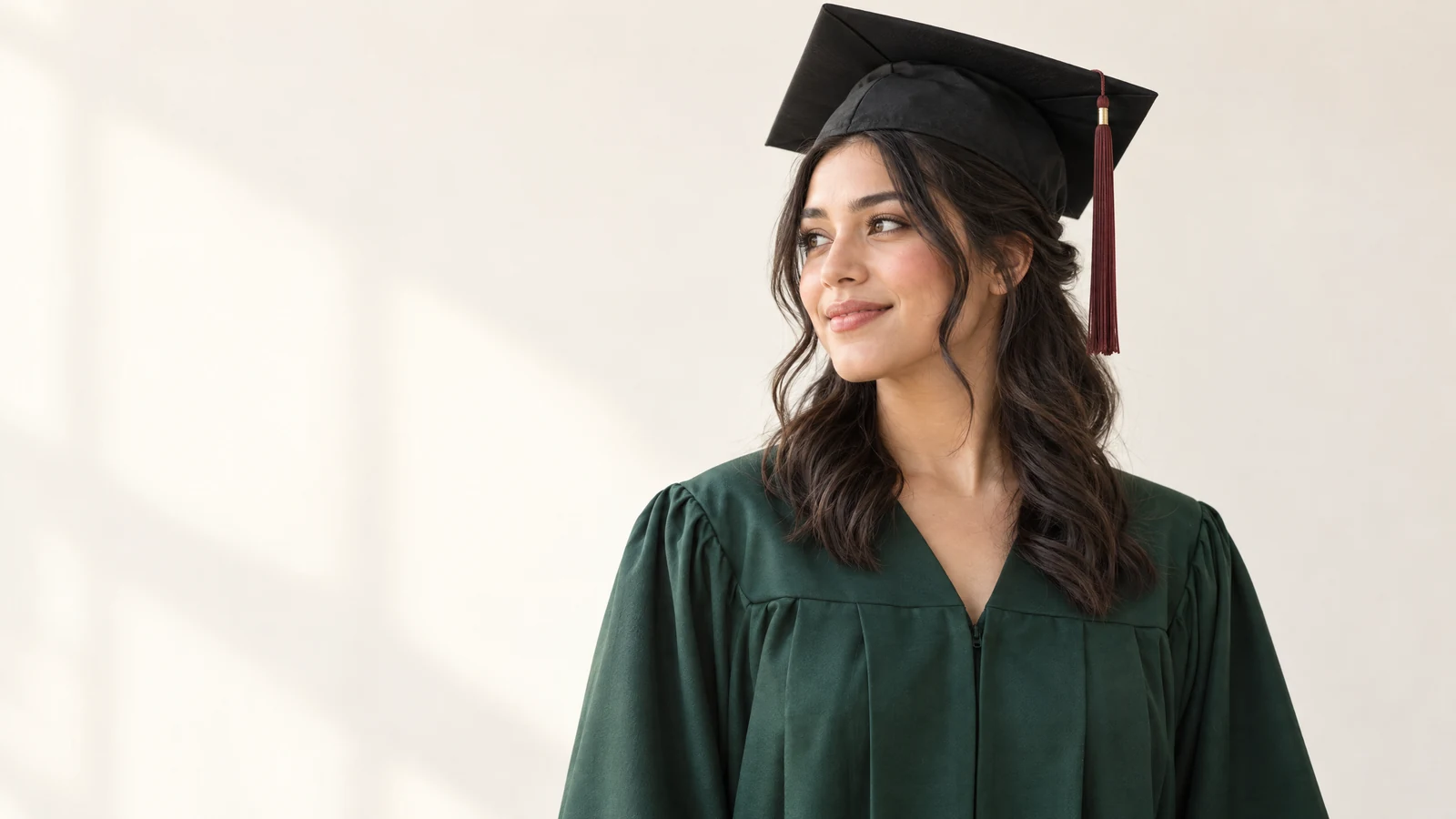
Graduation photo hairstyles should fit the cap
Check where the cap touches the crown and what remains visible near the face. A tall gathered shape can have different fitting requirements from a lower outline or loose hair. Show the actual headwear if the appointment arrangements permit it, and discuss how the style should look once the cap is removed.
Begin with your institution's dress instructions. For example, HKU's suggested academic attire specifies the seam-free cap lining at the front, the seam at the back and the tassel on the left. That is HKU guidance, not a rule for every graduation. Knowing the required orientation lets you assess the space around the fringe and ears without tilting the cap simply to rescue a hairstyle.
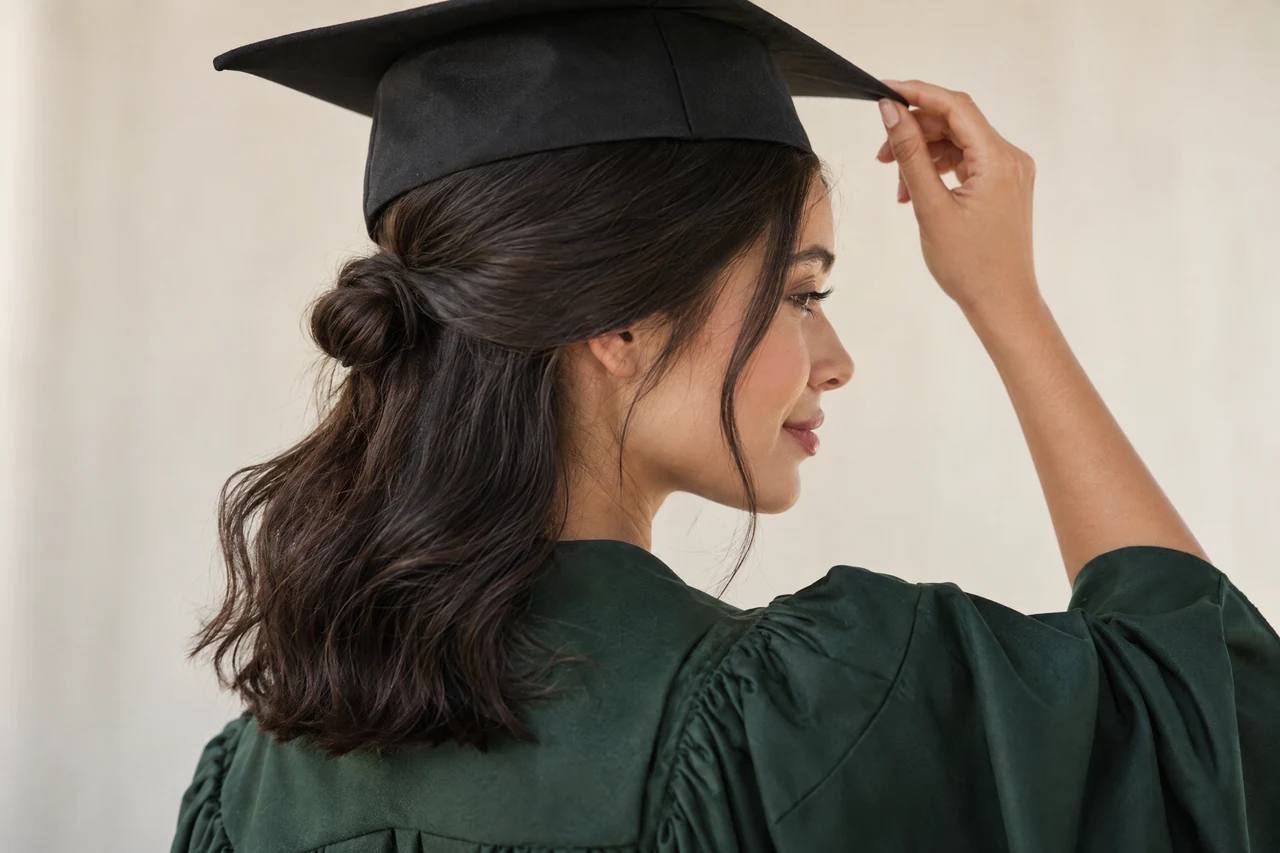
Try the cap with your hair in its usual dry state and turn your head gently. Check whether its band presses on a gathered section or a large clip stops it settling. A low half-up knot may leave more crown space than a high bun, but its exact height still needs testing. With loose hair, check that the front sections leave the eyes clear.
For a gathered finish, hair styling is the relevant starting point for discussing the shape and visible detail rather than assuming an ordinary loose finish includes a pinned arrangement.
Compare graduation photo hairstyles with headwear on and off
Take a simple reference photograph with the cap on, then remove it without pulling through the hair. Compare the parting, front sweep and position of any half-up detail. If you prefer fullness at the crown in uncovered portraits, say so before choosing a very flat covered outline. Agree which view has priority and what small adjustment you can manage between photographs. Avoid a design that only makes sense while the cap hides its upper section.
The gown collar changes the neckline
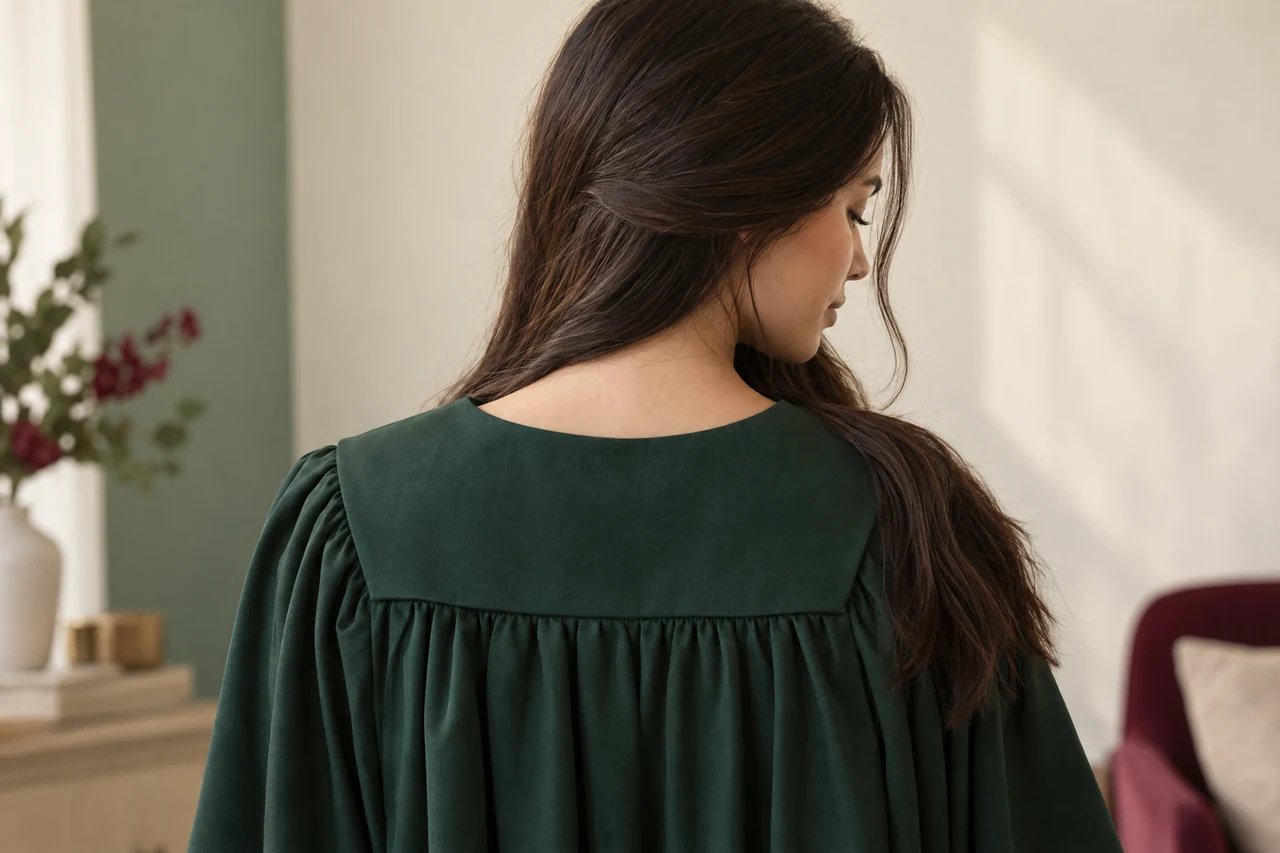
A high or broad gown collar may hide hair detail that would be visible with everyday clothing. Compare the back outline and how the ends sit over the fabric. If you also want photographs in another outfit, decide which look matters most and ask whether one base shape can sensibly work for both.
Put on the gown and hood together when checking the hair. A curl resting neatly at shoulder level in a blouse may sit on a fold of heavier fabric in the gown. A low knot can also share space with the upper edge of the collar. Rather than choosing the lowest possible position automatically, look for a comfortable gap between the cap band, gathered hair and fabric. Check it while sitting as well as standing.
For long hair, compare the ends behind both shoulders with a sweep over one shoulder. A balanced front outline or a clearer back collar may matter more depending on the portrait. Decide whether to emphasise the hood, an earring or hair length, then move only the intended loose section rather than dragging the whole style across the fabric.
Keep visible details clear of the fabric
A small braid or twist can disappear against the collar even when it looks intricate in a close-up reference. Ask where that detail will actually be visible. If the hood keeps moving, follow your university's attachment instructions instead of using hairpins to hold the gown. HKU, for example, gives button-loop guidance for its hood and advises against safety pins or adhesive tape on the regalia. Keep clothing adjustments separate from hair adjustments so changing one does not disturb the other.
Group portraits and close-ups have different emphasis
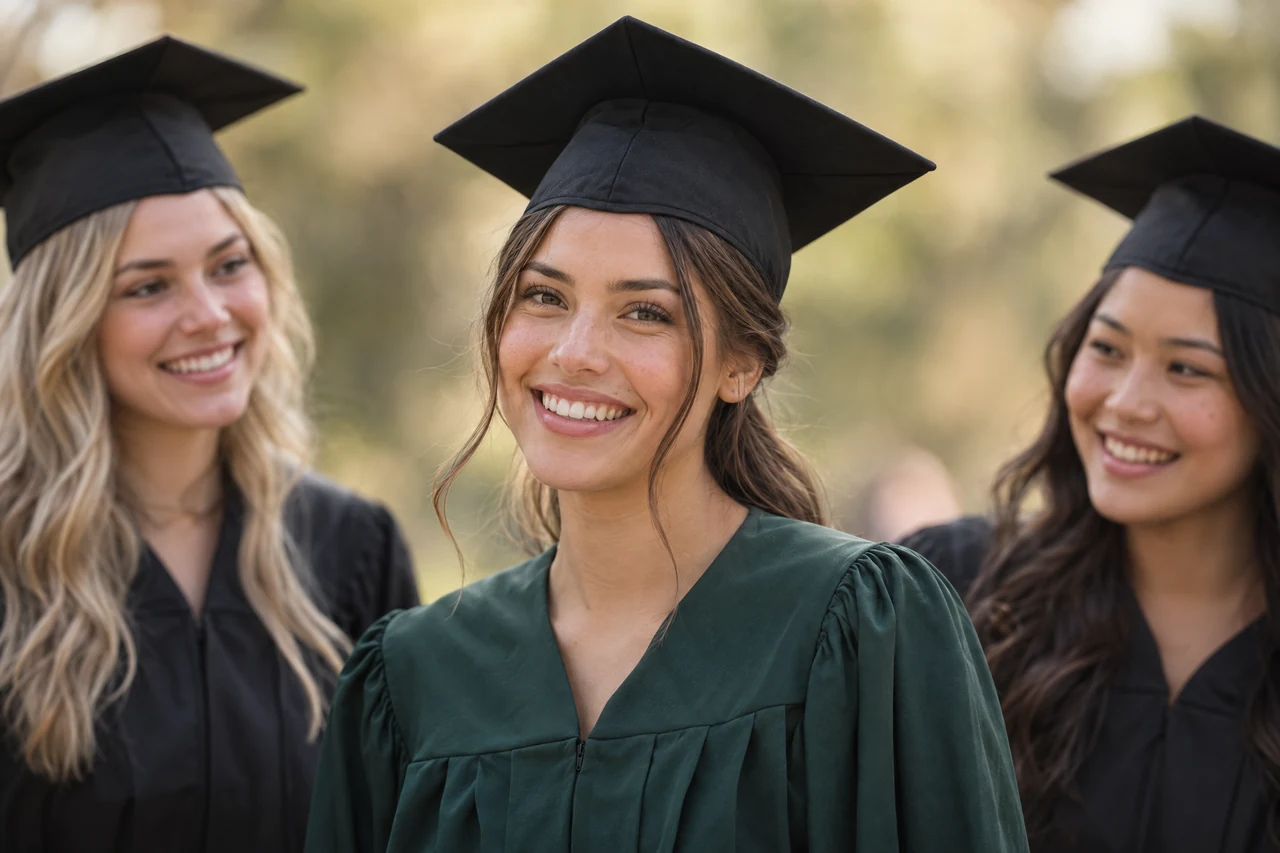
In a group photograph, a clear face and overall silhouette may matter more than a small intricate back detail. A close-up makes the fringe and parting more prominent. Explain which photographs are planned and use references from comparable hair lengths; the camera's angle and lighting are separate from the styling itself.
Make a short priority list: the formal group portrait, a family photograph and your individual cap-off portrait may call for different views of the same hairstyle. If the group picture is the main keepsake, check that a loose tendril does not cross your eye when you look towards the camera. A face-framing section can remain soft without hanging directly in front of the eyebrows. Test the direction you naturally turn rather than holding an unfamiliar pose to make the hair work.
A side portrait may reveal the half-up join or the curve of the ends, while a straight-on group photograph might barely show either. Tell the stylist which detail matters and supply a reference that actually displays it. If you wear glasses, try them with the cap so the frame arms and side hair are considered together. Leave decisions about camera height, exposure and the group arrangement to the photography plan.
Continue with hair styling for photo shoot for that specific comparison and the preparation questions it raises.
Prioritise the face and outline in the main photographs
Ask a friend to photograph the test look from a normal portrait distance, not only as a close-up of the hair. Check whether the fringe, cap edge and tassel compete for space beside your face. You do not need every strand to be symmetrical. A clear, intentional outline is a more useful goal than repeatedly arranging tiny back details that your chosen photographs will not show.
Allow for the ceremony and photography gap
Give the time you need to leave the salon and when the main photographs will be taken. Include travel, waiting and time wearing the cap in your own plan. Ask for suitable care advice and prepare for normal changes in the outline; no fixed duration, student discount or photography support is established by this guide.
Work backwards from your travel deadline. Include gown collection, registration and meeting relatives before the ceremony. When leaving Sheung Wan for the venue, allow for the actual route and belongings you must carry; a fixed photography slot does not mean the appointment can be shortened.
After removing the cap, check the parting and front sections before touching the rest. Ask which clip secures the cap and which pins support the hairstyle; pulling an unfamiliar pin can undo a half-up join. Pack only items you have been shown how to use rather than improvising with extra product.
Review event hair styling to check its service scope and the details to share before arranging the related work.
Plan travel, headwear and ordinary checks
Tell the salon whether the cap will stay on throughout the ceremony or be removed repeatedly for photographs. Include any outdoor waiting and a later meal. If you want a more relaxed appearance after the formal portraits, day to night event hairstyles can help you consider a modest transition from the same base shape. Decide what you can comfortably adjust yourself rather than planning a complete restyle in a crowded washroom.
Choose a shape that works with your current length
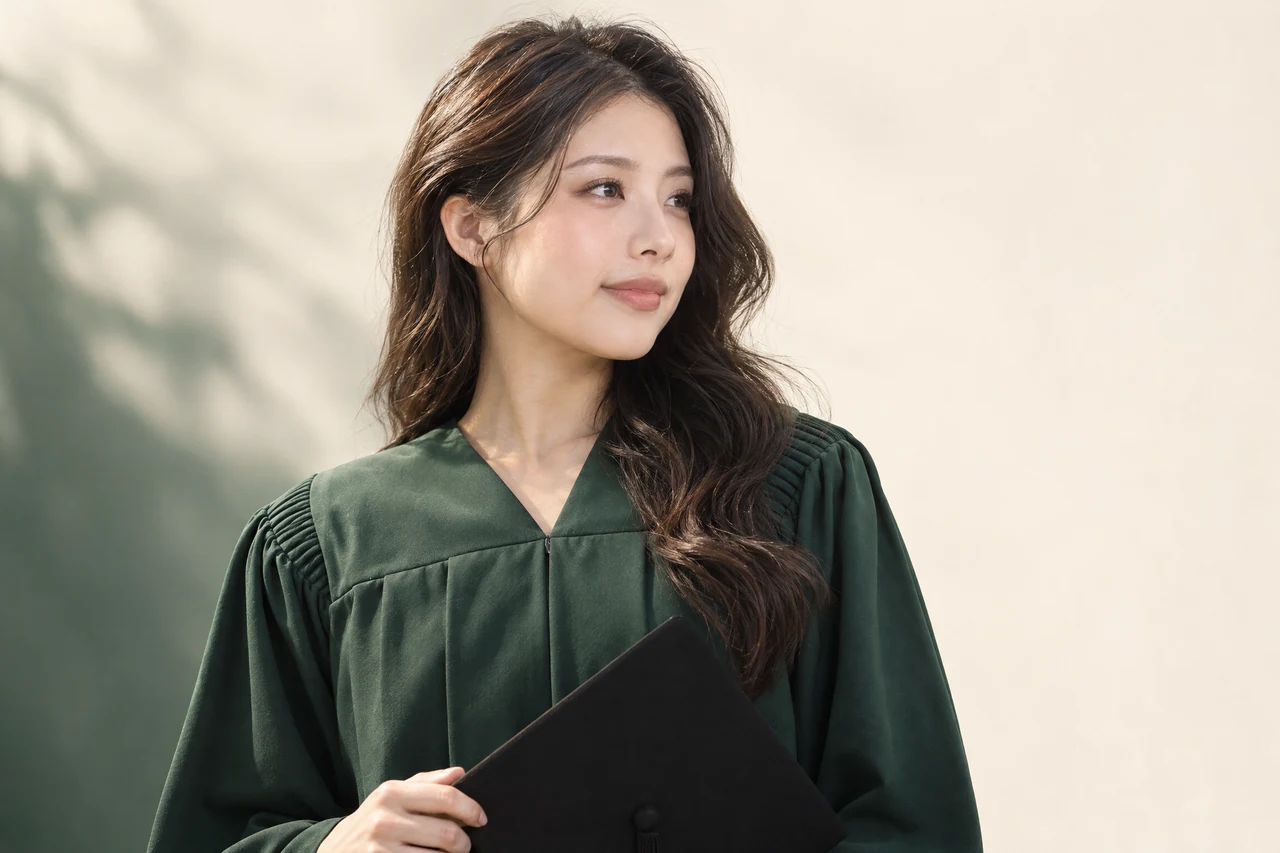
Short hair does not need to imitate a long-haired updo. A clear parting, an intentional fringe direction or ends arranged around the ears can provide a complete graduation look. Check what the cap leaves visible before asking for extra height. For a bob, test whether the ends turn against the gown collar; you may prefer a gentle curve, a straighter outline or one side tucked behind the ear.
With shoulder-length or longer hair, a low half-up finish preserves visible length while gathering some front sections. A low ponytail keeps more hair together but may disappear behind the shoulders in a front portrait. A braid offers a recognisable back detail, though its join must fit below the cap and its tail may sit against the gown. For natural curls, show your normal dry pattern and say whether preserving that texture matters more than recreating a smoother reference.
Keep a comfortable base beneath the cap
Secure should not mean painful. The American Academy of Dermatology's guidance on hairstyles that pull recommends loosening styles that pull and keeping hair loosely gathered beneath coverings. It also advises changing the style immediately if tightly pulled hair causes pain or scalp stinging. Speak up during the fitting instead of tolerating discomfort for the photograph. These are comfort and hair-care considerations, not evidence that a particular graduation look is aesthetically better.
Prepare a clear graduation styling enquiry
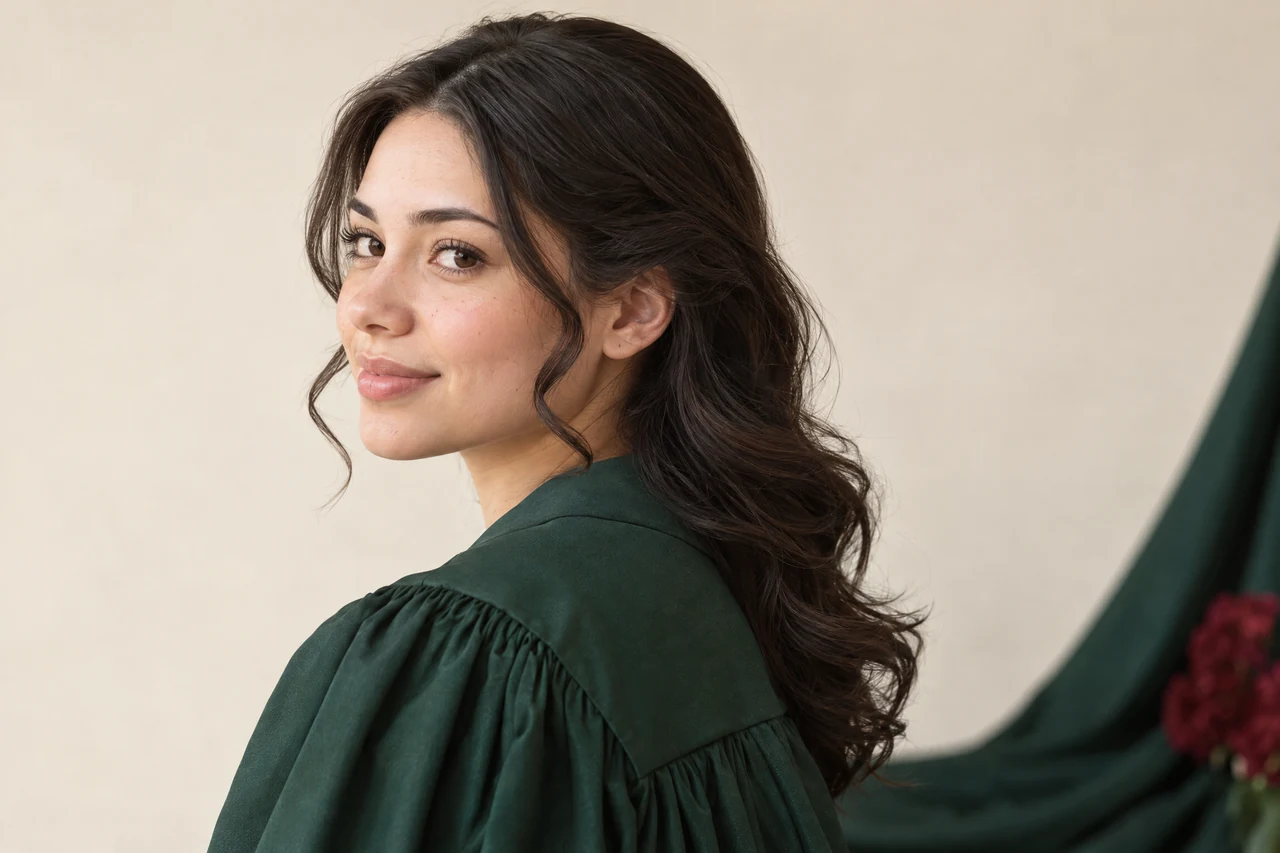
Send a current photograph showing your dry hair length and front outline, together with the reference you like. Explain whether the appeal is the side curl, low gathered position or exposed neckline. A photograph of the actual cap and gown is more useful than the words 'graduation style' alone. Ask about bringing the headwear before arriving with it.
Use the 6 preparation steps in the checklist below to organise your enquiry. State whether you want styling only or are also considering a haircut, and discuss the uncovered look before choosing a major cut. Confirm the scope, quote and timing together. A simple cap-compatible finish can be a deliberate choice without adding more services.
Use book a hair appointment to send the intended work and possible dates; wait for confirmation before travelling.
Name the photograph you most want to keep
Finish your enquiry with a clear priority, such as keeping the fringe open in the formal group portrait while retaining loose length for the individual pictures. That gives the discussion a practical direction. The aim is a recognisable version of you that fits the academic dress and the day's movements, not a different hairstyle for every camera angle.
Graduation hairstyle directions to compare with your actual cap and gown
| Direction | Visible benefit | Cap and collar check |
|---|---|---|
| Loose hair with a defined parting | Keeps length and your familiar front outline visible | Check the front sections after cap removal and where ends meet the gown |
| Low half-up shape | Gathers some face-side hair while retaining length | Place the join clear of the cap band and check its space above the collar |
| Low ponytail or compact gathered shape | Keeps more hair together and can expose the neckline | Check pressure while seated and whether the shape shows in the main portrait |
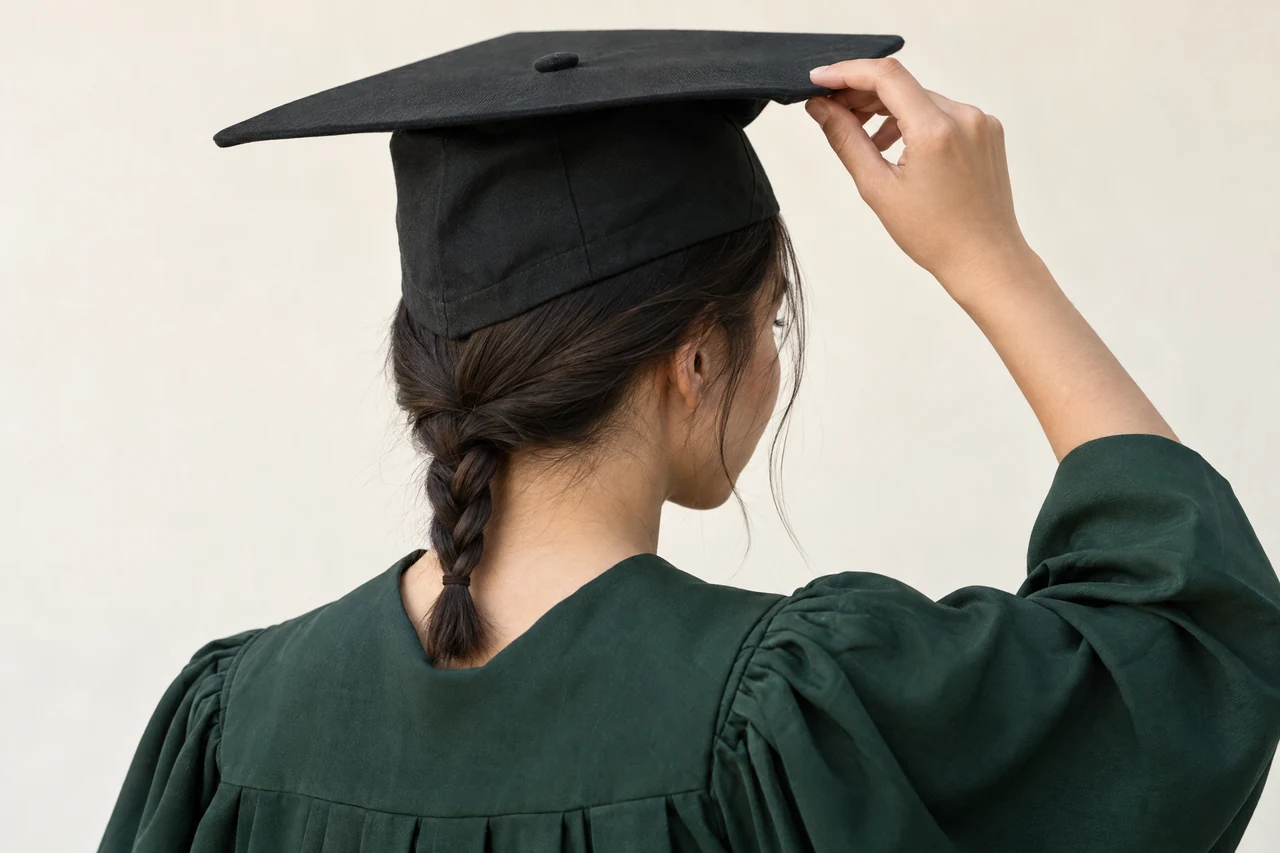
| Low braid | Provides a distinct back detail without building crown height | Check the starting point below the cap and the tail against the gown |
| Short cut or bob with arranged ends | Uses the existing fringe, ears and end line as the main detail | Test cap contact and the dry ends against the collar instead of forcing an updo |
Your preparation checklist
- Read your institution's cap, tassel and hood instructions; test the full academic dress rather than the cap alone.
- Choose the main photograph and state whether the cap-on group view or uncovered individual portrait has priority.
- Prepare current dry-hair photographs and references that show the specific parting, front section or gathered detail you like.
- Check the proposed outline while turning your head and sitting; flag cap pressure, pulling or interference with glasses and the collar.
- Share your salon departure deadline, ceremony schedule, route and expected gap before the main photographs.
- Confirm the appointment scope and quote, and ask which small cap-removal adjustments you can safely make yourself.
Frequently asked questions
Should I choose my style without considering the cap?
Consider both views. A cap covers and contacts part of the hair, so check the intended outline with headwear and after removal.
Can I request a style for both ceremony and casual photographs?
Explain the gown and second outfit together. A practical base shape may suit both, but any planned change and its timing need discussion.
Is a graduation or student discount confirmed?
No special offer is established here. Use the published service information and confirm the appointment scope and quote directly.
Do I need to grow my hair for graduation photographs?
Not necessarily. A short cut or bob can use the parting, fringe direction and ends as its visible detail. Choose references close to your current length and test them against the cap before deciding that you need a different haircut.
What should I do if the hairstyle feels tight under the cap?
Tell the stylist and have the fit or gathered section adjusted. Do not treat painful pulling as necessary for a secure photograph-ready finish. The cap and hairstyle should be checked together, including when you sit or turn your head.
Plan a graduation look around the photographs that matter
Enquire with Vit So in Sheung Wan using your current hair photographs, cap and gown details, preferred outline and departure deadline. Ask which finish is practical and confirm the service scope, quote and appointment timing before making travel arrangements. An enquiry is not a confirmed booking.
Start your WhatsApp enquirySources & further reading
- Academic Dress — Suggested Attire
HKU-specific cap orientation, tassel position and hood attachment guidance, including advice against safety pins or adhesive tape on the regalia.
- Hairstyles that pull can lead to hair loss
Comfort beneath headwear: loosen hairstyles that pull and change a tightly pulled style if it causes pain or scalp stinging.



