







Growing out a disconnected top with a short crown: locate the gap
The problem can sit inside the top even when the sides already look tidy. From the front, the fringe may seem long enough for a sweep or parting. From the side, that front section projects beyond a crown which stays upright or ends much earlier. A longer front can overlap shorter hair without creating a continuous shape. Ask the hairdresser to separate the fringe, middle top and crown during the assessment, rather than treating all of them as one long section.
Look at the hair in its usual dry state, then gently move the fringe aside. This helps distinguish a heavy overhang from a short area hidden underneath it. A crown whorl can also direct hair away from the intended outline, so apparent shortness is not always just a cutting difference. A photograph cannot settle every detail: the hairdresser still needs to check actual length, density and direction. The useful question is which section lacks the reach required for your preferred style.
What growing out a disconnected top with a short crown can change now
A cut can adjust existing length and weight; it cannot add hair to the crown. This is also an important principle when growing out an undercut, although the short region there is usually beneath the top. Here, repeatedly shortening the rear top can keep the front-to-crown difference in place. Establish the crown as a protected area first, then discuss what can change around it. A softer outline is a possible intermediate improvement, not proof that the missing connection has been completed.

Reduce the front overhang if earlier balance is the priority
Shortening some of the front can reduce the contrast with the crown immediately. That does not mean cutting the whole top to the shortest piece. The hairdresser may be able to create a gradual change through the middle top while leaving useful fringe length. However, the more strongly you want the long projection reduced, the more front length you may need to surrender. Ask to see the proposed dry fringe position before agreeing, especially if covering part of the forehead matters to you.
Consider a hypothetical customer who wants a tidy forward outline for work and no longer needs the fringe to sweep across the forehead. Reducing the longest front pieces may suit that priority. Someone who needs those pieces for a particular parting could regret the same decision. Neither choice is universally better. Judge the cut against the feature you actually use each morning, rather than against a general request for a more balanced top. The benefit is a changed proportion, not a faster-growing crown.
Set a front boundary before choosing the cutting approach
Use the eyebrows, upper forehead or another visible dry landing point to explain the shortest fringe you will accept. The men's fringe haircut guide can help you describe that boundary and the direction you want to wear. Distinguish the centre from the outer front pieces: they need not share the same limit. If the proposed blend would cross your boundary, ask for a different intermediate shape. Agreeing to lose length should be an explicit choice, not an unexpected consequence of the word 'tidy'.
Keep the long fringe and let the crown become useful
Keeping the front is a valid plan when its length has a clear purpose. You might value a loose forehead sweep, the option of changing the parting or a longer eventual top. In that case, the immediate goal is wearability while the crown gains usable length. Expect some difference between the front and rear top to remain visible. Merely waiting does not guarantee the final shape will suit your hair direction, but it preserves the material needed for a later assessment instead of removing it now.
Protecting the crown does not require ignoring every other area. A hairdresser can assess isolated protruding ends or a weight concentration without automatically taking the crown back to its previous length. Be cautious about requesting extensive thinning just because the front feels heavy. It may create shorter pieces without reducing the longest overhang, leaving the original length difference and a different texture problem. Ask which section would be shortened, which would only have weight adjusted and which would remain untouched.
Retained length depends on where each section is taken
Sam Villa's Shaglet haircut education on overdirection explains that moving a section away from a region during cutting can preserve more length in that region. The tutorial also deliberately separates a perimeter to protect it. This is a useful explanation of why section placement matters, not a prescription for your haircut or a reason to copy a shag. Ask how the proposed cutting plan protects your front and crown; a technique name alone does not tell you what will remain.
Use a temporary forward outline without pretending it is connected
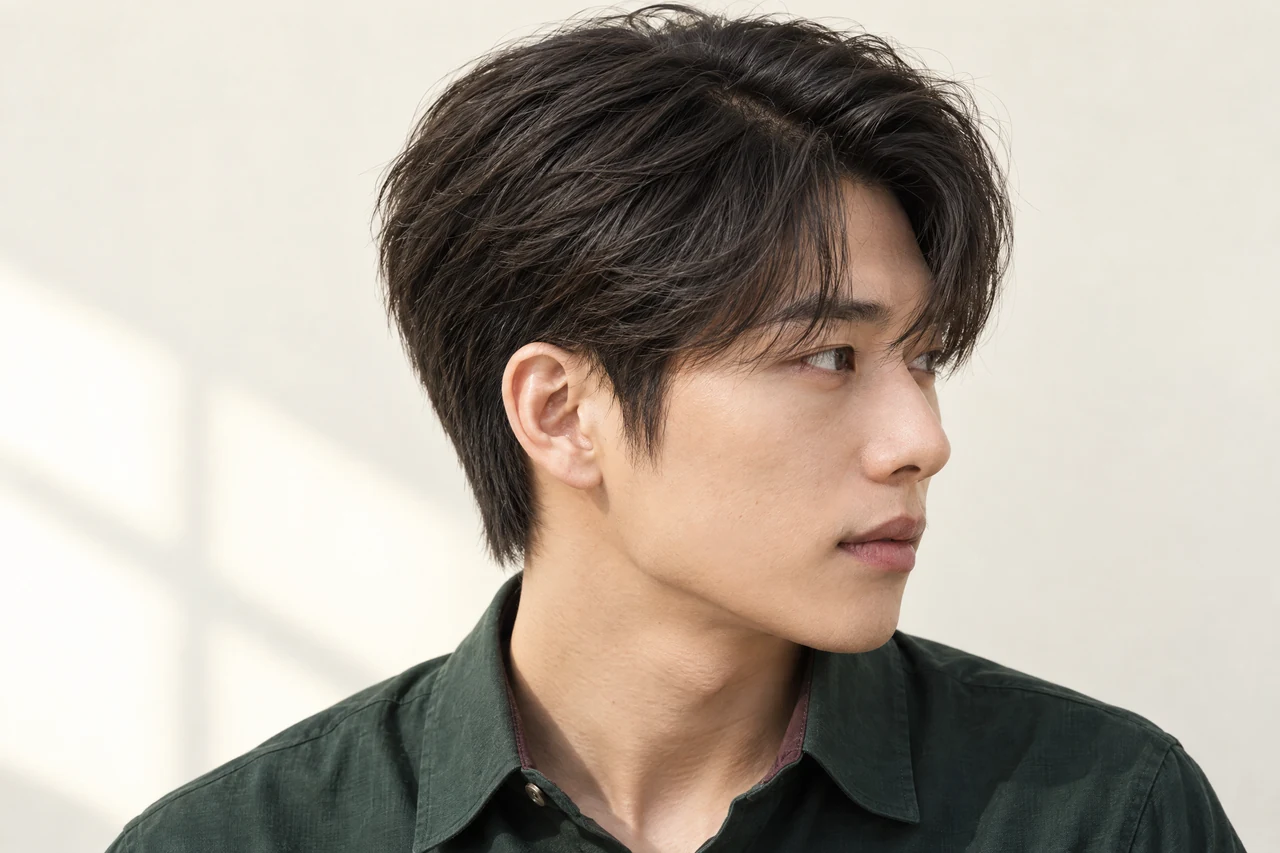
A forward direction may allow the middle top and crown to contribute to a softer outline instead of exposing the whole length difference through a strong parting. The fringe can remain comparatively long, with its ends arranged closer to the forehead rather than projecting out as a separate section. This is an option to test, not a universal solution. If the crown naturally pushes backwards or the front falls into the eyes, forcing everything forward may create more daily work than the current style.
Try the proposed direction with the hairdresser before committing to extra shortening. Look at the front, side and rear, then move the hair as you normally would. Decide whether the outline still makes sense without a carefully placed fringe covering the gap. A temporary style can be worthwhile even if it is not your final preference, provided it is comfortable and repeatable. If it only works through a rigid finish you dislike, keeping a more visible disconnection may be the more honest interim choice.
Blending a long men's fringe into shorter crown hair: choose your compromise
Compare the three approaches by what they preserve and what they ask you to tolerate. Reducing the overhang spends some front length to improve the present proportion. Retaining it protects the longer goal but leaves more difference during the transition. A temporary forward outline changes how that difference is displayed; it may still require a small front adjustment. These options can overlap, but the priority should stay clear. Do not approve a substantial fringe reduction while describing the appointment as a length-preserving tidy-up.
Keep styling gentle and judge the shape after washing
Start with the direction that the haircut is intended to use. Guide the crown and middle top first, then arrange the fringe, rather than relying on the longest front pieces to conceal everything underneath. If you use styling product, begin sparingly so you can see whether the outline works without heavy hold. Ask for a home routine that uses the tools you already have. A finish which needs repeated correction after every movement may indicate that the temporary shape needs reconsidering, rather than stronger product.
The American Academy of Dermatology's tips for healthy hair recommend limiting blow drying and heated tools, using low or medium heat with heat protection, and gently absorbing moisture rather than rubbing roughly with a towel. Those precautions help avoid unnecessary styling damage; they do not accelerate this grow-out or create crown length. Keep the routine proportionate to the temporary haircut. Repeated high-heat efforts to flatten an unsuitable crown direction are not a substitute for an achievable shape.
Assess direction changes separately from missing length
A perm or other chemical direction change cannot supply the crown length that the proposed outline needs. Defer chemical work while the length plan is unresolved, and disclose previous bleaching, straightening or perming before suitability is assessed. If the crown concern includes a new hair or scalp change rather than a known short cut, seek healthcare advice instead of treating it only as a styling problem. The dermatologist guidance above recommends professional help for hair and scalp conditions; this article cannot assess or diagnose them.

Prepare a haircut enquiry with a protected crown and a clear limit
Bring a current photograph without a heavily fixed finish, plus a side-view reference showing the top shape you want. Explain which part of the reference matters: its front reach, crown contour or overall direction. A very short-sided example can still contain a useful top detail, but it should not silently become a request to repeat the whole haircut. Say whether retaining the fringe or reducing the contrast is your first priority. The preparation checklist below helps turn that choice into information the hairdresser can assess.
For an intermediate men's haircut, ask what can reasonably be achieved while the crown remains protected. The confirmed price for men's wash, cut & blow-dry is HK$380. Confirm the service scope and actual charge when arranging the appointment; do not assume additional chemical work is included. A WhatsApp enquiry is a request for confirmation, not an instant booking. If consultation language matters to you, ask about it when enquiring rather than assuming that an English-language website guarantees an English-speaking appointment.
Review progress against function, not a promised deadline
After washing at home, note whether the crown now lies in the intended direction, whether the front still lands at the agreed boundary and whether the middle top looks less separate from the side. Use similar lighting and angles when comparing photographs. An appointment review should respond to those changes, not an invented date for a fully connected top. If the fringe has become inconvenient before the crown is ready, revisit the original priority and agree any shortening openly rather than restarting the entire top.
Three ways to manage a long front above a short crown
| Approach | What stays protected | Main trade-off | Useful next check |
|---|---|---|---|
| Reduce the overhang | Crown length and the agreed minimum fringe | Some front length is lost for a less exaggerated current outline | Show the proposed dry front landing point |
| Retain the long front | Existing fringe reach and crown growth | The top may remain visibly separate during the transition | Check whether the fringe still serves your daily parting |
| Try a forward outline | As much front and crown length as the tested shape permits | Direction may disguise contrast but cannot complete the connection | Test the side view and movement without rigid hold |
Your preparation checklist
- Photograph the dry front, side and crown in your usual unstiffened style.
- Identify the shortest acceptable fringe landing point using a visible facial landmark.
- State whether keeping the long front or improving present balance matters more.
- Choose a side-view reference and name the specific top detail you want.
- Describe your crown direction, daily styling tools and previous chemical services.
- Confirm protected sections, proposed shortening, consultation language and the actual service charge.
Frequently asked questions
Can the fringe and crown become connected without losing front length?
Possibly later, if the crown gains enough usable length for the intended shape. At the current appointment, keeping the full front usually leaves a difference that cutting or styling can only manage visually. The hairdresser needs to assess the middle top too; equal length everywhere is not necessarily the final goal.
Will thinning the long fringe solve the short-crown problem?
Not by itself. Weight adjustment may alter how the fringe sits, but it cannot lengthen the crown and may leave the longest front pieces in place. Ask whether the proposed work changes the outer length, internal weight or both. Extensive thinning is not an automatic substitute for choosing a front-length boundary.
Should every grow-out appointment include a crown trim?
No automatic rule is useful here. If the crown is the section you need to lengthen, repeatedly recreating its short shape works against that aim. Ask the hairdresser to explain any proposed crown cutting and show how it fits the longer goal. Reviews can focus on other boundaries while preserving that area.
Ask about a wearable top transition at Vit So
Send your current side-view photograph, desired top reference and minimum fringe boundary to WhatsApp +85253057561. Say whether you want to retain the long front or accept some shortening for earlier balance. Enquire about an appointment at 252 Hollywood Road, Sheung Wan, Hong Kong, and confirm availability, consultation language, scope and charge before making arrangements.
Start your WhatsApp enquirySources & further reading
- Shaglet Haircut — Sam Villa
Professional haircut education explaining overdirection and deliberate length preservation. Used for the limited section-placement principle, not as a men's grow-out timetable or a product recommendation.
- Tips for healthy hair — American Academy of Dermatology
Dermatologist-reviewed guidance on gentle drying, limiting heat and seeking professional help for hair or scalp conditions. It does not promise faster growth or a haircut outcome.



