







Growing out highlighted top hair and an undercut together: map two boundaries
There are two boundaries to inspect: the length difference between top and sides, and the colour difference between lighter top strands and darker hair below. They may sit in roughly the same place, making the division look stronger, but they are not the same problem. Colour cannot supply missing side length. A cut may soften the outline without changing the brightness. Look at each boundary separately before deciding that a dark strip means the whole style has stopped working.
The original logic of top only highlights for men is to keep brightness within the longer upper area while preserving depth elsewhere. During this grow-out, that upper area can start falling over side hair that is no longer being clipped close. Note where the lighter ends actually finish when the hair is dry and worn normally. A bright line sitting above the ear may come from the top's fall rather than from a side section needing colour.
Check the connection with the top lifted and released
Photograph the hair in its usual position, then gently lift the top to reveal the shorter section underneath. Release it and compare the two views. This helps distinguish an exposed short-side area from a colour boundary visible only when the top moves. A reference photograph with every strand swept back may exaggerate a contrast you rarely see in daily wear; a heavily styled front view may hide a side-length gap that still matters.
Protect the side length that the longer shape needs
Decide what you mean by a connected haircut. You might want hair that covers the upper ear, a softer junction under a side part, or enough side length to tuck back later. These targets require different amounts and positions of retained hair. Ask which area must stay untouched during a tidy-up, and which edge can be refined. An instruction such as 'make the sides neat' is too open if it allows the short section to be clipped back again.
The practical challenge of growing out an undercut is preserving useful growth while managing a top that is already longer. Bringing some top weight closer to the sides may make the transition less abrupt, but it involves deciding how much highlighted length you are willing to lose. Keeping every bright end and reaching a joined outline sooner may conflict. Choose the priority openly rather than asking colour to disguise a length difference you have not agreed how to handle.
Retained hair matters more than a calendar date
A side section is not ready for highlights simply because a certain number of weeks has passed. The useful question is whether that section will remain through the next shaping decision. If the hair around the temple still needs substantial adjustment, its eventual colour placement is uncertain. Review the actual length and outline instead of setting a promised finish date. Keep the decision flexible if the top or ear coverage target changes.

Keep dark sides, or reduce contrast in the highlighted top?
Dark sides can become an intentional base for a longer style. They may support a defined side part or let lighter top strands remain the focus without extending colour across the head. Check whether you dislike the dark colour itself or simply the temporary short-side shape. If the shade looks comfortable when the top is relaxed, leaving it alone keeps that area free from additional chemical work while you make the cutting decisions. Dark does not necessarily mean disconnected.
If the top now looks much brighter than you want, discuss the existing lightened hair before adding lightness below it. A tonal adjustment or an assessed deeper finish on selected bright areas may be worth considering, depending on their condition and colour history. This is a different request from lifting dark side hair. Do not assume that reducing warmth will also remove a strong light-versus-dark contrast: explain whether you want less gold, less brightness or fewer conspicuous light strands.
Compare colour in the way you will wear it
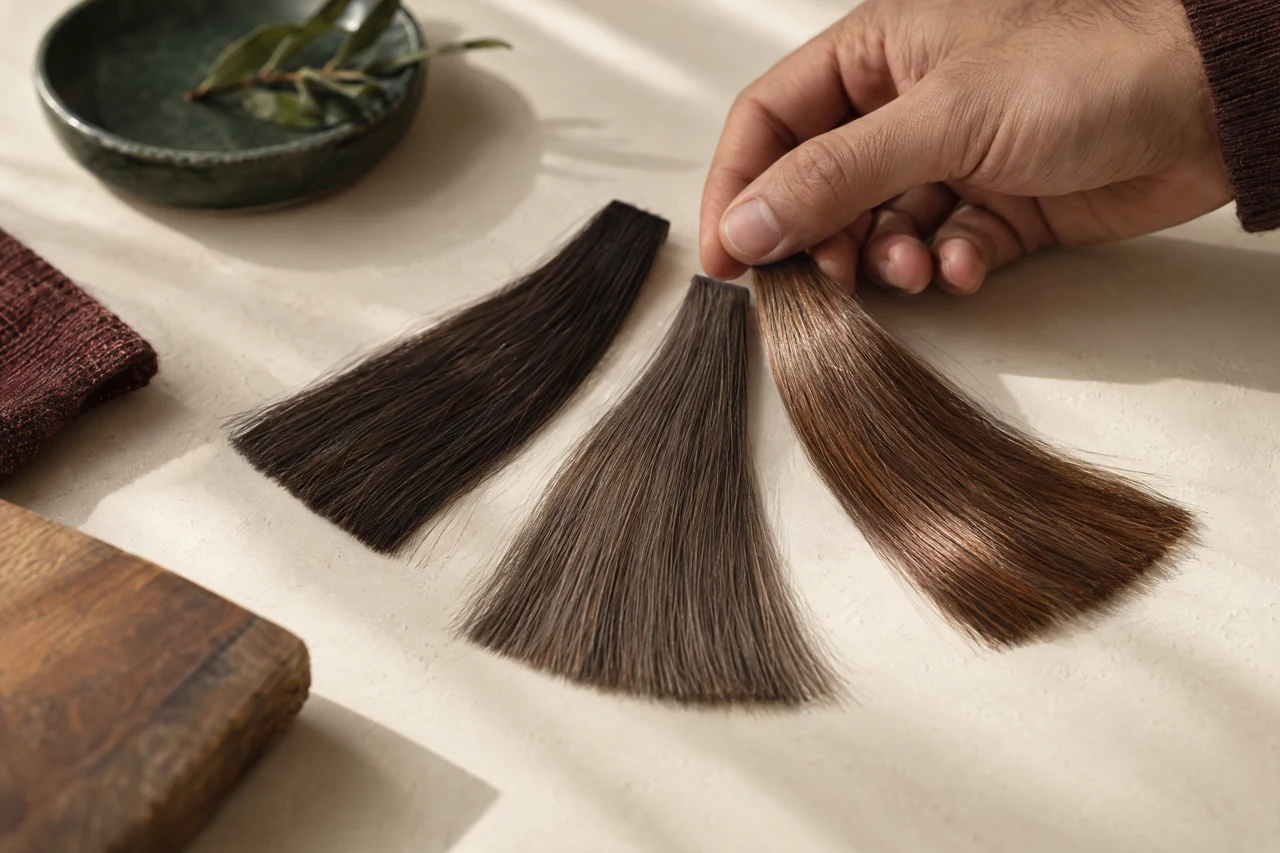
Use dry hair in ordinary daylight and compare the same parting each time. A lifted fringe can expose more dark side hair than a loose forward style. Tucking the top behind the ear can reveal a boundary hidden when it hangs down. The brown swatch concept illustrates separate choices of depth and warmth; it does not predict a formula or result. Explain the contrast you prefer in your everyday position, not only in a reference image's lighting.
Add side highlights only where the hair will stay
Side colour has a useful role when a retained section remains visibly separate from the top and you genuinely want brightness through that area. The proposed strands should be identified against the future shape, not scattered across every dark patch. Ask whether the placement will be visible with your usual parting and what the next trim would remove. Lightening a side section that will soon be shortened again may add work without helping the longer outline you are trying to establish.
If you are considering babylights, agree the retained side area before discussing fine placements within it. A technique name does not settle how far around the head colour will extend or how bright the strands should become. Request a clear explanation of the proposed area, its relationship to the existing top and the quotation. Fine strands should not be treated as an automatic promise of bleach-free work, easy upkeep or a seamless join between different lengths.
Assess old top colour and new side colour separately
Previously lightened top hair and apparently uncoloured sides need separate assessment; past colour may not be obvious from a photograph. The American Academy of Dermatology's colouring guidance notes that cosmetic treatments can leave hair dry and brittle and that substantial lightening increases damage. Share previous bleaching, tinting and other chemical work. If the top is brittle or its history is unclear, defer additional lightening until the condition and proposed treatment are properly assessed.
Choose a sequence instead of changing everything at once
Compare the options by the problem each one solves. Keeping dark side growth preserves the existing colour division while the cut changes. Adjusting the top addresses brightness already present. Adding side highlights extends the colour design into hair you intend to keep. Deferring colour is useful when the shape is undecided, not merely a compromise for someone who cannot choose a shade. The comparison below is a decision aid, not a prediction of how any individual head of hair will respond.
Consider a hypothetical person with a long highlighted fringe and side hair that still stands away from the head above the ear. If the main concern is that projecting outline, colouring it will not make the strands longer or alter the haircut connection. A shape review followed by another look at contrast is more informative. By contrast, someone whose retained sides already fall comfortably might consider selected brightness if a colour division remains distracting in normal wear. The order follows the concern.
Review the decision when a visible feature changes
Reassess when the side hair begins covering the ear, the top falls differently or a trim removes a substantial part of the old highlights. These changes can alter where the light strands appear, even without new colour. Keep photographs taken from similar angles so you can describe the difference accurately. If the darker area no longer bothers you in the revised shape, there is no need to add highlights simply to complete an earlier plan.

Prepare a clear enquiry and know when to pause
Bring current side and back views alongside a target photograph, but explain what each image is meant to show. An ear-tucked reference might describe length rather than colour. State which side area you want protected and whether you would accept shortening the highlighted top. The preparation checklist contains 6 items to clarify your cut-and-colour enquiry. It also separates the shape you need now from optional colour, so you can ask about assessment without committing to every possible service at once.
Postpone dye if the scalp is irritated, sunburned or damaged; this is a specific caution in the FDA's hair-dye safety guidance. Tell the salon about previous reactions and follow the relevant product's testing instructions. Previous uneventful colouring does not guarantee that another application will be safe. If you have a reaction, seek advice from a healthcare provider rather than using a new shade to work around it. A colour enquiry is not medical assessment.
Reviewing growing out highlighted top hair and an undercut together
Ask for a plan that identifies what will be cut, what will be left dark and which existing light areas might be adjusted. If side highlights remain an option, request their scope and a confirmed quotation before agreeing to treatment. Clarify the review point using a visible change in the haircut rather than a guaranteed deadline. You can choose a cut-focused appointment now and revisit colour later without treating the unfinished stage as a failed result.
Four choices for coordinating the longer outline with the existing top colour
| Choice | When it may help | Main limitation |
|---|---|---|
| Keep the sides dark | You enjoy the top contrast and the sides mainly need length. | The colour division remains visible; the cut still needs a plan. |
| Adjust existing top colour | The highlighted top feels too bright or its tone is distracting. | It does not add side length; suitability depends on existing colour and condition. |
| Add assessed side highlights | Retained sides sit comfortably but you want brightness through them. | New chemical work and future regrowth need consideration; placement cannot fix a length gap. |
| Defer colour and review shape | The next cut's retained side area is still uncertain. | You need to accept the present contrast while the outline changes. |
Your preparation checklist
- Take dry-hair photographs from the front, both sides and the back in ordinary daylight.
- Mark the side area you want retained, including the temple and upper-ear boundary.
- Show a target outline and explain whether ear coverage or tucking back matters.
- Record previous bleaching, tinting, perms and any reactions as accurately as you can.
- Say how much highlighted top length you would accept losing during shaping.
- Ask which colour work is optional and request its scope and quotation before agreeing.
Frequently asked questions
How do I choose between adding side highlights or keeping dark undercut regrowth?
Keep the sides dark while you establish which hair the longer cut will retain. Then check the colour division in your usual parting. If you like the darker base, no extra side colour is required. If you want brightness through stable side sections, ask for an assessed placement rather than colouring every dark area.
Can side highlights make a short undercut look connected immediately?
They can change visible colour contrast, but they cannot add missing length or guarantee a joined outline. If the top hangs over a much shorter side section, discuss the cutting transition first. Decide whether keeping the longest highlighted top strands matters more than shortening some of them to support the shape.
Must I refresh the top and colour the sides in the same appointment?
No. They are separate decisions with different purposes. You might keep the top unchanged, adjust its existing colour or postpone all colour while the cut develops. Ask what each proposed step is meant to improve and whether it is useful now. Suitability, scope, appointment arrangements and charges need confirmation before treatment.
Discuss the longer shape before extending the colour
Send Vit So a WhatsApp enquiry on +85253057561 with current photographs, your intended longer outline and your colour history. Explain whether you prefer keeping the sides dark or are considering extra brightness. The address is 252 Hollywood Road, Sheung Wan, Hong Kong. Ask for assessment, service scope, quotation and appointment confirmation; sending an enquiry does not confirm a booking.
Start your WhatsApp enquirySources & further reading
- Coloring and perming tips for healthier-looking hair — American Academy of Dermatology
Dermatologists' guidance on dryness, brittleness and the damage associated with greater lightening. Useful when weighing further chemical work on an already highlighted top; it is not a personalised assessment.
- Hair Dyes — U.S. Food and Drug Administration
Consumer guidance on irritated scalps, allergic reactions, product instructions and skin testing. Previous successful dye use or a negative test does not guarantee a reaction-free application.



