






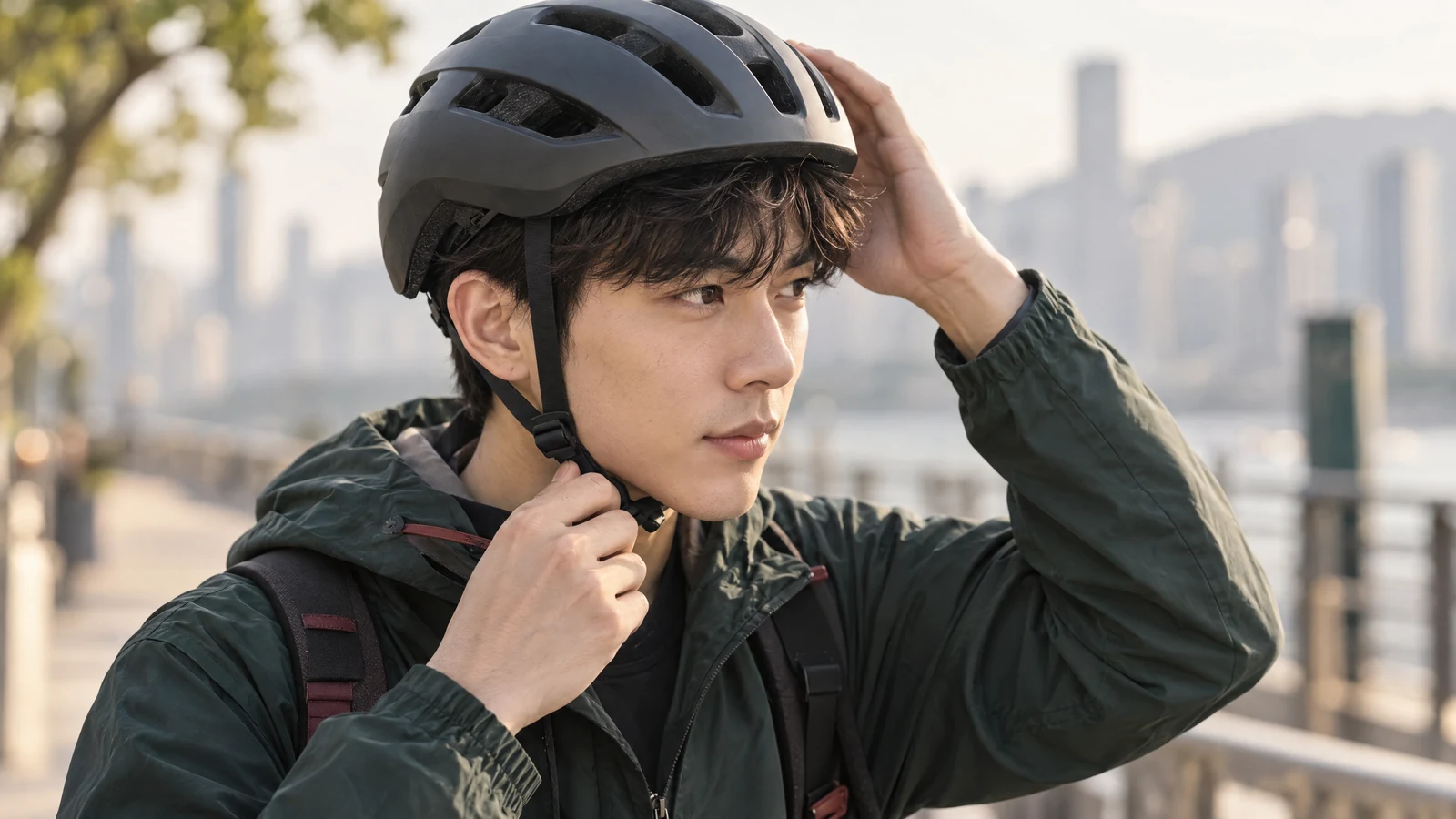
Prepare a haircut consultation for helmet wearers
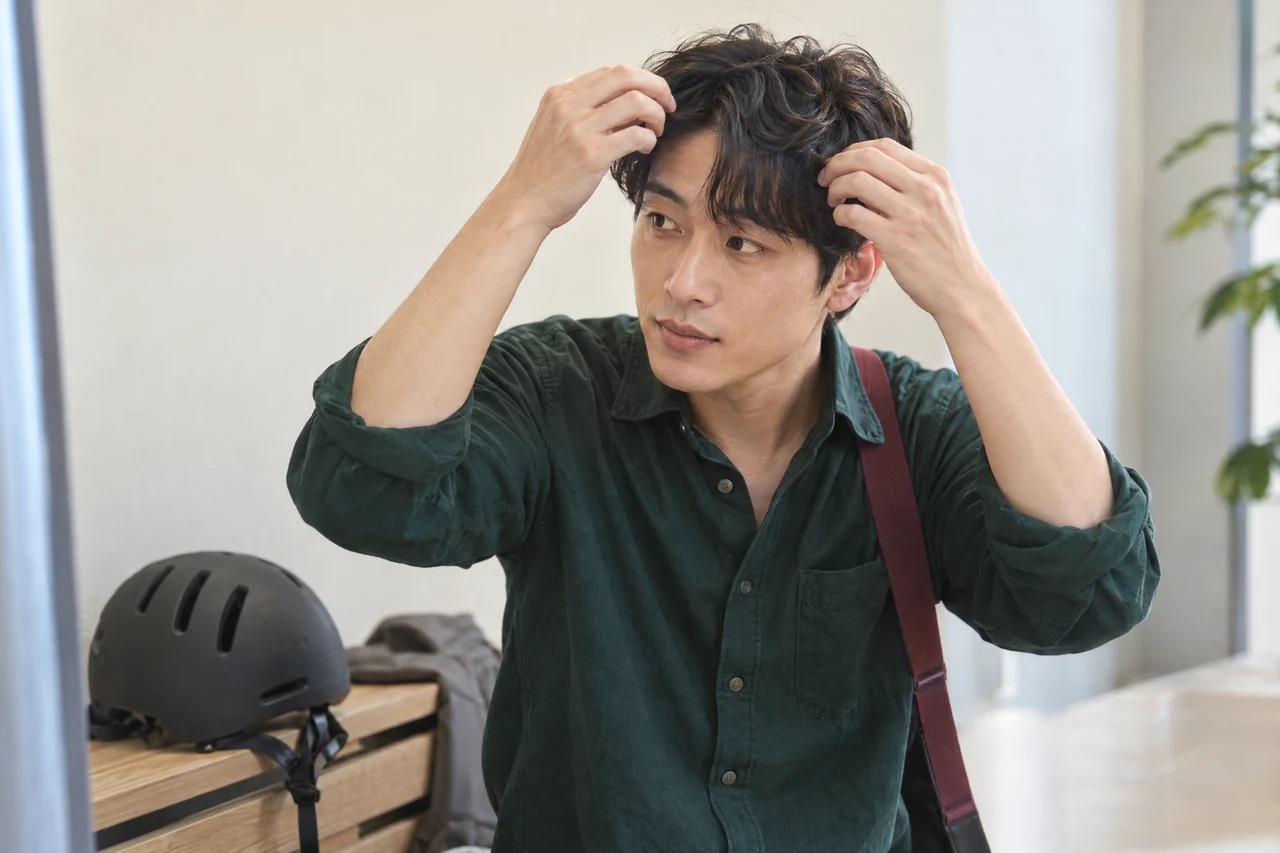
Bring a photo taken after your usual journey and explain how long you wear the helmet. Point out the flattened crown, bent fringe or displaced sides that concern you. Comparing that image with your normal loose hair helps define the design problem more clearly than asking for a style that never changes under headwear.
Explain which headwear you use: a cycling helmet, motorcycle helmet or protective helmet required at work. Describe a continuous journey differently from a shift that involves repeated removal and replacement. Tell the stylist whether your hair starts dry, whether you arrive with a damp fringe, and whether the visible change is mainly at the front or crown. These details help separate a haircut preference from the conditions the finished shape must accommodate.
Include your current unstyled hair alongside the arrival photo. For clearer haircut reference photos, keep the camera angle similar and show the whole outline rather than only a close-up of the mark. A favourite hairstyle picture can then explain the direction you like, while your own pictures explain the starting point. Avoid filters that hide the parting or blur the ends.
Show pressure marks in a haircut consultation for helmet wearers
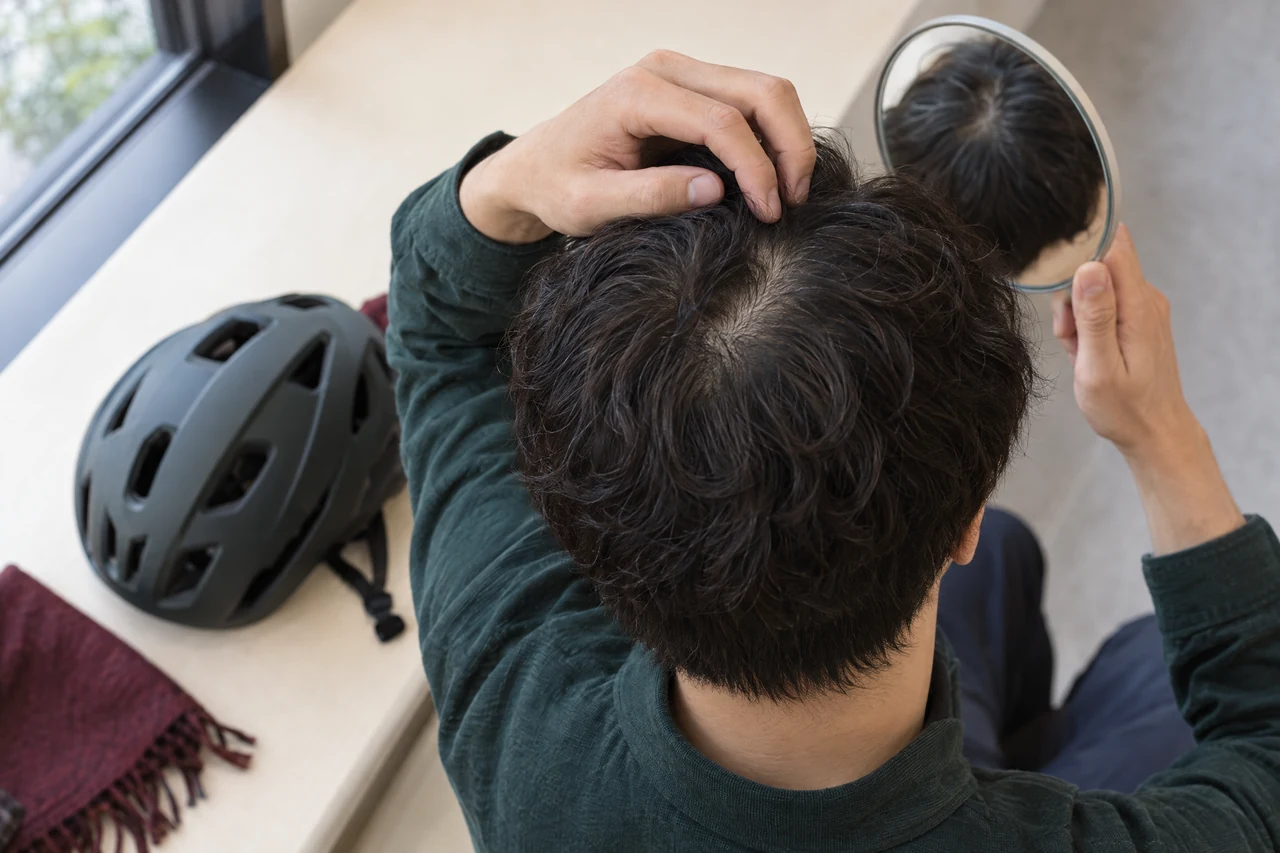
Describe what is difficult about each mark. A crown line may bother you because it divides an otherwise smooth outline; a bent fringe may fall across your eyes; flattened sides may make the top look disproportionately wide. Say which problem matters most. Ask the stylist to assess the natural growth direction and retained length before proposing layers, shorter sides or extra texture. More thinning is not automatically the answer to every flattened area.
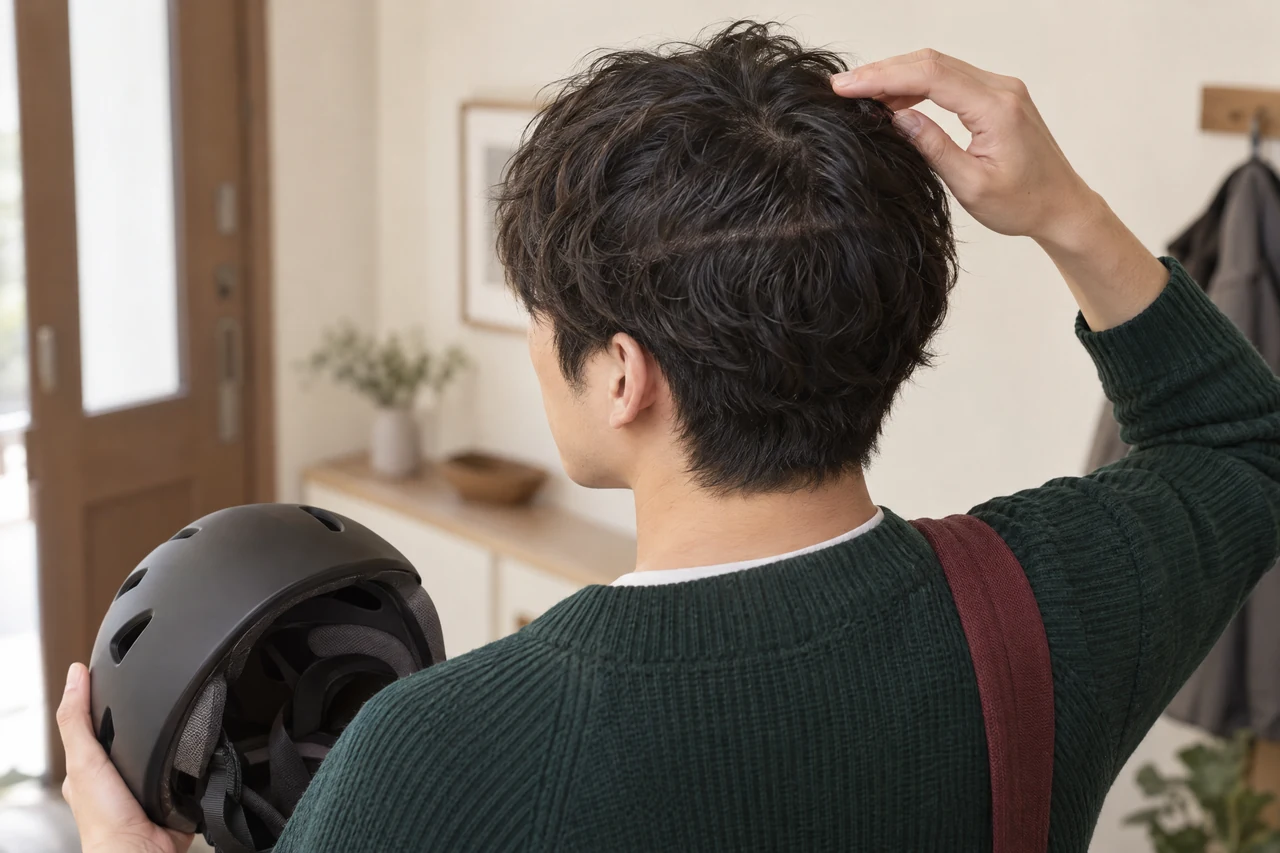
Keep safe fit ahead of hairstyle volume
Do not loosen or modify a helmet to protect a hairstyle. Follow the equipment manufacturer's fitting guidance and explain how you safely secure your hair beneath it. Hair design can take that arrangement into account, but a stylist's advice on length or volume does not establish that a helmet fits safely.
For cyclists, the National Highway Traffic Safety Administration's bicycle helmet guidance stresses that proper fit matters for protection and notes that sizes vary between manufacturers. That is bicycle-specific guidance, not a universal fitting method for motorcycle or workplace helmets. Use the instructions for your actual equipment and, for work-issued headwear, the appropriate workplace safety process.
Do not alter protective equipment for a look
Treat the equipment arrangement as a condition the haircut works around. Do not remove padding, reshape the liner or add an improvised insert to create space for height. Ask the manufacturer or an appropriate equipment specialist about fit concerns. If a proposed hairstyle changes how you normally put the helmet on, check that arrangement through the proper safety guidance rather than assuming a tidy salon appearance confirms suitability.
Describe how hair is secured
Show the stylist where you normally gather longer hair and which front or side sections escape. This helps identify lengths that need to stay long enough for your established, safe arrangement. Keep hairstyle tension separate from helmet fit: the American Academy of Dermatology's guidance on pulling hairstyles explains that repeated pulling can cause traction alopecia, a form of hair loss, and that painful tightly pulled hair is a reason to change the hairstyle. This is not advice to loosen protective equipment. Persistent scalp symptoms or hair loss need medical assessment, not a styling workaround.
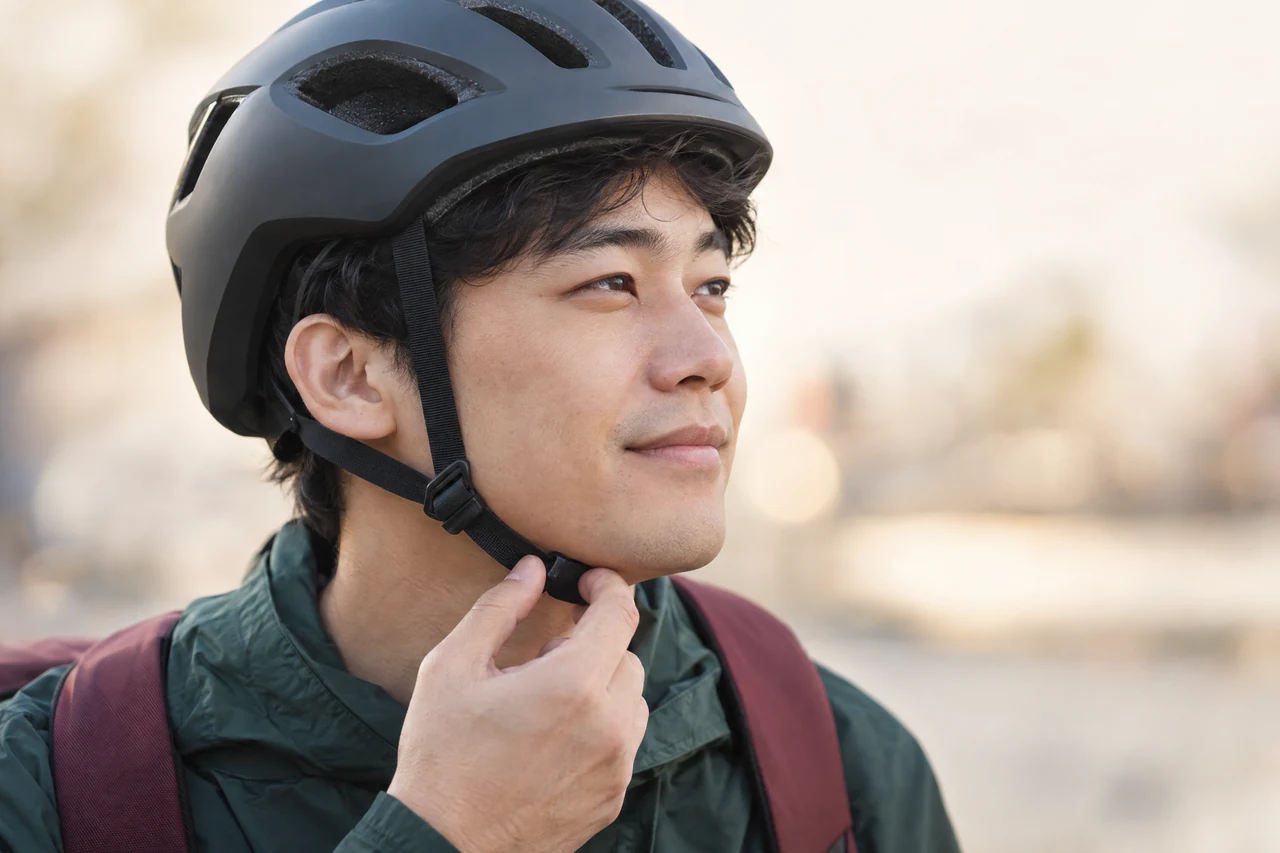
Consider what a perm would change
If you wear a helmet every day and are considering a perm, discuss how added curl would fit the routine after you take it off. Curl can still be flattened or displaced by headwear. Ask about suitability, drying and upkeep rather than expecting the hair to spring back to its salon shape automatically.
Start with the location of the change you want. Someone seeking movement through longer ends has a different goal from someone seeking lift near the crown or a curved fringe. Ask how the intended curl would look both loose and in your normal secured arrangement. Share previous bleaching, colouring, straightening and perming so suitability is assessed against the condition of the lengths, not just a reference picture.
Review men's perm to check its service scope and the details to share before arranging the related work.
Review hair perm to check its service scope and the details to share before arranging the related work.
Distinguish curl from resistance to pressure
Added curl offers a different texture to arrange; it does not establish pressure resistance. Compare the proposed dry width with the outline you prefer after arrival. A more pronounced curl may require separation or reshaping when displaced, while a softer bend may look less defined without deliberate drying. Neither is automatically better for helmet use. If your main concern is one awkward fringe section, ask whether adjusting its length and direction first could be a more proportionate choice than changing the whole head.
Review the routine after each journey
Describe the tools you can actually use at your destination. Ask for service-specific perm aftercare before deciding, including washing, drying and any instructions relevant to tying or compressing newly treated hair. Tell the stylist if protective headwear is unavoidable immediately after the appointment so timing can be discussed before treatment. Do not plan around an invented universal waiting period or promise that a quick finger-comb will recreate the salon finish.
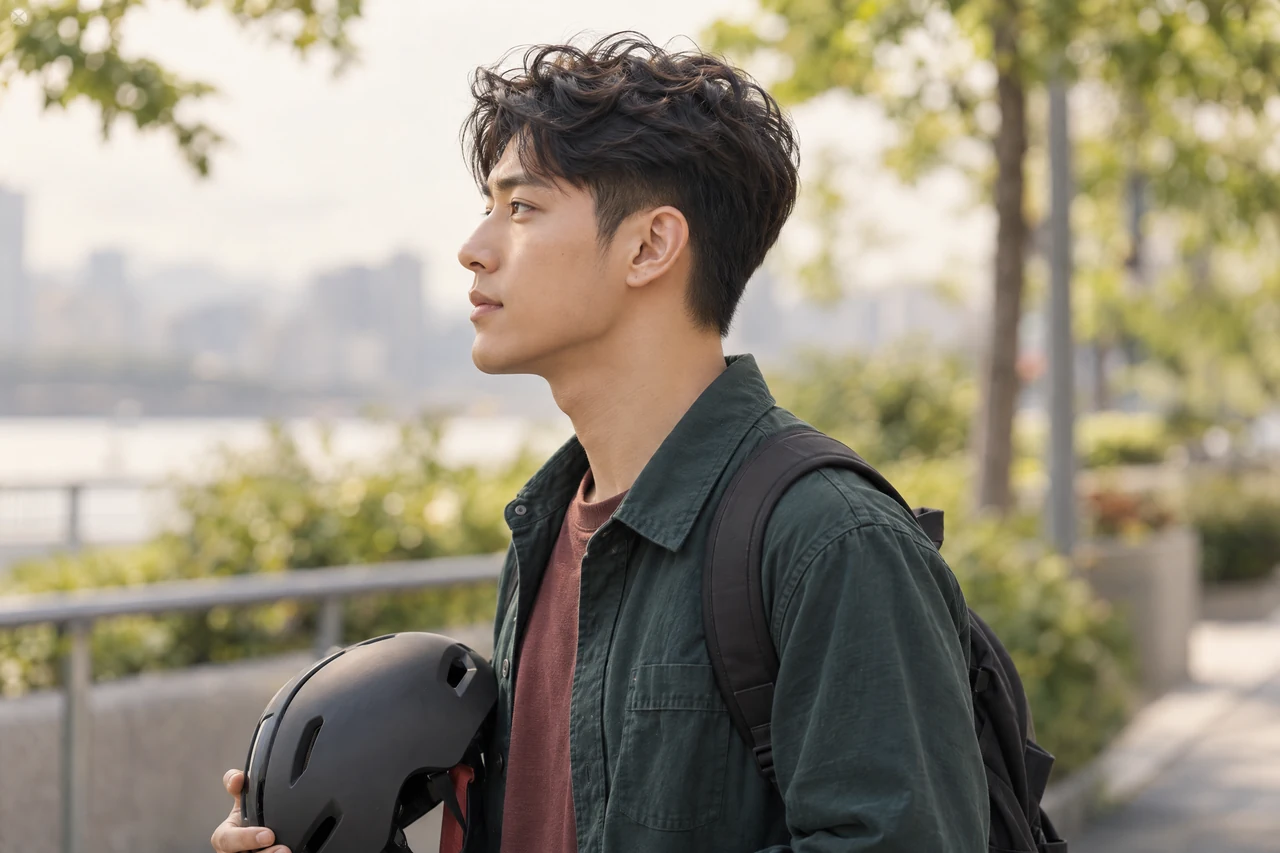
Choose a manageable shape after removing headwear
Tell the stylist whether you can use a mirror, dryer or products after arriving at work. Compare lengths and fringe directions against what you can actually manage at that point. The useful goal is a shape you can work with after wearing headwear, not a guarantee of a helmet-proof finish.
Separate your everyday acceptable finish from the more polished version you might want for an evening out. If your workday allows only a brief mirror check, a design that depends on rebuilding substantial height may be a poor match even if you love it in a photograph. Ask which visible area deserves attention first when time is limited, rather than adding a complicated recovery routine to every journey.
Compare fringe and side lengths
A shorter fringe may need less rearranging but gives you fewer options to sweep it away; a longer fringe can change direction but may require drying to sit as intended. At the sides, compare a closer outline with retained coverage rather than simply asking for the shortest possible cut. Show where the helmet leaves your hair folded. The stylist can discuss how different lengths might behave with your natural growth pattern without claiming that any length will eliminate marks.
Allow for limited tools
Ask for a demonstration using the tools you will carry or have available. If you will use only your hands and a mirror, say so before the shape is agreed. If a dryer is available, ask which areas need redirection and which can be left alone. Discuss products by their role and finish instead of assuming stronger hold solves flattening. Check how the routine changes when your hair is damp on arrival, particularly if you cannot wash and dry it there.
Keep tie-back function when changing the outline
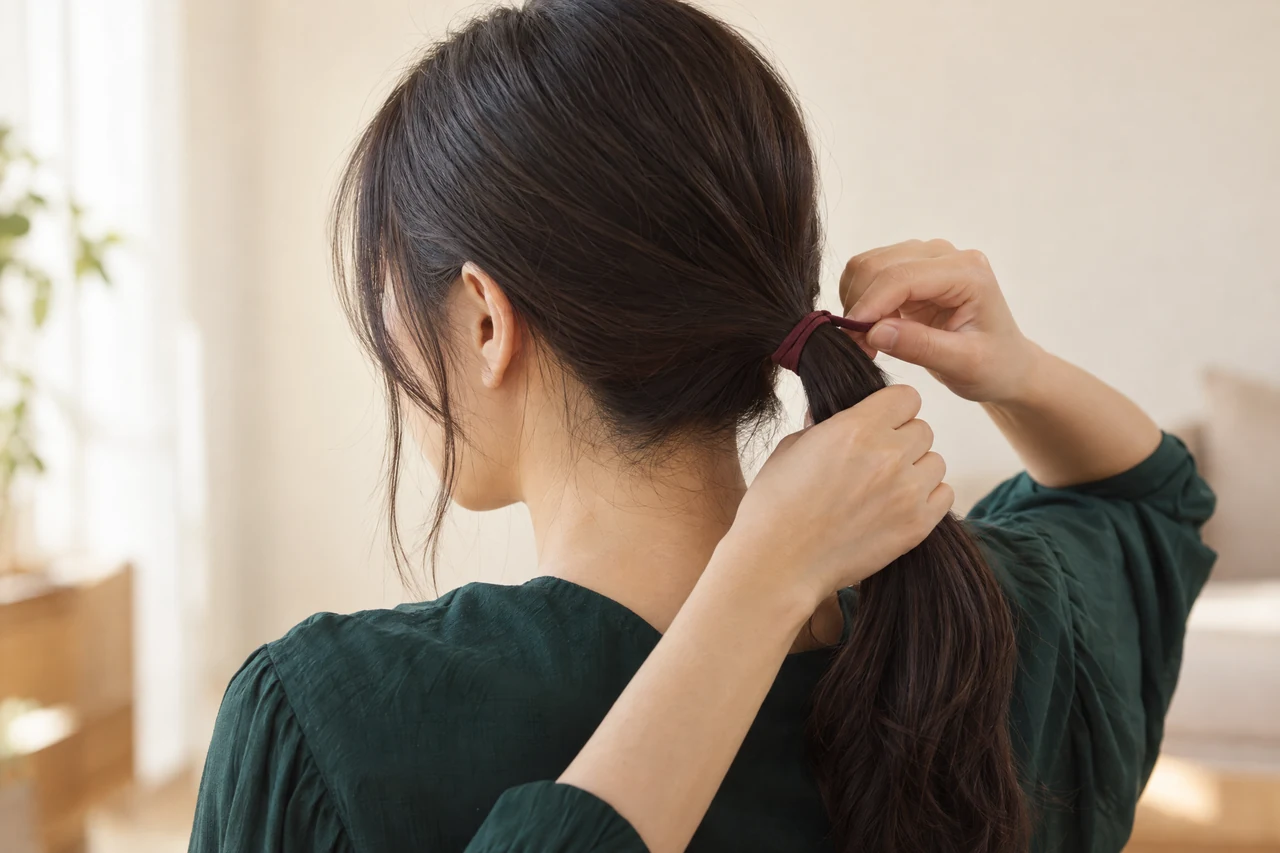
Helmet-aware haircut planning is not limited to short hair or to men. For longer hair, the key boundary may be the shortest section that must still reach your usual tie. Point out face-framing strands that already escape and explain whether you want to keep them or need them contained. A dramatic change in layering can conflict with a secure everyday arrangement even when the overall length still looks long.
Continue with haircut for an active lifestyle for that specific comparison and the preparation questions it raises.
Discuss loose and secured hair together
Show both versions before agreeing to remove length. Discuss where the ends should fall when loose and which sections must remain reachable when secured. Do not rely on a high bun, bulky clip or any other arrangement that interferes with the equipment instructions. Your preferred tie-back position is useful consultation information, but it is not itself proof of safe fit. If you are growing your hair, identify the lengths that must be protected while the less useful areas are reshaped.
Agree on what to review after the haircut
Before leaving, confirm the intended everyday outline and the simplest acceptable way to arrange it. Judge the haircut after a normal journey as well as after washing at home. A carefully blow-dried appointment finish answers a different question from how you manage the crown or fringe after headwear. Keep your equipment use consistent and take another comparable photo if you want to discuss a particular change.
The preparation checklist below contains 6 steps to make the consultation concrete. It is a planning tool, not a score for helmet safety or a prediction of results. Leave with a clear length boundary, a realistic styling routine and an understanding of whether a cut-only approach or further texture work is worth considering.
Make follow-up feedback specific
Explain what remains difficult: a fringe that bends in the wrong direction, a crown section you cannot redirect or short layers that no longer reach the tie. Mention whether the issue happens after every journey or only when your hair is damp. This is more useful than saying the whole style does not work. Ask what can be reviewed before assuming another chemical service is required; a length adjustment, a different drying method or a revised expectation may be the relevant discussion.
Compare haircut and texture choices against your actual helmet routine
| Design direction | Useful consultation question | Trade-off after headwear |
|---|---|---|
| Shorter fringe and closer sides | Which sections bend, and how short am I comfortable going? | Less length to arrange, but fewer sweeping or tying options; marks may remain. |
| Retained fringe with a natural side direction | Can I redirect this with the tools available on arrival? | More movement options, but the intended direction may need deliberate drying. |
| Longer hair with protected tie-back lengths | Which front and side sections must still reach my usual safe arrangement? | Preserves containment; shorter layers may escape and need attention. |
| Cut with added curl | Would the proposed dry curl width and aftercare suit my daily journey? | Changes the texture to manage, not its immunity to flattening or displacement. |
| Cut-only approach before deciding on a perm | Can a length or weight adjustment address the main difficulty first? | Avoids adding chemical texture now, but may not provide the movement desired. |
Your preparation checklist
- Identify your helmet type and describe your normal wearing pattern without changing its fit for a hairstyle.
- Bring comparable photos of naturally loose hair and hair immediately after your usual journey.
- Point out the crown, fringe or side change that bothers you most, and explain why it matters.
- Show how you safely secure longer hair and mark the shortest sections that must remain reachable.
- State the actual mirror, dryer and product access you have on arrival, along with the time you can spare.
- If considering a perm, share your treatment history and ask about suitability, daily headwear and service-specific aftercare before agreeing.
Frequently asked questions
Will a perm stop helmet marks?
No such result can be guaranteed. Pressure and the way you wear your hair can still affect curls. Assess the proposed texture against your normal journey and aftercare needs.
Should I bring a photograph after wearing my helmet?
Yes, it can show where the shape changes. Include a photograph without headwear too, and describe how you normally secure your hair.
Can I change the helmet fit to keep more volume?
Do not change safe fit for hairstyle volume. Follow the manufacturer's fitting instructions; hair design is not protective-equipment advice.
Is a perm practical if I wear a helmet every day?
It depends on your hair condition, the curl you want and the routine you can maintain. Daily helmet use should be part of the consultation, including any immediate aftercare constraints. Compare the proposed texture with a cut-only option and ask how to manage it after arrival rather than expecting automatic recovery.
Do I have to cut long hair short because I wear a helmet?
Not automatically. Explain your equipment requirements and current safe hair arrangement. The haircut discussion can focus on retaining reachable tie-back lengths and managing loose sections. A stylist can advise on the hair outline, but the equipment instructions remain the basis for safe use.
Bring your real helmet routine into the haircut discussion
Enquire with Vit So in Sheung Wan about a haircut that takes your arrival photos, retained lengths and available styling time into account. Share whether you are considering a cut only or added curl, and ask about suitability and the proposed service scope. An enquiry starts the discussion; appointment availability and the booking must still be confirmed.
Start your WhatsApp enquirySources & further reading
- Bicycle Safety
NHTSA's bicycle-specific guidance explains the importance of proper helmet fit and variation in sizes between manufacturers.
- Hairstyles that pull can lead to hair loss
Repeated pulling from tight hairstyles can cause traction alopecia; pain from tightly pulled hair is a reason to change the hairstyle, and hair loss warrants dermatological assessment.



