







Medium length haircuts for women need real landing points
A shoulder length haircut should be discussed in your usual posture and with the hair resting naturally, not pulled into a longer line. Show whether the edge should touch the shoulders or sit above them. That small distinction can change how the ends move and whether the cut feels closer to a compact bob or a longer outline.
An inspiration photo shows someone else's neck, shoulder slope and texture; it cannot supply the same body placement for you. Explain whether you want an exposed neckline or ends visible over a work shirt. These preferences can lead to different decisions even when both references are described as medium.
Length also leaves room for different structures. The Neäl & Wølf shoulder-length guide distinguishes blunt cuts with minimal layering from textured layered options. That is a useful reason to separate the position of the bottom edge from how much movement you want above it.
Continue with bob haircut for that specific comparison and the preparation questions it raises.
Medium length haircuts for women in your normal posture
Look straight ahead first, then turn naturally and let the ends settle without holding them down. Tilting your chin or lifting your shoulders can change the apparent placement. Check the front and side views in an ordinary top, not only with a salon cape covering the shoulder line. A useful instruction is: keep the dry edge just clear of my shoulders when I face forward. The stylist can then discuss whether that outline fits your hair's ordinary fall.
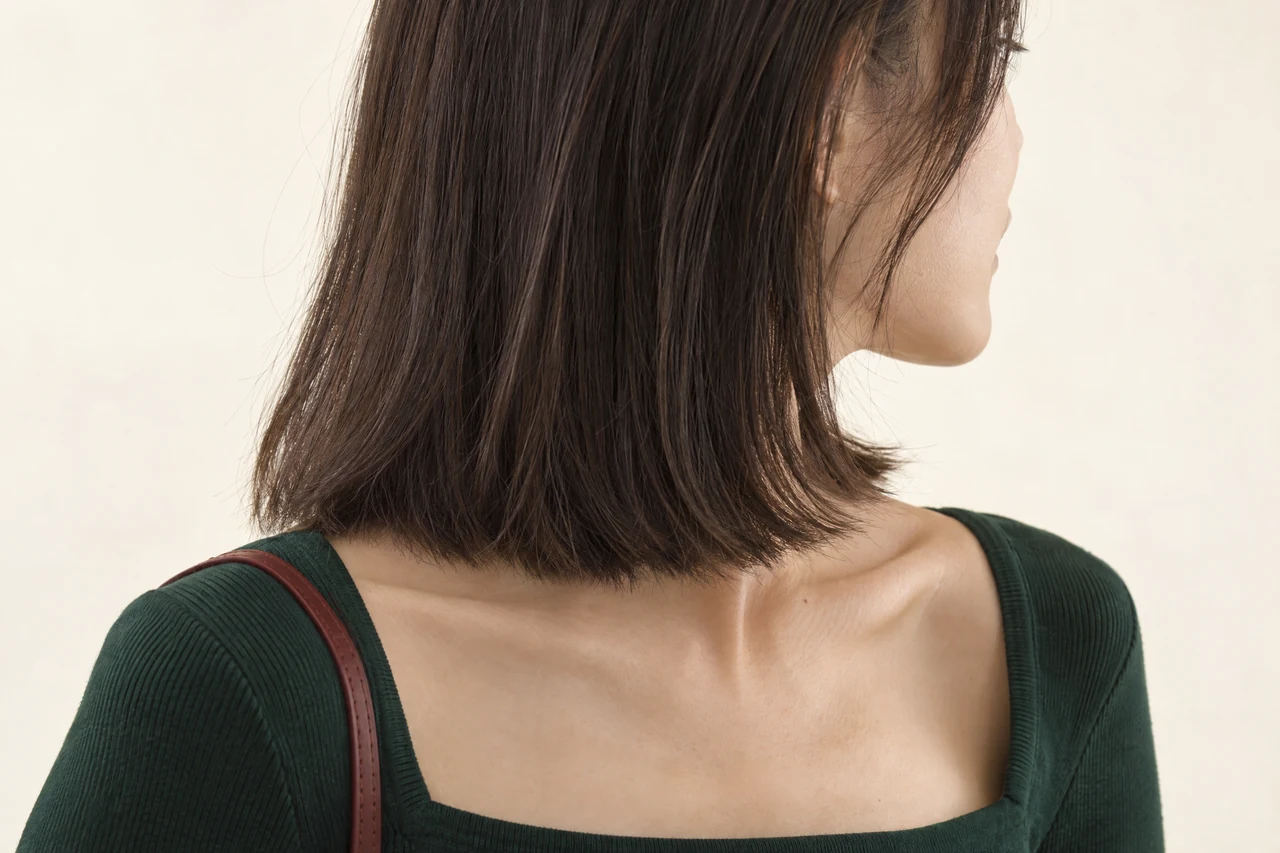
Compare a lower edge at the collarbone
A collarbone length haircut may retain a lower edge while the front pieces sit higher. Compare the hair worn forward and behind the shoulders, and explain which view matters most to you. Retaining the back perimeter does not automatically keep enough length around the face for your usual tie or tuck; check both independently.
A lower edge may appeal if you like some length over the chest. Bring the side sections forward to assess the ends beside your neckline, then put them behind the shoulders. If you switch between these positions during the day, both views belong in the consultation.
Keeping more perimeter length is not the same as keeping more front length. Before asking for a softer face outline, identify whether the ear-side section must tuck, reach a low tie or stay loose. You may prefer longer front pieces with a subtle change around the face rather than a conspicuous short section that needs a clip at work.
Continue with layered haircut for that specific comparison and the preparation questions it raises.
More length without an undefined front outline
Describe the front boundary separately from the back edge. For example, ask to keep the longest ends near the collarbone while retaining enough side length to tuck behind the ears. Alternatively, say that loose cheek-level pieces are welcome when the rest is tied. The point is not to ban shorter layers; it is to choose them knowingly. A collarbone outline can look fuller or more separated depending on the lengths above the perimeter.
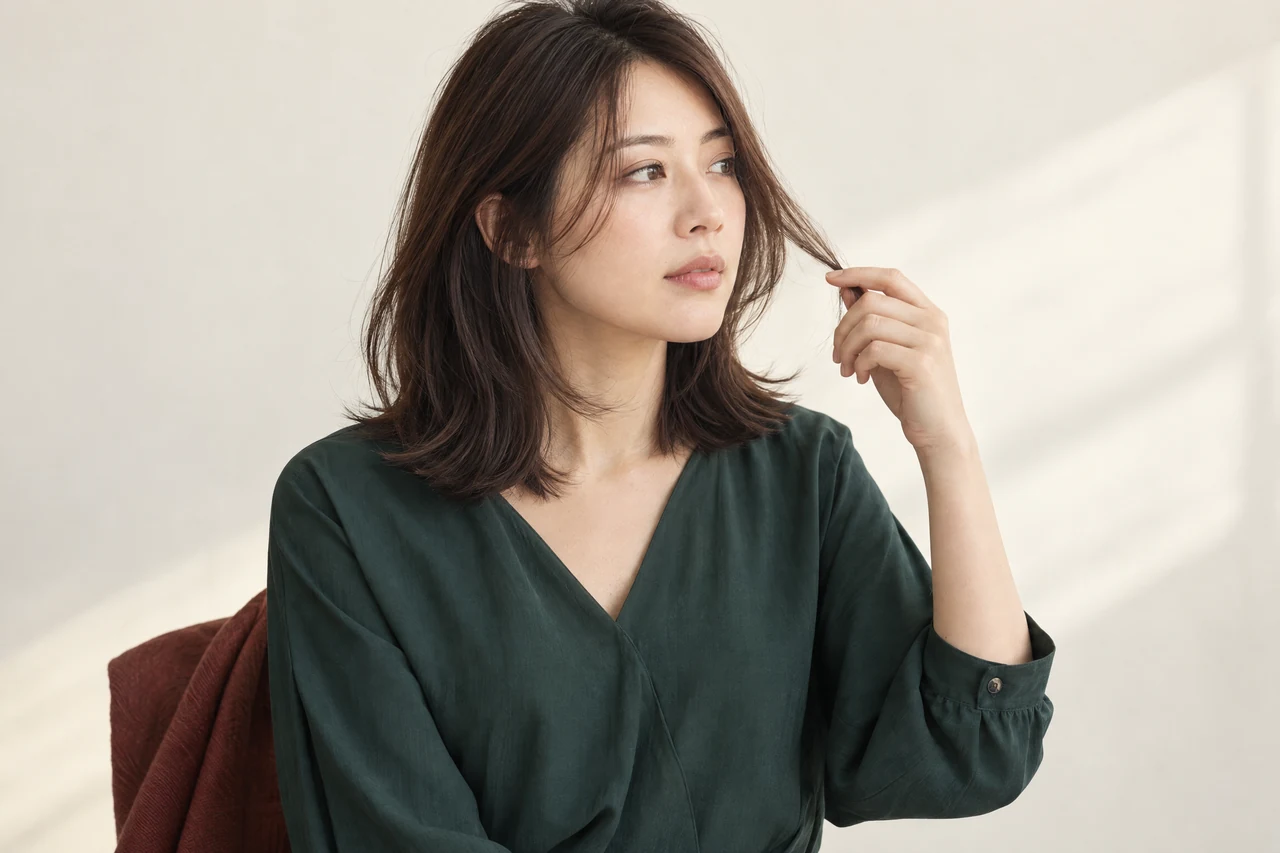
Check tying back before shortening
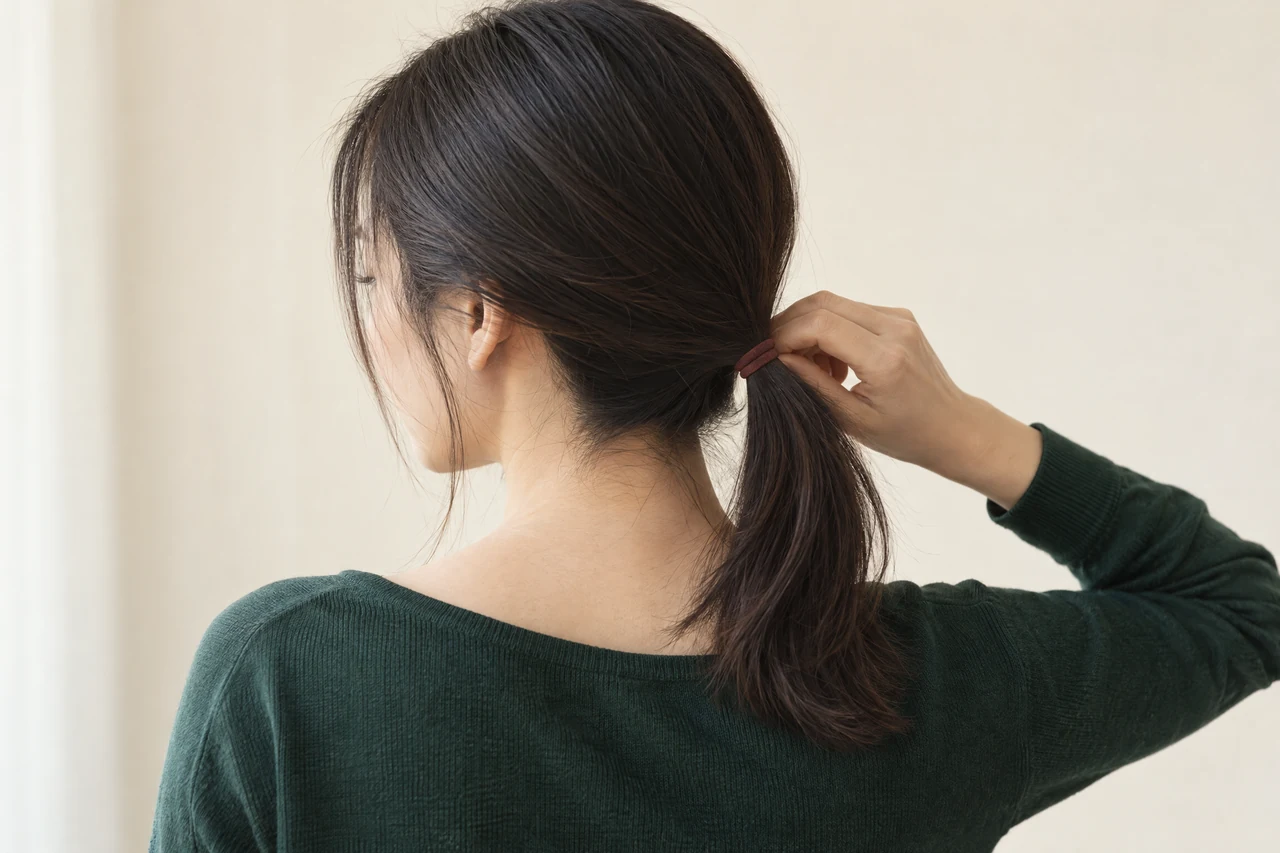
Use your normal tying position to show which pieces must reach. A low ponytail, a higher tie and a half-up arrangement can require different lengths, especially around the ears and front. Decide which function is essential and which loose pieces you would accept instead of assuming that all medium-length cuts offer the same flexibility.
Bring the hair tie or clip you actually use and demonstrate your usual arrangement before cutting. A low tie needs the front sections to travel towards the nape; a higher tie also asks the lower back sections to travel upwards. Check these areas independently. Hair gathered briefly by the stylist's hand is not necessarily as secure as a ponytail you can make yourself without stretching or repeated adjustment.
Loose pieces may suit desk work, while exercise or cooking may require the front securely away. A half-up option leaves the nape and lower lengths loose, so it cannot replace every full-tie requirement. Describe the activity as well as the hairstyle.
Do not compensate for barely reaching pieces by pulling harder. The American Academy of Dermatology's advice on hairstyles that pull recommends loosening styles and avoiding frequent pulling; a painful style is too tight. For this length decision, the practical aim is enough reach for a comfortable arrangement, not a tighter elastic.
The shortest useful piece and the tie position
Separate essential pieces from decorative ones. Point to the side sections you want inside the tie, then identify any front pieces you are happy to leave out. Explain whether you would accept pins or a headband, or whether needing extra accessories would defeat the purpose. If your current hair only just reaches, tell the stylist before agreeing to a shorter edge or shorter layers. Keeping those useful sections may matter more than matching a reference photo exactly.
Allow for shoulders and natural direction
Ends near the shoulders may turn differently as the hair touches the body or clothing. Show the ordinary dry pattern with your usual parting before making that movement the reason for a cut. Consider a different landing point or accepting some variation, without assuming a shorter length guarantees both sides will behave identically.
Notice whether the bend appears after an ear tuck or against a jacket collar, and whether it remains with the hair forward. Show that ordinary pattern rather than brushing it into your preferred direction before the consultation. This helps locate the contact you dislike.
If the shoulder-level flick is the main concern, compare keeping a little more length with moving the edge clear of the contact area. Both choices affect other functions, particularly tying back. A blow-dried inward finish is also a different request from an edge that settles inward without directed styling. Tell the stylist which result you expect on an ordinary morning.
If waves determine where your dry ends land, the guide to a haircut for naturally wavy hair helps you describe that pattern before settling on a shoulder or collarbone target.
A wearable outline rather than identical movement
Decide what variation would still feel comfortable. You might like a softly turned end but dislike hair catching against a high collar, or accept different bends provided the front stays out of your eyes. Naming that threshold makes the discussion more useful than asking for both sides to behave exactly alike. Compare the outline in your usual parting and drying method, then ask which styling step would be needed for the more controlled finish you have in mind.
Keep useful lengths as the shape changes
If you are growing a shorter cut towards medium length, the sections may reach your chosen body points at different times. A back edge near the shoulders can coexist with shorter sides or layers that still fall out of a tie. Explain whether the next cut is meant to preserve progress, tidy the outline or change the shape. Those are different priorities.
If you are coming down from long hair, identify the function you would miss most before choosing the new perimeter. A shorter outline with restrained layers may be a useful starting point if you want to assess the length change first. More visible layering can be discussed separately rather than treating it as an automatic part of going medium.
Continue with how to grow out a bob for that specific comparison and the preparation questions it raises.
Judge the shortest layer as well as the longest edge
A reference with collarbone ends may contain chin-level front pieces that are easy to overlook. Ask which sections would be shortened to produce that shape and which would remain. If you like the picture's lower edge but not its loose front pieces, say so. Protecting tie-back length does not mean every strand must be identical in length; it means the particular sections needed for your routine are deliberately retained.

Prepare a shoulder-to-collarbone consultation
Mark the detail you want in your inspiration image: the ends' landing point, the full edge or the front pieces. In an ordinary dry-hair photo of yourself, identify what bothers you now. This helps focus the proposed change.
For a women's haircut, make the enquiry specific: you are considering a shoulder or collarbone edge, you normally tie at the nape, and you want particular side pieces kept long enough to reach. The confirmed women's wash, cut and blow-dry price is HK$480. Confirm the requested service scope and any additional work when enquiring.
Use the comparison and checklist below to settle priorities before the visit. If keeping a full tie is non-negotiable, lead with that condition. If a clearer neckline matters more, explain which tied options you could give up. A useful decision is a length you understand in everyday positions, not simply the shorter or longer of two labels.
Agree on the finish you will actually use
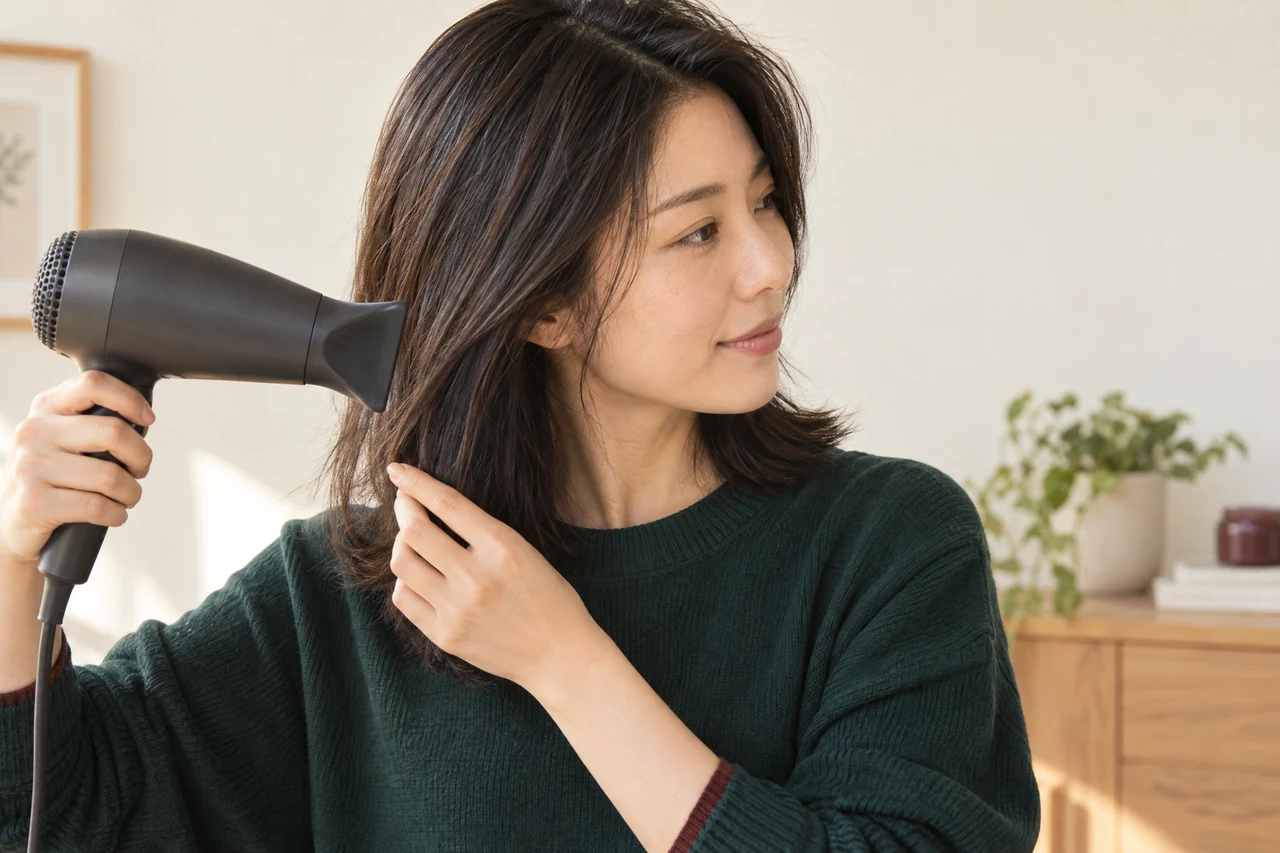
Say whether you usually let the hair dry naturally, use a dryer with your fingers or shape the ends with a brush. Include any habit of tucking one side or moving the parting. Ask how the proposed edge and front sections would look with that method. Before the cut starts, confirm the intended dry placement and the useful lengths to preserve so that the finished outline and your daily needs are part of the same conversation.
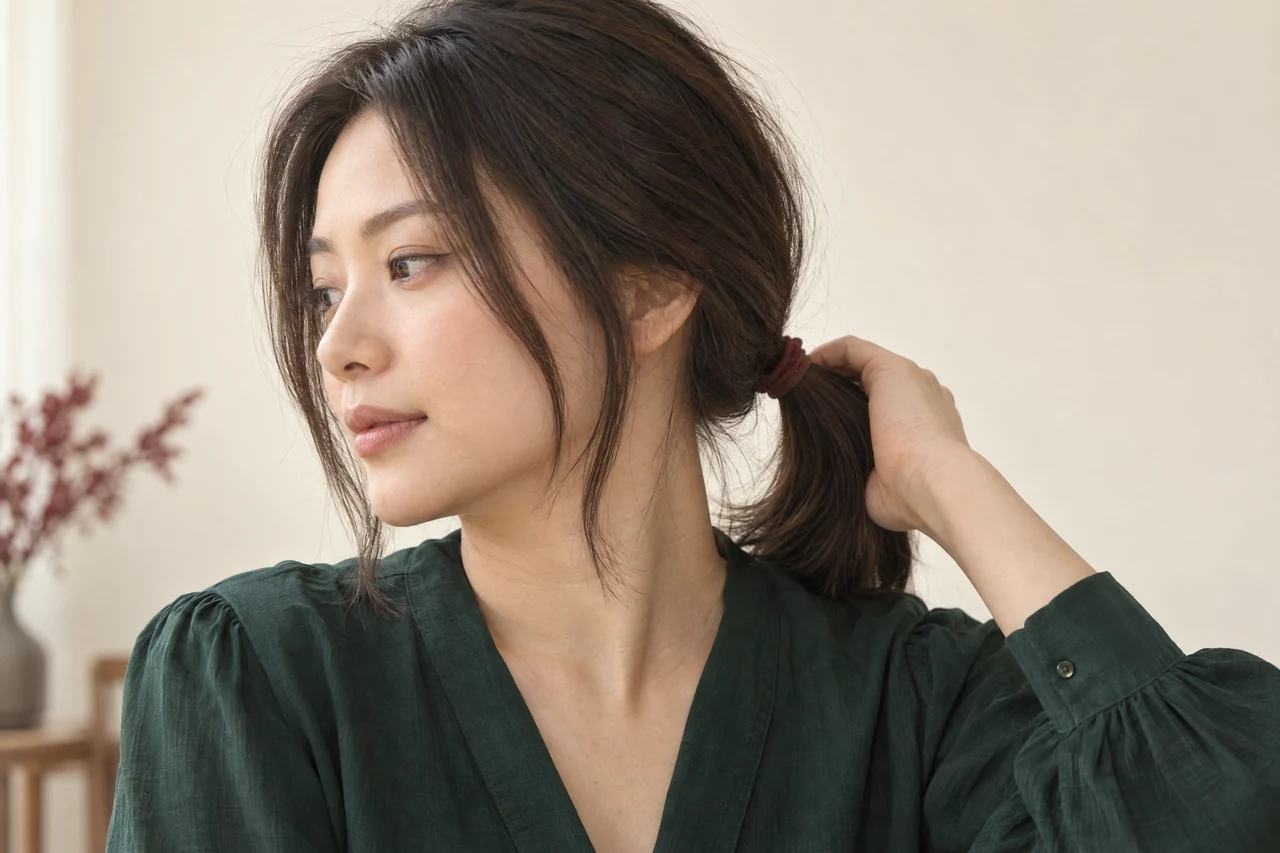
Compare medium-length landing points and the functions to check before cutting
| Length or detail | What to compare | What to demonstrate |
|---|---|---|
| Edge just above the shoulders | A clearer neckline versus losing useful tie-back reach | Dry side placement and the sections needed in your usual tie |
| Edge touching the shoulders | The compact outline and how contact changes the ends | Hair worn forward, behind the shoulders and against an ordinary collar |
| Edge near the collarbone | A lower perimeter versus independently shorter front pieces | Front and back placement, plus ear-side length |
| Shorter face-framing pieces | Loose detail versus keeping the front securely away | Whether you accept loose pieces, pins or a headband |
| Higher ponytail requirement | Nape reach as well as front reach | Your real tie position without pulling harder to gather pieces |
Your preparation checklist
- Point to the desired dry edge on your own body with your head upright; specify whether it should clear, touch or pass the shoulders.
- Demonstrate your essential tying position with your normal accessory, including any higher tie used for exercise.
- Identify the front and ear-side pieces that must reach the tie or tuck, and the loose pieces you would accept.
- Compare the hair forward and behind the shoulders in an ordinary top; mention collars that regularly catch the ends.
- Bring an everyday dry-hair photo and a reference, marking the length detail rather than assuming the whole reference is the request.
- Explain your usual drying method, confirm the lengths to retain and check the service scope before agreeing to the cut.
Frequently asked questions
Does medium length always mean shoulder length?
No. Use a specific landing point on your own body and show where the front and back should sit rather than relying on the broad label.
Will collarbone length guarantee that every piece ties back?
No. The shortest layers, front pieces and your usual tie position determine that function. Discuss them before shortening the perimeter.
Can a haircut guarantee that shoulder-level ends turn inward?
No. Natural direction, shoulder contact and styling affect movement. Compare your everyday finish and the variation you can accept.
Should I choose shoulder or collarbone length if I exercise regularly?
Begin with the arrangement you actually need during exercise. Show its tie position and whether loose front or nape pieces are acceptable. Then compare which perimeter and layer lengths preserve that function. Choosing the longer label alone is not enough if the front sections are shortened substantially.
Can I keep a medium outline without adding short layers?
Yes, medium describes a length range rather than a requirement for short layers. Discuss the bottom edge and the amount of movement separately. If you want a fuller perimeter or longer front sections for tying, explain those priorities before choosing the internal shape.
Choose a medium length around the pieces you need to keep
Enquire with Vit So in Sheung Wan about your preferred shoulder or collarbone placement. Share your current dry-hair photo, usual tie position and front lengths you want retained. Confirm the proposed service and availability before visiting; an enquiry is not a confirmed booking.
Start your WhatsApp enquirySources & further reading
- Hairstyles that pull can lead to hair loss
Avoiding frequent pulling and loosening tight hairstyles supports the comfortable tie-back discussion, not a claim about haircut aesthetics.
- Shoulder Length Hair: The Perfect In-Between Cut
The distinction between blunt minimally layered shoulder cuts and textured layered options supports discussing length separately from cut structure.



